Is a Turkcell eSIM the best option for tourists in Turkey?
For many travellers, a Turkcell eSIM is an excellent choice for connectivity in Turkey, particularly given Turkcell's extensive network coverage and reliable speeds across the country. I've personally relied on Turkcell from the bustling streets of Kadıköy to the quiet shores of Kaş, and it's rarely let me down.
Data plans and prices: Turkey eSIM
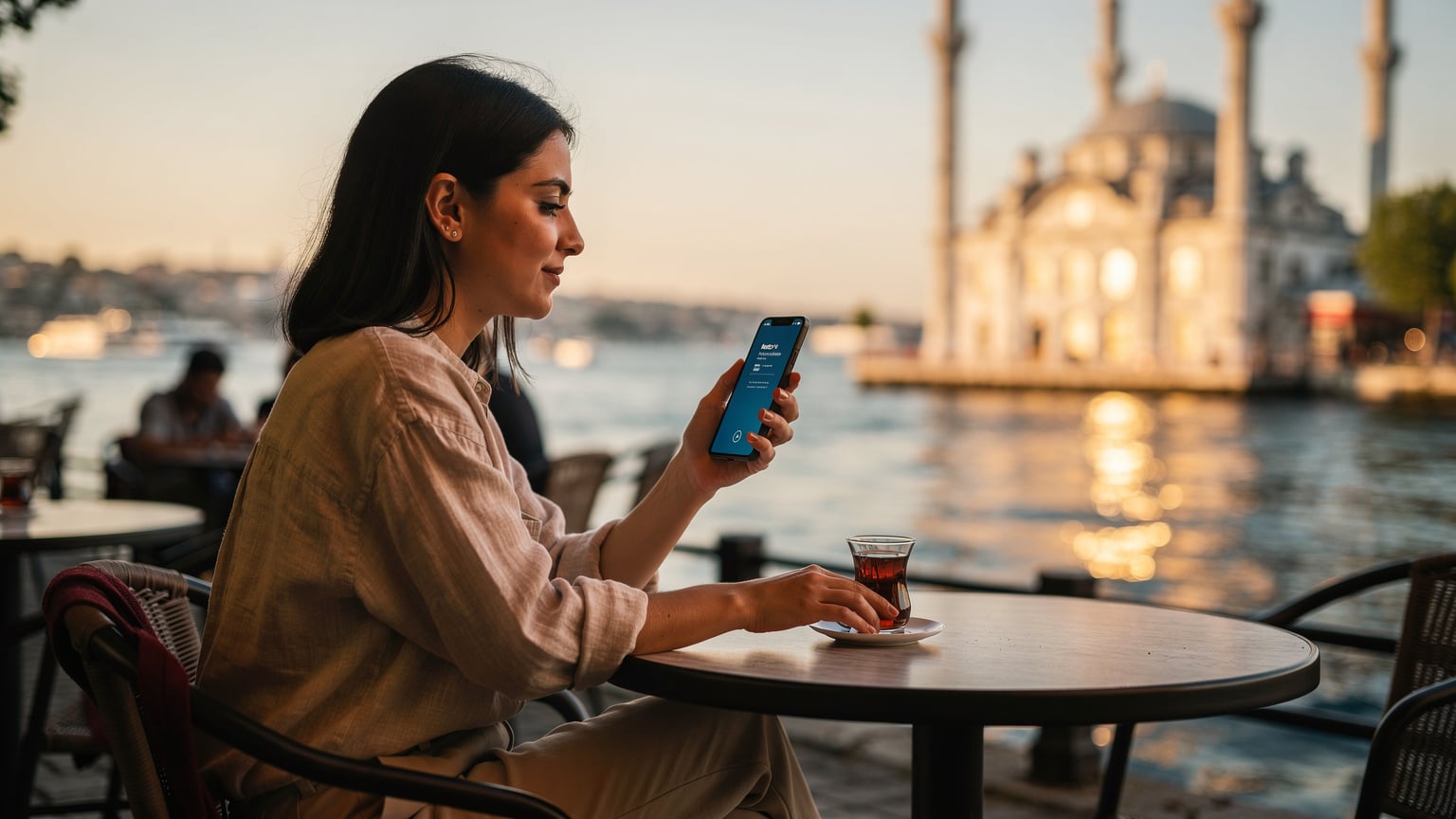
However, whether it's the absolute 'best' depends on your travel style and duration. If you're staying for a short trip, say under two weeks, a dedicated travel eSIM from a provider like Cellesim offering multiple networks (including Turkcell, Vodafone, or Türk Telekom) might be more convenient. These often activate instantly and can be purchased before you even land at Istanbul Airport (IST) or Sabiha Gökçen (SAW), saving you the hassle of finding a physical store.
For longer stays, or if you plan to make many local calls, a direct Turkcell plan might offer better value, but expect a bit more paperwork and a visit to a retail outlet. Remember, Turkey has some unique rules around phone registration, which we'll get into shortly.
How can I get a Turkcell eSIM before or after arriving in Turkey?
Getting a Turkcell eSIM for your trip can happen in a couple of ways, each with its own quirks.
Getting an eSIM Before You Arrive (Recommended for Ease)
The simplest method, in my experience, is to purchase an eSIM from a global provider before you even pack your bags. Companies like Cellesim offer Turkey eSIMs that often connect to Turkcell's network, or at least one of the other strong local carriers. You simply buy online, receive a QR code via email, scan it, and you're good to go. This means you have data the moment your plane touches down, which is invaluable for calling a taxi, getting around the city, or checking into your Airbnb in Beyoğlu.
This approach bypasses the need for store visits, language barriers, and any potential passport registration issues at a local kiosk. I've stood in queues at airports in countries far less busy than Turkey, watching my data trickle away on expensive roaming, wishing I'd done this. For a smooth start to your journey, this is the way to go.
Getting an eSIM After You Arrive (Requires a Store Visit)
If you prefer to go directly with Turkcell, you'll need to visit a Turkcell retail store. You can find these at major airports like IST or SAW, or in city centers, for example, along İstiklal Caddesi in Taksim. You'll need your passport and potentially a copy of your entry stamp for registration.
At the store, you'll typically buy a physical SIM card first, often a 'tourist pack' with a set amount of data and calls. Then, you can ask to convert it to an eSIM. Not all Turkcell stores are equally equipped or familiar with eSIM conversions for tourists, so be prepared for a bit of back-and-forth. My last attempt to do something similar in Italy with Vodafone Italia involved three different stores and a lot of gesturing before I found someone who knew the process. It's not always as simple as it sounds.
| Method | Pros | Cons | Best For |
|---|---|---|---|
| Cellesim (Travel eSIM Provider) | Instant activation, online purchase, no store visit, often multi-network access, immediate data on arrival. | May not include local Turkish phone number. | Short-term tourists, ease of use, immediate connectivity. |
| Turkcell Retail Store | Direct local carrier plan, includes local Turkish phone number, potentially better value for longer stays. | Requires store visit, potential language barrier, passport registration, physical SIM card first (then eSIM conversion), can be time-consuming. | Long-term visitors, those needing a local number, tech-savvy travellers. |
What are the benefits of using an eSIM for my trip to Turkey?
The advantages of an eSIM, especially for international travel, are significant. I've been using them for years, ever since I got tired of fumbling with tiny SIM trays at airport kiosks.
- Instant Connectivity: As mentioned, you can set up your eSIM before you even leave home. This means no scrambling for Wi-Fi at the airport or worrying about getting lost on the way to your hotel in Sultanahmet.
- Dual SIM Functionality: Many phones allow you to use an eSIM alongside your physical home SIM. This is fantastic for keeping your regular number active for calls and texts from back home while using the eSIM for local data. No more missed calls from family or urgent work emails.
- No Physical SIM Cards: This is a big one. No more tiny plastic cards to lose, no more fiddling with ejector tools (which I invariably forget to pack). It's all digital, all streamlined.
- Flexibility: Changing plans or carriers is as simple as deleting one eSIM profile and installing another. If you're hopping around Europe after Turkey, you could just switch to an eSIM plan for Europe without ever touching a physical card.
- Cost Savings: Roaming charges are notoriously expensive. An eSIM from a local or regional provider offers significantly cheaper data rates compared to what your home carrier would charge. Think of the extra simit and çay money saved!
What about Vodafone or Türk Telekom, do they offer eSIMs for visitors?
Yes, Turkey's other major operators, Vodafone Turkey and Türk Telekom, also offer eSIM services, though their availability for tourists can sometimes be less clear-cut than with Turkcell. Both have robust networks, with Vodafone often strong in urban centers like İzmir and Türk Telekom offering good coverage in more rural areas.
Similar to Turkcell, you would typically need to visit one of their official retail stores with your passport to purchase a physical tourist SIM package, and then inquire about converting it to an eSIM. My advice remains the same: buying a multi-carrier eSIM from a trusted provider like Cellesim before you leave can save you a significant amount of time and potential frustration. It ensures you connect to the best available network, whether that's Turkcell, Vodafone, or Türk Telekom, without having to choose or visit multiple stores.
How much data do I really need for a trip to Turkey?
This is a question I get asked constantly, and it really boils down to your personal usage habits. For a typical week-long trip, say exploring the markets of Gaziantep or the thermal pools of Pamukkale, most travelers find that 5-10 GB of data is more than enough. If you're constantly streaming videos, making video calls, or using your phone as a hotspot for other devices, you might lean towards 15-20 GB.
Consider these points:
- Navigation: Using Google Maps or local apps like BiTaksi for taxis will use some data, but not an excessive amount.
- Social Media & Messaging: Scrolling through Instagram or WhatsApp messages is relatively light on data.
- Streaming: This is the data killer. If you plan to watch Netflix on long bus rides between cities (like the overnight from Istanbul to Cappadocia), you'll chew through data quickly. Download content offline before you leave.
- Hotspot Use: If you're traveling with family or need to connect a laptop, factor in significantly more data.
For more detailed guidance, consider How Much Mobile Data Do You Really Need for 2 Weeks in Europe, which offers a good framework applicable to any destination.
What are the main pain points with Turkish SIM cards for tourists?
While local SIM cards can offer good value, Turkey has a few specific hurdles for tourists that are worth knowing about. These are the kinds of things that can turn a smooth arrival into a frustrating hour at the airport.
- Passport Registration: By law, all SIM cards in Turkey, including those for tourists, must be registered to a valid passport. This is a mandatory step. If you buy from a small, unofficial vendor (don't!), your SIM might be deactivated after a few days. Always go to an official store.
- IMEI Blocking: This is the big one. If you use a non-Turkish phone with a Turkish SIM card for more than 120 days (four months), your phone's IMEI number can be blocked from using Turkish networks. To unblock it, you'd need to pay a hefty import tax and register the phone with the Turkish government. This typically doesn't affect short-term tourists, but if you're planning an extended stay, be aware. I once had a colleague on a six-month secondment to Ankara who had his phone cut off mid-project because he hadn't registered it, a total nightmare.
- Tourist Packages: Local operators offer specific 'tourist' packages. These often have a validity period, usually 30 days, and once the data or validity runs out, topping up can sometimes be tricky or more expensive than the initial purchase. Clarify the expiry and top-up options when you buy.
- Language Barrier: While many staff at major airport stores or city center branches speak English, venture into a smaller Turkcell, Vodafone, or Türk Telekom shop in a neighborhood like Fatih, and you might encounter communication challenges. Having Google Translate ready can help.
- Activation Time: Sometimes, even after registration, a new SIM or eSIM might take an hour or two to fully activate. Don't panic if it's not instant.
Given these potential headaches, opting for an international eSIM provider that offers coverage in Turkey often feels like taking the path of least resistance. You avoid the IMEI registration issue, the store visits, and the language hurdles, letting you focus on the magic of Turkey, from the ancient ruins of Göbeklitepe to the bustling markets of Van.