

 eSIM Destination
United Kingdom eSIM
United Kingdom: compare travel eSIMs for maps, messages, and mobile data.
United Kingdom: mobile networks
6 carriers supported
- O2 UK5G
- Three UK5G
- Vodafone UK5G
- EE5G
- O25G
- 34G
Highest generation per operator is displayed; some plans may use a fallback band based on local conditions.
Free VPN with your eSIM
Every active Cellesim eSIM comes with a free VPN. Browse securely on public Wi-Fi and reach the apps you rely on from anywhere, at no extra cost and with no separate signup.
- 4.4(488)
- 5G
- Digital setup
- Refund policy
Data Plans / Unlimited
7 days
30 days
United Kingdom: mobile networks
6 carriers supported
- O2 UK5G
- Three UK5G
- Vodafone UK5G
- EE5G
- O25G
- 34G
Highest generation per operator is displayed; some plans may use a fallback band based on local conditions.
Free VPN with your eSIM
Every active Cellesim eSIM comes with a free VPN. Browse securely on public Wi-Fi and reach the apps you rely on from anywhere, at no extra cost and with no separate signup.
United Kingdom: our plans at or below the market median
We compare our United Kingdom plans with the public prices of other eSIM providers. The plans below cost the same as or less than the median price for the same data and validity.
- 1 GB · 7 days$3.49market median $4.50 · 22% below
- 3 GB · 30 days$7.79market median $9.00 · 13% below
- 5 GB · 30 days$9.99market median $12.00 · 17% below
- 10 GB · 30 days$15.75market median $17.50 · 10% below
Competitor prices checked on Oct 19, 2026. Prices change; the price shown at checkout is final.
United Kingdom: choose an eSIM for your trip
Choose how much data you need and for how long. Before you buy, check that your phone is compatible and that the plan covers where you're going. United Kingdom: plans start from $3.49. 4.4/5 · Based on 488 reviews Compare the plans below, including details on activation, hotspot use, and top-ups.
- Compare price and how much data you get
- Check networks and coverage
- Contact support if you need help
Frequently Asked Questions
A UK eSIM lets you connect to top UK networks like EE, Vodafone, O2, and Three instantly, no need for a physical SIM card.
After purchase, you’ll receive a QR code. Scan it, and your eSIM will activate within seconds. It’s ideal for travelers landing at London Heathrow, Manchester, or Edinburgh Airport who need instant internet access.
Yes! You can install the eSIM before your trip. Your data plan only starts once you connect to a UK network, so you’ll have internet as soon as you land.
Planning the trip? See our United Kingdom eSIM plans, install in one tap before you fly, and land online. Free VPN included.
Most modern smartphones support eSIM, including iPhone XS and newer, Samsung Galaxy S20+, and Google Pixel 4+. Always make sure your phone is unlocked and supports eSIM functionality.
No. Your eSIM connects directly to local UK carriers, which means you’ll enjoy high-speed local data without any roaming fees. Perfect for short-term visitors, students, and digital nomads.
Most UK eSIM plans are data-only, but you can use WhatsApp, FaceTime, Telegram, or Skype for calls and messages. If you need a local UK number, you can use virtual number apps or VoIP services.
Yes, WhatsApp, FaceTime, and other video/voice calls work normally over mobile data when using an eSIM in the United Kingdom.
The UK does not impose any restrictions or throttling on these popular communication apps, so you can freely connect with family and friends using your favorite services. Your eSIM provides reliable data connectivity, allowing you to make and receive calls, send messages, and use all your apps just as you would at home. This means you can easily stay in touch, share your travel experiences, and conduct video meetings without any issues.
Our eSIMs automatically connect to the strongest available major network in the UK, ensuring you have the best possible signal for your calls and internet usage across cities like London, Edinburgh, and Manchester, and even in more rural areas. The exact network partner may vary depending on your specific plan.
Planning the trip? See our United Kingdom eSIM plans, install in one tap before you fly, and land online. Free VPN included.
No! This is the #1 roaming trap. Since Brexit, the UK is NOT part of the EU's "Roam Like at Home" (RLAH) policy. Most EU carriers (like Orange FR, T-Mobile DE, Movistar ES) will now charge you expensive international roaming fees. A Cellesim eSIM is the only way to get a fixed, cheap data price and avoid a massive shock bill.
This specific plan is valid only within the UK. This is a critical point. If you take the Eurostar train to Paris or a ferry/flight to Dublin (Ireland), your connection will stop at the border. For a seamless multi-country trip, we highly recommend our Europe Regional eSIM, which covers the UK, France, Ireland, and all of Europe with one plan.
Yes, absolutely. Our eSIM plan covers all four nations of the United Kingdom: England, Scotland, Wales, and Northern Ireland. You will have a strong 4G/5G signal for using Google Maps in the Scottish Highlands, hiking in Snowdonia (Wales), or visiting Belfast (Northern Ireland).
To give you the best speed and coverage, our eSIM connects to the UK’s premium Tier-1 networks, typically EE, O2, or Vodafone. This ensures you get the fastest available 5G/LTE speeds, whether you are on the London Underground (Tube) or in Edinburgh.
About United Kingdom eSIM
United Kingdom eSIM — Data plans
$3.49. Compare data allowance, validity and the total package price in the plan list. Check coverage, hotspot support and any fair-use limits before buying.
Install with Wi-Fi before departure. Check when your selected plan starts; installation and activation are not always the same. Network speed varies by location, device and plan.
🏙️ London
eSIM United Kingdom: Reliable 5G Data for England, Scotland & Wales
Welcome to the United Kingdom! Whether you are planning a city break in London, a road trip through the countryside of England, or hiking in the Scottish Highlands, staying connected is essential. Cellesim United Kingdom eSIM plans provide instant, high-speed internet starting at just $3.49, covering all of England, Scotland, Wales, and Northern Ireland.
🌍 Visiting more than one country? eSIM Europe
Escape Extreme International Roaming Charges in England
Since Brexit, roaming rules have changed for many travelers. Your home carrier might now charge high daily fees for using data in England and the rest of the UK. Don't let expensive roaming charges ruin your holiday. A local eSIM is the smartest way to get affordable data without swapping physical SIM cards.
Why a Cellesim eSIM is Essential for Your England & UK Trip
- Instant Connectivity: Land at Heathrow (LHR), Gatwick (LGW), or Manchester (MAN) and get online immediately. No need to hunt for a SIM card shop in London.
- Best Price for England: Compare our $3.49 starting price vs expensive daily roaming passes.
- Keep Your Number: Your physical SIM stays active for calls/SMS, while WhatsApp and data run smoothly on your Cellesim eSIM.
- Works on All Major Phones: Check our list of eSIM supported devices to see if your phone is compatible.
- UK-Wide Coverage: Enjoy fast 4G/5G coverage whether you are in Liverpool, Birmingham, or the remote English countryside.
Connect Across England's Key Cities
- London: Navigate the Tube, find the best pubs in Soho, and share your Big Ben selfies instantly.
- Manchester: Stream live football matches or music events from this vibrant English cultural hub.
- Edinburgh & Cardiff: Cross borders seamlessly; our eSIM works across the entire UK, not just England.
Stay Connected at Top UK Attractions
- The British Museum: Use mobile data to download audio guides and navigate world history in the heart of London.
- London Eye: Share live panoramic videos of the England skyline on Instagram or TikTok.
- Tower of London: Buy tickets online to skip the lines and search for the history of the Crown Jewels.
Travelling to the Glasgow 2026 Commonwealth Games?
Stay online across the UK with one eSIM — see our Commonwealth Games 2026 eSIM guide.
Your Best eSIM for United Kingdom Travel
Planning your trip to the United Kingdom? Don't get caught without connectivity. Discover the best way to stay connected with an eSIM. Forget traditional SIM card hassles; our prepaid eSIMs offer incredible travel convenience and abundant data plans, including unlimited options, perfect for any tourist.
- Cheap prepaid plans for every budget
- Unlimited data options to stay connected
- Instant QR delivery for immediate activation
- No expensive roaming charges ever
How much does an eSIM for United Kingdom cost?
Our eSIM plans for the United Kingdom start from just $3.49. We offer a range of packages to suit every traveler, from short trips to extended stays, ensuring you get the best value.
Is an eSIM worth it in United Kingdom?
Absolutely! An eSIM for the United Kingdom is incredibly worth it. It provides seamless, instant connectivity, allowing you to navigate, communicate, and share your experiences without searching for local SIM cards or paying exorbitant roaming fees. It's the smart choice for modern travelers.
Can I buy a United Kingdom eSIM online before travel?
Yes, you can! You can easily buy your United Kingdom eSIM online before you even depart. Our digital delivery means you receive your eSIM instantly via email, ready to activate upon arrival. It’s the most convenient way to ensure you're connected from the moment you land.
United Kingdom eSIM reviews from real travelers
Based on 488 reviews
- Sam O.·Jul 7, 2026
i worked without any issues. used in gb, awesome experience
- Anonymous·Jul 1, 2026
Would buy again. The speed was excellent. Solid!
- Anonymous·Jun 22, 2026
The signal was awesome.
the sim was
Traveler R.·Jun 19, 2026the sim was awful. couldn't get it to connect. support was poor
The data was
Dave·Jun 10, 2026The data was nice.
i used it
Sam290·Jun 9, 2026i used it without any issues. the sim was good. used in gb, excellent experience. setup was fine. super!
keine probleme. alles
Tim G.·Jul 9, 2026·dekeine probleme. alles bestens. (gb)
No funciona. Lento
Jose·Jul 8, 2026·esNo funciona. Lento. !!
Lent. Terrible. Pas
Luc443·Jul 8, 2026·frLent. Terrible. Pas de réseau. (GB
Πολύ καλό WiFi
Χρήστης Z.·Jul 5, 2026·elΠολύ καλό WiFi. Το συνιστώ
- Budi U.·Jun 29, 2026·in
Sempurna 5G
Работи перфектно
Dimitar R.·Jun 28, 2026·bgРаботи перфектно. Супер
United Kingdom eSIM guides:what travellers ask before they go
Coverage, install steps, real connection speeds, and the small stuff that ruins a trip if you skip it. Curated for United Kingdom.
 Travel Tips
United Kingdom Travel Advisory 2026: Navigating Safety and Staying Connected
Heading to the United Kingdom in 2026? This guide cuts through the noise to give you the tactical rundown on staying safe and connected without blowing your budget. From border crossings to avoiding common tourist traps, and the cheapest way to get online, consider this your essential pre-trip briefing.
Read the guide Destination Guides
Uncovering the United Kingdom: 15 Essential Facts for Your 2026 Trip
Before you jet off to the United Kingdom, knowing a few insider facts can smooth out your travel experience. From navigating unique local customs to understanding the subtle nuances of daily life, these 15 points will prep you for a trip that feels less like a tourist dash and more like a local immersion. We're talking real-world intel, not just textbook trivia.
Read the guide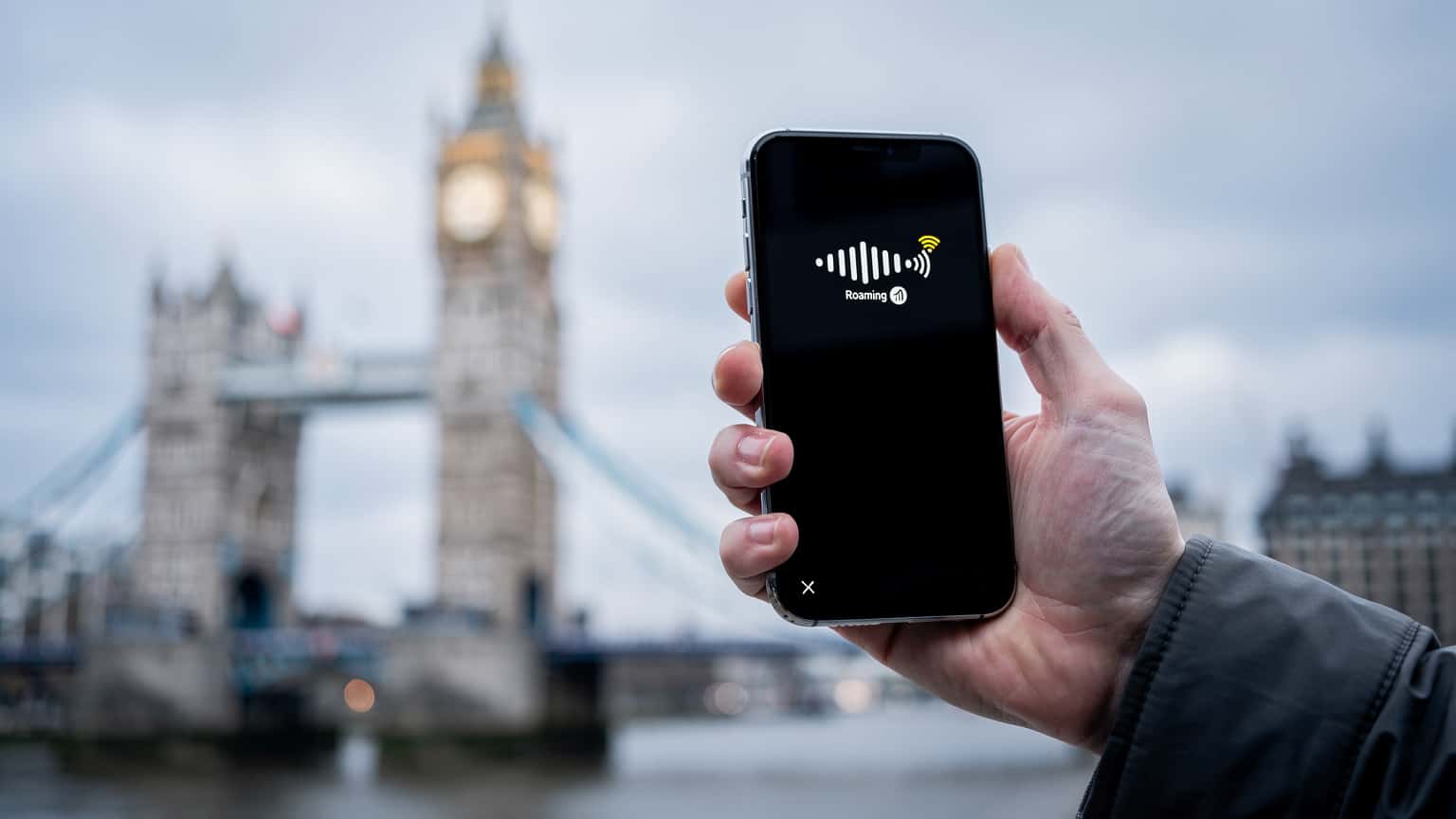 Travel Styles / Personas
UK Roaming for US Travelers: Verizon, AT&T, T-Mobile or eSIM?
Compare published US carrier roaming options for your UK trip, account for benefits already included, and decide whether you need a separate data eSIM.
Read the guide Events & Festivals
Notting Hill Carnival 2026: Your eSIM & Mobile Data Guide for London's Biggest Street Party
Navigating Notting Hill Carnival's immense crowds requires more than just good vibes; reliable mobile data is crucial for safety, finding friends, and accessing event info. This guide, from a telecom engineer's perspective, cuts through the noise to deliver actionable advice on optimizing your connectivity with an eSIM, ensuring your data keeps pace with the festivities.
Read the guide Events & Festivals
Edinburgh Fringe 2026: Seamless Shows and Connectivity for Festival-Goers
August in Edinburgh means one thing: the Fringe. From the Royal Mile's impromptu performances to late-night shows in the New Town, staying connected is crucial. Forget hunting for Wi-Fi or battling slow UK SIM activations. This guide is for the seasoned festival-goer who knows connectivity isn't a luxury, it's a necessity for snagging those last-minute tickets and coordinating with friends.
Read the guide Events & Festivals
Wimbledon 2026: Family Connectivity & eSIM Survival for London
Wimbledon with the family? It's a dream, but keeping everyone connected and entertained without blowing the budget on data can be a logistical challenge. This guide, from a seasoned parent traveler, breaks down how eSIMs make navigating London and enjoying the tennis with kids surprisingly stress-free, from streaming their favorite shows to finding your way with offline maps.
Read the guide Destination Guides
UK eSIM Guide 2026: Escaping the Post-Brexit Roaming Trap
The Brexit roaming grace period is officially dead. Here is the unvarnished reality of staying connected in the UK without funding a telco executive's yacht.
Read the guide Savings & Comparisons
Stop Overpaying for Europe Roaming in 2026: eSIM vs. The Rest
Europe roaming costs $15/day for 2GB. Cellesim eSIM? $5. Compare carrier plans, local SIMs, and pocket WiFi to save up to 80% on your 2026 trip.
Read the guide eSIM Guide
How to Troubleshoot eSIM Connectivity Issues in Europe
Experiencing eSIM issues in Europe 2026? Learn how to fix common connectivity problems with this expert troubleshooting guide. Get seamless data now.
Read the guide Destination Guides
How to Avoid Roaming Fees on Your 2026 Italy Summer Vacation
Planning your 2026 Italy vacation? Discover how to eliminate expensive roaming fees and stay connected effortlessly with Cellesim eSIM. Get instant data now!
Read the guide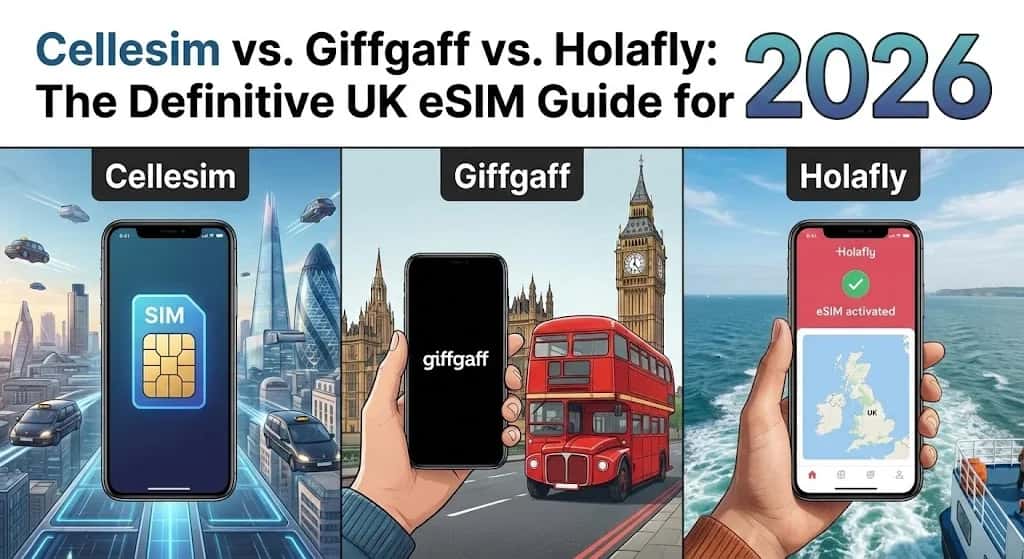 Savings & Comparisons
Cellesim vs. Giffgaff vs. Holafly: The Definitive UK eSIM Guide for 2026
A deep-dive comparison of Cellesim, Giffgaff, and Holafly. Discover the best UK eSIM for your travel style, whether you need flexibility, a local number, or unlimited data.
Read the guide Destination Guides
MWC Mobile World Congress Barcelona 2026: Your Ultimate Connectivity Guide
Master internet at MWC Mobile World Congress Barcelona 2026. Discover seamless eSIM connectivity, avoid roaming fees, and stay connected with Cellesim.
Read the guide
United Kingdom: Popular cities
City-specific connectivity guides


Nearby Countries
Check coverage for every stop on your trip.


