What are the Types of SIM Cards and What Do They Do?
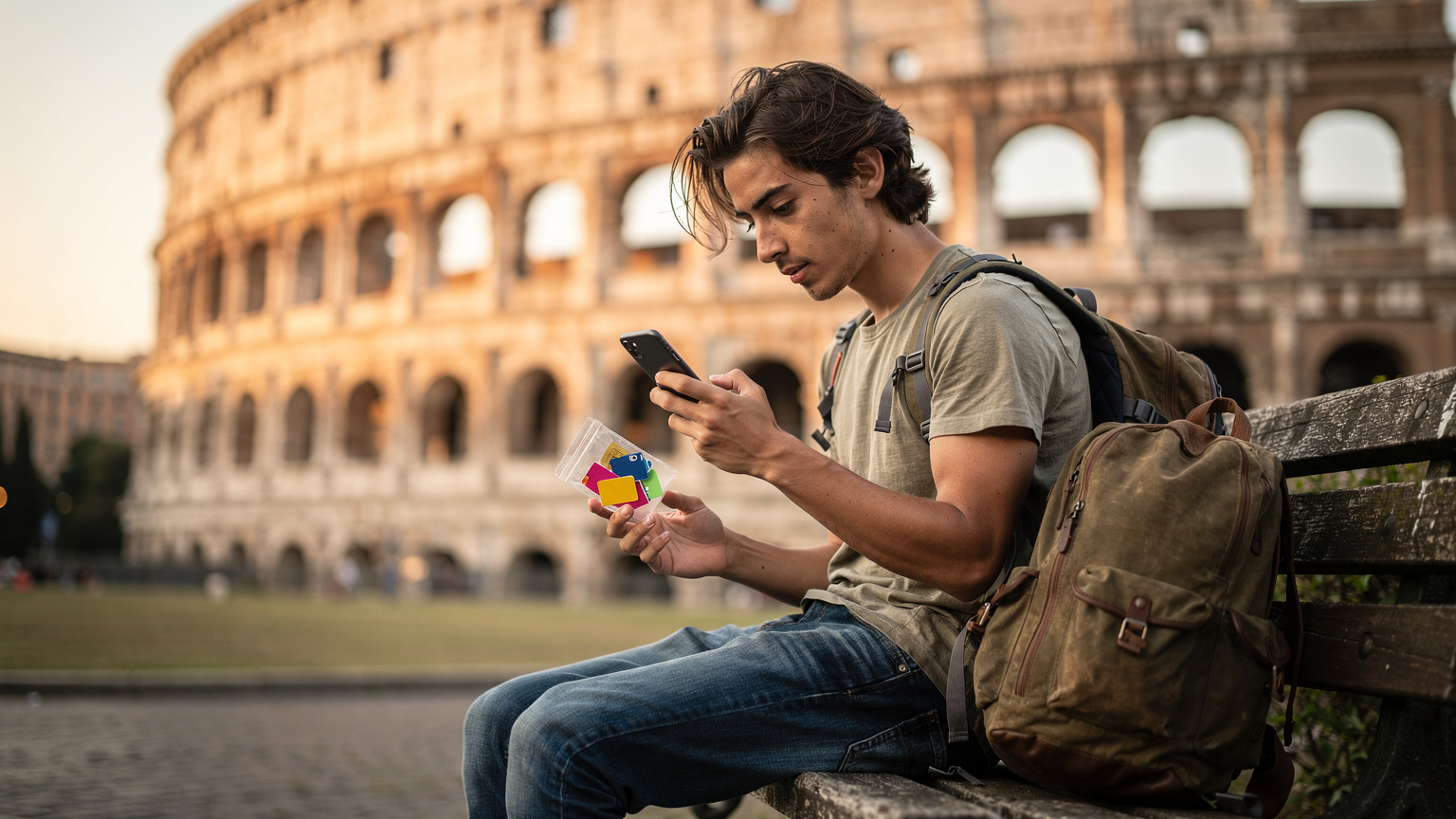
There are three main physical SIM card sizes you'll encounter, each designed to fit different phone models, plus the newer eSIM technology. The purpose remains the same across all of them: to securely store your subscriber information and enable your phone to communicate with a mobile network.Originally, SIM cards were the size of a credit card, but as phones got smaller, so did the cards. Today, you're most likely to see Nano-SIMs in modern smartphones.
| SIM Type | Size (mm) | Common Use |
|---|---|---|
| Standard (2FF) | 25 x 15 | Older feature phones, early smartphones (rare now) |
| Micro (3FF) | 15 x 12 | Some older smartphones (iPhone 4, Samsung Galaxy S3) |
| Nano (4FF) | 12.3 x 8.8 | Most modern smartphones (iPhone 5 onwards, recent Androids) |
| eSIM | Integrated (no physical card) | Newer flagship smartphones, smartwatches, tablets |
When you buy a physical SIM, it usually comes as a 'triple cut' card, meaning you can punch out the size you need. Just be careful not to snap it the wrong way. I once butchered a new SIM trying to fit it into an old backup phone in a dim hostel lobby in Medellín, wasting €10 I couldn't really afford to lose.
How Do Physical SIMs Work When Traveling?
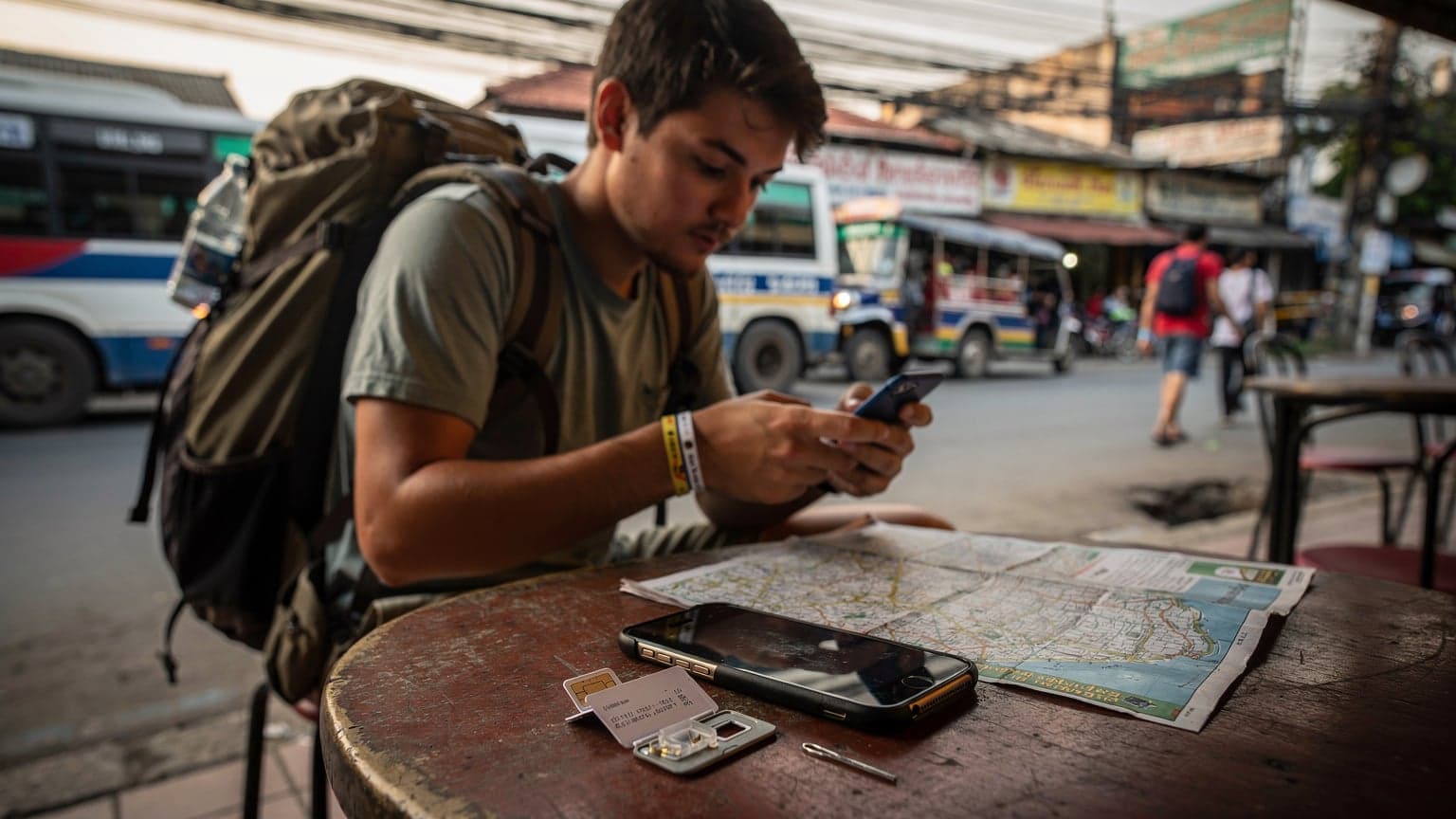
When you're traveling, a physical SIM card works by essentially replacing your home country's SIM. You pop out your regular SIM, insert the new local one, and suddenly your phone connects to a network in, say, Indonesia, with a local phone number and local data rates. This is often the go-to for backpackers because it traditionally offered the absolute cheapest per-GB rate, especially for longer stays.The process is simple enough: find a mobile carrier store, usually at the airport or in any major city center, buy a SIM, provide your passport for registration (this is now standard in many countries like India or Turkey), and activate it. For example, when I was in Indonesia, I went straight to a Telkomsel kiosk at Ngurah Rai Airport. For about 80,000 IDR (around €5), I got a basic SIM with 5GB of data. This was enough for my initial ride-sharing apps and hostel bookings.
However, the downside is obvious: you lose access to your home number, which can be a pain for two-factor authentication or if friends and family need to reach you without using Wi-Fi based apps. Plus, the hassle of keeping track of that tiny plastic chip, especially if you're swapping frequently between countries or phones, is real. Trust me, losing your home SIM in the bottom of a backpack is a stress you don't need.
How Much Do Travel SIM Cards Cost in 2026?
The cost of travel SIM cards varies wildly by country and carrier, but a good rule of thumb for a budget backpacker in 2026 is that a local physical SIM for a week or two will run you anywhere from €5 to €25 for a decent data allowance (think 5GB to 20GB). This often beats international roaming plans from your home provider, which can easily hit €10-€15 per day for similar data. For a deep dive into specific regional pricing, checking out resources like the Telkomsel eSIM for Budget Backpackers article can give you specific numbers for a country like Indonesia.Let's crunch some numbers. On my last trip through Southeast Asia, I spent 10 days in Vietnam. A local Viettel SIM with 15GB cost me 150,000 VND, roughly €6. That's 1.5GB per day, more than enough for maps, hostel bookings, and a bit of social media. Compare that to a typical roaming package from a European carrier: maybe €5 per 500MB. Over 10 days, that's €100 for just 5GB. The local SIM was a no-brainer.
However, the hidden costs can add up. Time spent hunting for a SIM card store, waiting in line, dealing with language barriers, and figuring out activation codes can easily eat up a few valuable hours of your trip. Sometimes, that time is worth more than the few euros you save, especially if you're only in a country for a couple of days.
What is an eSIM and How is it Different?
An eSIM, or embedded SIM, is a digital SIM card that's built directly into your phone's hardware. Instead of swapping out a physical chip, you simply download a profile from a carrier, often by scanning a QR code, which then activates your service. This means no more fiddling with tiny trays or losing your home SIM. It's a game-changer for frequent travelers, especially those who prioritize convenience and speed of activation.The main difference is the physical aspect, or lack thereof. With an eSIM, you don't need to find a local vendor or worry about compatibility with your phone's SIM tray. You can buy and activate an eSIM plan from anywhere, even before you land. This is incredibly useful for hitting the ground running, especially if you're arriving late or into a city where local SIM acquisition is known to be a hassle (looking at you, certain South American airports). For more on real-world performance, check out Speedtest Your eSIM: Real-World Performance & Troubleshooting 2026.
My Cellesim eSIM for an 8-day trip to Iceland cost me €28 for 10GB. That's €3.50 a day for 1.25GB, which handled all my Google Maps, WhatsApp calls, and even some light streaming in the evenings at my hostel. No faffing about at Keflavík Airport, just landed, scanned a QR code, and I was online. That's money well spent for saving time and stress.
When Should You Choose a Physical SIM Over an eSIM, or Vice Versa?
You should choose a physical SIM when you're staying in one country for an extended period (say, over three weeks) and the local physical SIM offers a significantly cheaper per-GB rate than any available eSIM. Conversely, an eSIM is almost always the better choice for shorter trips, multi-country itineraries, or if your priority is immediate connectivity upon arrival.Here's a quick breakdown to help you decide where to put your euros:
| Factor | Physical SIM Card | eSIM (e.g., Cellesim) |
|---|---|---|
| Trip Duration | Longer stays (3+ weeks, single country) | Shorter trips, multi-country travel |
| Cost per GB | Potentially slightly cheaper for high-volume local use | Competitive, often better value when factoring convenience |
| Convenience | Requires finding store, registration, swapping cards | Instant activation, no physical swap, purchase anywhere |
| Home Number Access | Lost when local SIM is inserted | Can keep home SIM active for calls/texts, use eSIM for data |
| Phone Compatibility | Works with any unlocked phone with a SIM tray | Requires a newer eSIM-compatible smartphone |
| Border Crossings | Requires new SIM in each country | Many regional eSIMs cover multiple countries seamlessly |
For example, if you're backpacking through Europe on an Interrail pass, buying a new physical SIM in every country is a nightmare. A regional eSIM covering the EU would save you hours and dozens of euros. I used one from Cellesim for my Balkan trip that covered Serbia, Bosnia, and Croatia. Switching between countries was literally instant, no fumbling at border posts, and it worked out to about €1.50 per day for 2GB across all three. You can find options like this for many regions, including specific country guides like Cosmote eSIM in Greece: Your 2026 Connectivity Playbook.
Can I Keep My Home Number With a Travel SIM?
With a traditional physical travel SIM, the answer is generally no; when you swap out your home SIM for a local one, your phone operates on the local number. However, with an eSIM, you absolutely can keep your home number active, which is a massive win for backpackers who need to receive calls or texts for banking, authentication, or simply staying in touch with family.Most modern smartphones with eSIM capability support dual SIM functionality. This means you can have your physical home SIM in the tray and an eSIM active simultaneously. You'd set your home SIM for calls and texts (and potentially minimal roaming data) and your eSIM for all your data needs abroad. This way, you don't miss important messages, and you still get cheap local data. It's the best of both worlds, saving you potential headaches and euros from missed calls or expensive roaming charges just to get an SMS code.
What About Border Crossings and Data?
Border crossings are where eSIMs truly shine, especially for multi-country trips, as they eliminate the need to buy a new local SIM at every single new country. Physical SIMs, on the other hand, mean a scramble for connectivity as soon as you step off the bus or train.I've been in situations crossing from Laos into Cambodia on a night bus, arriving at 4 AM, and the last thing I wanted to do was find an open phone shop. With an eSIM, my data automatically switched to the Cambodian network profile I'd activated earlier, and I could immediately check my hostel booking and call a tuk-tuk. No waiting, no haggling, no being stranded without maps. This is where the tactical advantage of eSIMs becomes undeniable.
Consider crossing from Germany into Poland. If you have a physical SIM from a German provider like Telekom or Vodafone, your data might roam, but at what cost? Often, it's far more expensive than a regional eSIM that covers both countries. For example, a Cellesim regional Europe eSIM could cover you from Berlin to Warsaw without a hitch, often for as little as €15 for a week with 5GB. That's about 0.7GB per day, plenty for navigation, messaging, and checking bus times on FlixBus.
Even at land borders, like crossing from Thailand into Malaysia, where the queues can be long and chaotic, having data pre-arranged is a lifesaver. You can look up immigration forms, check currency exchange rates, or just kill time on social media without worrying about finding Wi-Fi or a local SIM vendor as soon as you're through. For a comprehensive list of destinations and their connectivity options, you can explore Cellesim's eSIM Indonesia page.
Frequently Asked Questions
Do I need a SIM card to use Wi-Fi abroad?
No, you do not need a SIM card to use Wi-Fi. Wi-Fi connects your device to the internet via a local wireless network, completely bypassing mobile cellular networks. You can use Wi-Fi in hostels, cafes, and airports even without any SIM card in your phone.
Can I use WhatsApp or other messaging apps without a SIM card?
Yes, you can use WhatsApp and other messaging apps without an active SIM card, provided you have a Wi-Fi connection. The apps are tied to your phone number for registration, but they function over any internet connection, cellular or Wi-Fi, once registered.
What happens if I lose my physical SIM card while traveling?
If you lose your physical SIM card, you'll lose access to your phone number and mobile data service until you replace it. This can be a major inconvenience, especially if it's your home SIM, as it might affect two-factor authentication for banking or email. For a local travel SIM, you'd simply buy a new one.
Are eSIMs more expensive than physical SIM cards?
Not necessarily. While some local physical SIMs might offer slightly cheaper per-GB rates in specific countries for very long stays, eSIMs often provide better overall value when you factor in convenience, multi-country coverage, and the ability to keep your home number active. For shorter trips, eSIMs are almost always more cost-effective.
Do all phones support eSIMs?
No, not all phones support eSIMs. Generally, only newer flagship smartphones released in the last few years have eSIM capability. This includes models like the iPhone XS and newer, Google Pixel 3 and newer, and many recent Samsung Galaxy and Huawei devices. Always check your phone's specifications before relying on an eSIM.
How much data do I really need for a week of backpacking?
For a typical week of backpacking, focusing on navigation, messaging, social media, and hostel bookings, I find 5-10GB of data is usually sufficient. That's about 0.7GB to 1.4GB per day. Streaming videos or making lots of video calls will push that number up quickly, so monitor your usage if you're on a tight budget.