Updated: 2026-02-16
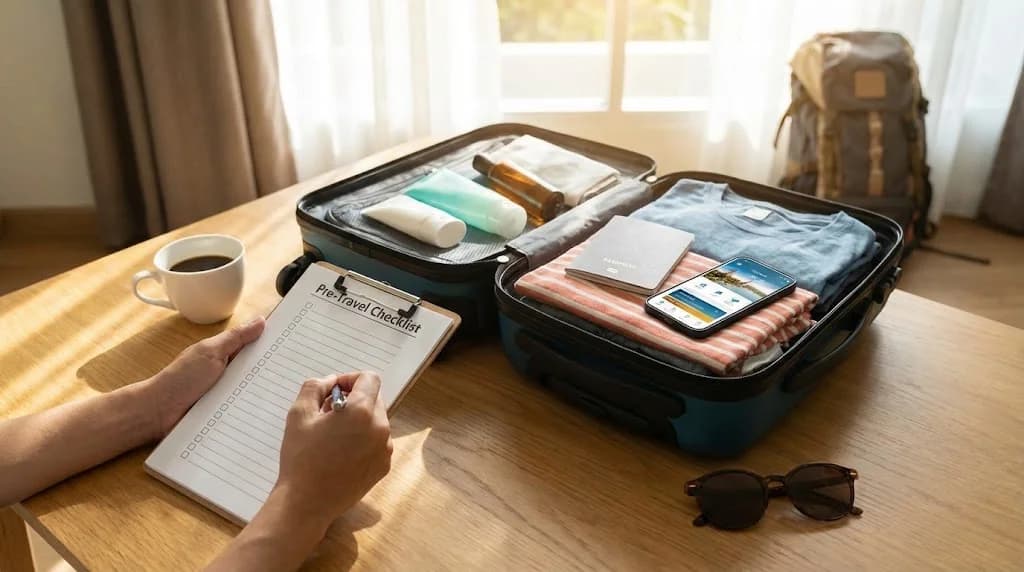
The exhilarating anticipation of a journey often comes with a subtle undercurrent of stress: the "did I forget something?" feeling as you head to the airport. This familiar pre-flight scramble, a frantic mental scan for passports, chargers, and confirmations, can easily overshadow the joy of impending adventure. A comprehensive pre-travel checklist transforms this anxiety into a ritual of confident preparation. It ensures all crucial logistics, from essential travel documents to staying connected while traveling, are sorted. This allows you to step onto your flight feeling completely prepared and ready to immerse yourself in the experience.
- Securing Your Travel Documents and Visas
- Organising Your Finances for Overseas Spending
- Arranging Your On-the-Go Connectivity
- Preparing Your Health and Safety Essentials
- Packing Smart: The Essentials and Beyond
- Digital Prep: Apps, Downloads, and Backups
- Home Sweet Home: Last-Minute Arrangements
- The Final Countdown: Airport Ready Checklist
- Frequently Asked Questions
Connect Globally with Cellesim eSIM
Stay connected in 200+ countries with instant setup. Join 50,000+ happy customers worldwide.
Get Your Global eSIMSecuring Your Travel Documents and Visas
Your journey begins long before you pack your first bag, specifically with your essential travel documents. This critical step ensures you have legal access to your destination and a smooth passage through immigration checkpoints.
Passport Validity and Renewals
Before booking any flights, confirm your passport's validity. Many countries require your passport to be valid for at least six months beyond your intended departure date. Check expiration dates well in advance, as passport renewals can take several weeks or even months. For example, applying for a new passport in the UK can take up to 10 weeks, according to Gov.uk.
Visa Requirements and Applications
Research visa requirements for your destination country and any transit points. Some nations offer visa-free entry, others require an Electronic Travel Authorisation (eTA), and many demand a traditional visa application. Start this process early, as visa processing times vary significantly. Ensure you have all necessary supporting documents, such as hotel bookings, flight itineraries, and proof of funds.
Digital and Physical Copies
Make digital copies of your passport, visa, flight tickets, and hotel reservations. Store these securely in a cloud service, email them to yourself, and leave copies with a trusted contact at home. Carry a physical photocopy of your passport and visa separately from your original documents. This precaution can be invaluable if your originals are lost or stolen.
Organising Your Finances for Overseas Spending
Managing your money effectively abroad prevents unexpected fees and ensures you have access to funds when needed. Financial preparation involves more than just exchanging currency; it includes strategising how you will pay, withdraw, and secure your money.
Notify Your Bank and Credit Card Companies
Before you depart, inform your bank and credit card providers of your travel dates and destinations. This prevents them from flagging your overseas transactions as suspicious and potentially freezing your cards. Inquire about foreign transaction fees and ATM withdrawal limits. Some banks offer travel cards with lower fees.
Currency Exchange and Budgeting
While relying on cards is convenient, having some local currency for immediate expenses upon arrival is often wise. Research the local currency exchange rates and consider exchanging a small amount before you fly, or withdraw from an ATM at your destination airport (often better rates than airport exchange kiosks). Develop a daily budget to manage your spending and track expenses during your trip.
Multiple Payment Methods
Avoid putting all your financial eggs in one basket. Carry a combination of credit cards, debit cards, and a small amount of cash in different locations. If one card is lost or stolen, you will have backup options.
Arranging Your On-the-Go Connectivity
Staying connected is no longer a luxury but a necessity for modern travellers. From navigating unfamiliar streets to staying in touch with loved ones, reliable internet access is crucial. This is where eSIM technology offers a significant advantage as a pre-travel essential.
Understanding Your Connectivity Options
Before you fly, evaluate how you will get online. The primary options include:
- International Roaming: Convenient but often the most expensive, with unpredictable charges. Many providers offer daily bundles, but costs add up quickly. Use the roaming savings calculator to see potential savings.
- Local Physical SIM Card: Requires purchasing a new SIM upon arrival, which means finding a store, dealing with activation, and potentially replacing your home SIM. This option also requires your device to be unlocked. Read our comparison on airport SIMs vs. eSIMs.
- Pocket Wi-Fi Device: A portable hotspot, but it's another device to carry, charge, and potentially rent or purchase.
- eSIM (Embedded SIM): A digital SIM profile that allows you to activate a local plan without a physical card. You can buy and install an eSIM for Italy, Indonesia, or any of Cellesim's 200+ covered countries from home, before your flight.
Why an eSIM is on Your Pre-Travel Checklist
An eSIM simplifies international connectivity dramatically. Here’s why it's an essential pre-flight consideration:
- Instant Activation: Purchase and activate your eSIM plan from Cellesim before you even leave home. You will have data the moment your plane lands.
- No Physical Swapping: Keep your primary SIM active for calls/texts, while using the eSIM for data. No fumbling with tiny cards or worrying about losing your home SIM.
- Cost-Effective: Cellesim offers competitive, transparent pricing, often significantly cheaper than traditional roaming charges. You know exactly what you are paying for.
- Wide Coverage: Cellesim provides eSIMs for over 200 countries, ensuring you can connect almost anywhere. Check how our network works for details.
Check if your device is eSIM compatible using our eSIM checker before purchasing. The setup guide is straightforward, making activation a breeze.
| Option | Setup Before Flight | Physical SIM Swap | Cost (Approx.) | Flexibility |
|---|---|---|---|---|
| Cellesim eSIM | Yes, Instant | No | Low, fixed plans | High (multiple plans) |
| International Roaming | Yes, automatic | No | High, variable | Low (carrier-dependent) |
| Local Physical SIM | No | Yes | Medium, fixed plans | Medium (local provider) |
Find Your Perfect eSIM Plan
Preparing Your Health and Safety Essentials
Prioritising your health and safety allows for peace of mind, knowing you are prepared for potential emergencies or unforeseen circumstances while abroad.
Travel Insurance
Never travel without comprehensive travel insurance. It covers medical emergencies, trip cancellations, lost luggage, and other unexpected events. Review your policy carefully to understand what is covered and any exclusions. Keep a copy of your policy documents, including emergency contact numbers, both digitally and physically.
Vaccinations and Medications
Consult your doctor or a travel clinic several weeks before your trip to discuss recommended vaccinations for your destination. Some vaccinations require multiple doses over a period. If you take prescription medications, ensure you have enough for your entire trip, plus a few extra days, and carry them in their original packaging with a copy of your prescription. Check if your medications are legal in your destination country; some common drugs are restricted overseas.
First Aid Kit and Emergency Contacts
Assemble a basic travel first aid kit with essentials like pain relievers, band-aids, antiseptic wipes, and any specific items you might need (e.g., allergy medication). Save emergency contact numbers (local authorities, your embassy/consulate, travel insurance, family) on your phone and write them down in a physical notebook.
"Being prepared with the right travel insurance and emergency contacts can turn a potential disaster into a minor inconvenience. It's an investment in peace of mind."
Packing Smart: The Essentials and Beyond
Efficient packing saves time, reduces stress, and avoids excess baggage fees. The goal is to bring everything you need without overpacking, adapting to your destination's climate and activities.
Review Airline Baggage Policies
Before you even think about what to pack, check your airline's baggage allowance for both carry-on and checked luggage. Pay attention to size, weight, and restricted items. Adhering to these rules prevents last-minute scrambling and unexpected fees at the airport. You can find detailed regulations on your airline's official website.
Clothing for Climate and Culture
Pack versatile clothing suitable for your destination's weather conditions and any cultural dress codes. Layering is often the most effective strategy for varying temperatures. Consider items that can be mixed and matched to create multiple outfits. Remember essentials like swimwear, activewear, or formal attire if your itinerary requires it.
Travel-Sized Toiletries and Adapters
Decant your liquids into travel-sized containers (under 100ml for carry-on) or opt for solid toiletries to save space and avoid leaks. Don't forget a universal travel adapter and voltage converter if needed, ensuring your electronics will work safely overseas. A portable power bank is also a lifesaver for keeping devices charged on the go.
Digital Prep: Apps, Downloads, and Backups
In the digital age, much of your pre-travel checklist involves preparing your devices and digital resources. These steps ensure you have access to information, entertainment, and communication, even when offline.
Essential Travel Apps
Download and familiarise yourself with crucial travel apps before you fly. This includes:
- Navigation: Google Maps, Apple Maps (download offline maps for your destination).
- Translation: Google Translate, DeepL (download offline language packs).
- Accommodation/Transport: Booking.com, Airbnb, Uber/local ride-sharing apps.
- Communication: WhatsApp, Signal, or other messaging apps for staying in touch.
- Airline App: For flight status, mobile boarding passes, and check-in.
Offline Content and Entertainment
Long flights, train rides, or unexpected delays are made more bearable with offline entertainment. Download movies, TV shows, music, podcasts, and e-books to your devices. This avoids reliance on potentially unreliable in-flight Wi-Fi or costly data usage. Ensure your device storage can handle these downloads.
Data Backups and Device Security
Back up all important data from your phone and laptop to a cloud service or external drive before your trip. This protects your memories and information in case a device is lost or damaged. Enable strong passcodes, face ID, or fingerprint authentication on all devices. Consider using a VPN for added security when connecting to public Wi-Fi networks abroad.
Home Sweet Home: Last-Minute Arrangements
While your focus is on your destination, ensuring everything is in order at home contributes to a stress-free departure and return. These arrangements prevent worries about your property or loved ones.
Pet and House Sitting Arrangements
If you have pets, confirm their care arrangements well in advance. Whether it's a pet sitter, boarding facility, or a friend, ensure all details are finalised. For your home, arrange for mail collection, plant watering, or house sitting if you will be away for an extended period. Consider informing a trusted neighbour about your absence.
Utility and Security Checks
Adjust your thermostat to an energy-saving setting, unplug unnecessary electronics to conserve energy and prevent potential surges, and turn off water to outdoor spigots. Double-check all windows and doors are locked. If you have a home security system, ensure it is armed and that emergency contacts are updated with your travel plans.
Inform Important Contacts
Share your itinerary with a close family member or friend who is not travelling with you. Provide them with copies of your passport, flight details, and emergency contacts. This person can be a crucial point of contact in an emergency.
The Final Countdown: Airport Ready Checklist
As departure day approaches, a final run-through of airport-specific tasks ensures a smooth transition from home to the aircraft. These are the immediate actions that streamline your airport experience.
Online Check-in and Boarding Passes
Utilise online check-in, typically available 24-48 hours before your flight. This saves time at the airport and often allows you to select your seat. Download your boarding pass to your phone's wallet or print a physical copy. Having both is a good backup.
Arrange Airport Transfers
Confirm your transport to and from the airport. Whether it is a pre-booked taxi, ride-share, public transport, or a friend dropping you off, ensure you have a clear plan and enough time to account for traffic or delays. For international travel, aim to arrive at the airport at least 3 hours before your scheduled departure.
Review Carry-On Essentials
Ensure your carry-on bag contains all immediate necessities: passport, wallet, phone, chargers, medications, a change of clothes, and any valuables. Keep liquids, gels, and aerosols in clear, resealable bags for security checks. Having essential items accessible will make your flight more comfortable and mitigate minor inconveniences.
"Being aware of airport security regulations, especially concerning liquids and prohibited items, is crucial for a hassle-free journey. Check official government guidelines for the latest updates."
For more detailed information on airport security and baggage, check official sources like government travel guidelines or your airline's website.
Ready for Seamless Connectivity?
Ensure your trip starts smoothly with Cellesim. Instant connection in 200+ countries.
Start Your Connected JourneyTrusted by 50,000+ travelers worldwide. 24/7 Support.
Frequently Asked Questions
When should I start preparing for an international trip?
Ideally, start your preparations at least 2-3 months before an international trip, especially for visa applications, passport renewals, and vaccinations. Some visas can take several weeks to process, and certain vaccinations require multiple doses over time. Early planning reduces stress significantly.
Is an eSIM really better than a local SIM card?
For many travelers, an eSIM offers greater convenience and flexibility. You can purchase and activate your Cellesim eSIM plan before you even leave home, landing with immediate data access. This avoids the hassle of finding a local SIM shop, dealing with language barriers, and physically swapping SIM cards upon arrival. An eSIM also allows you to keep your home SIM active for calls and texts.
How much data do I need for my trip?
Data needs vary, but a good estimate for light usage (maps, messaging, emails) is 1-2 GB per week. Moderate usage (some social media, occasional video streaming) might require 3-5 GB per week. Heavy users who stream a lot or tether other devices could need 10+ GB. Cellesim offers various plans to suit different data requirements. You can use a smart data calculator to estimate your needs.
What should I do if my passport is lost or stolen abroad?
If your passport is lost or stolen, immediately report it to the local police and obtain a police report. Then, contact your country's embassy or consulate for assistance in obtaining an emergency travel document or a replacement passport. Having photocopies (physical and digital) of your passport and visa will significantly expedite this process.
Should I carry cash or rely on credit cards when traveling?
It's advisable to carry a combination of both. Credit cards are convenient for larger purchases and offer fraud protection, but always inform your bank of your travel plans. Keep a small amount of local currency for taxis, tips, or small vendors who might not accept cards. Distribute your cash and cards in different secure locations to minimise risk.
How do I know if my phone is eSIM compatible?
Most newer smartphone models, including many iPhones, Samsung Galaxy, Google Pixel, and some Huawei devices, support eSIM technology. You can easily check if your specific device is compatible by visiting Cellesim's eSIM compatible devices page or using our dedicated eSIM checker on our website. This ensures you can seamlessly switch to an eSIM for your travels.