


Why Autumn Travel Demands a Smart Connectivity Plan
Autumn, for me, is the sweet spot. The throngs of summer tourists have receded, the air is crisp, and the landscapes put on a show that no Instagram filter could ever truly capture. But it's also a season of spontaneous drives, navigating winding country roads, and sometimes, finding yourself in charming but decidedly off-grid locales. This is precisely where a solid data plan isn't just a convenience, it's a necessity.
I've been caught out too many times, driving through the valleys of the Catskills in New York or exploring the remote corners of the Scottish Highlands, only to find my local SIM card gasping for a signal. Trying to find that quirky antique shop in Woodstock or that hidden pub in Plockton without GPS is a special kind of frustration, let me tell you. And don't even get me started on trying to confirm hotel bookings or check train times when you're reliant on dodgy café Wi-Fi. It's why I've become such a proponent of eSIMs for seasonal travel. They offer that critical flexibility when you're moving between areas with varying coverage, letting you swap plans or add data without the physical hassle.
The Shifting Landscape of Seasonal Connectivity
Gone are the days when a travel SIM was a physical hunt, often involving a lengthy wait at a small kiosk in a foreign airport, trying to decipher a data plan in a language you barely understood. I remember once, landing in Narita, Japan, and spending a solid hour trying to explain to a salesperson at the SoftBank counter that I needed a prepaid data SIM for my unlocked iPhone, not a two-year contract. It was a language barrier nightmare that ate into precious exploration time.
Now, with eSIMs, that entire headache is largely sidestepped. You can purchase and activate your plan before you even leave home, ensuring you have data the moment your plane touches down. This is particularly crucial for autumn travel, which often involves less predictable itineraries than a structured summer beach holiday. You might decide on a whim to extend your stay in a charming village or take a detour through a national park, and an eSIM allows you to adapt your data needs on the fly. No more hunting for a local convenience store to top up, which might be closed anyway if it's Sunday afternoon in a small European town.
Why a Reliable Connection is Non-Negotiable for Fall Adventures
Think about it, whether you're chasing the perfect crimson leaves in Vermont's Green Mountains or navigating the bustling streets of Munich during Oktoberfest, your phone is your lifeline. It's your map, your translator, your emergency contact, and your instant research tool for that obscure local delicacy. Losing signal can mean:
- Missing critical navigation: Ever tried to find that tiny, perfect B&B in Quebec's Eastern Townships (Bromont, specifically) when Apple Maps suddenly decides to go offline? It's not fun.
- Lost communication: Trying to coordinate with travel companions in a crowded European market, say the Naschmarkt in Vienna, without data is a recipe for getting separated.
- Security concerns: In unfamiliar territory, especially after dark, having a working phone to call a taxi or access emergency services is paramount. I've been in situations where I needed to call a local taxi service in a less-than-ideal part of Athens, and a dead phone was my biggest fear.
- Payment issues: Many places, from small-town bakeries in the Cotswolds to street food vendors in Krakow's Kazimierz district, increasingly rely on mobile payment systems. No data, no purchase.
For these reasons, selecting an eSIM that guarantees robust coverage, especially in areas known for natural beauty or large outdoor events, is paramount for a stress-free autumn journey. A little research upfront goes a long way, especially when you consider how easy it is to get an eSIM for the USA and have it ready before you even pack your bags.
North America's Fall Spectacle: New England & Canadian Rockies
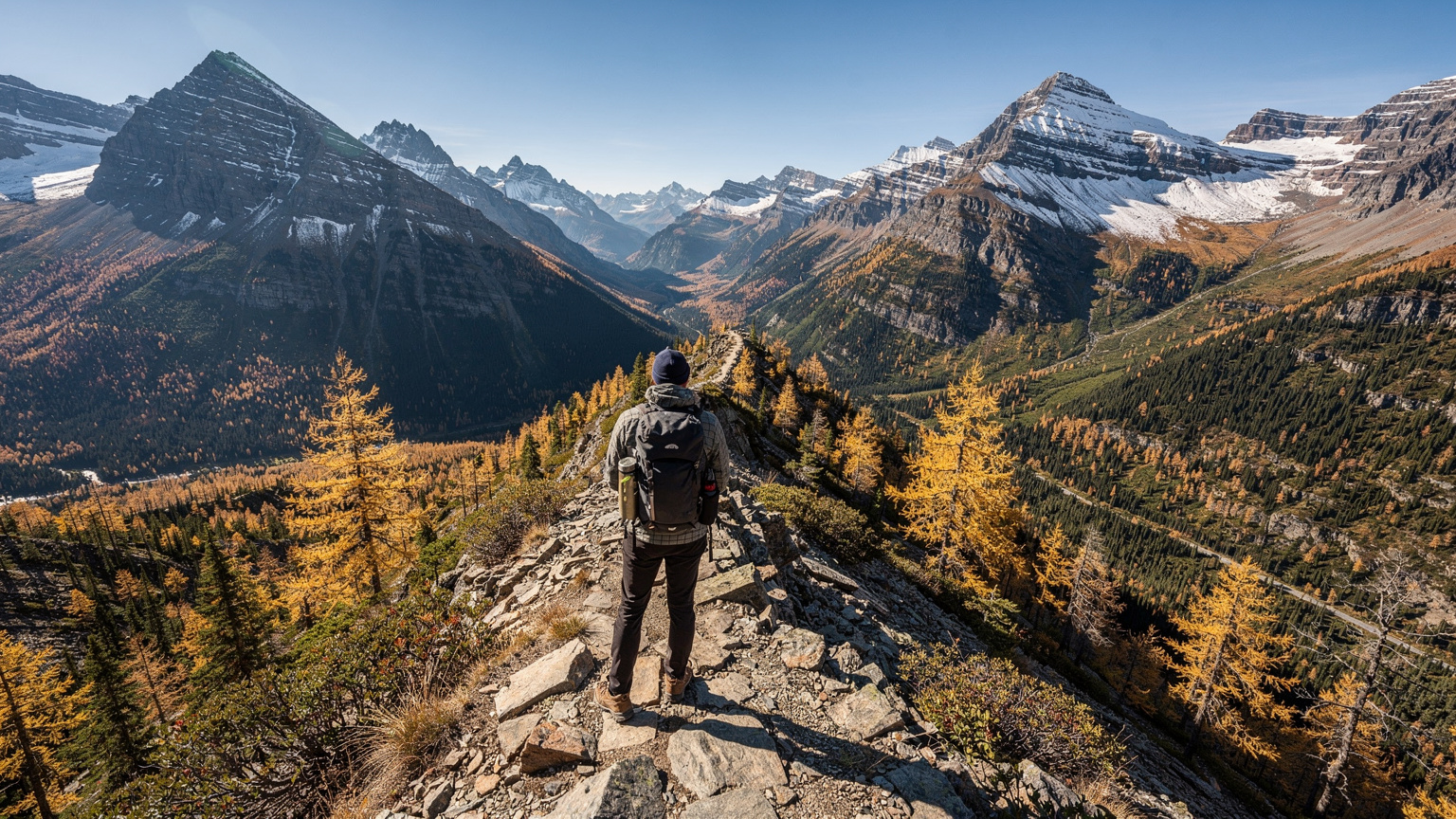
North America in autumn is, quite simply, breathtaking. From the fiery maples of New England to the golden larches of the Canadian Rockies, it's a photographer's dream and a road-tripper's paradise. But these majestic landscapes often come with patchy signal, especially once you venture off the main highways.
Chasing Foliage in New England: Connectivity on Scenic Byways
My first serious autumn foliage trip took me through Vermont, New Hampshire, and Maine. I was driving a beat-up rental, armed with a paper map, and a prayer. Back then, relying on a local SIM meant constantly checking coverage maps and often losing signal just as I was trying to find a picturesque covered bridge near Stowe, Vermont, or a cozy pub in Kennebunkport, Maine. Today, an eSIM makes this so much smoother.
For a seamless experience across New England's winding routes, you'll want an eSIM that partners with major US carriers like AT&T and T-Mobile. These providers have the most extensive coverage, even if they can't promise 5G in every remote corner of the White Mountains National Forest. Cellesim offers plans that leverage these networks, ensuring you have data for GPS, uploading those stunning photos, or checking the latest fall foliage reports (which are surprisingly detailed, by the way, often updated daily by local tourism boards from late September through mid-October).
| Carrier Partner | Typical Coverage Area (US) | Recommended For |
|---|---|---|
| AT&T | Strong in rural areas, national parks | Deep New England drives, mountain regions |
| T-Mobile | Excellent in towns, good highway coverage | Town-to-town travel, festival connectivity |
| Verizon | Dense urban and suburban, improving rural | Mixed city & countryside itineraries |
Remember, while major carriers have broad reach, specific areas like deep valleys or dense forests can still be tricky. Always download offline maps for your route in Google Maps or Maps.me, just in case. It's a habit I picked up after getting thoroughly lost in Acadia National Park years ago, and it's saved me more than once.
The Canadian Rockies in Autumn: From Banff to Jasper
Cross the border into Canada, and the Canadian Rockies present a different kind of autumn grandeur. The golden larches around Lake Louise and Moraine Lake in Banff National Park, usually peaking in late September, are truly spectacular. But once you head north towards Jasper, especially along the Icefields Parkway, cellular service becomes sparse to non-existent for long stretches.
For this region, a Canadian eSIM that roams on Bell or Telus is your best bet. Rogers is strong in urban centers, but Bell and Telus generally have better reach in the more remote, mountainous areas. I recall a trip where I had to pull over near Saskatchewan River Crossing to get a single bar on my phone, just to tell my family I was still alive. It was a pre-eSIM era, and I had a physical SIM from an urban provider that simply didn't cut it in the wilderness.
If you're planning an extensive trip through these national parks, consider a regional North American eSIM. These often bundle data for both the US and Canada, giving you seamless transitions without needing to switch plans at the border. The eSIM options for North America that Cellesim provides are usually multi-carrier, which means your phone will automatically connect to the strongest available signal, be it Bell or Telus.
Europe's Harvest & Cultural Festivals: Staying Connected
Europe in autumn is a tapestry of harvest festivals, wine celebrations, and cultural events. From Oktoberfest in Munich to smaller, regional truffle fairs in Italy, these events are vibrant, often crowded, and spread across various cities and towns. A reliable eSIM is crucial for navigating public transport, finding friends, and sharing your experiences.
Oktoberfest and German Beer Festivals: Navigating Crowds and Carriers
Munich's Oktoberfest, running from late September to early October, is an experience like no other. Millions descend upon the Theresienwiese, and while the atmosphere is electric, the sheer volume of people can strain local cell networks. I’ve seen phones struggle to get a signal during peak times, even with a local O2 or Telekom.de SIM.
For events like Oktoberfest, an eSIM that connects to multiple German carriers is invaluable. Cellesim’s regional Europe eSIMs typically leverage the networks of Deutsche Telekom, Vodafone, and O2, giving you the best chance of finding a robust signal even amidst the festivities. Being able to quickly pull up the MVV (Munich Transport and Tariff Association) app for tram and U-Bahn schedules, or use WhatsApp to find your friends in a sea of dirndls and lederhosen, is a game-changer.
| Festival/Region | Peak Season | Key Connectivity Needs |
|---|---|---|
| Oktoberfest, Munich (Germany) | Late Sept. to early Oct. | High-density crowd management, public transport apps |
| Bordeaux Wine Harvest (France) | Sept. to Oct. | Rural vineyard coverage, reservation apps |
| Alba White Truffle Fair (Italy) | Oct. to Nov. | Small town navigation, local vendor contact |
Frequently Asked Questions
What is the best eSIM for autumn foliage tours in New England?
For autumn foliage tours in New England, an eSIM that leverages major US carriers like AT&T and T-Mobile is recommended for the best coverage, especially on scenic rural routes. Cellesim offers plans that utilize these networks, providing reliable data for GPS and photo uploads.
Can I use an eSIM for Oktoberfest in Munich, Germany?
Yes, an eSIM is an excellent choice for Oktoberfest. A Cellesim Europe regional eSIM will connect to multiple German carriers, such as Deutsche Telekom, Vodafone, and O2, giving you a better chance of maintaining a strong signal amidst the large crowds at Theresienwiese for navigation and communication.
Do I need a special eSIM for the Canadian Rockies in autumn?
For the Canadian Rockies, where coverage can be sparse, choose an eSIM that partners with Bell or Telus, as these carriers generally offer the best reach in mountainous and remote areas. A North American regional eSIM often provides seamless data across both the US and Canada.
How much data should I get for a two-week autumn trip in Europe?
For a two-week autumn trip in Europe with moderate usage (daily navigation, social media, some photo uploads, light streaming), a 5-10 GB eSIM plan should suffice. If you plan heavy streaming, video calls, or tethering, consider a 15+ GB plan or one with easy top-up options.
What if my eSIM doesn't activate when I arrive?
If your eSIM doesn't activate, first ensure your device is unlocked and compatible. Then, check your phone's cellular settings to confirm the eSIM profile is enabled and APN settings are correct. If issues persist, contact Cellesim support, who can provide manual activation codes or troubleshoot network settings.
Is it better to get a single-country or regional eSIM for autumn travel?
The choice depends on your itinerary. If you're only visiting one country, a single-country eSIM is fine. However, for multi-country autumn trips, such as touring European harvest festivals across Germany, France, and Italy, a regional eSIM offers greater convenience and often better value by providing seamless connectivity across borders.
Wine Harvests and Culinary Trails in France & Italy
Beyond the beer tents, autumn in Europe is a gourmand's delight. Imagine driving through the rolling vineyards of Burgundy, France, or exploring the truffle-rich hills of Piedmont, Italy. These are regions where local charm often means less robust infrastructure. Many small vineyards or trattorias might not have Wi-Fi, making your phone data essential for making reservations or translating menus.
For exploring regions like the Barolo wine area in Piedmont, an eSIM that partners with carriers like Vodafone Italia or TIM is crucial. I once spent a frustrating afternoon in Barbaresco trying to confirm a tasting at a small family winery, only to discover my local SIM had no signal. A quick search with a reliable eSIM could have saved me a 45-minute drive. These multi-country eSIMs, like those designed for Europe or the Middle East, are perfect for this kind of flexible, cross-country exploration.
Beyond the Mainstream: Unexpected Autumn Gems
While everyone flocks to New England or Oktoberfest, there are countless other incredible autumn destinations that offer unique experiences and fewer crowds. These often require even more self-reliance, and a robust data plan becomes your best friend.
Japan's Koyo Season: Temples and Train Travel
Japan's autumn foliage, or 'koyo', is just as spectacular as its spring cherry blossoms. Kyoto's temples, like Kiyomizu-dera or Tofuku-ji, are transformed by fiery reds and golds, usually peaking in mid-November. The beauty is undeniable, but navigating the intricate train system (think JR East and Kyoto City Subway) and finding those hidden alleyway eateries requires constant connectivity.
For Japan, a dedicated Cellesim Japan eSIM is a smart choice. It usually connects to NTT Docomo or SoftBank, which offer excellent coverage even on bullet trains. I've personally used these on the Shinkansen from Tokyo to Kyoto, and the signal was strong enough to stream video the whole way. Just make sure your iPhone 15 is eSIM-ready and you've got your plan activated before you land. Nothing worse than arriving at Narita and realizing your phone is a brick.

Australia's Alpine High Country: Autumn in the Southern Hemisphere
While most think of Australia for its beaches, the country's alpine regions, particularly Victoria's High Country and parts of New South Wales, offer a stunning autumn display. From April to May, towns like Bright in Victoria become a kaleidoscope of European trees. This is prime hiking and cycling territory, and reliable data is crucial for safety and navigation.
Coverage in these more remote Australian regions can be challenging. Opt for an eSIM that leverages Telstra's network, as it generally has the widest rural coverage in Australia. Vodafone and Optus are strong in urban areas, but Telstra often reaches further into the bush. I once tried to rely on a cheap Optus prepaid SIM while exploring the Blue Mountains, and I quickly learned my lesson about national park connectivity. Don't make my mistake.
Choosing the Right eSIM for Your Autumn Adventure
With so many eSIM options available, picking the right one can feel daunting. But by considering a few key factors, you can ensure you have seamless data throughout your autumn travels.
Data Volume: How Much Do You Really Need?
This is where I see most travelers either overspend or underspend. Are you just checking emails and maps, or are you uploading high-resolution videos of every changing leaf? My rule of thumb for a 7-10 day trip where I'm actively using my phone for navigation, social media, and some streaming:
- Light User (1-3 GB): Occasional maps, messaging, email. Good for short city breaks.
- Moderate User (5-10 GB): Daily navigation, social media, some photo uploads, light streaming. Ideal for road trips with Wi-Fi at hotels.
- Heavy User (15+ GB): Constant social media, video calls, heavy photo/video uploads, streaming, tethering to a laptop. Essential for digital nomads or those without consistent Wi-Fi access. (If you're wondering how much you can save, I detailed my experience saving hundreds on data in Bangkok).
Remember, Cellesim plans often come with a free VPN, which is great for security but can sometimes consume a bit more data. Factor that in if you plan on heavy VPN usage.
Regional vs. Single-Country eSIMs: Which is Best?
This depends entirely on your itinerary. If you're focusing solely on New England, a US-specific eSIM is fine. But if your autumn trip involves hopping between, say, Germany, Austria, and the Czech Republic for various harvest festivals, a regional Europe eSIM is almost always the more cost-effective and convenient choice.
Regional eSIMs eliminate the hassle of buying a new plan every time you cross a border. I learned this the hard way trying to manage separate SIMs for Italy, Switzerland, and France on a road trip through the Alps. Each border crossing meant fiddling with tiny SIM cards, which often led to losing one or activating the wrong one. eSIMs simplify this significantly.
Validity Period: Matching Your Itinerary
Most eSIMs come with validity periods ranging from 7 days to 30 days or even longer. Choose a plan that comfortably covers your entire trip, plus a day or two buffer. There's nothing worse than running out of data on your last day, trying to find your flight details at the airport. Many plans offer extensions or top-ups, but it's always better to start with enough.
My Personal eSIM Activation Checklist, Because It Happens
As Cellesim's Technical Support Lead, I've seen it all. From