Why an eSIM is Your Best Bet for Central Asia
I still remember landing in Almaty, Kazakhstan, after a really long flight. I was exhausted. My first task? Get a local SIM card. But the kiosk at the airport arrivals had closed early at 8 PM. Suddenly, my plan to get a ride-share to my hostel in the Zhetysu district vanished. No data, no calls, just me staring blankly at my phone. It's a travel nightmare I want to avoid, especially in a region where every connection matters and language barriers can turn simple tasks into a huge production.
This is exactly why an eSIM isn't just nice to have for Central Asia, it's essential. The days of hunting for SIM card vendors in unfamiliar cities, trying to figure out local registration rules, or panicking about losing a tiny physical chip are over. An eSIM, or embedded SIM, lives right inside your phone, letting you download data plans digitally. It's a total game-changer, especially when you're hopping between countries like Uzbekistan, Kyrgyzstan, and Tajikistan.
The Hassle Factor: Physical SIMs Versus eSIMs
Let's be real, the fun of travel often gets interrupted by annoying chores. Finding a working phone plan is a big one. In Central Asia, that could mean a smooth purchase at a Beeline or Kcell store in a big city like Bishkek, or a confusing conversation in a dusty village shop near the Wakhan Corridor. I once spent an hour trying to explain, using hand gestures and a translation app, that I just needed a data plan, not a monthly contract. With an eSIM, those moments are history.
Beyond the immediate convenience, understanding how an eSIM works makes travel so much easier. It's basically a digital profile you activate, usually with a quick QR code scan, so your phone connects to local networks. This means you can keep your regular SIM active for important calls or texts, while your eSIM handles all your data needs. Think looking up the Hazrat Imam Complex's opening hours in Tashkent (usually 9 AM to 7 PM) or checking bus routes for Bishkek's 'marshrutkas.'
Cost Savings Over Traditional Roaming
Roaming. Just hearing the word makes me cringe. I once got a bill for a week in Europe that included an hour of data use, costing enough to buy another plane ticket. Central Asia's local carriers offer much cheaper rates than your home provider's international roaming. An eSIM perfectly bridges this gap, giving you those local rates without the legwork of a physical SIM.
Imagine scrolling through Instagram, uploading a stunning photo from Ala-Archa National Park, or finding your way through Bukhara's Old City, all without worrying about a massive bill. With a regional Central Asia eSIM, you're essentially buying local data bundles for a fraction of what your home carrier would charge. This is especially true if you're with a big provider like T-Mobile, where their own eSIM activation process is usually simple, but international roaming can still be pricey.
Understanding Central Asia's Connectivity Landscape
Central Asia is huge, and internet access, much like its landscapes, can be all over the place. You'll find modern, fast fiber-optic speeds in Astana's business district, but then spotty 3G that might occasionally appear in a remote village along the Pamir Highway. Knowing what to expect is half the battle.

Major Carriers and Network Coverage by Country
Each Central Asian country has its main providers. In Kazakhstan, you'll mostly see Beeline, Kcell, and Tele2/Altel. Kyrgyzstan relies heavily on Beeline and MegaCom. Uzbekistan has Ucell, Mobiuz, and Uztelecom as its top players, while Tajikistan's market is dominated by Tcell, Megafon Tajikistan, and Babilon-T. These carriers generally offer 4G LTE in major cities and along main roads, with 5G slowly rolling out in specific urban centers like Tashkent and Almaty. But once you get to rural areas, especially mountains or vast steppes, expect speeds to drop to 3G or even GPRS. That's fine for emails or messages, but don't plan on streaming Netflix while crossing the steppe in a shared taxi.
| Country | Primary Carriers | Typical Urban Coverage | Rural/Remote Coverage |
|---|---|---|---|
| Kazakhstan | Beeline, Kcell, Tele2/Altel | Strong 4G LTE, some 5G in Astana/Almaty | 3G, patchy 2G |
| Kyrgyzstan | Beeline, MegaCom | Good 4G LTE in Bishkek/Osh | Variable 3G, limited 2G |
| Uzbekistan | Ucell, Mobiuz, Uztelecom | Strong 4G LTE, growing 5G in Tashkent/Samarkand | 3G, improving |
| Tajikistan | Tcell, Megafon Tajikistan, Babilon-T | Decent 4G LTE in Dushanbe/Khujand | Patchy 3G, very limited in Pamir |
Wi-Fi Availability and Reliability
While your eSIM will be your main internet source, Wi-Fi is available, particularly in bigger cities. Most hotels, guesthouses, and increasingly, cafes and restaurants offer free Wi-Fi. Just don't expect super-fast speeds everywhere. In a charming teahouse in Khiva, I found the Wi-Fi good enough for messaging, but video calls were a struggle. Connection quality can be inconsistent, and public Wi-Fi networks often have security risks, making them less ideal for things like online banking. For dependable, secure internet, your eSIM is crucial, especially if you're a digital nomad with a laptop needing constant connection.
Common Data Challenges and How eSIMs Solve Them
Beyond the technical side, Central Asia presents unique data challenges. During Navruz, the spring festival, network congestion can be surprisingly high in places like the Registan Square in Samarkand, with everyone uploading celebration photos. Or, consider the bureaucratic hurdles, like the time I spent hours trying to register a local SIM card in Tajikistan, only to be told I needed a letter from my hostel owner and a blood sample (okay, maybe not the last one, but it felt that way). An eSIM bypasses almost all of this. You buy, you activate, you connect. It's that simple, leaving you more time to haggle for a carpet in the Chor-Su Bazaar in Tashkent, or enjoy a bowl of laghman in Osh.
Choosing the Right eSIM for Your Silk Road Adventure
With so many eSIM providers out there, picking the right one can feel a bit like choosing the right camel for a desert crossing: it can make or break your trip (though with much less risk, thankfully). For Central Asia, you'll want a provider that offers good regional coverage and flexible data plans.
Regional eSIM Plans Versus Single-Country Options
If your trip involves multiple countries, a regional eSIM plan is almost always the smarter move. Hopping from Kazakhstan to Kyrgyzstan to Uzbekistan would otherwise mean buying and activating three separate local SIMs. A regional plan means one purchase, one activation, and continuous internet as you cross borders. This is incredibly helpful when you're on a long shared taxi ride from Khujand to Dushanbe, the Tajik capital, and don't want to lose connection mid-journey.
However, if you're spending a long time, say a month or more, in just one country, like really exploring Uzbekistan, a single-country eSIM might give you slightly better value in terms of data volume or speed. This is often because they partner more closely with a specific local carrier like Ucell. Always compare the per-gigabyte cost and the network partners before you commit.
| Plan Type | Best For | Pros | Cons |
|---|---|---|---|
| Regional eSIM (e.g., Cellesim Central Asia) | Multi-country trips (Kazakhstan, Kyrgyzstan, Uzbekistan, Tajikistan) | Seamless border crossing, single purchase, wide coverage | Potentially slightly higher per-GB cost than local SIMs, some minor speed variations |
| Single-Country eSIM | Long stays in one specific country (e.g., a month in Uzbekistan) | Potentially lower per-GB cost, optimized local network access | Requires new eSIM for each country, less convenient for multi-country itineraries |
Data Volume and Validity Periods
Think about how much data you actually use. Are you a heavy streamer, or mostly using data for maps, messaging, and occasional social media? Plans usually come in different data packages, from 1GB to 20GB or more, with validity periods from 7 to 30 days. For a typical two-week trip with several cities and some excursions, I usually find 5-10GB is plenty, especially if I also use hotel Wi-Fi. It's always better to get a bit more data than you think you'll need, as topping up can sometimes be more expensive than buying a larger package upfront.
Evaluating eSIM Providers for Central Asia
When picking an eSIM provider, look for a few key things:
- Network Partners: Do they work with the major, reliable carriers in each country you're visiting? For example, Cellesim uses the strongest local networks, so you're not stuck with a slow connection.
- Customer Support: Good customer support, ideally 24/7, is a lifesaver, especially if you have activation problems or need to top up quickly.
- Reviews: Check recent reviews from other travelers. Are people consistently getting good coverage and speeds?
- Pricing Transparency: Are there hidden fees? Is the price clear from the start?
Remember, a good eSIM provider should make your journey easier, not harder. You're there to see ancient caravanserai, not struggle with your phone.
Activating Your eSIM, A Step-by-Step Guide
One of the best things about an eSIM is how simple it is to activate. It's usually faster and less error-prone than dealing with a physical SIM. Here’s how it typically works, whether you're getting ready at home or just landed at Manas International Airport in Bishkek (and managed to grab a decent coffee near baggage claim).
Before You Depart: Preparation is Key
- Check Device Compatibility: Make sure your smartphone supports eSIMs and is unlocked. Most newer iPhones (XS and later) and Android flagships work with eSIMs. Don't just assume, double-check your model specs.
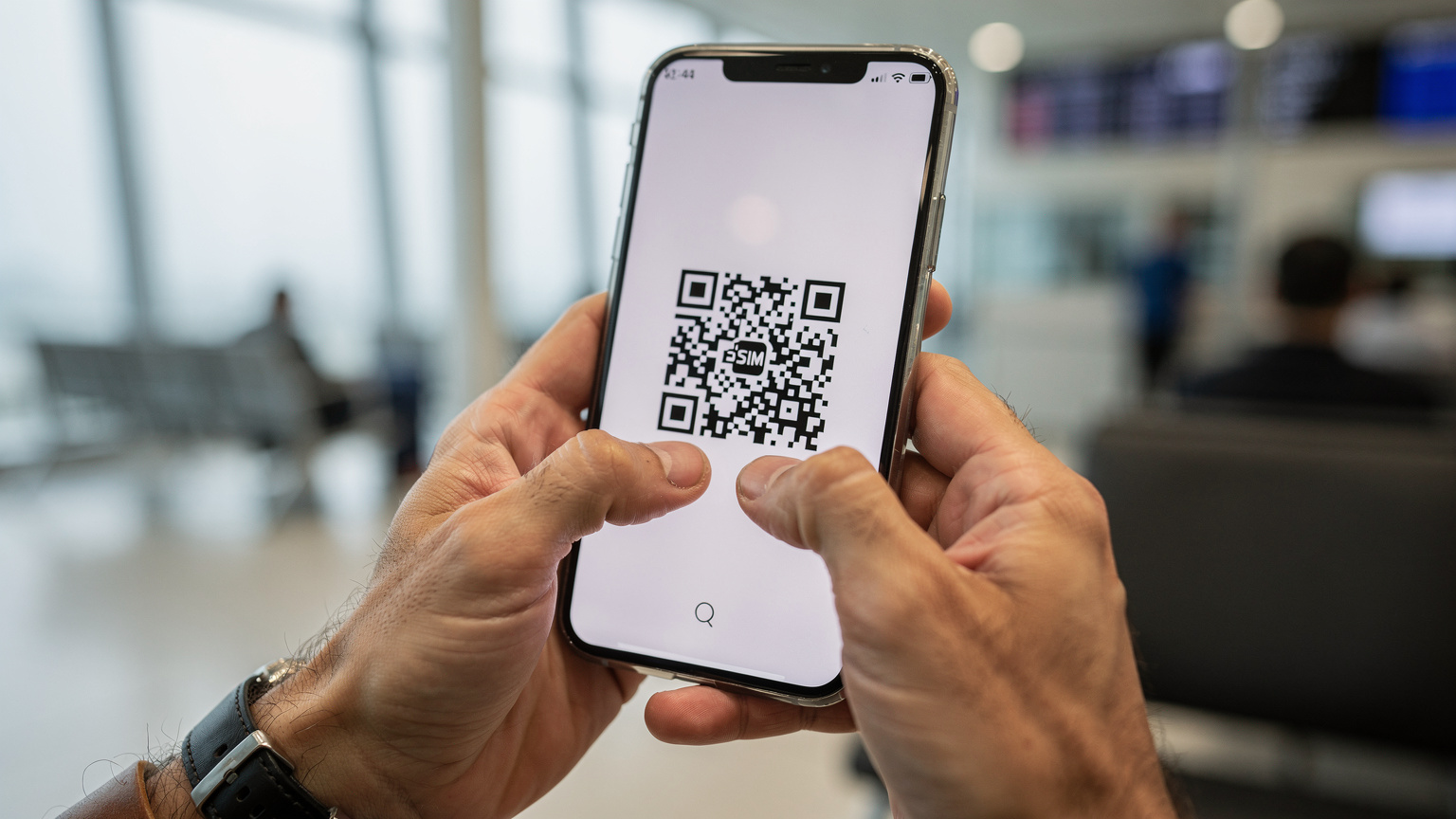
- Purchase Your eSIM Plan: Pick your regional or single-country Central Asia eSIM plan from Cellesim. You'll usually get a QR code and detailed instructions in your email.
- Download the Cellesim App (Optional but Recommended): Many eSIM providers have their own apps that make managing your plan, tracking data, and topping up much easier.
- Ensure Stable Wi-Fi: Before you try to activate, make sure you have a strong, reliable Wi-Fi connection. This is vital for downloading the eSIM profile. Trying to activate in a spotty airport zone will only lead to frustration.
On Arrival or When Ready to Activate
- Scan the QR Code: Go to your phone's settings (usually 'Cellular' or 'Mobile Data'). Look for an option to 'Add Cellular Plan' or 'Add eSIM'. You'll then be asked to scan the QR code Cellesim sent you.
- Follow On-Screen Prompts: Your phone will guide you through the rest. This usually involves naming your new eSIM (like 'Central Asia Data') and setting it as your main line for mobile data. Keep your home SIM active for calls and texts if you need to.
- Enable Data Roaming (for eSIM): This might sound strange since you're trying to avoid roaming charges, but for an eSIM to connect to local partner networks, data roaming needs to be turned on for that specific eSIM profile. Your home SIM's data roaming should stay OFF to prevent surprise bills.
- Test Your Connection: Once activated, try opening a browser or a messaging app. If it works, you're all set! If not, restart your phone and double-check your settings. Customer support is always there if you hit a snag.
Troubleshooting Common Activation Issues
Sometimes things don't go exactly as planned. I've had my share of 'no service' moments, usually from a simple mistake. Here are some common problems and how to fix them:
- No Service After Activation: Make sure 'Data Roaming' is on for your eSIM profile and off for your primary SIM. Also, check your phone's APN settings, though most eSIMs set this up automatically.
- QR Code Not Scanning: Ensure the QR code is well-lit and not blurry. You can also try entering the SM-DP+ Address and Activation Code manually, which are usually provided with the QR code.
- Phone Not eSIM Compatible: This is a hard stop. If your device isn't compatible, an eSIM simply won't work. That's why checking beforehand is so important.
Don't hesitate to contact Cellesim's customer support if you're truly stuck. They're there to help you get connected, so you can focus on finding that perfect pilaf in the Dehqon Bazaar in Khujand.
Optimising Your eSIM Usage and Data Management
You've got your eSIM, you're connected. Now, how do you make sure your data lasts and you're not constantly topping up? It's all about smart usage, especially when your phone is your navigator, translator, and communicator across countries.
Tips for Extending Your Data Plan
Data can disappear faster than a plate of samsa at a roadside cafe. Here are my go-to methods for making every megabyte count:
- Download Offline Maps: Before you head out, download Google Maps or Maps.me for the areas you'll visit. This is a lifesaver where connections are spotty and saves a ton of data. I constantly use offline maps when exploring the ancient streets of the Ichan Kala in Khiva.
- Use Wi-Fi Whenever Possible: When you're at your hotel, guesthouse, or a reliable cafe, switch to Wi-Fi for data-heavy tasks like uploading photos, video calls, or downloading updates.
- Disable Background App Refresh: Many apps refresh in the background, eating up data without you knowing. Turn this off for non-essential apps in your phone settings.
- Limit Streaming: Streaming video and music uses a lot of data. Save these for Wi-Fi zones or download content before you go.
- Monitor Data Usage: Regularly check your data usage through your phone's settings or the Cellesim app. This helps you understand what you're using and adjust as needed.
Managing Multiple eSIMs for Extended Travels
For truly epic journeys, say, a multi-month trip from the Caspian Sea to the Chinese border, you might find yourself juggling a few eSIMs. Your phone can store several eSIM profiles, but usually only one or two can be active at the same time (depending on your device). For example, I might have a regional Central Asia eSIM active, and a separate one for Europe if I'm transiting through Istanbul. This offers incredible flexibility.
When I was traveling through Turkey and then into the Caucasus, I used one eSIM for Europe, which included Turkey, and then switched to a different one for Georgia and Armenia. This smooth transition is where eSIMs really shine, preventing those frustrating dead zones at borders. Just remember to label them clearly in your phone's settings!
Topping Up and Purchasing Additional Data
If you find yourself running low on data, topping up your Cellesim eSIM is usually a breeze. Most providers let you buy additional data bundles right through their app or website. It's often instant, meaning you won't be without internet for long, even if you underestimated how much data you'd use trying to find the perfect ceramic workshop in Rishtan, Uzbekistan.
Real-World Connectivity Stories from the Silk Road
The Silk Road isn't just a historical route; it's a vibrant network of cultures, landscapes, and experiences. And like any modern trip, it comes with its own connectivity quirks and triumphs.

Navigating the Bazaars and Ancient Cities
Picture this: I'm deep in the labyrinthine alleys of Bukhara's Old City, specifically near the Lyab-i Hauz complex, trying to find a specific artisan's workshop for suzani embroidery. My paper map is useless, and my sense of direction has completely abandoned me. My eSIM, however, is pulling up precise GPS coordinates, guiding me past spice stalls and teahouses, and letting me use Google Translate to ask for directions from a friendly local. Without that connection, I'd still be lost, probably admiring the wrong minaret.
In Tashkent, especially around Amir Timur Square, I rely on my eSIM for ride-sharing apps like Yandex Go, which is Central Asia's answer to Uber. The convenience of calling a car with a few taps, rather than haggling with taxi drivers, is invaluable. This is particularly true when you're trying to reach the Uzbek State Museum of Applied Arts before it closes at 5 PM.
Mountain Passes and Remote Landscapes
My most memorable connectivity challenge happened while trekking in Tajikistan's Fann Mountains. As expected, cell service was nonexistent for long stretches. But as we descended into the Haft-Kul (Seven Lakes) area, a faint 3G signal flickered to life. My eSIM, using a Tcell tower, let me send a quick 'all clear' message to family and upload a single, breathtaking photo of Lake Marguzor. It wasn't blazing fast internet, but it was enough to let people know I was safe and share an incredible moment. These are the times when a multi-carrier eSIM's reliability truly shines, giving you peace of mind even when you're far from civilization.
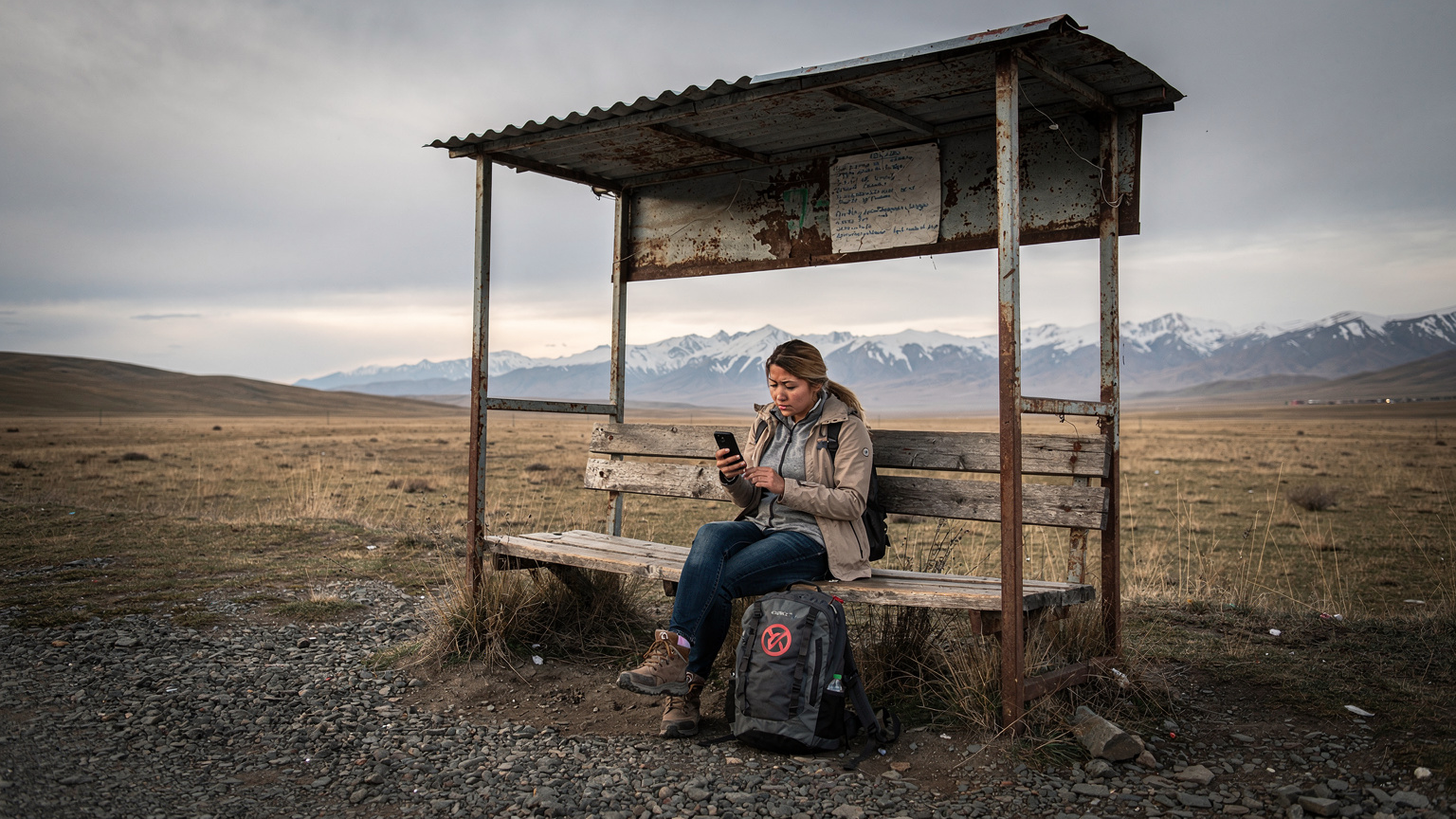
Staying Connected on Long Journeys, The Train Factor
Long train journeys are a classic Central Asian experience, whether it's the overnight train from Almaty to Astana, run by Kazakhstan Temir Zholy, or the fast Afrosiyob train from Tashkent to Samarkand. While some trains offer onboard Wi-Fi, it's often slow, unreliable, and expensive. My eSIM kept me connected, letting me track our progress, read e-books, and even do some light work. There's nothing quite like watching the steppe go by, all while knowing you're still connected to the wider world if you need to be.
"Central Asia rewards the prepared traveler. An eSIM isn't just about data, it's about flexibility, peace of mind, and more moments spent truly experiencing the destination, not wrestling with tech."
FAQ, Your Central Asia eSIM Questions Answered
What is an eSIM and how does it work for travelers?
An eSIM is a digital SIM card built right into your phone. For travelers, it means you can buy and activate a data plan from a local or regional provider without needing a physical SIM card. You usually scan a QR code, and your phone connects to the network, giving you data access almost immediately upon arrival.
Will my phone work with an eSIM in Central Asia?
Most newer smartphones, including iPhone XS and later models, plus many Samsung Galaxy, Google Pixel, and other top Android devices, are eSIM compatible. Your phone also needs to be unlocked by your home carrier. You should always check your specific device model's specifications before buying an eSIM plan.
Can I keep my original phone number with an eSIM?
Yes, absolutely. One of the big perks of an eSIM is that you can keep your main physical SIM card active, so you can still get calls and texts on your usual number. You'll simply set your eSIM as the primary line for mobile data, which means you get affordable local rates for internet use while traveling.
What are the main advantages of using an eSIM over a physical SIM in Central Asia?
The biggest advantages include instant activation, avoiding language barriers at local stores, not having to swap tiny physical cards, and generally more flexible multi-country plans. It also means you won't risk losing your home SIM. For a region like Central Asia with varied connectivity options, an eSIM simplifies the whole process significantly.
How much data do I need for a two-week trip to Central Asia?
For a two-week trip, a data plan between 5GB and 10GB is usually enough for most travelers. This covers regular use of maps, messaging apps, social media, email, and occasional browsing. If you plan to stream a lot of video or work extensively, consider a larger plan or rely more on Wi-Fi in your accommodation.
Is data roaming safe to enable for my eSIM in Central Asia?
Yes, for your eSIM profile, you typically need to turn on data roaming. This allows the eSIM to connect to the partner networks in Central Asian countries. Just make sure data roaming is turned off for your primary home SIM to avoid expensive charges from your domestic carrier.
Final Thoughts on Your Central Asian Journey
Central Asia is a region that will amaze your senses, broaden your horizons, and give you stories to tell for a lifetime. From the intricate tilework of Samarkand's Bibi-Khanym Mosque to the raw beauty of Kyrgyzstan's Jyrgalan Valley, there's a new discovery around every corner. As an experienced traveler, my top piece of advice is always to smooth out any potential headaches, and these days, internet access is a big one.
An eSIM isn't just about having data; it's about making your journey easier. It means you can easily find that hidden chaihana in Khiva's old quarter, quickly translate a menu in a busy Osh bazaar, or simply share a stunning sunset photo from the Pamir Highway with loved ones back home. It removes the guesswork and the frustration, letting you truly soak in the magic of the Silk Road.
So, as you plan your 2026 adventure, put a Central Asia eSIM at the top of your packing list. It's a small detail that makes a huge difference, making sure your focus stays on the incredible experiences around you, not on finding a tiny plastic chip in a foreign land. Happy travels, and may your connection be as smooth as silk itself.
Frequently Asked Questions
What is an eSIM and how does it work for travelers?
An eSIM is a digital SIM card embedded directly into your phone. For travelers, it means you can purchase and activate a data plan from a local or regional provider without needing a physical SIM card. You typically scan a QR code, and your phone connects to the network, allowing you to have data access almost instantly upon arrival.
Will my phone work with an eSIM in Central Asia?
Most modern smartphones, including iPhone XS and newer models, as well as many Samsung Galaxy, Google Pixel, and other flagship Android devices, are eSIM compatible. Your phone also needs to be unlocked by your home carrier. You should always check your specific device model's specifications before purchasing an eSIM plan.
Can I keep my original phone number with an eSIM?
Yes, absolutely. One of the main benefits of an eSIM is that you can keep your primary physical SIM card active, allowing you to receive calls and texts on your usual number. You'll simply set your eSIM as the primary line for mobile data, ensuring you get affordable local rates for internet usage while traveling.
What are the main advantages of using an eSIM over a physical SIM in Central Asia?
The primary advantages include instant activation, avoiding language barriers at local shops, not having to swap tiny physical cards, and typically more flexible multi-country plans. It also prevents the risk of losing your home SIM. For a region like Central Asia with diverse connectivity options, an eSIM streamlines the entire process significantly.
How much data do I need for a two-week trip to Central Asia?
For a two-week trip, a data plan between 5GB and 10GB is usually sufficient for most travelers. This allows for regular use of maps, messaging apps, social media, email, and occasional browsing. If you plan to stream a lot of video or work extensively, consider a larger plan or rely more on Wi-Fi in your accommodation.
Is data roaming safe to enable for my eSIM in Central Asia?
Yes, for your eSIM profile, you generally need to enable data roaming. This allows the eSIM to connect to the partner networks in Central Asian countries. Just be sure that data roaming is disabled for your primary home SIM to avoid incurring expensive charges from your domestic carrier.