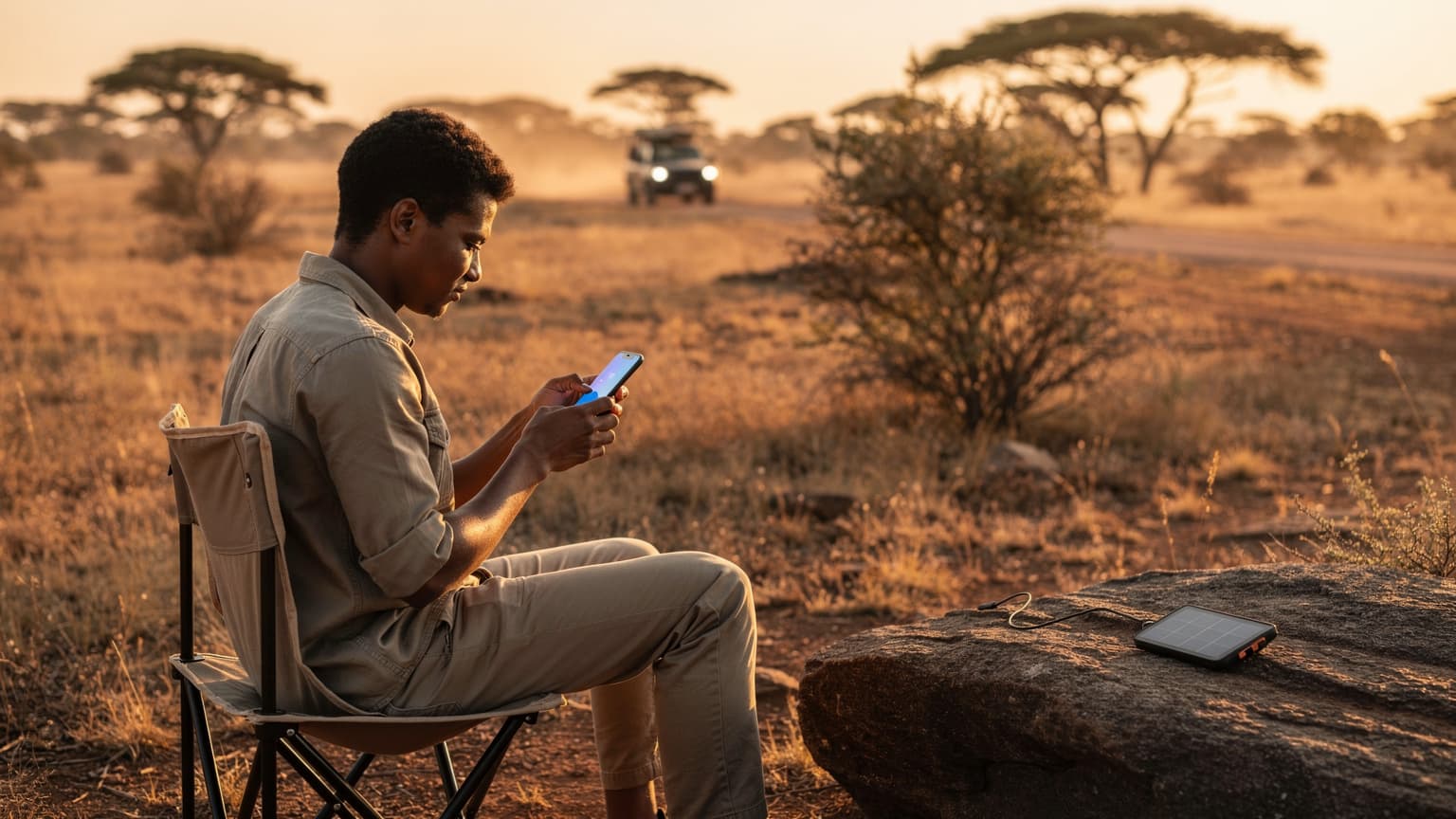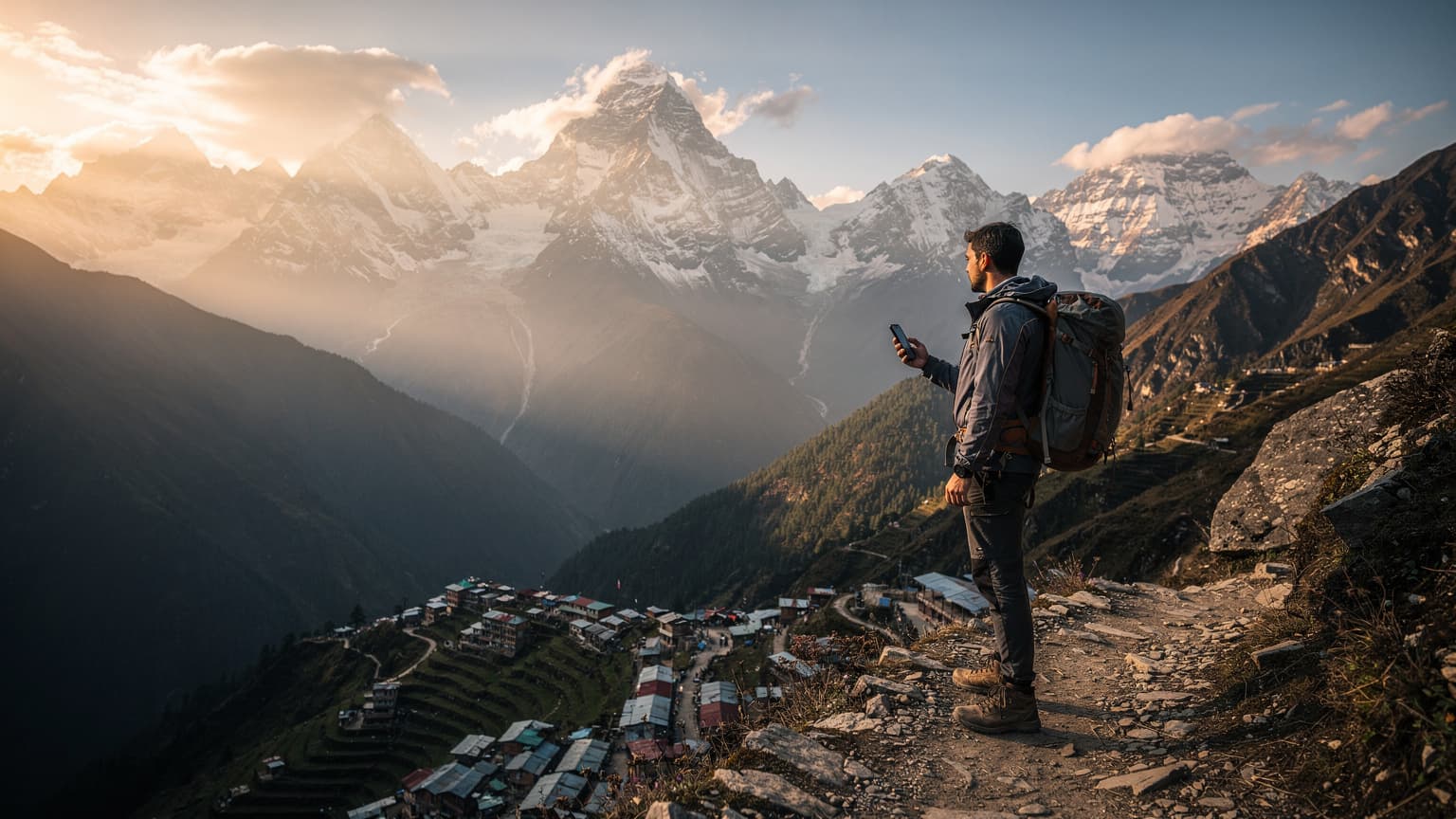
Why eSIMs Are Non-Negotiable in Central Asia
Look, I've been on the road for four years, and if there's one thing I've learned, it's that reliable internet isn't a luxury, it's the foundation of everything, especially in places like Central Asia. This isn't Bali, where you can practically trip over free Wi-Fi. The Silk Road countries, while incredible, present unique connectivity challenges. You’re often crossing borders every few weeks, sometimes by overnight train or shared taxi, and the last thing you want is to be hunting for a local SIM card vender at 2 AM in a dusty border town.
eSIMs simplify this mess. No more fumbling with tiny trays, no more language barriers trying to explain what a 'data-only plan' means. You activate it before you even leave home, or with a stable Wi-Fi connection at your first guesthouse. This is particularly critical for those of us who rely on stable internet for work, Zoom calls with clients back home, or even just checking Google Maps when your marshrutka driver takes an unexpected detour. Believe me, you don't want to be offline when that happens. The flexibility to switch between plans or top up on the fly is what makes them a non-negotiable for me.
The Pain of Physical SIM Cards: A Personal History
My first trip through Southeast Asia taught me this lesson the hard way. I spent hours in Bangkok airport, then again in Chiang Mai, trying to get a local SIM. Then in Vietnam, the process was entirely different, requiring passport copies and sometimes even a photo. In India, you need an Aadhaar card for many services, which is pretty much impossible for tourists to get, making local SIMs a nightmare. Thankfully, that's not the case across Central Asia, but the principle holds: why waste precious travel time on bureaucracy if you don't have to? An eSIM streamlines your arrival, letting you focus on finding your hostel and a good plov.
Border-Hopping Made Easy: Seamless Transitions
Central Asia is all about the multi-country journey: Kazakhstan to Kyrgyzstan, then maybe Uzbekistan. Each border crossing traditionally meant a new SIM card. With a multi-country eSIM plan, you just keep going. It’s the difference between arriving in Bishkek and instantly ordering a Yandex Taxi, or spending an hour trying to find a Kcell or Beeline shop that's actually open and has someone who speaks English. Given some of the remote border posts, often a Wi-Fi signal is hard to come by, and having data from the moment you cross is a sanity saver. The eSIM for Middle East Travel 2026: Multi-Country Plans for Seamless Data post covers similar issues, showing how regional plans cut down on constant admin.
Central Asia eSIM Coverage: The Good, The Bad, The Patchy
Let's be real: Central Asia isn't Silicon Valley when it comes to network infrastructure. Coverage varies wildly. In major cities like Almaty, Tashkent, or Bishkek, you'll generally get decent 4G, sometimes even 5G. Venture out to the Fann Mountains in Tajikistan or the remote steppes of Kazakhstan, and you're going to be looking at GPRS, if anything. This is where managing expectations comes in.
However, Cellesim partners with the strongest local providers, meaning you're almost always getting the best available network in any given area. It's not magic, but it's the best possible scenario. I've used it myself on multiple trips, and while I definitely had dead zones on long bus rides, I was always connected in towns, which is what truly matters for booking accommodation or checking bank balances.

Kazakhstan: Almaty and Beyond
Kazakhstan's major cities, especially Almaty and Nur-Sultan (Astana), have surprisingly robust 4G and growing 5G coverage. Providers like Kcell and Beeline dominate. In Almaty, I regularly worked from the 'Coworking and Business Hub' on Dostyk Avenue, getting solid speeds (around 50-70 Mbps download) that handled video calls with no sweat. Even my temporary apartment in the Medeu district, which cost me about ₸250,000 (around $550 USD) a month for a decent one-bedroom, had good home internet, but I still relied on eSIM for mobility. Outside the cities, expect more spotty coverage, especially in mountainous regions like near Charyn Canyon or Altyn-Emel National Park.
Uzbekistan: Samarkand, Bukhara, and the Silk Road Cities
Uzbekistan has invested heavily in infrastructure, particularly in its major tourist and business hubs like Tashkent, Samarkand, and Bukhara. Mobiuz and Ucell are the main players. In Tashkent, I found the 'Ground Zero Coworking' space to have excellent, reliable Wi-Fi, but my Cellesim eSIM consistently pulled 30-40 Mbps around the city. This was essential for using apps like Yandex Go for rideshares, which are a lifeline there. Even in the historical hearts of Samarkand and Bukhara, where ancient architecture meets modern life, you'll find decent 4G. It does drop off significantly once you hit the desert roads between cities, so download your maps and entertainment beforehand.
Kyrgyzstan: Bishkek and the Lakeshore
Kyrgyzstan, with its stunning mountains, is generally a bit more rustic. Bishkek has good 4G coverage, primarily from MegaCom and O! While not as fast as Almaty, it's perfectly workable. I often set up shop at 'Ololohaus' in Bishkek, where the Wi-Fi was decent, but I used my eSIM as a backup for important calls. Monthly rent for a basic apartment in Bishkek can run around $300-400 USD. Around Lake Issyk-Kul, coverage is decent in larger towns like Cholpon-Ata, but once you head into the remote jurt camps, you're usually offline. Embrace it, but have your eSIM ready for when you return to civilization.
Tajikistan: Dushanbe and the Pamir Highway
Tajikistan is the most challenging for connectivity, especially once you hit the Pamir Highway. Dushanbe, the capital, offers the best coverage with Tcell and Megafon Tajikistan. Speeds are acceptable for basic browsing and messaging. If you're planning a trip down the Pamir, consider it a digital detox. Even in Khorog, the main town on the western Pamir, connectivity can be slow and intermittent. Your Cellesim eSIM will connect to the best available network, but 'best available' might sometimes mean 2G. Don't expect to be streaming Netflix on the roof of the world.
Choosing Your Central Asia eSIM Provider: What to Look For
Not all eSIMs are created equal, especially when you're crossing multiple borders with varying network quality. My priority is always reliability and multi-country support. What's the point of an eSIM if it only works in one country when you're planning a Silk Road adventure?
- Multi-Country Coverage: Ensure the eSIM covers all the countries you plan to visit. A single regional plan is always better than buying individual eSIMs for each country.
- Data Allowance: Be realistic about your data needs. If you're just using maps and messaging, 5GB might be enough for a month. If you're doing daily video calls, aim for 20GB+. Check out Is 256kbps Fast Enough for Travel? Understanding eSIM Data Speeds in 2026 to gauge what you really need.
- Validity Period: Match the eSIM's validity to your travel duration. A 30-day plan for a 10-day trip is wasteful, but a 7-day plan for a 10-day trip is a headache.
- Top-Up Options: Can you easily add more data if you run out? This is crucial. Cellesim makes this straightforward directly through the app or website.
- Customer Support: Things go wrong. Having responsive customer support (preferably 24/7) can save your trip.
Cellesim offers several regional plans that cover Central Asia, often bundling multiple countries together. This is usually the most cost-effective and least stressful option for a multi-stop itinerary.
Comparison of eSIM Options for Central Asia
| Provider | Coverage Area | Typical Data Plans (Examples) | Key Benefit |
|---|---|---|---|
| Cellesim Central Asia Regional | Kazakhstan, Uzbekistan, Kyrgyzstan, Tajikistan, etc. (Multi-country) | 5GB/30 days, 10GB/30 days, 20GB/30 days | Seamless multi-country coverage, easy top-ups, reliable network partners. |
| Local Carrier eSIMs (e.g., Kcell, Mobiuz) | Single Country (e.g., Kazakhstan only) | Various local plans, often unlimited social media | Potentially cheaper for long, single-country stays, but require local purchase. |
| Major Global eSIM Providers | Global/Regional bundles (may include Central Asia) | Similar to Cellesim, but pricing and specific country coverage varies. | Wide availability, but check specific Central Asia coverage details carefully. |
eSIM Setup: A Nomad’s Guide to Quick Activation
Setting up an eSIM is generally a breeze, but there are a few things to keep in mind, especially if you're doing it in an airport with dodgy Wi-Fi (which, let's face it, is most airports). The crucial step is to activate your eSIM when you have a stable internet connection, ideally before you even leave home. I always do it the night before my flight. That way, the moment I land, my phone connects, and I can immediately check my WhatsApp for messages from friends, or grab a ride without stress.
Step-by-Step Installation on iOS
- Purchase Your eSIM: Buy your Cellesim plan for Central Asia online. You'll receive a QR code or manual activation details via email.
- Connect to Stable Wi-Fi: Before you land, or at your hotel, ensure you have a strong Wi-Fi connection.
- Go to Settings > Cellular/Mobile Data: Tap 'Add eSIM' or 'Add Data Plan'.
- Scan QR Code: Use your phone's camera to scan the QR code provided by Cellesim. If you can't scan, select 'Enter Details Manually' and input the SM-DP+ Address and Activation Code.
- Label Your eSIM: Give your new eSIM a clear label, like 'Central Asia Cellesim'. This helps avoid confusion with your primary line.
- Set as Primary for Data: Once activated, make sure your Cellesim eSIM is selected for 'Mobile Data'. You can keep your primary SIM active for calls and texts if needed, just remember to disable data roaming for it.
- Enable Data Roaming for eSIM: Crucial step. Your eSIM uses data roaming to connect to local networks. Make sure data roaming is toggled ON for your Cellesim profile.
Step-by-Step Installation on Android
- Purchase Your eSIM: Same as iOS, get your QR code or manual details from Cellesim.
- Connect to Stable Wi-Fi: A good internet connection is key for smooth activation.
- Go to Settings > Network & Internet > SIMs: Tap 'Add More' or 'Add SIM'.
- Download Your eSIM: Select 'Download an eSIM instead'.
- Scan QR Code: Scan the QR code. If scanning fails, choose 'Enter it manually' and input the provided details.
- Name Your eSIM: Label it clearly, e.g., 'Cellesim Central Asia'.
- Set Data Preference: Choose your new eSIM for mobile data. You can keep your physical SIM active for calls/SMS.
- Turn On Roaming for eSIM: This is a must. Data roaming must be enabled for your Cellesim profile to work internationally.
The Cost of Connectivity: eSIM Data Packages and Value
When it comes to pricing, eSIMs for Central Asia offer a clear value proposition, especially for multi-country trips. While a local SIM might initially seem cheaper for a single country, the aggregate cost of buying multiple local SIMs, dealing with activation fees, and losing unused data from previous cards quickly adds up. Plus, the convenience factor is priceless for someone on a tight schedule or constantly on the move.
| Data Package | Validity | Estimated Cellesim Cost (USD) | Best For |
|---|---|---|---|
| 5 GB | 30 Days | $25-$30 | Light users, checking maps, messaging, occasional emails. |
| 10 GB | 30 Days | $35-$45 | Moderate users, some social media, light browsing, occasional video calls. |
| 20 GB | 30 Days | $55-$70 | Heavy users, frequent video calls, streaming, working remotely. |
These are general estimates for regional packages. Individual country plans might vary slightly. Always check the Cellesim website for the most current pricing and specific country inclusions. Remember, going for a multi-country plan generally brings down the per-GB cost significantly compared to buying individual country eSIMs or relying on expensive roaming from your home carrier. I saved a good chunk of cash on my Bangkok Remote Work: How I Saved 280 EUR on eSIM Data for a Month in 2026 trip by bundling, and the same principle applies here.
Avoiding Bill Shock: Data Monitoring and Alerts
Nobody likes coming home to a massive phone bill. With eSIMs, you have more control. Most phones allow you to track data usage per eSIM profile. Cellesim also provides usage tracking and alerts when you're nearing your limit. This is especially important if you're relying on your phone as a hotspot for a laptop, which can chew through data faster than you'd expect. I always set a custom data usage alert on my phone (usually 80% of my allowance) to avoid any surprises.
Local SIMs vs. eSIMs: When to Bother with a Physical Card
For most travelers, especially those on shorter trips (under a month) or covering multiple countries, an eSIM is the clear winner. The convenience, instant activation, and multi-country coverage are hard to beat. However, there are niche scenarios where a local physical SIM might still be preferable, though these are becoming increasingly rare.
Long-Term Stays and Local Numbers
If you're planning to stay in a single Central Asian country for several months, say three months in Bishkek, a local physical SIM might offer better value in the long run. Local plans often come with truly unlimited data options or very generous allowances at a lower per-month cost than even the best eSIMs. More importantly, some local services, like setting up a local bank account (which can be a headache anyway), or some delivery apps, might require a local phone number for verification. For instance, some specific banks in Brazil require a local SIM for two-factor authentication on their banking apps, and while less common in Central Asia, it's worth noting if you plan to integrate deeply into the local system. Also, visa limitations can play a role here, as many Central Asian countries only issue tourist visas for 30-90 days, making long-term local SIM acquisition tricky without a residency permit.
Specific App Requirements
As mentioned, some apps or services are designed with a local phone number in mind. While most global apps like WhatsApp, Telegram, and even Yandex Go (for taxis) work perfectly well with your home number linked to your eSIM, specific local services might balk. If you find yourself in a situation where you absolutely need a local number for a critical service, then buying a cheap local physical SIM (if your phone has a dual SIM slot) could be a secondary option. I generally avoid this, as it adds another layer of complexity I don't need, but it's a consideration for those who go deep.
Troubleshooting Common eSIM Issues on the Road
Even with the best preparation, things can go sideways. I've had my share of connectivity woes, usually when I'm most desperate for a signal. Here's a quick rundown of common eSIM problems and how to fix them, based on years of trial and error.
No Service or Slow Data
- Check Data Roaming: This is the number one culprit. Go into your phone's cellular settings and ensure data roaming is ENABLED for your Cellesim eSIM. Without it, you won't connect.
- Restart Your Phone: The classic fix. Sometimes, a simple restart can force your phone to search for available networks again.
- Manual Network Selection: If still no luck, try manually selecting a network. Go to Settings > Cellular > Network Selection (or similar, depending on your phone) and turn off 'Automatic'. Your phone will search for available local networks, and you can try connecting to the ones Cellesim partners with (e.g., Kcell, Mobiuz, MegaCom).
- Check APN Settings: Rarely needed for Cellesim, but sometimes an incorrect Access Point Name (APN) can cause issues. Cellesim usually auto-configures this, but if you're stuck, their support can provide the correct settings.
eSIM Not Activating
- Strong Wi-Fi Connection: Activation absolutely requires a stable internet connection. If you're trying to activate in a spotty airport Wi-Fi zone, it might fail. Find a reliable connection.
- QR Code Issues: Ensure your camera lens is clean and the QR code is clearly visible and well-lit. If scanning fails, try the manual entry option.
- Contact Support: If all else fails, reach out to Cellesim support. They can usually re-send activation details or troubleshoot the specific problem. This is where Cellesim's FAQ can often provide quick answers to common activation questions.
Essential Apps That Need Local Data or a Local Number
While your eSIM will keep you connected, understanding which apps truly rely on that connection, or even a local number, is critical for smooth travel. Some are obvious, some less so.
- Mapping Apps (Google Maps, Maps.me): Absolute lifesavers. Download offline maps for areas where you expect poor coverage, like the Pamir Highway, but rely on live data for navigation within cities.
- Ride-Sharing Apps (Yandex Go, inDrive): Yandex Go is ubiquitous in Kazakhstan, Uzbekistan, and Kyrgyzstan. InDrive is also popular. These require an active data connection to hail a ride and track your driver. Your home number linked to your eSIM works fine for these.
- Messaging Apps (WhatsApp, Telegram): Essential for communicating with guesthouse hosts, tour guides, and fellow travelers. These work perfectly with your existing number over eSIM data.
- Translation Apps (Google Translate): Offline translation packs are great, but live camera translation or voice input requires data.
- Banking Apps: Most international banking apps will work, but some local bank apps (if you manage to set up a local account) might require a local SIM number for SMS verification.
- VPN: A VPN is vital for security on public Wi-Fi and accessing some services that might be geo-restricted. Cellesim actually bundles a free VPN into every eSIM, a lifesaver, as discussed in Why We Bundled a Free VPN Into Every Cellesim eSIM.
Central Asian Digital Nomad Hubs and Their Connectivity
Central Asia might not be as saturated with digital nomads as Southeast Asia, but hubs are emerging, primarily in the larger cities. These spots offer decent infrastructure, co-working spaces, and a growing expat community.
Almaty, Kazakhstan: The Mountain Metropolis
Almaty is arguably the most developed digital nomad hub in Central Asia. It's got a cosmopolitan vibe, good infrastructure, and a stunning natural backdrop. Connectivity here is generally excellent. Besides the 'Coworking and Business Hub' I mentioned, 'SmArt.Point' is another solid option with reliable fibre internet. A good coffee shop like 'Traveler's Coffee' also often has decent Wi-Fi. Cost of living is reasonable: expect to pay around $500-700 USD for a decent one-bedroom apartment in a central neighborhood like Samal or Bostandyk. Food is affordable, with weekly groceries around $50-70. I used my Cellesim eSIM constantly here, from calling Yandex Taxis to doing video calls, and it performed admirably.

Tashkent, Uzbekistan: The Modern Silk Road Capital
Tashkent is rapidly modernizing and becoming a more appealing spot for nomads. The metro is fantastic, and there's a good selection of cafes and co-working spaces. 'Ground Zero Coworking' is a popular choice, offering stable internet and a community. Accommodation in areas like Mirabad or Shaykhontohur will run you about $400-600 USD for a modern apartment. I found the connectivity with Cellesim in Tashkent to be very strong, allowing me to stay productive. Be aware that the visa process for Uzbekistan can be a bit more involved than some other Central Asian countries, so plan ahead if you intend a longer stay.
Bishkek, Kyrgyzstan: The Laid-Back Capital
Bishkek offers a more relaxed pace and is often a launching point for adventures into the mountains. 'Ololohaus' is the go-to co-working space, known for its creative atmosphere and good internet. The city also has numerous cafes with Wi-Fi, though speeds can be variable. Rent is typically lower than Almaty or Tashkent, with a central apartment costing $300-500 USD per month. Public transport is via marshrutka, and having data for navigation is essential. While not as high-tech as Almaty, Bishkek provides a solid base for remote work, and my Cellesim eSIM kept me connected through my entire month-long stay there.
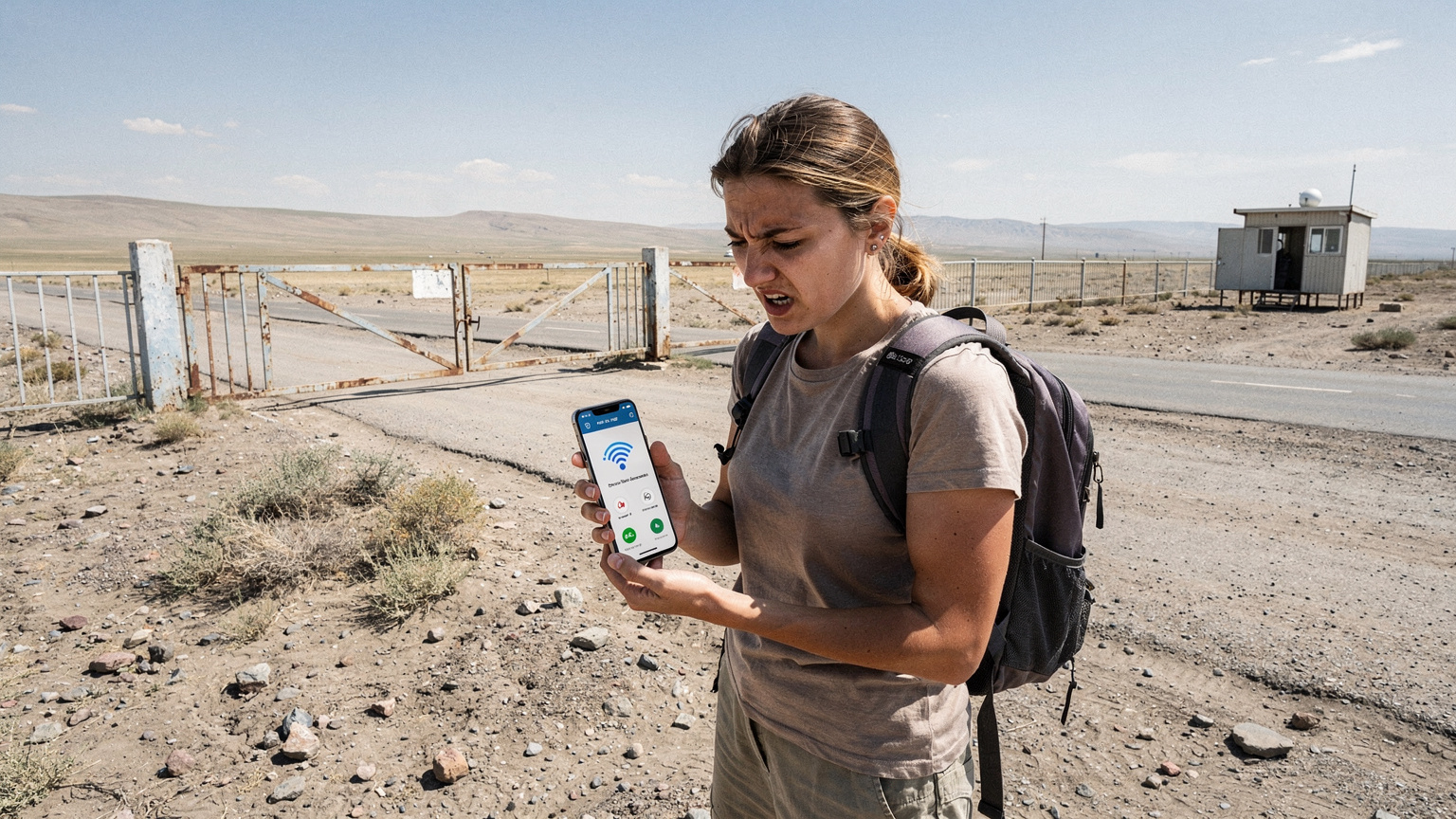
Final Thoughts on Staying Connected Along the Silk Road
Traveling Central Asia in 2026 is an incredible experience, but staying connected doesn't have to be a headache. An eSIM is, without a doubt, the smartest move for anyone needing reliable data across multiple countries. It minimizes stress, saves time, and keeps you linked to your work, friends, and crucial travel information. From the bustling bazaars of Samarkand to the serene landscapes of Lake Issyk-Kul, having Cellesim in your pocket means one less thing to worry about.
I've learned that preparation is everything, and a good eSIM is a core part of that prep. It frees you up to haggle for spices, marvel at ancient architecture, or just enjoy a quiet cup of chai, knowing your digital life is sorted. So, pack your bags, download your eSIM, and get ready for the adventure of a lifetime. The Silk Road is calling, and you'll be connected every step of the way. For more general travel connectivity advice, don't miss Summer Games 2026: Your Essential eSIM Guide for Paris & Beyond, even if it's a different continent, the principles of seamless connectivity remain the same.
Frequently Asked Questions
Which Central Asian countries are best for digital nomads in terms of connectivity?
Almaty, Kazakhstan and Tashkent, Uzbekistan offer the most reliable and fastest internet connectivity, especially within city limits. Bishkek, Kyrgyzstan, is also a solid option, though speeds might be slightly lower. Tajikistan's Dushanbe has decent city coverage, but rural areas are significantly more challenging.
Can I use one eSIM for all Central Asian countries?
Yes, Cellesim offers regional eSIM plans that cover multiple Central Asian countries, including Kazakhstan, Uzbekistan, Kyrgyzstan, and Tajikistan. This is generally the most convenient and cost-effective solution for multi-country travel, eliminating the need to buy separate SIMs.
Are there any specific apps that require a local SIM in Central Asia?
While most common apps like WhatsApp, Telegram, Yandex Go, and Google Maps work perfectly fine with your Cellesim eSIM and your existing phone number, some local banking services or niche delivery apps might occasionally require a local physical SIM number for verification. This is rare for tourists but worth noting for long-term residents.
What kind of internet speeds can I expect with an eSIM in Central Asia?
In major cities like Almaty and Tashkent, you can expect 4G speeds ranging from 30-70 Mbps, suitable for video calls and streaming. In smaller towns and rural areas, speeds can drop to 2G/3G, sufficient for messaging and basic browsing but not for heavy data use.
Is it better to get an eSIM or a local physical SIM for a month-long trip?
For a month-long, multi-country trip across Central Asia, an eSIM is generally superior due to its convenience, instant activation, and seamless border crossings. For a single-country stay exceeding a month, a local physical SIM might offer slightly better long-term value and a local phone number, if needed.
What is the typical cost of living for a digital nomad in Central Asian cities?
Monthly rent for a one-bedroom apartment ranges from $500-700 USD in Almaty, $400-600 USD in Tashkent, and $300-500 USD in Bishkek. Overall cost of living, including groceries and transport, is significantly lower than Western cities, often around $800-1200 USD per month for a comfortable lifestyle.