Based in the tech hub of Austin, Texas, Ryan Mitchell is the US Tech Editor for Cellesim. As a consumer tech advocate, Ryan specializes in cutting through marketing fluff with rigorous head-to-head comparisons. From speed tests to price breakdowns, he analyzes the top eSIM providers side-by-side, helping American travelers choose the absolute best connectivity for their trips to Europe, Asia, and beyond.
This article was created with AI assistance and reviewed by our editorial team for accuracy.
My last trip through Athens, trying to find a working SIM at Syntagma Square, reminded me just how much a good data plan shapes your travel experience. Cosmote is a major player in Greece, but getting their eSIM as a visitor isn't always straightforward. Let's unpack what you need to know about staying connected with Cosmote in Greece, and why an alternative might save you some headaches.
Cosmote eSIM for Tourists: The Reality
I've lost count of the times I've landed somewhere new, bleary-eyed and desperate for data, only to find myself wrestling with local bureaucracy. Greece, with its stunning islands and ancient ruins, is no exception. Cosmote, being one of the largest mobile operators in Greece, offers robust coverage across the mainland, from the bustling streets of Monastiraki in Athens to the quiet fishing villages of Crete, and out to the Cycladic islands. Their network is generally reliable, with 5G availability in major urban centers and popular tourist destinations. But here's the catch for travelers: getting your hands on a Cosmote eSIM isn't as simple as walking into a shop and buying one off the shelf, especially if you're only visiting for a few days or weeks.
While Cosmote does support eSIM technology for its contract customers, their offerings for prepaid users or short-term tourists are less straightforward. You'll typically find that local providers, not just Cosmote, prefer to issue physical SIM cards for temporary visitors. This usually involves a trip to a retail store, presenting your passport for registration, and then hoping they have staff who speak enough English to guide you through the process. My last experience in a Vodafone Greece shop near Omonia Square was a 45-minute ordeal, mostly waiting for a specific employee who handled international registrations to finish her lunch break. It's a small frustration, but one that adds up after a long flight.
The local prepaid SIM options from Cosmote usually come in various data bundles, often with unlimited calls and texts within Greece. A typical tourist plan might offer 10-15GB of data for 15-20 Euros, valid for 30 days. This sounds like a good deal, and it often is, provided you're willing to go through the physical SIM acquisition process. However, if your phone is eSIM-only, or you just prefer the convenience, these local options might not be what you're looking for. This is where dedicated travel eSIMs truly shine, offering a smoother entry into connectivity. For instance, if you're comparing connectivity options for a broader European trip that includes Greece, understanding how eSIMs perform across different Central European capitals can be a useful benchmark.
Why a Local Cosmote eSIM Can Be Tricky
The main hurdle for obtaining a Cosmote eSIM as a tourist revolves around their sales channels and registration requirements. Unlike some countries where you can easily purchase an eSIM online from a local carrier with just a few clicks, Greece generally mandates in-person registration for new mobile numbers, including prepaid lines. This is a measure to comply with national security regulations, and it means you can't simply buy a Cosmote eSIM from their website or app before you arrive.
When you visit a Cosmote store, perhaps in Thessaloniki's city center or near the port in Piraeus, you'll need your passport. The staff will input your details into their system, which can take a few minutes. If you're lucky, they might have an eSIM QR code ready to scan. More often than not, they'll push a physical SIM card because their internal systems and processes are more geared towards that. I remember trying to get an eSIM from an operator in Rome, and after a 20-minute discussion and showing them my iPhone's eSIM settings, they just shrugged and handed me a plastic card. It's a common scenario.
Moreover, Cosmote's prepaid plans designed for tourists, like their 'What's Up' or 'Frog Mobile' brands, might not always be available as eSIMs. These brands often cater to a younger, more budget-conscious local demographic, and the infrastructure for eSIM provisioning for these specific plans can be less developed. Their primary focus remains on their post-paid customers for eSIM services.
This leads to a classic traveler's dilemma: do you spend precious vacation time hunting down a physical SIM, or do you find a more streamlined option? The Cosmote stores typically operate from 9:00 AM to 9:00 PM on weekdays, with shorter hours on Saturdays (e.g., 9:00 AM to 5:00 PM) and often closed on Sundays, especially outside major tourist hubs. If you land on a Sunday afternoon at Athens International Airport, your best bet for immediate connectivity might be an airport kiosk with inflated prices, or simply waiting until Monday. This is precisely the kind of friction I like to avoid when I'm traveling, preferring to land with my connectivity already sorted.
A traveler looks at their phone with a puzzled expression while trying to connect to Wi-Fi in a bustling Athens coffee shop, surrounded by locals.
The Smarter Move: eSIMs Designed for Travelers
This is where global eSIM providers like Cellesim come into their own. Instead of grappling with local regulations and store visits, you can purchase an eSIM for Greece or even a broader European package right from your couch, weeks before your trip. These eSIMs are designed specifically for the international traveler, meaning they bypass the need for local registration, paperwork, or physical interaction.
Cellesim, for instance, offers various data packages for Greece, ranging from a few gigabytes for a short city break to larger bundles for extended island hopping. The process is simple: you select your desired data amount and validity period, complete the purchase online, and receive a QR code via email almost instantly. Then, you just scan the QR code with your eSIM-compatible phone (like many newer iPhones or Android devices), and your data plan is active. It's truly a game-changer for reducing travel stress.
What's more, these travel eSIMs often roam on the networks of major local carriers, including Cosmote, Vodafone, and Wind, ensuring you get excellent coverage without the direct hassle of dealing with those carriers. This means you get Cosmote's reliable network performance, for example, while still enjoying the convenience of a travel-focused product. This approach also sidesteps the issue of phone compatibility, as Cellesim generally works with a wide range of eSIM-enabled devices. If you're unsure about the setup, our guide on how to install your Cellesim eSIM provides a clear, step-by-step walkthrough for both iPhone and Android.
Consider the scenario: you're planning a trip to Santorini, hoping to catch the famous sunset in Oia. With a Cellesim eSIM, you land at Thira Airport, switch on your data, and immediately hail a taxi via a local app, or look up directions to your hotel without missing a beat. No need to hunt for a Cosmote shop, no language barriers, no wasted time. It's about maximizing your travel experience from the moment you arrive. This convenience is a stark contrast to the challenges faced by travelers in other regions, such as those looking for Telkomsel eSIM options for tourists in Indonesia, where local requirements can be even more complex.
Installation and Activation: What to Expect
Setting up a travel eSIM from a provider like Cellesim is usually a straightforward affair, but a few pointers can make it even smoother. First, ensure your phone is unlocked. This is critical because a locked phone will only accept SIMs or eSIMs from its original carrier. Most phones purchased outright or after a contract period are unlocked, but it's always good to double-check with your home provider if you're unsure. I once spent an hour troubleshooting a friend's phone in a café in Lisbon, only to find out it was still locked to AT&T, a detail that never occurred to her before we left.
Once you receive your eSIM QR code, the installation process typically involves going into your phone's cellular settings. For iPhones, it's 'Settings' > 'Cellular' or 'Mobile Data' > 'Add eSIM'. For Android devices, it's usually 'Settings' > 'Network & internet' > 'SIMs' > 'Add more' or 'Download an eSIM'. You'll scan the QR code, follow the on-screen prompts, and name your new eSIM line (e.g., "Greece Data" or "Cellesim Greece"). It often helps to perform this step while you still have a stable Wi-Fi connection, perhaps at home or at your departure airport, just to ensure a smooth download and activation.
Activation usually happens automatically once you arrive in Greece and your phone connects to a local network. If you've opted for an eSIM that covers multiple countries, like a regional Europe plan, it will activate as soon as you cross into one of the covered nations. You might need to enable 'Data Roaming' for your eSIM line in your phone's settings, but don't worry, this won't incur roaming charges from your home provider as long as you've selected the correct eSIM line for data. This is a common point of confusion for travelers, so it's always worth a quick check of your settings. Our FAQ page has more detailed troubleshooting tips if you run into any snags.
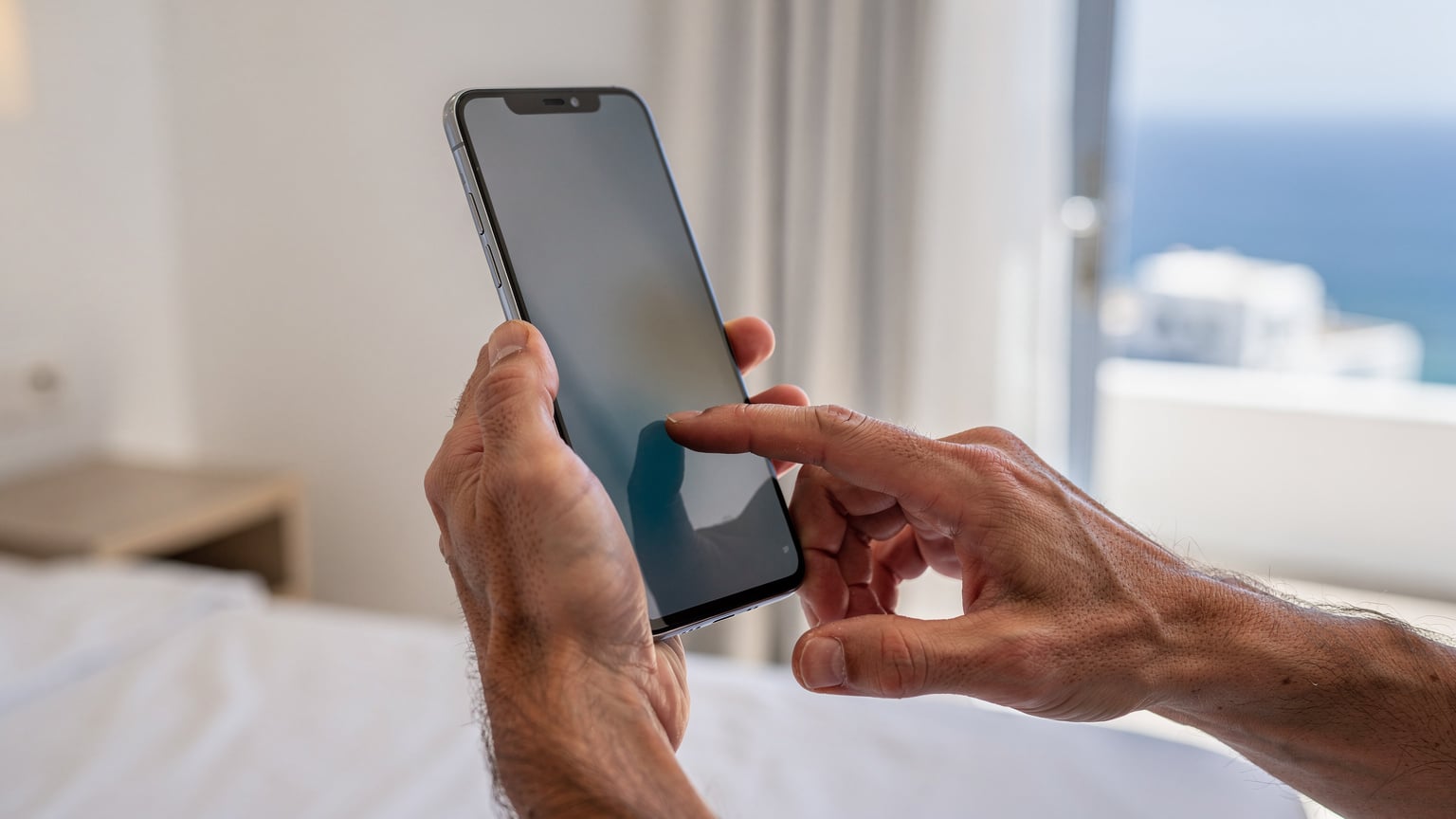
Close-up shot of a pair of hands holding a smartphone, with one finger gently tapping the screen to confirm an eSIM installation, in a sunlit hotel room in Mykonos. For data usage, most modern phones allow you to designate which SIM/eSIM slot to use for cellular data. You'll want to ensure your Cellesim eSIM is selected for data while you're in Greece. You can keep your primary SIM active for calls and texts if you need to receive them, just make sure to disable its data roaming to avoid unexpected bills. This dual-SIM functionality is one of the biggest advantages of eSIMs, allowing you to maintain your home number for important contacts while using a separate, affordable data plan abroad.
Making the Right Choice for Your Greek Adventure
Ultimately, the decision between trying to acquire a local Cosmote eSIM (or physical SIM) and opting for a travel-specific eSIM comes down to convenience, cost, and your willingness to navigate local systems. If you're an intrepid traveler with plenty of time and a desire to fully immerse yourself in every local process, a trip to a Cosmote store might even be part of the adventure.
However, for most travelers who value their time and want to ensure seamless connectivity from the moment they land, a prepaid travel eSIM from a provider like Cellesim is often the superior choice. The ability to purchase and activate your data plan before you even leave home, combined with reliable network access through local carriers, makes for a far less stressful start to any Greek escapade. Whether you're getting around the ancient paths of Delphi, exploring the vibrant markets of Athens' Varvakios Agora (which usually opens around 7:00 AM and closes by 6:00 PM, except Sundays), or simply relaxing on a beach in Zakynthos, having instant, reliable data can make all the difference.
I've seen too many travelers get frustrated by connectivity issues, spending precious hours that could be spent enjoying the local culture. My recommendation is always to sort out your data ahead of time. It's a small pre-trip task that pays dividends in peace of mind once you're on the ground. For instance, consider how a streamlined approach to connectivity can significantly improve the experience for a family traveling, as highlighted in your pre-trip data checklist for Indonesia from France. The principles of planning ahead are universal. Embrace the ease of travel eSIMs, and let your Greek adventure be defined by its beauty, not by your search for Wi-Fi.
Frequently Asked Questions
Can I get a Cosmote eSIM as a tourist in Greece?
While Cosmote does support eSIM, obtaining one as a short-term tourist can be challenging. They primarily offer eSIMs to contract customers, and prepaid options for visitors usually involve physical SIM cards and in-person registration at a Cosmote store, requiring your passport.
What kind of coverage does Cosmote offer in Greece?
Cosmote offers extensive coverage across Greece, including major cities like Athens and Thessaloniki, as well as the popular islands. They provide reliable 4G and growing 5G service in urban areas and tourist hotspots, ensuring good connectivity for most travel needs.
How much does a Cosmote prepaid SIM typically cost for tourists?
A typical Cosmote prepaid plan for tourists might cost around 15-20 Euros for 10-15GB of data, valid for 30 days. These plans often include unlimited calls and texts within Greece, but acquiring them usually requires an in-person visit to a retail store for activation and registration.
Are there any alternatives to Cosmote for eSIM data in Greece?
Yes, global eSIM providers like Cellesim offer a convenient alternative. You can purchase a data plan for Greece online before your trip, receive a QR code, and activate it instantly. These eSIMs often roam on major Greek networks, including Cosmote, providing excellent coverage without the need for local registration.
Do I need to unlock my phone to use an eSIM in Greece?
Yes, your phone must be unlocked to use any eSIM from a different carrier than your home provider. If your phone is locked to a specific network, it will not accept a new eSIM, so it's essential to confirm its unlocked status before traveling.
What are the operating hours for Cosmote stores in Greece?
Cosmote stores typically operate from 9:00 AM to 9:00 PM on weekdays and 9:00 AM to 5:00 PM on Saturdays. Most stores are closed on Sundays, especially outside of major metropolitan areas, so plan your visit accordingly if you intend to purchase a physical SIM.