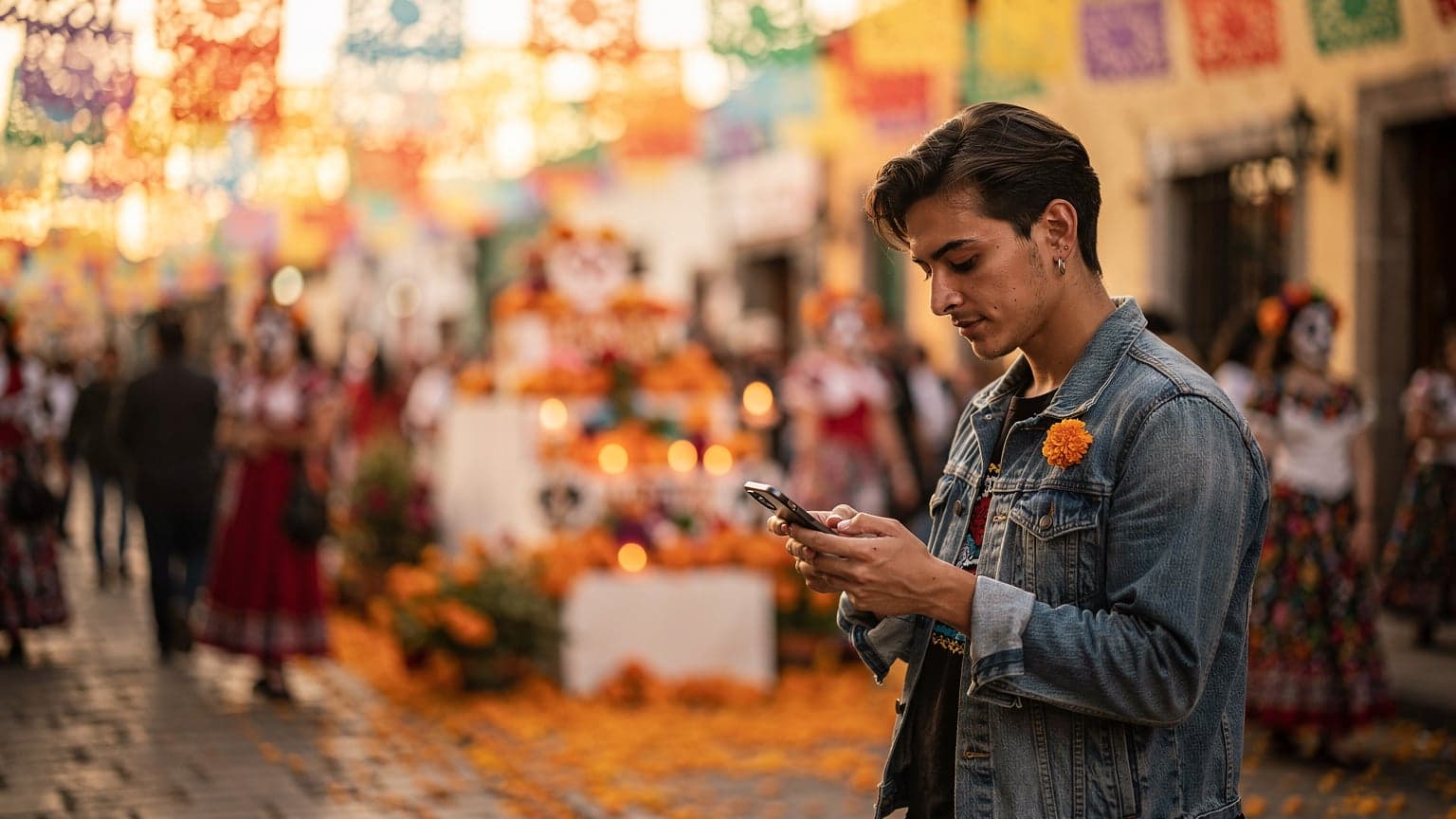
For Día de los Muertos 2026, an eSIM is the most reliable and convenient way to stay connected across Oaxaca, Mexico City, and Pátzcuaro, offering seamless data for navigation, real-time updates, and sharing memories without the hassle of physical SIM cards or expensive roaming charges.
Why an eSIM is Non-Negotiable for Día de los Muertos 2026
Look, I've been doing this digital nomad thing for four years now, hopping from Kyoto cafes to Bali beaches, and if there's one thing I've learned, it's that reliable internet is the bedrock of sanity. For an event like Día de los Muertos in Mexico, especially when you're bouncing between cities, an eSIM isn't just convenient, it's essential. You'll be navigating crowded streets, looking up parade routes, translating conversations with local vendors, and yes, uploading hundreds of photos of altars and catrinas. Trying to find a local SIM card in the middle of festivities, or dealing with an unreliable US carrier's roaming bundle, is a headache you absolutely don't need.
Consider this: you land in Mexico City, exhausted from a long flight. The last thing you want is to hunt for a Telcel or AT&T store, deal with language barriers, and then go through the activation song and dance. With an eSIM, you land, switch it on, and you're connected. No physical card to lose, no flimsy tray to bend, just instant data. This is particularly crucial when you're trying to meet up with friends in a new city or confirm your Airbnb check-in details. I've been in situations where a local SIM was required for specific apps, like some Brazilian banking apps or India's Aadhaar verification, but for general travel in Mexico, an eSIM is perfectly fine for WhatsApp, Google Maps, and all your social media needs.
The Cost of Connectivity: Roaming vs. eSIM
Let's talk money, because that's what often breaks the bank. Your typical US carrier's international roaming package for Mexico might seem appealing on paper. T-Mobile's Magenta MAX, for example, offers decent data in Mexico and Canada, but often throttled after a certain point. AT&T and Verizon's plans usually charge a daily fee that can quickly add up to more than a Cellesim Mexico eSIM for a month of heavy use. I've seen friends get hit with bills upwards of $200 for a two-week trip because they underestimated their data consumption. An eSIM provides transparent, upfront pricing, letting you pick a package that actually fits your needs, whether it's 10GB for a quick trip or 30GB for a longer stay. It's a no-brainer when you're planning a multi-city itinerary.
Critical Moments When Reliable Data Saves the Day
I can't stress this enough, but when you're caught in a massive parade in Mexico City's Zócalo, or trying to find a specific cemetery in Oaxaca at night, your data connection isn't a luxury, it's safety. Imagine getting separated from your group, or needing to call an Uber at 2 AM. Or trying to upload that perfect, once-in-a-lifetime photo of a candle-lit altar in Pátzcuaro before your battery dies. These aren't hypothetical scenarios, they're common travel frictions. Having a robust data connection means you can quickly access emergency services, translate urgent messages, or just confirm your way back to your Airbnb.
Choosing Your eSIM Plan: Mexico Specifics
Picking the right eSIM plan for Mexico means understanding coverage, speed, and how much data you actually need. Mexico's major carriers, Telcel, AT&T Mexico, and Movistar, all have decent coverage in urban centers and along major highways. Rural areas, especially around Pátzcuaro, can be spottier, but generally, if there's a village, there's at least 3G, often 4G LTE. Cellesim partners with these local providers, so you're essentially getting the same network quality without the local SIM hassle.
Data Needs for Día de los Muertos Activities
How much data do you actually need? Here's a breakdown of typical usage during Día de los Muertos:
- Navigation (Google Maps, Uber/DiDi): Around 50-100 MB per day, depending on how much you move around. Essential for finding specific altars or parade routes.
- Social Media & Photo Uploads (Instagram, WhatsApp): This is where it adds up. If you're uploading high-res photos and videos, expect to use 500 MB to 1 GB daily. Those cemetery photos are gorgeous, but they're data hogs.
- Video Calls (WhatsApp, Zoom): If you need to check in with family or do a quick work call, a 30-minute video call can chew through 300-500 MB.
- Streaming (Spotify, Netflix): If you're unwinding at night, streaming music or a show can use 1-2 GB per hour. I usually pre-download my Netflix shows before I leave the Airbnb.
For a week-long trip, I'd recommend at least 15-20GB to be safe, especially if you're keen on uploading those vibrant photos and videos. For a longer stay, say two weeks, 30GB is a good baseline. Don't skimp, because running out of data mid-parade is a terrible feeling.
Comparing eSIM Providers for Mexico
When it comes to Mexico, not all eSIMs are created equal. You want one that leverages the strongest local networks. Here's a quick comparison:
| Provider | Network Partner | Typical Data Speeds (Mbps) | Coverage Highlights | Best For |
|---|---|---|---|---|
| Cellesim (Mexico Plan) | Telcel, AT&T Mexico | 30-100 (LTE/5G) | Strong in urban areas, decent in smaller towns like Pátzcuaro. | Reliable, multi-city travel, heavy data users. |
| GigSky | Movistar, AT&T Mexico | 20-80 (LTE) | Good in major cities, can be weaker in rural zones. | Budget travelers, lighter data usage. |
| Airalo | Movistar | 15-70 (LTE) | Variable, stronger in CDMX, spottier elsewhere. | Short trips, minimal data needs. |
From my experience, Cellesim's network partners often deliver the most consistent speeds, which is crucial for those spontaneous video calls or quick file uploads. You don't want to be stuck with 3G when you're trying to send a large batch of photos from the San Andrés Mixquic cemetery.
eSIM Installation: A Quick How-To
Installing an eSIM is straightforward, but it's best done before you leave home, or at least while you have a stable Wi-Fi connection. Trust me, trying to troubleshoot in a noisy airport with spotty Wi-Fi is not the vibe.
- Purchase Your eSIM Plan: Head to the Cellesim Mexico page and select the data package that fits your trip duration and usage.
- Receive QR Code/Manual Details: You'll get an email with a QR code or manual installation details.
- Scan the QR Code: Go to your phone's Settings > Cellular/Mobile Data > Add eSIM. Scan the QR code.
- Label Your eSIM: Name it something like "Mexico Travel" so you know which line is which.
- Set as Primary Data Line: Once in Mexico, switch your mobile data to your new eSIM. Make sure data roaming is enabled for the eSIM. Keep your home line active for calls if you need to receive them, but disable its data roaming to avoid charges.
- Test Connectivity: As soon as you land, do a quick test. Open a browser, send a WhatsApp message, make sure everything's working. If not, toggle airplane mode or restart your phone. Most issues resolve themselves after that.
Oaxaca City: Your Base for Día de los Muertos
Oaxaca City is arguably the heart of Día de los Muertos traditions. I spent a month there last year, based in the Reforma neighborhood. Rent was about 8,000 MXN (around $470 USD) for a decent one-bedroom apartment, and my total cost of living, including food and a few mezcal tastings, was around 20,000 MXN ($1,170 USD). The city transforms completely for the festival. Data is key here for navigating the endless procession of comparsas (costume parades) and finding specific altars.
Connectivity in Oaxaca City: Coworking and Cafes
For reliable Wi-Fi, I highly recommend Impact Hub Oaxaca. Their internet speed is consistently excellent, perfect for Zoom calls or uploading large video files (I once had to upload a 20GB project there, no issues). Monthly membership is around 2,500 MXN ($145 USD). If you prefer cafes, Café Brújula, especially the one on Macedonio Alcalá, has solid Wi-Fi and good coffee. Just don't expect quiet during peak festival times. Your eSIM will be your primary lifeline when you're out and about, especially trying to find that one specific street art piece in Jalatlaco.
Cemetery Visits: Mixquic and Xoxocotlán
The cemeteries in San Andrés Mixquic and Xoxocotlán are iconic for Día de los Muertos. They're vibrant, crowded, and emotionally charged. Connectivity in these areas can be hit or miss with a regular physical SIM, but a good eSIM provider usually partners with Telcel, which has the broadest rural coverage. You'll need data for:
- GPS Navigation: Getting there and back, especially if you're taking colectivos or Ubers.
- Translating Interactions: Speaking with families at the altars.
- Sharing in Real-Time: Sending photos and videos to loved ones (though I always recommend being present first).
Be respectful, ask permission before photographing people, and remember that this is a deeply spiritual event for locals. Your eSIM data will ensure you can call for a ride share after midnight when buses are less frequent.
Mexico City (CDMX): The Grand Celebration
Mexico City hosts the grandest Día de los Muertos parade, a spectacle that can easily consume all your data if you're not careful. I've done the CDMX parade twice, and the sheer volume of people makes physical navigation and communication challenging. This is where a robust eSIM connection truly shines.
Navigating the Grand Parade and Zócalo
The Grand Parade typically runs along Paseo de la Reforma towards the Zócalo. Finding a good viewing spot, coordinating with friends, and then navigating out of the crowds afterwards demands constant connectivity. Google Maps will be your best friend. Cellular networks get saturated during major events, so having a strong, prioritized eSIM connection from a major carrier like Telcel through Cellesim is invaluable. Don't rely solely on public Wi-Fi, it's often slow or non-existent in such crowded areas.
Coworking and Digital Nomad Life in CDMX
For longer stays in CDMX, my go-to is Selina Coworking in Roma Norte. It's reliably fast, and the community is great. A hot desk for a month runs about 3,500 MXN ($200 USD). If you're staying in Roma or Condesa, you can find furnished apartments for around 15,000-25,000 MXN ($870-$1,450 USD) per month. For quick work sessions, Finca Don Eloy in Condesa offers good coffee and decent Wi-Fi. Just remember, some local delivery apps like Rappi or Uber Eats can sometimes be finicky without a local phone number, though most accept international numbers with an active data plan.
Pátzcuaro and Janitzio Island: Traditional Roots
If you're looking for a more traditional, intimate Día de los Muertos experience, Pátzcuaro in Michoacán is it. The celebrations on Janitzio Island, with the fishermen in their butterfly nets, are particularly poignant. This area is more rural, which makes reliable data even more critical.
Connectivity Challenges and Solutions in Michoacán
Michoacán, while stunning, can be a bit trickier for connectivity. While Pátzcuaro itself has good 4G LTE, especially with Telcel, coverage on Janitzio Island can be spotty, particularly during peak times with thousands of visitors. This is where a strong eSIM from a provider like Cellesim, leveraging Telcel's infrastructure, makes a difference. I've had issues in similar island settings, like during the Thai Songkran Festival on smaller islands, where only the dominant carrier had signal. Always manage your expectations for perfect 5G on a small island.
Getting to Pátzcuaro and Around
Travel to Pátzcuaro usually involves a bus from Morelia or Mexico City. Once there, colectivos and taxis are your main modes of transport. To get to Janitzio, you'll take a boat from the Pátzcuaro pier. Having data for Google Maps to find the pier, check boat schedules, and arrange return transport is crucial. There aren't always English speakers readily available, so a translation app running on your eSIM's data will be a lifesaver. This is not the place you want to be without a map or communication.
Managing Data and Connectivity On the Go
Even with a great eSIM, smart data management can extend your plan and prevent unexpected slowdowns. I've learned these tricks over years of constantly being on the move, from Tokyo coworking spaces to Bali beaches.
Optimizing Your Phone Settings for Travel
- Disable Background App Refresh: This is a huge data drainer. Go to Settings > General > Background App Refresh and turn it off for apps you don't need constantly updating.
- Download Offline Maps: Before heading out, download offline maps for Oaxaca, CDMX, and Pátzcuaro on Google Maps. This saves data and works even when signal is weak.
- Restrict High-Data Apps: In your phone's cellular settings, you can often restrict specific apps from using cellular data. For example, if you only want WhatsApp to use data and not TikTok, set it up.
- Monitor Data Usage: Regularly check your phone's data usage statistics (Settings > Cellular/Mobile Data) to keep track of how much data you're consuming. Most eSIM providers also have an app or portal to check your remaining data.
Using Local Wi-Fi Strategically
While your eSIM is your primary data source, don't ignore local Wi-Fi. Many cafes, restaurants, and hotels offer free Wi-Fi. Use these opportunities to:
- Upload Large Files: Especially those high-resolution photos and videos from the day's celebrations.
- Download Updates: App updates, podcast episodes, or Netflix shows for offline viewing.
- Make Video Calls: Save your eSIM data for when you truly need it on the go.
Always use a VPN when connecting to public Wi-Fi, especially in shared spaces like airport lounges or public squares. It's basic digital hygiene. For secure, elite connectivity, even during high-profile events like a G7 Summit, a VPN combined with a reliable eSIM is the gold standard.
Physical SIM vs. eSIM: A Long-Stay Perspective
As someone who spends months in one place, I've done the dance with both physical SIMs and eSIMs more times than I can count. For a short trip like Día de los Muertos, an eSIM wins hands down. For longer stays, say 3 months or more, the lines get a bit blurry.
The Hassle of Local SIM Cards
When I first started traveling, getting a local SIM was always the first thing on my to-do list. In Mexico, that meant finding a Telcel store, showing my passport, sometimes dealing with a registration process that required a local address (even if I didn't have one yet). Then came the top-ups, navigating Spanish-only IVR menus, or trying to explain to a OXXO cashier what kind of data package I wanted. It's a time sink and a minor stressor, especially when you're still jet-lagged. And if your phone is locked to your home carrier, you're out of luck entirely.
If you plan to stay in Mexico for more than three months, check your visa limitations. Most tourist visas are 180 days, but some countries only get 90 days. You don't want to overstay your welcome because you weren't paying attention to your visa while enjoying a multi-month stay.
The eSIM Advantage for Multi-City Travel
The biggest win for eSIMs during an event like Día de los Muertos, which often involves multiple cities, is flexibility. You can activate a Mexico-wide eSIM before you even leave home. If you're planning a grand tour that extends beyond Mexico, say to Europe or even back to Bali afterwards, a multi-country eSIM can cover you seamlessly. No need to swap cards, no fuss. It just works. This is especially true if you have a creator eSIM with 50GB+ for seamless uploads and streaming, like the ones I recommend for destinations like Cape Town.
Troubleshooting Common eSIM Issues
Even the most seasoned nomads run into connection issues. It happens. Here's a quick guide to fixing the most common eSIM problems.
No Signal or Slow Data
This is the classic. You've landed, activated, but nothing. Or it's crawling like 2G.
- Restart Your Phone: The oldest trick in the book, and it often works.
- Toggle Airplane Mode: Turn it on for 30 seconds, then off. Forces a reconnection to the network.
- Check APN Settings: Most eSIMs configure this automatically, but sometimes you need to manually enter the Access Point Name. Your eSIM provider's support page will have this. For Telcel in Mexico, it's usually "internet.itelcel.com".
- Ensure Data Roaming is ON for eSIM: This is a common oversight. While you want to disable data roaming for your home SIM, you need it enabled for your eSIM to connect to local networks.
- Check for Network Outages: Sometimes, it's not you, it's the network. Especially during huge festivals, local towers can get overloaded.
eSIM Not Activating
If you're stuck at the activation stage, here's what to check:
- Stable Wi-Fi Connection During Setup: You need a strong internet connection to download and activate the eSIM profile. Do this before you leave your hotel or a reliable Wi-Fi spot.
- QR Code Integrity: Make sure the QR code isn't blurry or damaged.
- Device Compatibility: Double-check that your phone actually supports eSIMs. Most newer iPhones (XS and later) and Android flagships do, but some older models or regional variants might not.
- Contact Support: If all else fails, reach out to Cellesim customer support. They can usually re-send the QR code or walk you through manual setup. They've helped me out of a bind more than once, even when I was stuck trying to get connectivity near Peru's Inca Trail.
Ultimately, a successful Día de los Muertos trip, especially for those who need to stay connected for work or sharing their experiences, hinges on reliable data. An eSIM from Cellesim provides that peace of mind, letting you focus on the vibrant traditions and poignant beauty of the festival, rather than worrying about your phone bill or hunting for Wi-Fi.
Frequently Asked Questions
Which cities are best for Día de los Muertos 2026 celebrations in Mexico?
Oaxaca City offers deeply traditional and artistic celebrations, Mexico City (CDMX) hosts the largest and most spectacular parade, and Pátzcuaro provides an intimate, culturally rich experience, especially on Janitzio Island.
How much data do I need for a week-long Día de los Muertos trip across multiple Mexican cities?
For a week of multi-city travel during Día de los Muertos, with navigation, significant photo uploads, and occasional video calls, I recommend at least 15-20GB of data. Heavy usage, especially with social media and streaming, might push you towards 30GB.
Can I use an eSIM for ride-sharing apps like Uber or DiDi in Mexico?
Yes, an eSIM provides the necessary data connection for ride-sharing apps like Uber and DiDi. While some local apps might occasionally prefer a local phone number, international numbers with an active data plan generally work well for these services.
Will an eSIM work in rural areas like Janitzio Island near Pátzcuaro?
Coverage in rural areas like Janitzio Island can be more variable than in major cities. However, eSIMs leveraging major networks like Telcel, which Cellesim partners with, generally offer the broadest coverage, increasing your chances of connectivity even in less populated areas.
Is it better to get a local physical SIM or an eSIM for a two-week trip to Mexico?
For a two-week trip, an eSIM is generally more convenient and cost-effective than a physical SIM. It eliminates the need to find a local store, deal with registration, and avoids the high roaming costs of your home carrier. You can activate it before you even land.
What's the best way to ensure strong Wi-Fi for work while traveling during Día de los Muertos?
For strong Wi-Fi, seek out dedicated co-working spaces like Impact Hub Oaxaca or Selina Coworking in Roma Norte, CDMX. Many cafes also offer decent Wi-Fi, but always have your eSIM data as a reliable backup for when you're on the move or in crowded festival areas.