Updated: 2026-02-15
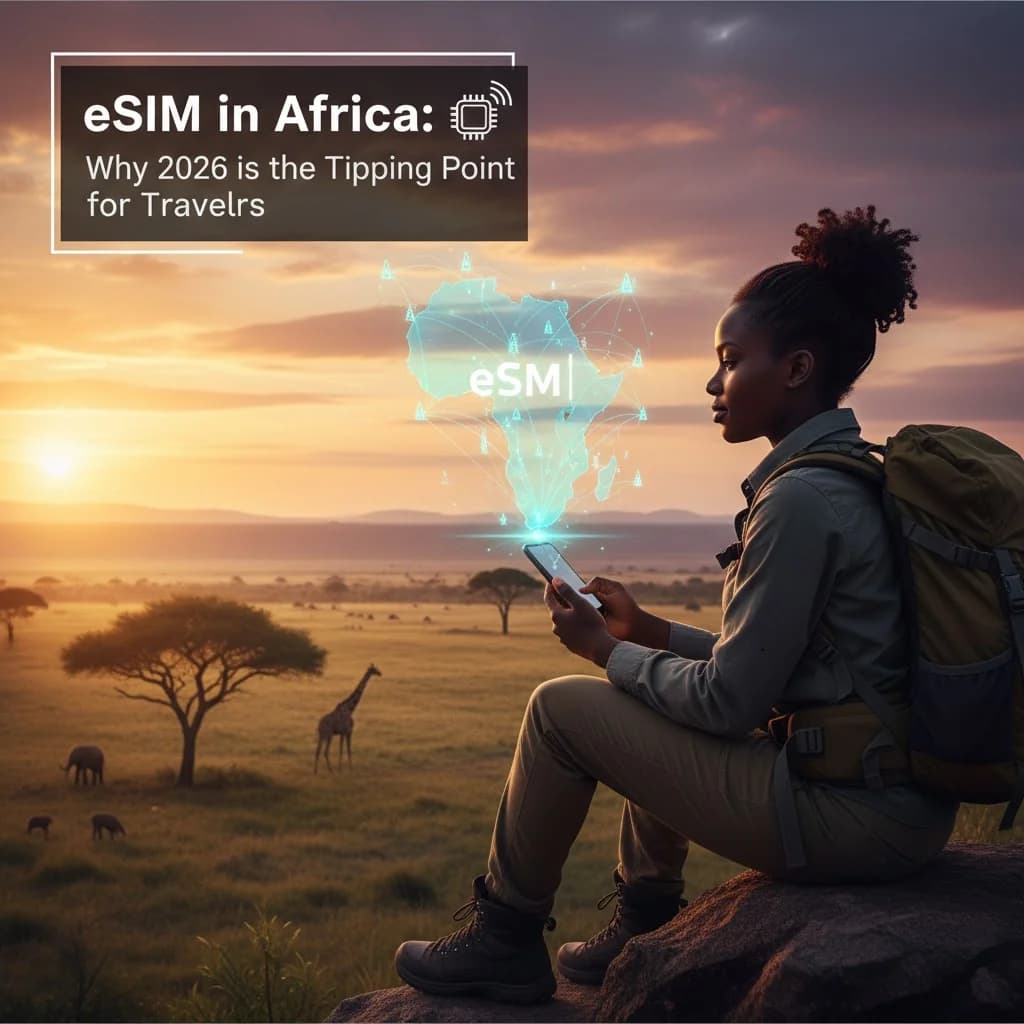
For years, the journey into Africa often began with a familiar hurdle: the quest for a local SIM card. Navigating bustling airport terminals, deciphering unfamiliar data plans, and waiting in queues became an unspoken initiation rite for travelers. This era of connectivity friction, however, is rapidly drawing to a close. By 2026, a significant shift in travel technology will have fully cemented eSIMs as the preferred, most efficient method for staying connected across the African continent. This isn't just an upgrade; it's a fundamental change in how travelers experience Africa, offering unparalleled convenience, security, and immediate access to communication from the moment of arrival.
- The End of the Airport SIM Card Scramble: Africa's Digital Shift by 2026
- Why 2026 Marks the Tipping Point for African eSIM Adoption
- Seamless Connectivity Across Africa with Cellesim eSIMs
- eSIM vs. Local SIM vs. Roaming: The Smart Choice for 2026 African Travel
- Preparing for Your African Adventure: Activating Your Cellesim eSIM
- Optimising Data for Your African Journey: From Safari to City Exploration
- Choosing the Best Cellesim Plan for Your African Itinerary
- Frequently Asked Questions
Africa eSIM Plans from $9.99
Connect instantly across 29 African countries. Join 50,000+ travelers who choose Cellesim for seamless connectivity.
View Africa PlansThe End of the Airport SIM Card Scramble: Africa's Digital Shift by 2026
The days of landing at Jomo Kenyatta International Airport in Nairobi, Cape Town International, or Bole International in Addis Ababa and immediately searching for a physical SIM card are quickly fading. This traditional process involved currency exchange, language barriers, understanding complex local plans, and the tedious act of swapping out tiny plastic cards. It was often the first point of stress in an otherwise exciting journey.
The transition to eSIM technology by 2026 is fundamentally altering this experience. Travelers can now arrive with their connectivity already sorted, ready to navigate, communicate, and share their experiences without delay. This shift not only saves precious travel time but also enhances security by eliminating the need to handle physical SIMs or expose personal data at unknown kiosks. It represents a significant upgrade in travel convenience, especially in a continent as vast and diverse as Africa.
Why 2026 Marks the Tipping Point for African eSIM Adoption
Several factors converge to make 2026 the pivotal year for eSIMs in Africa. Firstly, the global proliferation of eSIM-compatible devices has reached critical mass. Most flagship smartphones released since 2019, and nearly all new models by 2026, feature eSIM support. This widespread adoption removes a primary barrier for travelers.
Secondly, African mobile network operators are increasingly embracing eSIM technology. While some regions adopted it faster than others, by 2026, the underlying infrastructure and partnerships required for seamless eSIM roaming are expected to be robust across key tourist and business destinations. This technological readiness is supported by significant investments in digital infrastructure across the continent, enhancing 4G and 5G coverage in urban areas and tourist hubs. For an overview of general network capabilities, you can consult resources like GSMA's eSIM resources.
Finally, increased awareness and positive traveler experiences are fueling demand. Word-of-mouth and readily available information mean more people are discovering the simplicity of eSIMs. As the African tourism sector continues its recovery and growth, particularly with events like cultural festivals and expanding safari circuits, the demand for effortless connectivity will only intensify. For example, events like the annual migration safaris draw hundreds of thousands, all needing reliable connectivity.
Seamless Connectivity Across Africa with Cellesim eSIMs
Cellesim is at the forefront of this connectivity revolution, offering tailored eSIM solutions that cater specifically to the complexities and vastness of African travel. Our regional eSIM plans provide coverage across numerous countries, eliminating the need to purchase separate SIMs for multi-country itineraries. This is particularly advantageous for travelers embarking on extensive tours, such as a journey from Kenya's savannas to South Africa's vibrant cities.
With Cellesim, you gain access to reliable network partners across the continent, ensuring consistent 4G/5G speeds where available. Our Africa 29 Countries eSIM plan, for instance, simplifies connectivity for diverse routes, from coastal adventures in Morocco to wildlife expeditions in Tanzania. This global reach, covering
"Using an eSIM transformed my multi-country African trip. No more fumbling with SIM cards at every border, just continuous, high-speed internet. It's a game-changer for digital nomads and adventurers alike." - A recent Cellesim traveler.
eSIM vs. Local SIM vs. Roaming: The Smart Choice for 2026 African Travel
When planning your connectivity for an African adventure in 2026, understanding the differences between your options is crucial. Each method has its pros and cons, but eSIMs offer a distinct advantage in terms of convenience and often cost.
| Option | Setup | Cost (per GB) | Flexibility | Security |
|---|---|---|---|---|
| Cellesim eSIM | Instant QR/App | Low (from $0.50/GB) | High (Multi-country) | High |
| Local SIM | Airport/Store visit | Variable (often low) | Single country | Moderate |
| Carrier Roaming | Automatic | High (often $10+/day) | Global (Expensive) | High |
Traditional roaming from your home provider typically incurs exorbitant daily or per-MB charges, quickly accumulating into hundreds of dollars. Local SIM cards, while offering lower per-GB rates in a single country, require physical purchase, registration, and often a trip to a dedicated store, delaying your connectivity. They also necessitate swapping out your primary SIM, risking loss or damage.
Cellesim eSIMs combine the best of both worlds: competitive data rates, multi-country coverage, and instant activation without physical hassle. For detailed cost comparisons, especially for specific regions, you can utilize our Roaming Savings Calculator.
Preparing for Your African Adventure: Activating Your Cellesim eSIM
One of the significant advantages of choosing an eSIM for your 2026 African trip is the straightforward activation process. There’s no physical installation, just a few simple steps:
- Purchase your Cellesim eSIM: Select a plan that matches your travel duration and data needs for your chosen African countries. You can buy it days or weeks before your departure.
- Receive your QR code: After purchase, you will receive an email with a QR code or manual installation details.
- Install the eSIM: On your eSIM-compatible smartphone, go to your mobile settings and select "Add eSIM" or "Add Cellular Plan." Scan the QR code.
- Configure settings: Follow the on-screen prompts to name your new eSIM plan (e.g., "Africa Travel"). Ensure data roaming is ON for your Cellesim eSIM and OFF for your primary SIM to avoid unexpected charges.
- Activate when ready: Your eSIM will activate once it connects to a supported network in your destination country.
Before traveling, it is advisable to check if your device supports eSIM technology using our eSIM Checker. Most modern smartphones are compatible, but a quick check ensures a smooth experience.
Find Your Perfect Africa eSIM
Optimising Data for Your African Journey: From Safari to City Exploration
Understanding your data needs is essential for choosing the right eSIM plan. African travel often involves a mix of remote exploration and urban experiences, each with different connectivity demands. On a safari, for instance, you might use data sparingly for navigation, quick photo uploads, and essential communication, especially as network coverage can be intermittent in very remote areas.
In bustling cities like Cairo, Nairobi, or Marrakech, data usage tends to be higher. You'll rely on it for ride-sharing apps, finding local restaurants, video calls with family, and extensive social media sharing. Activities like streaming music or video can consume significant data quickly.
Consider the following estimates for typical daily data usage:
- Light User (emails, maps, occasional messaging): 1-2 GB per week
- Moderate User (social media, photos, light browsing): 3-5 GB per week
- Heavy User (video calls, streaming, extensive navigation): 7-10+ GB per week
Cellesim offers various data packages to suit these different needs, from smaller bundles for short trips to larger plans for extended stays. You can also use our Smart Data Calculator to estimate your specific data requirements based on your planned activities.
Choosing the Best Cellesim Plan for Your African Itinerary
Selecting the ideal Cellesim eSIM plan involves considering several factors specific to your African travel plans in 2026:
- Single Country vs. Regional: If your trip focuses on one nation, like a safari in South Africa or exploring the historic sites of Egypt (e.g., eSIM from Italy to Egypt), a single-country eSIM might suffice. However, for multi-country adventures (e.g., East Africa, Southern Africa), a regional eSIM covering 29 African countries offers unmatched convenience and often better value.
- Data Volume: Based on your estimated data usage (as discussed in the previous section), choose a plan with sufficient gigabytes. It's often more cost-effective to buy a slightly larger plan upfront than to frequently top up.
- Validity Period: Match the eSIM's validity period (e.g., 7 days, 15 days, 30 days) to your trip duration. Activating your eSIM right before you leave or upon arrival ensures you maximize your data allowance.
- Flexibility and Top-ups: Cellesim plans often allow for easy top-ups if you unexpectedly run low on data, providing peace of mind during your journey.
By carefully evaluating these points, you can ensure you have seamless, stress-free connectivity for your entire African adventure in 2026, allowing you to focus on the unforgettable experiences the continent offers.
Ready for Seamless Connectivity in Africa?
Join 50,000+ travelers in 200+ countries. Set up your Cellesim eSIM in minutes for your 2026 African adventure.
Start Your Connected JourneyTrusted by travelers worldwide. 24/7 Support: [email protected]
Frequently Asked Questions
Why is 2026 considered the tipping point for eSIMs in Africa?
2026 marks the confluence of widespread eSIM-compatible devices, robust network infrastructure development across African countries, and growing traveler awareness, making eSIMs the most convenient and cost-effective connectivity solution for visitors to the continent.
Which African countries are covered by Cellesim eSIMs?
Cellesim offers extensive coverage across Africa. Our regional eSIM plan covers 29 countries, including popular destinations like South Africa, Kenya, Morocco, Egypt, and Tanzania. Specific country plans are also available for focused travel.
Can I use my Cellesim eSIM for multiple countries during an African tour?
Yes, Cellesim's regional eSIM plans, such as the Africa 29 Countries eSIM, are specifically designed for multi-country travel across the continent. This eliminates the need to buy a new SIM in each country, providing continuous connectivity.
Is my phone compatible with eSIMs for African travel?
Most modern smartphones released in the last few years are eSIM compatible. You can easily check your device's compatibility using the Cellesim eSIM Checker on our website before you travel.
How do Cellesim eSIMs compare in price to traditional roaming or local SIMs in Africa?
Cellesim eSIMs generally offer a more cost-effective solution than traditional roaming, which can be very expensive. While local SIMs might seem cheaper for single countries, eSIMs save you time, hassle, and often provide better value for multi-country itineraries, with transparent pricing and no hidden fees.
When should I activate my Cellesim Africa eSIM?
You can install your Cellesim eSIM anytime before your trip while you have an internet connection. However, it is best to activate it (turn on the data plan) upon your arrival in your first African destination. This ensures that the validity period of your plan begins at the most opportune moment for your travel.