Updated: 2026-02-15
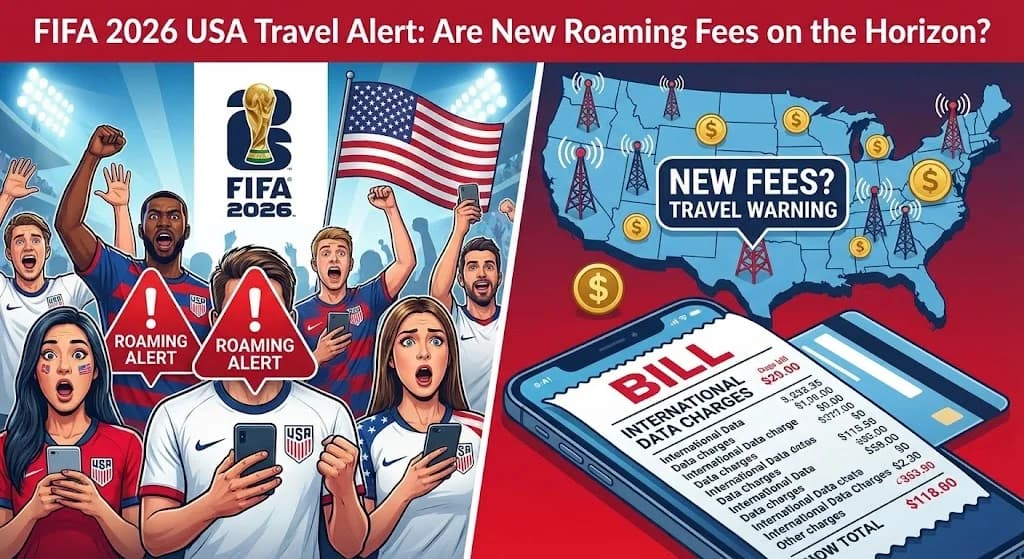
Picture this: You've just landed at LAX, buzzing with excitement for the FIFA World Cup 2026. You pull out your phone to book a ride to your hotel, check the match schedule, and find your friends, only to be greeted by that dreaded message: “No Service.” Or worse, you connect, but a nagging thought creeps in, how much is this costing me? For the millions of fans descending on North America for the FIFA World Cup 2026, the question of potential roaming fees isn't just a minor detail; it's a major source of travel stress. With networks bracing for unprecedented demand across the USA host cities like New York, Dallas, Miami, and Los Angeles, your home carrier's standard plan could lead to a shocking bill. This guide will break down the real risks and show you exactly how to secure seamless, affordable connectivity for your World Cup experience.
- Navigating Connectivity Challenges for FIFA 2026 USA Fans
- Unpacking FIFA 2026 USA Roaming Fees and Their Impact
- Why Your Current Roaming Plan Might Fail During the World Cup
- eSIM: The Smart Connectivity Solution for FIFA 2026
- Choosing the Ideal eSIM Data Plan for Your World Cup Journey
- A Step-by-Step Guide to Activating Your FIFA 2026 USA eSIM
- Essential Connectivity Tips for World Cup Host Cities
- Cost Comparison: eSIM vs. Traditional Options for FIFA 2026
- Frequently Asked Questions
Connect Instantly for FIFA 2026 USA
Secure high-speed data across all USA host cities. Join 50,000+ happy customers with Cellesim.
Get Your USA eSIMNavigating Connectivity Challenges for FIFA 2026 USA Fans
The FIFA World Cup 2026, co-hosted by the USA, Canada, and Mexico, represents an unprecedented global sporting event. With matches spread across 11 US citie, including major hubs like New York, Los Angeles, Miami, and Dalla, fans will be traveling extensively. This widespread movement, combined with millions of visitors converging on specific venues, creates unique connectivity challenges. Relying solely on your home network's international roaming plan without prior preparation can lead to frustrating experiences, from unexpected charges to unreliable service.
Staying connected is vital for modern travel. It enables real-time navigation, instant sharing of match highlights, communication with fellow fans, and access to essential travel information. The absence of reliable data can quickly transform an exciting trip into a logistical nightmare, impacting everything from booking rides to finding your seat at the stadium.
Unpacking FIFA 2026 USA Roaming Fees and Their Impact
For many international travelers, using their existing phone plan abroad means activating international roaming. While convenient in theory, the costs associated with traditional roaming can be substantial, especially in a high-demand environment like the World Cup. Carriers often charge premium rates for data, calls, and texts when outside your home country.
These charges typically come in a few forms:
- Pay-per-use rates: The most expensive option, where you're charged per MB of data, minute of call, or text message. These can quickly accumulate to hundreds of dollars.
- Daily roaming bundles: Many carriers offer daily passes, often costing $10-$15 per day for a limited amount of data, after which speeds are throttled or additional charges apply. For a multi-week World Cup trip, this becomes extremely costly.
- Monthly international packages: Some plans include a small allowance for international roaming, but this is often insufficient for extensive data use and may not cover the full duration or geographic spread of a World Cup visit.
These escalating costs can significantly "spoil" your trip by forcing you to constantly monitor data usage, limit sharing moments, or even disconnect entirely, undermining the immersive World Cup experience.
Why Your Current Roaming Plan Might Fail During the World Cup
Beyond the financial implications, traditional roaming plans often fall short in delivering a seamless experience during major events like the FIFA World Cup. Several factors contribute to this:
- Network Congestion: World Cup host cities and stadium areas will experience unprecedented network demand. Local networks prioritize their direct subscribers, meaning roamers may face slower speeds or reduced service quality during peak times.
- Throttling and Data Caps: Even with daily roaming bundles, major carriers frequently implement strict data caps after which speeds are severely throttled. This can make simple tasks like navigating or checking scores frustratingly slow.
- Limited Coverage Guarantees: While roaming agreements provide coverage, the quality can vary. Your home carrier has less control over the performance of partner networks in the USA.
- Lack of Flexibility: Roaming plans are usually rigid. If your travel plans change or you need more data, adjusting your roaming package can be difficult or incur further charges.
"Navigating unfamiliar cities, especially during a massive event like the World Cup, requires constant connectivity for maps, transport apps, and real-time updates. Intermittent or slow service isn't just an inconvenience; it can genuinely disrupt your travel plans."
The cumulative effect of these issues can lead to a less enjoyable, more stressful World Cup trip, where you are constantly worried about connectivity instead of focusing on the games and the atmosphere.
eSIM: The Smart Connectivity Solution for FIFA 2026
For savvy World Cup travelers, eSIM technology presents a superior alternative to traditional roaming or physical local SIM cards. An eSIM, or embedded SIM, is a digital SIM card that allows you to activate a cellular plan from a provider without needing a physical SIM card. It's built directly into your phone, offering unparalleled flexibility and convenience.
Here's why an eSIM is ideal for your FIFA 2026 USA journey:
- Instant Activation: Purchase an eSIM plan online, receive it via email, and activate it in minutes. There's no need to visit a store or wait for delivery, perfect for last-minute travelers or those arriving late.
- Cost-Effective: eSIM plans for data are typically significantly cheaper than carrier roaming rates, offering transparent pricing without hidden fees. You know exactly what you're paying for. You can use a roaming savings calculator to see potential savings.
- Keep Your Home Number: With an eSIM, you can keep your primary physical SIM active for calls and texts (on your home number) while using the eSIM for data. This means important contacts can still reach you on your familiar number.
- Multi-Country Coverage: For those planning to visit Canada or Mexico during the World Cup, Cellesim offers regional eSIMs that cover multiple North American countries, simplifying connectivity across borders. Cellesim's North America 3 Countries eSIM is specifically designed for such trips.
- Easy Data Management: Monitor your data usage and top-up your plan directly from the Cellesim app or website, giving you full control over your connectivity.
Choosing the Ideal eSIM Data Plan for Your World Cup Journey
Selecting the right eSIM plan for your FIFA 2026 trip involves considering your data usage habits and the duration of your stay. World Cup travel typically involves significant data consumption:
- Navigation: Using Google Maps or other navigation apps to get around host cities and between venues.
- Social Media & Sharing: Uploading photos and videos, live-streaming short clips, and staying updated with friends and family.
- Match Updates & Live Scores: Checking real-time scores, news, and highlights if you're not at a game or want to follow other matches.
- Communication: WhatsApp, FaceTime, or other VoIP calls to connect with travel companions or home.
- Ride-sharing Apps: Uber, Lyft, or local taxi apps are essential for getting around, especially after matches.
Cellesim offers a range of data packages for the USA, from smaller bundles for short stays to larger plans suitable for extended trips. Consider how long you'll be in the USA and your expected daily data needs. A smart data calculator can help you estimate your requirements.
Find Your Ideal USA eSIM Plan
A Step-by-Step Guide to Activating Your FIFA 2026 USA eSIM
Activating your Cellesim eSIM for your FIFA 2026 USA trip is a straightforward process, designed for quick and easy setup. We recommend installing your eSIM before you depart, or immediately upon arrival with a Wi-Fi connection.
- Purchase Your eSIM: Visit cellesim.com and select a USA or North America eSIM plan that fits your travel duration and data needs.
- Receive QR Code/Details: After purchase, you will instantly receive an email containing your eSIM QR code or manual installation details.
- Install the eSIM:
- iPhone: Go to Settings > Cellular/Mobile Data > Add eSIM. Scan the QR code or enter details manually.
- Android: Go to Settings > Network & Internet > SIMs > Add more > Download an eSIM. Scan the QR code or enter details manually.
- Activate Data Roaming for eSIM: Once installed, ensure that "Data Roaming" is enabled for your Cellesim eSIM line in your phone settings. Do NOT enable data roaming for your primary home SIM unless you intend to use it.
- Select eSIM for Cellular Data: Choose your Cellesim eSIM as the preferred line for cellular data.
You are now connected and ready to enjoy seamless data during your World Cup adventure.
Essential Connectivity Tips for World Cup Host Cities
Maximizing your connectivity experience during the FIFA 2026 World Cup in the USA requires a few strategic considerations:
- Activate Before Arrival: Whenever possible, install and activate your eSIM before you leave home or while connected to reliable Wi-Fi at the airport. This ensures you have immediate connectivity upon landing.
- Monitor Data Usage: Keep an eye on your data consumption through your phone's settings or the Cellesim app. Top up if needed to avoid unexpected disconnections.
- Beware of Public Wi-Fi: While convenient, public Wi-Fi networks in airports, hotels, and cafes can be unsecured. Use them cautiously and avoid sensitive transactions. Your eSIM provides a more secure alternative.
- Battery Life: Constant use of data-heavy apps, especially in crowded areas, can drain your phone's battery quickly. Carry a portable power bank to ensure your device stays charged throughout long match days.
- Emergency Contacts: Save important numbers, including local emergency services and your accommodation details, for offline access.
- Official FIFA Resources: Utilize the official FIFA World Cup website for schedules, venue information, and fan zones. Some apps may require an active internet connection.
Cost Comparison: eSIM vs. Traditional Options for FIFA 2026
To illustrate the financial benefits of using an eSIM for your FIFA 2026 USA trip, let's compare the typical costs and conveniences of different connectivity options.
| Option | Approx. Cost (3 Weeks) | Speed/Reliability | Setup Difficulty | Keep Home Number |
|---|---|---|---|---|
| Cellesim eSIM (USA) | From $20-$50 (data only) | Full 4G/5G, High Reliability | Instant (Digital) | Yes (for calls/SMS) |
| Carrier Roaming (Daily Pass) | $210-$315 ($10-15/day) | Variable, often Throttled | Automatic (Expensive) | Yes |
| Local Physical SIM (USA) | $40-$80 (Requires plans) | Full 4G/5G | Moderate (Store visit, ID) | No (New number) |
The table clearly shows that Cellesim eSIMs offer a compelling balance of cost-effectiveness, convenience, and high-quality service, making them the preferred choice for informed FIFA 2026 travelers looking to avoid excessive roaming fees.
Ready for Seamless FIFA 2026 Connectivity?
Don't let roaming fees spoil your World Cup experience. Get connected instantly across all USA host cities.
Start Your Connected Journey to the USATrusted by 50,000+ travelers worldwide. 24/7 Support: [email protected].
Frequently Asked Questions
Will my phone work in the USA for the FIFA World Cup 2026?
Most modern smartphones will work in the USA, provided they are unlocked and support the local network bands. To use an eSIM, your device must be eSIM compatible. You can verify this using the Cellesim eSIM checker.
How much data do I need for a World Cup trip?
Data needs vary, but a 2-3 week World Cup trip involving navigation, social media, match updates, and communication typically requires at least 20-30GB of data. Consider higher plans if you plan to stream extensively or tether other devices. Our Smart Data Calculator can help estimate your specific needs.
Can I use my Cellesim eSIM in all FIFA 2026 USA host cities?
Yes, Cellesim USA eSIM plans provide coverage across the entire United States, including all 11 host cities for the FIFA World Cup 2026. You will experience seamless connectivity whether you are in New York, Los Angeles, Dallas, or any other participating city.
What if I also plan to visit Canada or Mexico for the World Cup?
If your FIFA 2026 travel plans include other North American host countries like Canada or Mexico, Cellesim offers regional eSIMs. Our North America 3 Countries eSIM provides data coverage across the USA, Canada, and Mexico under a single plan, simplifying your cross-border connectivity.
Is an eSIM more secure than public Wi-Fi?
Yes, using an eSIM for cellular data is generally more secure than relying on public Wi-Fi networks. Public Wi-Fi can be vulnerable to security breaches. An eSIM provides a private, encrypted connection, protecting your personal data while you enjoy the World Cup.
Can I make calls and send texts with a Cellesim eSIM?
Cellesim eSIMs primarily provide data services. You can use data-based calling and messaging apps like WhatsApp, FaceTime, or Skype to make calls and send texts. Your home number on your physical SIM can remain active for traditional calls and SMS, or you can use your eSIM for data-driven communication.