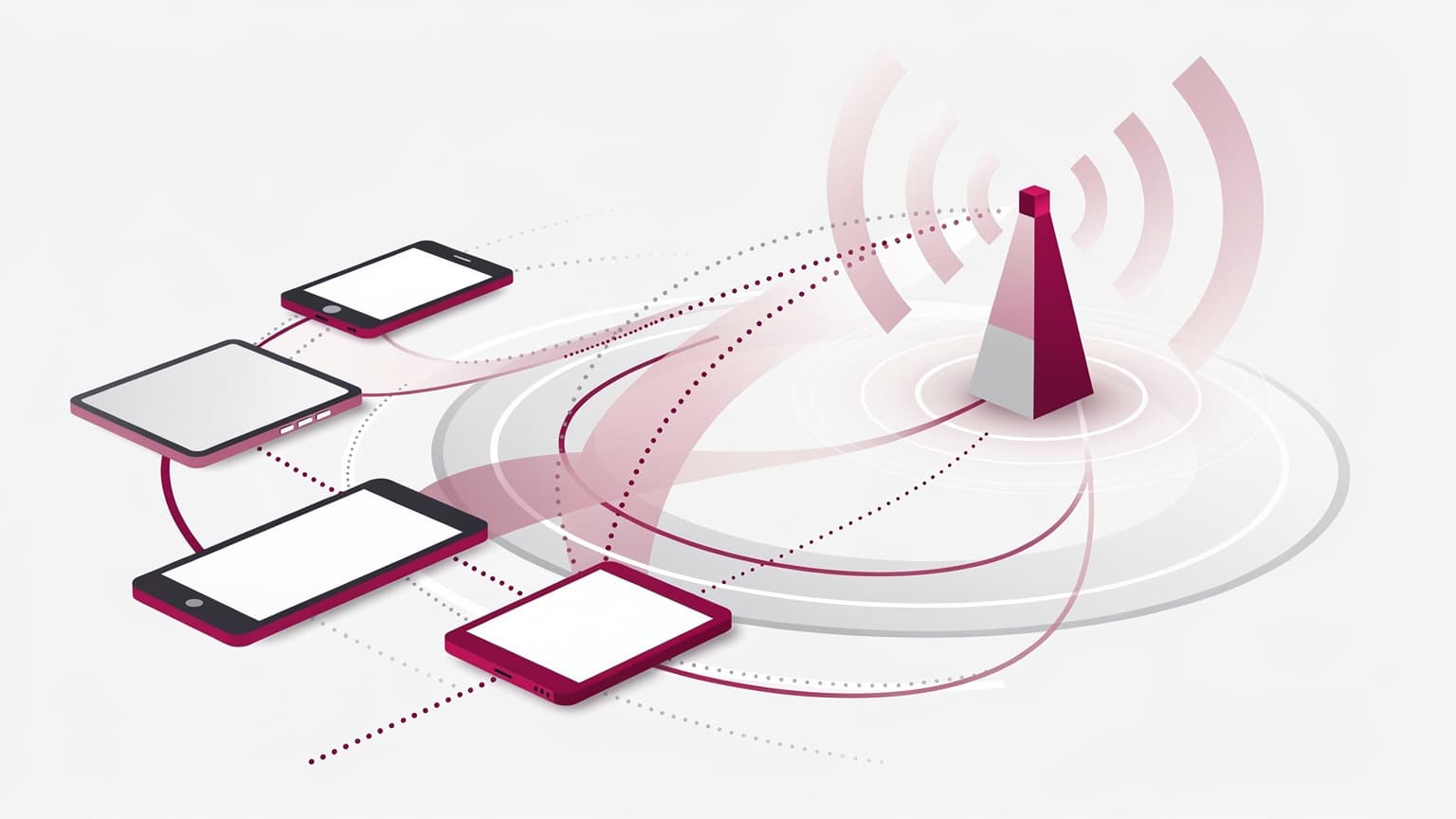
Most travel eSIMs do not support traditional SMS (Short Message Service) for sending or receiving text messages, or for voice calls. They are primarily data-only plans. However, you can still send and receive messages and often receive crucial One-Time Passcodes (OTPs) by keeping your primary SIM active or by leveraging data-based messaging apps.
What eSIMs Actually Do (and Don't Do) with SMS
Most travel eSIMs you can buy from a provider like Cellesim are data-only products. This means they are designed to give you internet access for apps like WhatsApp, FaceTime, Google Maps, Instagram, and TikTok—all the apps that use your data allowance.
What they generally won't do is allow you to send or receive traditional SMS texts, the kind that show up in your phone's native Messages app (unless it's iMessage or RCS, which route over data anyway). They also won't allow you to make traditional phone calls. This is a crucial distinction, especially if you're used to a local SIM that handles everything.
For example, a 10GB South America eSIM for a 50-day trip provides data, not SMS. If you are budgeting for your trip, using an eSIM for data can be a cost-effective choice, but it is important to remember it does not replace your home number for basic texts.
The Primary SIM Trick: Your Lifeline for OTPs
This is a useful method for avoiding being locked out of bank accounts and other services. Your home SIM card (the physical one or your primary eSIM profile) is the most reliable way to receive OTPs or two-factor authentication (2FA) codes.
When you travel, you don't need to remove your primary SIM. Just deactivate its data roaming to avoid outrageous charges. In your phone settings, keep your primary SIM active for calls and SMS, but set your Cellesim travel eSIM as the default for mobile data. This way, your bank or other services can still send codes to your familiar number, which will pop up even without active data on that line. You're effectively using two SIMs: one for data, one for crucial texts. This setup is a lifesaver for digital nomads and anyone needing eSIM and OTP Abroad: Your Two-Factor Authentication Lifeline.
Border Crossing and SMS: The Turkey Example
Border crossings are always a bit of a headache, and SMS can play an unexpected role. Take Turkey, for instance. If you're trying to register a foreign phone with the Turkish government to avoid it being blocked after 120 days (a real policy), you might need a local Turkish number for that process. Travel eSIMs won't cut it there. You'd need a local physical SIM, like a Turkcell Tourist SIM, which comes with its own registration hurdles and costs. The Turkey eSIM will give you data, but not the local number for government registration.
Another common scenario is trying to book a local bus in a country like Vietnam or Thailand. Sometimes, small, independent operators only communicate via local SMS or calls to confirm bookings. Your travel eSIM data will let you use WhatsApp, but if the operator does not use it, you may have difficulty. In this case, having a local physical SIM as a backup can be helpful. Alternatively, you can often buy a ticket in person at the station.
Data-Only eSIMs vs. Local Physical SIMs: The Real Cost
So, an eSIM typically won't handle SMS. Does that mean you should always get a local physical SIM? Not necessarily. Let's crunch some numbers.
| Feature | Travel eSIM (Cellesim) | Local Physical SIM (Example: Vodacom SA) |
|---|---|---|
| SMS/Calls | No traditional SMS/calls (data for apps only) | Yes, local SMS/calls included |
| Data Price (Approx.) | Often lower per GB than domestic roaming or some local SIMs | Varies; can be higher per GB than a bulk data eSIM |
| Installation | QR code, 2 minutes, no ID | Physical store, passport/ID registration (RICA in SA), 15-30 minutes |
| Convenience | Buy before you go, instant activation | Needs airport/store visit, potential language barrier |
| Recharge | Online via app/website | Local shops, kiosks, app (often needs local payment method) |
A Cellesim South Africa eSIM can provide a set amount of data for a fixed period. Compare this to a local SIM in South Africa, which, while offering local SMS and calls, may come with a different per-GB price and the hassle of registration procedures. For data access, travel eSIMs often win on convenience.
When You Really Need SMS: What's the Play?
There are specific situations where a data-only eSIM isn't enough:
- Two-factor authentication (OTPs): As discussed, keep your home SIM active for this. It's the simplest, cheapest solution.
- Local services requiring a local number: Sometimes a restaurant reservation, a delivery service, or a small guesthouse will ask for a local number. For these, if your home number isn't an option, you'd need a local physical SIM. For example, trying to use M-Pesa in Kenya requires a local Safaricom number, a definite case where a travel eSIM won't cut it.
- Emergency calls/texts to local services: While most modern phones can dial emergency numbers without any SIM, having a local number for non-emergency but urgent communication (e.g., calling a taxi service) can be helpful.
For most trips, a travel eSIM is a practical data solution. For SMS, you can rely on your home SIM for OTPs and use messaging apps (WhatsApp, Telegram, etc.) for everything else. If you will be in a single country for an extended period (e.g., a month or more) and anticipate needing local calls or SMS daily, you might consider getting a local physical SIM upon arrival. You can often find a basic pay-as-you-go option, but remember to check for any registration requirements.

So, while your travel eSIM won't replace traditional SMS, it provides the data for all your messaging apps. With a dual-SIM setup, your essential OTPs can still reach you. This allows you to avoid high roaming charges for SMS by using a more tactical approach.
Frequently Asked Questions
Can I send regular text messages with a Cellesim eSIM?
No, Cellesim eSIMs are data-only. This means they provide internet access but do not support traditional SMS or voice calls. You will need to use data-based messaging apps like WhatsApp or iMessage for texting.
How can I receive OTPs (One-Time Passcodes) if my eSIM is data-only?
The best way to receive OTPs is to keep your primary physical SIM or home eSIM active in your phone for calls and SMS, but turn off its data roaming. Your phone can still receive SMS to that number even if it's not using data, allowing you to get verification codes.
Will my travel eSIM work for two-factor authentication from my bank?
No, if your bank sends 2FA codes via SMS to your primary phone number, your data-only travel eSIM will not receive these. You must keep your primary SIM active for SMS to receive these critical security codes.
Is it cheaper to use a travel eSIM for texting via apps or a local physical SIM with SMS?
For most travelers, using a data-only travel eSIM with apps like WhatsApp is significantly cheaper than paying for international SMS roaming on a home SIM. A local physical SIM might offer local SMS, but often involves higher per-GB data costs and registration hassles.
What if I need a local phone number for calls or SMS in a country?
If you specifically need a local number for calls or traditional SMS (e.g., for local bookings or services), a data-only travel eSIM won't suffice. In such cases, you would need to purchase a local physical SIM card upon arrival, which often requires passport registration.