Introduction: The Carnival Connectivity Dilemma
Picture this: you've just touched down at Rio de Janeiro's Galeão International Airport (GIG). The electric energy of Carnival 2027 is already buzzing. You need to hail an Uber, confirm your rental address, and let your family know you landed safely. But your phone screen stares back with "No Service." That's the moment every traveler dreads, and it's precisely why the choice between an eSIM vs local SIM Brazil becomes so important. For an event as huge and vibrant as Carnival, your phone isn't just for sharing photos. It's your map, your communication link, and your safety net. Getting your mobile data right is a key part of your trip planning. First, though, make sure your phone is up to speed by checking our list of eSIM compatible devices.
This guide cuts through the tech jargon. We're not just comparing features. We're looking at this decision from the perspective of a real traveler on the ground, soaking in one of the world's biggest parties. We'll break down the practical upsides and downsides, focusing on what truly matters: security, ease of use, and reliable connection when you need it most.
Quick Comparison: eSIM vs. Local SIM for Brazil Carnival
If you just need the highlights, here's a quick look. We'll get into the specifics of each point further down.
| Feature | eSIM for Brazil | Local Brazilian SIM Card |
|---|---|---|
| Activation | Instant, digital activation before you leave home. | Requires finding a store, queuing, and manual registration upon arrival. |
| Safety & Security | High. No physical card to lose or be stolen. Avoids SIM swap scams and sharing personal documents with street vendors. | Variable. Risk of scams, requires sharing passport/CPF, and potential for card cloning. |
| Convenience | Excellent. Land and connect immediately. No language barrier or store hunting. | Low. Time-consuming process, especially during a peak event like Carnival. |
| CPF Requirement | None. You purchase as a tourist online without local bureaucracy. | Yes. You'll need a CPF (Brazilian tax ID), a major hurdle for tourists. |
| Cost | Transparent, prepaid data packages. May seem slightly higher per GB but has no hidden fees. | Can be cheaper for very large data bundles or long stays, but watch for activation fees. |
| Keeping Your Home Number | Yes. Your primary SIM stays in the phone for calls and texts from home. | No. You must physically remove your home SIM card to insert the local one. |
Deep Dive: Using an eSIM for Brazil Carnival
An eSIM, or embedded SIM, is a digital SIM card built right into your smartphone. Instead of swapping physical chips, you download your data plan directly to your device. For travelers, this technology changes everything.
How It Works
You buy a Brazil data plan online from a provider like Cellesim. They send you a QR code by email. Then, you simply scan that code in your phone's settings to install the eSIM profile. The whole thing takes about two minutes and you can do it from your couch before you even pack. Our interactive setup guide makes it really easy.
Pros of an eSIM for Carnival
- Immediate Connectivity on Arrival: This is the biggest benefit, hands down. The moment your plane lands in Rio or Salvador, you can turn on your eSIM data and be online. No hunting for airport Wi-Fi, no trying to navigate a new city without Google Maps, no stress.
- Enhanced Personal Security: Carnival crowds are huge, and opportunistic theft can happen. With an eSIM, you never have to hand over your phone or passport to a stranger at a kiosk. Your data is delivered digitally, which lowers your risk of scams or identity theft. This is a core reason we look at which is safer, an eSIM or local SIM for Brazil Carnival.
- Bypass the CPF Bureaucracy: To buy a local SIM card in Brazil, you officially need a CPF number (Cadastro de Pessoas Físicas), which is Brazil's individual taxpayer ID. While some vendors might bend the rules for tourists, it's often a big, frustrating hurdle. An eSIM completely avoids this requirement.
- Keep Your Home Number Active: Your physical SIM card slot stays free, meaning you can keep your main phone number active for calls and important texts (like banking verification codes). You just set the eSIM as your primary for mobile data.
- Flexibility and Choice: You pick exactly how much data you need for your trip. You can estimate your usage easily with a smart data calculator to avoid paying for more than you need. If you run out, topping up is instant through an app, so you don't have to find another store.
Cons of an eSIM
- Device Compatibility: The main catch is that your phone has to support eSIMs. Most smartphones made since 2019 (like iPhone 11 and newer, Samsung Galaxy S20 and newer, Google Pixel 3 and newer) do, but it's important to double-check first.
- Typically Data-Only: Most travel eSIMs only provide data. This isn't usually a problem for travelers, who use apps like WhatsApp, FaceTime, or Telegram for calls and messages. But if you truly need a local Brazilian phone number for traditional calls, a local SIM might be necessary.
Deep Dive: Buying a Local SIM Card in Brazil
The old-school way involves buying a physical SIM card from a Brazilian mobile provider like Vivo, Claro, or TIM once you arrive.
How It Works
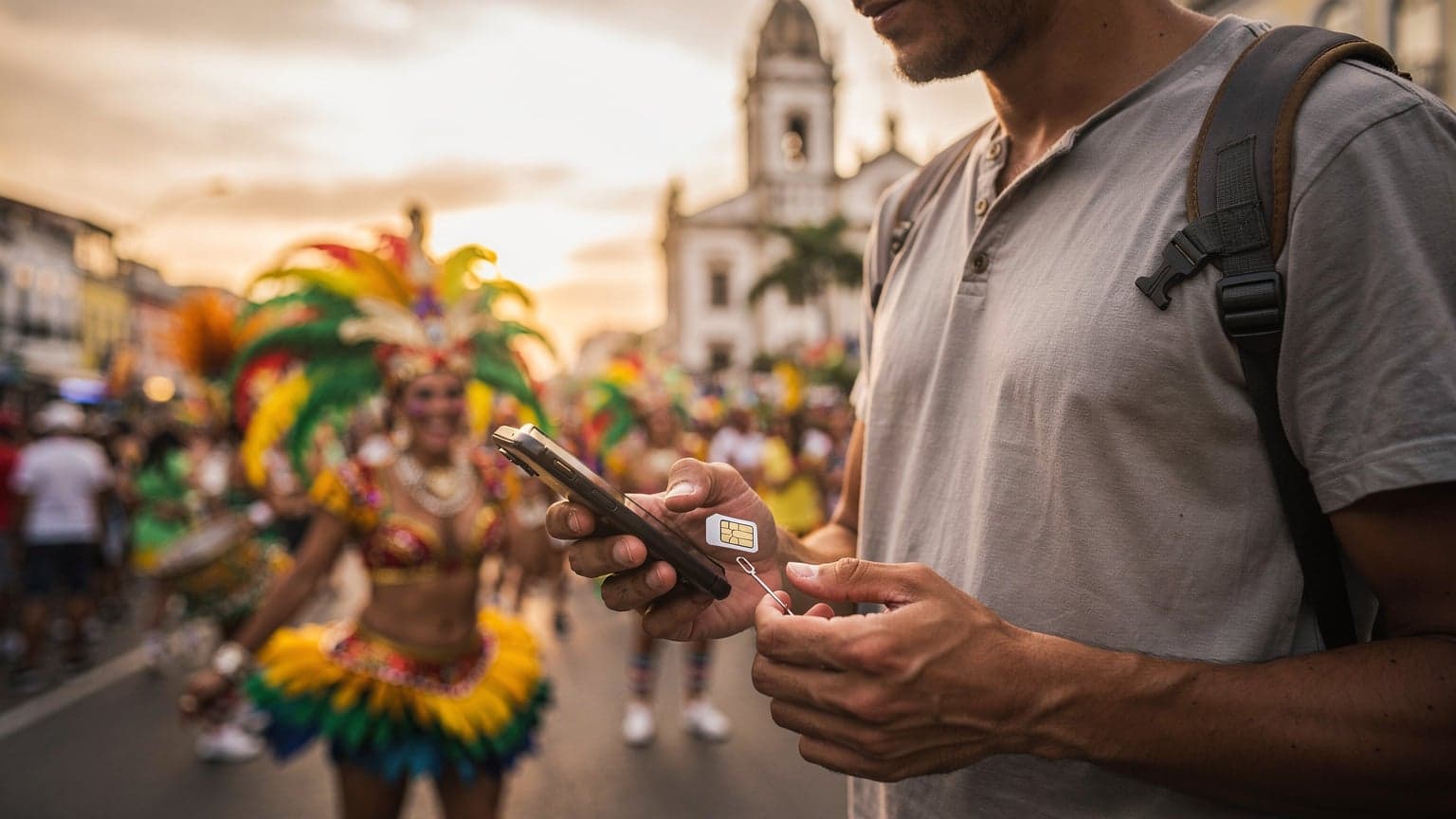
You'll need to find an official carrier store (loja), an authorized reseller, or a kiosk, often found at major airports. You'll have to show your passport and, technically, a CPF number. The vendor will activate the card for you, which can take anywhere from a few minutes to a few hours.
Pros of a Local SIM
- Potentially Lower Cost for Heavy Data Users: If you're staying for a month or more and plan to stream lots of video, a local prepaid plan (plano pré-pago) might give you more gigabytes for your money. You can even use a roaming savings calculator to see how it compares to your home provider's expensive fees.
- Local Phone Number: A local SIM gives you a Brazilian phone number, which can be handy for making local calls to restaurants, tour operators, or your hotel without using data.
Cons of a Local SIM for Carnival
- The CPF Headache: This is a huge deal. The official requirement for a CPF is a major roadblock for tourists. While some airport kiosks might know how to help foreigners, it's not a guarantee, and trying to find a store in the city that will assist you can be a frustrating wild goose chase.
- Safety and Security Risks: This is a big concern, especially during Carnival. You often have to hand over your passport for a photocopy. Buying from less-reputable street vendors increases the risk of getting a bad or already registered SIM, or even worse, having your personal details compromised.
- Language Barrier: Unless you speak fluent Portuguese, trying to activate the card, understand different data packages, and get help can be incredibly difficult.
- Wasted Time: Your first few hours in Brazil are precious. Do you want to spend them waiting in line at a phone store, or heading to your hotel to drop your bags and dive into the atmosphere? This process can easily eat up one to two hours of your trip.
- Losing Your Home SIM: You have to physically take out your tiny home SIM card. It's incredibly easy to misplace, which becomes a big problem when you get back home.
Key Differences Explained: Why Safety Matters Most During Carnival
When you're comparing mobile data options for Brazil, the Carnival atmosphere changes the game. It's not just a vacation; it's a high-energy, crowded, and sometimes chaotic environment. This is where the built-in security of an eSIM truly stands out. For a closer look at this topic in another popular destination, our eSIM vs. Local SIM in Italy guide offers similar insights.
Physical vs. Digital Security
A local SIM is a physical item that can be part of a scam. You often hand your unlocked phone to a stranger to install it. A dishonest vendor could potentially access your device or swap your new SIM with a bad one. An eSIM is a digital profile that you install yourself, using a secure QR code from a trusted provider. The process is clean, private, and safe. At Cellesim, we focus on this security, and you can learn more on our About Us page.
The Risk of Being a Target
Standing at an airport phone kiosk, looking confused and fumbling with your passport and wallet, immediately marks you as a freshly arrived tourist. This can make you a target for pickpockets. An eSIM lets you completely skip this vulnerable moment. You can arrange your ride and find your accommodation discreetly, blending in much more effectively from the moment you land.
Which Should You Choose? Recommendations for Every Carnival Traveler
So, what's the final word in the eSIM vs local SIM Brazil debate? It really depends on how you travel and what your priorities are.
For the Short-Term Carnival Goer (1-3 weeks): eSIM is the Clear Winner
If you're mainly in Brazil for Carnival and the weeks around it, the convenience, safety, and instant connection of an eSIM are unbeatable. You'll avoid all the major headaches of getting a local SIM and can focus on enjoying the party. The slightly higher cost is definitely worth the peace of mind and time saved.
For the Safety-Conscious Traveler: eSIM, Without a Doubt
If your top concern is safety, protecting your personal data, your physical documents, and your device, an eSIM is the only smart choice. It removes several points of vulnerability that come with buying a local SIM card abroad.
For the Digital Nomad or Long-Stay Traveler (1+ Month): It's a Toss-Up
If you're staying in Brazil for a longer time, the potential cost savings of a local SIM might be more appealing. If you're willing to go through the official process of getting a CPF and visiting a carrier store, you can often get a lot of data for a low monthly price. However, for your first few days, an initial eSIM plan is still a good idea to ensure you're connected while you sort out local arrangements. Many travelers from North America, for instance, might be used to simple plans like our United States eSIM offers, and the Brazilian system is much more complex.
For the Budget Backpacker: Weigh Time vs. Money
If every dollar really counts, you might be tempted by a potentially cheaper local SIM. But you have to consider the "cost" of your time and the possible stress. Is saving $10-$15 worth a few hours of hassle and the associated security risks? For many, the answer is no.
Conclusion: Connect Smarter and Safer for Carnival 2027
While a local Brazilian SIM card has its place for long-term residents or those with very tight budgets, for most travelers heading to Brazil Carnival 2027, an eSIM is the better choice. The decision in the eSIM vs local SIM Brazil comparison leans heavily towards the modern solution when safety and convenience are your top priorities.
Being able to land with data already working, skip bureaucratic steps like the CPF, and protect your personal information in crowded places isn't just convenient; it's a vital part of smart, safe travel. You're not just buying a data plan; you're buying a stress-free start to an amazing adventure. Don't leave your connection to chance. Before you go, use a quick eSIM checker to confirm your device is ready, and set yourself up for a smooth and secure Carnival experience.