Late Summer Festival Hopping 2026: Europe's Best eSIMs for Music Events

Rio Carnival GuideLollapalooza (Brazil/Argentina/Chile)Día de los MuertosStreet Safety HacksCrowd Connectivity

Areas de Experiencia Carnaval de Río Lollapalooza LatAm Seguridad en la Calle Conectividad en Multitudes Certificaciones y Credenciales Planificadora de Eventos Culturales Consultora de Seguridad de Viajes Creadora de Contenido Digital Articulos de Isabella Cruz 19 Articulos Cómo el roaming en Singapur te saldrá caro en 2026: Tu alternativa eSIM de bajo coste marzo 15, 2026 Ahorros y comparaciones El roaming en Singapur puede costar hasta €15/MB. Compara la eSIM de Cellesim por solo €0.9/GB y ahorra un 90% en tu viaje de 2026. Descubre cómo.

This article was created with AI assistance and reviewed by our editorial team for accuracy.

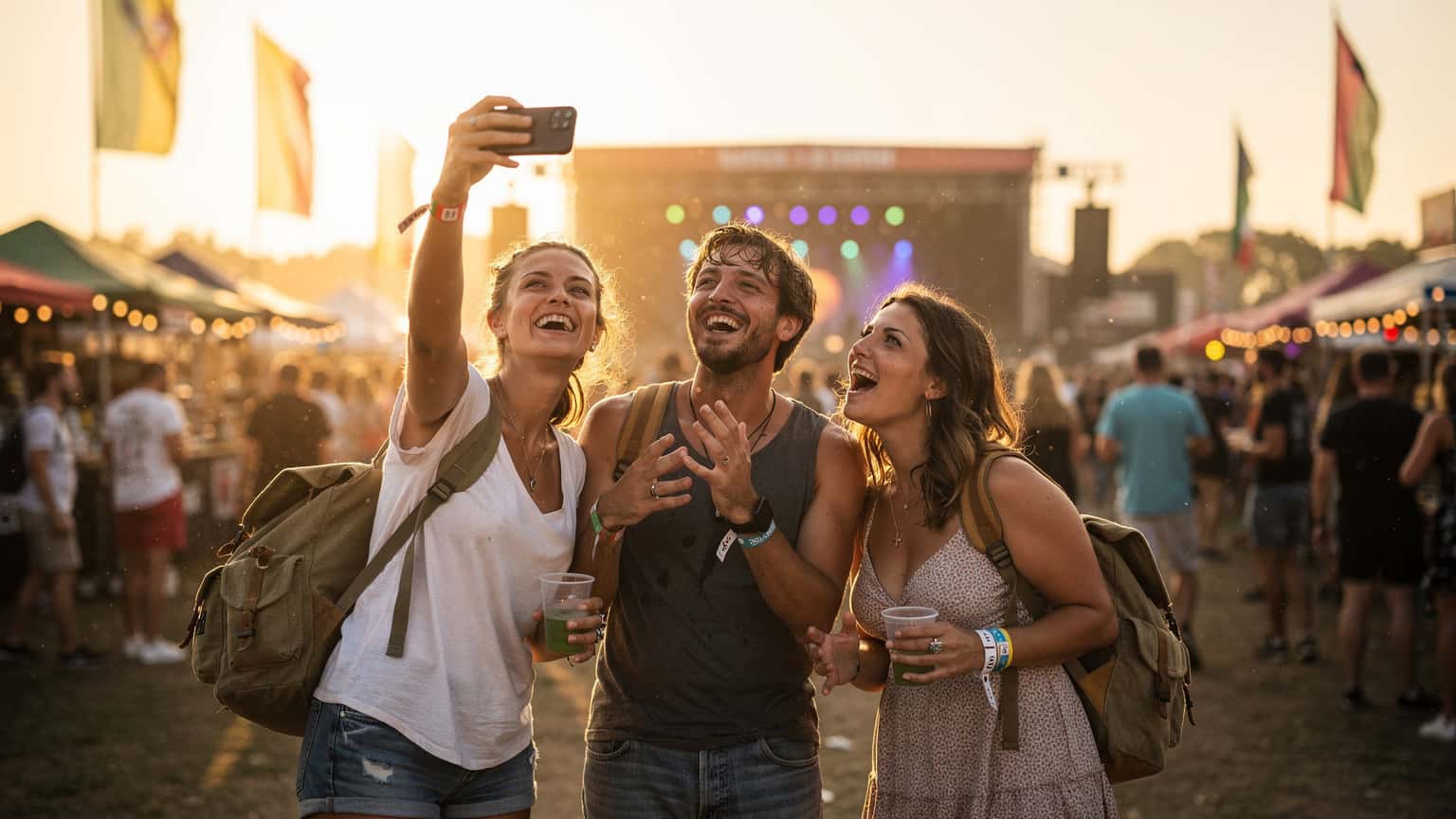
A group of friends at a late summer music festival in Europe, one person holding up a phone with a wide grin, showing off good signal amidst the crowd.
For late summer European festival hopping in 2026, a regional eSIM from a provider like Cellesim offers the best balance of cost, coverage, and convenience across multiple countries. It provides seamless connectivity for navigating crowds, coordinating with friends, and sharing your experiences without incurring expensive roaming charges or needing multiple local SIMs.

Ditch the Roaming Rip-Off: My Festival Data Budget

Let's get straight to it: for my last 8-day late summer festival marathon, hitting Rock en Seine in Paris and Sziget in Budapest, I spent exactly €280 on data. That's for about 30GB across two countries, enough to navigate festival maps, coordinate with friends on WhatsApp, upload my daily stories to the Substack, and even stream a bit of Spotify on the bus between cities. How? Smart eSIM planning. If you're eyeing festivals like Reading & Leeds, Lollapalooza Berlin, or Primavera Sound in Portugal for late summer 2026, you need a data strategy that won't leave you broke or stranded with no signal in a muddy field. Forget those horror stories of €100+ roaming bills or scrambling for sketchy Wi-Fi at a hostel like Wombat's in Budapest (good hostel, terrible Wi-Fi in the common area). Your festival experience hinges on connectivity, and your budget depends on being savvy.

The True Cost of Festival Data Without an eSIM

I've seen it firsthand, friends getting hit with €50 charges for a few hours of Instagram stories. Your home carrier's roaming package for Europe might look decent on paper, but when you're chewing through data trying to find your friends near the main stage or streaming the after-party DJ set, those MBs vanish. A 10GB roaming package from a major US carrier could easily run you $100 for a week. Meanwhile, a regional eSIM covering France and Hungary from Cellesim for a similar data allowance might be half that. That's an extra €50-€70 for festival food, a few beers, or a night bus from Paris to Amsterdam with FlixBus, instead of lining your home carrier's pockets. Every euro counts, especially when you're trying to stretch your trip.

My Data Consumption at Festivals: A Breakdown

When you're at a festival, your data habits change. You're not just browsing. You're constantly checking maps, messaging, posting, and sometimes even making video calls to show off the stage. Here's a rough estimate of what I burn through:

  • Messaging (WhatsApp, Messenger): ~500MB/day (lots of group chats, photo sharing).
  • Social Media (Instagram, TikTok): ~1GB/day (stories, reels, live streams).
  • Navigation (Google Maps, festival apps): ~200MB/day (finding stages, food stalls, toilets).
  • Music Streaming (Spotify, offline downloads): ~300MB/day (for walking to/from the festival, chilling at the campsite).
  • Video Calls (FaceTime, WhatsApp): ~500MB/day (checking in with family, showing friends the vibe).

Total: Around 2.5GB per day. For an 8-day festival trip, that's 20GB. So, my 30GB regional eSIM for €280 was a steal, giving me plenty of buffer. I like to have extra, just in case I get stuck in a long line and need to doomscroll.

Why an eSIM is Your Festival BFF

Imagine landing in Charles de Gaulle, grabbing your luggage, and your data is already working. No hunting for a phone shop near Porte de Clignancourt, no trying to explain 'data plan' in broken French. That's the beauty of an eSIM. It's pre-activated, digital, and ready to go the moment you land. For a festival-goer, time is precious. Every minute spent dealing with logistics is a minute not spent enjoying the music, exploring the city, or sleeping off last night's rave (we've all been there). Plus, losing a tiny physical SIM card in a mosh pit? That's a nightmare I wouldn't wish on my worst enemy.

Instant Connectivity: From Landing to the Main Stage

With an eSIM, you activate it before you even leave home. When your plane touches down at Budapest Ferenc Liszt International Airport, your phone automatically connects to a local network. No fumbling with ejector tools, no language barriers, just instant data. This is crucial for navigating unfamiliar public transport (like the M3 metro in Budapest), finding your hostel, or linking up with your crew who landed earlier. It's one less thing to worry about when you're already juggling tickets, backpacks, and sleep deprivation.

Keep Your Original Number: For Emergency Calls (and Mom)

Another massive perk: your primary physical SIM stays in your phone, active. This means you can still receive calls and texts to your home number, which is essential for two reasons. First, emergencies, obviously. Second, your bank might send verification codes to your home number. Trying to swap SIM cards every time you need an OTP is a pain in the neck. With an eSIM, your festival data runs on one profile, while your original number remains accessible on another. It’s a seamless dual-SIM experience that saves a lot of headaches, especially when you're trying to confirm a ride-share from the festival grounds at 3 AM.

A traveler in a vibrant festival outfit confidently holds their smartphone, displaying a clear signal, against a blurred backdrop of a lively European music festival crowd.

Picking the Right eSIM for Europe's Late Summer Gigs

Choosing the right eSIM for Europe is all about matching your travel itinerary with the best coverage and price. Are you hitting multiple countries, like France for Rock en Seine then Germany for Lollapalooza Berlin? Or are you sticking to one major event like Reading & Leeds in the UK? Your choice matters, because a regional eSIM will cover you across borders, while a country-specific one might be cheaper if you're staying put. Always check the network partners too, as not all carriers are equal, especially in crowded festival zones.

Regional eSIMs vs. Country-Specific: For Multi-Festival Trips

If your late summer involves hitting multiple festivals across Europe, say, going from Tomorrowland in Belgium to Sziget in Hungary, a regional eSIM that covers multiple European countries is your best bet. Providers like Cellesim offer excellent Europe eSIM plans that seamlessly switch between local networks as you cross borders. This means no fiddling with new SIMs, no extra activation steps. It's a single purchase, a single activation, and you're good for the entire trip. This is a lifesaver when you're crossing borders on a night train (like the ÖBB Nightjet) and just want to sleep, not worry about data.

However, if you're only attending one festival in one country, for instance, just Creamfields in the UK, a country-specific eSIM might offer more data for less money, or a slightly better local network preference. Always compare the GB/€ ratio.

Top eSIM Providers for European Festivals 2026

When it comes to Europe, you want providers that partner with the big names, ensuring solid coverage even when thousands of people are trying to upload videos simultaneously. Here’s a quick rundown of what to look for:

Provider (eSIM)Coverage StrengthTypical Data Plans (Europe Regional)Best For
CellesimExcellent (partners with major local carriers like Orange, Vodafone, Deutsche Telekom)10GB for €20 (15 days), 20GB for €35 (30 days), 50GB for €60 (30 days)Multi-country festival hopping, budget-conscious travelers needing reliable data.
AiraloVery Good (wide network of partners)10GB for $27 (30 days), 20GB for $49 (30 days)Reliability, but sometimes slightly pricier per GB.
HolaflyGood (unlimited data plans available)Unlimited Data for $47 (15 days)Heavy data users, but check for fair usage policies and speed caps.

My go-to is often Cellesim because their Europe-wide bundles usually give me the best bang for my buck, especially when jumping between countries. They often connect to the strongest local networks, which is key when you're battling thousands of other phones for bandwidth at a festival.

Local SIMs: The Dirt-Cheap Fallback for Solo-Country Trips

Okay, let's be fair. If you are ONLY going to one country for one festival and staying put, a local physical SIM card can sometimes be marginally cheaper, especially if you can find a good deal from a budget carrier. But it comes with caveats that often make the small savings not worth the hassle for festival travel.

The Pros and Cons of a Physical Local SIM

Pros:

  • Potentially lower cost per GB: In some countries, particularly outside the major Western European hubs, you might find a local deal that's a few euros cheaper than an eSIM for the same data.
  • Direct local support: If you have an issue, you can walk into a local store.

Cons:

  • Time-consuming: You have to find a store, wait in line, present ID (often passport), and get it activated. This can take hours, especially if you land on a weekend or public holiday.
  • Language barrier: Explaining your needs to a shop assistant in a foreign language can be a nightmare.
  • SIM swap hassle: You lose access to your home number unless you have a dual-SIM phone.
  • Border crossing headache: If you move to another country, that local SIM is useless, and you start the whole process over.
  • Loss risk: Tiny physical SIM cards are easy to misplace in a busy festival environment.

For example, if you're only going to Sziget in Hungary, you could grab a Telenor or Vodafone physical SIM at a local kiosk. A 10GB plan might cost you around 15€-20€. But is saving €5-€10 worth the hour-long detour to a phone shop after a long flight, instead of heading straight to your hostel or the festival grounds? For me, absolutely not. My time is worth more than that, especially when I'm on a tight festival schedule. (And let's be real, you're not going to be thinking clearly after an overnight flight.)

Where to Buy Local SIMs and What to Expect

If you absolutely must go the physical SIM route, here's the drill:

  1. At the Airport: Convenient, but often overpriced. Expect to pay a premium.
  2. Major Carrier Stores: Vodafone, Orange, Deutsche Telekom, O2, Telenor, etc. These are usually reliable, but you'll need your passport for registration in most EU countries.
  3. Supermarkets/Kiosks: Sometimes you can find pre-paid SIMs at places like Carrefour, Lidl, or local newsstands. These are often the cheapest, but activation might be self-service and require navigating a foreign-language website.

Always ask about the data allowance, validity period, and if it includes calls/texts (though for festival data, you probably don't care about the latter). Double-check the network coverage for the specific festival location. You don't want to find out Vodafone has no signal at Primavera Sound's Porto location after you've already bought the SIM.

Data Needs at a Festival: What You Really Use

People always underestimate their festival data consumption. It's not just checking directions. It's about staying connected to your friends, sharing the moment, and sometimes, letting everyone back home know you're still alive. You'll use more data than you think, especially in those peak sharing moments. Knowing your actual usage is key to picking the right eSIM plan and avoiding mid-festival data top-ups (which can be more expensive).

The Math of Festival Connectivity

Let's do the math for a typical 4-day festival, assuming a daily usage of 2.5GB (as per my breakdown above):

  • 4 days x 2.5 GB/day = 10 GB total.

Now, if you're doing a longer trip, say, 7 days with travel days in between, where you might use less data (0.5-1GB/day) but still need connectivity:

  • 4 festival days x 2.5 GB/day = 10 GB
  • 3 travel days x 0.8 GB/day = 2.4 GB

Total for a 7-day trip: around 12.4 GB. This means a 15GB or 20GB eSIM plan is a safe bet. Always round up. Running out of data mid-festival is like running out of water in the desert. It's a bad time. I always aim for at least 1.5x my estimated usage, just to be safe. You don't want to be paying for expensive top-ups when you could have bought a larger plan upfront for less.

Apps That Guzzle Your Gigabytes

Be aware of these data hogs:

  • Video streaming: If you're watching YouTube, Netflix, or even high-quality TikToks, it eats data fast. Save it for Wi-Fi.
  • Live streaming: Going live on Instagram or Facebook? That's a huge data drain.
  • High-resolution photo/video uploads: Sending original quality photos and videos to cloud services or friends. Compress them first!
  • Background app refresh: Turn this off for most apps in your phone settings. It's silently consuming data.

A smart move is to download festival maps, timetables, and even some music/podcasts offline before you arrive. Every bit helps. Check out Cellesim's guide on Free eSIM Trial: Unlimited Data in 2026? The Real Backpacker's Take for more budget data strategies.

Activating Your eSIM On The Go: No Fuss, No Frills

Activating an eSIM is surprisingly straightforward, even for a non-techie like me. Most providers, including Cellesim, make it a smooth process, usually involving a QR code. The best part? You can do it from your hostel bed, a cafe in Paris, or even while waiting for your train at Berlin Hauptbahnhof. No interaction with customer service needed, which is a blessing when you're on the move and facing language barriers.

Step-by-Step eSIM Activation: The QR Code Method

This is the most common and easiest way. Make sure you have Wi-Fi connectivity during the activation process. You'll need it to download the eSIM profile.

  1. Purchase Your eSIM: Go to the Cellesim website (or your chosen provider) and select your desired European regional plan (e.g., Cellesim Europe). Complete the purchase.
  2. Receive QR Code: You'll usually get an email with a QR code and detailed instructions. Keep this email accessible. Print it or save it to another device if possible, so you can scan it with your primary phone.
  3. Access Phone Settings: On your iPhone (check out iPhone eSIM 2026: The Engineer's Guide to Flawless Global Data if you need more details), go to Settings > Cellular (or Mobile Data) > Add eSIM. On Android, it's typically Settings > Network & Internet > SIMs > Add eSIM.
  4. Scan QR Code: Select the option to 'Use QR Code' (or similar). Scan the QR code provided in your email.
  5. Follow Prompts: Your phone will guide you through naming the eSIM (e.g., 'Europe Festival Data'), choosing which line is primary for data, and enabling data roaming for the eSIM profile. Ensure you turn off data roaming for your physical SIM to avoid unexpected charges.
  6. Connect to Network: Once installed, your phone should automatically connect to the best available local network. If not, you might need to manually select a network operator from your phone's cellular settings.

I usually do this a day or two before I fly, so I'm not rushing. It takes less than 5 minutes if you have the QR code ready.

Manual Activation: When QR Codes Fail You

In rare cases, a QR code might not scan, or you might not have a second screen to display it. Don't panic. Most eSIM providers also provide manual activation details, which include an SM-DP+ Address and an Activation Code. You'll enter these alphanumeric codes directly into your phone's eSIM settings. It's a bit more tedious but works just as well. Just make sure you type everything correctly, a single typo will throw it off. This is a good fallback, especially if your phone screen is cracked from an over-enthusiastic mosh pit, making QR codes tricky.

A close-up shot of hands holding a smartphone, scanning a QR code for eSIM activation from a laptop screen, with a backpack and travel guide subtly in the background.

Border Crossing with an eSIM: Staying Connected Between Countries

This is where a regional eSIM truly shines for a festival-goer on the move. Imagine taking the train from Paris (Rock en Seine) to Berlin (Lollapalooza Berlin), or a bus from Budapest (Sziget) to Vienna. With a local physical SIM, you'd lose data at the border and have to find a new SIM in the next country. With an eSIM, the transition is seamless. No downtime, no stress, just continuous data.

The Schengen Zone Advantage for eSIMs

Most major European festivals are within the Schengen Area, meaning once your regional eSIM is active, it will automatically connect to partner networks in each country without you lifting a finger. Whether you're crossing from France to Belgium, or from Germany to the Netherlands, your data just keeps working. This is a huge advantage over physical SIMs, where you'd need to buy a new one for each country, unless you buy a specific EU roaming SIM from a local carrier, which often comes with its own set of rules and limitations. (And usually, they're not as flexible as a dedicated travel eSIM.)

Border Crossing Edge Cases and What to Watch Out For

While regional eSIMs are great, there are a couple of things to be aware of:

  • Non-EU Countries: If your festival takes you outside the EU/EEA (e.g., UK after Brexit, or countries in the Balkans), ensure your eSIM plan covers those specific countries. A 'Europe' eSIM usually means EU/EEA. Always double-check the country list. (For example, I had to get a separate eSIM for my trip to Serbia for Exit Festival, as my EU one didn't cover it.)
  • Network Priority: Sometimes, at very specific border regions, your phone might try to hold onto the network of the previous country for a little too long. If you notice a drop in signal or speed after crossing a border, a quick toggle of airplane mode usually forces it to search for the strongest local network in your new country.
  • Remote Areas: While major festival sites usually have boosted coverage, if you're traveling through truly remote areas between festivals, there might be brief periods of no service, regardless of your provider. This is rare in Western Europe but can happen in parts of Eastern Europe or Scandinavia.

For more on smooth international data, check out our piece on Central Asia eSIM 2026: Silk Road Connectivity for the Modern Explorer, which highlights similar cross-border connectivity challenges and solutions.

A traveler sitting on a train, looking out the window at a changing European landscape, with their phone in hand, showing active signal bars as they cross an international border.

Troubleshooting Common eSIM Snags at the Festival

Even with the best planning, sometimes things go sideways. Festivals are chaotic, and network congestion is real. Here are some common issues you might face with your eSIM at a busy European festival and how to fix them without losing your cool (or your friends).

No Service or Weak Signal

This is the most common issue. Here's what to do:

  1. Toggle Airplane Mode: The classic fix. Turn it on for 30 seconds, then off. This forces your phone to re-scan for networks.
  2. Check Network Selection: Go to your phone's Cellular/Mobile Data settings. Under your eSIM profile, look for 'Network Selection' and try switching from 'Automatic' to 'Manual'. Then, select one of the listed partner networks for your eSIM provider (e.g., Orange, Vodafone, Deutsche Telekom). Sometimes, your phone tries to latch onto a weaker network.
  3. Restart Your Phone: The age-old tech support advice for a reason. A full restart can resolve many temporary network glitches.
  4. Check Data Roaming: Make sure data roaming is enabled for your eSIM profile. This is essential for it to work outside your home country.

Slow Data Speeds in Crowded Areas

This isn't always an eSIM issue, but a network congestion issue. Festivals mean thousands of people trying to do the same thing at the same time. Here's how to cope:

  • Avoid Peak Times: Everyone tries to upload during the headliner's set. Try to send your high-res videos a bit earlier or later.
  • Switch to Lower Quality: If you're streaming, drop the quality. For video calls, switch to audio-only if possible.
  • Close Background Apps: Force-quit apps you're not actively using. They might be silently consuming bandwidth.
  • Find a Less Crowded Spot: Sometimes, just moving a few meters away from the densest part of the crowd can make a difference.

Remember, an eSIM connects you to the local network. If the local network is swamped, even the best eSIM can't conjure bandwidth out of thin air. It's like trying to drive on a highway during rush hour, regardless of how good your car is.

Contacting eSIM Support When All Else Fails

If you've tried everything and still have no data, it's time to contact your eSIM provider's customer support. Have your order number and phone details ready. Most reputable eSIM providers offer 24/7 chat support, which is often the easiest way to communicate when you're abroad. They can often check your connection status remotely. (I once had an issue at a border crossing with a misconfigured APN setting, and Cellesim's chat support fixed it in minutes.)

A frustrated festival-goer looking at their phone screen with no signal bars, amidst a blurry background of a vibrant festival crowd, conveying a sense of digital isolation.

Making the Most of Your Festival Data

Data is a resource, and at a festival, it's a precious one. Being smart about how you use your data can save you money and ensure you don't run out when you need it most. It's not about being cheap, it's about being strategic. Every gigabyte counts, especially when you're trying to make your travel budget last for another week in a hostel dorm.

Data-Saving Hacks for Festival Success

  • Download Offline Maps: Before you leave Wi-Fi, download offline maps for the festival grounds and the surrounding city on Google Maps.
  • Download Music/Podcasts: Prepare your playlists offline. Streaming music for hours will eat your data.
  • Use Wi-Fi whenever possible: Many hostels, cafes, and even some festival zones offer free Wi-Fi. Hop on it to do heavy uploads or downloads.
  • Optimize Social Media Settings: Many social media apps have data-saver modes that reduce image/video quality. Turn them on!
  • Turn off Auto-Play Videos: In settings for Facebook, Instagram, etc., disable auto-playing videos.
  • Set Data Limits: Your phone's settings allow you to set a data warning or even a hard limit. This is a great way to monitor your usage.

These small habits add up. You'd be surprised how much data you can save just by being mindful. For more tips on cutting costs, check out Summer Holidays 2026: Families Cut Roaming Costs in Europe with eSIMs, even if you're not a family, the principles of data economy apply.

The Power of Pre-Planning Your Digital Life

Before you even pack your backpack, think about your digital needs. Have your eSIM activated and ready. Load up your phone with essential apps (festival-specific apps, translation tools, ride-sharing apps like Bolt or Freenow). Inform your bank you're traveling. This level of preparation means less stress and more enjoyment at the festival. You're there for the music and the atmosphere, not to wrestle with tech issues.

Final Thoughts on Festival Connectivity

Navigating Europe's late summer festivals in 2026 doesn't have to mean sacrificing connectivity or blowing your budget on data. With a well-chosen regional eSIM, you can enjoy seamless, affordable internet access from the moment you land until you're safely back home. It's about being smart, tactical, and a little bit ruthless with your euros. Don't let a bad data plan be the reason you miss linking up with your friends or fail to capture that epic headliner moment.

My experience across countless festivals, from the chaos of Carnival in Rio to the sprawling grounds of Lollapalooza, has taught me one thing: reliable data is not a luxury, it's a fundamental tool for enjoying your trip and staying safe. So, get your eSIM sorted, pack your glitter, and prepare for an unforgettable late summer festival season. Your wallet and your friends will thank you.

Europe eSIM 2026: Festival Hopping Data, Save €100+ on