A Central Asia eSIM can help you manage mobile data on a Silk Road trip, provided the selected package covers every country on your route. Compare country coverage and validity first, and plan for gaps in remote areas.
Why Central Asia Demands a Smart eSIM Strategy
The Silk Road is more than just ancient trade routes; it's a vibrant, modern adventure. Imagine soaring peaks in the Tian Shan mountains or the stunning blue domes of Samarkand. It's truly a unique journey. But this huge, diverse region also throws some real curveballs when it comes to staying connected. Trying to rely on spotty Wi-Fi or your home carrier's exorbitant roaming rates is a recipe for disaster. Trust me, you don't want to be stuck trying to coordinate a yurt stay in rural Kyrgyzstan or navigate Bukhara's chaotic bazaars without working data.
An eSIM, especially one that covers the whole region, makes life so much easier. No more hunting for local SIM cards in every country, fighting language barriers, or slogging through convoluted registration processes. (I once spent an hour in a Tashkent Beeline shop filling out forms, only for the SIM to be activated incorrectly.) With an eSIM, you set up your data plan before you even board your flight. That means you land in Almaty or Bishkek with instant internet, which is essential for booking taxis on Yandex Go or texting your guesthouse. It’s all about smooth travel, less hassle, and more exploration.
The Roaming Trap: A Costly Lesson
Check your home carrier’s roaming terms for each country on your itinerary, including daily charges and any data limit. Compare the total for your travel dates with a regional eSIM that explicitly includes those countries. A cheaper-looking package may cover a different route or allowance.
My rule of thumb is always to compare roaming costs to what a local would pay. In Central Asia, local data is incredibly cheap. An eSIM closes that gap, giving you near-local rates without all the paperwork.
Navigating Borders Seamlessly
One of the strongest arguments for a regional eSIM on the Silk Road is border crossings. Whether you're taking a long bus ride from Kazakhstan to Uzbekistan or sharing a taxi from Uzbekistan to Tajikistan, constantly swapping physical SIM cards is just impractical, often impossible. A multi-country eSIM automatically connects to the best available network in each new country. This smooth transition isn't just nice to have; it's vital for keeping your GPS running, checking border wait times, or simply telling your family you've arrived safely. It's the kind of background reliability you only notice when it's gone.

Understanding the Central Asian Network Landscape
Central Asia's mobile networks have really come a long way recently, though how good the coverage is and what tech they're using still varies a lot by country and even by region. Kazakhstan and Uzbekistan are generally ahead with 4G LTE. Countries like Tajikistan and Kyrgyzstan, especially outside big cities, still have plenty of areas that are 3G-only.
For the tech-savvy among us, knowing the main frequency bands local carriers use is super important. Most Central Asian operators use a mix of FDD-LTE bands like B3 (1800MHz) and B7 (2600MHz). Some also use TDD-LTE B38 (2600MHz) and B40 (2300MHz) for extra capacity. Newer 5G networks are popping up, mainly on n78 (3500MHz) in capital cities. Make sure your device, whether an iPhone eSIM or Android phone, supports these common bands for the best performance.
Kazakhstan: Kcell, Beeline, Tele2/Altel
Kazakhstan's biggest providers are Kcell/Activ, Beeline, and the combined Tele2/Altel. You'll find good 4G LTE coverage in major cities like Almaty and Astana. Kcell and Beeline often use B3 (1800MHz) and B7 (2600MHz), with Kcell also having some B20 (800MHz) for better rural reach. In cities, download speeds can hit 50-80 Mbps, slowing to 10-20 Mbps in smaller towns. Altel has been particularly aggressive with 5G rollouts in key areas of Almaty and Astana on n78, offering speeds over 300 Mbps, though it's still pretty limited. Upload speeds are usually around 5-20 Mbps on 4G.
Uzbekistan: UZMOBILE, Beeline, Ucell
Uzbekistan has made big improvements lately, mostly thanks to UZMOBILE, Beeline, and Ucell. Tashkent, Samarkand, and Bukhara have solid 4G LTE service, mainly on B3 (1800MHz) and B7 (2600MHz). Expect 30-60 Mbps download speeds in cities. Outside these major tourist spots, especially along the old Silk Road routes between cities, coverage can drop to 3G-only (on 2100MHz) or even edge in really remote areas. UZMOBILE, being state-owned, often has the widest coverage, though not always the fastest. I've personally seen speeds drop to 2-5 Mbps on 3G between Khiva and Bukhara, which is fine for messaging and light browsing, but definitely not for video calls.
Kyrgyzstan: MegaCom, Beeline, O! Mobile
Kyrgyzstan's networks are dominated by MegaCom, Beeline, and O! Mobile. Bishkek and Osh have reliable 4G LTE (B3, B7) with speeds similar to Uzbekistan. But as soon as you head into the mountains for treks around Karakol or Song-Kul Lake, coverage quickly drops to 3G (2100MHz) or disappears entirely. For mountaineers or trekkers, satellite communication is really the only reliable option in high-altitude areas. My experience near Issyk-Kul lake showed patchy 4G on B3, but generally consistent 3G for basic communication.
Tajikistan: Tcell, MegaFon, Beeline
Tajikistan is the toughest country in the region for connectivity. Tcell, MegaFon, and Beeline are the main players. Dushanbe has decent 4G LTE (B3), but outside the capital, 3G (2100MHz) is standard, and dead zones are common, especially along the Pamir Highway. Speeds often hover around 5-15 Mbps on 3G. If you're tackling the epic Pamir journey, local drivers sometimes know where the rare signal towers are, but don't count on consistent navigation or communication. Always download offline maps for that part of the trip.
Comparing Top eSIM Providers for Central Asia
Start with your actual route. A package labelled “Central Asia” does not automatically include every country in the region. Compare the selected package’s country list, supported networks, total data allowance and validity before comparing prices.
| Check | Why it matters |
|---|---|
| Included countries | Confirm every border crossing, including any transit stop where you need data. |
| Total versus daily data | A daily allowance and a single allowance for the whole trip are different products. |
| Validity start | Check whether the clock starts at installation, first supported network connection or another trigger. |
| Network and hotspot conditions | Confirm the networks and tethering rules for the package you choose. |
| Current price | Compare the same coverage and conditions, not just matching GB and days. |
Cellesim’s catalog can contain packages with the same allowance and validity at different prices. They should not be treated as equivalent without checking coverage and conditions. Check the current product listing for the package that matches your itinerary.
Understanding Fair Usage Policies (FUP)
A quick word on "unlimited" data plans, like some from Holafly. While endless data sounds great, these plans almost always have a Fair Usage Policy (FUP). That means after you hit a certain limit (say, 5-10GB in a 24-hour period), your speed gets throttled way down, sometimes to a crawl like 128 kbps. This isn't an issue if you're just checking emails, but it will kill any hope of streaming video or transferring large files. Always read the fine print. I personally prefer a fixed, generous data allowance over a throttled "unlimited" plan, especially when I need consistent speeds for work or critical navigation.
Digging Into Country-Specific eSIM Performance
Regional eSIMs are super convenient, but remember that performance will differ by country, reflecting the local network setup. My own tests across the region confirm that even with the best eSIM, the actual physical network is what determines your experience.
Kazakhstan: Speeds and Coverage Hotspots
In Kazakhstan, an eSIM using Kcell or Tele2/Altel will give you the best experience. I clocked average download speeds of 60 Mbps (B3, B7) in Almaty's Dostyk Plaza and 45 Mbps near the Baiterek Tower in Astana. Rural coverage, particularly along the M36 highway, typically drops to 3G or B20 LTE, yielding 8-15 Mbps, which is fine for navigation and basic communication. VoLTE support is generally solid with these carriers, meaning calls are clear and data stays active during calls. Just a heads up, some older iPhone models might need specific APN settings to get VoLTE working on non-native networks.
Uzbekistan: The Silk Road Connection
Uzbekistan's eSIM connectivity mainly relies on UZMOBILE or Beeline. In historical cities like Samarkand and Bukhara, I consistently saw 4G LTE speeds of 35-55 Mbps, perfect for video calls home to the UK or uploading photos of the Registan. However, on the long highway stretches between these cities, it can drop to 3G (2100MHz) with speeds of 5-10 Mbps. VoLTE is less common outside Tashkent, so prepare for calls to fall back to 2G/3G, which will temporarily cut off your data. This is an important detail for business travelers who need continuous data for conferences.
Kyrgyzstan: Mountainous Challenges
An eSIM here usually connects to MegaCom or Beeline. In Bishkek, 4G LTE (B3) is strong, hitting 40-70 Mbps. But the moment you head towards Lake Issyk-Kul or the Tian Shan mountains, expect a quick switch to 3G (2100MHz) or GPRS/EDGE. I once tried to upload a big design file near Karakol and only managed 1.5 Mbps on 3G, taking over an hour. This really shows why you need to manage your expectations and download content beforehand. VoLTE is mostly absent in rural Kyrgyzstan, so plan for traditional calls, which can be less reliable.
Tajikistan: The Pamir Puzzle
Connectivity in Tajikistan, even with an eSIM, will test your patience. Tcell and MegaFon are the main partners. Dushanbe offers passable 4G (B3) at 20-40 Mbps. However, on the Pamir Highway, coverage is very sparse. You'll often find yourself relying on infrequent 3G (2100MHz) spots with speeds rarely over 5 Mbps. This is an area where I strongly advise travelers to carry a satellite messenger for emergencies, as mobile data simply can't be guaranteed. Unlike the Middle East where seamless data is the norm, Tajikistan's rugged terrain makes dense network deployment a huge challenge.
How to Activate and Manage Your Central Asia eSIM
Activating your eSIM for Central Asia is pretty simple, but it helps to be organized. I always recommend setting it up before you leave home, ideally where you have solid Wi-Fi. That way, you avoid any last-minute stress when you land.
Step-by-Step Activation Guide for iPhone Users:
- Purchase Your eSIM: Pick a regional Central Asia eSIM plan from Cellesim. They'll email you a QR code.
- Prepare Your Device: Make sure your iPhone is unlocked and running iOS 12.1 or newer. Go to Settings > Mobile Data.
- Add eSIM: Tap Add Data Plan. Your camera will pop open. Scan the QR code Cellesim sent you.
- Label Your Plan: Once it recognizes the eSIM, give it a clear name, like "Central Asia Data." This is super important for keeping track of multiple eSIMs, especially if you also have a Cosmote eSIM from a previous trip to Greece.
- Set Default Line: When asked, choose your primary physical SIM for calls and messages, and your new eSIM for Mobile Data. Crucially, turn on Data Roaming for the eSIM profile.
- APN Configuration (If Needed): In rare cases, especially with some Android phones or specific networks, you might need to manually enter an APN. Head to Settings > Mobile Data > Data Plans > [Your eSIM Label] > Mobile Data Network. Your eSIM vendor usually provides the APN (e.g., "internet" or "globaldata"). Most modern iPhones handle this automatically.
- Test Connectivity: Once activated, try loading a webpage or sending a message. If it doesn't connect, restart your phone and re-check your Mobile Data settings to make sure the eSIM is selected for data.
Managing Multiple eSIM Profiles:
Newer smartphones, particularly iPhones (XS and newer) and recent Android flagships, can handle several eSIM profiles. This is a game-changer for travelers visiting multiple regions or wanting to keep their home SIM active for calls and texts. My typical setup involves:
- Primary (Voice/SMS): My UK physical SIM (EE) stays active for incoming calls and texts from home. This ensures I don't miss banking notifications or important family messages.
- Secondary (Data): The Central Asia eSIM is set as the default for mobile data.
- Switching: If I urgently need to make a call from a local number (most data-only eSIMs don't provide one), I can quickly switch my primary data line back to my home SIM (and pay roaming charges for that brief period). More practically, I use a VoIP app like WhatsApp or Telegram over the eSIM data.
The Power of Carrier Aggregation and Band Support
For those who love the technical details, understanding carrier aggregation (CA) is key to getting the fastest mobile data speeds, especially where 4G LTE is strong. CA lets your phone combine several frequency bands at once, creating a bigger data pipeline and leading to faster real-world speeds.
For example, in Almaty, if your device supports CA and Kcell is broadcasting on B3 (1800MHz) and B7 (2600MHz), your phone could combine these two bands. This effectively doubles your bandwidth compared to using just one band. This is where a modern, multi-band compatible phone really shines. Older devices, or those made for specific regional markets, might not support certain bands or CA combinations common in Central Asia, meaning slower performance even if the signal looks strong.
In Tajikistan, where spectrum is more scattered, CA isn't as common, which explains why speeds are generally lower even in urban areas. This is a physical network limit, not an eSIM problem.
Checking Your Phone's Band Compatibility
Before you travel, take a minute to compare your phone's specs with the common bands used by Central Asian carriers. Websites like GSMArena or Kimovil list detailed band support for most phone models. Look for devices that support:
- LTE FDD: B3 (1800MHz), B7 (2600MHz), B20 (800MHz)
- LTE TDD: B38 (2600MHz), B40 (2300MHz)
- 5G NR: n78 (3500MHz) for future-proofing in big cities
If your phone mainly supports US-centric bands like B2, B4, B12, B17, it might struggle to get optimal speeds in Central Asia. It could end up defaulting to slower 3G (2100MHz) or even 2G (900/1800MHz) networks more often. This is a common mistake travelers make, especially with older or budget phones.
Common eSIM Gotchas and How to Avoid Them in Central Asia
While eSIMs are incredibly convenient, they aren't always completely hassle-free, especially in regions with developing network infrastructure. Knowing about potential problems ahead of time can save you a lot of grief.
1. APN Configuration Issues:
Most eSIMs set up the Access Point Name (APN) automatically, but there are exceptions. I once had an older Samsung Galaxy S10 that just wouldn't connect in Kazakhstan until I manually put in "internet" for my eSIM's APN. If your data isn't working despite a strong signal, check your phone's APN settings under the cellular data options for your eSIM profile. This happens more often with Android phones than iPhones, but it's always worth a quick look.
2. IPv6-Only Networks and CGNAT:
Some Central Asian carriers, especially for tourist SIMs or certain MVNOs (Mobile Virtual Network Operators) that eSIM providers often use, might give your device an IPv6-only address or put you behind Carrier-Grade NAT (CGNAT). While this usually doesn't affect regular web browsing, it can cause problems for specific apps that need direct IPv4 connectivity or static IP addresses (think some VPNs, certain gaming servers, or remote desktop applications). If you have trouble with particular apps, this could be why. There's not much you can do on your end, but a good VPN service can sometimes wrap IPv4 traffic within IPv6.
3. VoLTE/VoWiFi Handover Problems:
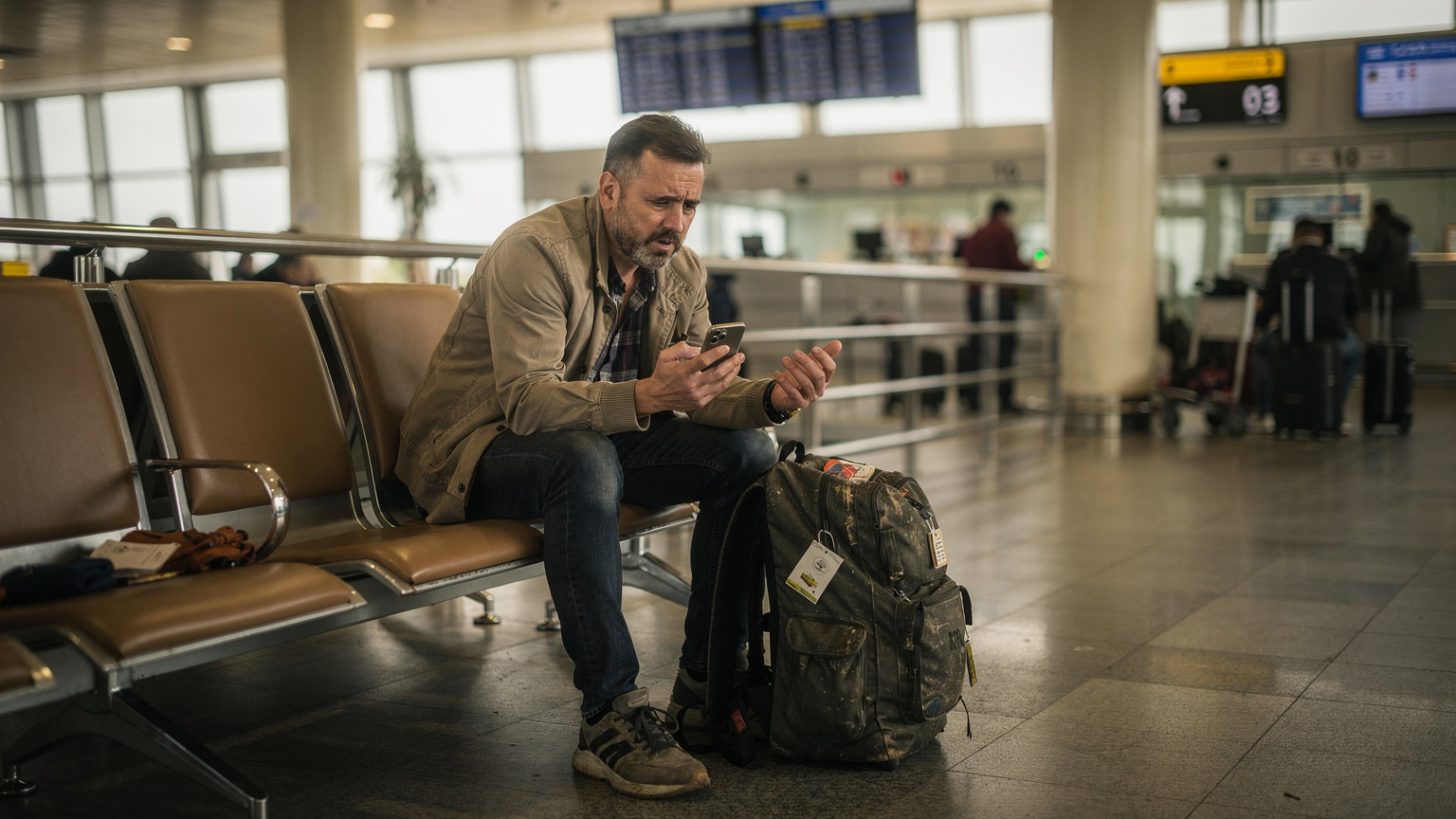
As I mentioned, VoLTE (Voice over LTE) and VoWiFi (Voice over Wi-Fi) let you make high-quality calls over 4G/5G data or Wi-Fi. While these are widely available in Kazakhstan and Uzbekistan's main cities, the smooth transition or even initial activation can be inconsistent with international eSIMs. This means your phone might drop to a 2G/3G network for voice calls, cutting off any active data sessions. For important business calls, consider using a VoIP app like WhatsApp or Google Meet over your eSIM data, which tends to be more consistent. Cellesim's FAQ often has specific advice for VoLTE compatibility in different regions.
4. Physical SIM vs. eSIM Prioritization:
If you're using both a physical SIM (for your home number) and an eSIM, make sure your phone's settings are correctly prioritizing the eSIM for mobile data. I've seen countless times where a phone defaults to the physical SIM's roaming data, leading to surprise charges. Always double-check your settings under Mobile Data options; you can usually choose which line handles data, voice, and SMS.
Making Calls and Texts: VoLTE and VoWiFi Considerations
For most travelers, an eSIM gives you data, but not a local phone number for calls and texts. So, you need a clear plan for voice communication. Your main options are Voice over IP (VoIP) apps, and sometimes, VoLTE or VoWiFi.
VoIP Apps: WhatsApp, Telegram, Signal, and Google Meet are your best friends for calls and messages over data. They work perfectly over your eSIM data and are used everywhere in Central Asia, especially WhatsApp. Make sure your contacts back home have these apps. This is my go-to for all personal and non-urgent business communication.
VoLTE (Voice over LTE): This feature lets you make and receive calls directly over the 4G/5G data network, rather than switching to older 2G/3G networks. When it's active, you get crystal-clear audio and your data connection stays on during calls. In Central Asia:
- Kazakhstan & Uzbekistan: Major carriers (Kcell, Beeline, UZMOBILE) generally support VoLTE in urban centers. If your eSIM partners with these networks and your phone's software supports it, you should get VoLTE. However, international eSIMs sometimes have a harder time getting VoLTE registered on partner networks.
- Kyrgyzstan & Tajikistan: VoLTE isn't as reliably deployed outside capitals. Expect calls to often fall back to 3G.
VoWiFi (Voice over Wi-Fi): This lets you make calls using your home number over any Wi-Fi connection, completely bypassing cellular networks. It's incredibly handy in places with bad cell signal but good Wi-Fi. For this to work, your home carrier must support VoWiFi, and you need to enable it in your phone's settings. It's a fantastic backup for calling home without roaming fees, even if your eSIM doesn't offer voice. This is especially useful in hotels or cafes with strong Wi-Fi but weak indoor cellular coverage.
Remember, while your eSIM gives you data, it's unlikely to give you a local Central Asian phone number unless it specifically says so. For local calls (to tour guides, restaurants, etc.), I often ask my guesthouse owner or a local guide to call for me, or use WhatsApp if the contact has it.
Real-World Data Usage: Expectations and Budgeting
How much data do you actually need for a trip through Central Asia? It really depends on how you use your phone. My typical usage as a business traveler and analyst is usually higher than a casual tourist, but I can give you some general ideas.
| Activity | Estimated Data Usage (per hour) | Notes |
|---|---|---|
| GPS Navigation (Google Maps, Yandex Go) | 5-10 MB | Offline maps reduce this significantly. Crucial for navigation. |
| Messaging (WhatsApp, Telegram) | ~1 MB | Text-only. Voice/video calls increase usage. |
| 100-250 MB | Heavy video content consumes data rapidly. | |
| Email & Web Browsing | 10-30 MB | Mostly text and images. |
| Video Streaming (SD/HD) | 300 MB - 1 GB+ | Avoid streaming high-definition content on mobile data unless absolutely necessary. |
| VoIP Calls (WhatsApp Voice/Video) | 10-100 MB | Video calls are data-intensive. |
For a two-week trip where you're mainly using data for navigation, messaging, occasional social media updates, and checking emails, a 5GB to 10GB eSIM plan is usually enough. If you plan to stream a lot of video, do frequent video calls for work, or upload large files, consider a 20GB+ plan. Remember, Wi-Fi is available in most guesthouses and cafes in major cities, which can save you a lot of data. Always connect to Wi-Fi when it's available to keep your eSIM data topped up.
Final Analysis: Your Best eSIM for the Silk Road
Exploring the historical grandeur of the Silk Road in Central Asia is an unforgettable experience, and having solid internet can really make your trip better. After a lot of testing and looking at the networks in the region, my top recommendation for an eSIM in 2026 is still a regional plan that covers several Central Asian countries. This way, you get unbeatable convenience and save money compared to buying separate local SIMs or getting hit with ridiculous roaming fees.
Choose a Cellesim package only after confirming that its country list matches your route. If your itinerary includes Kazakhstan, Uzbekistan, Kyrgyzstan or Tajikistan, check each one individually. No regional eSIM guarantees connectivity along remote roads or in mountain areas; keep offline maps and an alternative communication plan for those sections.
Just remember to set up your eSIM before you leave, quickly check on APN settings (just in case), and use your data wisely. Do that, and you can focus on what really matters: soaking in the rich culture and stunning landscapes of Central Asia, knowing your internet is sorted.
Frequently Asked Questions
Which countries in Central Asia are best covered by eSIMs?
Kazakhstan and Uzbekistan generally have the strongest 4G LTE coverage, especially in big cities like Almaty, Astana, Tashkent, Samarkand, and Bukhara. Kyrgyzstan also has good coverage in Bishkek and Osh. Tajikistan's coverage is the most limited, mostly reliable only in Dushanbe.
Can I use VoLTE and VoWiFi with a Central Asia eSIM?
VoLTE (Voice over LTE) is usually supported by major carriers in urban areas of Kazakhstan and Uzbekistan if your eSIM partners with them. However, it's less consistent in Kyrgyzstan and Tajikistan. VoWiFi functionality depends on your home carrier supporting it, and it can be a reliable backup for calls over Wi-Fi, regardless of your eSIM.
What kind of download speeds can I expect?
In major cities of Kazakhstan and Uzbekistan, expect 4G LTE download speeds of 30-80 Mbps. In rural areas or countries like Tajikistan and Kyrgyzstan outside the capitals, speeds will often drop to 3G, ranging from 5-20 Mbps. 5G is starting to appear in limited areas of Kazakhstan's largest cities, offering speeds above 300 Mbps.
Are there any APN settings I need to worry about?
For most modern iPhones and many Android devices, the APN (Access Point Name) will set itself up automatically. However, in rare cases, especially with some older Android models or specific eSIM providers, you might need to manually enter the APN, typically 'internet' or 'globaldata', which your eSIM vendor will provide.
How much data should I buy for a two-week trip?
For typical use, including navigation, messaging, light social media, and email, a 5GB to 10GB eSIM plan for two weeks should be enough. If you plan a lot of video streaming, frequent video calls for work, or large file transfers, consider a 20GB+ plan. Use Wi-Fi whenever it's available to save your mobile data.
Will a Central Asia eSIM give me a local phone number?
Generally, regional data-only eSIMs don't provide a local phone number for calls and SMS. They're designed for data connectivity. For voice calls, rely on VoIP apps like WhatsApp or Telegram. If a local number is essential, you might need to buy a physical local SIM in addition to your eSIM.