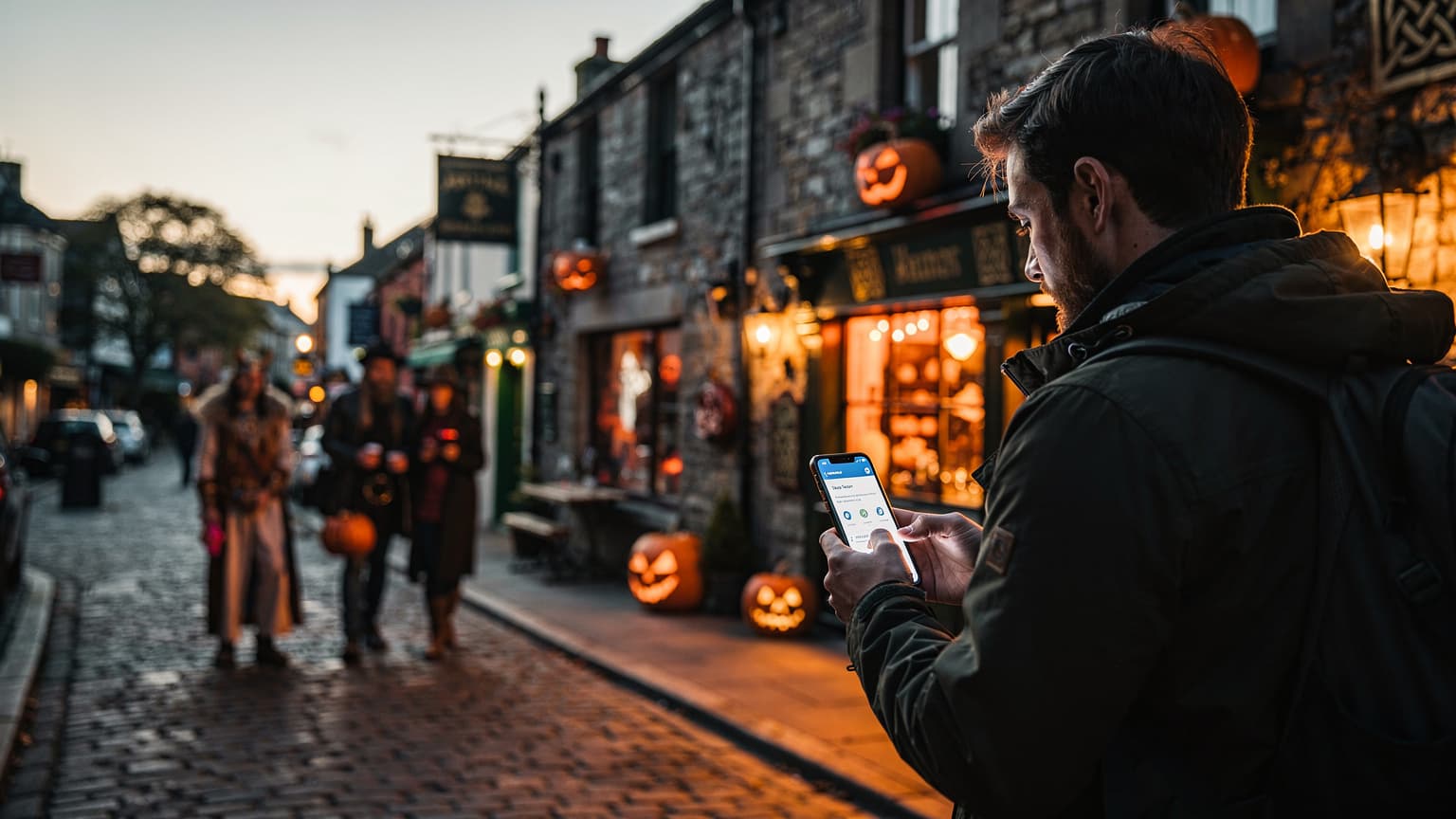
If you're planning a trip to the European Christmas markets in Germany, Austria, France, and Czechia between November 24 and December 23, 2026, listen up: an eSIM is hands-down the smartest way to get mobile data. It's affordable, convenient, and helps you totally bypass those outrageous roaming fees your home carrier loves to charge.
Choosing the Right eSIM for Your Christmas Market Tour
The crisp air, the scent of cinnamon, the twinkling lights - there's really nothing quite like a European Christmas market tour. This year, my personal itinerary takes me from Cologne to Nuremberg, then south to Vienna, east to Prague, and finally, west to Strasbourg. That's four countries, each with its own unique charm and, importantly, its own cellular landscape. Dealing with this without spending a fortune on roaming used to be a huge pain, but eSIMs have made it so much simpler.
When you're hopping between Germany, Austria, Czechia, and France, a multi-country eSIM is your best friend. Seriously, forget trying to wrestle with tiny SIM cards at Düsseldorf airport or attempting to explain your data needs in broken German to a shop assistant on Vienna's Mariahilfer Straße. I've been there, fumbling with my phone after a red-eye flight into Charles de Gaulle, only to find the local SIM card kiosk closed until 9:00 AM. Never again.
For a trip that crosses so many borders, you need a plan that offers consistent coverage across the Schengen Area (and beyond, for Czechia) without forcing you to switch profiles. Cellesim's Europe-42 eSIM is a great option. It covers 42 European countries, meaning your data just keeps flowing as you cross those invisible borders on the ICE train from Nuremberg to Vienna. It's exactly what you need when you're trying to quickly look up the exact opening hours for the Rathausplatz market in Vienna (usually 10:00 AM to 9:30 PM, but always good to double-check).
Understanding Data Needs for Festive Travel
So, how much data do you actually need for a Christmas market trip? You probably won't be streaming Netflix right in the middle of a bustling square, though I did once spot someone trying to watch a football match on their phone at the Nürnberger Christkindlesmarkt, bless their heart. Most of your data will go to things like navigation (Google Maps is a lifesaver in Prague's Old Town, trust me), quick searches for market stall reviews, uploading a few dozen photos to Instagram, and keeping in touch with your travel buddies.
For a two-week trip, I usually find that 10-15 GB is plenty. That's enough for daily mapping, social media updates, checking train schedules on Deutsche Bahn or ÖBB, and even a few video calls home. If you're a really heavy user, constantly uploading high-res photos or relying on your phone for entertainment on longer train journeys, then maybe consider a 20 GB plan. Keep in mind that WiFi is often available at hotels and many cafes, so you won't be completely reliant on cellular data.
Multi-Country eSIM Plans: What to Look For
When you're comparing multi-country eSIMs, don't just look at the price per gigabyte. Think about the network partners in each country. For example, in Germany, you want to be on Telekom.de or Vodafone D2. In Austria, A1 or T-Mobile. For Czechia, O2 CZ or T-Mobile CZ. And in France, Orange or SFR are usually excellent. A good eSIM provider will partner with the strongest networks in each region, making sure you don't get stuck on some obscure carrier with spotty coverage when you're trying to find your way from Prague Castle to the Charles Bridge.
Also, check the validity period. Most Christmas markets run from late November until just before Christmas, so a 30-day plan is often perfect for a two-week trip, giving you some wiggle room. Some providers offer shorter or longer durations, so make sure it aligns with your itinerary. My advice? Get a plan that covers your whole trip, plus a few extra days, just in case a flight gets delayed or you decide to stay a bit longer over a last mug of Glühwein in Strasbourg's Petite France.
Cologne Cathedral Christmas Market and the Rhine
Our journey kicks off in Cologne, a city dominated by its incredible cathedral. The Weihnachtsmarkt am Kölner Dom, right below those towering spires, is truly magical. It usually opens around November 24 and runs until December 23, from 11:00 AM to 9:00 PM on weekdays, and until 10:00 PM on weekends. The best way to get around the city (and to other markets like Heinzels Wintermärchen in the Alter Markt or the Harbour Christmas Market at the Chocolate Museum) is using the KVB tram and U-Bahn system.
Having reliable data here is critical, not just for figuring out transit routes on the KVB app, but also for checking how crowded places are. These markets get packed, especially on Friday and Saturday evenings. My secret? I use an app like 'Christmas Market Finder' (yes, it's a real thing) for live updates to plan my entry points. You really don't want to get stuck in a human traffic jam near the giant Christmas tree by the cathedral, especially if you're trying to meet someone.

Connectivity Tips for Cologne
In Cologne, you'll mostly connect to Telekom.de or Vodafone D2. Both offer fantastic 4G/5G coverage throughout the city and nearby areas. Make sure your eSIM profile is active and working even before you step off the train at Köln Hauptbahnhof. There’s nothing worse than trying to find your pre-booked apartment in the Ehrenfeld district with no data, especially after a long journey.
I once landed in Frankfurt, planning to catch an early IC train to Cologne, only to discover my prepaid physical SIM card from a previous trip had expired. The headache of trying to buy a new one at the airport, then activating it, while exhausted and juggling luggage, taught me a valuable lesson. An eSIM completely eliminates that physical SIM card dance, making your arrival so much smoother. You can activate it days before you even leave home.
Nuremberg's Christkindlesmarkt: A Timeless Tradition
Next up, Nuremberg. The Christkindlesmarkt here is one of Germany's oldest and most famous, running from November 29 to December 24, 2026. It's located in the Hauptmarkt, right in the heart of the Old Town. The market is open daily from 10:00 AM to 9:00 PM, closing at 2:00 PM on Christmas Eve. You absolutely have to try a Nürnberger Rostbratwurst and some Lebkuchen.
Getting around Nuremberg is easy with the VGN public transport network, which includes U-Bahn, S-Bahn, trams, and buses. I often use the 'DB Navigator' app to check regional train connections for day trips to nearby Rothenburg ob der Tauber, which also has a charming market. Reliable data keeps those schedules updated in real time, stopping you from missing the last train back to Nürnberg Hauptbahnhof.
Data Usage in Nuremberg
Whether you're exploring the Kaiserburg (Imperial Castle) or hunting for the perfect hand-carved ornament, your data will be working hard. Google Lens is amazing for translating German signs or menus at the market stalls, and it does use a fair bit of data. Plus, capturing the magical atmosphere of the Christkindlesmarkt means plenty of photos and videos. So, ensure your eSIM plan has enough juice.
Another thing to keep in mind: many smaller market stalls might only accept cash, but larger ones, and certainly most permanent shops in the Altstadt, will take card payments. Having data lets you quickly check your banking app for transactions, or even use mobile payment options if your bank and phone support them. I always keep an eye on my spending, especially when those charming wooden toys start calling my name.
Vienna: A Waltz Through Imperial Markets
From Nuremberg, it's a smooth train ride on the ÖBB to Vienna, Austria. Vienna boasts several spectacular Christmas markets, but the biggest and most famous is the Wiener Christkindlmarkt am Rathausplatz, which operates from November 16 to December 26, 2026 (hours vary, generally 10:00 AM to 9:30 PM). Other great markets include the Schönbrunn Palace Culture and Christmas Market (opens Nov 23, closes Dec 26, 10:00 AM to 7:00 PM) and the charming Spittelberg Christmas Market. Getting between these glorious sites is super easy with the Wiener Linien (U-Bahn, tram, bus) network.
Connectivity Across Vienna
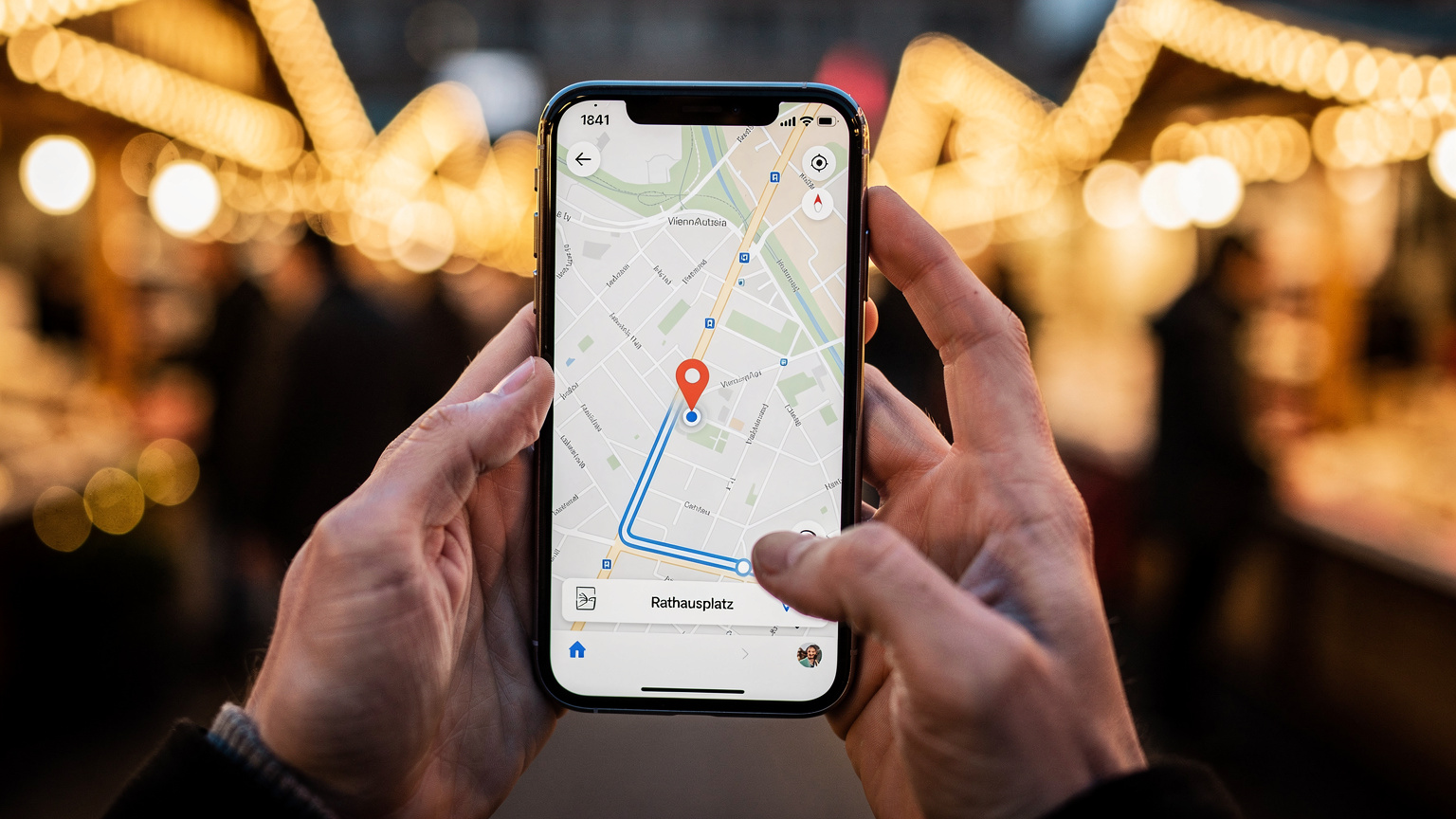
In Vienna, you'll likely connect to A1 Telekom Austria or Magenta Telekom. Both are very reliable. Data here is essential for using the WienMobil app for transit, reserving tickets for Schönbrunn Palace, or simply finding the best coffee house in the Innere Stadt for a quick escape from the cold. (I highly recommend Café Central, though be prepared for a wait, especially during peak season.)
One time, I was trying to find a specific antique shop near the Naschmarkt, relying only on public WiFi at my hotel. The WiFi signal got weaker the further I went, leaving me lost in an unfamiliar part of Margareten. I wasted an hour trying to get my bearings. An eSIM gives you that constant connection, preventing those frustrating moments when you're just trying to find a particular street stall selling handmade nativity scenes.
Prague: Old Town Square Charms and Trdelník
A quick train ride from Vienna (often on RegioJet or České dráhy) brings us to Prague, Czechia. The main Christmas markets are in the Old Town Square (Staroměstské náměstí) and Wenceslas Square (Václavské náměstí), typically running from November 30, 2026, to January 6, 2027. They're usually open from 10:00 AM to 10:00 PM daily. Don't leave without trying a Trdelník and some Svařené víno.
Prague's public transport, run by DPP, is incredibly efficient, with a comprehensive metro, tram, and bus network. I use the 'PID Lítačka' app for tickets and schedules. Data allows you to buy tickets on the go, check for delays (rare, but they happen), and navigate the charming, winding streets of Malá Strana, perhaps looking for a specific puppet shop or a traditional Czech restaurant for dinner.
Staying Connected in the Czech Capital
In Prague, your eSIM will connect to operators like O2 CZ, T-Mobile CZ, or Vodafone CZ. All provide strong 4G/5G signals. Given Prague's popularity, especially during the festive season, having your own dedicated data connection is much better than relying on often-overloaded public WiFi networks.
I remember trying to meet up with a local friend near the Astronomical Clock in Old Town Square. The free public WiFi was so slow and unreliable with thousands of people trying to use it that my messages wouldn't even send. We ended up missing each other for nearly an hour. Having an active eSIM prevents those communication breakdowns, making sure you can meet friends or confirm restaurant reservations without a hitch.
Strasbourg: Capitale de Noël and Alsatian Delights
Our final market stop takes us to Strasbourg, France, famously known as the 'Capitale de Noël'. Its market is one of the oldest and largest in Europe, spread across various squares, including Place Kléber and Place de la Cathédrale. It usually runs from November 24 to December 24, 2026, from 11:00 AM to 8:00 PM on most days, with longer hours on Fridays and Saturdays. The CTS operates a comprehensive tram and bus network, making it easy to hop between markets and explore the picturesque Petite France district.
French Connectivity for Festivities
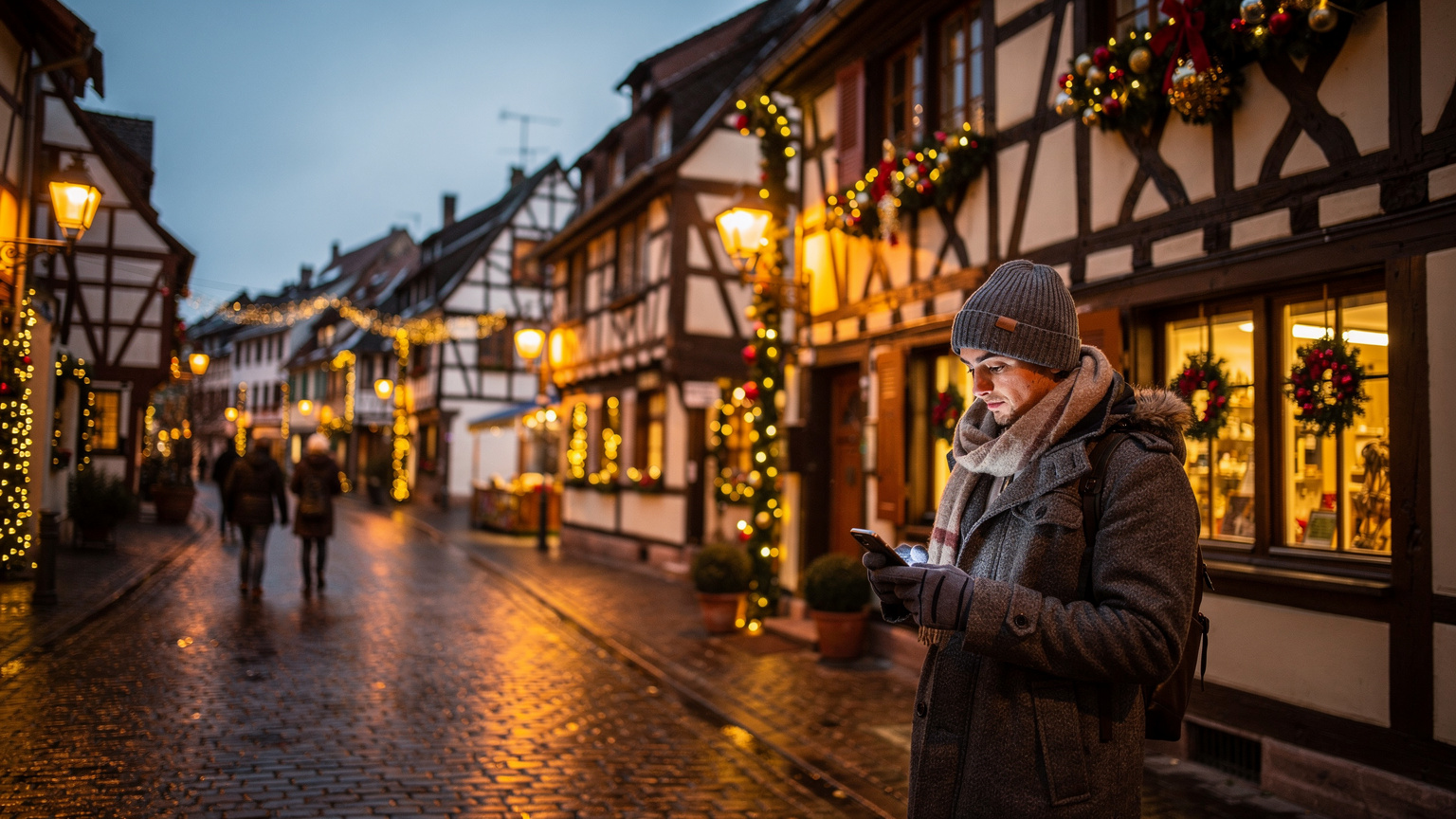
In Strasbourg, your eSIM will connect to the networks of Orange, SFR, or Bouygues Telecom. All are strong. Data is absolutely necessary for finding the various market locations, checking the schedule for the famous Great Christmas Tree lighting at Place Kléber, or finding a traditional Alsatian Winstub for dinner. I often use the 'Strasbourg Eurométropole' app for local info and event listings. This city is a foodie's dream, so having data to quickly look up reviews for tarte flambée spots is a must.
Also, consider using your data to stay connected with loved ones back home. A quick video call from the foot of the Strasbourg Cathedral, all lit up at night, is a memory worth sharing. And for those moments when you're planning your onward journey, maybe to Paris or back to Germany, having access to real-time train updates on the SNCF app is invaluable.
eSIM vs. Local SIM Cards and Roaming Bundles: The Real Cost
This is where my inner budget expert really gets going. For years, I’ve been crunching the numbers on data costs, and for multi-country European travel, eSIMs always win. Let's break down why.
The Hidden Traps of US/UK Carrier Roaming Bundles
Many US and UK carriers offer "international roaming bundles" or "travel passes." On the surface, they sound super convenient. T-Mobile's 'Magenta Max' plan, for example, includes international roaming at 256 kbps in many countries. That's barely enough to load a Google Maps page, let alone do anything more data-intensive. For faster speeds, they'll charge you for a 'high-speed data pass' - often $5-$10 per day for a measly 500 MB. That adds up incredibly fast. A two-week trip could easily cost you $70-$140, and you're still likely to run out of data before the day is over.
Similarly, UK carriers like Vodafone or EE might offer daily passes for a flat fee, but again, the data allowances are usually tiny, and if you go over them, the per-MB rate becomes exorbitant. I once paid £8 for 100MB of data in Italy because I forgot to turn off my data roaming - a mistake I swore I'd never repeat. These bundles are designed to seem convenient but are rarely the most economical choice for travelers who use their phone regularly.
The Hassle Factor of Local Physical SIMs
Before eSIMs, getting a local physical SIM card was the go-to budget option. You'd land, find a phone shop, buy a SIM, insert it, activate it, and maybe even top it up. This works okay if you're staying in one country for a month. But for a multi-country Christmas market tour, imagine doing this four times: in Germany, then Austria, then Czechia, then France. Each time, you'd be paying for a new SIM card (often €10-€20 just for the card, before data), dealing with potential language barriers, and possibly losing your home SIM card. It's a logistical nightmare.
Not to mention, many EU-based prepaid SIMs require registration with ID, which just adds another layer of bureaucracy. My personal breaking point was trying to buy a local SIM in a small town in rural France, only to be told they couldn't activate it without a French residential address. I was stuck for two days without data until I got to a larger city. That kind of frustration is precisely what an eSIM helps you avoid.
| Option | Pros | Cons | Typical Cost (2-week trip, 15GB) |
|---|---|---|---|
| Multi-Country eSIM (e.g., Cellesim) | Seamless cross-border, instant activation, keep home SIM active, wide coverage, competitive pricing | Requires eSIM-compatible device, initial setup might be unfamiliar to some | $25-$45 |
| US/UK Carrier Roaming Bundle | Convenient if minimal data needed, no setup required | Very expensive per GB, often throttled speeds, data limits are low | $70-$140+ (for slow speeds/limited data) |
| Local Physical SIM Card (per country) | Potentially good local rates, fast speeds | Huge hassle for multi-country trips, risk of losing home SIM, activation issues, language barriers, requires physical SIM slot | $80-$150 (4 SIMs x ~$20-35 each + data) |
The Clarity and Cost-Effectiveness of eSIM
An eSIM simplifies everything. You buy your data plan online, get a QR code, scan it, and you're set. No physical cards, no waiting in registration lines, no language barriers. You keep your home SIM active for calls and texts (though I usually recommend using WhatsApp or similar over data for messaging), and your eSIM handles all your data needs. It's a digital solution to a physical problem, and it's almost always cheaper per gigabyte for true high-speed data across multiple countries.
For a trip like this, you're looking at spending between $25 and $45 for 10-20GB of data with a good eSIM provider. Compare that to the hundreds you might spend on roaming or the time and money wasted on multiple local SIMs. It's really a no-brainer. For more on making your data dollars stretch, check out Cellesim's FAQ.
Getting Your eSIM Ready: A Step-by-Step Guide
Setting up an eSIM is pretty simple, but it's much better to do it before you're scrambling through the terminal at Frankfurt Airport. Here’s how I usually do it:
- Check Device Compatibility: First, make sure your phone actually supports eSIM. Most newer iPhones (XS and later), Google Pixels (3 and later), and many Samsung Galaxy models (S20 and later) are compatible. Just double-check your specific model.
- Purchase Your eSIM Plan: Go to a reliable eSIM provider like Cellesim and pick a multi-country European plan that fits your data needs and how long you'll be traveling. For this Christmas market route, a Europe eSIM with at least 15GB for a 30-day validity would be perfect.
- Receive Your QR Code: After you buy it, you'll typically get an email with a QR code and manual installation details. I always recommend printing the QR code or saving it to another device (like a tablet or laptop) so you can easily scan it with your phone.
- Install the eSIM Profile: On your phone, go to Settings > Cellular (or Mobile Data) > Add eSIM. Choose to use a QR code, and scan the code you received. Just follow the on-screen prompts to add the cellular plan.
- Label Your eSIM: Once it's installed, give your new eSIM profile a clear name, like 'Europe Travel' or 'Christmas Markets 2026'. This helps avoid confusion later on.
- Configure Data Roaming: Before you even leave, switch your data roaming OFF for your primary (home) SIM to prevent any accidental charges. Set your new eSIM as your primary line for cellular data. Keep your home SIM active for calls/texts if you expect them, but definitely make sure its data roaming is off.
- Activate When You Land: When you arrive in Europe, make sure your eSIM is enabled and data roaming is turned on specifically for that eSIM profile. Your phone should automatically connect to a local partner network. If it doesn't, a quick restart often fixes it.
Troubleshooting Common eSIM Issues on the Go
Even with the best planning, sometimes things don't go perfectly. I've definitely had my share of connectivity hiccups over the years, from Berlin's busy Mitte district to the quieter streets of Salzburg. Here are a few common issues and how to fix them:

- No Connection After Landing: First, restart your phone. This genuinely solves about 80% of problems. Then, double-check that your eSIM profile is enabled and that 'Data Roaming' is turned on specifically for that eSIM.
- Slow or Intermittent Data: Manually select a network operator. Sometimes your phone might connect to a weaker partner. Go to Cellular/Mobile Data Settings > your eSIM > Network Selection > turn off Automatic, and try selecting one of the major local carriers (e.g., Telekom.de in Germany, A1 in Austria, Orange in France).
- Can't Make Calls/Send Texts: Remember, most data-only eSIMs don't include a local phone number. Use apps like WhatsApp, Signal, or FaceTime over data for communication. If you absolutely need a local number, you'd need a different type of eSIM or a local physical SIM.
- Data Depleted Faster Than Expected: Check background app refresh. Many apps use data even when you're not actively using them. Go into your phone's settings and restrict background data for non-essential apps. Also, consider downloading offline maps (Google Maps allows this) for areas you'll be exploring a lot.
- eSIM Profile Disappeared: This is rare but can happen if you accidentally delete it. If you still have the QR code, you can try reinstalling it. Otherwise, contact Cellesim support; they can usually resend the QR code or help with manual setup.
Maximizing Your Christmas Market Experience with Connectivity
Having reliable data isn't just about avoiding roaming fees; it's about making your travel experience so much better. Imagine being able to instantly share that perfect photo of the Strasbourg Cathedral lit up at night, or quickly looking up the German phrase for 'another Glühwein, please!' (Noch einen Glühwein, bitte!) without missing a beat.
Here are some ways I personally use my eSIM connectivity on these festive trips:
- Real-time Transit: Use local transit apps (like KVB-App in Cologne, VGN in Nuremberg, Wiener Linien in Vienna, DPP in Prague, or CTS in Strasbourg) to get around efficiently. Real-time updates mean less standing around in the cold.
- Offline Maps & Translation: Download Google Maps for offline use, but then use your data for live traffic and walking directions, especially through crowded market streets. Google Translate is also incredibly helpful for quick chats with vendors, especially when you're trying to figure out if that sausage is pork or veal.
- Market Research: Use apps like 'TripAdvisor' or 'Google Reviews' to find the best market stalls for specific foods or crafts. Sometimes the best gingerbread is hidden away in a less obvious corner.
- Emergency Preparedness: In the rare event of an emergency, having an active data connection lets you quickly access emergency services, your travel insurance details, or contact your embassy. It's a small peace of mind that means a lot.
- Staying in Touch: WhatsApp, Signal, and other messaging apps keep you connected with family and friends. A quick video call from the Christmas markets can share the magic with those who couldn't join.
Heavy data usage, especially with 5G, can drain your phone battery really fast. I always carry a portable power bank. There's nothing worse than your phone dying just when you're trying to navigate back to your hotel after a long day of market hopping and mulled wine.
So, as you plan your enchanting journey through the European Christmas markets of 2026, remember that a reliable eSIM isn't just a tech gadget; it's your key to a smooth, stress-free, and budget-friendly adventure. Enjoy every single moment, from the scents of roasted almonds in Nuremberg to the festive glow of Strasbourg, knowing your connectivity is completely taken care of. Happy travels, and a very Merry Christmas!
Frequently Asked Questions
Which European countries are typically covered by a multi-country eSIM for Christmas market travel?
A good multi-country eSIM for European Christmas markets will usually cover all 27 Schengen Area countries, plus others like the UK and Switzerland. For a route through Germany, Austria, Czechia, and France, an eSIM that includes these countries is essential. Cellesim's Europe-42 plan, for instance, covers a wide range of nations, ensuring seamless connectivity across borders.
How much data do I need for a two-week Christmas market trip through Germany, Austria, Czechia, and France?
For a two-week trip, 10-15 GB of data is generally sufficient for most travelers. This covers daily navigation, social media updates, checking public transport schedules (like the KVB or Wiener Linien apps), and occasional video calls. If you plan to stream a lot of video or frequently upload high-resolution content, consider a 20 GB plan to be safe.
Can I use my home phone number for calls and texts while using an eSIM for data in Europe?
Yes, absolutely. One of the main benefits of using a data-only eSIM is that you can keep your primary (home) SIM active. This allows you to receive calls and texts to your usual number, while the eSIM handles all your mobile data. Just remember to turn off data roaming for your home SIM to avoid unexpected charges.
What's the best way to activate an eSIM before I travel to Europe for the Christmas markets?
The best way to activate your eSIM is at home, before you even leave. Purchase your plan online, receive the QR code via email, and scan it with your phone in a familiar, stable WiFi environment. This ensures the eSIM profile is correctly installed. Once you land in Europe, simply enable the eSIM and turn on data roaming for that profile, and you should connect automatically.
Are there any specific apps I should download to maximize my eSIM data usage during my European Christmas market tour?
Yes, several apps will enhance your trip. Download local transit apps like KVB (Cologne), VGN (Nuremberg), Wiener Linien (Vienna), DPP (Prague), and CTS (Strasbourg) for real-time schedules. Google Maps (with offline maps downloaded) and Google Translate are invaluable. Messaging apps like WhatsApp or Signal will keep you connected with friends and family over data.
What are the typical operating dates and hours for the major Christmas markets in Germany, Austria, Czechia, and France in 2026?
While exact dates can vary slightly, most major Christmas markets like Cologne Cathedral, Nuremberg Christkindlesmarkt, Vienna Rathausplatz, Prague Old Town Square, and Strasbourg's Capitale de Noël typically open from late November (around Nov 24-30) and run until December 23-26, with Prague sometimes extending to early January. Daily hours are usually 10:00 AM to 9:00 PM, with some variation for weekends and closing days.
See also: eSIM for Czechia