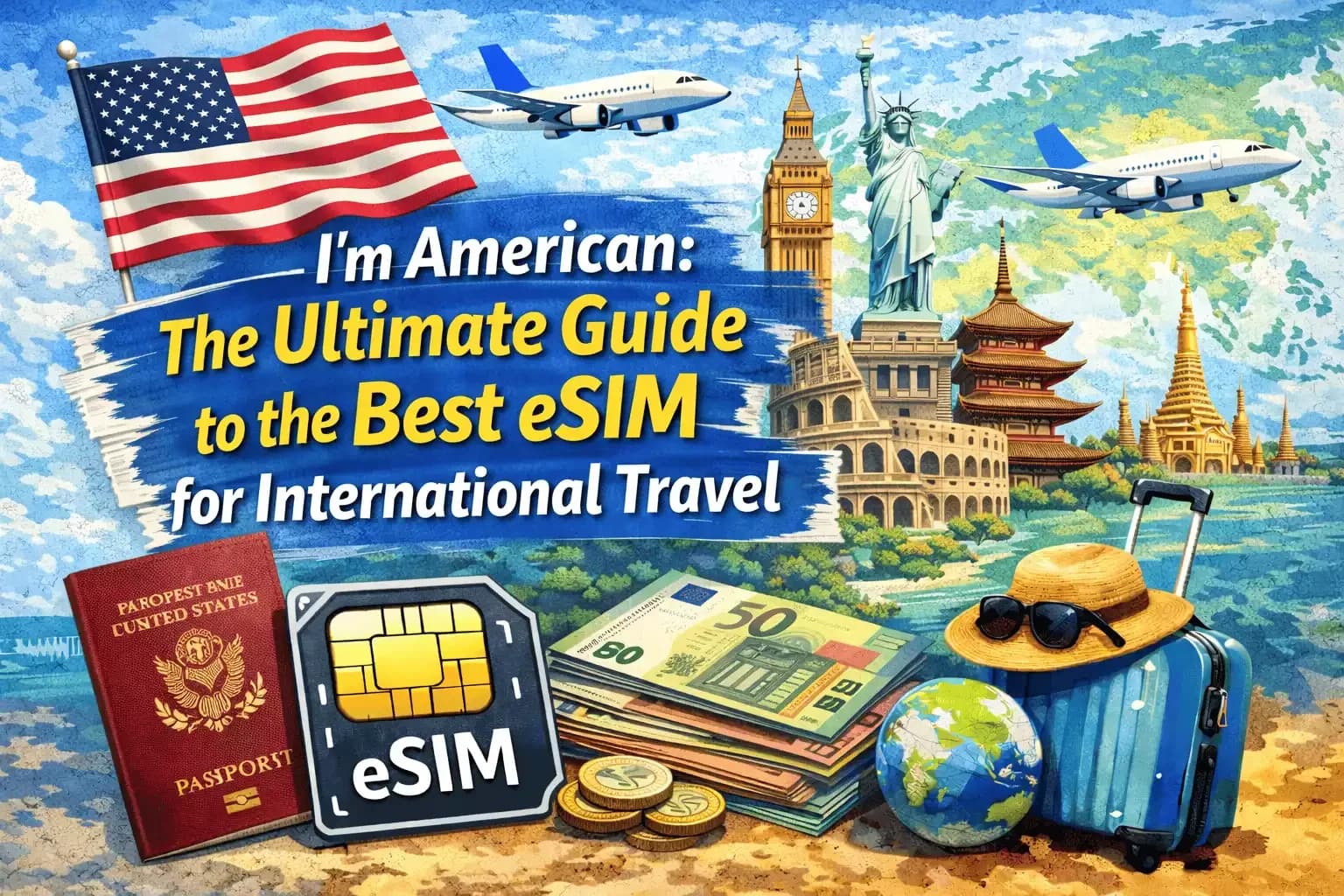
For American travelers venturing beyond the borders of the United States, staying connected is often a primary concern. Relying on your home carrier's international roaming plan can lead to unexpected charges and limited data. The solution many savvy American travelers are now embracing is the eSIM, offering a flexible and cost-effective way to stay online almost anywhere in the world. This guide explores why Cellesim eSIMs are an ideal choice for your international adventures, providing seamless connectivity without bill shock.
- Why US Carrier Roaming Plans Fall Short for American Travelers
- The American Traveler's Advantage: Embracing eSIM for International Trips
- Ensuring Your US Smartphone is eSIM Compatible
- Choosing the Right Cellesim eSIM Plan for Your Global Journey
- Activating Your Cellesim eSIM: A Simple Guide for US Users
- Keeping Your US Number: Calls, Texts, and WhatsApp Abroad
- Cost Comparison: eSIM vs. US Carrier Roaming vs. Local SIM
- Pro Tips for American Travelers: Maximizing Your eSIM Experience
- Frequently Asked Questions
Connect Globally with Cellesim eSIMs
Experience reliable data in 200+ countries. Join 50,000+ happy customers who choose Cellesim for their travels.
Get Your Global eSIMWhy US Carrier Roaming Plans Fall Short for American Travelers
Many American travelers begin their international trip planning by looking at their current carrier's international roaming options. While convenient in theory, these plans often come with significant drawbacks. US carriers like Verizon, AT&T, and T-Mobile typically offer daily passes, expensive per-GB rates, or throttled "free" data, which can quickly deplete your travel budget and patience.
For a two-week trip, a daily roaming pass could cost hundreds of dollars, far exceeding the price of a dedicated travel eSIM.
These plans might also limit your data speeds or cap your high-speed allowance, leaving you with slow connectivity when you need it most. Imagine trying to navigate a new city or stream a video call with loved ones back home, only to be hit with sluggish speeds or an unexpected data bill.
Furthermore, many US roaming plans do not provide a local number, which can be inconvenient for making reservations or communicating with local services. For a comprehensive comparison, consider our detailed analysis of Cellesim vs. Roaming.
The American Traveler's Advantage: Embracing eSIM for International Trips
An eSIM, or embedded SIM, is a digital SIM card that allows you to activate a cellular plan without needing a physical SIM. For American travelers, this technology offers a compelling alternative to traditional roaming or buying local SIM cards. Cellesim provides a range of eSIM plans that offer instant connectivity in over 200 countries.
The primary benefits for US travelers include:
- Cost-Effectiveness: eSIM plans are often significantly cheaper than US carrier international roaming, offering more data for less money.
- Convenience: Purchase and activate your eSIM digitally before you even leave the US. No need to hunt for local SIM card stores upon arrival or deal with language barriers.
- Flexibility: Easily switch between your Cellesim eSIM and your primary US line. Keep your US number active for calls and texts while using eSIM for data.
- Instant Connectivity: Data starts working the moment you land, allowing you to use navigation, messaging apps, and social media without delay.
- Security: Avoid public Wi-Fi networks where your personal data might be vulnerable. An eSIM provides secure, private internet access.
This seamless integration helps American travelers focus on their journey, not on connectivity hassles. Whether you are traveling for business or leisure, an eSIM simplifies your digital life abroad.
Ensuring Your US Smartphone is eSIM Compatible
Before you commit to an eSIM, it is crucial to verify that your US smartphone supports eSIM technology. Most modern iPhones (iPhone XR and newer), Google Pixel phones (Pixel 3 and newer), and many Samsung Galaxy devices are eSIM compatible. However, compatibility can vary by specific model and region. For example, some iPhones sold in the US now support only eSIM, while international versions might still have a physical SIM slot.
If your device is carrier-locked, you might need to contact your US provider to unlock it for international use. An unlocked phone ensures you can freely use eSIMs from any provider worldwide. You can find more details on eSIM compatible devices on our website.
Choosing the Right Cellesim eSIM Plan for Your Global Journey
Cellesim offers a variety of eSIM plans designed to fit different travel needs. As an American traveler, consider these factors when selecting your plan:
- Destination: Are you traveling to a single country like Italy, or embarking on a multi-country European tour? Cellesim offers both country-specific and regional plans covering multiple countries.
- Data Usage: How much data do you anticipate using? If you rely heavily on navigation, social media, video calls, or tethering, a larger data package is advisable. For lighter usage, a smaller plan might suffice. Our Smart Data Calculator can help estimate your needs.
- Duration of Trip: Cellesim plans vary in validity, from 7 days to 30 days or more. Select a plan that covers your entire travel period to avoid running out of data mid-trip.
For extensive international travel, Cellesim's global eSIM plans are particularly advantageous, allowing you to seamlessly transition between countries without changing eSIMs. These plans simplify connectivity across different continents, ideal for extended backpacking trips or business travel across multiple regions.
Activating Your Cellesim eSIM: A Simple Guide for US Users
One of the greatest advantages of an eSIM for American travelers is the ease of activation. You can purchase and install your Cellesim eSIM plan even before you depart from the US. Here’s a general step-by-step guide:
- Purchase Your Plan: Visit cellesim.com and select the international eSIM plan that suits your destination and data needs.
- Receive QR Code/Manual Details: After purchase, you will receive an email with a QR code or manual installation details.
- Install the eSIM: On your smartphone, go to Settings > Cellular/Mobile Data > Add eSIM or Add Data Plan. Scan the QR code or enter the details manually.
- Label Your eSIM: Name your Cellesim eSIM (e.g., "Travel Data") to distinguish it from your primary US line.
- Activate on Arrival: Once you land at your destination, simply switch your data roaming off for your primary US line and select your Cellesim eSIM for cellular data. Ensure "Data Roaming" is enabled for your eSIM profile.
Keeping Your US Number: Calls, Texts, and WhatsApp Abroad
A common concern for American travelers using an eSIM is what happens to their primary US phone number. With Cellesim, your US number remains active for calls and texts on your primary SIM. This means you can still receive verification codes, important calls, and messages from home. The eSIM simply handles your data connectivity.
Here’s how it typically works:
- Dual SIM Functionality: Modern smartphones supporting eSIM allow you to have both your physical US SIM (or another eSIM for your US number) and your Cellesim international eSIM active simultaneously.
- Voice & Text: You can set your primary US line to handle calls and texts, incurring standard international roaming rates for these services (which are usually less expensive than data roaming).
- WhatsApp and Messaging Apps: Your WhatsApp account is linked to your phone number, not your active data plan. As long as you maintain your US number, WhatsApp and similar apps will continue to function normally using the Cellesim data connection. This means you can make free calls and send messages via Wi-Fi or data without incurring extra charges from your US carrier.
This setup provides the best of both worlds: affordable data abroad and continuous access to your trusted US phone number.
Cost Comparison: eSIM vs. US Carrier Roaming vs. Local SIM
To illustrate the financial advantages for American travelers, let's compare the typical costs and conveniences of Cellesim eSIMs against other options for a two-week international trip:
| Option | Typical Cost (2-week trip) | Speed/Reliability | Setup Difficulty | Local Number |
|---|---|---|---|---|
| Cellesim eSIM | From $20 - $50 | Full 4G/5G, reliable | Easy (pre-trip) | No (data only) |
| US Carrier Roaming | $140 - $210+ | Often throttled, expensive | Automatic (high cost) | Yes (US number) |
| Local Physical SIM | $30 - $60 | Full 4G/5G, reliable | Moderate (on arrival) | Yes (local number) |
As the table highlights, Cellesim eSIMs typically offer the best balance of cost, speed, and convenience for American travelers. While local SIMs can be competitive on price and offer a local number, the process of finding and purchasing one in a foreign country can be time-consuming and challenging.
Pro Tips for American Travelers: Maximizing Your eSIM Experience
To ensure a smooth and connected journey abroad as an American using Cellesim, consider these practical tips:
- Download Offline Maps: Before losing Wi-Fi, download offline maps of your destination (e.g., Google Maps) to conserve data and navigate even without a signal. Learn more about how to save data abroad.
- Monitor Data Usage: Regularly check your data consumption through your phone's settings or the Cellesim portal to avoid unexpected depletion.
- Utilize Wi-Fi When Available: Connect to secure Wi-Fi networks in hotels or cafes for heavy data tasks like uploading photos or video calls, preserving your eSIM data.
- Turn Off Auto-Updates: Disable automatic app updates and background app refresh on your US number and any apps not essential while abroad to save data.
- Emergency Contacts: Ensure your emergency contacts have your primary US number and know how to reach you via data-based apps like WhatsApp.
By following these tips, American travelers can optimize their Cellesim eSIM usage and enjoy uninterrupted connectivity throughout their international adventures.
Ready for Seamless International Connectivity?
Join 50,000+ American travelers connecting effortlessly in 200+ countries with Cellesim.
Start Your Connected JourneyTrusted by travelers worldwide. 24/7 Support: [email protected]
Frequently Asked Questions for American Travelers
Can I keep my US phone number while using a Cellesim eSIM?
Yes, absolutely. Your Cellesim eSIM works alongside your existing physical US SIM (or your US carrier's eSIM). You can keep your primary US number active for calls and texts, while the Cellesim eSIM handles all your data needs internationally.
Will my US phone be locked if I use an international eSIM?
No, using an international eSIM from Cellesim will not lock your phone. However, your device itself must be unlocked by your US carrier to be able to use eSIMs from other providers. Most new smartphones purchased directly from manufacturers are unlocked.
How do Cellesim eSIMs compare to my US carrier's international roaming plan?
Cellesim eSIMs typically offer significantly better value, providing more data at a lower cost compared to most US carrier international roaming plans. They also offer greater flexibility and often faster, unthrottled data speeds.
Can I make calls with a Cellesim eSIM?
Cellesim eSIMs primarily provide data connectivity. You can make calls and send texts using internet-based apps like WhatsApp, FaceTime, or Skype, which leverage your eSIM data connection. You can also still use your primary US number for traditional calls and texts, though international roaming rates may apply.
What if I need customer support while abroad?
Cellesim offers 24/7 customer support via email at [email protected]. We recommend saving this contact information before your trip, ensuring you can reach us from any internet connection.
Is it safe to use an eSIM for international travel?
Yes, using an eSIM is very safe. It eliminates the need to swap physical SIM cards, reducing the risk of losing your home SIM. Furthermore, using a private eSIM data connection is often more secure than relying on public Wi-Fi networks in unfamiliar locations.