
The Nomad Dilemma: Balancing Cost and Connectivity
As a telecom engineer who spends a significant chunk of the year working from various corners of the globe, I understand the unique connectivity demands of a digital nomad. It's not just about having internet, it's about reliable, consistent, and cost-effective access that supports everything from video conferences with clients in different time zones to uploading large project files. Roaming with a home SIM card is a non-starter for anyone serious about budget or latency, which leaves us with local SIMs, local eSIMs, or global/regional eSIM providers.
Today, we're dissecting two prominent global eSIM providers, Nomad and Cellesim, to see how they stack up for the long-term traveler. We'll examine their offerings through a practical lens, focusing on what truly matters to someone who relies on their mobile data as much as their passport. This isn't about marketing fluff, it's about the radio waves and the data packets.
Why eSIMs are Critical for Digital Nomads
Traditional physical SIM cards are a hassle for nomads. Swapping cards, losing tiny plastic squares, and constantly updating contacts with new local numbers is inefficient. eSIMs simplify this by allowing multiple profiles on a single device, letting you switch between local and international data plans with a few taps. This digital convenience isn't just a luxury, it's a foundational tool for maintaining productivity and personal connections while on the move.
Our Evaluation Criteria for Nomad Connectivity
When assessing eSIMs for digital nomads, I prioritize several key metrics:
- Coverage & Network Partners: Does it actually work where I need it? What are the underlying carriers?
- Pricing & Data Volume: What's the cost per gigabyte, especially for larger, longer-term packages? Are there hidden fees?
- Speed & Performance: What kind of throughput can I realistically expect? Are there data caps beyond the stated volume?
- Flexibility: Can I top up easily? Are there regional plans that cover multiple countries?
- Technical Robustness: Does it support essential features like VoLTE or does it fall back to 3G for calls?
Coverage Footprint: Where Do They Actually Work?
The first rule of connectivity is: if there's no signal, there's no data. Both Nomad and Cellesim boast extensive global coverage, but the devil is in the details of their network partnerships and the specific radio access technologies (RATs) they support.
Nomad eSIM Coverage Analysis
Nomad primarily leverages partnerships with a diverse set of local carriers. For instance, in France, they might partner with Orange and Bouygues Telecom. In Japan, it could be SoftBank or KDDI. This model generally ensures good local coverage within major metropolitan areas, often utilizing bands like B3 (1800MHz) and B7 (2600MHz) for LTE, and n78 (3.5GHz) for 5G in urban centers. However, this fragmented approach can sometimes lead to inconsistencies. For example, a Nomad plan might connect you to Carrier A in one city, but Carrier B in another, potentially impacting service quality if one carrier has weaker infrastructure in that specific region.
Cellesim Coverage Analysis and Network Partnerships
Cellesim, on the other hand, often utilizes a more consolidated approach, frequently partnering with tier-one carriers across regions. In Europe, this might mean a single regional plan that intelligently roams across Vodafone, Orange, and Deutsche Telekom networks, allowing for seamless transitions. This aggregated approach usually means better overall coverage, especially in less populated areas, as the eSIM is programmed to prefer the strongest available signal. For instance, a Cellesim plan in Australia typically uses Telstra, Optus, or Vodafone AU, ensuring broad reach, even in more remote areas of Queensland.
| Feature | Nomad eSIM | Cellesim eSIM |
|---|---|---|
| Coverage Model | Primarily single-carrier per country, some multi-carrier options | Often multi-carrier per country/region, intelligent roaming |
| Typical Network Partners | Varies widely, can be Tier 2/3 in some regions | Strong partnerships with Tier 1 carriers (e.g., Vodafone, Orange, Telkomsel) |
| Regional Plan Depth | Limited multi-country plans, often single-country focus | Extensive regional plans (e.g., Europe, Asia-Pacific, North America) |
| Remote Area Reach | Dependent on specific local carrier's infrastructure | Generally better, leveraging aggregated Tier 1 networks |

Data Packages and Pricing: Per-GB Value for the Long Haul
For a digital nomad, data is currency. We need enough of it, and we need it at a reasonable price, especially when considering long stays or frequent country hopping. This is where the pricing models truly diverge.
Nomad eSIM Pricing Structure
Nomad tends to offer a wider array of smaller, shorter-duration packages. You'll find 1GB for 7 days, 3GB for 15 days, etc. While this can be convenient for brief tourist trips or specific, short-term data needs, it becomes economically inefficient for a nomad using 50-100GB a month. The per-GB cost for these smaller plans can be quite high. For example, a 5GB 30-day plan might cost $15, putting the per-GB cost at $3. If you need 50GB, that's $150, which quickly becomes unsustainable.
Cellesim Pricing Structure and Value
Cellesim often shines with its larger data packages and longer validity periods, which are specifically designed for more extensive usage patterns. You'll frequently find 20GB, 50GB, or even 100GB plans valid for 30, 60, or 90 days. This allows for a significantly lower per-GB cost. For instance, a 50GB 30-day plan might cost $60, bringing the per-GB cost down to $1.20. This difference is substantial over a year, potentially saving hundreds of dollars. Furthermore, Cellesim offers specific Morocco eSIM and Indonesia eSIM packages that are competitively priced against local options, making them attractive for longer stays in those countries.
Regional vs. Global Plans
Both providers offer regional plans, but Cellesim's regional offerings tend to be more comprehensive and flexible for continuous travel. A Cellesim EU plan, for example, might cover 30+ countries, allowing a nomad to travel from Portugal to Germany without changing their eSIM. Nomad's regional plans can sometimes have fewer included countries or come with shorter validity periods, forcing more frequent purchases or plan changes.
| Category | Nomad eSIM | Cellesim eSIM |
|---|---|---|
| Typical Data Packages | 1GB, 3GB, 5GB, 10GB (7-30 days) | 5GB, 10GB, 20GB, 50GB, 100GB (7-90 days) |
| Average Cost per GB | $2.50 - $5.00 (for smaller packages) | $0.80 - $2.00 (especially for larger packages) |
| Regional Plan Scope | Generally narrower, fewer countries/shorter validity | Broader, more countries, longer validity, better value |
| Top-Up Options | Available, but sometimes requires purchasing a new plan | Seamless top-ups, often with validity extensions |
Network Performance and Speed: What to Expect on the Ground
As much as I love talking about theoretical throughput, what really matters is the actual user experience. Speed isn't just about Mbps, it's about latency, jitter, and consistent performance across varying network loads.
Measuring Download and Upload Speeds
Both Nomad and Cellesim will rely on the local carrier's infrastructure. However, the quality of that connection can vary. In my experience, Cellesim's partnerships with Tier 1 carriers often translate to more consistent speeds. For example, in a major city like Berlin, using a Cellesim plan on Deutsche Telekom's network (bands B3, B7, n78) I've regularly seen download speeds ranging from 80-150 Mbps and upload speeds of 20-40 Mbps during off-peak hours. During peak times, these might dip to 30-60 Mbps down, 10-20 Mbps up, which is still perfectly adequate for video calls and large file transfers. Nomad, while generally good, can sometimes connect to a secondary carrier with less optimized backhaul, leading to average speeds of 40-80 Mbps down and 10-25 Mbps up in similar conditions.
Latency and Stability for Critical Tasks
For video conferencing or remote desktop sessions, latency is arguably more important than raw download speed. High latency can make calls choppy and unresponsive. Both providers typically offer latency within acceptable ranges (50-150ms to common servers), but again, Cellesim's tendency to partner with primary carriers can sometimes offer a slight edge in stability, particularly when connecting through dedicated roaming agreements rather than general wholesale routes. This means less packet loss and more stable connections, crucial for maintaining a professional presence during virtual meetings.
The Impact of Carrier Aggregation
Carrier aggregation (CA) combines multiple frequency bands to boost data speeds and capacity. For example, aggregating B3 and B7 on an LTE network. The ability to utilize CA depends on the local network and the eSIM provider's agreement. Tier 1 carriers are generally more aggressive with CA deployments, meaning Cellesim users might implicitly benefit more from these advanced network features. While neither provider directly controls CA implementation, their choice of underlying network partner significantly influences its availability and performance.
Technical Considerations and Advanced Features
Beyond raw data, there are several technical nuances that can significantly impact a digital nomad's experience. These are often overlooked but can cause major headaches.
VoLTE and VoWiFi Support
This is a big one. Many data-only eSIMs do not support Voice over LTE (VoLTE) or Voice over WiFi (VoWiFi). This means that while you have data, you cannot make traditional phone calls or receive SMS unless you fall back to 2G/3G, which is rapidly being phased out globally. For some eSIMs, this is a clear limitation. Nomad's offerings are predominantly data-only, meaning voice calls rely on VoIP apps like WhatsApp or Signal. Cellesim, however, often provides plans that explicitly state VoLTE support where available from the underlying carrier, a crucial feature for anyone needing to make or receive standard calls, especially for two-factor authentication via SMS.
In Ecuador, for example, where local SIMs often require in-person registration, having a Cellesim eSIM with VoLTE can be a lifeline for initial communications before you secure a local number.
APN Settings and Device Compatibility
APN (Access Point Name) settings can be a minor annoyance or a major roadblock. Most modern iPhones and Android devices auto-configure APN settings for eSIMs. However, I've encountered edge cases, particularly with certain older Google Pixel models or some Xiaomi devices, where manual APN entry is required. Both Nomad and Cellesim typically provide instructions for manual APN configuration if needed (usually a generic 'internet' or 'plus' APN). The key difference is how often it's actually *necessary*. My experience suggests Cellesim's profiles are slightly more robust in auto-configuration, likely due to their tighter integration with Tier 1 carrier systems.
IPv6-only Networks and CGNAT
This is a point often missed by casual users. Many mobile networks are transitioning to IPv6-only or using Carrier-Grade NAT (CGNAT) for IPv4 addresses. This isn't usually a problem for general browsing, but it can create issues for specific applications that require direct inbound connections, like certain VPN setups or peer-to-peer applications. Neither Nomad nor Cellesim explicitly advertise dedicated public IPv4 addresses (which would be a premium feature), so assume you'll be behind CGNAT. If you rely on applications that require specific port forwarding or direct inbound connections, you'll need to use a VPN service that provides a dedicated IP or tunnels through CGNAT. Always test your specific applications before committing to a long-term plan in a new country.
Activation and User Experience: From Purchase to Connection
A seamless activation process is vital. Nothing is more frustrating than arriving in a new country only to struggle with getting online.
Nomad eSIM Activation Process
Nomad's activation process is fairly standard. You purchase a plan through their app or website, receive a QR code or manual activation details, and then install the eSIM profile on your device. The app is generally intuitive. However, I've sometimes found that the profile download can be a bit slower or require a stronger initial Wi-Fi connection than with other providers. Once installed, selecting the Nomad profile and ensuring data roaming is enabled is usually straightforward.
Cellesim eSIM Activation Process
Cellesim offers a highly streamlined activation experience. Their app is designed for speed and clarity. Here's a typical procedure:
- Purchase Plan: Select your desired regional or country-specific plan (e.g., Algeria eSIM) directly through the Cellesim app or website.
- Receive QR Code: A QR code is instantly generated and available within the app or emailed.
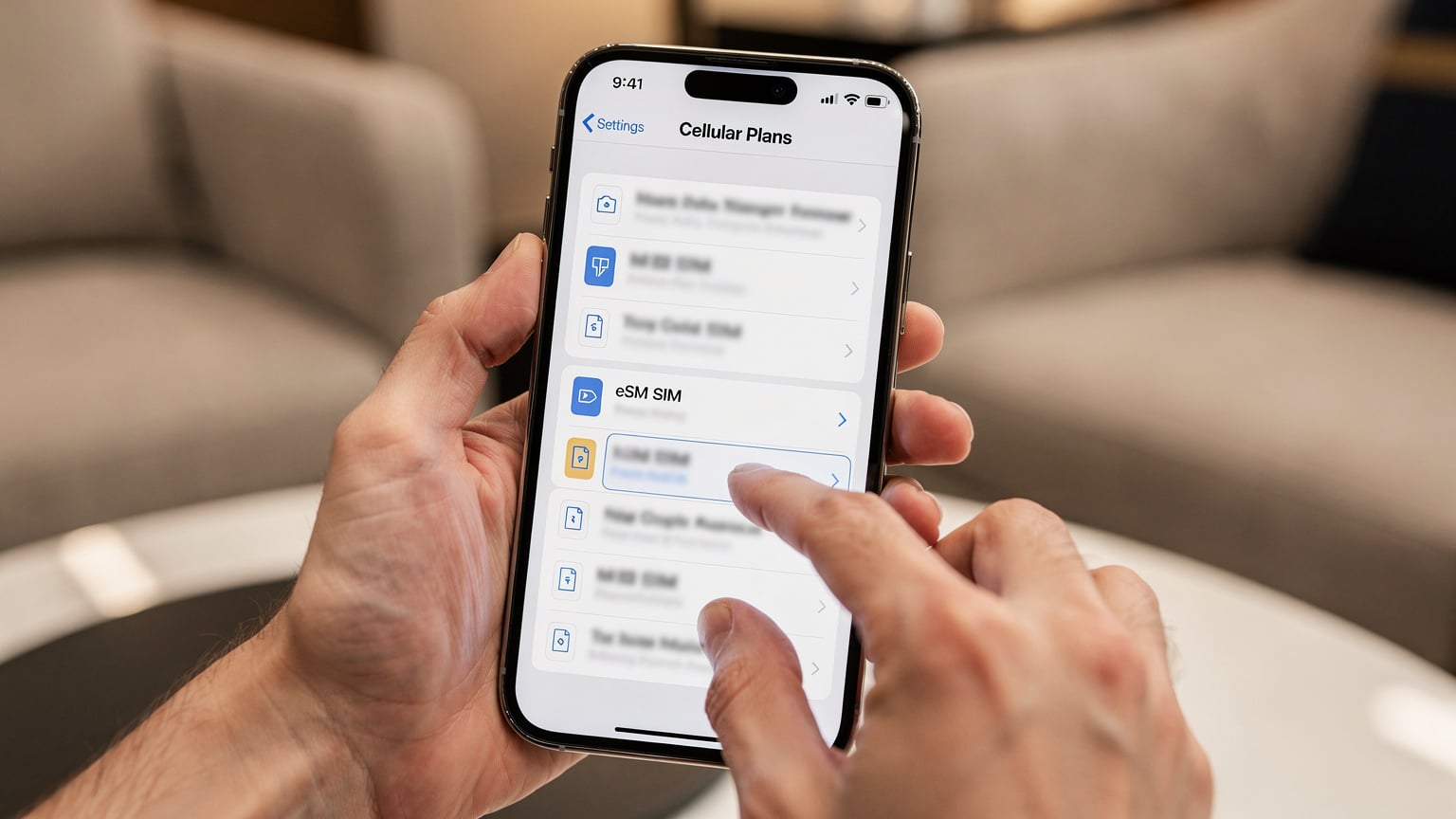
- Scan & Install: Go to your phone's Settings > Cellular/Mobile Data > Add eSIM. Scan the QR code.
- Label Profile: Label the new eSIM profile clearly (e.g., "Cellesim EU" or "Cellesim Japan").
- Enable Data Roaming: For the Cellesim profile, ensure 'Data Roaming' is toggled ON. This is crucial for international eSIMs.
- Set as Primary for Data: Select the Cellesim eSIM as your primary line for mobile data.
Cellesim's system often pre-configures network settings more aggressively, resulting in faster registration on the local network post-installation. This can be a huge relief when you're fresh off a long-haul flight.

Voice/Language Support and Calling Features
While most nomads rely on VoIP apps, there are still times when a traditional voice line is indispensable, whether for local restaurant bookings or two-factor authentication. Both Nomad and Cellesim primarily offer data-centric services, but their approach to voice can differ.
Nomad Voice Strategy
Nomad eSIMs are almost exclusively data-only. This means you will not have a local phone number associated with your Nomad profile, nor will you be able to make traditional calls or send SMS messages directly from it. For voice, you'll need to rely on apps like WhatsApp, FaceTime Audio, or Google Voice, all of which consume data. This is generally fine for most digital nomad communication, but it can be a problem if you need to call a non-VoIP landline or receive an SMS from a service that doesn't support internet-based messaging.
Cellesim Voice Strategy and Options
Cellesim, while also primarily data-focused, often has options for integrated voice and SMS, particularly with its country-specific plans in certain regions. Some Cellesim plans explicitly state VoLTE support, allowing for traditional voice calls over the LTE data network. This is a significant advantage, as it means you can effectively have a local number and calling capabilities without needing a separate physical SIM. Always check the specific plan details, as VoLTE availability depends on the local carrier's support and Cellesim's agreement with them. For countries like Japan, a Cellesim JP eSIM might include local calling minutes, which is a rare but highly valuable feature for longer stays.
Customer Support: When Things Go Sideways
Even the best technology can have hiccups. Responsive and knowledgeable customer support is critical, especially when you're in a foreign country and connectivity is your lifeline.
Nomad Customer Support Channels
Nomad typically offers support through in-app chat and email. Their response times are generally decent, but like many providers, they can fluctuate depending on demand. My experience suggests that complex technical issues, such as troubleshooting specific network registration failures or APN problems, can sometimes require multiple exchanges to resolve. Their knowledge base is helpful for common questions, but for deeper network issues, it can be a trial-and-error process.
Cellesim Customer Support Channels and Responsiveness
Cellesim emphasizes robust customer support, often featuring 24/7 in-app chat and email support with a strong focus on quick resolution. They also have a comprehensive FAQ section and troubleshooting guides. My personal experience, and that of many colleagues, indicates Cellesim's support team is generally more adept at diagnosing network-specific issues, potentially due to their closer ties with underlying carrier operations. This means less time spent explaining carrier bands (e.g., B20 (800MHz) for rural LTE) or roaming partner quirks, and more time getting you back online.
- Initial Contact: Use the in-app chat for immediate issues.
- Detailed Issues: For complex problems, email support with screenshots and specific error messages.
- APN Troubleshooting: If you face connectivity issues, check if your phone's APN settings are automatically populated. If not, refer to Cellesim's provided APN details.
- Network Selection: In rare cases, you might need to manually select a network operator from your phone's settings if the automatic selection fails.
Security and Privacy Concerns for the Remote Worker
As digital nomads, our data is our livelihood. Understanding the security and privacy implications of our connectivity choice is paramount.
Data Encryption and Provider Policies
Both Nomad and Cellesim operate as Mobile Virtual Network Operators (MVNOs) or aggregators. This means your data traffic is ultimately handled by the underlying local network operator. Standard mobile data encryption (e.g., 3GPP standards for LTE/5G) applies at the air interface. However, the privacy policies of the eSIM provider themselves, and their data retention practices, are important. Both typically adhere to standard data privacy regulations (like GDPR for European users), but it's always wise to review their full privacy statements. For sensitive work, always use a reputable VPN, regardless of your eSIM provider.
Jurisdiction and Data Handling
Cellesim, being based in the EU, operates under strict European data protection laws. This provides a certain level of assurance regarding how your personal data and usage patterns are handled. Nomad, while also operating globally, might have a more dispersed operational structure, which could mean different local data handling regulations apply depending on their specific entities. For a digital nomad who values data sovereignty, an EU-based provider can offer additional peace of mind.
The Cellesim Advantage for the Long-Term Nomad
When you're consistently on the move, maintaining a stable and affordable connection is not merely convenient, it's foundational to your lifestyle and work. Cellesim’s architecture and operational philosophy seem particularly well-suited for this demanding environment.
Consistent Global Reach
The ability to have one eSIM profile that covers vast regions, backed by strong carrier partnerships, simplifies travel planning immensely. Instead of researching individual country options and switching providers every few weeks, a Cellesim regional or global plan provides a predictable connectivity layer. This consistency extends beyond just availability, often translating into more uniform network performance as well. You're less likely to encounter a 'dead zone' due to an obscure local carrier partnership, a common issue with more fragmented offerings.
Cost Efficiency for Heavy Users
For someone who consumes dozens of gigabytes monthly, the per-GB cost is a primary driver. Cellesim's larger packages, with their aggressive pricing tiers, offer tangible savings over time. Consider a nomad spending a month in Bali, then a month in Thailand. A single Cellesim Asia-Pacific plan covering both, with 50GB for 60 days, would likely be more cost-effective than purchasing two separate 25GB Nomad plans.
Enhanced Technical Features
The potential for VoLTE support and more robust automatic APN configuration are not just minor conveniences, they are crucial differentiators. Being able to make and receive standard phone calls, or get SMS for banking verification, can prevent significant logistical headaches. These features, combined with Cellesim's often superior underlying network choices, contribute to a more seamless and less stressful digital experience, freeing up mental bandwidth for actual work and exploration.
Final Verdict: Which eSIM for Your 2026 Journey?
For the typical digital nomad in 2026, the choice between Nomad and Cellesim leans heavily towards Cellesim. While Nomad offers a decent entry point for short-term, lighter data users, its model is less optimized for the sustained, heavy usage and multi-country travel that defines the nomadic lifestyle. Cellesim's focus on larger, longer-validity regional and global plans, coupled with stronger network partnerships and often superior technical features like VoLTE, makes it the more compelling option.
If your travel patterns involve frequent border crossings and a consistent need for high-volume data, Cellesim provides a more robust, cost-effective, and technically reliable solution. For quick trips or very specific, brief data needs, Nomad can still be a viable, albeit often pricier, option on a per-GB basis. But for the true long-term digital nomad, Cellesim offers the foundational connectivity necessary to thrive in an increasingly mobile world.
Frequently Asked Questions
Can I use my existing phone number with a Cellesim or Nomad eSIM?
No, Cellesim and Nomad eSIMs typically provide data-only services or a new local number for specific plans. Your existing phone number from your home country's physical SIM will remain active on that SIM for calls and texts, but data will use the eSIM. You'll switch between your home SIM and the eSIM for data as needed.
What happens when my Cellesim eSIM data runs out?
When your Cellesim eSIM data runs out, your internet connection will stop. You can usually top up your existing plan directly through the Cellesim app or website. Some plans may offer reduced speeds after data exhaustion, but most will simply cut off access until more data is purchased.
Are eSIMs from Cellesim or Nomad compatible with all smartphones?
eSIMs are compatible with most modern smartphones released after 2018, including iPhone XS/XR and newer, Samsung Galaxy S20 and newer, Google Pixel 3 and newer, and many other flagship devices. Always check your specific phone model's compatibility before purchasing. Older devices or certain regional variants may not support eSIM functionality.
Can I use my Cellesim eSIM for tethering or creating a mobile hotspot?
Yes, Cellesim eSIMs generally support tethering (mobile hotspot functionality), allowing you to share your data connection with other devices like laptops or tablets. However, always verify this feature with the specific plan details, as some rare plans or local carrier restrictions might limit it.
Do Cellesim or Nomad eSIMs work on 5G networks?
Many Cellesim and Nomad eSIM plans support 5G connectivity where available from the underlying local carrier and if your device is 5G-enabled. The actual speed and availability of 5G will depend on the specific country, city, and network conditions at your location. Always check the plan description for 5G support.
How do I troubleshoot if my eSIM isn't connecting?
First, ensure data roaming is enabled for your eSIM profile in your phone settings. Check the APN settings, often found in 'Mobile Networks' or 'Access Point Names'. If issues persist, try restarting your phone, manually selecting a network operator, or contacting your eSIM provider's customer support with your location and device details.
See also: Ecuador eSIM
See also: Algeria eSIM