Straight Talk Roaming: The Painful Truth
Let's be honest: Straight Talk is brilliant for keeping your phone bill low in the U.S. But the second you leave the country, their international roaming options turn into a money pit. I'm talking rates that will make your eyes water faster than a Thai chili pepper. You'll often pay $0.10 to $0.25 per minute for calls, similar amounts for texts, and data? Forget it. They don't even offer proper international data roaming packages. Instead, they push you towards calling cards or just relying on Wi-Fi. That's fine if you're happy hunting for free Wi-Fi in every Starbucks (and good luck finding a free, reliable one in rural Laos), but if you need consistent connectivity, it simply won't work.
I still remember a friend, a fellow budget traveler using Straight Talk, who swore they'd use their phone "just for emergencies" in Mexico. Three days later, a $70 bill for a few short calls. That's a week's worth of hostel beds in Oaxaca gone. This isn't a dig at Straight Talk for their domestic service, which is great. It's just the hard truth about their international plan: it wasn't built for today's traveler who needs Google Maps, WhatsApp, and booking apps.
Why Straight Talk Isn't Your Global Travel Buddy
The core problem comes down to Straight Talk's business model. As a Mobile Virtual Network Operator (MVNO), they rent network capacity from big U.S. carriers like Verizon, AT&T, and T-Mobile. While this keeps domestic costs low, it means they don't have their own direct roaming deals with international carriers. Instead, they rely on their underlying carrier's roaming rates, which are often sky-high and almost never passed on to customers in a user-friendly package. You're left with a service designed for convenience at home, not adventures abroad.
eSIM: The Budget Backpacker's Secret Weapon
Here's where the eSIM comes in. This isn't some fancy tech for luxury travelers. It's a practical, money-saving tool that every budget backpacker should have. I've personally used eSIMs all over Southeast Asia, Europe, and Latin America, cutting my data costs to a fraction of what traditional roaming or even some local SIMs would charge. On a recent 8-day trip through Montenegro and Croatia, I spent only €28 on data with a 10GB regional eSIM. That's €3.50 a day for solid 4G, enough for maps, social media, flight updates, and WhatsApp calls. Compare that to my friend's $70 Mexico disaster, and the choice is clear.
An eSIM, or embedded SIM, is a digital SIM card built right into your phone. Instead of swapping out a tiny plastic chip, you just download a digital profile to your device. This means you can have several "SIMs" on one phone, switching between them with a few taps. For Straight Talk users, this is huge: you keep your physical Straight Talk SIM for your U.S. number, and add an eSIM for data wherever you're traveling.
The Cost Savings That Actually Matter
Let's look at the numbers. A 5GB eSIM for 15 days in Japan might cost around $15-20. If you're there for a week, that's roughly $2-3 a day for data. Good luck finding that price with any traditional roaming plan. Even if you consider the cheapest local physical SIM, like a tourist SIM from AIS in Thailand for 8 days at 299 THB (about $8.50), the eSIM often offers more flexibility and convenience, especially if you're traveling to multiple countries. The ability to activate before you even land, skipping airport kiosks, is worth a few extra dollars to me any day.
Flexibility for the Multi-Country Hopper
One of the biggest benefits of eSIMs for someone like me, who might cross three borders in a week, is the option to buy regional or even global plans. Instead of fumbling for a new physical SIM in every country, I can buy one eSIM that covers all of Europe, for example, or a big part of Asia. This saves time, stress, and honestly, a lot of potentially confusing conversations with local vendors.
How eSIM Works with Straight Talk: Keeping Your Number
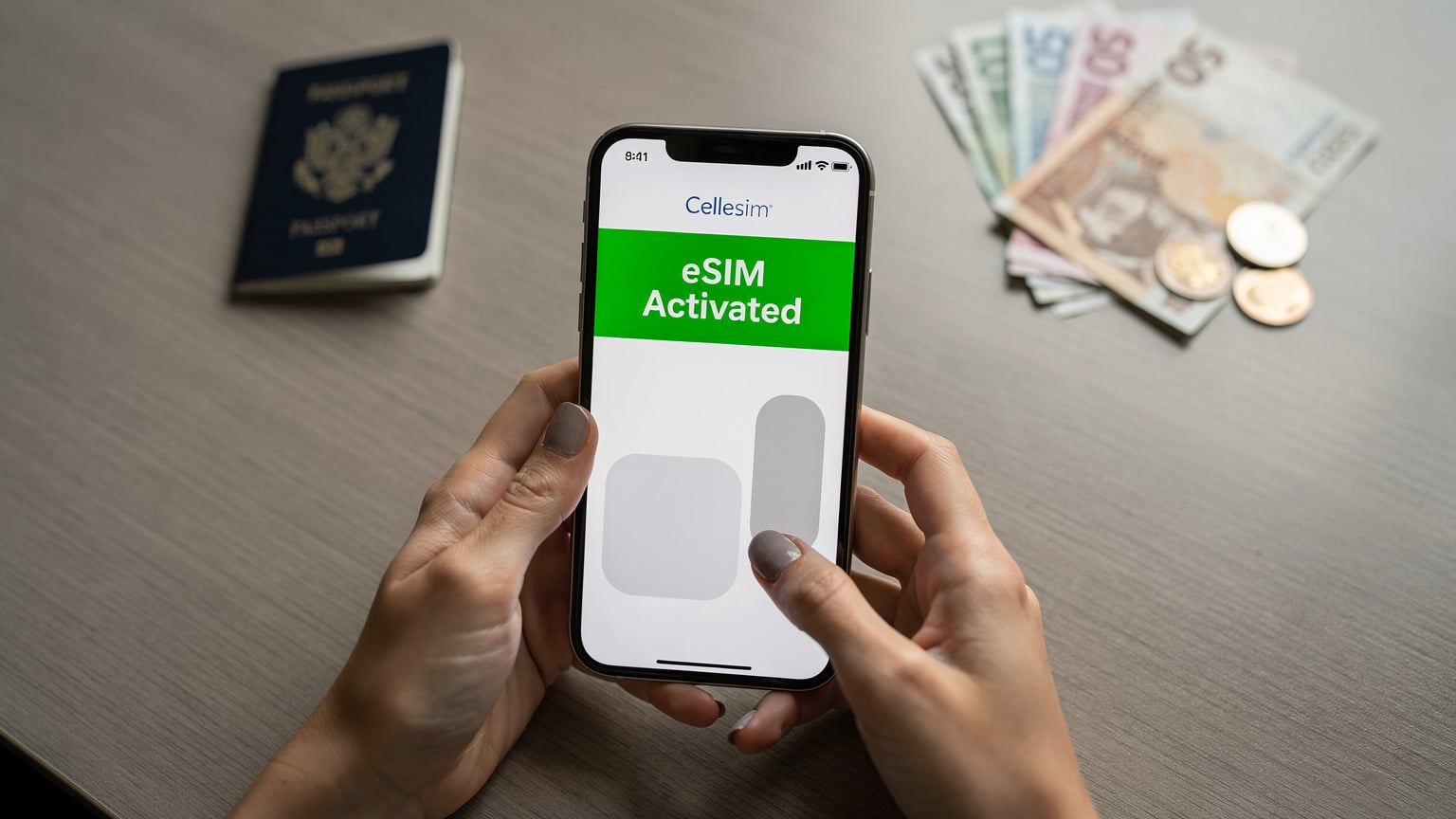
This is the key for Straight Talk users. Your Straight Talk service is tied to your physical SIM card. When you travel internationally, you simply add an eSIM as a second line. Your physical Straight Talk SIM stays right in your phone, still connected to your U.S. number. This means you can still get calls and texts on your Straight Talk number (though Straight Talk's international rates for these still apply, so use WhatsApp or other VoIP apps when possible). All your data usage, however, routes through the new, affordable eSIM plan.
Dual SIM Unleashed: Your Straight Talk Number Stays Put
Most modern smartphones that support eSIM also support Dual SIM, Dual Standby (DSDS). This tech lets both your physical Straight Talk SIM and your travel eSIM be active at the same time. You'll set your eSIM for cellular data, while your Straight Talk line stays active for calls and texts. It's like having two phone lines in one device, perfectly separated for travel.
When you land, you just switch your phone's mobile data preference to your new eSIM. Your Straight Talk line will still be there, ready to receive that important two-factor authentication code from your bank or a quick call from your mom. But it won't be racking up data roaming charges. It's a simple, smart solution that avoids the headache of porting numbers or dealing with temporary U.S. numbers.
Choosing the Right eSIM Plan for Your Trip
Picking an eSIM plan isn't complicated, but it does need a little planning. Think about how you travel and how much data you use. Are you always streaming videos, or just checking maps and sending messages? Are you staying in one country, or traveling across a continent? Cellesim offers a range of options, from plans for a single country to regional bundles and even global data packages.
Single-Country vs. Regional vs. Global: Which One For You?
For a trip focused on one place, say a two-week exploration of Japan, a single-country eSIM plan usually gives you the best value per gigabyte. If you're backpacking through Europe, visiting Paris, Berlin, and Rome, a regional Europe eSIM (like Cellesim's Europe plan) is usually more cost-effective and convenient than buying three separate country-specific eSIMs. For those really ambitious travelers hitting multiple continents, global eSIMs exist, but they often cost more per GB, so weigh the convenience against your budget.
Data Allowance: How Much Do You Really Need?
This is where understanding your usage helps. I typically budget about 1GB of data for every 2-3 days of travel if I'm relying heavily on my phone for navigation, social media updates, and communication. If I'm mostly using Wi-Fi at hostels or cafes, I can stretch 1GB for 4-5 days. For a 10-day trip, I'd probably get a 5GB or 10GB plan just to be safe. It's always better to have a little extra than to run out halfway through your trip and have to scramble for a top-up.
| Activity | Estimated Data Usage (per hour) | Backpacker's Tip |
|---|---|---|
| Google Maps/Navigation | 5-10 MB | Download offline maps to save data! |
| Social Media (browsing) | 50-100 MB | Limit video auto-play, use Wi-Fi for heavy scrolling. |
| WhatsApp/Messaging | 1-5 MB | Text is cheap, video calls burn data quickly. |
| Streaming Music (Spotify) | 40-150 MB | Download playlists over Wi-Fi before you head out. |
| Streaming Video (Netflix/YouTube) | 200 MB - 1 GB+ | Avoid streaming video on mobile data unless absolutely necessary. |
| Email/Web Browsing | 10-30 MB | Quick checks are fine, lengthy research is for Wi-Fi. |
Validity Periods: Don't Overpay for Unused Days
Always match the eSIM's validity period to how long your trip is. If you're traveling for 7 days, don't buy a 30-day plan if a 7-day option is cheaper. While it might seem like a small thing, these little savings add up over multiple trips. Cellesim offers plans from 7 days to 30 days or more, so you can pick exactly what you need.
Activating Your Cellesim eSIM: A Step-by-Step Guide
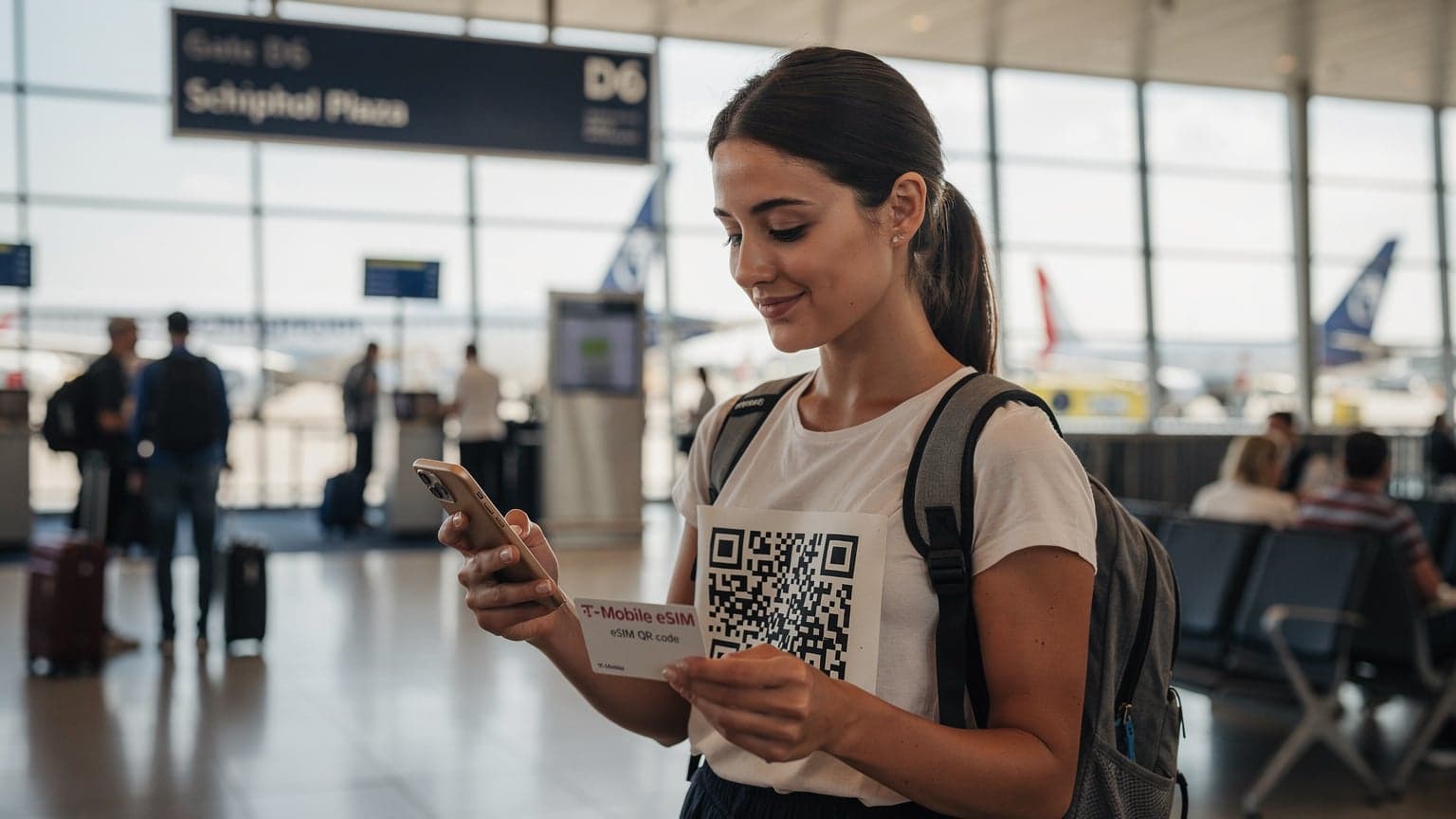
One of the best things about eSIMs is how easy they are to activate. You can often buy and set up your eSIM before you even leave home. This means you land with data already working. No more fumbling with tiny SIM trays on a crowded plane or looking for a local vendor at the airport.
Pre-Departure Setup: Land Connected
Here's how I usually set up my Cellesim eSIM before a trip:
- Purchase Your eSIM Plan: Go to the Cellesim website or app and choose your destination and the data plan you want. Complete the purchase.
- Receive Your QR Code/Activation Details: You'll typically get an email with a QR code or manual activation details. Keep this handy, either printed or on another device.
- Add eSIM to Your Phone (Wi-Fi Required): While you're still connected to Wi-Fi (at home or your departure airport), go to your phone's settings:
- For iPhone: Go to Settings > Cellular (or Mobile Data) > Add eSIM. Choose 'Use QR Code' and scan the code.
- For Android: Go to Settings > Network & Internet > SIMs > Add more (or +) > Download a SIM instead? Follow the prompts to scan your QR code.
- Label Your eSIM: Once it's added, your phone will ask you to label the new eSIM (e.g., 'France Travel', 'Europe Data'). Do this, it makes managing your lines much simpler.
- Set Default Line for Data: This is crucial: set your new eSIM as the default line for 'Cellular Data' (or 'Mobile Data'). Keep your Straight Talk line as the default for calls and texts if you want to receive them.
That's it. When your plane lands, your phone should automatically connect to the local network covered by your eSIM. Smooth sailing.
Post-Landing Activation: When You're In a Pinch
If you forgot to set up before leaving, don't panic. You can still activate an eSIM once you've landed, but you'll need a Wi-Fi connection. Most airports offer free Wi-Fi, even if it's just for 30 minutes. Find an airport cafe, connect to their Wi-Fi, and follow the steps above. I've done this more times than I care to admit after a late-night flight scramble.
Border Crossing and eSIM Tactics for the Savvy Traveler
Border crossings can be tricky, especially if you're traveling through less-developed areas or countries with strict SIM registration laws. This is where eSIMs really shine. I've navigated border checks between Montenegro and Albania, and between Laos and Vietnam, where local physical SIMs require passport registration, sometimes even fingerprinting. With an eSIM, you skip all that red tape for data.
Seamless Transitions: No SIM Swapping at the Border
Imagine crossing from Germany into Poland on a FlixBus. With a regional Europe eSIM, your data simply switches to the local Polish network without you doing anything. No need to buy a new SIM, no searching for a kiosk at a bus station in a foreign language. Your phone just works. This is incredibly valuable, especially when you need Google Maps right after you cross, or to message your hostel in Krakow.
Tricky Borders: Where eSIM Is a Lifesaver
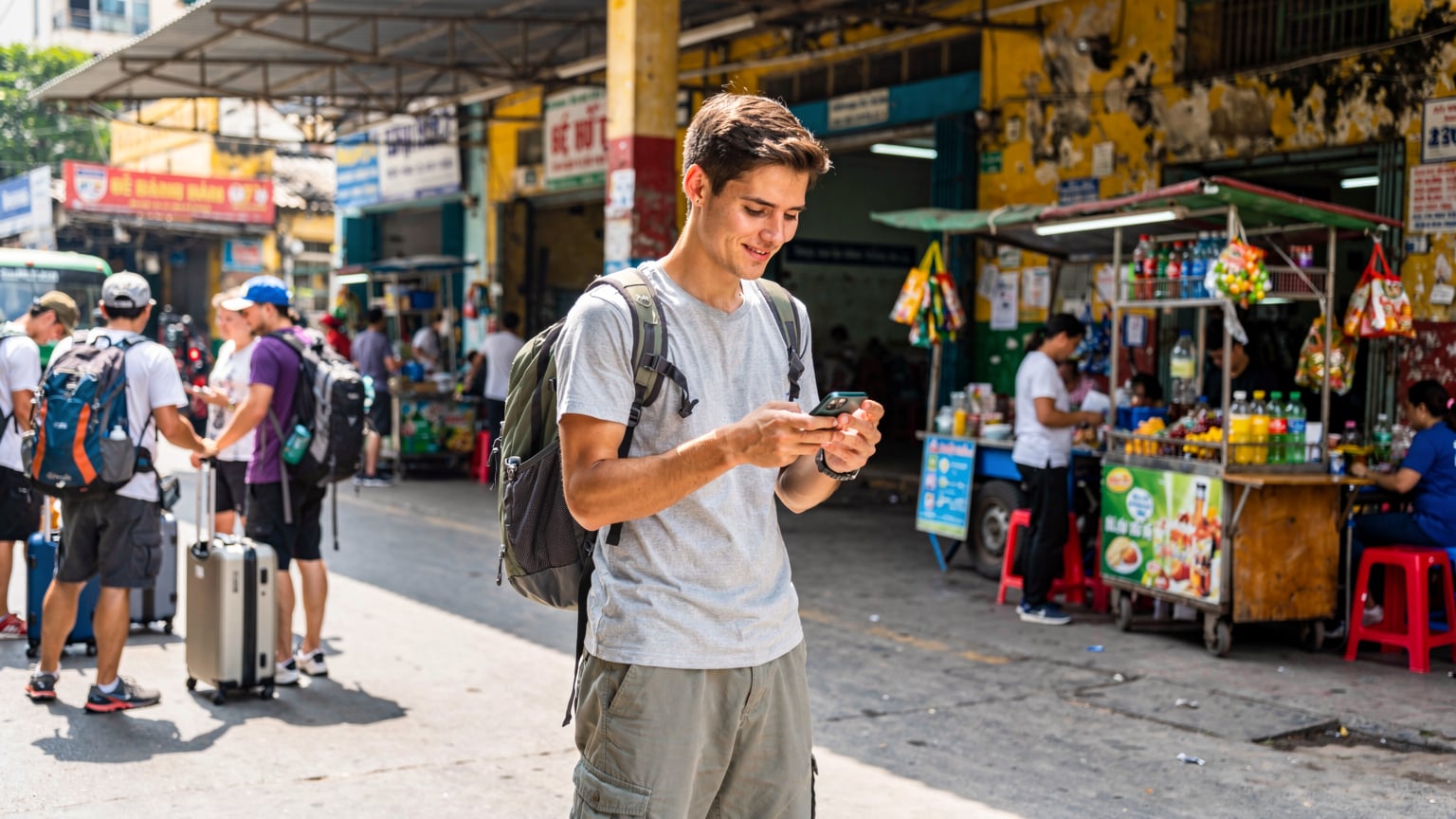
Think about countries like Vietnam or India, where buying a local SIM can sometimes be a bureaucratic headache for tourists. While local SIMs are often cheaper per GB if you're staying for a long time, the immediate data connectivity an eSIM provides upon arrival, especially if you're landing late or feeling tired, is incredibly valuable. You avoid potential scams at the airport, and you're connected from the moment you step off the plane. This is especially helpful for those first few hours when you're finding your accommodation, calling a Grab, or checking a reservation.
The Local SIM Card Alternative: When to Consider It
I'm a big fan of eSIMs, but I'm also a budget traveler, so I believe in being totally transparent. There are times when a local physical SIM card might still be the absolute cheapest choice, especially if you're staying in one country for a long time (say, a month or more) and you use a lot of data. For example, in Thailand, a 30-day TrueMove H or AIS tourist SIM with unlimited data (or a very high cap like 50GB) can cost around 500-700 THB (about $15-20 USD). That's often less than a comparable eSIM for the same duration and data.
The Cost-Benefit Analysis: Local SIM vs. eSIM
The main trade-off is convenience versus the absolute lowest cost. A local SIM requires:
- Finding a vendor: Often at the airport, a phone shop, or convenience store (like 7-Eleven in Thailand).
- Passport registration: This is required in many countries and takes time.
- Physical swapping: You'll remove your Straight Talk SIM, store it somewhere safe, and insert the local SIM. Don't lose that tiny plastic chip!
- Local number: You'll get a local phone number, which can be useful for local contacts but means your Straight Talk number is offline for calls/texts.
- Instant activation: Often before you even leave home.
- No registration hassle: Your provider handles the background work.
- Dual SIM advantage: Keep your Straight Talk number active.
- Slightly higher cost (sometimes): Especially for very long trips or huge data needs.
For a typical 1-3 week trip, especially if you're moving between countries, the eSIM usually wins on convenience and overall value, even if the per-GB cost is slightly higher than the cheapest local SIM. The time and hassle saved are worth a few extra dollars.
| Feature | eSIM for Travel (Cellesim) | Local Physical SIM |
|---|---|---|
| Activation | Online, instant, before travel | In-country, often requires store visit/passport |
| Keep Straight Talk Number | Yes, with Dual SIM | No, must swap SIM; ST number goes offline |
| Cost (per GB) | Competitive, especially for short/multi-country trips | Potentially lower for long, single-country stays |
| Convenience | High: no physical swap, no queues | Low: physical swap, registration process |
| Coverage | Excellent, leverages best local networks | Excellent, native local network |
| Data Top-ups | Online, instant via app/website | Online, or via physical top-up cards/stores |
Data Consumption: Show Me The Math
Understanding your data usage is essential to avoid overspending. I carefully track my usage, mostly using my phone's built-in data monitor. For a typical travel day in a new city, constantly checking maps, looking up reviews for a local street food stall, and uploading a few photos to my Substack, I average about 700MB per day. That's if I'm good about using Wi-Fi at my hostel or a café for bigger tasks like video calls or large downloads.
A Typical Day on the Road and Its Data Footprint
Let's break down a realistic day for a budget traveler:
- Morning Navigation (1 hour): Google Maps to find a coffee shop and the nearest metro station: ~50MB
- Social Media & Messaging (2 hours throughout the day): Instagram stories, WhatsApp messages, checking flight status: ~200MB
- Quick Searches (30 minutes): Looking up museum opening hours, restaurant menus: ~30MB
- Photo Uploads (occasional): Uploading 10-15 high-res photos: ~150MB
- Background Usage: Emails, app updates, push notifications: ~50MB
Total for a moderate day: Approximately 480MB.
If you're more conservative, relying heavily on Wi-Fi, you might get away with 200-300MB/day. If you're a heavy user, constantly streaming or video calling, you could easily hit 1-2GB a day. Multiply your estimated daily usage by how long your trip is, and you'll get a clear idea of the minimum data plan you need.
For my 8-day trip through Montenegro and Croatia, where I used 10GB, that comes out to roughly 1.25GB/day. This covered my constant navigation, posting updates from Sveti Stefan, and coordinating with friends on WhatsApp. It was more than enough, and I never felt limited.
Troubleshooting Common eSIM Issues
Even with the best planning, sometimes things go wrong. Here are a few common eSIM problems and how to fix them:
My eSIM Isn't Connecting: No Service!
First, check the basics:
- Ensure Data Roaming is ON for the eSIM: Go to your phone's Cellular/Mobile Data settings. Select your travel eSIM and make sure 'Data Roaming' is toggled ON. This often confuses people because you turn it OFF for your Straight Talk line, but ON for your travel eSIM.
- Verify APN Settings: Sometimes the Access Point Name (APN) settings aren't automatic. Your eSIM provider (like Cellesim) will usually give you these. You can find them in your eSIM's settings under 'Cellular Network' or 'Access Point Names'. Enter them manually if needed.
- Restart Your Phone: The classic fix. A quick reboot often solves network registration problems.
- Manually Select Network: In your eSIM settings, under 'Network Selection', try turning off 'Automatic' and manually choosing one of the available local carriers.
My Straight Talk Number Isn't Receiving Calls or Texts
This is usually a simple settings problem:
- Check Dual SIM Settings: Make sure your Straight Talk physical SIM is still enabled for 'Voice' and 'SMS' in your phone's Cellular/Mobile Data settings.
- Confirm Straight Talk Account Status: Ensure your Straight Talk account is active and you have enough balance or plan duration left. Even though you're not using it for data, it still needs to be an active line to receive calls/texts.
Final Thoughts on Straight Talk and eSIM for Global Travel
For Straight Talk users, eSIM isn't just convenient, it's a financial must-have for international travel. It’s the difference between coming home to a reasonable bill and getting hit with hundreds of dollars in unexpected roaming charges. By using eSIM, you keep Straight Talk affordable at home while getting budget-friendly, reliable data abroad. It’s a smart, tactical choice that lets you focus on your adventure, not your phone bill.
I've personally saved hundreds of euros on my travels by using eSIMs. It’s a simple process that gives you control over your connectivity and your budget. So, next time you plan a trip abroad, don't even think about relying on Straight Talk's roaming. Get an eSIM from Cellesim, keep your Straight Talk number active, and enjoy smooth, affordable data wherever your desire to travel takes you. If you have more questions, you can always check Cellesim's FAQ page for detailed answers on eSIM usage and compatibility.
Frequently Asked Questions
Can I keep my Straight Talk number active while using an eSIM for international data?
Yes, absolutely. Most modern smartphones support Dual SIM, Dual Standby (DSDS), allowing you to keep your physical Straight Talk SIM active for calls and texts, while using a Cellesim eSIM for all your international data needs. You just designate the eSIM for data in your phone's settings.
Will using an eSIM affect my Straight Talk service or plan?
No, using an eSIM for data abroad will not directly affect your Straight Talk service or plan. Your Straight Talk plan continues as usual for domestic use. When you're abroad, you'll be using the eSIM for data, and your Straight Talk line will primarily be for receiving calls and texts (at their standard international roaming rates, which can be high for calls).
Is an eSIM cheaper than Straight Talk's international roaming options?
Significantly. Straight Talk does not offer affordable international data roaming packages. Their per-minute/per-text rates for international use are very high. An eSIM from Cellesim offers dedicated data plans for specific countries or regions at a fraction of the cost, making it the far more economical choice for data.
How do I activate an eSIM on my Straight Talk-compatible phone?
You activate an eSIM through your phone's cellular settings. After purchasing a Cellesim plan, you'll receive a QR code or manual details. On an iPhone, go to Settings > Cellular > Add eSIM. On Android, go to Settings > Network & Internet > SIMs > Add more. You'll need a Wi-Fi connection for the initial setup.
What if my Straight Talk phone doesn't support eSIM?
If your phone doesn't support eSIM, you have two primary options for international data: either purchase a local physical SIM card upon arrival at your destination (which means temporarily removing your Straight Talk SIM), or rely solely on Wi-Fi access. Most newer smartphones, especially iPhones XR/XS and newer, and many recent Android flagships, are eSIM compatible.
Can I use an eSIM for calls and texts, or just data?
Cellesim eSIMs primarily provide data. For calls and texts, you can use VoIP apps like WhatsApp, Signal, or Google Meet which rely on your eSIM data connection. While some eSIMs offer local numbers with calling/texting, Cellesim focuses on data for seamless internet access.