
T-Mobile eSIM Free Trial: What It Actually Offers (And What It Doesn't)
As a long-time family travel planner (and the unofficial tech support for my own kids), I'm always looking for smart ways to stay connected when we're away from home. So when T-Mobile rolled out its eSIM free trial, I took notice. Free data for 30 days? That sounds like a dream come true for parents trying to keep the peace on a long trip. But as is often the case with "free" offers, the details really matter, especially when you're managing multiple devices for kids who see Wi-Fi as a basic human right.
The T-Mobile eSIM free trial is mostly for potential new customers who want to try out their network at home. You get unlimited data, talk, and text within the US for 30 days. That's a solid deal if you're planning a US road trip, maybe from Seattle to Yellowstone, and want to see how T-Mobile stacks up against your current provider. But here's the big catch for international travelers: the free trial only gives you a rather small 5GB of high-speed data for international roaming in eligible countries. After that, your speeds drop to 2G, which, frankly, is barely enough to get a text message to load, let alone stream an episode of Bluey or keep Google Maps running.
For my family, with kids aged 7 and 10, those 5GB would disappear faster than ice cream on a hot day. My children, bless their digital hearts, can chew through data like there's no tomorrow. Between streaming Disney+, a quick Roblox session, and chatting with friends on iMessage (because a Minecraft update simply cannot wait), 5GB for a whole month isn't even enough for one child's iPad, let alone two, plus my own needs for navigation and communication. We're talking about a family that might need to download a few episodes of Cocomelon or Paw Patrol before we even leave the house. And don't forget those unexpected moments at the hotel when the Wi-Fi inevitably cuts out.
Domestic vs. International: What You Really Get
It's super important to understand the difference between the domestic part of the offer and the international bit. At home, unlimited data for 30 days is great for trying out T-Mobile's network on a US trip. You can download all the offline maps you want, stream endlessly, and really test their service. But internationally, that 5GB high-speed allowance is a completely different story. It's a tiny sample, not a full meal. For families, this means you'd be constantly watching your data usage, and that's the last thing you want to do while trying to enjoy a gelato in Rome or find your way through a market in Marrakech.
What Devices Are Eligible?
The trial works with smartphones that support eSIM technology. So, if you have an iPhone 11 or newer, a Samsung Galaxy S20 or newer, or a Google Pixel 4 or newer, you should be fine. The key detail is that it's usually one trial per device, and it's linked to starting a new line of service. This makes sense for T-Mobile, but it complicates things for families. You can't just activate the trial on every iPad and iPhone you own and expect it to work. If you're looking for tips on activating eSIMs for your Apple devices, especially for family trips, our guide on iPhone 15 eSIM Activation: Your Family Travel Connectivity Playbook 2024 could be really helpful.
The Fine Print: Eligibility and Activation Hassles
Reading through the terms for any "free" offer can feel like trying to understand ancient puzzles, and T-Mobile's eSIM trial is no different. It's usually straightforward for one person, but add a family to the mix, and you'll hit a few snags. As someone who has spent plenty of time fixing "SIM Not Supported" errors for my Facebook group (and my own kids), I know that getting an eSIM activated can be the most stressful part, especially when you're rushing to the airport.
Who Can Get the Free Trial?
T-Mobile's free trial is mainly for new customers who aren't already on their network. So, if you're already a T-Mobile customer, this trial isn't for you. It's designed to bring in new users, not to give extra perks to existing ones. You also need an eligible, unlocked device. This is super important. If your phone is still locked to your current carrier, the eSIM won't work, and you'll be stuck. Always check if your device is unlocked before you even think about using an eSIM for travel. I've seen too many frustrated parents at airports trying to figure out why their "new" phone won't take a travel eSIM, only to find out it's still locked to AT&T or Verizon.
- Check device compatibility: Make sure your smartphone supports eSIM. Most iPhones (XS and newer), Samsung Galaxies (S20 and newer), and Google Pixels (4 and newer) work.
- Verify unlock status: Your device must be unlocked from your current carrier. If you're not sure, contact your home carrier.
- Download the T-Mobile app: You usually activate the trial through the T-Mobile app (Network Pass for iOS, or a similar app for Android).
- Follow on-screen prompts: The app will walk you through installing the eSIM, which means adding a cellular plan to your phone's settings.
- Select the trial: Choose the "Network Pass" or "Free Trial" option and accept the terms.
- Activate and test: Once it's installed, make sure the T-Mobile line is working as it should, especially before you leave for your trip.
Activation Troubleshooting for Families
What happens when the QR code won't scan or the app freezes? As Cellesim's Technical Support Lead, I've seen it all. First, make sure you have a strong Wi-Fi connection during activation. Second, try restarting your device. It sounds too simple, but it often fixes things. Third, if you're still stuck, T-Mobile's support is your next step, though calling tech support while packing for a trip is no fun at all. Remember, the free trial is for one device only, so trying to activate it on all your kids' iPads or phones won't work. Each child's tablet, if they need their own data, would require a separate, paid solution.
Data Needs for the Modern Traveling Family
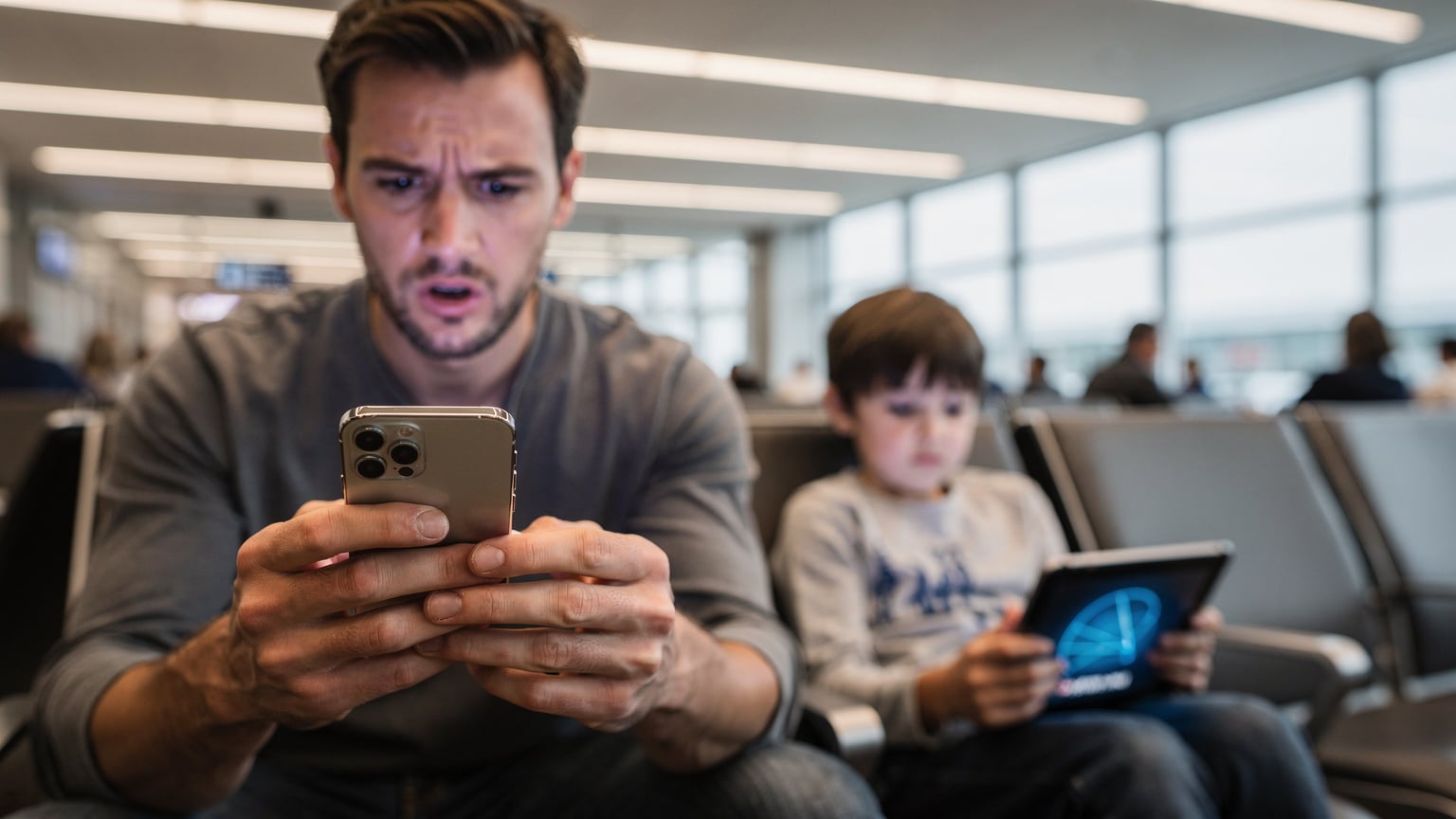
Let's be honest: for families, data isn't just a nice-to-have, it's essential. It's the difference between a calm car ride through the Dolomites and a full-on tantrum because "Minecraft won't connect." When I plan our trips, I always account for how much data everyone in the family will use, because I know a few hours of streaming on a long train ride can chew through gigabytes faster than a souvenir shop can chew through Euros.
How Much Data Do Kids Really Use?
This is the million-dollar question, and the simple answer is: a lot. My two kids, aged 9 and 12, can easily use 2-3 GB each per day if I don't set limits, especially with streaming services like Disney+ or Netflix. Add in online gaming (Roblox, Fortnite, Minecraft multiplayer) and video calls to grandparents, and you're looking at a huge amount of data. The T-Mobile trial's 5GB international allowance for 30 days is, frankly, a joke for this kind of use. That's only about an hour of HD streaming, or maybe two hours of standard definition, before you hit those painfully slow 2G speeds. It's barely enough for one child to get through a single movie on a long flight, let alone cover an entire trip.
| Activity | Estimated Data Usage Per Hour | Impact on 5GB Trial (Approx.) |
|---|---|---|
| Standard Definition Streaming (e.g., Netflix, Disney+) | 0.7 GB - 1 GB | 5-7 hours total |
| High Definition Streaming (e.g., YouTube HD) | 2 GB - 3 GB | 1.5-2.5 hours total |
| Online Gaming (e.g., Roblox, Minecraft) | 0.1 GB - 0.2 GB (per user) | 25-50 hours total (if only light gameplay) |
| Video Calls (e.g., FaceTime, Zoom) | 0.5 GB - 1 GB | 5-10 hours total |
| Social Media Browsing (with videos) | 0.2 GB - 0.4 GB | 12-25 hours total |
Pre-Loading and Offline Access: A Parent's Best Friend
To help manage data use, I always push for downloading content ahead of time. Before any big trip, especially ones with long flights or drives, I make sure the kids' iPads are packed with downloaded movies and games. Apps like Netflix, Disney+, and even YouTube Kids let you download things for offline viewing. For gaming, many single-player games work perfectly without internet. This is also where offline maps truly shine. Both Google Maps and Apple Maps allow you to download entire regions for offline navigation, which is a lifesaver when you're trying to find that specific gelato shop in Florence with unreliable Wi-Fi.
However, pre-loading only gets you so far. There will always be times when you need live data, whether it's checking bus schedules in London, translating a menu in Paris, or, inevitably, when a child needs a "quick refresh" of their favorite streaming service. That's exactly when a good travel eSIM comes in handy, making sure you don't get stuck at 2G speeds halfway through your adventure.
Parental Controls and Network Limitations
When you hand over a device to your child, even an iPad full of educational games, parental controls are a must-have. So, what happens to those controls when you're using an eSIM, especially a trial one? And how does the network itself affect your ability to keep an eye on or limit their usage?
Maintaining Screen Time Rules Abroad
The good news is that most parental control features, like Apple's Screen Time or Google's Family Link, are built into the device, not the network. This means they'll keep working whether your device is on Wi-Fi, your home carrier's physical SIM, or a travel eSIM. You can still set app limits, content filters, and downtime schedules. But there's a real challenge with data usage. With the T-Mobile trial's 5GB international cap, you'll need to be extra careful. While you can often set data warnings on your phone, trying to set specific data limits for individual apps or devices (like a child's iPad sharing your phone's hotspot) can be tricky. This makes a fixed-data travel eSIM feel less like a trial and more like walking a tightrope.
Connectivity in Challenging Environments
Theme parks, cruise ships, and remote areas all bring their own connectivity headaches. Many theme parks have Wi-Fi, but it's often spotty, slow, and unreliable, especially during busy times. Trying to find your family or check ride wait times with a slow connection is incredibly frustrating. Cruise ships are infamous for expensive and sluggish satellite internet, making a separate data plan vital for anything beyond basic messages. The T-Mobile trial might give you a tiny bit of international data, but it's unlikely to perform well in these packed or isolated spots. For these situations, a strong, dedicated travel eSIM with wider coverage and more data is almost always the smarter choice. I've personally used Cellesim in places like Disneyland Paris and on a Mediterranean cruise, and the peace of mind knowing I could always connect was invaluable.
Coverage and Speed Abroad: A Real-World Test
"Coverage" isn't just a buzzword when you're traveling. It means being able to call for help, find directions, or keep a tired child entertained with a cartoon. The T-Mobile eSIM trial's international roaming uses various partner networks, and how well they perform can be all over the map. My experience, and what I've heard from many parents in my travel group, suggests that a free trial's "best effort" roaming isn't something you want to rely on for your family's connectivity.
Where Does the 5GB Work?
The T-Mobile trial covers international roaming in over 215 countries and destinations. That sounds great on paper, but remember, it's only 5GB of high-speed data. How well it actually works in those countries depends a lot on T-Mobile's roaming partners. In big cities, you'll probably get a decent 4G/LTE network, but once you go off the main path, those speeds can quickly drop. Imagine trying to use a translation app or find an urgent care clinic in a small Italian village with 2G speeds. It's not just annoying; it's a safety concern when you have kids with you.
| Country/Region | Typical Roaming Partner (Example) | Expected Speed (Trial) | Family Suitability |
|---|---|---|---|
| Western Europe (France, Germany, Italy) | Orange, Vodafone, Deutsche Telekom | Mostly 4G/LTE (until 5GB exhausted, then 2G) | Adequate for very light personal use, insufficient for multi-device family needs. |
| Japan | SoftBank, NTT Docomo | Mostly 4G/LTE (until 5GB exhausted, then 2G) | Barely enough for solo navigation, completely inadequate for streaming or multiple kids' devices. |
| Mexico/Canada | Telcel, Rogers/Bell | Variable 4G/LTE, some 5G (until 5GB exhausted, then 2G) | Might work for a short weekend trip if extremely careful, but risky for longer stays. |
| Southeast Asia (Thailand, Vietnam) | AIS, Viettel | Mainly 4G (until 5GB exhausted, then 2G) | Very limited for solo travelers, impractical for families. |
The Reality of 2G Speeds
I can't stress this enough: 2G speeds are basically no speed at all in today's digital world. Trying to load a webpage, send a photo, or even refresh your social media on 2G is incredibly frustrating and pointless. For parents, this means:
- No reliable navigation: Google Maps will barely move, making it impossible to get around a new city.
- Zero streaming: Your kids' devices become expensive paperweights for anything that needs internet.
- Emergency communication delays: While basic texts might go through, any app-based communication or urgent browsing will be severely slowed down.
- Hotspot uselessness: Don't even think about sharing your phone's data with your child's iPad if you're stuck on 2G. It just won't work.
That's why, for any serious international trip, a dedicated travel eSIM or a proper local SIM card is always the safer bet. You need consistent, dependable data, especially when you're responsible for keeping little ones happy and safe. If you're comparing options for a specific place like Japan, you might want to check out Airalo eSIM for Japan vs Cellesim: Value, Coverage & Connectivity 2024.
The Cost of Exceeding Your Free Trial Limits
The word "free" is very appealing, but it often comes with hidden catches. While the T-Mobile eSIM free trial itself doesn't cost anything, hitting that 5GB international data limit can lead to a really bad experience. And if you decide to stick with T-Mobile afterward, the costs can add up quickly, especially if you're trying to get unlimited data for your whole family.
Automatic Slowdown and Its Impact
Unlike some plans that charge you for going over, the T-Mobile free trial simply slows your international data speeds to 2G once you've used your 5GB. This avoids unexpected bills, but it severely impacts your travel experience. As I've said, 2G speeds are pretty much useless for modern internet tasks. This means if you're relying on this trial for your family's internet, you'll likely be completely disconnected for most of your trip, which can lead to frustration, missed opportunities, and potentially stressful situations if you need reliable access for directions or emergencies. It's like bringing a tiny spoon to a buffet when you really need a shovel.
What If You Want More Data?
If you like the T-Mobile network at home and decide to turn your trial into a paid plan, you'll then get access to their regular international roaming benefits. These often include more generous high-speed data allowances or the option to buy data passes. However, these can be expensive, especially compared to dedicated travel eSIM providers. For example, T-Mobile's Magenta MAX plan gives you 5GB of high-speed data in 215+ countries, then drops to 2G speeds. If you need more, you're looking at international data passes that can be pricey. A 15GB pass for 30 days might cost around $50. If you need that for two phones and two iPads, you're quickly racking up a big bill that could have been much cheaper with a travel eSIM designed for multiple devices.

Alternatives to the T-Mobile eSIM Free Trial for Families
Since the T-Mobile free trial isn't a good long-term solution for family data abroad, it's really important to look at other options that actually meet the needs of traveling parents. From my experience, dedicated travel eSIMs are usually the most affordable and dependable choice.
Dedicated Travel eSIMs: The Family-Friendly Option
This is where providers like Cellesim truly shine. Travel eSIMs are built specifically for international travelers, offering various data packages designed for different destinations and trip lengths. The main benefits for families are:
- Flexible Data Plans: You can buy plans with much bigger data allowances, often from 10GB to 50GB or even unlimited, for durations that match your trip. This means enough data for everyone, including those crucial Disney+ streams on the iPads.
- Multi-Country Coverage: Many travel eSIMs offer regional or global plans, covering several countries with one package. This is perfect for multi-city European trips (think Paris, then Rome, then Berlin).
- Predictable Costs: You pay for your data upfront, so there are no surprise charges. Once the data runs out, you either top up or buy a new plan. No automatic slowing down to unusable speeds.
- Easy Hotspotting: Most travel eSIMs let you use your phone as a mobile hotspot. This way, you can share that generous data plan with your kids' iPads, their Nintendo Switches for online gaming, or even a travel laptop. This is a game-changer for keeping everyone connected.
For instance, instead of struggling with T-Mobile's 5GB, a Cellesim regional Europe plan might offer 20GB for 30 days across 30+ countries for a very reasonable price, and it's easily shareable across devices. This allows the kids to watch their shows, you to navigate, and everyone to stay connected without constantly worrying about data. While I might be biased, I truly believe buying an eSIM for Italy (or any other destination) from a specialized provider like Cellesim is a much smarter choice for families.
Local SIM Cards and Portable Wi-Fi
Another option is to buy local physical SIM cards when you arrive. This can be cheap but means finding a store, dealing with language barriers, and potentially tricky activation. It also means taking out your home SIM, which some travelers prefer not to do. Portable Wi-Fi devices (Mi-Fi) are also an option, giving you a mobile hotspot for several devices. But they're another gadget to charge and carry, and the rental costs can add up, often costing more than a well-chosen travel eSIM.
Getting Ready for Your Trip: Pre-Departure Checklist
Planning is something I truly enjoy, especially when it comes to family travel. A solid connectivity plan can save you from countless headaches and make your journey smoother, whether you're flying, driving, or taking a train. Before you even think about an eSIM trial, a few key steps will set you up for success.
- Unlock Your Phone: This is the most important step. Contact your home carrier well in advance to make sure your device is unlocked and ready for any travel eSIM. Don't wait until the day before you leave.
- Download Essential Apps: Fill everyone's devices with offline entertainment, maps, and translation apps. Think Disney+, Netflix, Google Maps, and Duolingo.
- Set Up Parental Controls: Double-check Screen Time or Family Link settings on all kids' devices. Make sure content restrictions and app limits are in place.
- Research Connectivity Options: Don't just rely on a free trial. Look into dedicated travel eSIM providers like Cellesim for your specific destination. Compare data allowances, coverage, and prices.
- Inform Your Home Carrier: Let your carrier know you'll be traveling and using an eSIM. This helps prevent any unexpected roaming charges if your physical SIM accidentally connects.
- Practice eSIM Activation: If you can, activate a small, cheap eSIM plan before your trip to get comfortable with the process. This builds confidence and helps you sort out any issues beforehand.
Managing Kids' Devices and Screen Time on the Go
Travel often means more screen time, especially on long journeys. My approach is always about finding a balance. Pre-loading games and movies helps a lot, but having reliable data for those unexpected moments is also key. Think about getting a portable charger for each device, including a power bank for your phone if you're using it as a hotspot. Nothing is worse than a dead iPad mid-flight. Also, remember to encourage "digital detox" moments. Get your kids to look out the window, interact with their surroundings, or play classic travel games. Data is a tool, not something to be glued to constantly, especially when you're exploring new cultures.
Final Verdict: Is the T-Mobile Trial Right for Your Family?
After carefully weighing everything, especially from the viewpoint of a parent juggling multiple devices and different data needs, my conclusion is clear: the T-Mobile eSIM free trial is generally not a good fit for international family travel.
The Good, The Bad, and The Unusable
The Good: For domestic US travel or for someone just trying out T-Mobile's network at home, the unlimited data, talk, and text for 30 days is a genuinely strong offer. It gives you a real feel for their service before you commit. This is a great way to see if T-Mobile's coverage works well in your neighborhood or during a cross-country road trip within the States.
The Bad: The 5GB international data cap is the biggest problem. For a family, this is simply not enough. It forces you to constantly monitor data, limits streaming for kids, and quickly leads to those unusable 2G speeds. This means you'll spend your vacation worrying about hitting your limit instead of enjoying your time. Imagine trying to find family members at different attractions in a theme park only to discover your data has slowed to a crawl.
The Unusable: The moment you hit that 5GB limit, your international data experience basically stops. 2G speeds are not practical for navigation, real-time communication, or keeping children entertained with digital content. This makes the trial pretty much useless for most of a family's international data needs, turning a potential solution into a major source of stress.
A Parent's Recommendation
While the T-Mobile eSIM free trial might look tempting, especially with "free" in the name, it's really best treated as a domestic trial only. For international family travel, where reliable and sufficient data is essential for getting around, communicating, and keeping everyone happy, a dedicated travel eSIM provider like Cellesim offers much better value, flexibility, and peace of mind. You can buy a plan that actually meets your family's data needs, knowing you won't suddenly be cut off or slowed down to unusable speeds. Investing in a solid travel eSIM plan is one less thing to stress about, letting you focus on making amazing family memories abroad.
Frequently Asked Questions
Can I use the T-Mobile eSIM free trial for my kids' iPads internationally?
The T-Mobile eSIM free trial is primarily for smartphones and offers only 5GB of high-speed international data. This amount is generally insufficient for multiple devices like kids' iPads, especially for streaming or online gaming, and it cannot be shared across devices.
What happens when I use up the 5GB international data on the T-Mobile trial?
Once you exceed the 5GB international data allowance, your speeds will be throttled down to 2G. This speed is practically unusable for modern internet tasks such as navigation, streaming, video calls, or even loading most websites, making it very impractical for family travel.
Is the T-Mobile eSIM free trial suitable for long family trips abroad?
No, the T-Mobile eSIM free trial is not suitable for long family trips abroad. Its limited 5GB international data cap for 30 days will quickly be depleted by even moderate family use, leaving you with extremely slow, unusable speeds for the remainder of your trip.
Can I hotspot my child's device using the T-Mobile eSIM free trial internationally?
While the T-Mobile free trial supports hotspotting, the 5GB international data limit means that sharing data with a child's device will deplete the allowance even faster. Once the 5GB is used, the throttled 2G speeds will make hotspotting effectively useless for any meaningful activity.
Are parental controls affected by using a T-Mobile eSIM free trial abroad?
Parental controls like Apple's Screen Time or Google's Family Link are device-based and will continue to function regardless of your network connection. However, the limited data on the T-Mobile trial means you'll need to be extra diligent in managing overall data consumption to avoid hitting the 2G slowdown.
What are better alternatives for family data abroad than the T-Mobile trial?
For family travel abroad, dedicated travel eSIMs like those offered by Cellesim are significantly better. They provide larger, more flexible data plans, multi-country coverage, predictable costs, and robust hotspotting capabilities, ensuring reliable connectivity for all family devices.