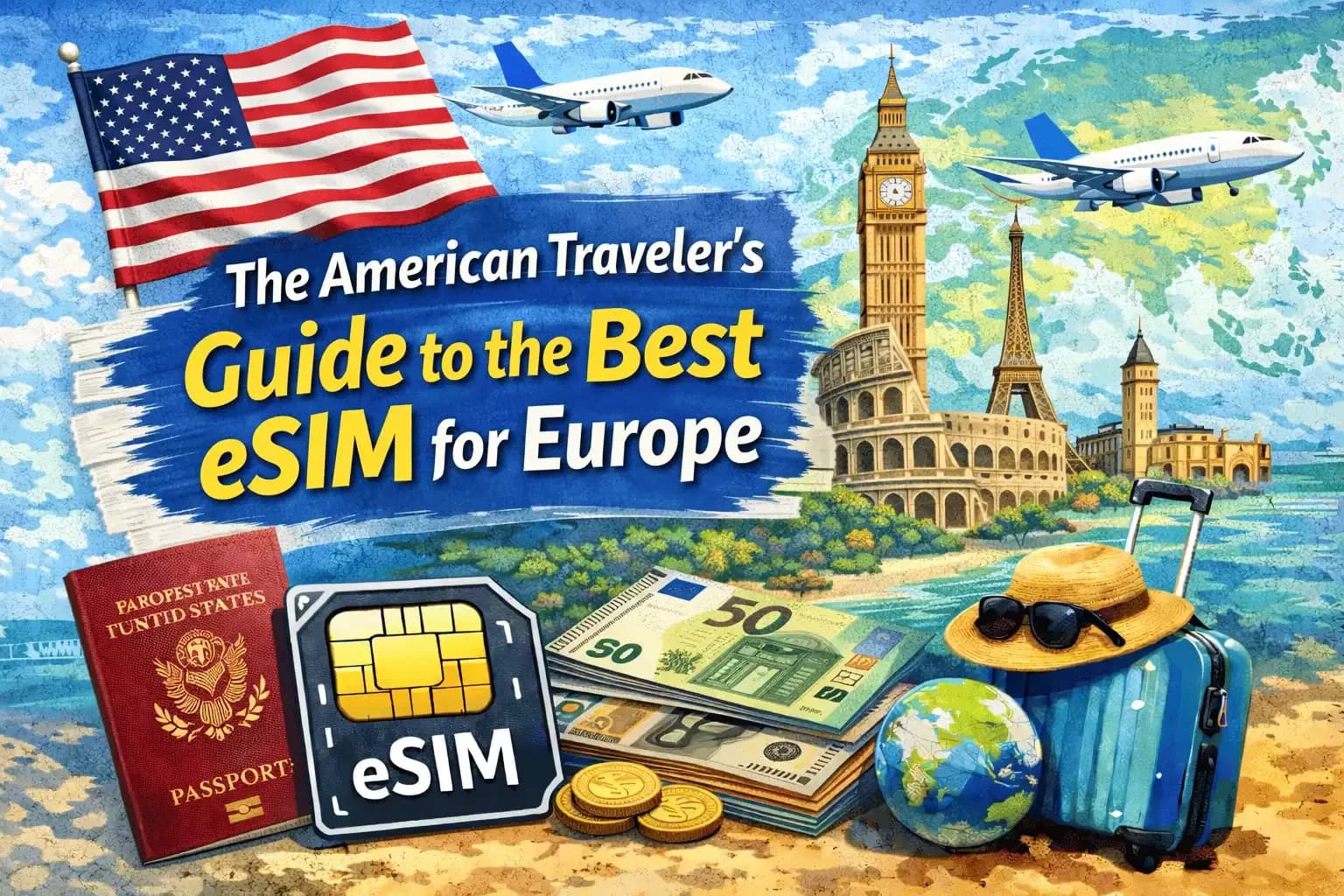
Embarking on a European adventure is an exciting prospect for any American traveler. From the historic streets of Rome to the romantic canals of Venice or the vibrant culture of Barcelona, staying connected is essential for navigation, sharing experiences, and keeping in touch with loved ones back home. Traditional roaming plans from US carriers can quickly become expensive, while hunting for local SIM cards upon arrival adds unnecessary hassle to your journey. This guide is specifically designed for American travelers looking for the best way to maintain seamless, affordable connectivity across Europe: the eSIM.
- Why a Cellesim eSIM is the American Traveler's Best Friend in Europe
- Key Considerations for American Travelers: Device & Compatibility
- Choosing Your Cellesim Europe eSIM Plan: Data Needs for Your Adventure
- Cost Comparison: eSIM vs. US Roaming vs. Local SIM for Americans
- Seamless Setup: Activating Your Cellesim Europe eSIM
- Maximizing Your Connectivity: Pro Tips for American Travelers in Europe
- Frequently Asked Questions
Connect Across 42 European Countries with Cellesim
Experience uninterrupted data with Cellesim's Europe eSIM plans, starting from just $4.50. Join 50,000+ happy customers staying connected globally.
Get Your Europe eSIMWhy a Cellesim eSIM is the American Traveler's Best Friend in Europe
For American travelers venturing into Europe, traditional connectivity solutions often present a dilemma. Relying on your home carrier's international roaming can lead to exorbitant bills, while purchasing a physical SIM card in each new country or even just once in Europe means dealing with local vendors, registration processes, and potentially losing access to your primary US number.
An eSIM, or embedded SIM, streamlines this entire process. It's a digital SIM profile downloaded directly to your phone, eliminating the need for physical cards. For American tourists, Cellesim's Europe eSIM offers several distinct advantages:
- Cost-Effectiveness: Cellesim provides competitive data plans specifically tailored for European travel, often significantly cheaper than typical US carrier roaming fees. You select a plan that fits your budget and data needs, avoiding unexpected charges.
- Seamless Activation: Purchase and activate your eSIM before you even leave the US, or upon arrival. The setup is quick and entirely digital, allowing you to land in Europe with instant connectivity. No more searching for SIM card vendors at the airport.
- Keep Your US Number Active: With an eSIM, you can maintain your physical US SIM card in your phone, allowing you to receive calls and texts on your American number while using the eSIM for all your data needs. This is crucial for two-factor authentication, family communication, and important alerts.
- Multi-Country Coverage: Cellesim's Europe eSIM plans cover 42 countries, meaning you can travel from France to Italy, Germany to Spain, and beyond, all with the same data plan, eliminating the need to buy new SIMs in each destination.
- Instant Digital Delivery: Your eSIM is delivered via email almost instantly after purchase, allowing for immediate setup.
"For frequent travel across Europe, an eSIM offers unparalleled flexibility and cost control that traditional roaming simply cannot match for an American budget."
Key Considerations for American Travelers: Device & Compatibility
Before you commit to an eSIM for your European journey, it is essential for American travelers to confirm their device's compatibility. While most modern smartphones from the US support eSIM technology, there are a few important points to check.
- eSIM-Compatible Device: Ensure your smartphone is eSIM-compatible. Most iPhone models from the XS/XR onwards, and many recent Android flagship devices from Samsung, Google Pixel, and others, support eSIM. Some models purchased in specific regions might have limitations. You can verify your device's compatibility quickly using our eSIM Checker.
- Unlocked Phone: Your phone must be unlocked by your US carrier to use a Cellesim eSIM. If your phone is still under contract or financed, it might be locked to your current provider, preventing you from using other networks. Contact your US carrier to confirm its unlocked status.
- Operating System Updates: Ensure your phone's operating system (iOS or Android) is updated to the latest version. This ensures optimal eSIM performance and access to all necessary features.
Checking these few points before you depart will prevent any connectivity surprises once you land in Europe. For a comprehensive list of supported devices, visit our eSIM compatible devices page.
Choosing Your Cellesim Europe eSIM Plan: Data Needs for Your Adventure
Selecting the right data plan is crucial for a smooth European travel experience. American travelers often underestimate their data usage abroad, leading to either running out of data or overspending on unnecessary GBs. Consider your typical usage patterns:
- Light User (1-3 GB for 7-10 days): You primarily use Wi-Fi, check emails, send messages, and occasionally use maps for navigation.
- Moderate User (5-10 GB for 7-14 days): You rely on maps daily, browse social media, stream some music, and make occasional video calls to family.
- Heavy User (15-30 GB for 14-30 days): You frequently stream video, tether other devices, engage in extensive social media use, and make regular video calls.
Cellesim offers a variety of Europe eSIM plans with flexible data amounts and durations to suit different travel styles. Our plans are designed to provide excellent value and coverage across 42 European countries. For a more personalized estimate of your data needs, try our Smart Data Calculator.
Cost Comparison: eSIM vs. US Roaming vs. Local SIM for Americans
Understanding the financial implications of different connectivity options is vital for American travelers planning their European trip. Let's compare Cellesim eSIM with typical US carrier international roaming and local European SIM cards.
| Option | Setup | Cost (Typical 10-day trip, 10GB) | Flexibility | Keep US Number |
|---|---|---|---|---|
| Cellesim eSIM | Instant, Digital | From $20 - $35 | Multi-country, Various plans | Yes |
| US Carrier Roaming (e.g., Verizon, AT&T, T-Mobile) | Automatic | $10-$15/day (up to $150 for 10 days) | Limited, Can be throttled | Yes |
| Local European SIM | Store visit, Registration | $25 - $40 | Single-country (usually), Limited choice | No (new number) |
As the table illustrates, Cellesim's eSIM presents a clear financial advantage for American travelers, offering significant savings compared to typical US roaming packages. It also provides greater convenience than repeatedly buying local SIMs.
For a detailed breakdown of potential savings, use our Roaming Savings Calculator. It highlights how much you can save by choosing an eSIM over traditional roaming plans from your US provider.
Explore All Cellesim eSIM Plans
Seamless Setup: Activating Your Cellesim Europe eSIM
Activating your Cellesim Europe eSIM is a straightforward process designed for simplicity, even for first-time eSIM users. Here’s a general step-by-step guide:
- Purchase Your eSIM: Visit cellesim.com/en/esim-europe-42-countries and select the Europe eSIM plan that best suits your data and duration needs.
- Receive Your eSIM: After purchase, you will receive an email containing a QR code or manual installation details.
- Installation (before you travel or upon arrival):
- For iPhone: Go to Settings > Cellular/Mobile Data > Add eSIM. Scan the QR code or enter details manually. Follow the on-screen prompts. Label your new eSIM clearly (e.g., "Europe Data").
- For Android: Go to Settings > Network & Internet > SIMs > Add eSIM (or similar path depending on device model). Scan the QR code or enter details manually. Follow the on-screen prompts.
- Enable for Data: Once installed, ensure your Cellesim eSIM is selected as your primary line for cellular data when you arrive in Europe. You can typically find this option in your phone's Cellular/Mobile Data settings.
- Disable Data Roaming on US Line: To avoid accidental roaming charges on your US number, make sure data roaming is turned OFF for your physical US SIM card. You can keep your US line active for calls and texts if desired.
For more detailed instructions, including screenshots and device-specific guides, consult our complete eSIM setup guide or our interactive setup guide.
Maximizing Your Connectivity: Pro Tips for American Travelers in Europe
To get the most out of your Cellesim Europe eSIM and ensure a hassle-free experience, consider these practical tips tailored for American travelers:
- Keep Your US Number Active: As mentioned, you can keep your US SIM active for calls and texts while using the eSIM for data. This is vital for maintaining contact with your US bank, two-factor authentication for apps, and family communication without incurring roaming data charges. Learn more about keeping your number when using a travel eSIM.
- Understand Dual SIM Settings: Familiarize yourself with your phone's dual SIM management settings. You can designate which SIM to use for data, calls, and messages. Set your eSIM for data and your US physical SIM for calls and texts if you wish to receive them.
- Utilize Wi-Fi Calling: If your US carrier supports Wi-Fi calling, enable it before you leave. When connected to Wi-Fi in Europe, you can make and receive calls on your US number without using your eSIM data or incurring international calling fees.
- Monitor Data Usage: Keep an eye on your data consumption through your phone's settings or the Cellesim portal. This helps you manage your plan and decide if you need to top up.
- Troubleshooting Common Issues: If you experience any connectivity issues, try toggling airplane mode on and off, restarting your phone, or manually selecting a network operator in your phone's settings. Our customer support team is available via [email protected] if you need further assistance.
- Emergency Services: In Europe, the emergency number is 112. Your phone, regardless of SIM status, should be able to connect to emergency services.
Staying informed about your connectivity options ensures that your focus remains on enjoying the rich cultural experiences Europe has to offer, rather than worrying about phone bills or finding Wi-Fi.
Ready for Seamless European Connectivity?
Join 50,000+ travelers in 200+ countries. Set up your Cellesim Europe eSIM in minutes and land connected.
Start Your Connected JourneyTrusted by travelers worldwide. 24/7 Support via [email protected].
Frequently Asked Questions
Can I use my existing US phone number with a Cellesim eSIM in Europe?
Yes, absolutely. An eSIM is for data connectivity. You can keep your physical US SIM card in your phone and keep your US number active for calls and texts, using your Cellesim eSIM solely for data services while abroad.
Will my US phone be compatible with a Cellesim Europe eSIM?
Most modern US smartphones (iPhone XS/XR and newer, Samsung Galaxy S20 and newer, Google Pixel 3 and newer) are eSIM compatible. However, your device must also be unlocked by your US carrier. You can check compatibility using our eSIM Checker.
Is an eSIM cheaper than international roaming from my US carrier?
In almost all cases, yes. US carrier international roaming plans can cost $10-$15 per day, quickly accumulating high charges. Cellesim Europe eSIM plans offer significantly more affordable data rates, with transparent pricing for your entire trip. Use our Roaming Savings Calculator to see the difference.
Can I make calls and send texts with a Cellesim Europe eSIM?
Cellesim eSIMs primarily provide data connectivity. While some apps allow calls/texts over data (e.g., WhatsApp, FaceTime), you will typically use your US physical SIM for traditional calls and texts to your US number, or Wi-Fi calling if enabled.
When should I activate my Cellesim Europe eSIM?
You can purchase and install your eSIM before you even leave the US. However, it is generally recommended to activate the data plan (turn on data roaming for the eSIM) only once you arrive in Europe to maximize your data duration.
What if I need more data during my trip?
Cellesim offers flexible plans, and in most cases, you can top up your existing eSIM with more data directly from our website if you find yourself running low. This can be done quickly and seamlessly online.