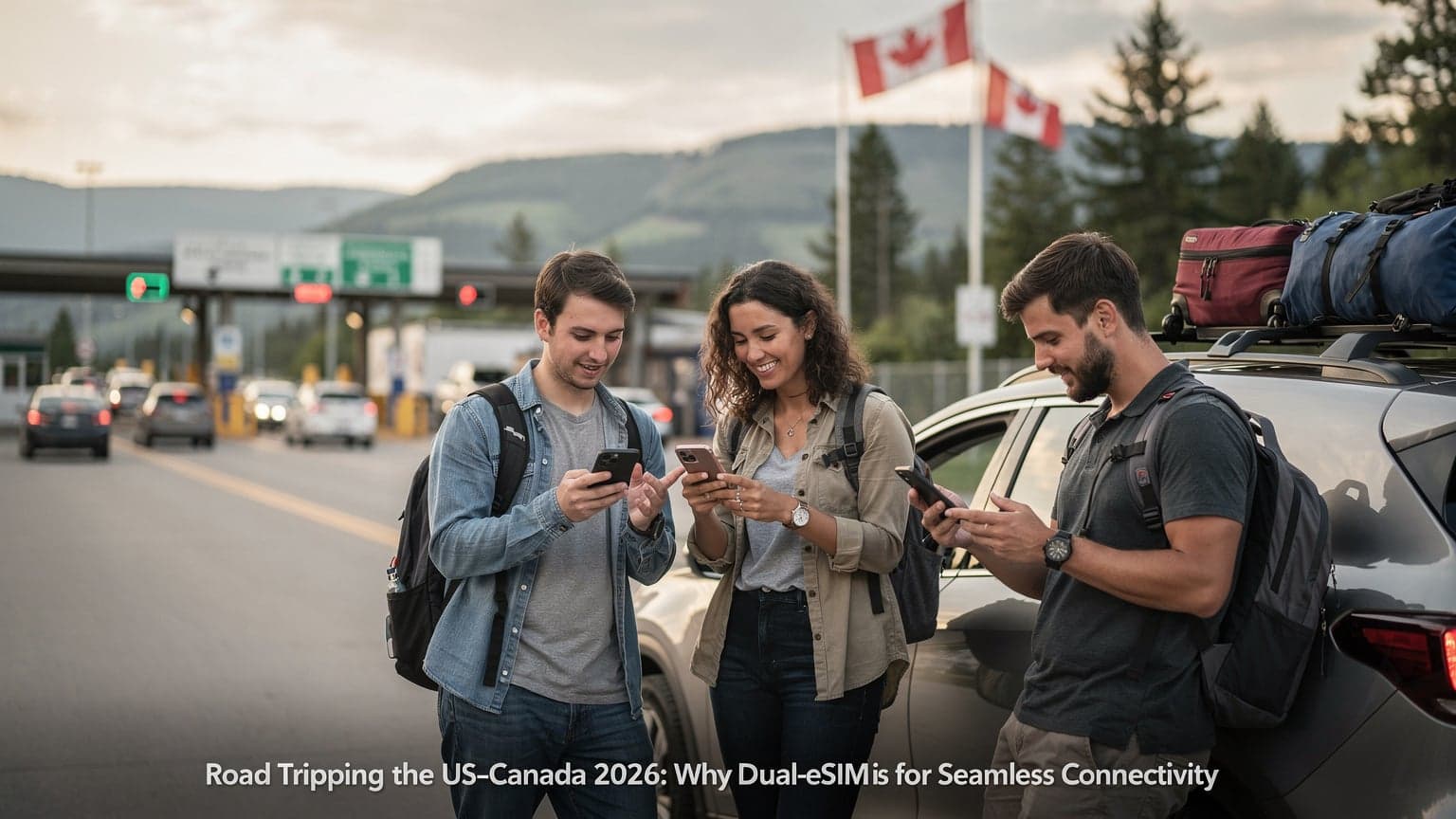
Summer Road Trip 2026: Ditch Roaming Fees on Your USA & Canada Adventure with an eSIM
The open road is calling! The sun’s shining, your road trip playlist is perfect, and you can practically taste the adventure of exploring the USA and Canada. You’re dreaming of massive national parks, lively cities, and charming small towns. But hold on, there’s one small detail that can quickly turn your dream trip into a money pit: international roaming fees. We’ve all been there - a quick map check, a social media update, and suddenly your phone bill looks like a car payment. Don’t panic, fellow traveler, because for your Summer Road Trip 2026, there’s a real game-changer: the eSIM. Forget physical SIM cards, unlock codes, and ridiculous charges. It’s time for smarter connectivity.
Why Roaming Fees Are the Arch-Nemesis of Road Trippers
Before we jump into the amazing world of eSIMs, let’s quickly remember why traditional roaming is such a pain. When you use your home country’s SIM card abroad, your carrier partners with local networks. That’s convenient, sure, but it comes with a steep price. Data, calls, and texts often cost way more than what you pay at home. These charges add up fast, especially when you’re using your phone for navigation, booking hotels, researching cool spots, and keeping in touch with family. Imagine trying to find the best poutine in Montreal or the fastest way through Yellowstone, only to get a huge bill later. It just sucks the fun right out of things.
The Hidden Costs of Traditional Roaming
- Per-MB Data Charges: These can be shockingly high, sometimes several dollars per megabyte. Even a short video or browsing a few websites can quickly empty your wallet.
- Voice Call Minutes: Both making and receiving calls can hit you with big fees.
- SMS Text Messages: While not as bad as data, individual text message charges can still sting.
- Surprise Bills: Often, you don't realize how much damage has been done until you’re back home and get your monthly statement.
- Data Throttling: Some carriers might slow down your speed after you hit a certain usage, even if you’re paying top dollar.
Enter the eSIM: Your Summer 2026 Connectivity Savior
An eSIM, short for embedded SIM, is a digital SIM card. It lets you activate a cell plan from a carrier without needing a physical card. Instead of swapping tiny plastic chips, you just download a profile onto your compatible phone. This tech has been around for a few years, but it’s really going mainstream now, making it perfect for international travelers, especially those doing a multi-country trip like a USA and Canada road trip.
How an eSIM Works for International Travel
Think of an eSIM as a virtual SIM slot in your phone. You buy a data plan from a provider that specializes in international eSIMs (like Cellesim travel eSIM), and they send you a QR code or activation details. You scan the QR code with your phone, and boom! Your device now connects to a local network in the country you’re in, often for much less than traditional roaming. This means you can keep your home SIM active for incoming calls and texts (if you want) while using your eSIM for all your data.
Benefits of Using an eSIM for Your USA & Canada Road Trip
The upsides of an eSIM for a cross-border road trip are huge and truly make travel better. It simplifies your trip and keeps you connected without draining your bank account.
Smooth Cross-Border Connectivity
One of the biggest frustrations for USA and Canada road trippers has always been staying connected at the border. Do you buy a US SIM and then a Canadian one? With the right eSIM, you can often find plans that cover both countries, giving you uninterrupted data as you drive from, say, Seattle to Vancouver, or from Niagara Falls, New York, to Niagara Falls, Ontario. This means no more swapping SIMs or dealing with multiple companies, just a smooth drive.
Cost-Effectiveness
This is where eSIMs really shine. Providers like Cellesim travel eSIM offer various data packages specifically for travelers, often costing a fraction of what traditional roaming would. You can pick a plan based on how much data you think you’ll use, so you only pay for what you actually need. No more guessing games or fearing a huge bill.
Convenience and Ease of Use
Activating an eSIM is incredibly simple. No need to find a local store, struggle with language barriers, or fiddle with tiny SIM card trays. Most activations can be done from your couch before you even leave, or right from your hotel room. Once it’s active, switching between your home SIM and your eSIM is usually just a few taps in your phone’s settings.
Flexibility and Control
With an eSIM, you’re in charge. If you run out of data, you can easily top up or buy another plan right from the eSIM provider's app or website. This flexibility is super valuable if your travel plans change or you end up using more data than you expected. You can also compare different plans and choose the one that best fits your budget and data needs, instead of being stuck with your home carrier’s expensive roaming rates.
Security
Losing a physical SIM card is a pain and a security risk. With an eSIM, there’s no physical component to misplace or have stolen. Your digital profile stays safe on your device.
Choosing the Right eSIM for Your USA & Canada Adventure
While the benefits are clear, picking the right eSIM provider and plan is key. Not all eSIMs are the same, and some are better for specific travel needs.
Key Factors to Consider
- Device Compatibility: Make sure your smartphone or tablet supports eSIM. Most newer models (iPhone XS and later, many Samsung Galaxy S/Note/Fold series, Google Pixel 3 and later, etc.) work with it. Double-check your device’s specs.
- Coverage: Confirm that the eSIM provider has great coverage in the specific areas you plan to visit in both the USA and Canada. Providers like Cellesim travel eSIM often work with major local networks, which means reliable service.
- Data Packages: Look for plans that give you enough data for your trip length and how you use your phone. Do you need 5GB for a week or 20GB for a month? Think about if you’ll be streaming a lot, making video calls, or just using basic navigation and messaging.
- Validity Period: Make sure the plan’s validity period covers your entire road trip. Some plans are for 7 days, others for 15, 30, or even longer.
- Pricing and Top-Up Options: Compare prices from different providers. Also, check how easy it is to add more data if you run out during your trip.
- Customer Support: Good customer support is priceless if you hit any snags during activation or while using your eSIM.
- Voice and SMS: Most travel eSIMs focus mainly on data. If you need to make calls or send texts, check if the plan includes them or if you’ll use apps like WhatsApp, FaceTime Audio, or Google Voice.
Why Cellesim Travel eSIM is an Excellent Choice
When you’re planning your Summer Road Trip 2026, a provider like Cellesim travel eSIM really stands out because they focus on international travelers. They usually offer a variety of plans made specifically for multi-country trips, often covering both the USA and Canada in one package. This means you don’t have to buy separate eSIMs for each country, making border crossings much smoother. Cellesim travel eSIM typically partners with leading local networks, which means strong coverage in both cities and remote areas - essential for a road trip where signals can be tricky. Their easy-to-use platform and clear pricing make it simple to find and activate the perfect plan for your adventure, giving you peace of mind so you can focus on the incredible journey ahead.
Practical Tips for Using Your eSIM on the Road
To get the most out of your eSIM and have a smooth trip, here are a few practical tips:
Activate Before You Depart
Whenever you can, activate your eSIM before you leave home or as soon as you arrive at your first stop. This ensures you have data right away, which is super helpful for calling a taxi, finding your hotel, or letting family know you’ve arrived safely.
Understand Your Phone Settings
Get familiar with your phone’s cellular settings. You’ll need to know how to pick which SIM (your home SIM or your eSIM) is used for data, calls, and messages. You can usually label your eSIM for easy recognition (like “Travel Data” or “USA/Canada eSIM”).
Monitor Your Data Usage
Keep an eye on how much data you’re using through your phone’s settings or the eSIM provider’s app. This helps you avoid running out unexpectedly and lets you top up proactively if you need to. Remember, heavy streaming and video calls eat data fast.
Utilize Wi-Fi When Available
Even with an affordable eSIM, it’s smart to connect to free Wi-Fi whenever you can (at hotels, cafes, public hotspots) to save your data allowance, especially for big downloads or updates.
Turn Off Data Roaming for Your Home SIM
Crucially, make sure data roaming is turned OFF for your home SIM card in your phone settings. This prevents any accidental charges from your home carrier while you’re using your eSIM for data.
Conclusion: Embrace the Future of Travel Connectivity
Your Summer Road Trip 2026 across the USA and Canada will be an amazing adventure, full of beautiful sights, new experiences, and memories you’ll treasure. Don’t let the fear of huge roaming fees spoil it. By using an eSIM, like those from Cellesim travel eSIM, you can stay connected, navigate confidently, and share your incredible journey with everyone, all without stressing about your phone bill. Make the smart choice, ditch the roaming fees, and hit the open road with complete peace of mind. Happy travels!