
Family eSIM: Why it's a Game-Changer for Parents
Remember those frantic moments trying to find a working Wi-Fi signal in a bustling Venetian piazza just to check if the vaporetto was still running? Or the time my eldest, convinced he was lost in the maze of the Grand Bazaar in Istanbul, needed to call me, and my local SIM had run out of credit? These aren't just travel anecdotes, they're common parental nightmares. For years, managing connectivity for a family abroad felt like a complex equation involving multiple physical SIMs, unreliable pocket Wi-Fi devices, or exorbitant roaming fees. Then came the eSIM.
An eSIM, or embedded SIM, is a digital SIM card that lets you activate a cellular plan without needing a physical card. For families, this means incredible flexibility and convenience. Imagine landing at London Heathrow, and before you've even cleared customs, everyone's device is already connected. No more fumbling for tiny pins, no more desperate searches for local mobile shops, just instant access.
The End of the Roaming Headache
I recall a trip to the Amalfi Coast with my then-teenage niece. She’d managed to rack up a £200 bill in a single afternoon, mostly from uploading Instagram stories while we were hiking near Positano. My face when I saw that bill was probably a deeper shade of red than the local San Marzano tomatoes. With an eSIM, those days are a distant memory. You buy a data package for your trip, and once it's used, it's used. No hidden charges, no surprises.
Shared Data, Shared Sanity
Many eSIM providers, like Cellesim, offer plans you can share across multiple devices. This is a lifesaver. Instead of buying individual plans for everyone, you get one big data bundle everyone can tap into. My kids, bless their tech-savvy hearts, can stream a bit of Netflix on a long train journey with the Deutsche Bahn, while I check restaurant reviews for Abendessen in Berlin-Mitte, and my partner navigates us through the U-Bahn system to Alexanderplatz. All from the same pool of data.
Choosing the Right Family eSIM Plan: Data Needs and Coverage
The key to a successful, stress-free trip starts with planning your data. It's easy to underestimate how much data a family truly needs, especially with kids who love YouTube Kids or Roblox. A week-long trip to Rome, for example, might see us using over 20GB across four devices. This covers maps, translation apps, social media, and yes, a fair bit of screen time to keep the peace during museum visits.
| Activity | Estimated Data Usage Per Hour | Family Impact |
|---|---|---|
| Basic Navigation (Google Maps) | 5-10 MB | Essential for parents, low impact. |
| Social Media Browsing (Instagram, TikTok) | 100-300 MB | High for older kids/teens, moderate for parents. |
| Streaming Video (Netflix, YouTube) | 500 MB - 1.5 GB | Very high for kids' entertainment on long journeys. |
| Video Calls (WhatsApp, FaceTime) | 200-500 MB | Moderate for staying in touch with home. |
| Online Gaming (Roblox, Minecraft) | 50-200 MB | Moderate to high for kids. |
| Messaging (WhatsApp, iMessage) | 1-5 MB | Low, but crucial for communication. |
Assessing Your Family's Data Appetite
Before you even look at plans, think about your family's digital habits. Are your kids constantly on their tablets? Do they need to share every adventure with friends back home? My rule of thumb is to always overestimate, especially when you're crossing multiple time zones where boredom can strike fast. For a typical week-long family holiday, I'd say is 5GB data enough for a week abroad, for one person, is often a stretch. For a family, aim for 20-30GB for a week, or more if you're staying for two.
Coverage Across Continents
The great thing about Cellesim is its wide global coverage. You can find multi-country eSIMs that cover entire regions, like Europe or the Middle East. For our recent trip exploring the souks of Marrakech and the ancient city of Petra, a Middle East eSIM meant seamless connectivity from one desert to the next. No swapping cards or worrying about local networks. This multi-country option is especially useful for families doing a grand tour, say, across several European capitals, moving from the BVG in Berlin to the ATM in Milan, then on to the RATP in Paris.
Popular Summer Holiday Destinations for Families and Their Connectivity
The world really opens up during the summer holidays. Whether you're chasing the sun on the Aegean Sea or exploring ancient ruins, reliable data is essential. Let's look at some popular spots.
Mediterranean Marvels: Greece and Turkey
The Greek islands are always a favorite, and for good reason. From the white-washed villages of Santorini to the historical wonders of Crete, families love them for sun, sea, and mythology. For connectivity, local carriers like Cosmote have strong networks. With a Cellesim Cosmote eSIM Greece 2026, you skip the queues and potential language barriers at a local shop, getting online as soon as you land. Turkey, with its vibrant culture and stunning coastlines, is another fantastic choice. My family spent a memorable week exploring the historical wonders of Sultanahmet in Istanbul, then relaxing on the beaches of Bodrum. We used our eSIM constantly for maps, translation, and booking our Bosphorus cruise. For those going to Turkey, a Turkcell eSIM for Tourists 2026 simplifies your data needs.

The Allure of Asia: Thailand and China
For families seeking a more adventurous summer, Southeast Asia, especially Thailand, offers incredible experiences. Imagine exploring the bustling markets of Bangkok, then unwinding on the tranquil beaches of Phuket. Staying connected here is vital, not just for navigation but also for using local ride-hailing apps like Grab or ordering food delivery. And for those planning a truly epic trip, China presents a unique connectivity challenge. The Great Firewall can make accessing familiar apps tricky. However, a Best eSIM for China 2026 is specifically designed to get around these restrictions, giving you easy access to your usual social media and communication channels. I remember my first trip to Beijing, trying to use a VPN that kept dropping out. It was a constant battle. Now, with the right eSIM, that frustration is gone.
Navigating the Digital Divide: Keeping Kids Engaged and Safe
Traveling with children, especially teenagers, often means balancing exploration with screen time. A family eSIM helps with this, offering both freedom and control.
Entertainment on the Go
Long flights, train rides, or even just waiting for a table at a busy trattoria in Trastevere, Rome, can test anyone's patience. This is where pre-downloaded content is great, but sometimes, a bit of live streaming or a new game can really save the day. With plenty of data, kids can access their favorite shows or games, keeping boredom away. I once survived a delayed flight from Athens to London thanks to my son being engrossed in an online game on his tablet, powered by our shared eSIM data. The alternative? A very loud, very public meltdown.

Safety and Communication
Beyond entertainment, connectivity is a safety net. Knowing your child can contact you if they get separated in a crowded market, or that you can track their location with a family sharing app, offers immense peace of mind. During a family trip to Disneyland Paris, my youngest got briefly separated near Space Mountain. Having an active eSIM on his watch (paired with my phone) allowed us to quickly find him using the Find My app. It turned a potential panic into a minor blip. This instant communication is priceless.
Troubleshooting Common eSIM Issues on the Go
While eSIMs are usually easy to use, sometimes a hiccup happens. Knowing a few basic troubleshooting steps can save you a lot of grief.
Basic Connectivity Checks
Before you panic, go through the basics:
- Restart your device: It sounds simple, but a quick reboot often fixes minor network glitches.
- Check eSIM settings: Make sure the eSIM is active and selected for cellular data in your phone's settings (Settings > Cellular/Mobile Data). Sometimes, an inactive physical SIM might still be prioritized.
- Verify APN settings: Occasionally, especially with certain regional carriers, the Access Point Name (APN) might need manual setup. Your eSIM provider's support page usually has these details.
- Toggle Airplane Mode: Turning Airplane Mode on for 30 seconds, then off again, can force your device to reconnect to the network.
When to Contact Support
If these steps don't work, it's time to reach out to your eSIM provider's customer support. Most reputable providers offer 24/7 chat support. Have your order number and device details ready. I once had an issue in Vietnam where my eSIM wouldn't connect in Hoi An. A quick chat with support confirmed a local network outage, and they were able to push a configuration update that fixed it within minutes. It's a huge improvement from the old days of trying to explain technical issues to a local shop assistant with a language barrier.
The Logistics of eSIM Activation and Management
One of the biggest benefits of eSIMs is how simple they are to activate. No more queuing at the airport or hunting for specific carrier stores.
Pre-Departure Setup
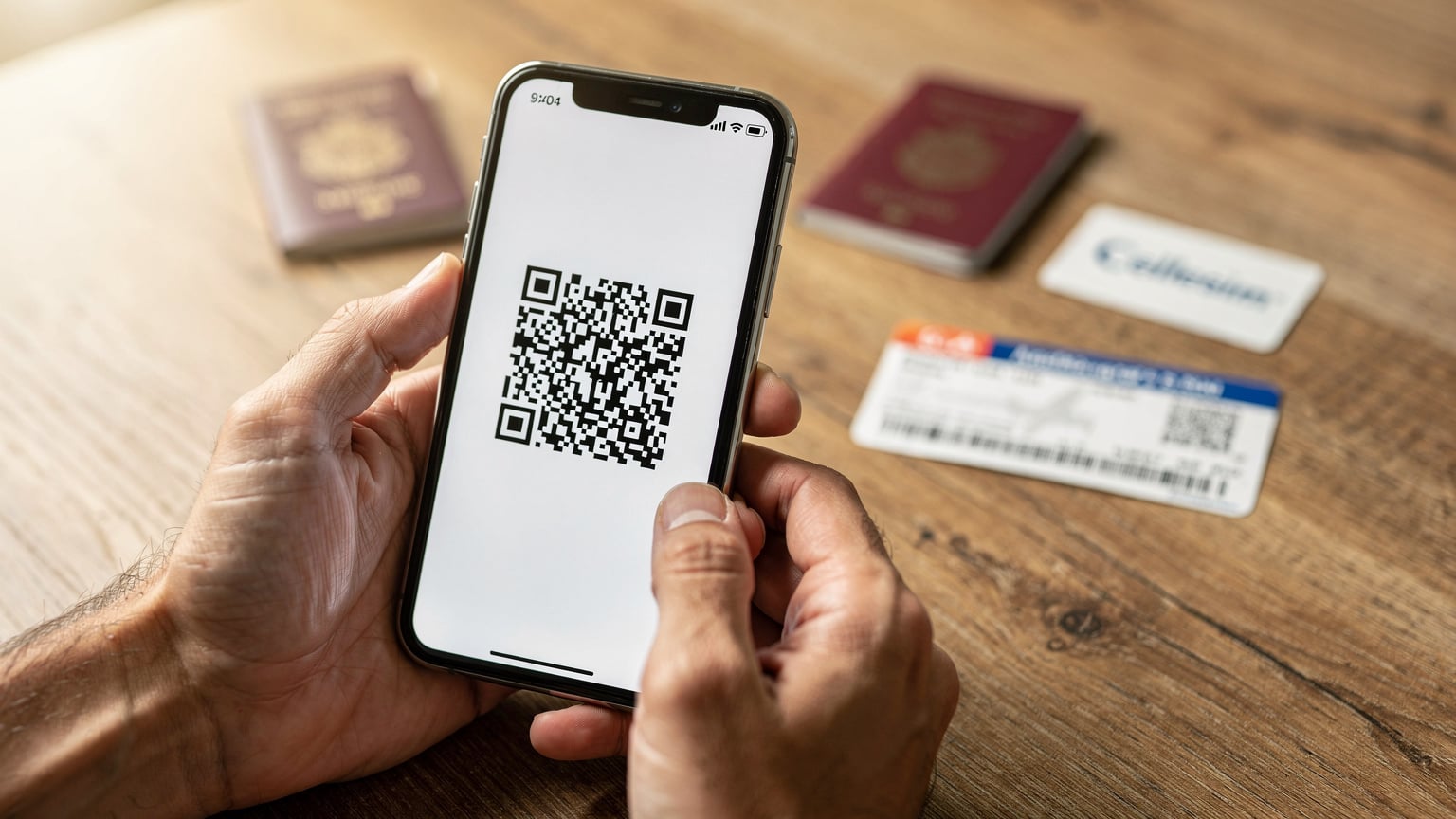
The best time to activate your eSIM is before you even leave home, ideally over a stable Wi-Fi connection. Most providers send you a QR code or an activation link. For iPhones, the process is incredibly smooth, often just a scan of a QR code and a few taps. If you're using an iPhone, make sure it's unlocked. You can read more about unlocking your iPhone for eSIM to ensure compatibility. I've heard too many stories of travelers arriving at their destination only to find their phone is locked to their home carrier, making their new eSIM useless. A quick call to your home provider (or checking their website) before you fly can save a lot of headaches.
Managing Multiple eSIMs and Devices
Modern smartphones can store several eSIM profiles, letting you switch between them as needed. This is perfect for multi-country trips. For instance, if you're traveling through France and then heading to French Polynesia, you could have a dedicated eSIM for Europe and another for the islands. For families, this means the primary device (likely a parent's phone) can manage the shared data plan, while other family members connect their devices via a personal hotspot, or if their devices are eSIM-compatible, have the eSIM installed directly. For those heading to the South Pacific, an eSIM for French Polynesia 2026 provides easy island connectivity.
Real-World Scenarios: How a Family eSIM Saves the Day
It's not just about avoiding roaming fees, it's about making travel smoother, safer, and more enjoyable.
The Lost Child in Barcelona's Gothic Quarter
Imagine this: You're exploring the winding streets of Barcelona's Gothic Quarter, kids excitedly pointing at street performers. One moment they're there, the next, a crowded turn and they're gone. With an active eSIM on their device (or a secondary device like a smartwatch), a quick call or a location check on a family tracking app instantly reunites you. This happened to a friend of mine near La Rambla, and the relief in her voice when her son answered his phone was palpable.
Navigating the Tokyo Subway System with Ease
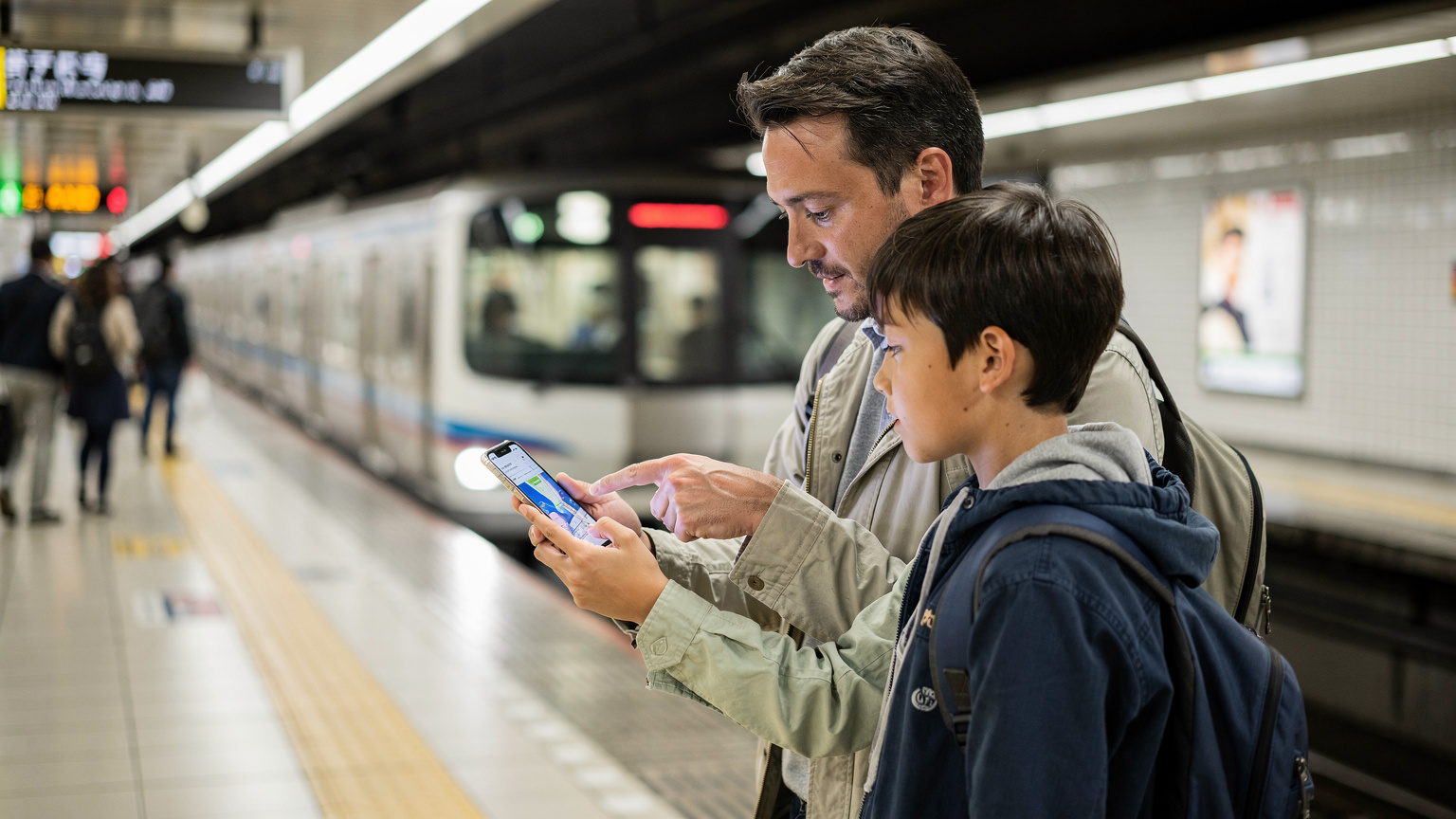
Tokyo's transit system, run by JR East and Tokyo Metro, is incredibly efficient but can be intimidating for first-timers, especially with kids. Having constant access to Google Maps or the Japan Transit Planner app is a huge help. You can confidently navigate from Shinjuku to Shibuya Crossing, knowing exactly which platform to be on and when the next train departs, even if you don't speak Japanese. Trying to figure out the best route without data, especially with a couple of tired children, is a special kind of challenge I wouldn't wish on anyone.
Budgeting for Connectivity: Avoiding Bill Shock
One of the most common travel nightmares is returning home to an exorbitant phone bill. With eSIMs, this is largely avoidable.
Transparent Pricing Models
Cellesim, for example, offers clear, upfront pricing. You select a data package, say 10GB for 15 days, and that's what you pay for. There are no hidden fees or unexpected charges. This transparency lets you budget precisely for your family's connectivity needs, freeing up more funds for gelato in Florence or souvenirs in Paris.
| Provider | Typical 10GB Europe Plan (15 Days) | Key Features for Families |
|---|---|---|
| Cellesim | £20-£25 | Multi-country plans, competitive pricing, easy top-ups, reliable customer support. |
| Holafly | £30-£35 | Unlimited data options (though speed can throttle), no hotspot. |
| Airalo | £22-£28 | Good regional options, but might be slightly more expensive than Cellesim for higher data tiers. |
Cellesim vs. Competitors: Value for Families
When comparing eSIM providers, it's not just about the cheapest price, but the best value for a family. Cellesim consistently offers competitive pricing with generous data allowances, often providing more data for less money than some of its rivals. This means fewer arguments about who's used up the data and more peace of mind. For a deeper look at how Cellesim stacks up, you might want to check out Cellesim vs. Holafly 2026.
Future-Proofing Your Family Travels with eSIM
The travel landscape is always changing, and eSIM technology is leading the way. As more devices become eSIM-compatible, and as providers keep innovating, family travel connectivity will only get easier.
The Rise of Multi-Device Connectivity
We're seeing more and more devices incorporate eSIM technology, from smartwatches to tablets. This means that soon, every family member could have their own independent, but centrally managed, data connection. Imagine your youngest, with their eSIM-enabled smartwatch, able to send you a quick message even if their phone is back at the hotel. This level of widespread, reliable connectivity will redefine family travel.
Always Prepared for the Unexpected
Travel has a way of throwing curveballs. A sudden reroute, a cancelled flight, an unexpected overnight stay. Having reliable data means you're always prepared. You can rebook flights, find alternative accommodation quickly, or simply keep the kids entertained during a prolonged delay at a regional airport like Bologna Guglielmo Marconi. The peace of mind that comes from knowing you're always connected, no matter what surprises your journey holds, is truly invaluable for any parent.
Frequently Asked Questions
What is a family eSIM and how does it work for travel?
A family eSIM is a digital SIM card plan designed to provide internet access for multiple devices under one shared data package while traveling internationally. It eliminates the need for physical SIM cards, allowing for easy activation and management through a primary device, often a parent's smartphone, and can share data via hotspot or direct installation on compatible family devices.
How much data does a family typically need for a week-long summer holiday?
For a family of four on a week-long summer holiday, a data plan between 20-30GB is generally sufficient. This accounts for navigation, social media, light video streaming for children, and essential communication. Heavy streaming or online gaming across multiple devices might require closer to 40-50GB.
Can I use an eSIM on multiple devices for my family?
Yes, many eSIM plans, especially those from providers like Cellesim, are designed for multi-device use. You can either install the eSIM directly on multiple compatible devices, or, more commonly, activate it on one primary smartphone and use its personal hotspot feature to share data with other family members' phones, tablets, or laptops.
What are the best destinations for family travel with an eSIM in 2026?
Popular family destinations like the Greek Islands, the coasts of Turkey, major European cities like Paris or Rome, and even further afield places like Thailand or French Polynesia, are excellent for family travel with an eSIM. The key is to choose an eSIM plan that offers robust coverage in your specific travel regions.
How does an eSIM help keep kids safe and entertained while traveling?
An eSIM ensures constant connectivity, allowing children to stay entertained with their favorite apps during downtime and providing a crucial safety net for communication. Parents can use location-sharing apps to track children if separated and maintain contact via messaging or calls, offering peace of mind.
Is my family's phone compatible with an eSIM?
Most modern smartphones released after 2018 are eSIM compatible, including newer iPhone models (XR and later), Samsung Galaxy S20 series and up, and Google Pixel 3 and up. It's best to check your specific device's specifications or consult your eSIM provider's compatibility list before purchasing a plan. Unlocking your phone from your home carrier is also essential.