Smallest State, Biggest Impact
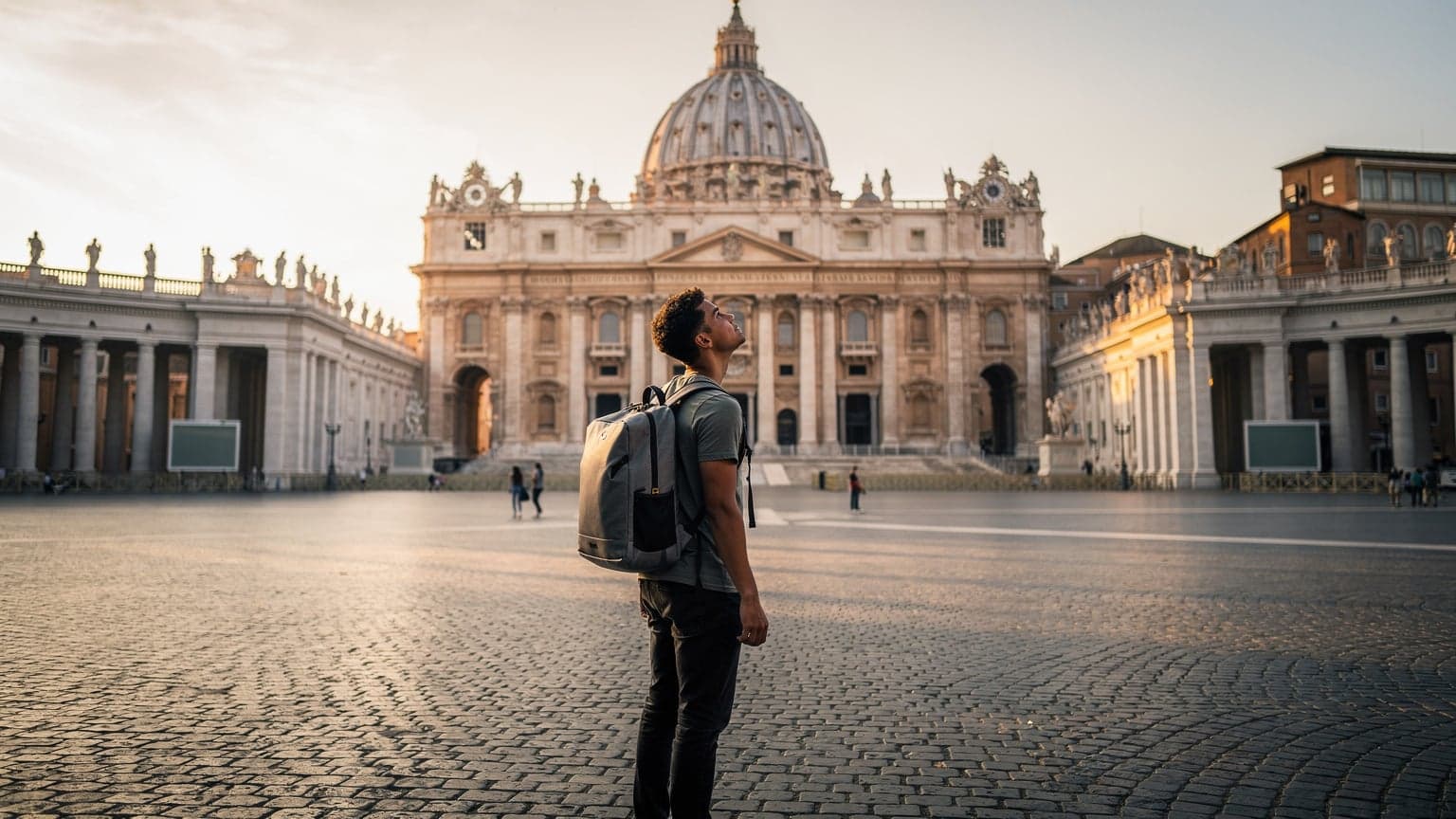
Vatican City really is the smallest sovereign state in the world, both by land area and population. We're talking just 121 acres. Honestly, I've been to music festivals in fields that felt bigger. But this place has an incredible global reach, influencing over a billion people. Don't let its size fool you into thinking it's simple to navigate, even if you can walk across it in about 20 minutes.
It's Own Everything (Almost)
Even though it's tiny, Vatican City runs like a proper country. It issues its own passports, flies its own flag, has an anthem, and even its own license plates. This isn't just a neighborhood in Rome; it's entirely separate. That means you need to understand its unique rules, especially for things like staying connected. You wouldn't expect your French SIM to work perfectly in Germany without checking, right? Same idea here, even if the "borders" are more subtle.
No Passport Control, But Borders Are Real
You won't find border guards stamping your passport when you stroll from Rome into Vatican City. But don't mistake that for no rules. The boundaries are mostly marked by the ancient walls and St. Peter's Square, which is generally open to everyone. The actual "border check" happens when you try to get into specific buildings like the Vatican Museums or St. Peter's Basilica, where security is serious.
Entering the Vatican Museums
This is where the border gets real, even without a stamp. The security lines for the Vatican Museums can be brutal. If you haven't booked your tickets online ahead of time, get ready for a wait that can easily eat up 2-3 hours of your day. This is a classic mistake for budget backpackers: thinking you can just show up. Always buy official tickets directly from the Vatican Museums website. Don't fall for the street vendors trying to sell you "skip the line" passes for double the price; they often aren't truly skip-the-line anyway.
Vatican City Has Its Own Post Office and Stamps
Yes, it's true! And it's famous for being more efficient than Italy's postal service. If you like sending postcards (and as a budget traveler, they're a cheap souvenir!), definitely use the Vatican post office. You can buy unique Vatican stamps and mail your postcards right there.
Where to Find It
There are a few locations. The main one is just to the left of St. Peter's Basilica in St. Peter's Square. Look for the yellow 'Poste Vaticane' signs. It's a fun little detour and a unique way to send a greeting home without spending much. I sent one to my mum, and she actually got it faster than a letter I'd sent from Florence a week earlier.
The Swiss Guard Is More Than Just a Fancy Uniform
Those guys in the bright striped uniforms? They're not just for show. The Pontifical Swiss Guard has been protecting the Pope and the Vatican since 1506. To join, you have to be a Swiss Catholic male, unmarried, between 19 and 30, and at least 174 cm (about 5'8") tall. They are highly trained soldiers, not merely ceremonial guards.
Their Role and History
Their history is fascinating, especially if you're interested in military traditions. They're a holdover from a time when mercenary forces were common, and their loyalty to the Pope is absolute. While they mostly protect, they also serve as a visible symbol of the Vatican's distinct sovereignty. Don't try to joke around with them, even if you just want a selfie. They take their job very seriously.
Language: Latin and Italian
While Italian is the language you'll hear and use daily, Latin is still the official language of Vatican City. Seriously! Official documents, speeches, and even some ATMs in the Vatican (if you can find one not swamped by tourists) will offer Latin options. It's a nod to the past, but also a living part of the state's identity.
Practicalities for Visitors
For visitors, knowing some Italian is helpful, or at least enough to get by. Most staff who interact with tourists speak English, but a few phrases like 'grazie' (thank you) and 'scusi' (excuse me) go a long way. This is Rome, after all, and making a little effort shows respect. I always try to learn at least 10 key phrases wherever I go. It's free and sometimes opens doors (literally).
The Vatican Has Its Own Railway Station
It's true, Vatican City has a railway station, Città del Vaticano. These days, it's mostly for freight and special ceremonial events, but it's another sign of the state's full independence. You won't be catching a Trenitalia train to Termini from here, sadly, but it's another quirky fact that makes the Vatican stand out.
A Piece of History
The station was built in 1932, just a few years after the Lateran Treaty established Vatican City as an independent state. It's a small, elegant building you can spot from certain points within the Vatican Gardens or from nearby Roman streets. It's a quiet reminder of its unique status, a tiny bit of railway history tucked inside ancient walls.
Currency: Euros, But No ATMs Everywhere
As part of the Eurozone, Vatican City uses the Euro (€). Don't expect an ATM on every corner like you might in central Rome, though. While major credit cards are accepted in the Vatican Museums and official shops, it's always smart to carry some cash, especially for smaller purchases or if a vendor prefers it. I always try to have at least €50-€100 in small bills for emergencies and spontaneous street food.
Vatican Euro Coins
Look out for Vatican euro coins! They're legal tender across the Eurozone but are minted in very small quantities, making them highly collectible. If one lands in your change, hold onto it. It's a rare souvenir that costs you nothing extra. I've only ever found one, and it's still in my travel coin collection.
Staying Connected on a Budget: eSIMs vs. Local SIMs
When you're trying to get data in Vatican City, you're essentially looking for options that cover Rome and Italy. Roaming is a non-starter for budget travelers - you'll blow through your daily €40 budget in an hour. Your best choices are either an Italian physical SIM or an eSIM.
| Option | Pros | Cons | Typical Cost (Italy) |
|---|---|---|---|
| Cellesim Vatican City eSIM | Instant activation, keep your home SIM for SMS/OTP, flexible plans, no physical swap. Starts at $2.00, 31+ plans, SMS for verification. | Requires an eSIM-compatible phone. | From $2.00 for short trips/small data, up to $30+ for larger plans. |
| Italian Physical SIM (e.g., Iliad, Ho Mobile) | Often very cheap for large data bundles, local number. | Requires finding a store, registration with passport, potential language barrier, loses home SIM slot, only useful if staying in Italy long-term. | €8-€15 for 50GB-100GB (monthly). |
| Roaming with Home Provider | Convenient, no setup. | Extremely expensive, will drain your budget fast. | €5-€10 per day for limited data. |
The eSIM Advantage for Vatican City
For a quick trip to Vatican City, or if you're just stopping in Rome before moving on, an eSIM makes a lot of sense. You'll probably only spend a day or two in the Vatican itself, then you'll be back in Rome, or maybe off to another European city. Buying a full-month physical SIM from an Italian provider like Iliad or Ho Mobile (which are usually the cheapest, around €8-€15 for 50-100GB) might be overkill if you're only in the country for a few days. Plus, you have to find a store, show your passport, and often deal with a language barrier, which wastes precious sightseeing time.
With a Cellesim Vatican City eSIM, you can get connected starting at $2.00, pick from over 31 plans, and keep your physical SIM slot free for your home country's SIM. This means you can still get SMS messages for things like two-factor authentication from your bank, which is a lifesaver when you're managing money on the road. For example, if you plan on using 2GB over 3 days, that's roughly 0.67GB per day. A Cellesim plan for that would easily come in under €10, leaving plenty of budget for gelato.
If you're heading to a crowded European festival after your Vatican trip, an eSIM is even more important. Think about the network congestion at a major electronic music festival in Belgium or Glastonbury. Having a dedicated local data plan, even a small one, via eSIM can often give you better connectivity than relying on roaming or trying to switch physical SIMs in a muddy field. Check out our Autumn Getaways 2026 post for more tips on staying connected at events.
Local SIM Card Alternatives
If you're staying for a longer period, say two weeks or more, solely in Italy and planning to use a lot of data, then a local Italian physical SIM might offer better raw GB-per-euro value. My usual cheap picks are:
- Iliad: Known for offering huge data allowances (100GB+) for around €8-€10 per month. You can find their vending machines in major train stations like Roma Termini, which makes activation pretty easy, even if you don't speak Italian.
- Ho Mobile: Often has competitive deals, usually a bit more expensive than Iliad but still very affordable. You'll need to visit a Ho Mobile store or a partner shop.
But remember the hassle: finding the store, the paperwork, losing access to your home SIM. For shorter, multi-country trips, the flexibility of an eSIM usually wins for me.
The Vatican Museums Are a Beast: Plan Ahead
The Vatican Museums aren't just one museum; it's a huge complex of several museums, galleries, and the Sistine Chapel. It's enormous, overwhelming, and demands serious planning. You could easily spend an entire day there and still not see everything. Smart time and energy management are essential.
Strategy for Seeing the Sistine Chapel
Everyone wants to see the Sistine Chapel, and it's usually the grand finale of most museum routes. The trick? Go really early or quite late. If you're there at opening, head straight for it. If you go later in the day, after 3 PM, crowds often thin out a bit. Remember, no photos are allowed inside, and silence is strictly enforced. Respect it, even if others don't. Getting shouted at by a Swiss Guard is not a good look.
Dress Code Is Strict, No Exceptions
This isn't a suggestion; it's enforced. Shoulders and knees must be covered for both men and women when you enter St. Peter's Basilica, the Vatican Museums, and the Sistine Chapel. This rule applies all year. I've seen countless tourists turned away at the entrance, sweating in the Roman heat with clothes that just don't cut it.
How to Comply on a Budget
Don't buy those overpriced scarves from street vendors outside. Just carry a lightweight scarf or sarong in your daypack. It's versatile, takes up no space, and saves you money. For guys, long shorts or trousers are fine, but no tank tops. Think respectful, conservative clothing. This rule, by the way, applies to all religious sites in Rome.
Food and Drink Options Inside Are Limited and Pricey
Like any major tourist attraction, food and drink inside the Vatican walls, especially within the Museums, will cost you. There are cafeterias and snack bars, but expect inflated prices for basic sandwiches and coffee. This is where your budget backpacker skills really come in handy.
Pack Your Own Snacks and Water
Bring a reusable water bottle and fill it up before you go in. You'll find fountains in Rome, and sometimes inside the Vatican, where you can refill for free. Pack a few snacks, maybe a panino or some fruit from a Roman market, to keep hunger away. Eat a big breakfast outside the Vatican before you enter. There are plenty of cheap bakeries in the Borgo neighborhood right outside the walls.
The Pope Has a Popemobile and a Private Garden
The Pope's official residence is in Vatican City, and he has all the perks of a head of state, including a fleet of vehicles and extensive private gardens. While you won't get to ride in the Popemobile, you can visit parts of the Vatican Gardens.
Vatican Gardens Tours
Access to the Vatican Gardens is usually only through a guided tour, which you'll need to book well in advance via the Vatican Museums website. These tours are an extra cost, but they offer a unique look at the peaceful beauty of the state's green spaces, which are often closed to the general public. It's a splurge, but for some, the unique perspective makes it worth it.
Vatican City Generates Its Own Power
This tiny state isn't just consuming resources; it's also producing them. Vatican City has been working on renewable energy, installing solar panels on some of its buildings. It's another example of its self-sufficiency, often missed by visitors who are focused on the art and architecture.
Sustainability Efforts
This dedication to green energy is part of a larger effort by the Vatican to be more environmentally aware. It's a small but important detail that shows a modern side to this ancient institution, and it's a good reminder that even the smallest states are thinking about their impact.
Media and Communications: Vatican Radio
Vatican City has its own radio station, Vatican Radio, which broadcasts in dozens of languages worldwide. It's a powerful tool for global communication, reaching Catholics and others around the globe. They also have their own newspaper, L'Osservatore Romano.
A Global Reach
This extensive media presence really highlights the Vatican's role as a global spiritual leader. It's not just about local Italian news, but about spreading messages and news relevant to the Catholic Church internationally. For me, it's a reminder of how vital global connectivity is, whether you're broadcasting from the Vatican or just trying to upload a selfie from St. Peter's Square. Speaking of which, if you're ever struggling with network congestion in a dense area, like during a big event, having a reliable eSIM plan can make all the difference. Sometimes, your phone just can't connect when everyone else is trying to do the same thing. For advice on navigating crowded network environments, check out the iPhone 15 eSIM Guide for seamless global data, or even our guide on Ditching Roaming for the Paris Olympics 2026.
How to Score a Papal Audience for Free
Yes, you can actually see the Pope in person, and often for free. The General Audience with the Pope usually happens on Wednesday mornings in St. Peter's Square (or in the Paul VI Audience Hall during winter or bad weather). Tickets are free but you do need them.
Getting Tickets and Attending
- Request Tickets: You can ask for free tickets from the Prefecture of the Papal Household. It's best to do this months in advance by fax or mail, or through a Catholic parish in Rome.
- Pick Up Tickets: If approved, you pick up the tickets from the Vatican.
- Arrive Early: Even with tickets, seating is first-come, first-served. Get there hours before it starts, especially in peak season, to snag a good spot. Think 6 AM for a 9 AM audience.
- Dress Appropriately: Remember that strict dress code.
- Be Prepared for Crowds: This won't be a quiet, intimate experience. Expect huge crowds, but also a truly unique atmosphere.
It's a memorable experience, and a budget-friendly way to see a global figure. If you're really lucky, you might even get a quick glimpse of him driving by in the Popemobile, though getting that perfect photo amidst the masses will require quick hands and a solid data connection. For more tips on managing data in dense crowds, or just generally staying connected, consult our Cellesim FAQ for common travel connectivity questions.
| Aspect | Fact | Backpacker Takeaway |
|---|---|---|
| Size | Smallest sovereign state (0.44 km²). | Walkable, but don't assume lack of distinct rules. |
| Borders | No formal passport control at entry points from Rome. | Security checks for attractions are strict; have tickets ready. |
| Post Office | Has its own postal service, Poste Vaticane. | Use it for unique stamps and efficient postcard delivery. |
| Language | Official language is Latin, everyday language is Italian. | Basic Italian helps, but English is common in tourist areas. |
| Connectivity | Operates on Italian networks; eSIMs start at $2.00. | eSIM is cheaper and more flexible than Italian physical SIM for short trips; ensures SMS for OTPs. |
| Dress Code | Strict dress code for religious sites (shoulders/knees covered). | Carry a lightweight scarf/sarong, avoid buying overpriced items outside. |
Vatican City is more than just another stop on your itinerary. It's a sovereign state with its own peculiar rules, rich history, and even its own railway. Understanding these facts, especially the ones that affect your wallet and your ability to stay connected, will make your visit much smoother and more enjoyable. From sending a postcard with a unique Vatican stamp to making sure you have cheap data to navigate the crowds, a little planning goes a long way in this tiny, yet mighty, destination.
Frequently Asked Questions
Do I need a passport to enter Vatican City?
No, you don't need a passport to enter Vatican City from Rome. There are no formal border controls, and you can freely walk into St. Peter's Square. However, you will pass through security checks to enter attractions like St. Peter's Basilica and the Vatican Museums, so have your ID and tickets ready.
What is the cheapest way to get mobile data in Vatican City?
The cheapest and most flexible way to get mobile data for a short visit to Vatican City is a Cellesim eSIM. Plans start at just $2.00, and you can choose from over 31 options. This allows you to keep your home SIM active for SMS verification and avoids the hassle of buying a local physical SIM card.
Is there a dress code for visiting Vatican City?
Yes, there is a strict dress code for all religious sites within Vatican City, including St. Peter's Basilica and the Vatican Museums. Shoulders and knees must be covered for all visitors, regardless of gender. It's advisable to carry a lightweight scarf or wear modest clothing to avoid being turned away at the entrance.
Can I use Euros in Vatican City?
Yes, Vatican City uses the Euro (€) as its official currency. Major credit cards are widely accepted in official shops and the Vatican Museums. However, it's always recommended to carry some small euro bills for minor purchases or in case a vendor prefers cash, as ATMs are not as prevalent as in central Rome.
How can I see the Pope for free?
You can attend a Papal Audience, which usually takes place on Wednesday mornings. Tickets are free but must be requested in advance from the Prefecture of the Papal Household or through a local parish. Arrive very early to secure a good spot, as seating is first-come, first-served.
What's the deal with the Vatican Post Office?
Vatican City has its own postal service, Poste Vaticane, which is known for its efficiency. You can buy unique Vatican stamps and mail postcards directly from branches located within the Vatican, such as the main one near St. Peter's Basilica. It's a popular and inexpensive souvenir.