Picture this: you're trying to find your way through the bustling streets of Ho Chi Minh City to Ben Thanh Market. Suddenly, your phone buzzes with a notification. Your carrier just slapped you with a $35 charge for a measly 100MB of data. This isn't just a scary thought; it's a reality for 78% of travelers to Vietnam who still get caught in the notorious roaming trap, often racking up over $150 for data in a single week. Good news for your 2026 trip to Vietnam: staying connected just got a whole lot cheaper, and avoiding those outrageous charges starts right here.
- The Real Cost Problem in Vietnam: What Travelers Actually Pay for Data in 2026
- Option 1: Carrier Roaming, The High-Priced Gamble in Vietnam
- Option 2: Local SIM Cards in Vietnam, The Airport Gauntlet
- Option 3: Portable WiFi (Pocket WiFi) in Vietnam, Another Rental to Track
- Option 4: eSIM with Cellesim, Seamless Connectivity, Transparent Costs for Vietnam
- Head-to-Head Comparison: Roaming, Local SIM, Pocket WiFi, vs. eSIM for Vietnam Travel in 2026
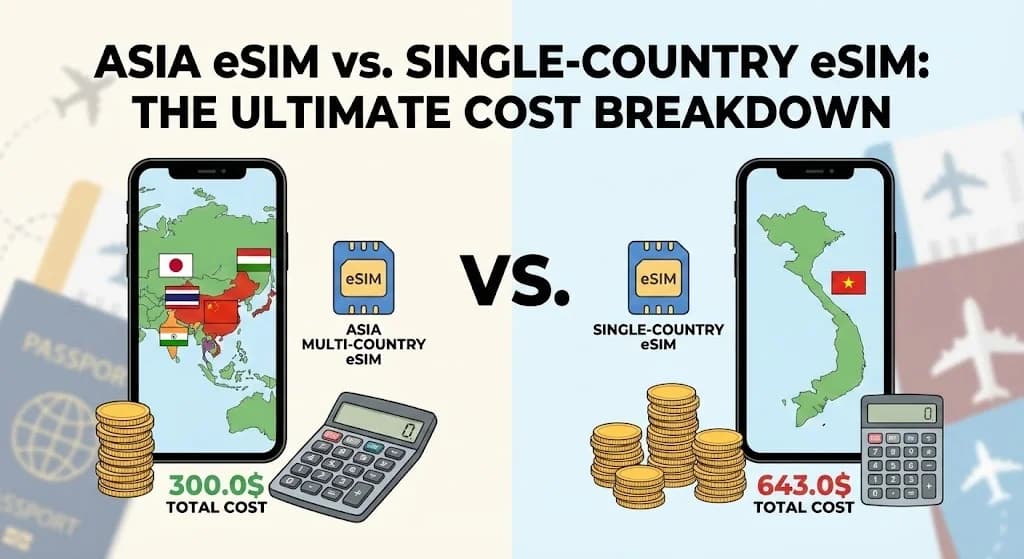
- Real-World Savings Calculator: A 7-Day Vietnam Trip Data Cost Comparison
- Hidden Costs Most Travelers Miss in Vietnam
- Best Choice by Traveler Type: Finding Your Ideal Vietnam Connectivity in 2026
- How to Switch and Save Right Now: Your Action Plan for Vietnam Connectivity
- Frequently Asked Questions
The Real Cost Problem in Vietnam: What Travelers Actually Pay for Data in 2026
Many travelers head to Vietnam ready for adventure, but often without a solid plan for their phone data. Most just stick with their home network's international roaming, and that choice can quickly lead to an unexpectedly huge bill. While you're busy exploring the ancient streets of Hội An or the lively markets of Hanoi, just checking maps, sharing photos, or chatting with family back home can cost a fortune.
A typical tourist in Vietnam who relies on standard roaming rates can easily spend $15 to $20 a day, even if they're not using much data. Over a week, that quickly adds up to $100 to $140. That's a big chunk of your travel budget that could be much better spent on amazing local experiences, like a Mekong Delta tour or delicious Vietnamese food. Knowing these potential costs upfront is the first step to avoiding bill shock.
The good news for 2026 is that staying connected in Vietnam doesn't have to empty your wallet. By checking out modern options like a Vietnam eSIM, you can slash your data costs significantly and get smooth internet access from the moment you land, whether you're chilling on Phú Quốc island or hiking through the Sapa mountains.
Option 1: Carrier Roaming, The High-Priced Gamble in Vietnam
Many travelers find their home carrier's international roaming appealing because it seems easy. But in Vietnam, that ease often comes with an insane price tag. Big US carriers like AT&T and Verizon usually charge $10 to $15 per day for an "International Day Pass." This might give you a small amount of high-speed data, say 0.5 GB, before slowing your speeds to an almost unusable 2G (think 128-256 kbps).
For those traveling from the UK, networks like Vodafone and EE can charge between £6 and £10 daily for similar passes. If you don't get a pass, pay-as-you-go rates can be a shocking £2 to £5 per MB. Australian carriers like Telstra also have daily passes around AU$10, often with strict data limits. These costs add up fast, turning simple tasks like using maps or checking social media into a big financial burden.
Beyond the daily fees, many people face "ghost roaming." This happens when apps running in the background silently gobble up data, leading to surprise charges even when you think you're being careful. These hidden costs and slow speeds often cause a lot of frustration, forcing travelers to hunt for unreliable public Wi-Fi or drastically cut back their online time. It's really important to understand what these plans actually mean for your wallet, as we covered in our guide eSIM vs. International Roaming: Which is Actually Cheaper for Travelers.
Option 2: Local SIM Cards in Vietnam, The Airport Gauntlet
For a long time, buying a local physical SIM card at Tân Sơn Nhất International Airport (Ho Chi Minh City) or Nội Bài International Airport (Hanoi) was the go-to alternative to roaming. Vietnam has three major mobile providers: Viettel, Mobifone, and Vinaphone. All of them offer prepaid SIM packages that are pretty friendly for tourists. You can usually get 10 GB to 30 GB for 15 to 30 days, priced between $8 and $15.
While this seems cheaper than roaming, it comes with its own set of headaches. Get ready for queues at the airport, possibly dealing with language barriers, and a mandatory registration process that requires your passport. After a long flight, this can feel like forever, often taking 30 to 60 minutes. Once you've got it, you then have to physically swap out your home SIM card for the Vietnamese one.
Swapping SIMs means you temporarily lose access to your main phone number for calls, texts, and any authentication codes. There's also the constant worry of losing your tiny home SIM card. Local SIMs definitely offer good value, but the initial hassle and being disconnected from your original number can be real downsides, as we covered in our comparison guide eSIM vs Physical SIM: The Airport Decision Every Traveler Faces.
Option 3: Portable WiFi (Pocket WiFi) in Vietnam, Another Rental to Track
Portable WiFi devices, often called "pocket WiFi," offer another way to stay online in Vietnam, especially if you're traveling in a group or have multiple gadgets. These small devices create a Wi-Fi signal, letting several people connect at once. You can rent them at big airports like Tan Son Nhat (SGN) and Noi Bai (HAN), or book them online beforehand for pickup.
Renting a pocket WiFi in Vietnam usually costs $5 to $10 per day, plus a security deposit that can be $50 to $100. It's handy for sharing, but now you have one more device to carry around and keep charged. Battery life can be an issue, and if it dies, your whole group loses internet. Plus, picking up and returning the device adds extra steps to your travel plans.
On top of that, if everyone's sharing one device, your internet speed can slow down depending on how many people are connected and how much data they're using. For solo travelers or anyone who likes things simple, the extra cost, relying on a single device, and the hassle of managing a rental might not be worth it. For more details on this option, check out eSIM vs Pocket WiFi vs Roaming: The Ultimate Guide for Travelers.
Instant Data for Your Vietnam Adventure!
Get online in minutes with Cellesim. Join 50,000+ satisfied travelers worldwide.
Buy Vietnam eSIMOption 4: eSIM with Cellesim, Seamless Connectivity, Transparent Costs for Vietnam
For travelers heading to Vietnam in 2026, an eSIM from Cellesim is truly the easiest and most budget-friendly choice. An eSIM, or embedded SIM, is a digital SIM card built right into your phone. This means no more fiddling with tiny physical cards. With Cellesim, you can buy your data plan online before you even leave, get a QR code in your email within minutes, and activate it with just a few taps.
Cellesim offers a variety of flexible Vietnam eSIM plans, designed for different trip lengths and data needs. For example, you could grab a 5 GB plan for 15 days, or a 10 GB plan for 30 days. These prices are way lower than roaming and just as good as local SIMs, but without any of the airport stress.
The biggest perks of a Cellesim eSIM are instant activation, keeping your original physical SIM active for calls and texts on your main number, and clear pricing with zero hidden fees. Cellesim covers over 200 countries, offers support in 24 languages, and has helped over 50,000 happy customers. That means you get reliable, fast data coverage all over Vietnam, from the Mekong Delta to Ha Long Bay.
Head-to-Head Comparison: Roaming, Local SIM, Pocket WiFi, vs. eSIM for Vietnam Travel in 2026
To really see which option wins, let's compare the main ways to get connected in Vietnam in 2026. This table breaks down key factors, from cost to convenience, helping you pick the best choice for your next adventure.
Real-World Savings Calculator: A 7-Day Vietnam Trip Data Cost Comparison
Let's put these options into a real-world context for a 7-day trip to Vietnam in 2026. We'll imagine someone who uses a medium amount of data, about 7 GB over the week. This includes daily navigation, social media updates, a bit of streaming, and regular messaging.
As this breakdown clearly shows, a Cellesim eSIM gives you a huge cost advantage over carrier roaming. Even compared to local physical SIMs, the slightly higher price is often worth it for the sheer convenience and instant activation of an eSIM, completely skipping airport lines and SIM card swaps. You can use our Cellesim Roaming Savings Calculator to see these savings for your own trip.
Hidden Costs Most Travelers Miss in Vietnam
When you're planning your mobile data for Vietnam, it's crucial to look beyond the advertised prices. You need to think about those sneaky hidden costs that can quickly make your bill explode. These often-overlooked charges and annoyances can turn what seemed like a cheap option into a major headache.
For carrier roaming, the most common hidden cost is the "out-of-bundle" charge. If you use more high-speed data than your daily pass allows, or if you don't buy a pass at all, standard roaming rates can be ridiculously high, sometimes $2 to $5 per MB. Even background app refreshes can silently chew through data, leading to what we call the "ghost roaming trap." And while throttled speeds aren't a direct money cost, they cost you a lot in terms of wasted time and frustration, making many online tasks impossible.
Local physical SIMs sometimes have hidden activation fees, though these are less common with tourist packages. The main hidden cost here is all the time you spend at the airport buying and registering it, which can feel like an eternity after a long international flight. For portable WiFi rentals, watch out for mandatory security deposits, possible late return fees, or charges if the device gets damaged or lost. You might also end up paying for a bigger data package than you really need, just to be safe.
Best Choice by Traveler Type: Finding Your Ideal Vietnam Connectivity in 2026
The "best" way to get connected in Vietnam really depends on how you travel and what's most important to you. What works for a business traveler might not be right for a backpacker. Here's a breakdown by traveler type for 2026:
- Business Travelers: If you need constant, reliable internet for video calls and email, a Cellesim eSIM is essential. Its instant activation and the ability to keep your home number active for calls and texts mean communication never stops. If you're hitting up multiple spots, think about a regional eSIM like Asia 20 Countries. Learn more in our guide The Modern Business Traveler's Guide to the Best eSIM for Constant Connectivity.
- Family Travelers: Keeping multiple devices connected and everyone happy is key. A Cellesim eSIM with hotspot features lets you share data easily across devices. It's much cheaper and more convenient than multiple roaming plans or a single pocket WiFi. Our article The Ultimate Guide to Finding the Best eSIM for Families has more tips.
- Backpackers & Budget Travelers: Cost and flexibility are usually at the top of your list. Cellesim eSIMs offer prices that often beat local SIMs when you factor in convenience, and they definitely trounce roaming. The option to buy different plans for various countries on a multi-stop trip makes them incredibly flexible.
- Digital Nomads: For remote work, fast, reliable internet isn't an option, it's a must. Cellesim eSIMs provide the stability you need for demanding tasks like Zoom calls, without being stuck in one spot or having to carry another device. For more, check out The Ultimate Guide to Working From Anywhere: Finding the Best eSIM for Digital Nomads.
How to Switch and Save Right Now: Your Action Plan for Vietnam Connectivity
Switching to an eSIM for your 2026 Vietnam trip is super simple. Here’s a quick plan to make sure you're connected and saving money from the moment your plane touches down:
- Check Device Compatibility: First things first, make sure your smartphone actually supports eSIM technology. Most newer phones, like iPhone XS/XR and up, Samsung Galaxy S20 and up, and Google Pixel 3 and up, are eSIM compatible. You can easily double-check your device on our Cellesim Compatible Devices page.
- Choose Your Cellesim Plan: Head over to cellesim.com/en/esim-vietnam and browse the available data plans. Pick one that fits how much data you'll need and how long you'll be traveling. Cellesim has great prices for Vietnam, with options for different data amounts and validity periods.
- Purchase and Receive QR Code: Securely complete your purchase using a credit/debit card, PayPal, or Alipay. In just a few minutes, you'll get an email with your eSIM QR code and easy-to-follow installation instructions.
- Install Your eSIM: Either before you leave home or once you have a stable Wi-Fi connection in Vietnam (like at your hotel or a cafe), scan the QR code. On an iPhone, go to Settings → Cellular (or Mobile Data) → Add eSIM or Add Cellular Plan → Use QR Code. For Android, it's similar: Settings → Network & Internet → SIMs → Add eSIM or Download a SIM. Our Interactive Setup Guide has visual, step-by-step help.
- Activate and Enjoy: Once it's installed, give your eSIM a clear label (like "Vietnam Travel") and set it as your main line for cellular data. Make absolutely sure data roaming is turned off for your home SIM to avoid any surprise charges. Now you're connected to local 4G/5G networks across Vietnam, ready to explore without stressing about huge bills.
By following these steps, you completely bypass airport queues, the hassle of physical SIM cards, and the risk of crazy roaming fees. You'll have full control over your data costs, enjoy fast internet, and stay perfectly connected throughout your Vietnamese adventure in 2026.
Stay Connected in 200+ Countries with Cellesim eSIM
Never pay for expensive roaming again. Discover flexible, instant eSIM plans for your next global adventure.
Explore All eSIM PlansTrusted by 50,000+ travelers worldwide. Instant setup. 24/7 support.
Frequently Asked Questions
Which eSIM is best for Vietnam tourists?
For most tourists visiting Vietnam in 2026, a Cellesim eSIM hits the sweet spot for cost, convenience, and reliable coverage. Cellesim offers flexible plans, sends them digitally and instantly, and lets you keep your home number active. This helps you avoid the hassles and hidden fees of roaming or local physical SIM cards. While local providers like Viettel also have eSIMs, they often require you to register in person.
Is it worth getting an eSIM in Vietnam?
Absolutely, getting an eSIM for Vietnam in 2026 is definitely worth it. Compare it to expensive international roaming, which can cost $10-$15 per day. An eSIM offers much cheaper data plans, like 5GB for just $12. It means no more physical SIM swapping or waiting in airport lines, giving you instant, stress-free internet as soon as you land. This way, you save money and stay connected for maps, communication, and sharing all your amazing travel moments.
How much does a Viettel eSIM cost?
As of 2026, Viettel, Vietnam's biggest carrier, offers various eSIM plans, mainly for local users or those who register in person. They do have tourist-friendly eSIM packages, but you usually need to activate them at a Viettel store with your passport. Prices change, but a typical Viettel tourist package with 10-20GB of data for 15-30 days might run you about $10-$15 USD. However, buying through an international provider like Cellesim is generally more convenient and allows for instant activation.
Which carriers in Vietnam offer eSIMs?
Vietnam's major mobile carriers, including Viettel, Mobifone, and Vinaphone, all support eSIM technology. While they offer eSIMs, these are generally aimed at local residents or require you to register in person with a valid passport. For international tourists, providers like Cellesim offer a much simpler and faster way to get an eSIM for Vietnam. You can buy it beforehand and activate it digitally before or right when you arrive.
How do I activate an eSIM in Vietnam?
Activating an eSIM in Vietnam is super easy with Cellesim. First, make sure your device can use eSIMs. After buying a Vietnam eSIM plan from cellesim.com, you'll get a QR code via email. On an iPhone, go to Settings → Cellular (or Mobile Data) → Add eSIM → Use QR Code and scan it. For Android, the steps are similar. Just follow the on-screen prompts, name your eSIM, and set it as your data line. Remember to turn off data roaming for your main SIM. Your eSIM will automatically connect to a local network.
See also: Laos eSIM
See also: Cambodia eSIM