

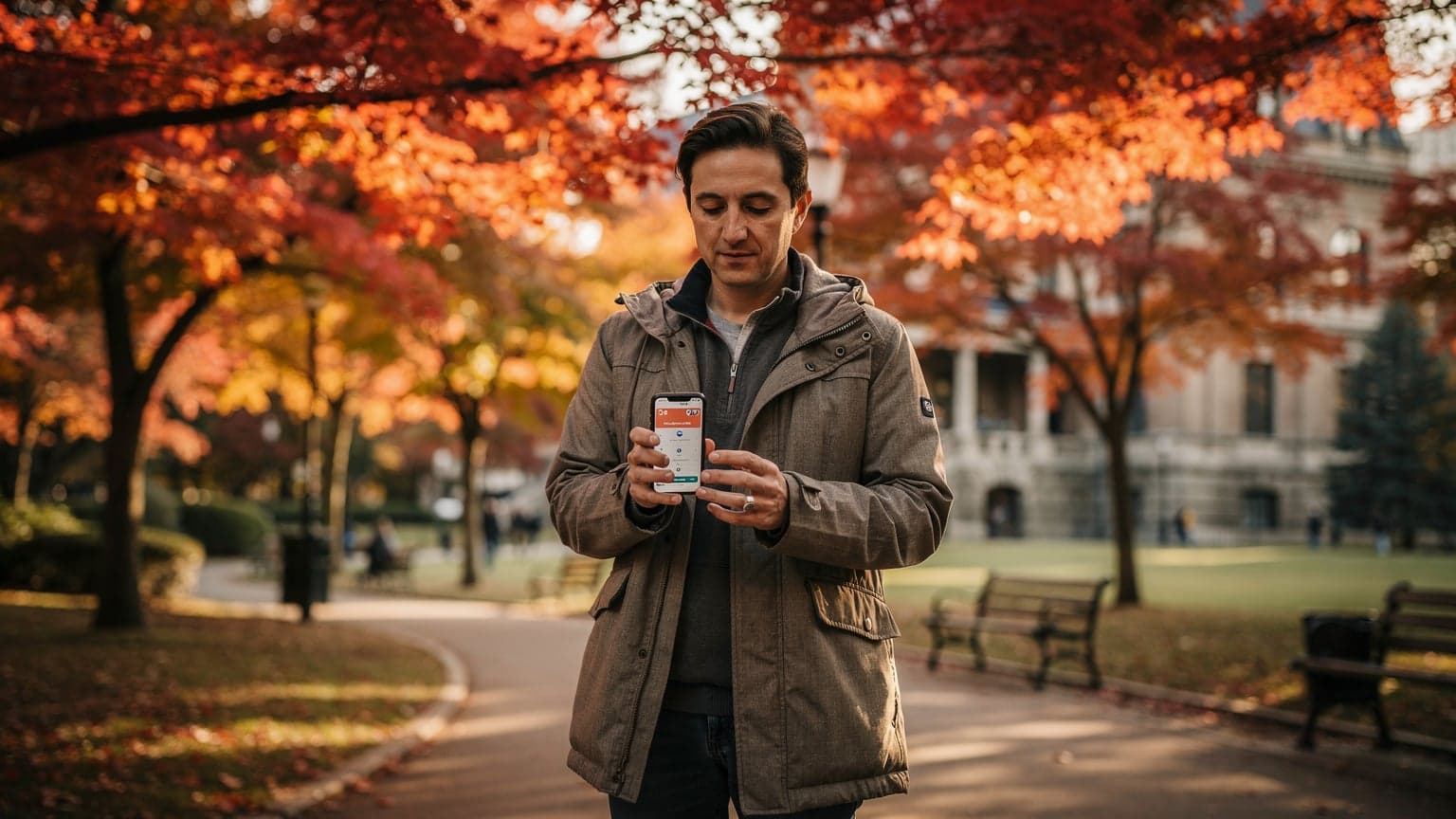
For autumn 2026, the best eSIMs for fall foliage and festival travel offer robust multi-country coverage and flexible data plans from providers like Cellesim, Holafly, and Airalo, ensuring seamless connectivity for navigation, photo sharing, and event streaming across popular destinations such as New England, Quebec, and European festival hotspots.
Fall Travel Connectivity, Why eSIMs Are Non-Negotiable
Look, I've been on the road for four years straight, hopping countries every few months. I've seen it all, from dodgy Wi-Fi in a Chiang Mai co-working space to getting ripped off by a street vendor selling SIM cards in Rome. When you're chasing autumn leaves or trying to navigate a crowded festival, the last thing you need is a dead zone or, worse, running out of data while trying to find your Airbnb in a new city.
Autumn travel, especially in 2026, isn't just about pretty pictures, it's about logistics. You're using Google Maps to find that elusive pumpkin patch, streaming a live set from Austin City Limits, or trying to coordinate with friends at Oktoberfest. An eSIM isn't a luxury anymore, it's foundational. It's the difference between smooth sailing and yelling at your phone in a foreign language. Trust me, I've done both.
The Pain Points of Traditional Roaming
Remember the days of swapping out tiny SIM cards at the airport? Or worse, getting home to a bill that makes your eyes water from roaming charges? That's old news. With traditional roaming, you're at the mercy of your home carrier's agreements, which usually means slower speeds, higher latency, and unpredictable costs. I once blew through a week's budget in two days trying to upload videos from a festival in Portugal. Never again.
Then there's the security aspect. Relying on open public Wi-Fi in every cafe or train station is asking for trouble. An eSIM provides secure, private data, letting you bypass those risks. Plus, if you need to keep your home number active for bank verification (some of those Brazilian banks, or India's Aadhaar app, are notorious for this), an eSIM lets you do that while using local data. It’s a dual-SIM setup without the physical fuss.
Why eSIMs Win for Seasonal Travel
Seasonal travel, like autumn foliage tours or major festivals, often means moving between regions or even countries. An eSIM's flexibility is unmatched here. You can buy a regional plan for North America to cover New England and Quebec, or a Europe-wide plan for Oktoberfest and Halloween in Ireland. No more hunting for local shops, no language barriers, just scan a QR code and you're good to go. It’s instant, efficient, and frankly, less stressful.
For instance, if you're hitting up the Quebec side of the fall colors, a Canadian eSIM bundle is far more practical than trying to stitch together multiple local SIMs. You can activate it before you even leave your couch, so you land connected.
North America Foliage Routes: eSIM Deep Dive
North America in the fall, especially New England and Quebec, is peak travel season. Everyone's out there trying to get that perfect shot of a red maple. This means cell towers get hammered, and reliable data is crucial for everything from navigation to finding an open diner. A good eSIM here isn't just about data, it's about network priority and consistent coverage.
New England's Best Bets: Vermont, New Hampshire, Maine
I spent a month in Burlington, Vermont, last fall. The foliage was incredible, but cell service in some of the more rural areas, like along Route 100 in the Mad River Valley, can be spotty. You need an eSIM that partners with major carriers like Verizon and AT&T, not just T-Mobile, for the best chance of consistent signal.
My go-to co-working spot was Karma Bird House on Lake Street, which had rock-solid Wi-Fi. But when I was driving the scenic routes, my Cellesim plan, which uses both Verizon and AT&T towers, was a lifesaver for Google Maps and streaming podcasts. Rent for a decent one-bedroom in Burlington was about $1,800/month, and my overall cost of living, including food and a few local brewery visits, hit around $3,500/month. So, every penny saved on data counted.
| eSIM Provider | Coverage (US) | Typical Data Plans | Network Partners |
|---|---|---|---|
| Cellesim US | Excellent (99%) | 5GB/7 days ($10), 20GB/30 days ($30) | Verizon, AT&T, T-Mobile |
| Holafly US | Good (98%) | Unlimited/5 days ($19), Unlimited/30 days ($44) | AT&T, T-Mobile |
| Airalo US | Good (97%) | 3GB/30 days ($11), 10GB/30 days ($26) | T-Mobile |
Quebec's Maple Roads and Urban Connectivity
Heading north to Quebec for fall colors is a different beast. Language can be a barrier if your French is rusty, but connectivity shouldn't be. The Laurentians and Eastern Townships are stunning, but again, rural coverage needs to be robust. In Montreal, I usually parked myself at Anticafé on Sainte-Catherine for solid Wi-Fi and unlimited coffee, paying about CAD $5 per hour. Rent for a decent spot in Le Plateau Mont-Royal ran me about CAD $1,500/month. For general use, a good regional eSIM is paramount.
For Canadian travel, especially if you're crossing the border from the US, make sure your eSIM includes data for both countries, or at least allows for easy top-ups. You don't want to get caught without signal trying to navigate the scenic Route du Fleuve. And remember, some local apps, while not critical for tourists, might require a local Canadian number for full functionality, though for most visitors, data is the primary concern.
Festival Hotspots: Austin City Limits & Beyond
Beyond foliage, autumn is festival season. Austin City Limits, Voodoo Fest in New Orleans, various Oktoberfest celebrations across the US. These places are packed. Network congestion is a real issue. I've been at Coachella and Burning Man enough times to know that 'No Signal' is a content creator's nightmare. You need an eSIM that can cut through the noise.
When I was trying to livestream from a crowded festival in San Antonio, Texas, the difference between a basic data plan and a premium eSIM with network priority was night and day. It meant the difference between a choppy, pixelated mess and a smooth, watchable stream. Always check if your eSIM provider offers any kind of 'priority data' option for high-traffic events, it's worth the extra cash.
European Autumn Festivals: eSIM Strategies
Europe in the fall is a whirlwind of festivals, from the beer tents of Munich to the ancient traditions of Samhain in Ireland. Each locale has its own connectivity quirks, and a one-size-fits-all approach won't cut it if you're serious about staying online.
Oktoberfest and German Connectivity
Munich for Oktoberfest is an experience, but getting signal in a crowded beer tent can be a challenge. Major German carriers like Deutsche Telekom and Vodafone offer excellent coverage, but when you're shoulder-to-shoulder with thousands of revelers, even the best networks struggle. An eSIM that uses these primary networks is essential. I always recommend grabbing an eSIM with at least 10-15 GB of data for a week in Munich, especially if you're relying on ride-sharing apps (Free Now is big there) or trying to upload photos and videos.
If you're staying for longer, say a month, a short-term apartment in Schwabing might run you €1,500-€2,000. My go-to for remote work was Tageskarte near Marienplatz, with decent speeds. Just remember, some German banking apps might require a German number for 2FA, but for general travel, an eSIM for data is fine.
| eSIM Provider | Coverage (Germany) | Typical Data Plans | Network Partners |
|---|---|---|---|
| Cellesim Europe | Excellent (99%) | 10GB/15 days ($25), 30GB/30 days ($50) | Deutsche Telekom, Vodafone, O2 |
| Airalo Europe | Good (98%) | 5GB/30 days ($17), 20GB/30 days ($42) | Deutsche Telekom, Vodafone |
| Orange Holiday Europe | Good (98%) | 20GB/14 days ($29), 50GB/28 days ($49) | Deutsche Telekom, Vodafone |
Ireland's Samhain and Rural Roaming
If you're heading to Ireland for Halloween, or more accurately, the Samhain festivals, you'll likely be traveling outside of Dublin. Places like the Púca Festival in County Meath are incredible, but rural Ireland can be a challenge for connectivity. An eSIM that connects to both Eir and Vodafone Ireland is crucial for avoiding dead zones as you explore ancient sites and small towns. I've had friends get utterly lost trying to find a specific stone circle because their data dropped out. Don't be that friend.
For more on specific connectivity for these festivities, check out our guide on Ireland Halloween 2026: Samhain Festivals & eSIM Cost Breakdown. It breaks down what you need to know.
Mediterranean Escapes: Italy and Spain
While northern Europe gets chilly, the Mediterranean often enjoys a milder, longer autumn. Festivals dedicated to olives, wine, and chestnuts pop up across Italy and Spain. Cities like Florence and Seville are still bustling, but with fewer crowds than in summer. Connectivity in these urban centers is usually good, but if you venture into the Tuscan hills for a truffle festival, or the Spanish countryside for a grape harvest, you'll want solid coverage.
My advice for a long stay in Italy, say in Florence, is to plan for connectivity. Rent for a short-term apartment in Oltrarno could be around €1,200-€1,500. I found Impact Hub Florence had reliable internet. For those exploring beyond major cities, a regional Europe eSIM is usually the most cost-effective and reliable option.
Asia-Pacific Fall Destinations: Staying Connected
Autumn in Asia-Pacific brings unique festivals and stunning natural beauty, from Japan's fiery maples to Australia's spring blooms (their autumn, our spring). The connectivity landscape here varies wildly, so a tailored eSIM strategy is key.
Japan's Koyo Season and High-Speed Data
Japan's 'Koyo' (fall foliage) season, especially in Kyoto and Nikko, is breathtaking. You'll want to share every moment, and Japan's high-speed networks (NTT Docomo, SoftBank, au) are perfect for it. However, if you're heading into the more remote mountain regions, like parts of the Japan Alps, coverage can drop. A Cellesim eSIM for Japan generally uses Docomo, which has the widest coverage.
Navigating Japan requires apps like Google Maps and HyperDia for trains. You'll be using data constantly. While major cities like Tokyo have abundant Wi-Fi (Starbucks, convenience stores), you don't want to be caught without data on a Shinkansen or trying to find your way through a crowded festival in Asakusa. An apartment in a central Kyoto neighborhood like Gion might run JPY 150,000-200,000 per month. For coffee and reliable Wi-Fi, I usually hit up Kurasu Kyoto.
Australia's Spring Festivals and Outback Coverage
While it's spring in Australia during our autumn, many festivals kick off during this time. Think outdoor events, music festivals, and exploring national parks. Australia's vastness means connectivity can be an issue outside major cities. Telstra generally has the best rural coverage, followed by Optus and Vodafone. Your eSIM needs to be on one of these robust networks if you plan on venturing beyond Sydney or Melbourne.
For festivals like Spilt Milk or exploring the Blue Mountains, having reliable data for emergency services (which you hope you don't need, but better safe than sorry) and navigation is paramount. A coworking space in Sydney's Surry Hills, like Fishburners, will cost you around AUD $450/month for a hot desk. Rent in a central area like Darlinghurst is easily AUD $2,500/month.
Choosing the Right eSIM Plan: Data Needs and Validity
Picking an eSIM isn't just about the cheapest price. It's about getting the right amount of data for your actual usage and ensuring the plan lasts as long as your trip. Overpaying for data you won't use is a waste, but running out mid-trip is a nightmare.
Assessing Your Data Consumption
Be honest with yourself. Are you just checking emails and WhatsApp, or are you live-streaming every single moment of a festival? Here's a rough guide:
- Light User (Email, Maps, Messaging): 3-5 GB per month.
- Moderate User (Social Media, Occasional Video, Music Streaming): 10-15 GB per month.
- Heavy User (Video Calls, Extensive Streaming, Large Uploads): 20+ GB per month.
- Festival/Content Creator: 50+ GB or Unlimited plans.
Always factor in how much Wi-Fi you'll actually use. If you're staying in a hotel or co-working space with good Wi-Fi, you might need less mobile data. But if you're primarily on the go, navigating and sharing, err on the side of more data.
Understanding Validity Periods and Top-Ups
eSIM plans come with specific validity periods: 7 days, 15 days, 30 days, even 90 days. Match this to your trip duration. Don't buy a 7-day plan for a 10-day trip, you'll be scrambling. Most providers, including Cellesim, offer easy top-ups directly from their app or website, which is a godsend when you realize you've used more data than expected.
I've learned this the hard way. I once bought a 15-day plan for a 3-week trip to South America, thinking I'd be fine. Nope. Trying to top up in a remote town in Patagonia with patchy Wi-Fi was not fun. Plan ahead, and if in doubt, grab a plan with a slightly longer validity or a generous top-up option. For more on regional options, check out our South America eSIM Guide 2026.
Troubleshooting Common eSIM Issues On The Go
Even with the best eSIMs, sometimes things go sideways. It happens. The key is knowing how to fix it quickly without panicking. I've debugged more phone issues on the road than I care to admit.
Installation and Activation Woes
The most common issue is usually during installation. Most eSIMs activate via a QR code. Make sure you're doing this in a place with a stable internet connection (your hotel Wi-Fi, or even using your home SIM's data before disabling it). If the QR code isn't scanning, try manually entering the SM-DP+ Address and Activation Code. These details are always provided by your eSIM provider.
Step-by-Step eSIM Installation (iPhone)
- Ensure Wi-Fi or Cellular Data: Make sure you have an active internet connection on your iPhone.
- Go to Settings: Tap Settings, then Cellular (or Mobile Data).
- Add eSIM: Tap Add eSIM.
- Scan QR Code: Choose Use QR Code and scan the QR code provided by Cellesim. If scanning fails, tap Enter Details Manually and input the SM-DP+ Address and Activation Code.
- Label Your eSIM: Once installed, label your new eSIM (e.g., "Travel Data") for easy identification.
- Set Default Line: In Cellular settings, choose your primary SIM for calls and texts, and set your new eSIM for Cellular Data. Ensure Allow Cellular Data Switching is off if you want to avoid accidental roaming charges on your home SIM.
If you're still having trouble, check out our guide on Finding Your eSIM Number on iPhone & Android, which often helps clarify setup questions.
No Service or Slow Data Speeds
You've installed it, but there's no service, or data is crawling. First, restart your phone. Seriously, it fixes more things than you'd think. Second, check your APN settings. Sometimes, an eSIM requires a specific Access Point Name (APN) to be manually entered, though most modern eSIMs configure this automatically. Your provider's FAQ (like Cellesim's FAQ page) will have this information.
Also, ensure data roaming is enabled for your eSIM in your phone settings. It sounds counterintuitive, but for an eSIM operating on a foreign network, this setting often needs to be on. If speeds are slow, try manually selecting a different network operator in your phone's cellular settings. Your eSIM usually connects to the best available, but sometimes forcing a switch helps.
Cost-Saving Hacks for Long-Term Fall Travelers
Being a digital nomad means every dollar (or euro, or yen) counts. While eSIMs are already a huge cost-saver compared to roaming, there are ways to squeeze even more value out of them, especially for longer autumn trips.
Mixing and Matching Plans
Don't be afraid to mix and match. If you're spending two weeks in Paris for a film festival, then a week in the Scottish Highlands for hiking, a single Europe-wide eSIM might be okay, but you might get better local coverage with a dedicated France eSIM and then a UK/Ireland eSIM. Or, you could buy a smaller regional plan for most of your trip, and then a tiny local eSIM just for the remote hiking part where you know coverage might be an issue with a generic plan. This granular approach saves money and headaches.
For example, if I'm doing a two-month stint in Europe, I might grab a 30-day Cellesim Europe plan, then halfway through, top up or switch to a country-specific eSIM if I find myself spending significant time in one place with particular connectivity needs, like a remote co-living space in Portugal where I need guaranteed uptime. I've found that a good co-working space, like Selina Porto, can cost €250-€350/month for a hot desk, which is worth it for the reliable Wi-Fi alone.
Leveraging Wi-Fi Whenever Possible
This sounds obvious, but you'd be surprised how many people burn through data unnecessarily. Download maps offline on Google Maps. Download movies or podcasts on Netflix/Spotify over Wi-Fi before you head out. Most cafes, hotels, and even some public transport systems offer free Wi-Fi. Use it. Save your precious eSIM data for when you absolutely need it, like navigating through a dense crowd at a festival or making an urgent video call from a scenic overlook.
Many co-working spaces or even food courts (I practically lived at the food court in the Emquartier mall in Bangkok for their free Wi-Fi on Tuesdays) offer decent, free Wi-Fi. Make a habit of checking for it. Just be mindful of security on public networks, especially if you're accessing sensitive information.
Local SIM vs. eSIM: When You Still Need a Physical Card
While I'm a huge proponent of eSIMs, there are still niche situations where a physical local SIM card might be a better, or even necessary, option. It's not about being anti-eSIM, it's about being practical.
Country-Specific Requirements and Apps
Some countries, for example, Brazil, require a local CPF (tax ID) to purchase a physical SIM card, and some local banking apps or government services (like India's Aadhaar mentioned earlier) absolutely need a local phone number for verification or two-factor authentication. In these cases, even if you have an eSIM for data, you might still need to jump through the hoops for a physical SIM if you plan a very long stay and need access to those local services.
Also, if your phone is older and doesn't support eSIM technology, a local physical SIM is your only option for local rates. Always check your device compatibility before you leave. If you're spending three months in Brazil, for instance, a physical SIM with a CPF will probably be more cost-effective for calls and texts, and perhaps even data, than relying solely on international eSIM data plans, especially since monthly rents in places like Florianópolis can be around BRL 2,500-3,500 for a decent apartment, so you'll want to save where you can.
Long-Term Stays and Local Numbers
If you're planning to stay in a single country for several months, or even a year, a local physical SIM often provides better long-term value. You'll get a local phone number, which is invaluable for setting up utilities, opening a bank account, or even just getting local delivery services. These long-term local plans often come with more generous data allowances at a lower per-GB cost than even the most competitive eSIMs.
For my longer stints, I usually start with an eSIM for the first week or two to get settled, and then I invest in a local physical SIM once I've got my bearings, know which local carrier has the best coverage in my neighborhood, and have sorted out any necessary local ID. It's a hybrid approach that gives you the best of both worlds, bridging immediate connectivity with long-term integration.
Final Thoughts on Autumn Connectivity 2026
Autumn travel in 2026, whether it's chasing brilliant foliage or immersing yourself in a vibrant festival, demands reliable connectivity. eSIMs have fundamentally changed how we stay online abroad, offering flexibility and convenience that traditional roaming or physical SIMs simply can't match for most travelers. No more fumbling with tiny plastic cards or dreading a surprise bill.
The key is to plan smart. Assess your data needs, understand the networks in your destination, and choose a provider like Cellesim that offers robust coverage and flexible plans. Don't underestimate the small details, like checking APN settings or knowing when a local SIM might still be necessary for those obscure local apps. A connected traveler is a happy traveler, and frankly, a less stressed traveler. So, go enjoy those autumn adventures, and leave the connectivity worries to your trusty eSIM.