

 eSIM Destination
Canada eSIM
Toronto skyline to Banff peaks, your data crosses provinces with you.
Operators in Canada
4 carriers supported
- Rogers Wireless5G
- Bell5G
- Telus5G
- SaskTel5G
Highest generation per operator is displayed; some plans may use a fallback band based on local conditions.
Free VPN with your eSIM
Every active Cellesim eSIM comes with a free VPN. Browse securely on public Wi-Fi and reach the apps you rely on from anywhere, at no extra cost and with no separate signup.
Best eSIM for Canada in 2026
Looking for the best eSIM for Canada? Cellesim is a top pick for travelers thanks to transparent pricing, fast 4G/5G coverage, and instant activation. Plans start from $5.15 for Canada eSIM data. Rated 4.5/5 across 284 verified customer reviews. Compare features below and see why Cellesim consistently ranks among the best value eSIM options for international travelers.
- Transparent prices — no account needed
- Enterprise-grade network backbone
- 24/7 multilingual support
Frequently Asked Questions
This specific plan is valid only within Canada. This is a critical question for travelers. If your trip involves crossing the border into the USA (e.g., visiting Niagara Falls, driving from Seattle to Vancouver), your connection will stop. For a seamless trip, we highly recommend our North America Regional eSIM, which covers both Canada and the USA with one single plan.
Our Canada eSIM connects to the country's leading mobile networks, including Bell, Rogers, and Telus, ensuring premium coverage and speeds.
Canada's vast mobile landscape is dominated by these three premium providers. By connecting to their top-tier infrastructure, your eSIM guarantees access to the fastest 4G/LTE and 5G speeds available. This wide coverage extends across the country, from bustling urban centers like downtown Toronto to the scenic regions of Quebec, ensuring you stay connected wherever your travels take you.
When you use our Canada eSIM, you're leveraging the same robust networks that local subscribers rely on. This means you won't experience a drop in quality compared to a direct carrier plan. It's important to understand that while our eSIM utilizes the networks of Bell, Rogers, or Telus, it is a travel-specific eSIM designed for convenience and flexibility, rather than a direct product offered by any of these individual carriers. This approach provides seamless connectivity without the need for a local SIM card or a long-term contract.
Planning the trip? See our Canada eSIM plans, install in one tap before you fly, and land online. Free VPN included.
Yes, in key areas. The drive through the Rocky Mountains is spectacular. You will have reliable 4G/LTE coverage in the townsites of Banff, Jasper, Lake Louise, and Canmore. However, on the Icefields Parkway (the highway connecting Banff and Jasper), coverage is notoriously spotty and non-existent for long stretches. We strongly recommend downloading offline maps before starting that scenic drive.
Yes, in most cases. US carriers' "Roam North" or "Day Pass" plans often charge $10-$14 per day, which can add up to $100 for a 10-day trip. A Cellesim eSIM is a one-time prepaid fee. For the same price as two days of US roaming, you can often get enough data for your entire 2-week Canadian vacation, saving you significant money.
No. This is a data-only eSIM and does not come with a local phone number for calls or SMS. However, you can use WhatsApp, FaceTime, or Skype (which are very popular) to make all your voice and video calls over the high-speed data connection. You can also keep your primary US/UK number active for incoming calls while using our eSIM for data.
Yes. Tethering (Personal Hotspot) is fully supported. This is perfect for the classic Canadian road trip. You can share your data connection with your family's iPads, your laptop, or your car's navigation system while driving through different provinces.
Yes, we highly recommend it. You can install the eSIM at home before you fly. The validity only starts when you connect to a Canadian network. This way, you can skip the terrible airport Wi-Fi, avoid roaming charges on landing, and order an Uber or check the UP Express (Toronto) train schedule the moment you step off the plane.
Yes, WhatsApp, FaceTime, and other video/voice calling apps work perfectly fine over mobile data throughout Canada, just as they do in most unrestricted countries.
Canada boasts robust mobile infrastructure, with major carriers like Bell, Rogers, and Telus providing extensive 4G LTE and 5G coverage across populated regions. This ensures that your video and voice calls via apps like WhatsApp, FaceTime, Google Meet, or Zoom will be clear and reliable. Your eSIM will automatically connect to the strongest available major network upon arrival, allowing you to stay connected without hassle. The specific network your eSIM utilizes may vary depending on your chosen plan.
- For optimal performance, especially for video calls, ensure you have a strong data signal.
- Be mindful that video calls consume more data than standard voice calls.
- Public Wi-Fi networks are also widely accessible in cities, hotels, and cafes, offering an alternative for calls.
Planning the trip? See our Canada eSIM plans, install in one tap before you fly, and land online. Free VPN included.
Our Canada eSIM automatically connects to the strongest available major mobile network, typically one of Canada's leading providers like Bell, Rogers, or Telus.
Canada boasts a highly developed telecommunications infrastructure, primarily serviced by these three national carriers. Your eSIM is engineered to automatically select the best performing network at your current location, ensuring you have reliable data coverage. This means you can stay connected whether you're navigating the bustling streets of Toronto, exploring the scenic beauty around Vancouver, or visiting the historic charm of Montreal. The specific network partner your eSIM utilizes can vary based on the particular plan you select, but rest assured, all our Canada eSIMs are designed to leverage these top-tier networks for optimal performance across the country.
Yes, ride-hailing apps like Uber and Lyft operate normally in Canada and will work seamlessly when using your eSIM for data connectivity.
These apps rely on a stable internet connection to locate drivers, process payments, and provide navigation. Your eSIM provides this essential data access by connecting to the strongest available major mobile network across Canada, ensuring you can request rides wherever service is available. While Uber and Lyft are widely available in major Canadian cities such as Toronto, Vancouver, Montreal, and Calgary, their presence can be limited or non-existent in smaller towns and remote areas. Always check app availability for your specific destination. The exact network your eSIM connects to may vary by plan and location, but it will always aim for optimal coverage.
Planning the trip? See our Canada eSIM plans, install in one tap before you fly, and land online. Free VPN included.
About Canada eSIM
🇨🇦 Canada eSIM — quick facts (2026)
A Cellesim Canada travel eSIM connects to the main local networks — Rogers Wireless, Bell, Telus and SaskTel — the same towers locals use, not a weak roaming partner. 5G is widely available. For a typical trip, plan about 1 GB of data per day (light use ~0.4 GB/day, heavy use ~2.5 GB/day). Plans start from $1.05, activate instantly by QR code, and work on any unlocked eSIM-compatible phone — no roaming charges, no physical SIM swap.
🏙️ Toronto · Vancouver · Montreal
- Networks: Rogers Wireless · Bell · Telus · SaskTel
- 5G: Widely available
- Recommended data: ~1 GB/day
- Price from: $1.05
- Activation: Instant QR code, before you travel
eSIM Canada: Reliable 5G/4G for Toronto, Vancouver & Montreal
Ready to explore the Great White North? Whether you are marveling at the power of Niagara Falls, skiing in Banff National Park, or exploring the historic streets of Old Montreal, a reliable internet connection is your lifeline. Don't get stuck searching for coffee shop Wi-Fi. Cellesim Canada eSIM plans offer instant, high-speed connectivity starting at just $5.15. Choose from 13 limited plans for short trips or 14 unlimited plans for worry-free browsing.
🧭 Related eSIM destinations: eSIM United States · eSIM Mexico · eSIM North America
Escape Extreme International Roaming Charges
Canada is notoriously expensive for mobile data, and international roaming fees from US or European carriers can add up fast (often (varies)/day or more). With Cellesim, you get affordable local rates without swapping SIM cards. No hidden costs, no contracts, no bill shock.
Why a Cellesim eSIM is Essential for Your Canada Trip
- Instant Airport Connection: Get online the moment you land at Toronto Pearson (YYZ), Vancouver (YVR), or Montreal (YUL). Bypass the queues at airport kiosks.
- Massive Cost Savings: Plans start at $5.15, ignificantly cheaper than a cup of Tim Hortons coffee.
- Keep Your Home Number: Your physical SIM remains active for 2FA banking codes and emergency calls, while you use the eSIM for data. WhatsApp and Uber work seamlessly.
- Reliable Coverage: Access top local networks (Rogers/Bell/Telus infrastructure) for 4G/LTE and 5G speeds from the Rockies to the Maritimes.
Connect Across Canada's Key Cities
- Toronto: Use Google Maps to navigate the TTC subway and find the best view from the CN Tower.
- Vancouver: Share videos of your bike ride around Stanley Park instantly.
- Montreal: Translate French menus in real-time while dining in the Plateau.
Stay Connected at Top Canada Attractions
- Niagara Falls: Post live stories from the Hornblower boat tour without buffering.
- Banff National Park: Use GPS trails to hike safely around Lake Louise.
- Quebec City: Video call your family from the charming streets of Petit Champlain.
Visiting for the 2026 World Cup?
One eSIM covers all three host countries — the USA, Canada and Mexico — on a single plan, so you stay online across every host city. See our World Cup 2026 eSIM guide to pick the right plan.
Your Best eSIM for Canada Travel Data
Planning your next adventure to Canada? Don't get caught without connectivity! Discover the best way to stay connected with an eSIM, eliminating the need for a physical SIM card. Our prepaid eSIM for travel to Canada offers abundant data plans, including options for unlimited connectivity, perfect for any tourist looking to explore without limits.
- Cheap prepaid plans, no hidden fees.
- Stay connected with unlimited data options.
- Instant activation via QR code.
- Avoid expensive roaming charges.
How much does an eSIM for Canada cost?
Our Canada eSIM plans start from just $5.15, offering various data allowances and durations to suit your travel needs and budget. You can easily buy your preferred plan online.
Is an eSIM worth it in Canada?
Absolutely! An eSIM for Canada is incredibly convenient. It saves you time and hassle, provides reliable internet access, and helps you avoid costly international roaming fees, making it a smart choice for any traveler.
Can I buy a Canada eSIM online before travel?
Yes, you can! You can easily buy your Canada eSIM online before you even depart, receiving an instant QR code for activation. This means you're connected the moment you land, ready to explore.
Canada eSIM reviews from real travelers
284 verified reviews from people who used a Cellesim eSIM in Canada.
- Emily T.·Jun 29, 2026·Cellesim Customer
Perfect. !!
- Jess H.·Jun 4, 2026·Cellesim Customer
great signal ok
the app was
User199 S.·May 24, 2026·Cellesim Customerthe app was awesome.
Used in CA
User199 K.·May 16, 2026·Cellesim CustomerUsed in CA, solid experience
Great eSIM
Michael G.·May 13, 2026·Cellesim CustomerExactly what I needed for my trip. Data network was completely flawless everywhere. Fair pricing for a generous amount of data. Highly recommend Cellesim to anyone!
- Anon O.·May 2, 2026·Cellesim Customer
Do not recommend. Couldn't get it to work. Total waste of money in CA
- Sophie X.·Jun 28, 2026·Cellesim Customer·fr
Parfait. Je recommande.
- Taka Z.·Jun 28, 2026·Cellesim Customer·ja
速い。 素晴らしい。 とても良いです。 機能します。
Flott
Ingrid·Jun 22, 2026·Cellesim Customer·noFlott. Anbefales 🔥
- Matteo Y.·Jun 16, 2026·Cellesim Customer·it
Molto bene. Eccellente. Perfetto. (CA)
funktioniert. schnell. gerne
max·Jun 15, 2026·Cellesim Customer·defunktioniert. schnell. gerne wieder.
- Nikos R.·Jun 10, 2026·Cellesim Customer·el
Πολύ αργό QR code
Canada eSIM guides:what travellers ask before they go
Coverage, install steps, real connection speeds, and the small stuff that ruins a trip if you skip it. Curated for Canada.
 Travel Styles / Personas
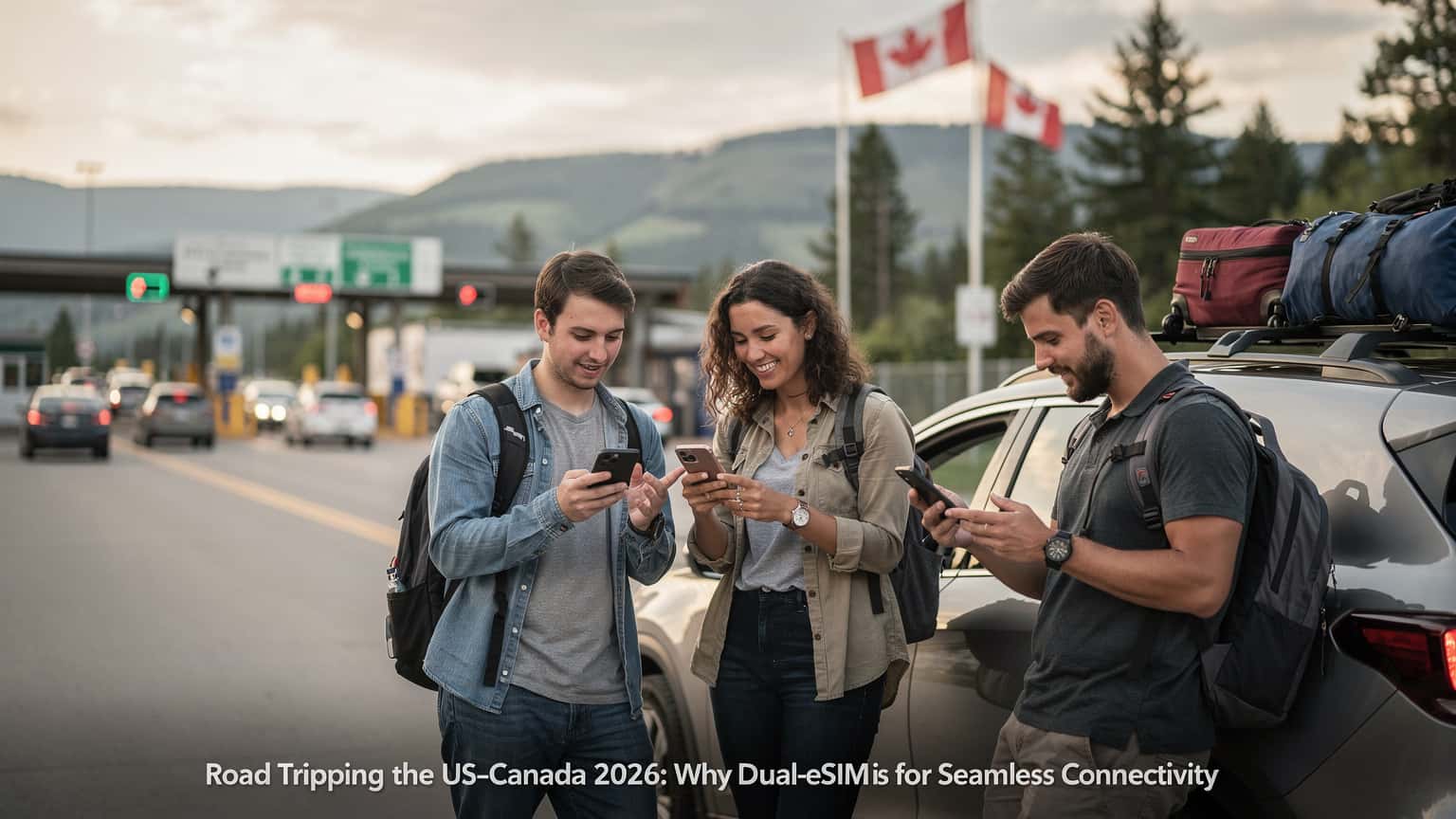
Road Tripping the US-Canada Border 2026: Why Dual-eSIM is Your Best Bet for Seamless Connectivity
Crossing the US-Canada border on a road trip can turn your data plan into a nightmare. Roaming fees bite hard, and physical SIMs are a pain. I just wrapped up 10 days, 3 states, and 2 provinces, spending only €28 on data with a dual-eSIM setup. Here's how to skip the stress and stay connected.
Read the guide Travel Styles / Personas
Summer Road Trip 2026: Why Your US/UK eSIM is Essential for Seamless US National Park & Canada Border Hopping
Forget frantic Wi-Fi hunts and exorbitant roaming charges on your next family road trip across the US National Parks and into Canada. An eSIM is the savvy parent's secret weapon, ensuring everyone, from the GPS navigator to the Disney+ streamer in the back seat, stays connected without a hitch. It's about peace of mind, from Yellowstone's valleys to Vancouver's cityscape.
Read the guide Travel Styles / Personas
Summer Road Trip 2026: Ditch Roaming Fees on Your USA & Canada Adventure with an eSIM
My old beat-up Mazda, a map that's seen better days, and a playlist for every stretch of highway, that's my kind of summer. But there's one thing I don't leave to chance anymore: my phone data. Crossing borders, even just from Vermont into Quebec, used to be a headache of roaming charges. Not anymore, thanks to the humble eSIM.
Read the guide Travel Styles / Personas
Summer Road Trip 2026: Ditch the Dead Zones with the Best eSIM for US & Canada
Forget the anxiety of losing signal on America's open roads or Canada's vast landscapes. This summer, an eSIM is your secret weapon against dead zones, keeping your maps live, your playlists streaming, and your travel stories instantly shareable, all without surprise roaming charges.
Read the guide Destination Guides
Conquer US National Parks: Best eSIM for Remote Road Trips
Explore US National Parks with reliable eSIM data in 2026. Stay connected on remote road trips, navigate safely, and share memories. Get your Cellesim eSIM now.
Read the guide Destination Guides
T-Mobile International Data Pass vs. Cellesim eSIM: Save More Abroad in 2026
Compare T-Mobile's International Data Pass with Cellesim eSIM in 2026. Discover how to get reliable data, avoid roaming, and save money on your next international trip.
Read the guide Destination Guides
T-Mobile International Data Pass Alternatives: Discover Cellesim eSIM
Ditch expensive T-Mobile International Data Passes in 2026. Discover Cellesim eSIM for faster speeds, wider coverage, and transparent pricing. Explore plans now!
Read the guide Destination Guides
iPhones & SIM Cards: The Traveler's Ultimate eSIM Guide for 2026
Master iPhone travel with eSIMs in 2026. Avoid roaming fees, get instant data, and stay connected globally. Explore Cellesim's worldwide eSIM plans now!
Read the guide Destination Guides
Affordable eSIM for North America Travel in 2026: Your Smart Guide
Find the cheapest eSIM for North America travel in 2026. Get instant data for USA, Canada, and Mexico with Cellesim's affordable plans. Explore now!
Read the guide eSIM Guide
When Is Turkey Day 2026? Your Ultimate Thanksgiving Guide
Find out when Turkey Day 2026 is celebrated in the USA & Canada. Plan your holiday travel with Cellesim eSIM for seamless connectivity.
Read the guide Destination Guides
How to Avoid Roaming Fees on Your 2026 Italy Summer Vacation
Planning your 2026 Italy vacation? Discover how to eliminate expensive roaming fees and stay connected effortlessly with Cellesim eSIM. Get instant data now!
Read the guide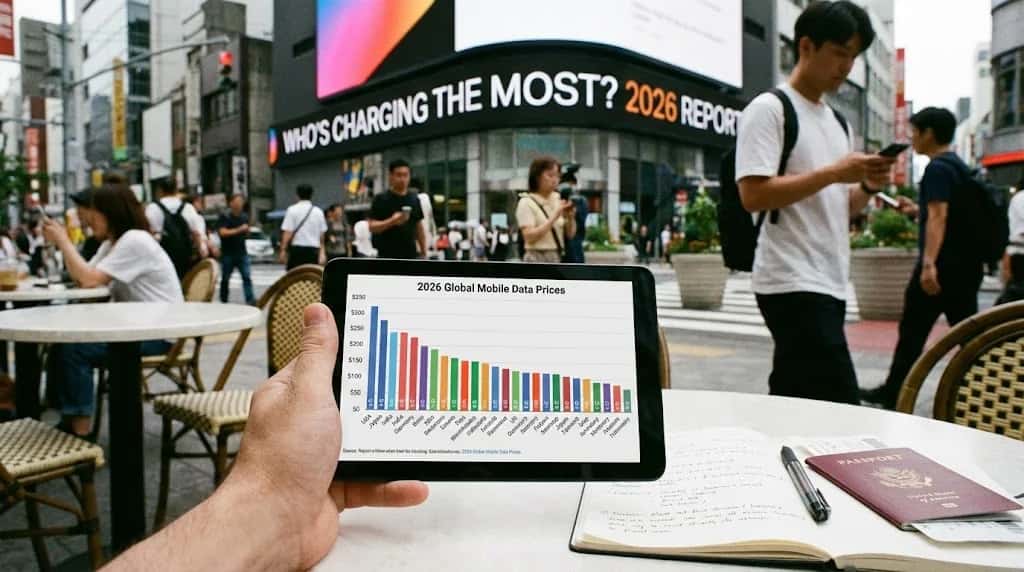 Savings & Comparisons
The 2026 Global Mobile Data Price Report: Who's Charging the Most?
A deep dive into the 2026 global mobile data price rankings. We uncover the most expensive countries for internet and show you how to stay connected affordably.
Read the guide
Popular cities in Canada
City-specific connectivity guides


Nearby Countries
Travelers to Canada also buy eSIMs for these countries


