What an eSIM Actually Is (and Isn't)
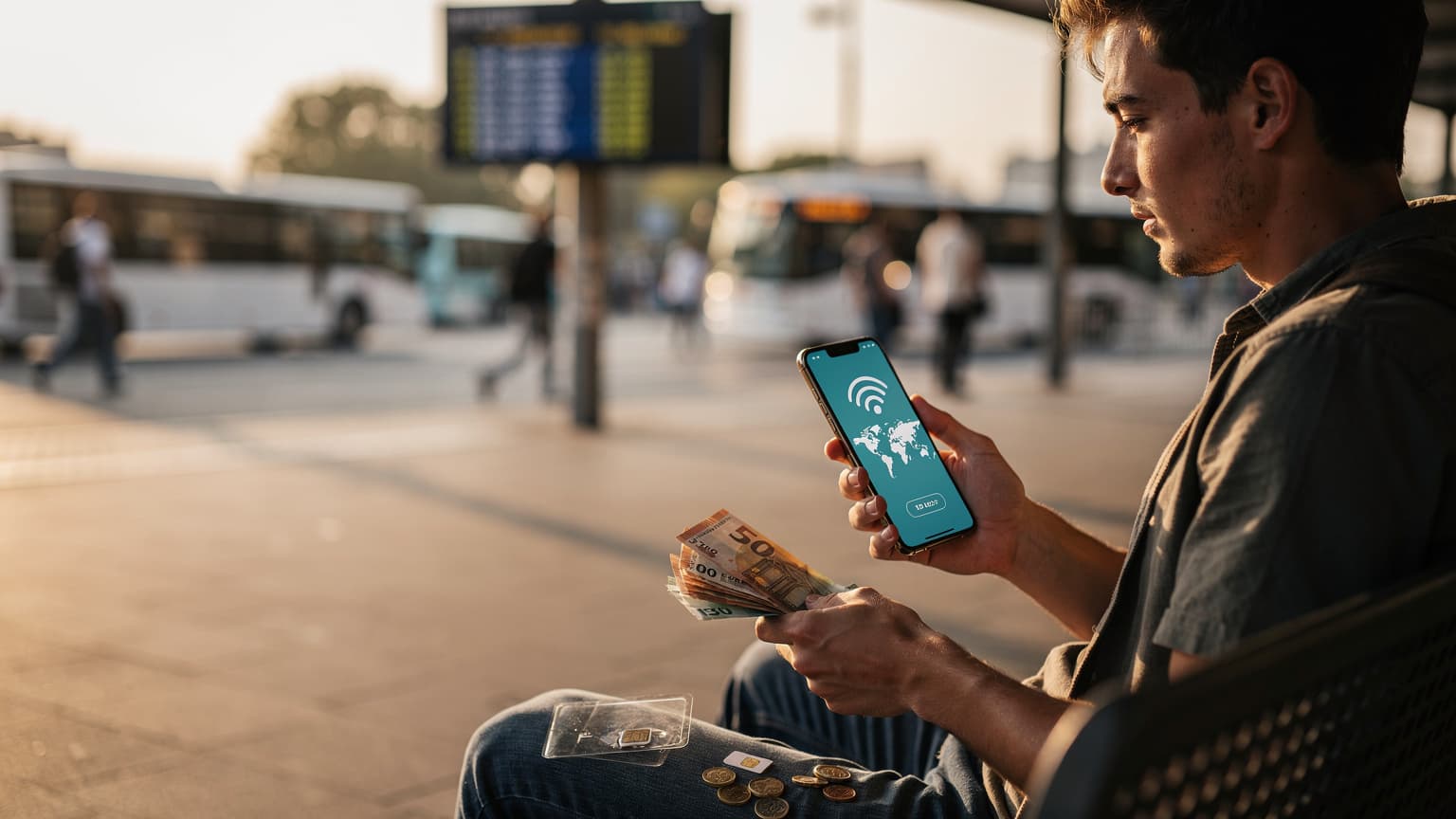
Alright, let's cut through the tech jargon. An eSIM isn't some magic signal booster, and it's not a different kind of phone. Think of it like this: your phone has a physical slot for a tiny plastic SIM card, right? That card is essentially a digital ID that tells networks who you are and what plan you're on. An eSIM is that exact same digital ID, but it's built directly into your phone's hardware, welded in there at the factory. No more fiddling with paperclip tools or losing your home SIM in a hostel bunk bed. It's a digital profile, not a physical object you can hold or lose.
This embedded chip, compliant with GSMA standards, is programmable. That's the key. Instead of buying a new physical SIM when you arrive in, say, Portugal, and slotting it in, you simply download a new profile onto your existing eSIM chip. It's like having a universal SIM card that can be instantly reprogrammed for any local network worldwide. This capability is what makes devices like the iPhone eSIM abroad such a game changer for easy connectivity.
The Hardware Under the Hood
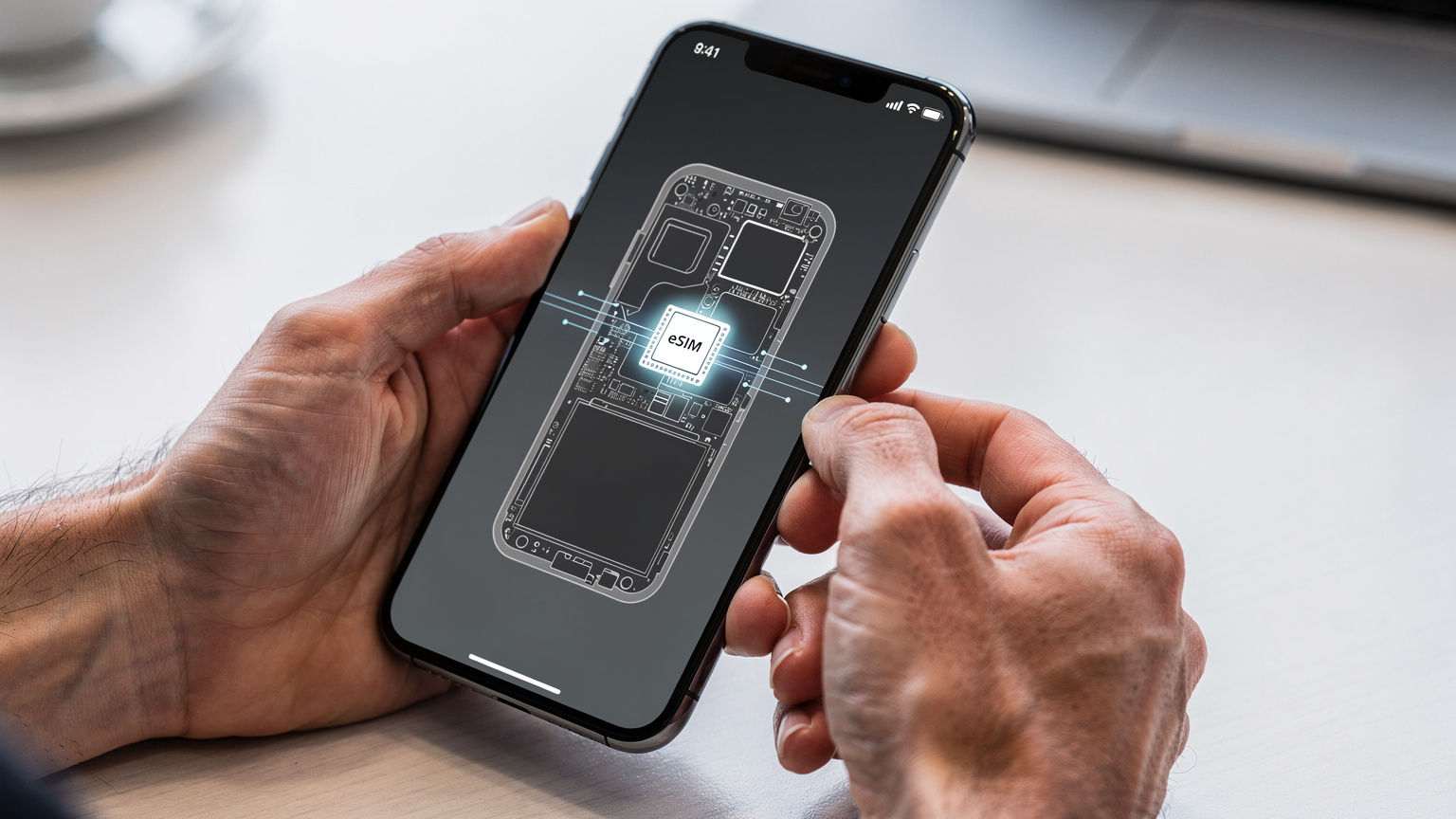
At its core, an eSIM is a small chip, called an eUICC (embedded Universal Integrated Circuit Card), permanently soldered into your smartphone, tablet, or even some laptops. This chip stores multiple network profiles digitally. When you buy an eSIM plan, you're essentially downloading a new profile onto this chip. Your phone still needs antennas and modems to connect to cellular networks, just like it always has. The eSIM just handles the 'who am I' part of the connection. It's the digital passport for your data.
Common Misconceptions Debunked
Many folks still think an eSIM is somehow less secure or less reliable than a physical SIM. Not true. The security protocols are identical, often even enhanced by the digital nature of the provisioning. Another myth: you need to be constantly online to use an eSIM. Nope. You need internet to download the initial profile, but once it's active, it works just like any other SIM, connecting to cellular towers without Wi-Fi.
The Nuts and Bolts: How eSIM Activates Your Data
So, you've decided to ditch the plastic and go digital. Smart move. Activating an eSIM is genuinely straightforward, far less of a headache than hunting down a tiny mobile shop in a new city and trying to explain 'data only, please' in broken local tongue. The process boils down to scanning a QR code or entering a few details, and boom, you're online.
This digital handshake between your phone's eUICC chip and the network provider is what makes it all possible. The QR code contains all the necessary information, like the network's authentication credentials and your specific plan details. Your phone reads it, loads the profile, and registers it with the network. It's really that simple. No more waiting for activation, no more wondering if the SIM card is inserted correctly. (Remember those days? Good riddance.)
The Magic of QR Codes and Manual Entry
Most eSIMs are activated via a QR code. You buy a plan online, they email you a QR code, you scan it with your phone's camera settings, and your phone does the rest. It's usually a two-minute job. For instance, if you're looking into T-Mobile eSIM abroad, you'll find this QR code method is standard. Sometimes, though, you might get a manual entry option, where you type in an SM-DP+ Address and an Activation Code. This is useful if you can't scan, like if you're setting up the eSIM on the device you're using to display the QR code itself, or if the screen is cracked. Either way, it's digital, it's fast.
What Happens When You Switch Providers?
This is where eSIMs truly shine for the budget traveler. Let's say you're in Spain with a Cellesim eSIM, and you're moving to France. Instead of buying a new physical SIM at the border or airport, you simply buy a French eSIM plan online. You download the new profile, and your phone now has two (or more!) active data plans. You can switch between them in your phone's settings with a tap. Your existing number, if you want to keep it, stays active on your primary physical SIM (if your phone has one) or another eSIM profile. This flexibility is a lifesaver, especially when crossing borders quickly.
Why Budget Backpackers Should Care About eSIMs: Money and Hassle Saved
Look, I've done the hostel circuit for years, and every euro counts. The difference between a €5 data plan and a €25 tourist trap SIM can be a whole extra meal, or even a night at a cheaper hostel. eSIMs aren't just a convenience; they're a tactical advantage for keeping your travel budget in check. No more getting ripped off by airport kiosks or wandering aimlessly trying to find a legitimate vendor.
I remember one trip to Albania. I landed in Tirana, and the local SIM shop at the airport was charging €30 for 10GB. I knew from my research that a local Vodafone AL SIM in the city center was €12 for the same. With an eSIM, I could have landed, activated a cheaper plan instantly, and been on my way, saving time and money. That's a €18 difference, which in Tirana can get you three days of street food. You do the math: if you're traveling for a month, saving €18 every few days adds up quick.

Cost-Efficiency Beyond the First Glance
Often, people assume local physical SIMs are always cheaper. While sometimes true for long-term stays (months, not weeks), the hidden costs of physical SIMs, like activation fees, mandatory bundles, or inflated tourist prices, can quickly eat into your budget. eSIM providers like Cellesim offer transparent pricing and data packages tailored for short to medium-term travel, often eliminating those hidden costs. For example, a 10GB, 30-day plan for most of Europe might run you €20-€25 with an eSIM, whereas a similar physical SIM at an airport could be €30-€40.
Consider your data usage. On average, I burn through about 0.5-1GB per day. That's for maps, WhatsApp, checking hostel reviews, and the occasional Instagram story. If I'm traveling for 10 days, I need 5-10GB. A €20 eSIM for 10GB is a no-brainer. If I had to buy two physical SIMs for two countries, it could easily be €25 per country, totaling €50. AT&T eSIM abroad, for instance, can often be more expensive than dedicated travel eSIMs, illustrating the need to compare.
Convenience That Pays Off in Time and Stress
Time is money, especially when you're on a tight schedule. Hunting for a SIM card shop, waiting in line, and dealing with language barriers wastes precious travel hours. With an eSIM, you can buy your data plan while still at home, activate it as soon as your plane lands, and be connected before you even clear customs. This means you can immediately order a ride-share, navigate to your hostel, or tell your travel buddies you've arrived. No more relying on dodgy airport Wi-Fi or getting lost trying to find a local telco store.
Comparing Apples to Oranges: eSIM vs. Local Physical SIMs
This is the big debate among budget travelers. Should you stick with the old plastic, or embrace the digital future? There's no one-size-fits-all answer, but understanding the pros and cons will help you make an informed decision that saves you euros.
For a short trip, say a week in Italy, an eSIM often wins on convenience and transparent pricing. You land, you're connected. For a month-long deep dive into a single country, a local physical SIM might offer slightly better value, particularly if you find a good local deal. But even then, the hassle factor often tips the scale towards eSIMs for me. My personal rule: if I'm in a country for less than two weeks, it's eSIM all the way.
| Feature | eSIM | Local Physical SIM |
|---|---|---|
| Purchase & Activation | Online, instant QR code scan | In-person at shop, requires ID & waiting |
| Cost Transparency | Clear package prices, no hidden fees | Can have activation fees, tourist prices, mandatory bundles |
| Flexibility | Switch networks/plans instantly, multiple profiles | Tied to one network, swap physical cards |
| Physicality | Digital, no physical card to lose | Small plastic card, easy to lose or damage |
| Device Compatibility | Newer smartphones (iPhone XS/XR+, recent Android) | Any phone with a SIM slot |
The Cheapest Local SIM Alternative, for Fairness
Let's be real, sometimes a local physical SIM is the absolute rock-bottom cheapest option, especially if you're staying in one place for an extended period. For example, in Poland, you can often find a Play, Orange, or T-Mobile physical SIM for as little as 5 PLN (€1.10) with a few GBs of data, then top it up. The catch? You'll need to find a local store (Żabka or a dedicated telco shop), present your passport for registration (mandatory in many countries), and deal with potential language barriers. This usually means a trip to a larger city center, not an airport kiosk.
So, if your budget is so tight that every single euro counts, and you have time to kill, then yes, the physical local SIM route can save you a few quid. But you're trading time and convenience for those savings. For a quick 3-day city break, is saving €5 worth an hour of your travel time? Probably not.
When to Stick with a Physical SIM
There are still scenarios where a physical SIM makes more sense. If you have an older phone that doesn't support eSIMs (check your device's specs!), then a physical SIM is your only option. Also, if you're planning an extremely long stay, say six months or more in a single country, a local physical SIM might offer better long-term rates or specific local features not available on travel eSIMs. But for the average backpacker doing shorter stints, the scales heavily tip towards eSIMs.
Getting Started with an eSIM: A Step-by-Step Guide
Okay, you're convinced. You want to try an eSIM. Good. It's less intimidating than it sounds. Here's how I usually set up my Cellesim eSIM before I even leave home, ensuring I'm connected the moment I touch down.
- Research and Purchase Your Plan: First, head to a reputable eSIM provider like Cellesim. Browse plans for your destination, considering data allowance (how many GBs), validity period (how many days), and coverage. Look for transparent pricing. I always overestimate my data needs slightly, just in case. Don't cheap out and get stuck.
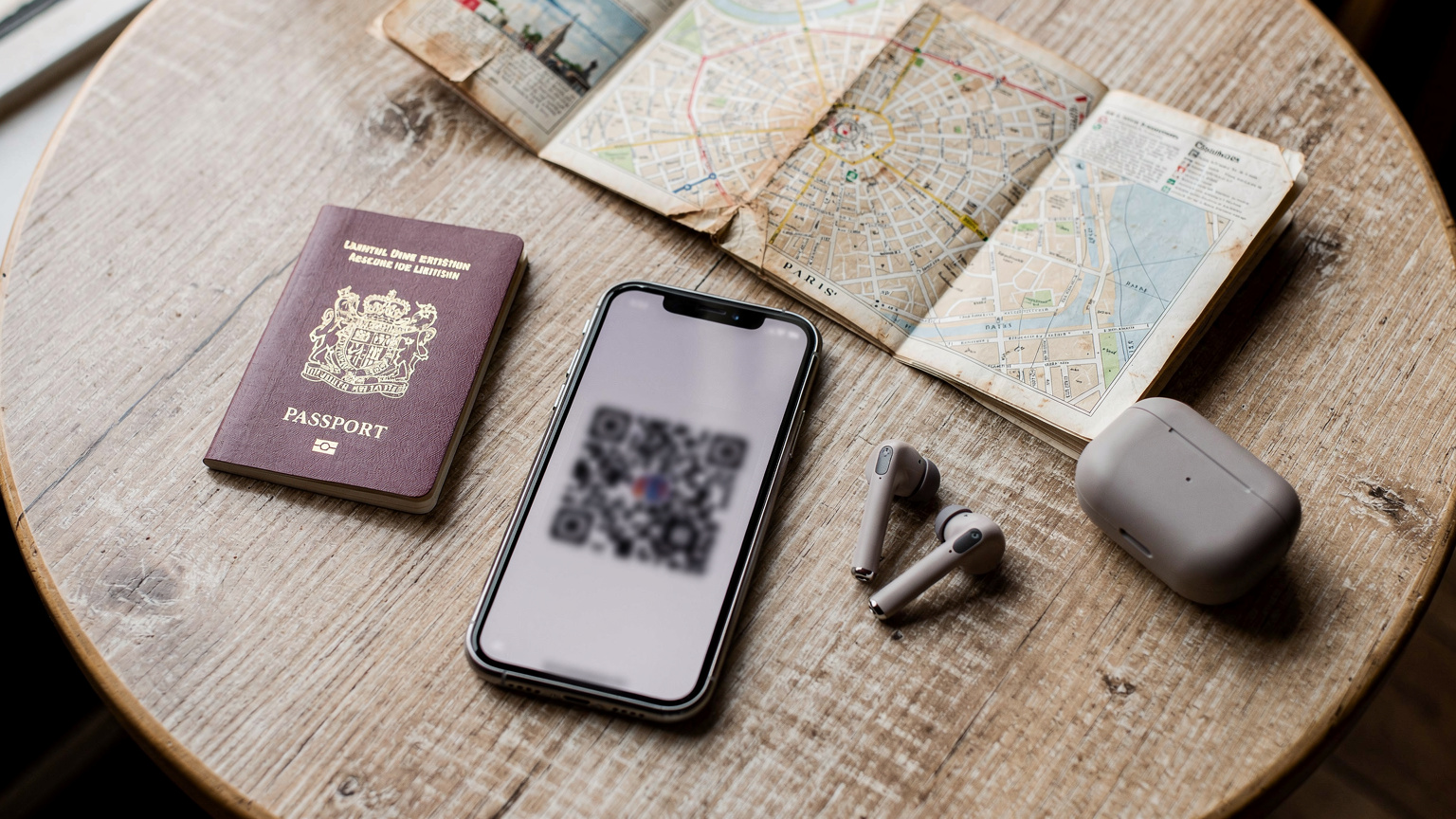
- Receive Your eSIM Details: After purchase, you'll typically receive an email with your eSIM's QR code or manual activation details. Keep this email handy, or better yet, print it out or save it as a PDF on a second device. You don't want to be reliant on Wi-Fi to access it!
- Access Your Phone's Settings: Navigate to your phone's cellular or mobile data settings. On iPhones, it's 'Settings' > 'Cellular' > 'Add eSIM'. On Androids, it varies slightly but is usually 'Settings' > 'Network & internet' > 'SIMs' or 'Mobile network' > 'Add eSIM'.
- Scan the QR Code (or Enter Manually): Choose the option to 'Scan QR Code'. Your phone's camera will open. Point it at the QR code you received. If scanning isn't an option or you're using the same device to display the code, select 'Enter Details Manually' and input the SM-DP+ Address and Activation Code provided.
- Configure Your eSIM Settings: Once the eSIM is detected, your phone will prompt you to name it (e.g., 'Spain Travel' or 'Cellesim Europe'). This is crucial for managing multiple eSIMs. You'll also be asked if you want to use it for data, calls, or both. For travel, I usually set it for 'Data Only' and keep my home SIM active for calls/texts, if I want to receive them without roaming charges. Make sure 'Data Roaming' is enabled for your new eSIM if prompted.
- Activate and Go!: Your eSIM should now be active. You might see a new signal bar or an indicator showing two networks. Select your new eSIM for mobile data and turn off data roaming for your home SIM to avoid bill shock. Double-check connectivity by opening a browser or app.
Device Compatibility: Is Your Phone eSIM Ready?
Not all phones support eSIMs. Generally, most iPhones released after 2018 (iPhone XS, XR, and newer) are eSIM compatible. For Android, it's a bit more scattered, but recent flagship models from Samsung (Galaxy S20 series and up, many Folds/Flips), Google Pixel (Pixel 3 and up), and some Huawei models are usually good to go. Always check your specific phone model's specifications before you buy an eSIM plan. A quick Google search for 'Is [Your Phone Model] eSIM compatible?' should give you a definitive answer.
Managing Your eSIMs Like a Pro: Toggling Data and Checking Usage
Once you've got a couple of eSIMs loaded up, managing them becomes key. This is where you really start to feel like a seasoned pro, effortlessly switching networks as you cross borders, or just getting the best deal. It's about being in control of your data, not letting your phone decide for you.
My phone usually has my home SIM (physical) and at least two travel eSIMs loaded at any given time. I label them clearly: 'Home SIM, No Roaming', 'Europe Cellesim', 'Turkey Local'. This way, when I land in Istanbul, I just tap 'Turkey Local' for data, and my home SIM remains active for receiving SMS. No fumbling, no stress. Knowing how to find your eSIM number can also be handy for customer support or specific registrations.
Toggling Between eSIM Profiles
Switching between eSIMs is simple. In your phone's cellular settings, you'll see a list of your installed eSIMs. You can enable or disable them individually. For data, you simply select which eSIM (or physical SIM) you want to use as your primary data source. This is invaluable when you have, say, a Cellesim regional eSIM for general travel and a cheaper local eSIM for a specific country where you'll be spending a lot of time.
| Action | iPhone Steps | Android Steps (General) |
|---|---|---|
| Add eSIM | Settings > Cellular > Add eSIM | Settings > Network & internet > SIMs > Add more |
| Toggle Data Source | Settings > Cellular > Cellular Data > Select Plan | Settings > Network & internet > Internet > Select SIM for Mobile Data |
| Rename eSIM | Settings > Cellular > Tap eSIM > Cellular Plan Label | Settings > Network & internet > SIMs > Tap eSIM > Name |
| Remove eSIM | Settings > Cellular > Tap eSIM > Remove Cellular Plan | Settings > Network & internet > SIMs > Tap eSIM > Erase SIM |
Monitoring Your Data Usage
Keeping an eye on your data consumption is crucial for budget travel. Most phones have a built-in data usage tracker in the cellular settings. Reset it when you activate a new eSIM plan so you can see exactly how much you're using. Many eSIM providers also have companion apps where you can track your usage in real-time, top up your plan, or buy new data packages. This prevents nasty surprises and ensures you're not overspending.
Border Crossing with eSIM: Your Secret Weapon Against Connectivity Blackouts
This is where eSIMs really earn their keep. I've been stuck at countless border crossings, especially overland ones, where the local SIM I just bought at the previous country's bus station suddenly dies the moment I cross a river. Or worse, the mobile network signal at the border office itself is non-existent. With an eSIM, you sidestep all of that.
Think about a train journey from Budapest to Vienna. As you leave Hungary, your Hungarian eSIM will eventually drop signal. Before you even pull into Vienna Hauptbahnhof, you can switch to your Austrian or European regional eSIM, and you're connected. No frantic searching for a Telekom Austria shop, no waiting in line, no language barrier. You can immediately check your hostel booking or find the U-Bahn route. This kind of seamless transition is priceless when you're navigating new cities.
The Seamless Transition from Country to Country
When you're hopping between countries, especially within Europe's Schengen Area where borders are often just a sign on the highway, an eSIM with regional coverage is gold. You literally don't have to think about data. Your phone just switches networks in the background. If you're using a single-country eSIM, you can simply activate the next country's eSIM as you approach the border. This beats trying to find a SIM card vendor at a remote border post, which usually involves inflated prices and sketchy dealers.
I once crossed from Laos into Cambodia via the Veun Kham-Dom Kralor border. There was absolutely nothing at the border post for SIM cards. Had I not had my pre-loaded regional eSIM, I would have been offline for hours until I reached Stung Treng. That's a huge pain when you're trying to coordinate a bus or find a guesthouse. This is why having a Nomad Visa & eSIM combo is crucial for digital nomads.
Navigating Non-eSIM Friendly Countries and Regions
While eSIM adoption is growing, there are still some countries or regions where it's less prevalent, or where local networks aren't fully integrated. In these cases, a reliable travel eSIM provider like Cellesim might still offer coverage through roaming agreements, even if local carriers don't directly sell eSIMs. If all else fails, you might need to resort to the tried-and-true physical SIM. But always check your eSIM provider's coverage map first. For example, some remote parts of Central Asia might still require a physical SIM, but that landscape is changing fast. Central Asia eSIM 2026 provides a deeper dive into this specific challenge.
Common eSIM Gotchas and How to Dodge Them
No tech is perfect, and eSIMs have their quirks. Knowing them beforehand can save you a headache and prevent you from being offline when you need data most. Most issues are easily avoidable with a bit of foresight.
- Not downloading before departure: Always, always, always download and install your eSIM profile BEFORE you leave home, or at least while you have reliable Wi-Fi.
- Forgetting to enable 'Data Roaming': Sometimes, even with an eSIM, you need to toggle on 'Data Roaming' for it to connect to partner networks in a foreign country.
- Deleting an eSIM prematurely: Don't delete an eSIM profile until you are absolutely certain you won't need it again. Reinstalling it can be tricky or even impossible without the original QR code.
Troubleshooting Connectivity Issues
If your eSIM isn't connecting, don't panic. First, check your phone's settings to ensure the correct eSIM profile is selected for mobile data and that 'Data Roaming' is enabled for that profile. A simple restart of your phone often works wonders. If you're still stuck, try manually selecting a network operator from your phone's cellular settings; sometimes your phone just needs a nudge to find the strongest local signal. Finally, if all else fails, contact your eSIM provider's support. They can often diagnose issues remotely.
Data Limits and Fair Usage Policies
Read the fine print! Some 'unlimited' plans have fair usage policies that throttle your speed after a certain amount of data. Others might limit tethering or hotspot usage. Always know exactly what you're buying. For example, a 10GB plan for 15 days means 10GB total, not 10GB per day. Keep track of your usage, as mentioned earlier, to avoid hitting your limit prematurely.
The Future of Travel Data: Where eSIMs Are Headed in 2026 and Beyond
The writing's on the wall: physical SIMs are on their way out. Apple already ships US iPhones without a physical SIM tray, and other manufacturers are likely to follow suit. This means eSIMs aren't just a niche travel hack anymore, they're becoming the default. For budget backpackers, this is overwhelmingly good news, as competition drives down prices and innovation makes connectivity even more seamless.
I foresee a future where regional eSIMs are the norm, covering entire continents for a flat, affordable rate. Imagine a single 'Europe eSIM' that costs €25 for a month of solid data across 30+ countries. That's the dream, and we're rapidly approaching it. Companies like Cellesim are already leading the charge, constantly expanding coverage and optimizing plans for travelers. The days of hunting down a random kiosk in a foreign country for a SIM are numbered.

eSIMs in Other Devices: Beyond Your Phone
It's not just phones anymore. Laptops, smartwatches, and even some tablets are now coming with eSIM capabilities. This means you can have true, independent data connectivity on all your devices without relying on your phone's hotspot or hunting for Wi-Fi. Imagine your smartwatch having its own data plan, so you can leave your phone at the hostel and still navigate or make calls. For remote workers, an eSIM for PC abroad means always-on internet for your laptop, no matter where you are.
The Rise of Dynamic and On-Demand eSIM Plans
Expect more flexibility in eSIM plans. We'll see more dynamic pricing based on real-time usage, on-demand data top-ups that activate instantly, and even plans that automatically switch to the cheapest available network in a given location. The goal is to make data as fluid and invisible as possible, adapting to your travel needs without you even thinking about it. For a comparison with other popular options, consider looking at Nomad eSIM: Is It Still Worth It for Global Travel in 2026? A Cellesim Reality Check.
Frequently Asked Questions
Can I use my regular phone number with an eSIM?
Yes, absolutely. You can keep your primary physical SIM card active for calls and texts (your regular number) while using an eSIM for mobile data only. This setup allows you to receive calls and messages on your home number without incurring expensive roaming data charges, as long as you disable data roaming for your physical SIM.
Do I need Wi-Fi to activate an eSIM?
You typically need an internet connection, usually Wi-Fi, to download the initial eSIM profile onto your device. Once the eSIM is installed and activated, it functions just like a regular SIM card, connecting directly to cellular networks for data, calls, and texts without needing Wi-Fi.
How many eSIMs can I have on my phone?
Most modern eSIM-compatible smartphones can store multiple eSIM profiles, usually between 5 and 10, though only one or two can be actively used for cellular data at any given time (depending on your phone's dual SIM capabilities). You can easily switch between these stored profiles in your phone's settings as needed.
Are eSIMs more expensive than physical SIM cards?
Not necessarily. While some local physical SIMs for long-term stays might appear cheaper initially, eSIMs often offer more transparent pricing without hidden activation fees or mandatory bundles. For short to medium-term travel, eSIMs frequently provide better value and convenience, saving you time and stress at competitive prices.
What happens if I accidentally delete my eSIM profile?
If you accidentally delete an eSIM profile, you will lose access to that specific data plan. To reinstall it, you would typically need the original QR code or manual activation details provided by your eSIM carrier. Some providers allow reinstallation, while others might require purchasing a new plan, so always be cautious before deleting.
Can I use an eSIM on an older phone?
eSIM functionality is dependent on your phone's hardware. Generally, only newer smartphone models support eSIMs. For iPhones, this usually means iPhone XS, XR, and later models. For Android devices, it's typically flagship models from recent years. Always check your specific device's specifications to confirm eSIM compatibility.