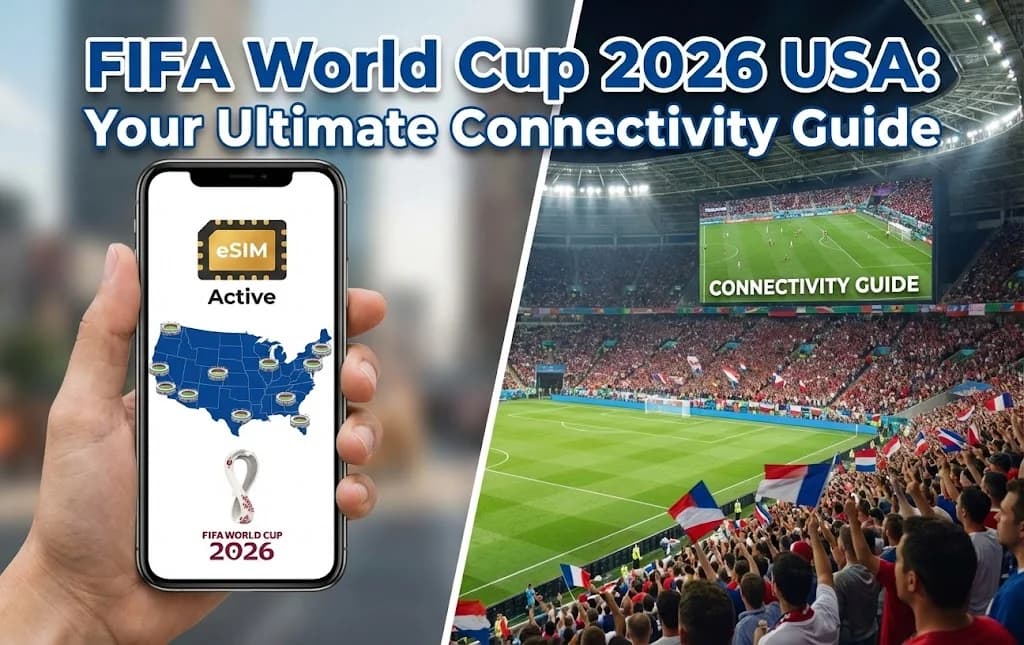
FIFA World Cup 2026 USA: Your Ultimate Connectivity Guide
Get ready, football fanatics! The FIFA World Cup 2026 is heading to North America, with a significant chunk of the action unfolding across the USA. If you're planning to be there, soaking in the electric atmosphere, chanting for your team, and capturing every unforgettable moment, then one thing is absolutely crucial: staying connected. From navigating unfamiliar cities to sharing your incredible experiences in real-time, reliable connectivity isn't a luxury; it's a necessity. This guide is your ultimate playbook for ensuring seamless internet access throughout your World Cup adventure in the USA.
Why Connectivity is King for World Cup Travelers
Imagine trying to find your stadium gate without GPS, or missing that crucial match update because your data ran out. Connectivity for the World Cup 2026 in the USA isn't just about social media (though sharing those epic selfies will be a must!). It's about practicalities:
- Navigation: Getting to stadiums, hotels, and tourist attractions.
- Ride-Sharing: Booking Uber or Lyft to avoid parking hassles.
- Ticketing: Many tickets are digital, requiring internet access for entry.
- Communication: Staying in touch with travel companions and loved ones back home.
- Information: Real-time match scores, news, local recommendations, and emergency services.
- Payments: Many vendors prefer or exclusively use digital payment methods.
Simply put, a connected phone is your most powerful tool for a stress-free and enjoyable World Cup experience.
Understanding USA Mobile Networks
The USA has a robust and competitive mobile network landscape. The major players you'll encounter are:
- Verizon: Known for its extensive coverage, particularly in rural areas.
- AT&T: Also offers wide coverage and strong performance in urban centers.
- T-Mobile: Has expanded rapidly and often boasts competitive 5G speeds, especially in metropolitan areas.
All three offer excellent service in and around the major host cities. The key is ensuring your chosen connectivity solution works seamlessly with one of these networks.
Your Connectivity Options: A Deep Dive
1. International Roaming (Your Home Provider)
This is often the easiest option to set up before you leave, but frequently the most expensive. Contact your home mobile provider to inquire about their international roaming packages for the USA. Be very careful to understand the data limits, costs per MB/GB, and any daily charges. While convenient, bill shock upon your return is a common complaint with this method. It's generally not recommended for heavy data users or budget-conscious travelers.
2. Local Physical SIM Card (USA Carrier)
Upon arrival in the USA, you could purchase a physical SIM card from a local carrier (Verizon, AT&T, T-Mobile) or a Mobile Virtual Network Operator (MVNO) like Mint Mobile or Cricket Wireless. This usually involves finding a store, presenting ID (sometimes), and activating the card. While this can offer good value, it has a few drawbacks:
- Time-consuming: You'll need to locate a store and spend time on activation, potentially after a long flight.
- Physical Swap: You'll have to remove your home SIM, meaning you might miss calls or texts to your primary number.
- Limited Flexibility: Often tied to specific plans with fixed durations.
This is a viable option if you have time upon arrival and prefer a traditional approach, but there are more modern solutions available.
3. Wi-Fi Hotspots (Public & Private)
Free public Wi-Fi is available in many hotels, cafes, airports, and even some stadiums. While useful for quick checks, relying solely on public Wi-Fi is risky:
- Security Concerns: Public Wi-Fi is often unsecured, making your data vulnerable.
- Reliability: Speeds can be slow, especially in crowded areas like stadiums.
- Limited Availability: You won't have it everywhere you go.
Treat public Wi-Fi as a supplemental option, not your primary connectivity solution.
4. Portable Wi-Fi Hotspot Device
These devices allow you to connect multiple devices to a single Wi-Fi signal generated by the hotspot. You can rent or buy them. They offer convenience for groups, but add another gadget to carry and charge. Data plans are often separate and can be expensive.
5. The Game Changer: eSIM Technology
This is where modern technology truly shines for international travelers. An eSIM (embedded SIM) is a digital SIM that allows you to activate a cellular plan without needing a physical SIM card. Most newer smartphones (iPhone XS and later, many Android flagship models) support eSIM.
The advantages of using an eSIM for your World Cup trip are substantial:
- Instant Activation: Purchase and activate your data plan online before you even leave home, or upon arrival. No need to hunt for stores.
- Dual SIM Functionality: Keep your home SIM active for calls/texts while using your eSIM for data. This is incredibly convenient.
- Flexibility: Easily switch between different data plans or providers if needed.
- Cost-Effective: Often much cheaper than international roaming, with a variety of data packages to suit your needs.
- No Physical Swap: Your physical SIM stays in your phone, reducing the risk of loss or damage.
Cellesim Travel eSIM: Your World Cup Connectivity MVP
When it comes to reliable and convenient eSIMs for travel, Cellesim travel eSIM is an excellent choice for your FIFA World Cup 2026 adventure in the USA. Cellesim offers a range of data plans specifically designed for travelers, providing seamless connectivity across the United States.
Why Cellesim stands out for the World Cup:
- USA-Specific Plans: Cellesim offers competitive data packages tailored for the USA, ensuring you get enough data for navigation, streaming, and sharing.
- Major Network Access: Cellesim often partners with major US networks, guaranteeing strong coverage in all host cities.
- Easy Activation: Purchase your Cellesim plan online, receive a QR code, scan it with your phone, and you're good to go. It's truly that simple.
- Flexible Durations: Choose plans that match the length of your stay, from short trips to extended tours.
- Clear Pricing: No hidden fees or unexpected charges. You know exactly what you're paying for upfront.
- 24/7 Support: Should you encounter any issues, Cellesim provides customer support to assist you.
Imagine landing at the airport, switching on your phone, and instantly being connected. No queues, no language barriers, just seamless internet access thanks to your pre-activated Cellesim eSIM. This peace of mind is invaluable when traveling for a major event like the World Cup.
Tips for Optimal Connectivity During the World Cup
- Download Offline Maps: Even with reliable data, having Google Maps or Apple Maps downloaded for offline use can be a lifesaver if you temporarily lose signal or want to conserve data.
- Battery Banks are Your Friend: Constant phone usage (GPS, streaming, social media) will drain your battery quickly. A portable power bank is an absolute essential.
- Check Your Phone's Compatibility: Before you travel, ensure your smartphone supports eSIM technology if you plan to use it.
- Understand Data Usage: Streaming video and live-sharing can consume a lot of data. Monitor your usage and adjust if needed. Cellesim's plans are designed to be generous, but awareness helps.
- Secure Your Connection: If you must use public Wi-Fi, consider a Virtual Private Network (VPN) for added security.
- Plan Ahead: Don't wait until you land to sort out your connectivity. Purchase and activate your Cellesim travel eSIM before you depart for the USA.
Final Whistle: Stay Connected, Enjoy the Game!
The FIFA World Cup 2026 in the USA promises to be an incredible spectacle. By taking a proactive approach to your connectivity, especially by leveraging the convenience and efficiency of a Cellesim travel eSIM, you can ensure your focus remains on the beautiful game and the unforgettable experiences awaiting you. Stay connected, share your joy, navigate with ease, and make the most of every moment. Enjoy the World Cup!