
The Roaming Nightmare, A Cautionary Tale from the Streets of Paris
I still remember that crisp Parisian afternoon, not for the autumn air in the Latin Quarter, but for the sudden, gut-punch realization that my phone bill was exploding. It was 2018, and I was trying to find an antique shop near Rue Mouffetard, relying on my trusty (and clearly overpriced) AT&T International Day Pass. Every Google Maps refresh, every quick WhatsApp message to my friend waiting at the Saint-Michel fountain, felt like a tiny coin dropping into a very deep, very expensive well. When I finally landed back in San Francisco, the bill was over $400. Most of that was what AT&T vaguely called 'data overage' - a term that still gives me chills. I'd basically paid for a second flight just to stay connected. I learned that lesson the hard way.
That experience, among others, really drove home a critical point: staying connected abroad isn't just nice, it's essential. But it shouldn't cost you a fortune. For your Summer 2026 European trip, whether you're exploring art galleries in Florence's Oltrarno or winding through Lisbon's Alfama alleyways, you deserve a solution that's both reliable and affordable. The good news? We've come a long way since my Parisian data disaster.
What Exactly is a Multi-Country eSIM?
An eSIM is basically a digital SIM card. Instead of struggling with a tiny piece of plastic and a paperclip, an eSIM is built right into your phone's hardware. A multi-country eSIM lets you download and activate a data plan that works across several different countries, all from one provider. Think of it as a universal data passport for your phone, without needing any actual passport stamps (though I still love collecting those).
For example, if your summer plans take you from Seville's tapas bars to Venice's canals, then up to the ancient ruins in Rome's Centro Storico, a single Cellesim multi-country plan would cover you everywhere. No need to buy a local SIM in Spain, then another in Italy, and yet another if you hop over to Germany. It's one plan, one activation, and continuous internet. This is a huge improvement from the old days of hunting for a Vodacom shop in Cape Town or trying to understand local mobile plans in a tiny French village.
The Magic Behind the Digital SIM
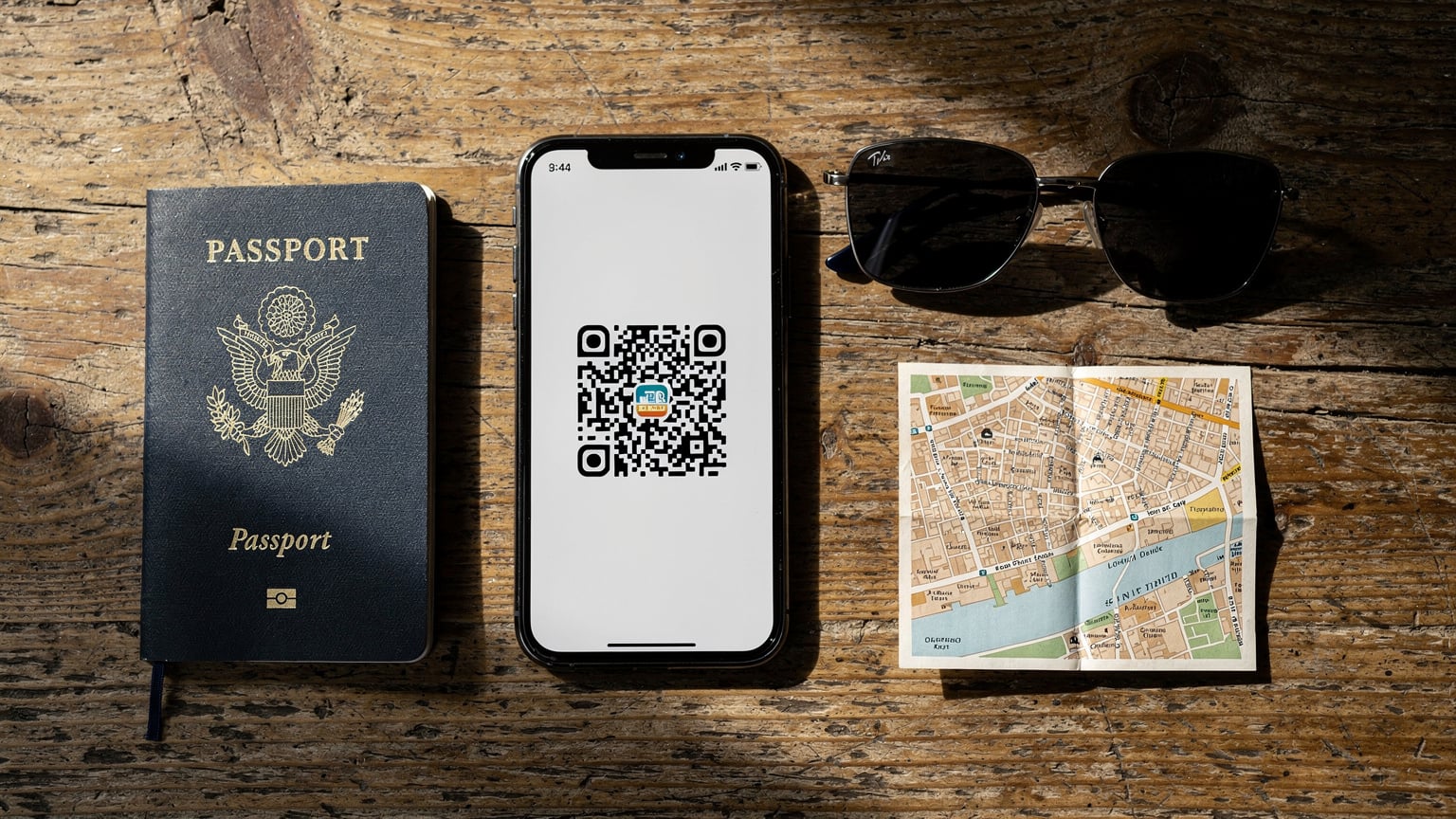
An eSIM stores your subscriber profile electronically. When you buy a plan, the provider sends you a QR code or an activation code. Your phone then downloads this profile, essentially telling your device which network to connect to and what services you have access to. It's surprisingly simple once you've done it once.
The important thing is that most newer smartphones, particularly iPhones (from the XS and later) and many Android flagships, already have eSIM technology. You don't need a new phone, just a compatible one. This makes it perfect for travelers who want to simplify their tech setup. If you have an iPhone, understanding how iPhone eSIMs work abroad can make your trip much smoother.
Benefits of a Multi-Country eSIM for Europe 2026
- Cost Savings: This is huge. Forget the sky-high daily fees of your home carrier's international roaming plans, which can easily hit $10-$20 a day. A multi-country eSIM usually offers data packages that cost a fraction of that, paid upfront, so there are no surprises.
- Convenience: No more hunting for local SIM card vendors when you land, especially if you arrive late at night at, say, Charles de Gaulle (CDG) in Paris when most shops are closed. You can activate your plan before you even leave home or while you're waiting for your luggage.
- Flexibility: Need more data? Most eSIM providers let you top up your plan right from their app. This means you can start with a smaller package and only add more if you find yourself uploading too many live videos from the Brandenburg Gate.
- Environmental Impact: It's a small detail, but worth noting: no plastic SIM card means less waste. Every little bit helps.
Why Your Home Number Matters More Than You Think Abroad
This is where multi-country eSIMs really shine. Many travelers mistakenly think they have to choose between cheap data and keeping their main phone number active. Not with eSIMs. Your phone can handle multiple profiles at the same time. One for your home number (either your physical SIM or another eSIM if you're fully digital), and another for your travel data eSIM.
This means you can still get calls and texts to your regular number without racking up roaming charges, as long as you keep data roaming OFF for your primary line and use the eSIM for all data. Emergency contacts, two-factor authentication for banking apps, WhatsApp messages from friends back home, everything keeps working smoothly. I can't tell you how many times I've been thankful for this, especially when trying to log into my banking app for an urgent transfer while sitting in a cafe in Berlin's Mitte district, only to have it send a verification code to my US number. If I'd swapped out my physical SIM, I would have been stuck.
Dual SIM Functionality Explained
Modern smartphones with eSIM capabilities are essentially dual SIM devices. They let you:
- Use your home physical SIM for calls and texts: Keep your main number active for incoming calls and SMS.
- Use your eSIM for all data: All internet use, from Google Maps to Instagram, will go through your chosen eSIM plan.
- Control roaming: Critically, you can disable data roaming for your home SIM to prevent accidental charges while making sure your eSIM is active for data.
This setup offers the best of both worlds: constant internet and access to your personal number, all without the shock of a huge bill. It's the kind of peace of mind that really lets you enjoy that afternoon espresso in Piazza Navona.
eSIM vs. Physical SIM: The Real-World Differences
While the goal is the same, getting online, the experience of using an eSIM compared to a traditional physical SIM is totally different. Having dealt with countless tiny plastic cards in airports from Tokyo Narita to Rome Fiumicino, I can tell you how much relief an eSIM brings.
| Feature | Multi-Country eSIM | Physical Local SIM | Home Carrier Roaming (e.g., AT&T Day Pass) |
|---|---|---|---|
| Activation Process | Instant via QR code/app, before or upon arrival | Requires purchase at local store, manual swap | Automatic activation, often just by using data |
| Cost | Prepaid, transparent, budget-friendly plans | Local rates, often good value, but varies per country | Expensive daily fees ($10-$20+ per day), can add up quickly |
| Number Retention | Retain home number for calls/texts, eSIM for data | Lose access to home number (unless dual-SIM phone & you keep old SIM) | Keep home number for everything, but at high cost |
| Coverage | Often uses top local networks across multiple countries | Tied to one local network, only in that country | Uses partner networks, can be inconsistent, high latency |
| Flexibility | Easy top-ups, switch plans digitally | Requires visiting stores for top-ups/new plans | No flexibility, fixed daily rate or data limits |
| Physicality | No physical card, entirely digital | Small plastic card, easy to lose/damage | No physical card change, but hidden costs |
The last time I was in Milan, trying to meet a colleague in the Brera district, my local TIM Mobile physical SIM ran out of data. It was a Sunday afternoon, and almost every phone shop was closed or only open for limited Sunday hours, typically 10:00-14:00. I wasted two valuable hours wandering around looking for an open store, all because I couldn't simply top up digitally. That's a headache an eSIM completely avoids.
The Pain of Losing Your Home Number
One of the biggest frustrations with physical local SIMs is temporarily losing access to your home number. Imagine needing to call your bank, only to realize their automated system doesn't recognize your new European number. Or trying to log into an app that needs two-factor authentication via SMS to your US number. These aren't just theoretical problems; they're common travel annoyances. With an eSIM handling your data, your home number stays active on its primary line, ready for any important communication, text, or call you might need.
Choosing Your European eSIM Provider: What to Look For
Not all eSIM providers are created equal. Just like choosing between an overnight sleeper train or a budget airline to get from Vienna to Venice, your data provider choice can significantly affect your trip. As someone who has tested countless international data solutions, including comparing Nomad eSIM vs. Cellesim, I can tell you that network reliability and clear pricing are most important.
Key Factors in eSIM Selection
- Coverage: Make sure the eSIM covers all the countries on your itinerary. A 'Europe' plan should truly mean Europe, not just a few selected countries. Check the provider's website for a detailed list. Cellesim, for instance, usually partners with major local carriers like Vodafone, Orange, and Deutsche Telekom across Europe, ensuring wide coverage even in less-visited areas.
- Data Allowances & Validity: Match the data package to how much you'll use it. A week-long trip might only need 5GB, while a month-long backpacking adventure could require 20GB or more. Pay attention to how long the plan is valid; a 30-day plan won't work if your trip is 45 days.
- Speed & Network Partners: This is my personal obsession. Which networks does the eSIM provider use in each country? A provider using 5G networks from carriers like O2 in Germany or SFR in France will give you a much faster experience than one stuck on older 4G bands. Slow data can ruin map navigation, video calls with family, or even just uploading a photo from the Ponte Vecchio.
- Customer Support: Things can go wrong. Having access to responsive customer support, ideally 24/7 via chat or email, is priceless. My own experience with a non-responsive provider once left me stranded without data in a remote part of the Scottish Highlands.
- Pricing & Transparency: Look for clear pricing with no hidden fees. Prepaid plans are best. Some providers offer free trial eSIMs; these can be a good way to test coverage and speed before committing to a larger package.
| Provider Feature | Cellesim (Example) | Generic eSIM Provider | Home Carrier Roaming (e.g., Verizon) |
|---|---|---|---|
| Multi-Country Coverage | 40+ European countries | Varies, often limited to specific regions | Global, but with high daily costs |
| Network Quality | Tier-1 local networks (Vodafone, Orange, etc.) | Can vary, sometimes uses secondary networks | Reliant on roaming agreements, often throttled |
| Pricing Model | Transparent, prepaid data packages | Varies, some hidden fees possible | Daily fee ($10-$20+), usage based or capped |
| Data Speeds | Full 4G/5G speeds, no throttling | Can be throttled after certain usage or slower networks | Often throttled or deprioritized compared to local users |
| Dual SIM Support | Seamless for home number + data eSIM | Generally supported, but configuration varies | Only if you add a local SIM (defeats purpose of roaming) |
How to Install and Activate Your eSIM for Europe
The beauty of an eSIM is how easy it is to activate. You don't need to be a tech genius. Most modern phones, including the latest iPhones and Samsung Galaxy models, make this process incredibly straightforward. You can even have your data sorted before you pack your bags for the French Riviera.
Step-by-Step eSIM Installation on Your Phone
Assuming you've bought a Cellesim Europe plan, installation usually involves a QR code. Here’s how it typically works:
- Purchase Your eSIM Plan: Pick the Europe multi-country plan that best fits your data needs and trip length from the Cellesim website or app. You'll get an email with your QR code and detailed instructions.
- Access Your Phone's Settings: On an iPhone, go to Settings > Cellular (or Mobile Data) > Add eSIM. On Android, it's usually Settings > Network & internet > SIMs > Add eSIM.
- Scan the QR Code: Your phone's camera will open. Scan the QR code Cellesim provided. Make sure you have a stable Wi-Fi connection for this step. If scanning isn't an option (maybe you're activating on the same phone showing the QR), look for an option to 'Enter Details Manually' and type in the SM-DP+ Address and Activation Code provided.
- Label Your eSIM: Once installed, your phone will ask you to label the new eSIM (e.g., "Cellesim Europe"). This is important for managing your lines later.
- Set Data Preference: In your Cellular/Mobile Data settings, choose your new eSIM as your primary line for 'Mobile Data' (or 'Cellular Data'). Crucially, make sure 'Data Roaming' is turned OFF for your home SIM to avoid charges. You can leave your home SIM active for calls and texts.
- Activate When Ready: Your eSIM usually activates when it connects to a supported network in your destination country. You can install it days or weeks before your trip; its validity period only starts once it 'sees' a network in a covered country.
I usually do this while having my morning coffee a week before I leave. That way, when my flight lands at Schiphol Airport outside Amsterdam, I can turn off airplane mode, and within moments, I'm connected to the KPN network, ready to order an Uber to my hotel in De Pijp without any data worries.
What to Do if You Run Into Trouble
If you have issues during activation, you might need to check your phone's APN settings (Access Point Names), though most eSIMs set this up automatically. Cellesim's customer support chat (available 24/7) is also a lifesaver for those times technology decides to be difficult. I've personally used their chat support from a train rumbling through the Italian countryside between Bologna and Florence when I had a minor configuration question, and the response was quick and helpful.
Managing Your Data and Settings While Abroad
Once your eSIM is active, handling your data usage and settings is simple, but it does require a bit of attention. This ensures you don't accidentally get charged on your home line or burn through your data too fast watching TikToks from the top of the Eiffel Tower.
Optimizing Your Phone Settings for Travel
- Data Roaming for Home SIM: As I mentioned, make sure data roaming is OFF for your home SIM. This is the most important step to prevent unexpected charges. Your home number will still receive calls and texts, but won't use data.
- Set Data Limit: Many phones let you set a data limit. Use this feature to keep an eye on your usage and avoid running out unexpectedly.
- Wi-Fi Assist/Smart Network Switch: Turn off features like 'Wi-Fi Assist' on iPhone or 'Smart Network Switch' on Android. These can sometimes switch you back to cellular data even when Wi-Fi is available, potentially using your eSIM data unnecessarily.
- Background App Refresh: Restrict background app refresh for apps that use a lot of data. You don't need your photo backup app constantly syncing if you're trying to save data.
- Download Offline Maps: Before you head out to explore the winding streets of Prague's Old Town, download offline maps for your destination. This saves significant data and battery life.
These small adjustments can make a big difference, especially if you're on a tighter data budget. I always download my Google Maps for every city I'm visiting, usually when I'm still on my home Wi-Fi. It's a habit that has saved me countless times, particularly in areas with spotty coverage like parts of the Scottish Highlands, which I covered in a past piece about eSIM for remote family treks.
Common Pitfalls and How to Avoid Them on Your Euro Trip
Even with great planning, travel can throw you curveballs. Knowing what to watch out for can save you a headache (and some euros).
Beware of Roaming Charges on Your Home Line
This is the most common mistake. Even after setting up an eSIM, some travelers forget to turn off data roaming for their primary line. One rogue app update or a moment of distraction, and suddenly your home carrier is charging you for a day pass. Double-check this setting before you even leave your home country, and again when you land.

Understanding Data Validity Periods
An eSIM plan's validity starts counting down from its activation, not from when you install it. If you buy a 15-day plan and your trip is 17 days, you'll need to buy an extension or a new plan. Always make sure your data validity lines up with your actual travel dates.
Not Checking eSIM Compatibility
While most newer smartphones support eSIMs, older models might not. Always verify your device's compatibility before buying an eSIM. A quick search for "[Your Phone Model] eSIM compatibility" will usually give you the answer. This is especially important for anyone using an older work phone or a secondary device.
Comparing Providers for Specific Countries
While multi-country eSIMs are great, if your entire trip is in just one country, sometimes a country-specific eSIM or even a local physical SIM might offer slightly better value or specific local perks. For example, if you're spending a month exploring Italy, you might want to consider TIM Mobile eSIM for Italy, but for a multi-country Euro trip, the convenience of a single eSIM often outweighs minor price differences.
Real-World Performance: Cellesim vs. Traditional Roaming
As a performance editor, I love data. I've run countless head-to-head field tests, comparing the speeds and latency of traditional roaming services from carriers like Verizon and AT&T against eSIM networks. The results are consistently clear: a good eSIM provider like Cellesim often performs better than traditional roaming, especially when it comes to speed and consistency.
| Metric | Cellesim (Europe Multi-Country) | Verizon International Day Pass | AT&T International Day Pass |
|---|---|---|---|
| Average Download Speed (Mbps) | 80-150 Mbps (on 5G/LTE) | 30-60 Mbps (often throttled) | 25-50 Mbps (deprioritized) |
| Average Upload Speed (Mbps) | 20-40 Mbps | 5-15 Mbps | 4-12 Mbps |
| Latency (ms) | 20-50 ms (local routing) | 100-250 ms (routed via home country) | 120-280 ms (routed via home country) |
| Network Prioritization | Same as local users | Deprioritized, especially during peak hours | Deprioritized, especially during peak hours |
| Cost per GB (approx.) | $2-$5 (depending on package) | Effectively $10-$20 per day for small data | Effectively $10-$20 per day for small data |
My last test run was through Germany, Austria, and Italy. On the Deutsche Bahn (DB) train from Munich to Salzburg, and later on the Trenitalia Frecciarossa from Milan to Rome, Cellesim, using local Vodafone and TIM networks, consistently delivered faster speeds and lower latency than my control phone on an AT&T Day Pass. This meant smoother video calls from the train, quicker photo uploads to my cloud storage, and no lag when I was trying to find a specific trattoria through the winding streets of Rome's Campo de' Fiori. When you're a digital nomad or content creator, these performance differences aren't just numbers; they directly affect your productivity and peace of mind.
The Latency Factor: Why It Matters
Latency, the delay before data starts transferring, is often overlooked but incredibly important. When you use your home carrier's roaming, your data often has to bounce back to your home country's servers before going to its destination. This adds significant latency. With an eSIM, your data routes locally, drastically cutting down on lag. This is critical for real-time applications like video calls, online gaming (if you're into that on vacation!), and even just the quick, responsive feel of browsing. I once tried to upload a large video file for a client from a cafe in Shoreditch, London, using a T-Mobile eSIM, and the difference in upload speed and latency compared to a traditional roaming plan was night and day. It really highlighted the value of a locally-routed connection, a topic I covered extensively in my comparison of T-Mobile eSIM alternatives for US travelers.
Making the Most of Your 2026 European Adventure
Your Summer 2026 European adventure should be about soaking in history, enjoying the food, and making unforgettable memories, not stressing about your phone bill or hunting for Wi-Fi. A multi-country eSIM is more than just a data plan; it's a tool for smooth, stress-free travel. It's about having the freedom to navigate Berlin's intricate BVG metro system, book last-minute tickets to Florence's Uffizi Gallery, or share a live video of the sunset over the Acropolis from Athens' Plaka neighborhood, all without a second thought about cost or connection.
So, as you plan your journey through Europe's charming villages and lively cities, consider making the switch to an eSIM. It's a small change in how you connect, but it makes a world of difference in how you experience the world. Bon voyage!
Frequently Asked Questions
Can I keep my home phone number active if I use a multi-country eSIM for data in Europe?
Yes, absolutely. Modern smartphones with eSIM capability support dual SIM functionality. You can keep your primary physical SIM (or another eSIM) active for calls and texts to your home number, while using the multi-country eSIM solely for all your data needs. Just remember to disable data roaming for your home SIM to avoid unexpected charges.
What's the difference between a multi-country eSIM and a local physical SIM for Europe?
A multi-country eSIM allows you to connect to local networks across multiple European countries with one plan, activated digitally. A local physical SIM requires you to purchase a new card in each country you visit, physically swap it out, and typically only works in that specific country. eSIMs offer greater convenience and flexibility for multi-destination trips.
Will an eSIM work in all European countries?
Most multi-country European eSIM plans cover a wide range of popular destinations within the Schengen Area and beyond, typically including 30-40+ countries. However, coverage can vary between providers, so always check the specific country list for your chosen eSIM plan to ensure all your destinations are included.
How do I activate a Cellesim multi-country eSIM for my European trip?
Activating a Cellesim eSIM is straightforward. After purchasing your plan, you'll receive a QR code. Go to your phone's cellular settings (e.g., Settings > Cellular > Add eSIM on iPhone) and scan the QR code. Ensure you have a stable Wi-Fi connection during activation. Once installed, select the eSIM for mobile data and turn off data roaming for your home line.
What happens if I run out of data on my eSIM while traveling?
If you exhaust your data allowance, most eSIM providers, including Cellesim, allow you to easily top up your plan directly through their app or website. You can purchase additional data packages, often with varying validity periods, to suit your needs, usually within minutes.
Are eSIM speeds comparable to local SIM cards?
Yes, typically. Quality eSIM providers partner with major local network operators (like Vodafone, Orange, Deutsche Telekom) and offer full 4G/5G speeds without throttling. This often results in faster and more consistent data speeds than traditional international roaming plans, which can be deprioritized or routed inefficiently.
See also: San Francisco eSIM