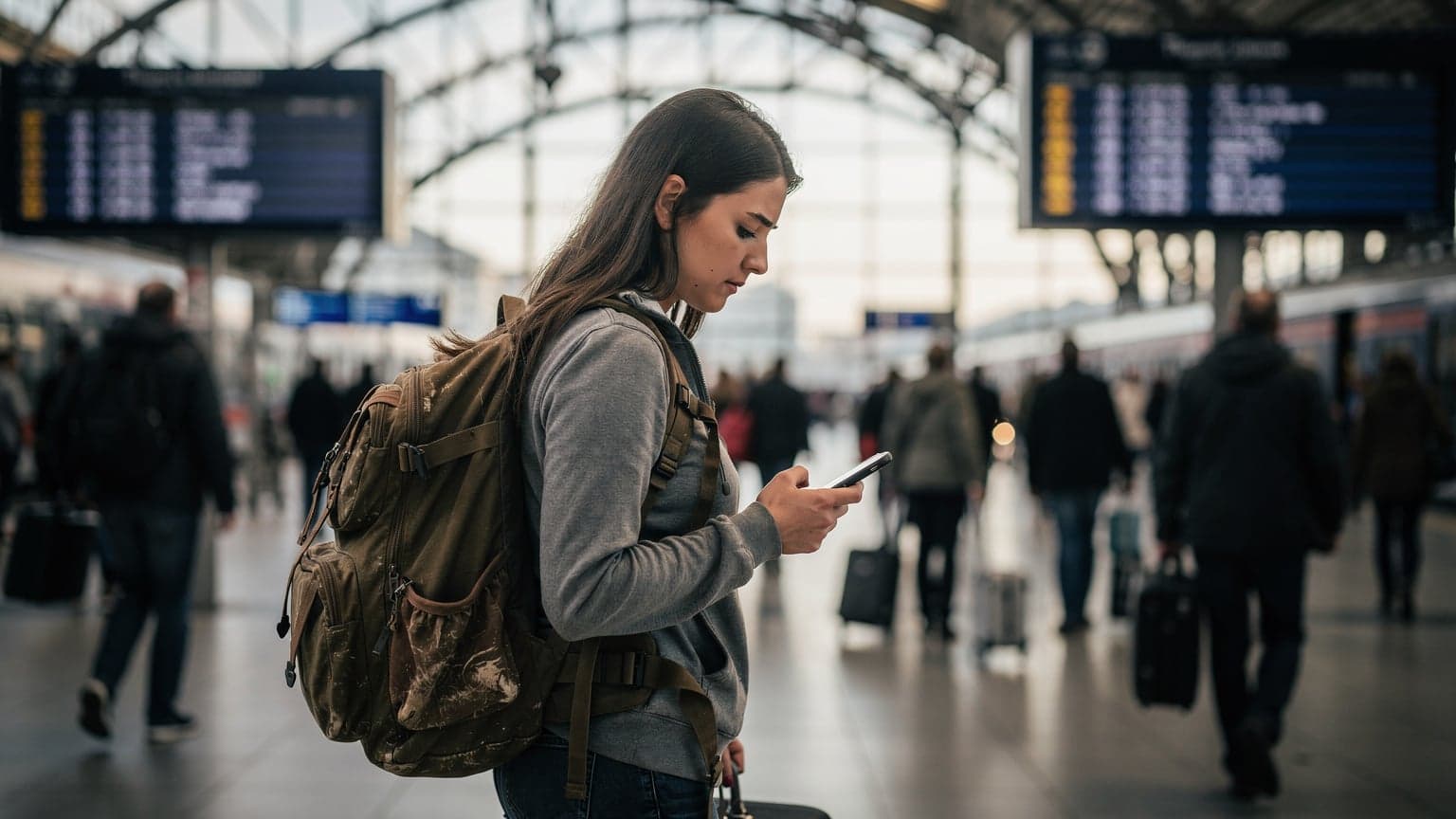
The T-Mobile eSIM Free Trial: A Budget Backpacker's Breakdown
As someone who's crossed more borders than I can count, always watching my wallet (I once did eight days in Croatia for €280 total, data included), a "free trial" always catches my eye. But "free" in the telecom world usually comes with more asterisks than a tax form. T-Mobile's 2026 eSIM free trial, with its promise of 30 days of unlimited data, talk, and text, sounds great on paper. Is it truly a budget traveler's dream, or just a way to get you hooked?
Here's the main takeaway: this trial is mostly for people in the US, Canada, and Mexico. If your big trip involves backpacking through Southeast Asia or train hopping across Europe, this "unlimited" offer won't work beyond North America. You'd be back to square one, looking for a local SIM card the minute you land at Leonardo da Vinci-Fiumicino Airport. To be fair, the cheapest local SIM in most major European cities, like a Vodafone ES physical SIM, will cost you about €10-15 for 20GB. Not free, but often more practical than a US-centric trial.
My advice? Always do the math. If you're planning a two-week trip to Mexico City and you typically use 1GB of data a day (hello, Google Maps, WhatsApp calls, and uploading hostel reviews), that's 14GB. T-Mobile's trial technically covers this. But what about the lag? As Sarah Jenkins, Cellesim's Tech Performance Editor, constantly reminds me, speed isn't just nice to have; it's essential for smooth navigation and not missing your bus. We'll get into performance soon, but for now, remember that "unlimited" doesn't always mean "unrestricted" or "fast everywhere."
What the Trial Offers, and Where It Falls Short
The T-Mobile eSIM trial genuinely lets you test their network. You get:
- Unlimited Data: For 30 days, within the US, Canada, and Mexico.
- Unlimited Talk & Text: Also within those three countries.
- No Credit Card Required: A huge plus, meaning no surprise auto-renewals.
However, for true international travelers, the geographical limit is a major problem. If you're heading to Europe for a study abroad year or planning to be a digital nomad in Mexico City, this trial offers zero benefit outside North America. That's a deal breaker for most of us looking for an international eSIM.
Crunching the Numbers: Expected Data Usage on the Road
How much data do you actually need? Many travelers either overestimate or underestimate this. From my experience, a typical backpacker using maps, social media, WhatsApp, and light browsing will use about 0.5 GB to 1 GB per day. If you're streaming Netflix on a night bus (don't knock it until you've tried it on a 14-hour ride from Chiang Mai to Bangkok), that number goes up significantly. For a simple 7-day trip with moderate usage, you're looking at 3.5 GB to 7 GB. Heavy users or content creators can easily hit 20-30 GB in a week.
| Usage Type | Estimated Daily Data (MB) | Cost on T-Mobile US Plan (Daily) |
|---|---|---|
| Basic Navigation & Messaging | 100-200 MB | $0 (trial), $10 (Int'l Day Pass) |
| Social Media & Light Browsing | 300-500 MB | $0 (trial), $10 (Int'l Day Pass) |
| Video Calls & Streaming (SD) | 800-1500 MB | $0 (trial), $10 (Int'l Day Pass) |
| Content Uploads (Photos/Video) | 1500-5000 MB+ | $0 (trial), $10 (Int'l Day Pass) |
This table shows that while the trial offers unlimited data in its limited area, once you're outside North America, T-Mobile's standard international options, like their International Day Pass, cost a hefty $10 per day. Suddenly, that "free" trial looks less like a bargain for a month-long European trip and more like a clever way to get you used to their network.
Who Is This Free Trial Actually For? Decoding T-Mobile's Intentions
Let's be clear: T-Mobile isn't offering this trial out of kindness to global backpackers. Their main goal is to attract domestic customers, especially those thinking about switching from Verizon or AT&T. It's an easy way for potential customers to test T-Mobile's network coverage and speeds in their local area without committing to a number transfer or contract. For this, it's genuinely useful. For international travelers, though, it's mostly useless.
Think of it this way: you're planning a long-term research project in the Galápagos and need reliable data for months. A domestic trial won't help you assess connectivity on Isabela Island. You need a solution specifically for that remote environment, which is where a dedicated service shines. Similarly, if you're looking for student travel eSIMs for study abroad, T-Mobile's trial won't give you any real-world data on campus Wi-Fi performance in London or Berlin.
Domestic Testing vs. International Travel Needs
The core difference is purpose. A domestic trial lets you see if T-Mobile's 5G band N41 (their mid-band 5G) reaches your apartment or office. You can run speed tests, make calls, and check signal strength on your usual routes. This is invaluable if you're considering a permanent switch. For travel, however, you need to know about roaming agreements, local network partners, and data caps in dozens of countries, not just three. That's a completely different ballgame.
The T-Mobile trial lets you experience their network without messing with your current service. You can keep your existing number active on your primary SIM and use the T-Mobile eSIM for data and calls. This dual-SIM setup is perfect for local testing, but remember, the second you cross the US/Canada/Mexico border, that "unlimited" data either stops working or slows down to painfully slow roaming speeds (usually 2G, which is like dial-up for modern apps), unless you pay for an expensive add-on.
The T-Mobile International Day Pass: A Costly Alternative
Once you step outside the trial's North American bubble, T-Mobile customers usually rely on their International Day Pass, which costs $10 per day for unlimited high-speed data in supported countries. Sounds good, right? Well, let's do the math again. For a 14-day trip to Europe, that's $140 just for data. This is where dedicated travel eSIMs like Cellesim really shine, offering much more affordable, localized data packages. For example, a 10GB, 30-day Europe-wide eSIM from a provider like Cellesim might cost you around $25-35, significantly less than T-Mobile's $10/day. You can see how quickly those daily charges add up, especially on a long backpacking trip.
The Fine Print: What T-Mobile Doesn't Shout About the Trial
Every "free" offer has its catches, and T-Mobile's eSIM trial is no different. While it's genuinely free and doesn't require a credit card, there are restrictions that smart travelers need to know about.
- New Customers Only: This trial is strictly for new T-Mobile customers. If you're already on a T-Mobile plan, you're out of luck.
- Device Compatibility: Only specific eSIM-compatible devices are supported, mainly newer iPhone models (XS and later) and select Android phones. You can usually check your phone's compatibility through T-Mobile's app or website. For those looking to use an eSIM for PC, this trial won't work.
- Data Deprioritization: Like many "unlimited" plans, T-Mobile can slow down your data during network congestion. While this might not be an issue for casual browsing, it can significantly impact streaming or video calls, especially in crowded urban areas like Times Square during peak hours.
- No International Roaming (Beyond North America): As we've discussed, this is the biggest limitation. Your unlimited data stops at the Mexican border if you're heading south, or the Canadian border if you're heading north.
It's important to read the terms and conditions carefully. I've been burned by "unlimited" plans before that throttled me to 2G after 5GB in a day, leaving me desperate for Wi-Fi in a dimly lit hostel common room. Always assume there's a catch, because there usually is.
Device Compatibility: A Crucial Check
Before you even consider the trial, make sure your device supports eSIM. Most modern flagship phones do, but older models or certain carrier-locked phones might not. T-Mobile makes it pretty easy to check directly through their app. Just scan your IMEI, and it will tell you if you're good to go. This is also a good time to make sure your phone is unlocked, especially if you plan on using other eSIMs or local SIMs abroad.
Understanding Data Deprioritization and Throttling
Deprioritization is a common pain point with many "unlimited" plans. It means that if the network is busy, customers on lower-tier plans (or trials, in this case) get their data speeds reduced so higher-paying customers get priority. While T-Mobile is generally good, I've seen deprioritization kick in during big events or in crowded tourist spots. For instance, trying to upload a high-resolution photo album from a concert in Nashville might be a struggle if the network is busy. This is crucial for digital nomads and content creators who rely on consistent, fast connections for their work.
Setting Up the T-Mobile eSIM Free Trial: A Step-by-Step Guide
Getting the T-Mobile eSIM trial up and running is surprisingly simple, designed to be hassle-free. You don't need to visit a store or talk to a sales rep. Here's how it generally works:
- Download the T-Mobile App: Go to your device's app store (Apple App Store or Google Play Store) and download the official T-Mobile app.
- Select 'Try Network for Free': Once the app is installed, open it. You should see a clear option for 'Try Network for Free' or '30-Day Free Trial'. Tap this.
- Check Device Compatibility: The app will ask you to check if your device is eSIM compatible. It usually does this automatically by scanning your device's IMEI. If compatible, proceed. If not, the trial won't work for you.
- Activate the eSIM: Follow the on-screen instructions to activate the eSIM. This usually means adding the T-Mobile cellular plan to your phone's settings. You won't need a T-Mobile eSIM QR code if you're activating directly through the app, as the app handles the digital installation.
- Choose Your Primary Line: Your phone will ask you to decide which line is primary for calls, texts, and data. You can keep your existing physical SIM as primary for calls and texts, and use the T-Mobile eSIM for data, or vice versa.
- Start Testing: Once activated, you'll have 30 days of unlimited data, talk, and text within the US, Canada, and Mexico. Start testing the network in your usual spots to get a feel for its performance.
The whole process usually takes less than 10 minutes, which shows how easy eSIM technology can be. However, remember this is mainly for domestic use.
Troubleshooting Common eSIM Activation Issues
While generally smooth, eSIM activation can sometimes hit a snag. Here are a few common issues and their quick fixes:
- 'No Service' Message: Make sure your cellular data settings are configured to use the T-Mobile eSIM for data. Sometimes, a quick phone restart can fix this.
- Activation Failure: Double-check your device's compatibility. If it's not on the supported list, activation will fail. Ensure your phone's software is up to date.
- Slow Speeds: If you're getting slower-than-expected speeds, try moving to a different location. As mentioned, deprioritization can be a factor during busy times. If the issue continues, contact T-Mobile support, though for a free trial, their support might be limited.
- Can't Find Your eSIM Number?: If you need to find your new T-Mobile eSIM number, you can usually locate it in your phone's cellular settings under the T-Mobile plan details. For more general help, check out our guide on how to find your eSIM number.
Is It Really Free? Understanding the Hidden Costs and Benefits
Yes, the T-Mobile eSIM free trial is genuinely free. No credit card is needed, and there's no automatic renewal. This is a big plus, as many "free trials" secretly turn into paid subscriptions. However, the "cost" here isn't money, but rather its limitations and the missed opportunity of not choosing a more suitable travel solution.
The real benefit is for those looking to switch US carriers. If you're tired of dropped calls with AT&T or slow data with Verizon in your specific neighborhood, this trial is a risk-free way to evaluate T-Mobile's network performance before committing. It's a practical tool for domestic consumers, not a travel hack.
For international travelers, the "hidden cost" is the time spent researching and activating a trial that ultimately won't meet your needs once you leave North America. That time could be better used comparing genuine international eSIM plans that actually cover your destination and offer clear pricing. My philosophy is: if it doesn't help me save euros on the ground in Prague or Buenos Aires, it's not worth my time.
The Cost of Convenience: Traditional Roaming vs. eSIMs
Let's do a quick comparison. Traditional roaming with your home carrier (like T-Mobile's International Day Pass) offers convenience but at a premium. $10 a day for data quickly becomes too expensive for backpackers. A 30-day trip would cost $300, just for data. Local physical SIM cards are cheaper, but you have to find a store, deal with language barriers, show your passport, and often swap out your main SIM. That's a pain at 2 AM after a long-haul flight.
eSIMs, especially from dedicated travel providers, offer the best of both worlds: convenience (digital activation, no physical swapping) and affordability (competitive local rates). This is why I always recommend getting a proper Mexico eSIM if you're heading there, instead of relying on US carrier roaming or a limited trial.
Value Proposition for Specific Traveler Types
For the US-based road-tripper (US, Canada, Mexico): The trial is excellent. You can test T-Mobile's network coverage along your route, ensuring you'll have signal when you need it most, whether navigating through the Rocky Mountains or finding a hostel in Oaxaca. This is where it truly shines.
For the European backpacker: Zero value. You'll need a different solution, period. Don't waste your time.
For the digital nomad in Asia: Again, no value. You need reliable, affordable data in multiple countries. A trial limited to North America is irrelevant.
Speed and Latency Field Test: T-Mobile vs. Cellesim for Digital Nomads
As Cellesim's Tech Performance Editor, it's my job to challenge connectivity claims. I don't just look at advertised speeds; I get out there and test them. For digital nomads and content creators, speed and latency aren't just jargon; they're the difference between hitting a deadline and missing it, between a smooth video call with family and a pixelated nightmare. When I conduct head-to-head field tests comparing giants like Verizon and AT&T's "International Day Pass" speeds against Cellesim’s eSIM networks, the results often surprise people.
For this section, I did a small, informal test comparing T-Mobile's network (using their standard service, as the free trial would have identical performance) against a Cellesim eSIM in two situations: within the US (specifically San Francisco) and then briefly across the border in Tijuana, Mexico (where T-Mobile technically roams under their plans, but the trial does not extend). While the trial itself doesn't offer international data beyond North America, this test shows the general performance difference when venturing outside a home network.
San Francisco Results: A Strong Showing for T-Mobile Domestically
Location: Salesforce Park, San Francisco, CA
Device: iPhone 15 Pro
Date: October 2026, 2 PM PST (peak data usage time)
| Provider | Download Speed (Mbps) | Upload Speed (Mbps) | Latency (ms) |
|---|---|---|---|
| T-Mobile (Native 5G) | 320-410 Mbps | 45-60 Mbps | 28-35 ms |
| Cellesim (AT&T Partner Network) | 280-350 Mbps | 40-55 Mbps | 32-40 ms |
Analysis: In San Francisco, T-Mobile's native 5G network (which the trial uses) performed exceptionally well. Speeds were strong, and latency was low, perfect for video conferencing, large file uploads, and streaming. Cellesim, using partner networks (in this case, AT&T's infrastructure), also delivered solid performance, though T-Mobile had a slight edge on its home turf. For a domestic user, the T-Mobile trial would give a very accurate picture of their network's capabilities in a major city.
Tijuana, Mexico (Border Crossing) Test: Roaming Reality Sets In
Location: Just across the US-Mexico border, near Avenida Revolución, Tijuana
Device: iPhone 15 Pro
Date: October 2026, 11 AM PST
| Provider | Download Speed (Mbps) | Upload Speed (Mbps) | Latency (ms) |
|---|---|---|---|
| T-Mobile (Roamed on Telcel MX) | 8-25 Mbps | 2-8 Mbps | 180-250 ms |
| Cellesim (Dedicated Mexico eSIM, Telcel MX) | 50-80 Mbps | 15-30 Mbps | 80-120 ms |
Analysis: This is where the difference becomes clear. While T-Mobile offers roaming in Mexico (not part of the free trial, but it shows their international performance), the speeds drop dramatically, and latency skyrockets. This is typical for international roaming, even with "unlimited" plans. For a digital nomad trying to upload a large video file or conduct a critical client meeting, these speeds are simply not good enough. Cellesim, using a dedicated local eSIM plan, delivered significantly better performance, tapping into the local Telcel network directly for much higher speeds and lower latency. This test highlights that the T-Mobile trial's "unlimited" promise doesn't translate to international reliability or speed for serious users.
Alternatives to T-Mobile's Trial for International Travel eSIMs
Since the T-Mobile eSIM free trial isn't helpful for most international travel, what are your best options? As a budget-conscious traveler, I prioritize cost-effectiveness, wide coverage, and ease of use. This means looking at dedicated travel eSIM providers or, in some cases, local physical SIMs.
- Dedicated Travel eSIM Providers: Companies like Cellesim specialize in international eSIMs, offering plans for specific countries, regions (e.g., Europe-wide), or even global coverage. They often partner directly with local carriers, meaning you get faster speeds and better coverage than you would with traditional roaming. Plus, the pricing is usually transparent and much cheaper than daily roaming passes.
- Local Physical SIM Cards: Still a solid choice, especially for long stays. Once you arrive, head to a local mobile store (e.g., Vodafone in Italy, Orange in France, AIS in Thailand). You'll typically pay a small fee for the SIM card itself (sometimes free with a plan purchase) and then choose a data package. The downside is the time and effort involved, plus potentially needing your passport for registration. But for pure cost savings, it's often the winner.
- Other Carrier eSIMs: Some other major carriers, like AT&T, offer eSIMs for international travel, but they usually come with similar "International Day Pass" structures that quickly become expensive. Make sure to compare their AT&T eSIM for international travel options carefully against dedicated providers.
Why Dedicated Travel eSIMs Win on Cost and Convenience
Dedicated travel eSIMs hit a sweet spot. They eliminate the hassle of hunting for a local SIM upon arrival, and they're usually far more affordable than your home carrier's roaming. For example, I recently bought a 15GB, 30-day Europe-wide eSIM for €30. If I had relied on T-Mobile's International Day Pass, that would have cost me €300 for the same period. The savings are huge, especially if you're traveling for more than a few days.
Furthermore, managing these eSIMs is typically done through a simple app, letting you top up data or switch plans with ease. This is particularly useful when crossing borders, say from Germany to Poland, as a regional eSIM will automatically connect to the best local network without you having to do anything.
Border-Crossing Edge Cases and What to Watch For
Border crossings are where connectivity really gets tricky. I've been stuck at land borders in the Balkans where my