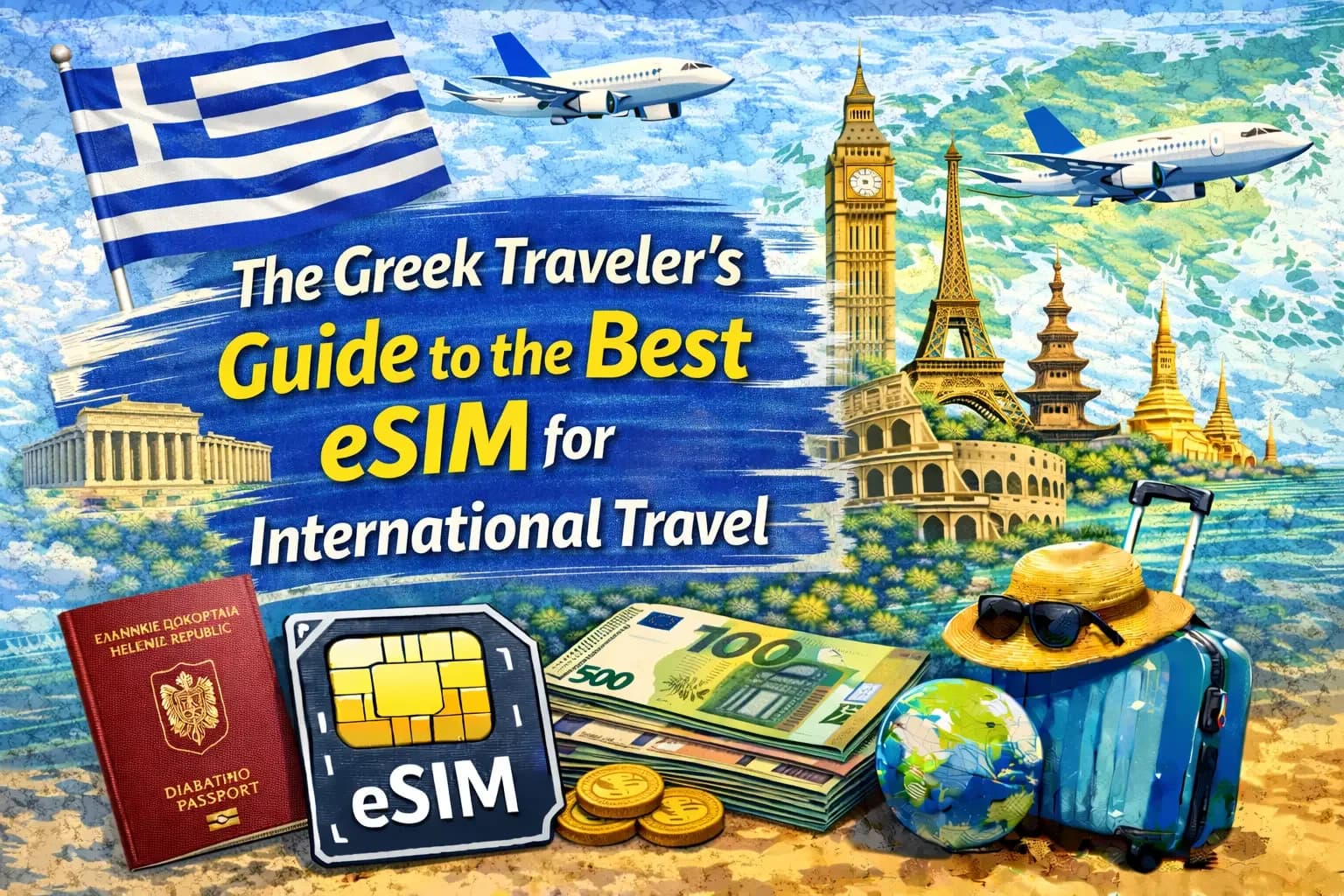
Picture this: you have just landed at your dream destination outside the EU. You switch your phone off airplane mode, eager to pull up a map or let family know you have arrived safely. But then, a dreaded text message from your Greek provider pops up, detailing the exorbitant pay-per-megabyte roaming charges. We have all felt that jolt of panic. As Greeks, we are accustomed to the EU's "Roam Like at Home" policy, but the moment we step beyond its borders, that convenience vanishes. This is precisely why finding the best eSIM for international travel is no longer a luxury; it is an essential part of modern travel planning. It is the key to staying connected without returning home to a shocking phone bill, whether you are exploring the ancient streets of Rome or the bustling avenues of New York. For many, a trip to a neighboring country is the first step, and having reliable, affordable data plans for Italy can make all the difference.
- The "Roam Like at Home" Trap: Why Your Greek SIM Isn't Enough
- Demystifying the Digital SIM Card: What is an eSIM?
- How to Choose the Best eSIM for Your International Trip
- Cost Comparison: Cellesim eSIM vs. Greek Roaming vs. Local SIMs
- Popular Destinations for Greek Travelers Beyond the EU and Recommended eSIMs
- Your Step-by-Step Guide: Using an eSIM When Traveling from Greece
- Maximizing Your eSIM Experience: Pro Tips for Greek Travelers
- Frequently Asked Questions
Explore Connectivity Beyond the EU
Planning a trip to the UK from Greece? Get instant, affordable data with Cellesim. Stay connected from day one.
Get Your UK eSIM Now 🇬🇧
The "Roam Like at Home" Trap: Why Your Greek SIM Isn't Enough
For years, traveling within the European Union has been wonderfully simple. Our Cosmote, Vodafone, or Nova plan works seamlessly from Portugal to Poland without a second thought. This convenience, however, creates a false sense of security when our travel ambitions take us further afield. The reality is starkly different once you land in countries like the United Kingdom, Turkey, the UAE, or the United States.
Suddenly, the familiar framework disappears. Your Greek carrier switches to offering expensive international roaming packages that often provide minimal data for a high price. A few minutes of using Google Maps or uploading photos to Instagram can quickly burn through a costly daily pass. This is the international roaming trap: paying a premium for slow, limited connectivity precisely when you need it most. This is where a dedicated travel eSIM for staying connected in the USA or other non-EU destinations becomes a far smarter international roaming solution.
Why Standard Roaming Falls Short:
- Exorbitant Costs: The per-megabyte rates outside the EU can be staggering. Daily or weekly roaming packages from Greek providers are often overpriced for the data they offer.
- Data Throttling: Even if you buy a package, carriers often throttle your data speed after a certain limit, leaving you with a frustratingly slow connection.
- Lack of Control: It is easy to lose track of data usage, leading to unexpected overage charges that can add hundreds of euros to your bill.
Relying on spotty hotel Wi-Fi or hunting for public hotspots is not a practical strategy. You need data for navigation, ride-sharing apps, mobile banking, and staying in touch. An eSIM offers a powerful travel SIM card alternative that puts you back in control. For an in-depth understanding of how roaming costs compare, review the information provided by the Hellenic Telecommunications and Post Commission (EETT), Greece's national regulatory authority for electronic communications and postal services, regarding consumer rights and charges.
Demystifying the Digital SIM Card: What is an eSIM?
So, what is this technology that is changing the way we travel? An eSIM (embedded Subscriber Identity Module) is a digital SIM card that is built directly into your smartphone. Instead of a physical, plastic card that you have to insert and swap, an eSIM can be downloaded and activated with a simple QR code. It holds all the same information as a traditional SIM but in a purely digital format. Think of it as software that connects your phone to a local mobile network.
This simple shift from physical to digital unlocks a world of flexibility for travelers. Before your trip, you can browse online, choose a data plan for your destination, and install it on your phone without ever visiting a store or fumbling with tiny SIM trays. But first, it is essential to check if your phone supports eSIM technology, as most newer models from Apple, Samsung, and Google do.
eSIM vs. Physical SIM: The Key Advantages for Travelers
- Instant Delivery, Zero Hassle: Purchase your plan online from anywhere and receive it instantly via email. No more waiting in line at an airport kiosk after a long flight.
- Keep Your Greek Number: This is a massive benefit. Because your phone can use both the physical SIM and the eSIM simultaneously (Dual SIM functionality), you can keep your Greek number active for receiving calls and important SMS messages (like bank verifications) while using the eSIM for affordable local data.
- Cost-Effective Connectivity: eSIM plans connect you directly to local networks, bypassing your home carrier's expensive roaming fees. You pay local rates for high-speed data.
- Flexibility and Choice: You can store multiple eSIM profiles on your phone. If you are on a multi-country trip, you can have an eSIM for each region and switch between them as needed.
- Enhanced Security: A physical SIM can be lost or stolen. An eSIM is embedded in your device, making it more secure.
How to Choose the Best eSIM for Your International Trip
Not all eSIMs are created equal. Choosing the right one depends entirely on your travel style and destination. A weekend trip to London requires a different plan than a three-week backpacking tour of Southeast Asia. Here is how to break it down.
Match the Plan to Your Itinerary
The first step is to consider the scope of your journey. eSIM providers typically offer three types of plans:
- Single-Country Plans: Perfect if you are visiting only one country. These plans often offer the best value and data speeds for that specific location. Examples include eSIMs for the United States or eSIMs for the United Kingdom.
- Regional Plans: Ideal for trips covering multiple countries in one area, like an eSIM for Europe travel (covering non-EU countries like the UK, Switzerland, or Turkey if part of a broader region), a tour of the Balkans, or an adventure across North America. A regional plan means you have seamless connectivity as you cross borders, without needing to switch plans. Cellesim offers excellent regional packages such as the Asia 20 Countries eSIM or Middle East 11 Countries eSIM.
- Global Data Plans: The ultimate solution for long-term travelers, digital nomads, or anyone on a round-the-world trip. A single Global Esim Plan 127 Countries can cover dozens of countries across several continents, offering unparalleled convenience.
Calculate Your Data Needs Accurately
Running out of data mid-trip is a major inconvenience. It is crucial to estimate your usage realistically. Think about how you use your phone at home and apply it to your travel habits. To get a precise idea, you can use an online tool to estimate your travel data needs based on your usage of apps like maps, social media, and streaming.
- Light User (1-3 GB per week): You primarily use data for maps, messaging apps (like WhatsApp), and light browsing.
- Medium User (3-5 GB per week): You do all the above, plus regularly post photos and videos on social media and occasionally stream music.
- Heavy User (5+ GB per week): You rely heavily on your phone for video calls, streaming videos, and using it as a mobile hotspot.
Pro Tip: It is always better to overestimate slightly. Buying a bit more data upfront is usually cheaper than having to top up while you are abroad.
Check Network Coverage and Quality
The cheapest plan is not always the best. The quality of your connection depends on which local mobile networks the eSIM provider has partnered with. A reputable provider like Cellesim works with top-tier carriers in each country to ensure you get fast, reliable 4G/LTE or even 5G speeds, not a connection on a budget network with spotty coverage.
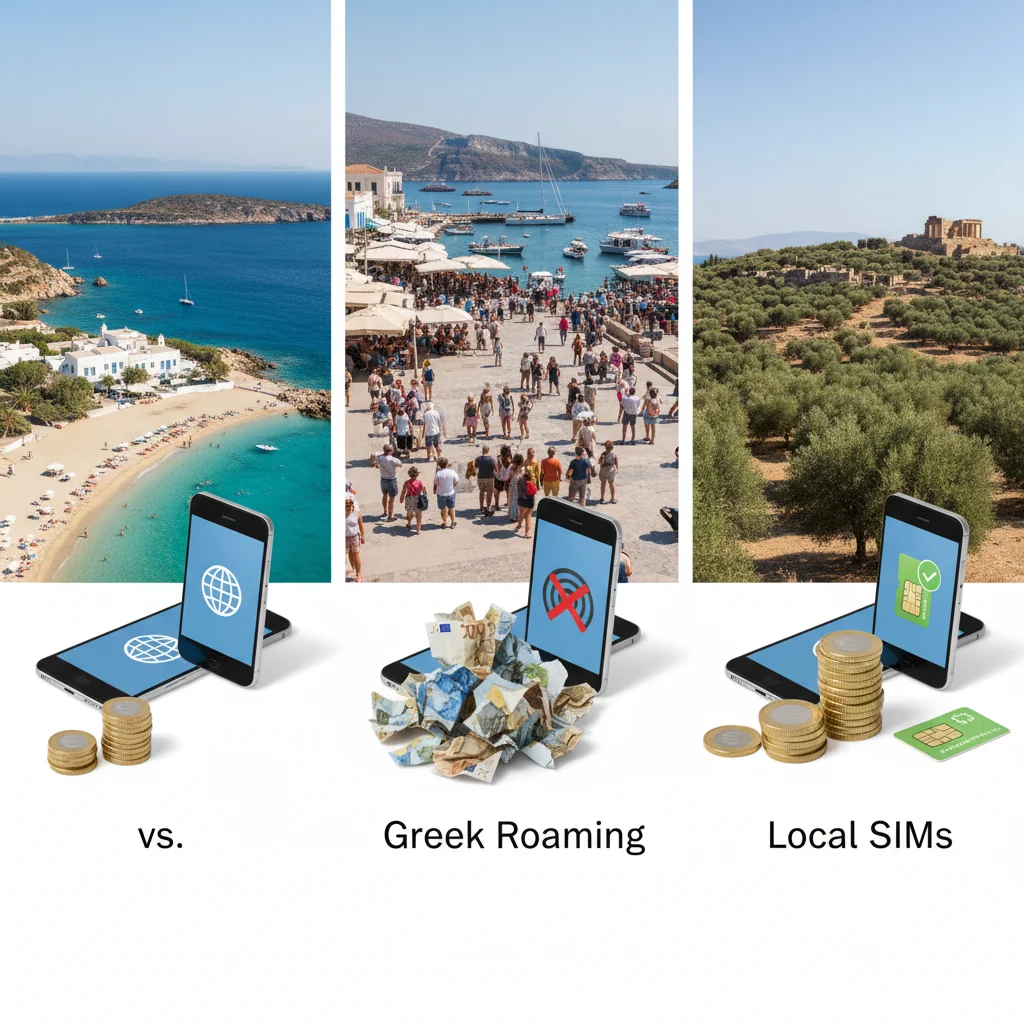
Cost Comparison: Cellesim eSIM vs. Greek Roaming vs. Local SIMs
For Greek travelers, understanding the true cost of connectivity outside the EU is paramount. The difference in pricing and flexibility between traditional roaming, a local physical SIM, and an eSIM can be substantial, directly impacting your travel budget and convenience. Let us break down the typical scenarios:
| Feature | Greek Carrier Roaming (Outside EU) | Local Physical SIM Card | Cellesim eSIM |
|---|---|---|---|
| Cost for 5GB (approx.) | €50-€150 (often daily passes) | €15-€30 (requires purchase) | €10-€25 (country/region dependent) |
| Activation & Purchase | Automatic, but costly | Buy at airport/store, activate there | Online purchase, instant email delivery & activation |
| Convenience | Seamless, but financially risky | Time-consuming, requires finding a store | Effortless, pre-trip setup from home |
| Keeping Greek Number | Yes, but expensive for data | No, unless Dual SIM phone and keeping original SIM in | Yes, use Dual SIM for calls/SMS & eSIM for data |
| Data Speed & Reliability | Variable, often throttled | Good, local network rates | Excellent, connects to premium local networks |
| Flexibility | Limited package options | Country-specific, new SIM for each country | Single-country, regional, or global plans available |
As the table illustrates, Cellesim eSIMs generally offer the best balance of cost-effectiveness, convenience, and flexibility for international travel. You avoid the high prices of Greek roaming while gaining the ease of digital activation that a physical local SIM cannot match. For a deeper analysis of costs, you can explore the Cellesim Roaming Savings Calculator.
Experience seamless connectivity on your next trip. Browse all eSIM plans.
Popular Destinations for Greek Travelers Beyond the EU and Recommended eSIMs
Greek travelers frequently venture outside the EU for a variety of reasons, from tourism and business to visiting family and friends. For each common destination, selecting the right eSIM plan ensures a smooth and connected experience.
- United Kingdom: A top choice for short breaks to London or visits to relatives. The UK left the EU, meaning Greek roaming rates apply. A Cellesim UK eSIM provides dedicated, high-speed data at local rates.
- United States: A popular destination for longer holidays, road trips, or academic pursuits. Greek roaming charges in the US can be exceptionally high. Consider a Cellesim USA eSIM for reliable coverage across the country, especially if visiting major cities like New York or Los Angeles.
- Turkey: Due to its close proximity and strong cultural ties, Turkey is a frequent destination for Greek travelers. While not in the EU, affordable data is essential. A regional Middle East eSIM or a specific Cellesim plan for Turkey provides excellent connectivity.
- Middle East (e.g., UAE, Egypt): Dubai and Cairo are increasingly popular for luxury travel or historical exploration. Standard roaming here is costly. A Cellesim Middle East eSIM covers countries like the UAE and Egypt, ensuring you stay connected while exploring desert landscapes or bustling souks.
- Asia (e.g., Thailand, Japan, South Korea): For adventurous Greek travelers exploring distant cultures, Asia offers unique experiences. A regional Cellesim Asia eSIM is ideal for multi-country trips, allowing seamless transitions between destinations like Thailand, Vietnam, and Japan without changing plans.
Choosing a plan that aligns with your specific itinerary, whether it is a single country, a regional tour, or a global adventure, will significantly enhance your travel experience.
Your Step-by-Step Guide: Using an eSIM When Traveling from Greece
Making the switch to an eSIM is incredibly straightforward. Here is exactly how to do it, from your couch in Greece to the moment you land at your destination.
Step 1: Before You Leave Athens (or anywhere else!)
Preparation is key. Do this while you have a stable internet connection at home.
- Confirm Compatibility: Double-check that your smartphone is unlocked and eSIM-compatible.
- Purchase Your Plan: Choose the Cellesim plan that best fits your destination and data needs. You will receive a QR code in your email immediately after purchase.
- Install the eSIM: Go to your phone’s settings (Cellular/Mobile Data > Add eSIM) and scan the QR code. Your phone will download and install the digital SIM card profile. It will not activate or start the validity period until it connects to a network at your destination. Our step-by-step eSIM activation guide walks you through the process for both iPhone and Android.
Step 2: When You Land Abroad
This is where the magic happens. As soon as you turn off airplane mode:
- Activate Your eSIM: Go back into your cellular settings and turn on your newly installed eSIM line. Make sure “Data Roaming” is enabled for this eSIM.
- Select it for Data: Set your eSIM as the primary line for mobile data.
- Configure Your Greek SIM: Keep your primary Greek line turned on but designate it for calls and texts. This allows you to receive important communication on your home number without incurring data roaming charges. Your phone is now in Dual SIM mode. This method is explained further in our guide on keeping your number with a travel eSIM.
Step 3: Managing Your Plan
Once you are connected, you can easily monitor your data usage through your phone’s settings. If you start running low, many Cellesim plans can be topped up directly through our app or website. You can have peace of mind knowing you are connected via a robust system, and it helps to understand how Cellesim partners with local networks to provide a premium service.

Maximizing Your eSIM Experience: Pro Tips for Greek Travelers
To ensure you get the most out of your Cellesim eSIM during your international travels, consider these practical tips:
- Pre-Activation Timing: While you can install your eSIM before departure, activate the data plan only upon arrival at your destination. This ensures the validity period begins when you actually need it, preventing premature expiry.
- Leverage Wi-Fi Calling: Even when using your eSIM for data, keep your Greek physical SIM active for calls and SMS. Enable Wi-Fi Calling on your phone. This allows you to make and receive calls on your Greek number over any Wi-Fi connection or, critically, using your eSIM's data connection, often without incurring additional charges from your Greek provider. This means friends and family can reach you as usual.
- Download Offline Maps: Before you leave a Wi-Fi zone, download offline maps for your destination using Google Maps or Apple Maps. This significantly reduces data consumption for navigation, especially useful in areas with patchy coverage or when you are trying to conserve data.
- Monitor Data Usage Regularly: Your phone's settings (under Cellular/Mobile Data) provide real-time data usage statistics for each SIM/eSIM. Check this regularly to avoid surprises. Cellesim also offers tools to monitor data usage and top up instantly if needed.
- Limit Background App Refresh: Adjust your smartphone settings to restrict background data usage for non-essential apps. This prevents apps from consuming data when you are not actively using them, prolonging your data allowance.
- Use Public Wi-Fi Safely: While eSIM provides reliable connectivity, sometimes you will connect to public Wi-Fi. Always use a Virtual Private Network (VPN) for security when accessing banking or sensitive information on public networks.
Frequently Asked Questions
Is my Greek phone compatible with an eSIM?
Most modern smartphones, including recent iPhone, Samsung Galaxy, Google Pixel, and some other Android models, are eSIM compatible. You can easily verify your device's compatibility by checking your phone settings or using the Cellesim eSIM checker on our website before purchasing a plan.
Can I keep my Greek phone number with an eSIM?
Yes, you absolutely can. With a Dual SIM compatible phone, you can keep your Greek physical SIM active for calls and SMS (even receiving bank verification codes) while using your Cellesim eSIM for all your data needs abroad. This avoids expensive roaming data charges while maintaining your primary number.
When should I activate my Cellesim eSIM?
You can purchase and install your Cellesim eSIM profile on your phone before you even leave Greece. The data plan's validity period typically only begins when your eSIM connects to a local network at your destination. It is often recommended to activate the data line once you land to ensure immediate connectivity.
How do I top up my Cellesim eSIM data?
If you find yourself running low on data during your trip, many Cellesim plans offer convenient top-up options. You can usually purchase additional data directly through your Cellesim account on our website or via our dedicated mobile app, ensuring continuous connectivity without interruption.
What if I travel to multiple countries outside the EU?
Cellesim offers a range of flexible plans, including single-country, regional (e.g., Europe, Asia, Middle East), and global eSIM plans. For multi-country trips, a regional or global plan provides seamless connectivity across borders, eliminating the need to purchase separate eSIMs for each new country.
Is an eSIM suitable for long-term travel or digital nomads?
Absolutely. eSIMs are an ideal solution for long-term travelers and digital nomads due to their flexibility and cost-effectiveness. You can easily manage multiple eSIM profiles, switch between plans, and top up data as needed, ensuring reliable connectivity wherever your travels take you around the world.
Travel the World, Stay Connected
No more exorbitant roaming fees or searching for local SIMs. Cellesim provides effortless global data at local rates, keeping Greek travelers connected in over 200 countries.
Shop All eSIM PlansFor Greek travelers venturing beyond the familiar comfort of the EU, the old ways of staying connected are broken. Hunting for Wi-Fi is unreliable, and paying for your home carrier's roaming is unnecessarily expensive. The best eSIM for international travel is more than just a piece of technology; it is a tool for freedom. It gives you the confidence to navigate a new city, the ability to share your experiences in real-time, and the peace of mind that comes from knowing you are in complete control of your connectivity and your budget. It is the modern, intelligent, and stress-free way to explore the world.