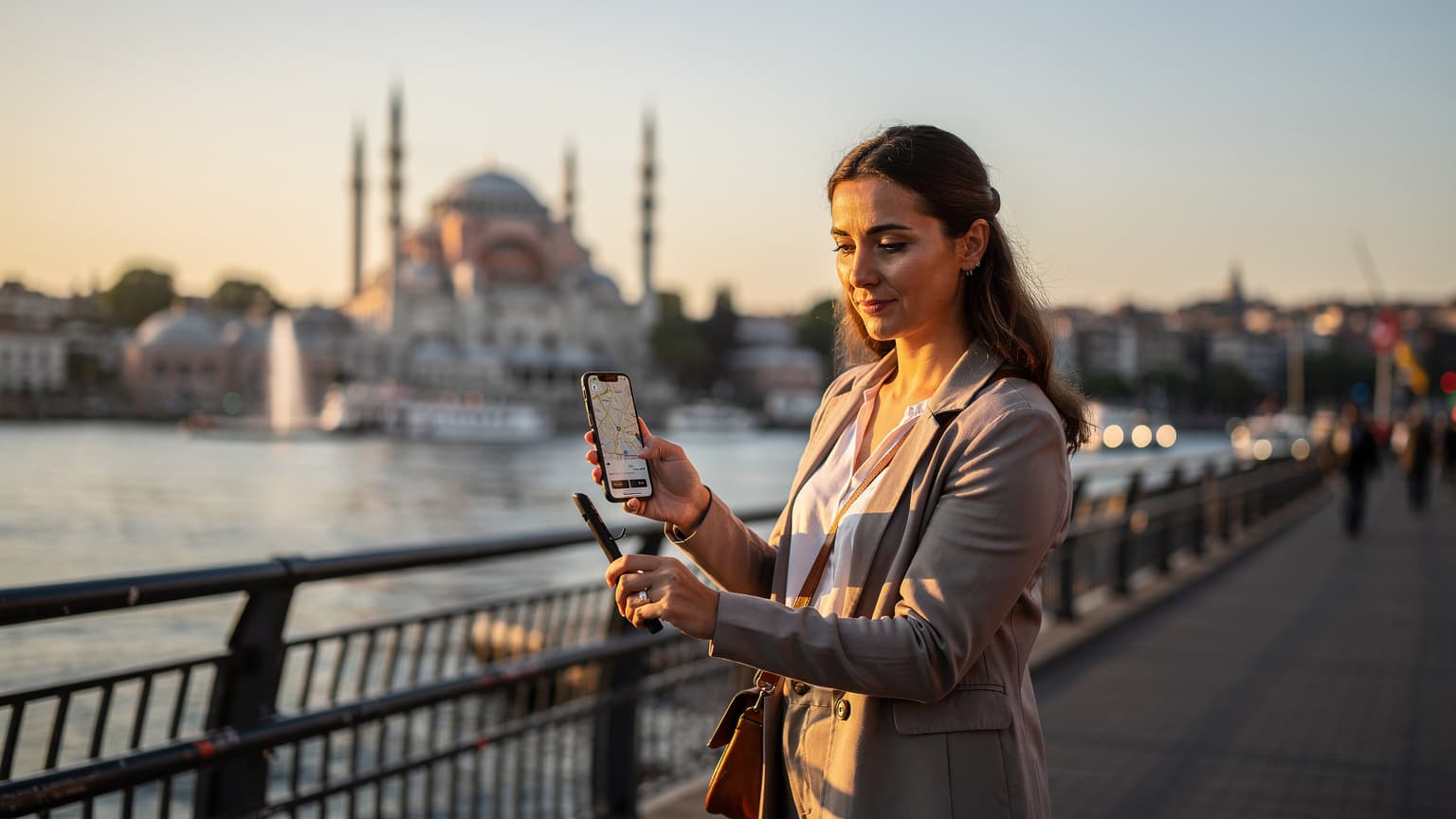
I still remember the scramble at Atatürk Airport, years back, when I landed in Istanbul for the first time. The customs line snaked endlessly, but the real headache began after that, trying to find a working payphone (remember those?) to tell my hostel I was running late. My trusty local SIM card from my previous destination was, of course, useless. These days, the physical SIM hassle has largely shifted to the mobile operator kiosks at the airport, but the fundamental friction remains: you land, you need data, and you often waste precious travel time trying to get it.
For anyone heading to Türkiye, especially if you plan to explore beyond Sultanahmet or Kadıköy, reliable internet access is non-negotiable. Whether you are getting around the intricate streets of İzmir's Konak district or coordinating a hot air balloon ride in Cappadocia, staying connected matters. Turkcell is Türkiye's largest mobile operator, and naturally, tourists often look to them for local connectivity. But is a Turkcell eSIM for tourists truly the best or easiest option?
Turkcell eSIM Turistler İçin Neler Sunuyor?
Turkcell, along with Vodafone Türkiye and Türk Telekom, dominates the mobile market here. They offer excellent coverage across the country, from the bustling markets of Gaziantep to the serene beaches near Fethiye. For tourists, Turkcell traditionally offered physical prepaid SIM cards, often bundled with a certain amount of data, calls, and SMS, valid for a set period, usually 30 days.
The concept of an eSIM for tourists from a local Turkish provider is relatively new. While Turkcell supports eSIMs for its contract customers and some local prepaid users, their direct offerings specifically branded as a "Turkcell eSIM Tourist" are not as straightforward as you might hope. You are generally looking at purchasing a standard prepaid line and then requesting an eSIM conversion, which adds another layer of bureaucracy to your arrival experience.
When I was last in İzmir, visiting friends in the Alsancak neighborhood, I popped into a Turkcell store near Pasaport Pier to inquire about eSIMs. The process, even for a simple prepaid plan, still involved showing my passport, filling out forms, and waiting for activation. Converting that to an eSIM on the spot? It felt like a multi-step quest, not the quick plug-and-play experience I've come to expect from eSIM Türkiye solutions. They often cite a requirement for a Turkish tax ID for eSIM activation, which is a non-starter for most short-term visitors.
The main draw of a Turkcell physical SIM for tourists has always been the promise of local rates and perhaps a local number for things like ordering food delivery via Yemeksepeti or calling a taxi through BiTaksi. However, the price point for these tourist SIMs has been steadily climbing. You are often looking at spending upwards of ₺500-₺700 (around €15-€20, depending on the exchange rate) for a package that might only last 15-30 days with limited data. And that is before you consider the time lost in the shop.
Yerel SIM Kart Almanın Zorlukları
Getting a local SIM card in Türkiye, even from a major provider like Turkcell, often comes with a few predictable headaches that can eat into your precious travel time. I have been through this dance more times than I care to admit, whether it was struggling with a local vendor in a small electronics shop in Tokyo's Akihabara or trying to explain my phone model to a busy clerk at a Vodafone store in Rome's Termini Station.
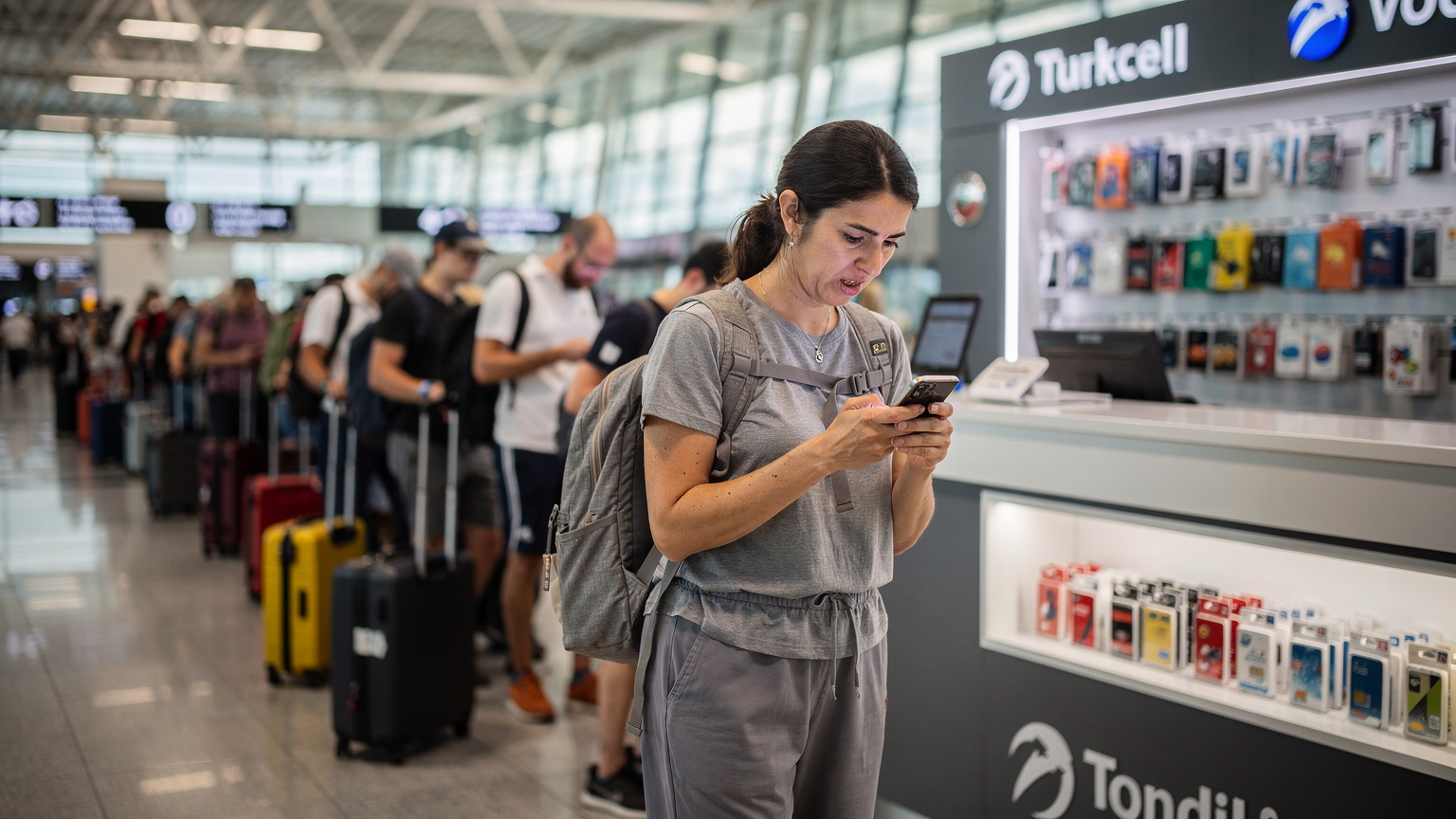
First, there is the registration process. Turkish law requires all SIM card users, including tourists, to register their ID. This means presenting your passport at a Turkcell, Vodafone, or Türk Telekom store. It is not just a quick flash of the passport; they often need to make copies, enter your details into a system, and sometimes even take a photo. This can take anywhere from 15 minutes to an hour, especially if the store is busy, as they often are in central areas like İstiklal Caddesi in İstanbul or near Kaleiçi in Antalya.
Then there is the phone compatibility issue. If you bring a phone purchased outside Türkiye, it might be subject to a system that prevents it from being used with a local SIM card for more than 120 days without being registered and taxed. While this typically affects long-term residents more than short-term tourists, it can still cause unexpected problems. I once had a phone (a Google Pixel 3, if memory serves) that, despite being unlocked, stubbornly refused to register on a local network in a similar situation abroad, leaving me scrambling for Wi-Fi hotspots.
Finally, the cost. Tourist SIM packages are often priced higher than local prepaid plans and are rarely as transparent. You might find a Turkcell Tourist Welcome Pack at Istanbul Airport (IST) for ₺600, offering 20 GB of data, but a local might pay less for more data. This is where options like Cellesim really shine, offering clear, upfront pricing with no hidden fees or registration hassles. If you want to see how much you can save, read our comparison: Turkcell Tourist SIM vs. Cellesim eSIM: 8 Günde €280 Veri Harcamayın 2024.
Uluslararası eSIM'ler Neden Daha İyi Bir Seçenek?
This is where the magic of a dedicated travel eSIM really comes into its own. Forget the queues, the paperwork, and the language barriers. An international eSIM, like the ones Cellesim provides for Türkiye, is designed specifically for travelers. It means you can buy your data plan before you even leave home, activate it with a QR code, and be connected the moment your plane touches down at Sabiha Gökçen or Dalaman Airport.
The primary advantage is convenience. Imagine landing at İstanbul Airport, stepping off the plane, and having internet access immediately. No need to hunt for a Turkcell store, no awkward conversations, no waiting. Your existing phone number remains active for calls and texts, (though you should know about eSIM OTP: Why Travel eSIMs Struggle with Two-Factor Codes in 2024), and your travel eSIM handles your data. This dual-SIM functionality is a game-changer for anyone who needs to stay in touch with home while using local data.
Another significant benefit is cost control. With a Cellesim eSIM for Türkiye, you know exactly what you are paying for upfront. No hidden charges, no unexpected roaming fees, and no pressure to buy an overpriced tourist package at the airport. You choose a data package that suits your trip length and usage, whether it is a few GB for a weekend in Bursa or a larger plan for a month-long exploration of the Aegean coast. This transparency is a relief compared to deciphering local prepaid tariffs.
I remember one trip to Bali where I spent almost an hour at Ngurah Rai International Airport trying to get a Telkomsel SIM working. The line was long, the connection spotty, and the salesperson was clearly overwhelmed. The next time, with an eSIM for Indonesia, I was connected before my Grab taxi even pulled away from the curb. It is a small thing, but those wasted minutes add up and detract from the joy of arriving in a new place. For more on this, check out Telkomsel eSIM Bali: A Family's Guide to Staying Connected on the Island 2024.
Türkiye'de Sorunsuz Bağlantı İçin Tavsiyeler
To ensure your internet connection in Türkiye is as smooth as a fresh cup of çay, a bit of foresight goes a long way. Beyond choosing the right eSIM, there are some practical steps you can take to make sure you are always connected, whether you are trying to find the best baklava shop in Karaköy or checking the Metro İstanbul schedules.
First, download offline maps. Google Maps allows you to download entire regions, which can be a lifesaver if you find yourself in an area with patchy coverage (though Turkcell's network is generally very strong, especially in urban areas). I always download the map for my destination city and surrounding regions before I even leave home. This saved me more than once when I was getting around the winding streets of Mardin and lost signal for a bit.
Second, consider a power bank. Even with the most efficient eSIM, heavy data usage for navigation, social media, and translation apps can drain your phone battery quickly. A portable charger is a travel essential, ensuring your phone stays alive when you need it most. Imagine being at the top of Uludağ and your phone dying just as you are trying to capture that panoramic view.
Third, understand your eSIM data usage. While unlimited data plans are available from some providers, many travel eSIMs offer fixed data allowances. Monitor your usage through your phone's settings or your eSIM provider's app. If you plan to stream a lot of content (like a movie on a long bus ride from Antalya to Pamukkale), consider doing it on Wi-Fi at your hotel. For more on data usage, you might find eSIM SMS: Travel Data for Texts (And Streaming Disney+) in 2024 helpful.
Lastly, always have a backup plan. This could be simply knowing where to find free Wi-Fi spots (many cafés, restaurants, and public spaces in Türkiye offer it, especially in tourist hubs). Or, it could mean having a second, smaller data package from another eSIM provider as a fail-safe. While rare, technical glitches can happen, and having a plan B brings peace of mind.
eSIM Kurulumu ve Aktivasyon: Adım Adım
Setting up your Cellesim eSIM for Türkiye is designed to be incredibly straightforward, far simpler than wrestling with a physical SIM card or navigating a local mobile store. It is essentially a three-step process that you can complete from the comfort of your home, or even while waiting for your flight at Heathrow Terminal 5.
1. Purchase Your eSIM Plan: Head over to the Cellesim website (or use the Cellesim app) and select a data plan for Türkiye that fits your travel duration and data needs. You will find various options, from a few gigabytes for a short city break to larger bundles for extended stays. The pricing is transparent, with no hidden activation fees.
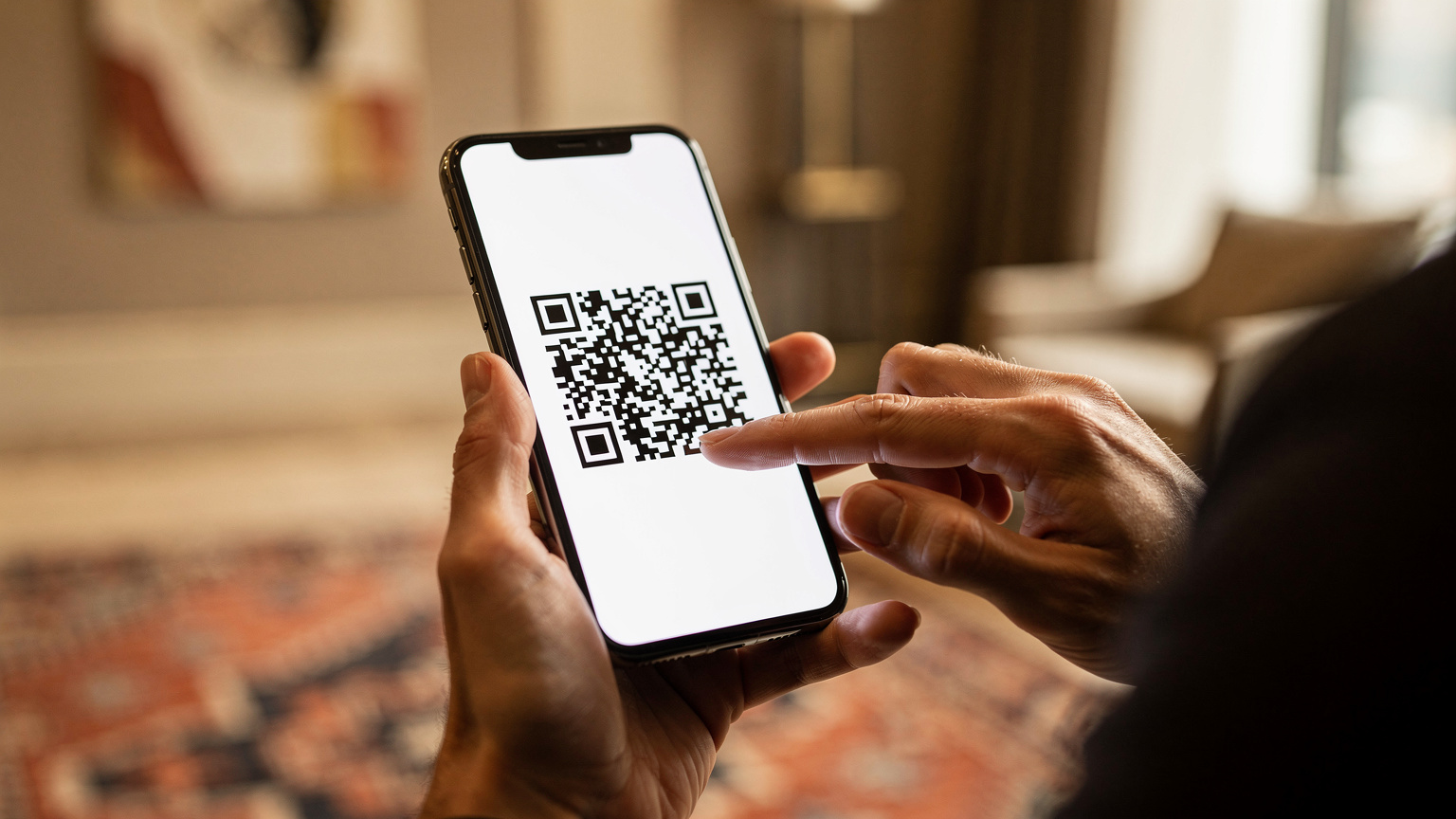
2. Receive Your QR Code: Once your purchase is complete, you will immediately receive an email containing a QR code. This code is your digital SIM card. Make sure your phone is connected to Wi-Fi to scan it.

3. Install and Activate:
- For iPhones: Go to Settings > Cellular (or Mobile Data) > Add eSIM. Choose "Use QR Code" and scan the code. Follow the on-screen prompts. You will typically be asked to label your eSIM (e.g., "Travel Türkiye") and choose which line to use for data. Keep your primary line for calls and messages.
- For Android (Samsung, Pixel, etc.): The exact steps might vary slightly depending on your device model, but generally, you will go to Settings > Network & internet > SIMs (or Mobile network) > Add eSIM (or Download a SIM). Then, select "Download a new eSIM" and scan the QR code.
That is it. Seriously. Before you land, ensure your eSIM is installed but keep it turned off until you reach Türkiye. Once you land, simply switch on the eSIM line for data, and you are good to go. You should be able to hop on the Havaist shuttle from İstanbul Airport to Taksim, tracking its route in real-time, without a single moment of data anxiety. For a more detailed walkthrough, you can always refer to our comprehensive eSIM setup FAQs.
Frequently Asked Questions
What is a Turkcell eSIM for tourists?
A Turkcell eSIM for tourists would theoretically be a digital SIM card provided by Turkcell. However, direct tourist-specific eSIM offerings from Turkcell are not common. Tourists typically purchase a physical prepaid SIM and might then request a conversion to eSIM in-store, which can be a complex process involving ID verification and potential tax registration issues for foreign phones.
Can I get an eSIM directly from Turkcell at the airport?
It is unlikely you will be able to get a direct eSIM from Turkcell specifically for tourists at an airport kiosk. While Turkcell supports eSIM technology, their primary offering for visitors is a physical prepaid SIM card. Converting this to an eSIM usually requires an in-person visit to a main Turkcell store and involves additional registration steps that can be time-consuming.
What are the alternatives to a Turkcell tourist SIM or eSIM?
The best alternative for tourists in Türkiye is an international travel eSIM from providers like Cellesim. These eSIMs can be purchased online before your trip, activated via a QR code, and provide immediate data connectivity upon arrival without needing to visit a local store or deal with local registration requirements. They offer transparent pricing and allow you to keep your existing physical SIM active for calls.
Do I need to register my phone to use a local SIM or eSIM in Türkiye?
Yes, if you plan to use a local Turkish SIM card (physical or eSIM converted from a local plan) for more than 120 days, phones purchased outside Türkiye are generally required to be registered with the government and a tax paid. While this typically affects longer stays, it highlights the bureaucratic hurdles with local options. International travel eSIMs bypass this requirement as they operate as roaming data.
How much data should I get for a trip to Türkiye?
The amount of data you need depends on your usage. For a one-week trip with moderate browsing, social media, and navigation, 5-10 GB is usually sufficient. If you plan to stream videos, make frequent video calls, or work remotely, consider a larger plan of 20 GB or more. Cellesim offers various packages to suit different needs.
Will my regular phone number still work with a travel eSIM?
Yes, one of the key benefits of using a travel eSIM is that your primary physical SIM card (with your home number) remains active. You can set your phone to use the eSIM for data only, while still receiving calls and texts on your regular number. This dual-SIM functionality is incredibly convenient for staying connected with family and friends without incurring high roaming charges.