
USA-Bound: The eSIM Advantage
I remember my first trip to the States, way back when flip phones were still a thing and international roaming meant remortgaging your house. Landing at JFK, I’d beeline for the nearest T-Mobile or AT&T store, hoping to snag a local SIM. More often than not, I'd end up in a lengthy queue, facing a salesperson who looked utterly bewildered by my foreign passport, asking for a "Social Security Number" I didn't have. It was a proper faff, often eating up hours I could have spent exploring the East Village or grabbing a bagel. The hassle of a local SIM versus an eSIM for families is a story many seasoned travellers can tell.
Fast forward to 2026, and those days feel like a distant, slightly painful memory. The eSIM has transformed how we connect abroad, especially in a vast country like the USA. Instead of physical plastic, you're looking at a digital profile, activated with a QR code or a few taps on your phone. No more fiddling with tiny trays, no risk of losing your home SIM in a bustling airport terminal. It's truly a game-changer, whether you're hopping off a red-eye into LAX or touching down in Seattle-Tacoma.
For business travelers, the eSIM means you can land in San Francisco, head straight to your meeting in the Financial District, and be online, responding to emails, before your taxi even hits the Bay Bridge. For tourists, it's about instantly sharing that first photo of the Grand Canyon or checking the L train schedule for your Brooklyn adventure. The benefits are clear: convenience, flexibility, and often, significant cost savings compared to traditional roaming.
What Is an eSIM, and Why Is It Perfect for the USA?
An eSIM, or embedded Subscriber Identity Module, is essentially a digital SIM card built directly into your phone. It functions just like a traditional SIM but eliminates the physical card. Instead of swapping out plastic, you download a "profile" onto your device. Think of it as a virtual key to a local network.
Why is this ideal for the USA? Because the States are enormous, with varying network strengths across different regions. Some local SIMs might perform brilliantly in New York City's Midtown, but leave you wanting in the deserts of Arizona or the sprawling suburbs of Dallas. An eSIM provider, particularly one like Cellesim, often partners with multiple major US carriers, giving you access to the best available network, whether it's AT&T, T-Mobile, or even Verizon in some cases. This means you get broader, more consistent coverage without needing to buy a new SIM for every state line you cross. It's a single solution for a diverse geographical beast.
The Pain of Physical SIMs: My Personal Horror Story
Let me tell you about Beijing, 2018. I was there for a conference, and my flight landed late. I needed to call my hotel in the Chaoyang District, but my phone was dead. I had a local SIM I'd bought online, but it needed activation in a shop. The airport's mobile store was closed (it was after 10 PM, naturally), and I spent an hour trying to explain "SIM card activation" to a very patient taxi driver using Google Translate. Eventually, he drove me to a 24-hour convenience store that, bless its heart, sold mobile top-ups but couldn't activate a new SIM. I ended up paying a small fortune for the hotel's lobby computer to send a single email. With an eSIM, I could have activated it right on the plane, moments after landing, and been connected instantly. That experience alone made me a lifelong convert.
Understanding the USA Mobile Landscape in 2026
The US mobile market is dominated by three main players: AT&T, T-Mobile, and Verizon. Each has its strengths and weaknesses, particularly when it comes to regional coverage and 5G deployment. For a traveler, understanding this isn't just academic; it dictates whether you'll be streaming Netflix on the Amtrak Acela Express or staring at a dreaded "No Service" message in a remote corner of Yellowstone National Park.

Major Carriers and Their Coverage Footprints
AT&T: Generally strong in urban areas and along major interstate highways. Their 5G network is robust in cities like Atlanta's Buckhead district and throughout California's Bay Area. However, once you venture into truly rural states like Montana or parts of Wyoming, coverage can become spotty.
T-Mobile: Known for its aggressive 5G rollout, T-Mobile often boasts the fastest speeds in many major cities, including Miami Beach and downtown Chicago. Their "Extended Range 5G" has improved rural coverage significantly, but pockets of weak signal still exist, particularly in the vast stretches of the Midwest and Mountain West.
Verizon: Historically renowned for its superior rural coverage, Verizon continues to be a strong contender, especially in less populated areas where other networks falter. Their 5G Ultra Wideband offers incredible speeds in specific dense urban zones, like parts of Manhattan or Las Vegas Strip, but their broader 5G (Nationwide) can sometimes be slower than T-Mobile's.
5G Availability and Speed Expectations
In 2026, 5G is widespread across major US cities. You can expect blazing fast speeds capable of handling video calls, large downloads, and seamless streaming in places like New York City's Times Square, Los Angeles's Hollywood, or Washington D.C.'s Capitol Hill. However, outside these dense areas, you'll often rely on "Nationwide 5G" which, while faster than 4G LTE, might not always feel like the revolutionary leap advertised. In truly remote areas, 4G LTE remains the standard, and sometimes even 3G if you're really off the beaten path (say, driving through Death Valley National Park, where even a strong 4G signal is a blessing).
Choosing Your eSIM Plan: What to Look For
Selecting an eSIM for your USA trip isn't just about finding the cheapest gigabytes. It's about matching the plan to your travel style and needs. Are you a digital nomad needing constant connectivity, or a casual tourist who mostly needs maps and social media? The right choice will save you headaches, and potentially hundreds of dollars.
Data Allowances and Validity Periods
Most eSIM providers offer plans ranging from a few gigabytes for a week to unlimited data for a month. Consider your usage carefully. If you're staying in hotels with Wi-Fi and mainly using data for navigation (Google Maps, Waze) and messaging (WhatsApp), 5-10GB for a two-week trip might be plenty. However, if you're working remotely, streaming videos on the daily commute on the MTA in New York, or relying heavily on hotspot tethering, you'll need more.
Validity periods are also crucial. A 30-day plan makes sense for a month-long road trip from Boston to San Diego, but if you're only in Miami for a long weekend, a 7-day plan will be more cost-effective. Always check the expiration date, as some plans activate immediately upon purchase, while others begin when you connect to a US network.
Coverage, Reliability, and Network Partnerships
This is where the rubber meets the road. A great price is meaningless if you can't get a signal. Look for eSIM providers that explicitly state their network partners in the USA. The best providers will connect to AT&T and T-Mobile, giving you dual-network access for better overall coverage. Some premium plans even include Verizon, which is fantastic for rural areas.
Before you buy, do a quick check of the coverage maps for the specific regions you'll be visiting. Most carriers, and by extension, eSIM providers, have interactive maps on their websites. If your trip involves a lot of driving through national parks or remote areas (like a business trip to a rural manufacturing plant in Ohio), prioritize providers with strong rural coverage.
Cost Comparison and Value for Money
While I generally advise against going for the absolute cheapest option without considering coverage, value for money is still vital. Compare the cost per gigabyte across different providers for similar validity periods. Sometimes, paying a few extra dollars for a more reliable network or better customer support is a wise investment.
Also, watch out for hidden fees. Most eSIMs are prepaid, so what you see is what you get, but always double-check. And remember, some plans might offer unlimited data but throttle speeds after a certain usage threshold. Read the fine print!
Top eSIM Providers for USA Travel in 2026
In 2026, the eSIM market for US travelers is quite mature, offering several excellent choices. While dedicated local SIMs from the major carriers are still an option, the flexibility and convenience of eSIMs from global providers are hard to beat. For comprehensive USA eSIM options, Cellesim provides a detailed breakdown.
Cellesim: Reliable and Flexible
Cellesim stands out for its straightforward approach and robust network partnerships. They typically leverage both T-Mobile and AT&T networks, ensuring wide coverage from the bustling streets of Brooklyn's DUMBO neighborhood to the quiet charm of Charleston, South Carolina. Their plans are designed with travelers in mind, offering various data allowances and durations, making it easy to find a fit whether you're on a short business trip or an extended vacation.
| Plan Type | Data (GB) | Validity (Days) | Estimated Price (USD) | Network Partners |
|---|---|---|---|---|
| Standard Tourist | 10 | 15 | 25-30 | T-Mobile, AT&T |
| Business Traveler | 20 | 30 | 40-50 | T-Mobile, AT&T |
| Heavy User | 50 | 30 | 70-85 | T-Mobile, AT&T |
Airalo: A Popular Choice for Budget-Conscious Travelers
Airalo often provides competitive pricing, particularly for shorter trips or smaller data needs. They partner primarily with T-Mobile in the USA, which offers excellent 5G speeds in urban centers like Los Angeles's Koreatown. Their app is intuitive, and activation is generally smooth. However, for extensive rural travel, relying solely on T-Mobile might sometimes leave you with less robust coverage than a dual-network provider.
Nomad eSIM: For Flexibility and Top-Ups
Nomad eSIM is another strong contender, offering a range of plans and often providing options for easy top-ups directly from their app. This is particularly useful if you find your data consumption higher than expected while navigating the vastness of Texas. Their network partnerships vary, so always check the specifics for the USA to ensure it aligns with your itinerary. Comparing Cellesim vs. Nomad eSIM for your family's perfect data plan can help clarify which suits your specific needs.
Installing and Activating Your USA eSIM: A Step-by-Step Guide
One of the beauties of an eSIM is how straightforward the installation process is, especially on modern smartphones. Gone are the days of needing a paperclip to open a SIM tray. Emma Wright, our eSIM Setup Specialist, would be proud of how simple this has become.
Pre-Arrival Preparation: What to Do Before You Fly
Preparation is key to a smooth start. You don't want to be troubleshooting connectivity issues when you should be enjoying your first New York slice in Hell's Kitchen.
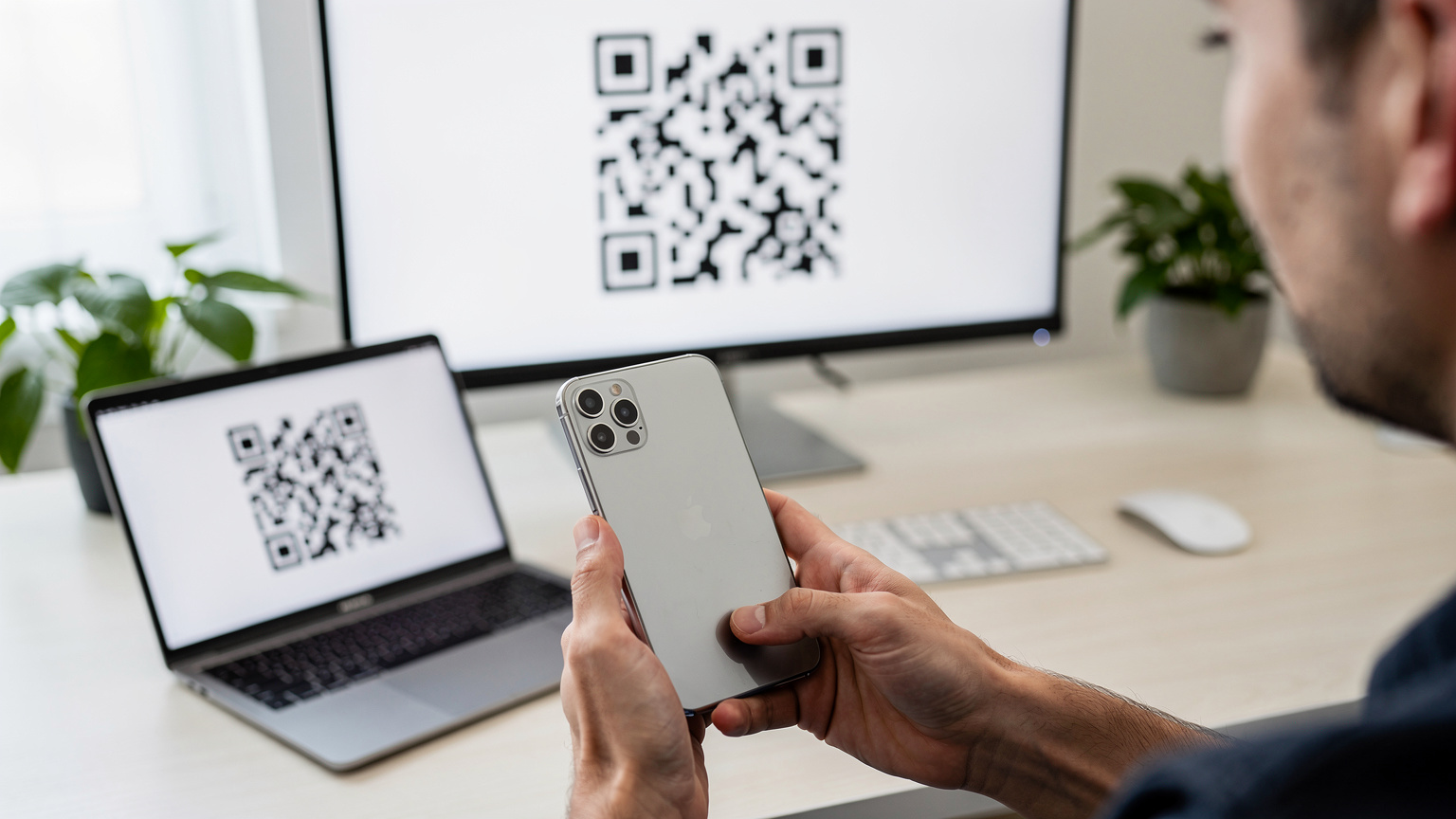
- Purchase Your eSIM: Buy your chosen USA eSIM plan online from Cellesim or another reputable provider. You'll typically receive an email with a QR code or manual installation details.
- Ensure Your Device is Unlocked: Your phone must be unlocked by your home carrier to accept an eSIM from another provider. If you're unsure, contact your home carrier before you travel.
- Download the Provider's App (Optional but Recommended): Many eSIM providers have their own apps (like Cellesim's) which can simplify installation, provide data usage tracking, and facilitate top-ups. Download it while you still have reliable Wi-Fi.
- Take a Screenshot of the QR Code: In case you have trouble accessing emails upon arrival, having a screenshot of your eSIM QR code saved in your photos can be a lifesaver.
Activating Your eSIM on iPhone and Android
The process is remarkably similar across most modern devices.
For iPhones (iOS 12.1 or later):
- Go to Settings: Tap on 'Cellular' or 'Mobile Data'.
- Add eSIM/Cellular Plan: Tap 'Add eSIM' or 'Add Cellular Plan'.
- Scan QR Code or Enter Details: Most providers will give you a QR code. Use your camera to scan it. If you have trouble or prefer manual entry, select 'Enter Details Manually' and input the SM-DP+ Address and Activation Code provided by your eSIM provider.
- Label Your Plans: Your iPhone will prompt you to label your plans (e.g., "Primary" for your home SIM, "Travel USA" for your eSIM). This is incredibly helpful for managing data.
- Choose Default Line for Data: Once installed, go back to 'Cellular' and under 'Cellular Data', select your 'Travel USA' eSIM. Make sure to turn off 'Allow Cellular Data Switching' to avoid accidental roaming charges on your home SIM.
For Android (Google Pixel, Samsung Galaxy, etc. with eSIM support):
- Go to Settings: Navigate to 'Network & Internet' (or 'Connections' on Samsung) and then 'SIMs' or 'Mobile Network'.
- Add a New SIM: Tap 'Add SIM' or 'Download a SIM'.
- Scan QR Code: Your phone will open a camera to scan the QR code provided by your eSIM carrier. If manual entry is needed, look for the option to enter details.
- Enable and Set as Default: Once downloaded, enable the eSIM and set it as your preferred option for mobile data. You can usually find options to manage your SIMs and data preferences within the same 'SIMs' or 'Mobile Network' settings.
- Configure APN Settings (If Necessary): Occasionally, you might need to manually input APN settings. Your eSIM provider will supply these if required. This happened to me once with a T-Mobile eSIM QR code not working, and a quick manual APN fix solved it. Troubleshooting T-Mobile eSIM QR code issues is often about these small details.
Real-World Scenarios: Picking the Right Plan for Your Trip
Every trip to the USA is different, from a quick hop to a major conference in downtown Seattle to a multi-week adventure covering California's Pacific Coast Highway. Your eSIM plan should reflect that.

The Business Trip: New York City or Silicon Valley
If you're flying into LaGuardia for meetings in Midtown Manhattan, or landing at SFO for tech talks in Palo Alto, constant, reliable connectivity is non-negotiable. You'll need enough data for video calls, email, presentations, and navigating public transport (like the BART in San Francisco's Mission Bay). A plan with 20-30GB for 15-30 days is a good starting point. Look for providers with strong 5G coverage in these dense urban centers, like Cellesim's partnerships with T-Mobile and AT&T. You don't want to be caught off guard trying to hail a yellow cab near Grand Central Station when your maps app decides to buffer.
| User Type | Key Needs | Recommended Plan | Why It Works |
|---|---|---|---|
| Business Traveler | High data for video calls, reliable 5G, hotspot capability | 20-30GB, 15-30 days | Ensures consistent connectivity in urban hubs like NYC or Silicon Valley, supporting heavy use and tethering for laptops. |
| Family Vacationer | Maps, social media, light streaming, shared data | 10-15GB, 15-20 days | Enough data for navigation, sharing photos from Disney World, and keeping kids entertained, without overspending. |
| Road Tripper | Extensive coverage, navigation, emergency calls, occasional streaming | 30-50GB, 30 days (or multi-country plan if crossing borders) | Robust data for cross-country travel, reliable mapping in varied terrains, and ability to stay connected even in more remote areas. |
The Family Vacation: Disney World or National Parks
A family trip, whether it's navigating the crowds at Magic Kingdom in Orlando or finding trailheads in Zion National Park, means multiple devices needing data. Kids will inevitably want to stream cartoons in the hotel, and parents will need maps, restaurant bookings, and constant communication. A mid-range data plan, perhaps 10-15GB for 15-20 days, should suffice. Prioritize a provider with good overall coverage, not just urban speeds, especially if your itinerary includes scenic drives or national parks where signal can be spotty. Remember, a single eSIM can't be shared across multiple devices, but you can use your phone as a hotspot, which counts against your data allowance.
The Great American Road Trip: Coast to Coast
This is where coverage really matters. A road trip from, say, Los Angeles to New Orleans means traversing deserts, mountains, and vast plains. You'll pass through areas with excellent signal and others where you'll be lucky to get a text out. For this, a provider that uses a combination of AT&T and T-Mobile (or even Verizon) is paramount. A larger data bundle, perhaps 30-50GB for 30 days, would be prudent, allowing for GPS navigation, streaming music, and sharing updates from roadside diners. You don't want to rely on the sporadic Wi-Fi at a gas station just off I-40 in Oklahoma.
Troubleshooting Common eSIM Issues in the USA
Even with the best plans and preparation, things can sometimes go awry. Knowing a few common fixes can save you a lot of frustration.
My eSIM isn't activating, what should I do?
First, ensure you have a stable internet connection (Wi-Fi is best) during activation. Sometimes, a weak signal prevents the profile from downloading correctly. If you're manually entering details, double-check every character. I once spent 20 minutes in a hotel lobby in Singapore, convinced my eSIM was faulty, only to realize I'd mistyped a single digit in the activation code. (A good reminder to pay attention, even when jet-lagged!) If you're still stuck, try restarting your phone. Often, that simple step resolves minor glitches.
I have no service, or very slow data, even after activation.
This is usually a coverage issue or an APN setting problem. Here's a quick checklist:
- Check Signal Strength: Are you in a known coverage area for your eSIM's network partner? Use a coverage map.
- Toggle Airplane Mode: Turn airplane mode on for 30 seconds, then off. This forces your phone to re-search for networks.
- Verify APN Settings: Go to your phone's settings (Cellular/Mobile Data > Network Selection > Access Point Names on Android, or Cellular Data Network on iPhone) and ensure the APN settings match what your eSIM provider gave you. If not provided, try resetting to default.
- Manual Network Selection: Sometimes, forcing your phone to manually select the network (e.g., AT&T or T-Mobile) can help. You'll find this option in your cellular settings.
- Contact Support: If all else fails, reach out to your eSIM provider's customer support. They can often diagnose the issue remotely. Check our FAQ for more common troubleshooting questions.
Making the Most of Your USA eSIM
An eSIM isn't just about data, it's about enabling a smoother, more enriching travel experience. Think beyond just checking emails.
Local Apps and Navigation
With reliable data, you can fully leverage local apps that make travel easier. For transit, download the MTA app for New York, CTA Tracker for Chicago, or TAP LA for Los Angeles. For ride-sharing, Uber and Lyft are ubiquitous. For food delivery, DoorDash and Uber Eats are king. In Boston, you'll want the MBTA mTicket app for the subway. These apps can be data-hungry, so a generous eSIM plan is a blessing.
Staying Connected with Home
Keeping your home number active (even if just for receiving calls/texts) while using your eSIM for data is a huge perk. Many iPhones, and increasingly Android devices, support Dual SIM Dual Standby (DSDS). This means you can have both your home physical SIM and your USA eSIM active simultaneously. You'll receive calls and texts on both numbers, but your data will route through your chosen eSIM. This is invaluable for banking authentications or staying in touch with family without incurring huge roaming costs. I always leave my primary SIM active, but with data roaming switched off, to avoid any nasty surprises on my bill when I get home.
The Future of Connectivity: eSIMs Beyond 2026
The eSIM revolution is still unfolding. As more device manufacturers embrace eSIM-only designs (some iPhones in the US are already physical SIM-less), and as networks continue to expand their 5G footprints, the convenience and efficiency of eSIMs will only grow. We're moving towards a world where connectivity is truly global and seamless, a single solution for Europe in 2026 with multi-country eSIM plans or indeed, anywhere else your wanderlust takes you.
For travelers to the USA in 2026, the choice is clear. Ditch the physical SIM card hunt, bypass the roaming fees, and embrace the digital ease of an eSIM. Whether you're chasing business deals in the Financial District of Manhattan, exploring the historic streets of the French Quarter in New Orleans, or hiking the trails of a national park, a well-chosen eSIM ensures you're always connected, always capable, and always ready for the next adventure.
Frequently Asked Questions
Can I use my existing phone number with a USA eSIM?
Yes, most modern smartphones support Dual SIM Dual Standby (DSDS), allowing you to keep your home physical SIM active for calls and texts while using the eSIM for data. Just ensure your home SIM's data roaming is switched off to avoid charges.
What happens if I run out of data on my USA eSIM plan?
Many eSIM providers, including Cellesim, allow you to easily top up your data directly through their app or website. You can purchase additional data bundles, often with varying validity periods, to keep you connected without interruption.
Is 5G available with USA eSIMs in 2026?
Yes, most eSIM plans for the USA in 2026 offer 5G access, leveraging the extensive 5G networks of major carriers like T-Mobile and AT&T. Speeds will vary based on your exact location and the specific network partner.
Can I use an eSIM on any phone for USA travel?
Only eSIM-compatible devices can use an eSIM. Most newer iPhone models (XS, XR, 11, 12, 13, 14, 15 series), Google Pixels (3 and newer), and Samsung Galaxy devices (S20 and newer, Flip, Fold series) support eSIM. Your phone must also be unlocked by your home carrier.
Are eSIMs secure for travel to the USA?
eSIMs are highly secure. They eliminate the risk of a physical SIM card being lost or stolen. The digital profiles are encrypted, and the activation process ensures only authorized devices can use the service.
How does eSIM coverage compare to a local physical SIM in the USA?
eSIM providers often partner with major US carriers like AT&T and T-Mobile, offering comparable or sometimes even better coverage than a single local SIM by leveraging multiple networks. The quality of coverage depends on the specific eSIM provider's partnerships.
See also: eSIM for Las Vegas
See also: Washington D.C. eSIM