

Why an eSIM for Africa's Grand Expeditions?
I remember my first overland trip through East Africa, a good fifteen years ago. Crossing from Tanzania into Kenya, then on to Uganda, meant fumbling with three different physical SIM cards. Each border crossing involved hunting for a phone shop, haggling over local currency, and then trying to explain in broken Swahili what I needed. It was a time sink, often eating up precious daylight hours that could have been spent exploring Dar es Salaam's Kariakoo Market or tracking chimps in Kibale National Park.
Fast forward to 2026, and the landscape for connectivity has, thankfully, evolved. For a continent as vast and diverse as Africa, where a single journey can span multiple nations, the traditional SIM card approach is simply too cumbersome. Enter the eSIM: a digital SIM embedded directly into your phone, allowing you to switch network profiles with a few taps. For a continent known for its incredible overland routes, from the Cairo to Cape Town highway to the Garden Route in South Africa, this convenience isn't just a luxury, it's a necessity.
The Multi-Country Advantage of Regional eSIMs
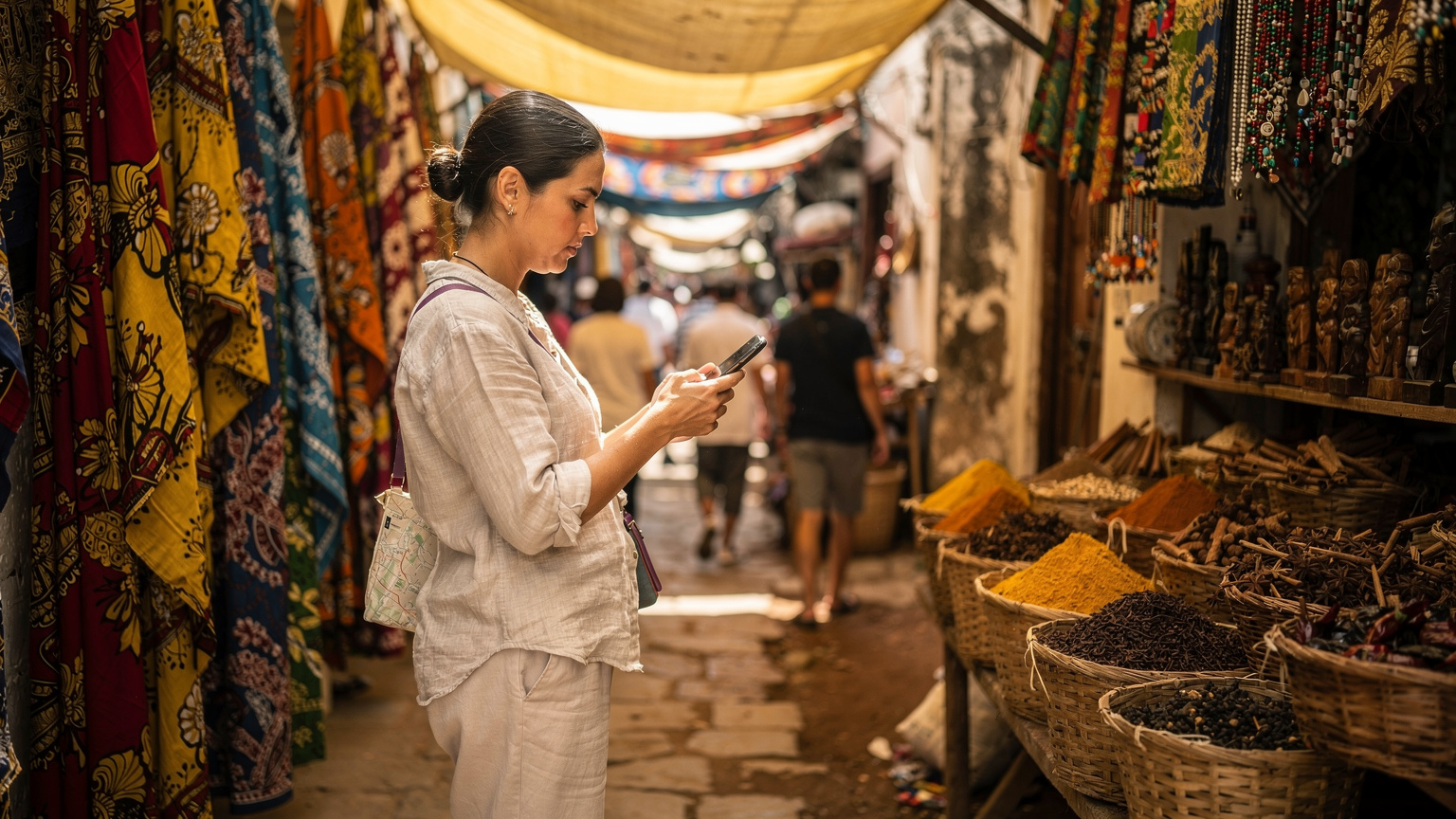
The beauty of a regional eSIM for Africa is its ability to roam across borders without changing your digital identity. Imagine driving from Botswana's Okavango Delta, through Zimbabwe, and into Zambia to see Victoria Falls, all while staying connected on the same data plan. No more scrambling to find a Safaricom or Vodacom outlet the moment you cross a new frontier. This is particularly valuable for those long stretches between towns, say, between Maun and Gaborone, where a quick signal check can be crucial for navigation or a safety call.
It also means you avoid the often inflated tourist prices for local SIMs. I once paid nearly double the local rate for a SIM in a small town outside Stone Town, Zanzibar, simply because I was clearly a foreigner and in a rush. With an eSIM, you lock in your rates before you even pack your bags, often saving both money and frustration.
Bypassing Local SIM Card Headaches
Beyond the cost, there's the sheer practicality. Many African countries require passport registration for local SIM cards, a process that can be lengthy and, frankly, a bit intrusive. I remember spending an entire morning in a MTN shop in Maputo, Mozambique, just to get a SIM registered. They needed copies of my passport, fingerprints, and even a local address. With an eSIM, the activation is typically done entirely online, often before you even board your flight. This means you land with immediate connectivity, ready to call your Airbnb host in Cape Town's Bo-Kaap district or hail a local taxi using Bolt or Uber.
Furthermore, physical SIM cards are easy to lose or damage, especially when you're constantly swapping them in and out. If you've ever dropped a tiny SIM card on a dusty street in Marrakech's medina, you'll appreciate the digital simplicity of an eSIM. It's one less thing to worry about losing alongside your passport or that extra camera lens.
Understanding Africa's Connectivity Tapestry
Africa is not a monolith, especially when it comes to infrastructure. Connectivity varies wildly from the bustling urban hubs to the remote wilderness. While you might find blazing 5G in areas of Nairobi's Westlands or Johannesburg's Sandton, venture into the rural parts of, say, Malawi or Ethiopia, and you'll be lucky to get 3G, or even 2G, on occasion.
Regional eSIMs typically partner with multiple local carriers to ensure the broadest possible coverage. This multi-network approach is a significant advantage over a single local SIM, which can leave you high and dry if its specific network has a weak spot.
| Country | Primary Local Carriers (Examples) | Typical Urban Coverage | Typical Rural Coverage |
|---|---|---|---|
| Kenya | Safaricom, Airtel, Telkom | 4G/5G strong | 3G/4G, occasional 2G |
| South Africa | Vodacom, MTN, Cell C | 4G/5G excellent | 3G/4G, some gaps |
| Tanzania | Vodacom, Airtel, Tigo | 4G good | 3G, significant gaps |
| Egypt | Vodafone, Orange, Etisalat | 4G/5G strong | 3G/4G, some desert areas limited |
| Morocco | Maroc Telecom, Orange, Inwi | 4G/5G strong | 3G/4G, mountain/desert gaps |
Safari Connectivity: What to Expect in the Bush
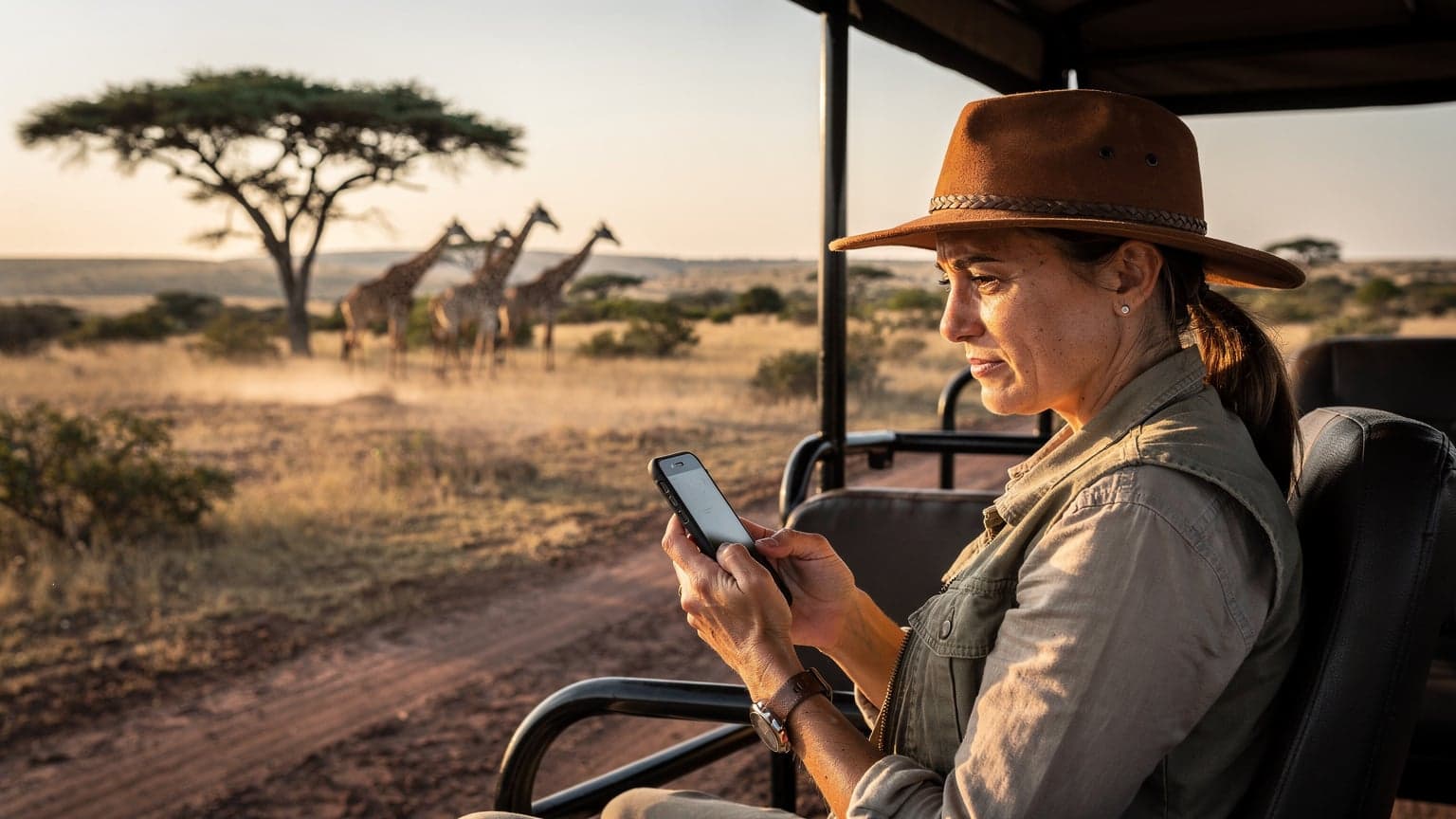
When you're deep in the Serengeti or Chobe National Park, chasing the Big Five, your phone signal will be intermittent at best. Most major safari lodges and camps, especially those in more established areas like the Ngorongoro Conservation Area, offer Wi-Fi, sometimes for a fee, but it's rarely fast enough for streaming. Your eSIM will generally connect to the nearest available tower, often providing a decent signal around larger towns or main roads near the parks, but don't count on continuous 4G while on a game drive. I've had many a moment in Kruger National Park where WhatsApp messages would only send after driving for twenty minutes.
For critical communication, consider carrying a satellite phone if you're doing a truly remote self-drive safari. For everything else, an eSIM provides the best possible chance of getting a signal when one is available, allowing you to use apps like Google Maps offline, or upload a quick photo when you hit a patch of 4G.
Overland Adventures: From City to Desert to Coast
Overland trips are where regional eSIMs truly shine. Crossing countries like Namibia, Botswana, and South Africa, you'll traverse vast distances between towns. Having a consistent data connection, even if it drops occasionally, is invaluable for navigation (apps like Maps.me or Gaia GPS are essential), checking road conditions, or booking accommodation on the fly. I once got stranded in the middle of nowhere between Walvis Bay and Swakopmund, Namibia, with a flat tire and no signal on my local SIM. The eSIM would have connected me to a different network, potentially saving me a three-hour wait.
Even in major cities like Accra, Ghana, or Dakar, Senegal, having immediate data upon arrival helps with using ride-hailing apps like Yango or Free Now, or navigating public transport. The convenience of immediate data helps you blend in faster and avoid looking like a lost tourist.
Choosing the Right eSIM Plan for Your African Adventure
Selecting an eSIM for Africa isn't a one-size-fits-all decision. Your choice will largely depend on the length of your trip, the number of countries you plan to visit, and your data consumption habits. Are you a minimalist who only needs maps and WhatsApp, or a digital nomad uploading photos and video daily?
Data Plans for Different Trip Types
- The Safari Enthusiast (1-2 Weeks, 1-3 Countries): For shorter trips focused on a few national parks, a 5GB or 10GB regional plan valid for 15-30 days should suffice. You'll primarily use data for navigation, quick searches, and sharing photos on social media during evening downtime at the lodge.
- The Overland Adventurer (3-6 Weeks, 4-8 Countries): This type of journey demands more data and a longer validity. Look for plans with 15GB to 30GB, valid for 30-60 days. You'll be relying on data for continuous navigation, communication across borders, and staying informed about local conditions.
- The Extended Explorer (2+ Months, Multiple Regions): For serious deep dives into the continent, you'll need the largest regional packages available, perhaps 50GB+ or even unlimited data plans, valid for 60-90 days. This allows for more extensive research, occasional video calls, and potentially even working remotely from a café in Addis Ababa's Bole sub-city or a co-working space in Camps Bay, Cape Town.
Remember, some providers offer regional plans that cover specific sub-regions of Africa, such as East Africa or Southern Africa. Always check the exact country list before purchasing. For instance, a 'Southern Africa' plan might not include countries like Kenya or Tanzania, even though they're geographically nearby.
Evaluating eSIM Providers for Africa
When comparing eSIM providers, look beyond just the gigabytes and price. Consider these factors:
- Network Partnerships: Which local carriers does the eSIM provider use in each country? More partnerships generally mean better coverage.
- Top-Up Options: Is it easy to add more data if you run out? Can you do it from their app?
- Customer Support: What's their support like? Is it 24/7? Is it responsive? Having reliable support can be a lifesaver if you run into activation issues in a remote location.
- Validity Period: Does the plan's validity match your trip duration? A 30-day plan is useless if you're traveling for 45 days.
- Regional Scope: Does the plan cover all the countries you intend to visit? Some 'Africa' plans might exclude certain North African nations or island states.
| Provider Feature | Safari Trip (1-2 Weeks) | Overland Trip (3-6 Weeks) | Extended Exploration (2+ Months) |
|---|---|---|---|
| Recommended Data | 5GB - 10GB | 15GB - 30GB | 50GB+ or Unlimited |
| Validity | 15-30 Days | 30-60 Days | 60-90 Days |
| Key Consideration | Immediate activation, coverage in park areas | Multi-country support, seamless border crossing | Cost per GB, reliable support, broad coverage |
| Ideal eSIM Type | Regional Africa or specific country (e.g., Kenya) | Comprehensive Africa regional plan | Long-term regional or global plan |
Comparing Data Costs and Value
While local SIMs can sometimes offer cheaper per-GB rates in a single country, the true value of a regional eSIM lies in its convenience and cross-border functionality. Factor in the time saved, the avoided hassle, and the peace of mind. A few extra dollars for an eSIM can be well worth it when you consider the alternative of hunting for SIM cards in a new city after a long flight into Bole International Airport, Addis Ababa, or O. R. Tambo in Johannesburg.
For example, a 10GB regional Africa eSIM might cost around $30-40 USD for 30 days. To achieve similar coverage with local SIMs across three countries, you might spend $10-15 per SIM, plus the time and effort of purchasing and activating each one. The savings aren't just monetary.
eSIM Activation: A Smooth Start to Your Journey
One of the biggest advantages of an eSIM is the simple activation process. You can typically purchase and activate your eSIM from the comfort of your home, days or even weeks before your flight. This means you land in Africa with your data ready to go, avoiding any airport scams or the stress of finding a reliable vendor.
Pre-Departure Setup and Preparation
Before you even think about packing your safari hat, make sure your phone is eSIM compatible and unlocked. Most modern smartphones, particularly iPhone models from XS onwards, and many newer Android devices from Samsung, Google, and Huawei, support eSIM. If you're unsure, a quick search on your phone manufacturer's website will confirm it. You'll also want to make sure your phone is not locked to a specific carrier at home. This is a common pitfall I've seen travelers hit, especially those on contract plans in the US.
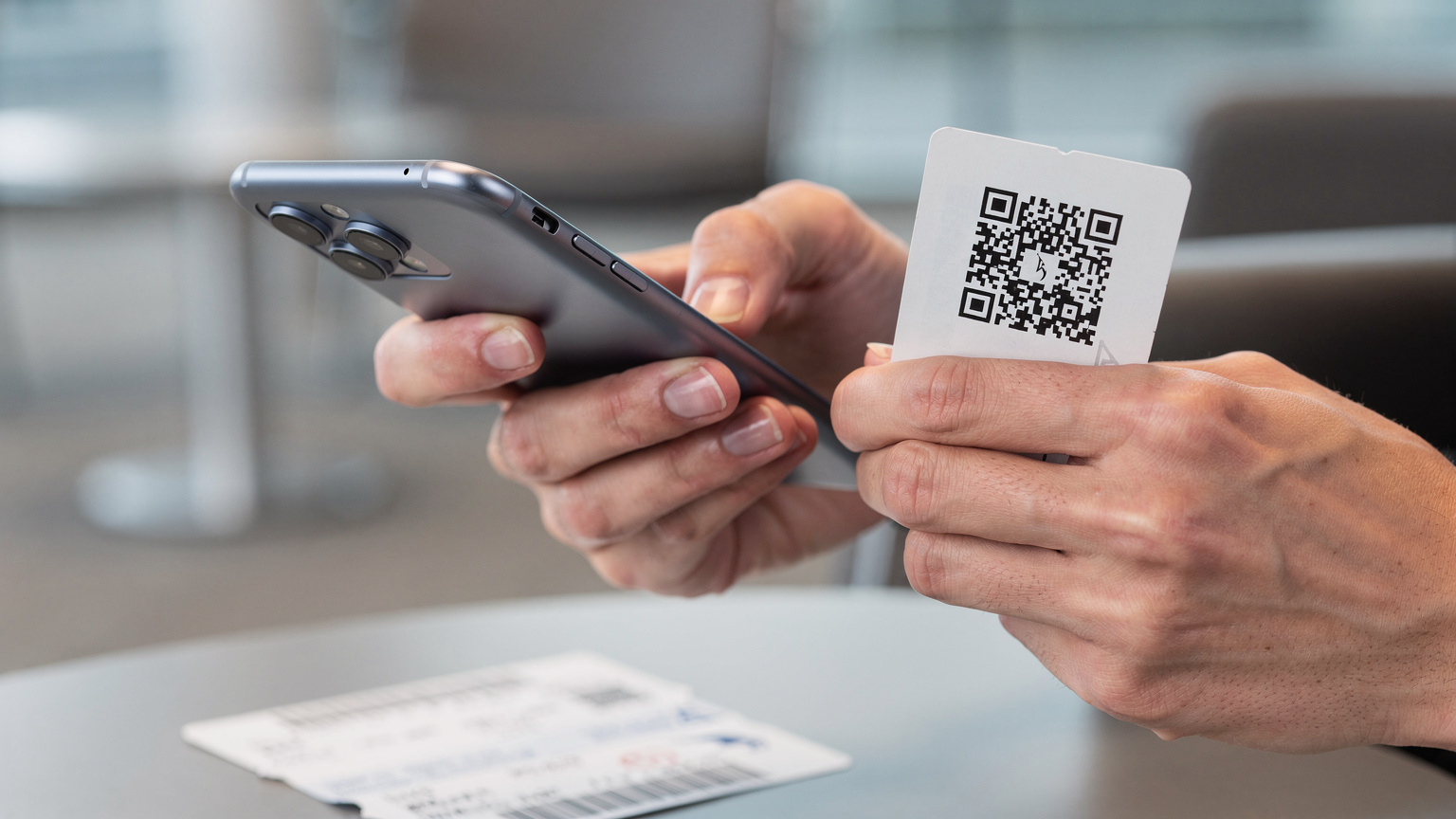
Once you've bought your Africa eSIM, you'll usually receive a QR code or manual activation details via email. It's a good idea to print this out or save it as a PDF on a second device, just in case your primary phone is out of battery or has issues.
Step-by-Step Activation Guide
The process is generally straightforward, but it can vary slightly between iOS and Android. Here’s a general walkthrough:
- Purchase Your eSIM: Select your desired regional Africa eSIM plan from a reputable provider.
- Receive QR Code/Details: You'll get an email with a QR code or manual installation instructions.
- Scan the QR Code (Recommended): Go to your phone's settings (Settings > Cellular/Mobile Data > Add eSIM/Add Data Plan). Choose to 'Use QR Code' and scan the code provided.
- Manual Installation (If Needed): If you can't scan the QR code, you can usually enter the SM-DP+ Address and Activation Code manually.
- Label Your eSIM: Once installed, you'll be prompted to label your new eSIM (e.g., "Africa Travel" or "Cellesim Africa"). This helps differentiate it from your primary SIM.
- Set as Primary for Data: In your cellular settings, ensure your new eSIM is selected for 'Cellular Data' or 'Mobile Data'. Keep your primary SIM active for calls/SMS if you need to receive them, but turn off its data roaming to avoid charges.
- Enable Data Roaming for eSIM: Crucially, turn on 'Data Roaming' for your new eSIM. This is often counter-intuitive for travelers used to keeping roaming off, but for an eSIM, it's necessary for it to connect to partner networks across different countries.
Troubleshooting Common Activation Issues
While eSIM activation is mostly smooth, sometimes things go sideways. I once had a frustrating experience in a hotel lobby in Luanda, Angola, trying to get an eSIM to connect. It turned out to be a simple setting, but in the moment, it felt like rocket science.
- No Signal After Activation: Double-check that 'Data Roaming' is enabled for your eSIM. Also, try restarting your phone. Sometimes, the network needs a fresh handshake.
- Incorrect APN Settings: Rarely, an eSIM might require manual APN (Access Point Name) settings. These are usually provided by your eSIM provider. You'll find this under your cellular data options.
- Connectivity in Remote Areas: If you're in a very remote area, it might simply be a lack of network coverage. Try moving to a slightly higher elevation or closer to a populated area.
- Locked Phone: Confirm your phone is unlocked. If it's still locked to your home carrier, the eSIM simply won't work. Contact your home carrier to unlock it before your trip.
If you've tried everything and it's still not working, reach out to your eSIM provider's customer support. They can often diagnose issues remotely. Some providers, like Cellesim, offer 24/7 support, which is a lifesaver when you're in a different time zone.
Maximizing Your eSIM Data on the Road
Data is precious, especially when you're relying on it for navigation, communication, and those crucial emergency lookups. Knowing how to stretch your data further can make a big difference, particularly on longer overland journeys where top-up options might be less immediate.
Smart Data Usage Tips for African Travel
- Download Offline Maps: Before you leave Wi-Fi, download offline maps for all the regions you'll be visiting using Google Maps or Maps.me. This saves enormous amounts of data.
- Limit Streaming: Avoid streaming video or high-quality audio when on cellular data. Save that for hotel Wi-Fi.
- Update Apps on Wi-Fi Only: Configure your phone to only update apps when connected to Wi-Fi. Background app refreshes can consume significant data without you realizing it.
- Use Wi-Fi Whenever Available: Always connect to hotel, café, or lodge Wi-Fi networks when possible. Just be mindful of public Wi-Fi security.
- Compress Images/Videos: If you're sharing media, use messaging apps that compress images and videos, or manually reduce quality before uploading.
These small habits add up. I once blew through 10GB in a week in Morocco because I forgot to turn off background app refresh. Lesson learned, the hard way, in a small riad in Chefchaouen's medina.
Using Your Phone as a Hotspot for Other Devices
Many regional eSIM plans allow you to use your phone as a mobile hotspot, which can be incredibly useful for connecting a laptop or tablet. This is particularly handy for remote work or if you're traveling with companions who don't have eSIM-compatible devices. However, be aware that hotspotting consumes data much faster than individual phone usage.
If you plan to use your laptop extensively for work, consider a dedicated eSIM for your PC. This offloads the data burden from your phone and can offer a more stable connection.
Common Connectivity Challenges and eSIM Solutions in Africa
Africa, for all its beauty, presents unique connectivity challenges. From power outages to remote areas, a seasoned traveler anticipates these and prepares. An eSIM doesn't magically create a signal where none exists, but it certainly smooths over many of the common bumps.
Power Outages and Charging on the Go
Power cuts are a fact of life in many parts of Africa, even in major cities like Lagos, Nigeria (known as 'load shedding' in South Africa). This can leave you without a way to charge your phone, rendering your eSIM useless. Always carry a fully charged power bank, or two, especially if you're venturing into rural areas or on multi-day safaris.
For overland trips, vehicles often have USB charging ports, but these can be slow. A 12V car charger is a better bet. Some campsites even have limited generator hours, typically running from 6:00 PM to 10:00 PM, so plan your charging accordingly.
Navigating Remote Areas and National Parks
As mentioned, network coverage in national parks is sparse. Even in a country with strong overall coverage like South Africa, driving through the Cederberg Wilderness Area will likely mean long stretches of no signal. This is where those offline maps become critical. Your eSIM ensures that the moment you hit a pocket of signal, you'll connect, without having to manually swap SIMs or fuss with settings.
It’s a good practice to download crucial information, like lodge booking confirmations or emergency contacts, as PDFs or screenshots, accessible offline. Never assume you'll have continuous connectivity.
Security Concerns and Public Wi-Fi Risks
While an eSIM provides private data, you'll still inevitably use public Wi-Fi in hotels, cafes, and airports. Be cautious. Public networks can be insecure, leaving your data vulnerable. I always use a VPN (Virtual Private Network) when connecting to public Wi-Fi, particularly in places like Cairo's downtown cafes or train stations in Abidjan.
A good VPN encrypts your traffic, protecting your sensitive information. This is a general travel safety rule, not just for Africa, and is as important as knowing travel safety tips for France or any other destination.
Real-World Scenarios: eSIM in Action Across Africa
Let me paint a picture from my own journeys, where an eSIM would have saved me significant grief, or where it did, in fact, save the day. The practical application of this technology really highlights its value.
Safari Expedition: Tanzania and Kenya
Last year, I guided a small group through the Serengeti and then up to the Maasai Mara. We landed at Kilimanjaro International Airport (JRO), took a bush plane to a small airstrip near the national park, and then transferred to our camp. Getting a local SIM at JRO would have been a faff, and impossible at the airstrip. With a regional eSIM, everyone's phones automatically connected to Vodacom Tanzania upon landing.
Later, as we crossed into Kenya, the phones seamlessly switched to Safaricom Kenya. No one had to do anything. This meant our group chat remained active, we could share photos with family back home in real-time (when signal allowed), and our guide could use his mapping apps without concern. The peace of mind was immeasurable, especially in such remote areas.
Overland Journey: Namibia to South Africa
My friend, a keen photographer, once embarked on a self-drive trip from Windhoek, Namibia, down through the Fish River Canyon, and then across to South Africa, ending in Cape Town. He had planned to buy local SIMs in each country. In Namibia, he spent nearly an hour at an MTC store in Windhoek's central business district, trying to get registered.
Upon crossing the border into South Africa near Noordoewer, he faced another challenge. The border post itself had no phone shops, and the nearest town, Springbok, was another hour's drive. His local Namibia SIM stopped working, and he had no data for navigation or to contact his pre-booked guesthouse in the Karoo. An eSIM, pre-activated, would have connected him to Vodacom or MTN South Africa immediately, allowing him to navigate the N7 highway without a hitch.
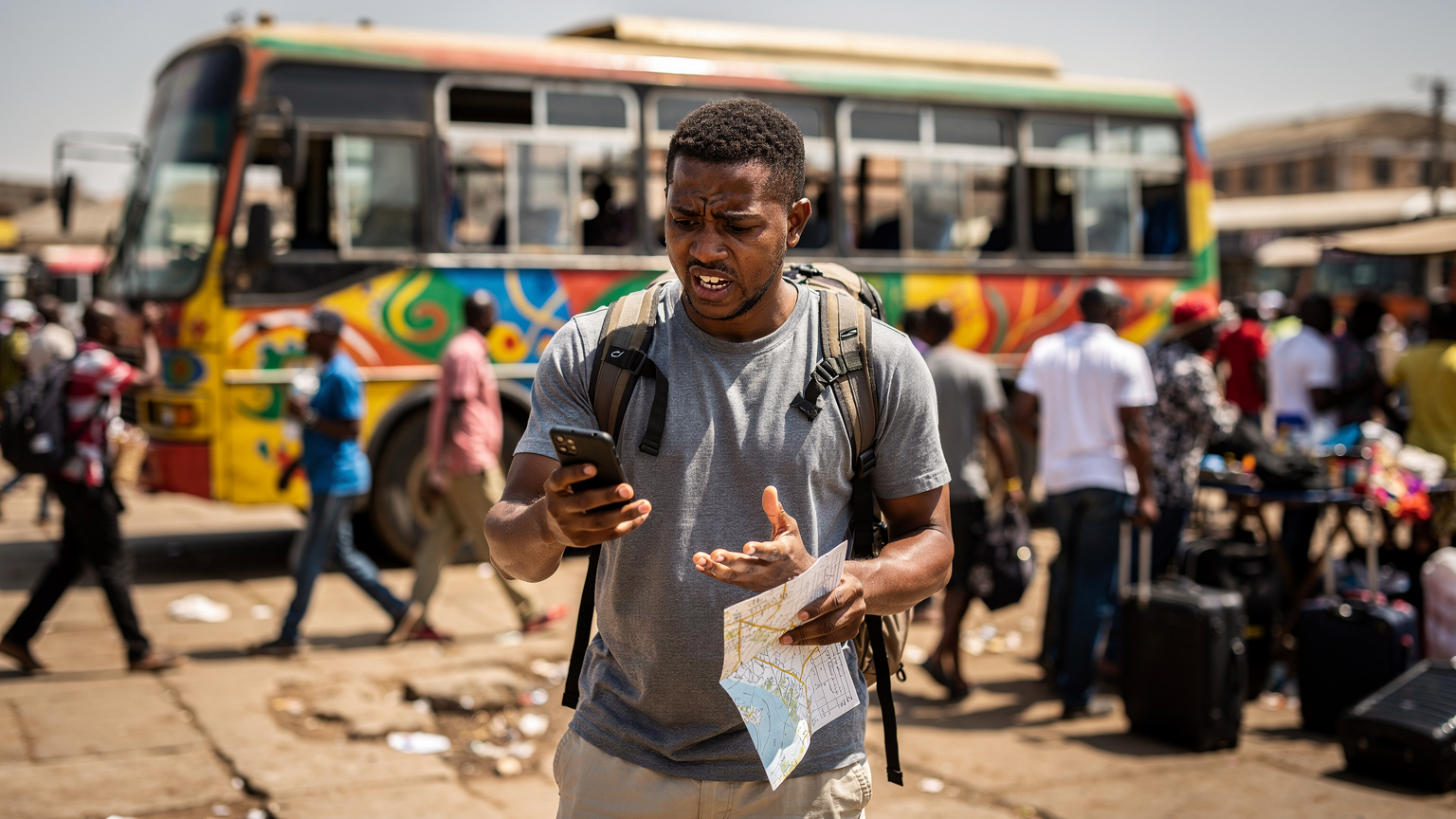
City Hopping: West Africa (Ghana, Togo, Benin)
West Africa is a vibrant, bustling region, but border crossings can be less straightforward. I remember an experience traveling from Accra, Ghana, to Lomé, Togo, and then into Cotonou, Benin. Each country has its own dominant carrier (MTN in Ghana, Togocel in Togo, Moov in Benin).
Without an eSIM, I had to buy a new SIM at each border, often from small, informal kiosks. This was not only time-consuming but also meant dealing with different currencies (Ghanaian Cedi, West African CFA franc) and often questionable exchange rates. A regional eSIM would have allowed me to seamlessly transition from one network to the next, maintaining consistent connectivity for ride-hailing apps, translating phrases, and staying in touch with my travel companions.
Future-Proofing Your African Travel Connectivity
As technology evolves, so too does the way we stay connected on our travels. eSIMs are not just a current trend, they are the future, offering unparalleled flexibility and ease for globetrotters. Africa, with its vast distances and numerous borders, is a prime example of where this technology truly shines.
The Longevity and Adaptability of eSIMs
The beauty of the eSIM is its digital nature. You can store multiple eSIM profiles on a single device, switching between them as needed. This means if you have an eSIM for Africa, and then plan a trip to Europe, you can easily add a Movistar eSIM for Spain or a Cosmote eSIM for Greece, all on the same phone. No more carrying a wallet full of tiny plastic cards.
As network infrastructure improves across Africa, the regional eSIM providers will adapt, updating their partnerships to leverage the best available coverage and speeds. This means your investment in an eSIM today will likely continue to serve you well for future African adventures.
Beyond Data: eSIMs and the Connected Traveler
While data is the primary benefit, an eSIM facilitates a host of other connected travel experiences. It ensures you can always access emergency services, translate languages on the fly, use digital payment apps, and stay in touch with loved ones. It's about empowering you to travel more independently and confidently, knowing you have a reliable link to the outside world.
For those long bus rides, say from Kigali, Rwanda, to Kampala, Uganda, a working data connection on your eSIM means you can stream music, read e-books, or catch up on emails. It transforms travel time into productive or relaxing downtime. The seamless transition from city to bush, and across multiple borders, is what truly sets regional eSIMs apart for the African continent in 2026.
Frequently Asked Questions
What is the best eSIM for an African safari trip?
For a typical 1-2 week African safari, a regional eSIM plan offering 5GB-10GB of data with 15-30 day validity is usually sufficient. Look for providers with strong network partnerships in the specific safari countries you plan to visit, such as Kenya, Tanzania, and South Africa.
Can I use one eSIM for multiple countries in Africa?
Yes, a regional Africa eSIM is designed for multi-country travel. These plans connect to various local networks across a pre-defined list of African countries, allowing you to seamlessly cross borders without needing new SIM cards. Always check the exact list of included countries before purchasing.
How much data do I need for an overland trip across Africa?
For an overland trip lasting 3-6 weeks and covering multiple countries, a regional eSIM plan with 15GB-30GB of data and 30-60 day validity is recommended. This provides enough data for continuous navigation, communication, and occasional research, accounting for potential gaps in rural coverage.
What are the common challenges with using eSIMs in remote African areas?
The primary challenge in remote African areas is the lack of network infrastructure, meaning even an eSIM won't find a signal. Power outages can also be an issue, so carrying a power bank is crucial. Always download offline maps and critical information before venturing into truly remote locations.
Is my phone compatible with an eSIM for Africa?
Most modern smartphones released after 2018, including iPhone XS and newer models, and many flagship Android devices from Samsung, Google, and Huawei, support eSIMs. Ensure your phone is also unlocked by your home carrier. You can check your phone's settings or manufacturer's website for compatibility.
How do I activate an eSIM for my Africa trip?
After purchasing, you'll typically receive a QR code via email. Go to your phone's cellular settings, select 'Add eSIM' or 'Add Data Plan,' and scan the QR code. Remember to enable 'Data Roaming' for your new eSIM for it to connect to partner networks across different African countries.
See also: eSIM for Ghana
See also: Rwanda eSIM
See also: Senegal eSIM
See also: Togo eSIM