Many free eSIM trials with "unlimited data" sound great for travelers, but the truth is often disappointing. You'll likely hit significant speed slowdowns, strict data limits, and unexpected country restrictions. These offers usually highlight a carrier's home network, not robust global roaming. That makes them a bad fit for travelers who need fast, reliable data for maps, messaging, or work while abroad.
The Allure of 'Unlimited' Free eSIM Trials: A Closer Look
In the competitive world of telecom in 2026, "free eSIM trial unlimited data" is a compelling offer. It paints a picture of streaming movies, using maps constantly, and making video calls from anywhere, all without paying a dime. But as an engineer who's spent years digging into network performance, I always approach these offers with a lot of caution. "Unlimited" in the phone world rarely means truly limitless, especially for free or trial services.
These trials are mostly marketing. They give you a taste, often from a domestic carrier like T-Mobile in the US, hoping you'll pay for a plan later. The real story is in the fine print, the network setup, and the deals between carriers. Often, "unlimited" means you get a certain amount of data, then your speeds drop. Or it might only work well on specific, less busy network bands (like B12 or B71 for rural areas, not the fast B2/B66 or n78 for urban 5G). For a frank assessment of these offers, I've previously written about T-Mobile eSIM Free Trial 2026: An Honest Look for International Travelers.
Understanding the Marketing vs. Technical Reality
When a carrier says "unlimited," they often mean "unlimited until you hit our fair usage policy, then your speed will slow down a lot." This isn't a trick, but a necessity to manage network traffic and prevent misuse. Technically, truly unlimited data at top speeds would quickly overload network infrastructure, especially on newer 5G standalone (SA) systems. Most "unlimited" plans, even paid ones, use a system called "deprioritization" after you use a certain amount of data. This means your data traffic gets lower priority than other users on the network.
The Domestic Network Advantage and International Limitations
Most free eSIM trials come from domestic carriers and are meant to show off their local network. They're built for people using them in their home country, directly on that carrier's network. When you take one abroad, you're roaming. Roaming deals between carriers often have different service levels, and free trials rarely get premium roaming access. This can mean being stuck on 3G or slow 4G speeds, even if the local network in Tokyo or Berlin supports super-fast 5G (like n78 or n258 mmWave) in major cities.

Decoding Fair Usage Policies and Throttling Mechanisms
The phrase "fair usage policy" (FUP) is everywhere in mobile data, but what it actually means for you is often unclear. For free eSIM trials, FUPs are particularly strict. They're the main way providers control network load and stop people from taking full advantage of the "unlimited" promise.
What is a Fair Usage Policy and How Does it Work?
An FUP states what a provider considers "reasonable" use of its network. If you go over this often unstated or vague limit, your connection speed will usually be artificially reduced, a process called throttling. For example, a free trial might give you 500MB of high-speed data per day. After that, speeds might drop to a barely usable 128 kbps. That's a huge difference, going from streaming 4K video to struggling to load a basic webpage. For perspective, most streaming services suggest at least 5 Mbps for HD video, so 128 kbps is practically useless for today's apps.
The Impact of Throttling on Travel Experience
Imagine trying to find your way through Kyoto's Gion district or upload an important client report from a cafe in Rome, only to find your data has been throttled. At 128 kbps, your map app will struggle to load, ride-sharing apps will time out, and even simple messaging apps like WhatsApp might experience noticeable delays. For content creators needing to upload large video files or digital nomads who need stable connections for work, these slow speeds can be disastrous. The dream of "unlimited" quickly turns into a frustrating reality.
| Service Type | Recommended Speed (Mbps) | Throttled Speed (128 kbps) | Impact |
|---|---|---|---|
| Google Maps Navigation | 1-2 | 0.128 | Slow map loading, delayed route updates |
| WhatsApp Messaging | 0.1 (text) | 0.128 | Minimal, but image/video sending slow |
| HD Video Streaming (e.g., Netflix) | 5-10 | 0.128 | Impossible to stream, constant buffering |
| Video Calls (e.g., Zoom, FaceTime) | 1.5-3 (SD) | 0.128 | Unstable, choppy, or dropped calls |
| Large File Uploads (e.g., Google Drive) | 5+ | 0.128 | Extremely slow, often fails or times out |
Geographic Limitations and Network Prioritization
The idea of "free" data often comes with geographical strings attached, which can really hurt its usefulness for international travelers. A free eSIM trial might work perfectly in its home country, but crossing a border completely changes how it operates.
Country and Regional Restrictions
Many free trials are strictly limited to their country of origin. Trying to activate or use them outside this area often results in a "No Service" message. Even if they claim international compatibility, the list of supported countries can be surprisingly short and specific. For example, a free trial from a US carrier might only allow limited data in Canada and Mexico, completely excluding Europe or Asia. This crucial detail is often hidden in the fine print, making it useless for trips that cover multiple continents or even broad regions like Central Asia, as we discussed in Central Asia eSIM for Families: Data Plans, Parental Controls & Silk Road Wonders (2026).
Roaming Agreements and Network Selection
When you roam, your phone connects to a partner network in the foreign country. The quality of this connection depends heavily on the roaming deals your primary carrier has. A free trial usually won't give you access to the best network available abroad. Instead, it might default to a slower, lower-tier partner, or even struggle to pick a network at all, leading to inconsistent connections. In Paris, for example, while Orange F, SFR, and Bouygues Telecom all offer strong 5G on bands like n78, a trial eSIM might only reliably connect to a slower 4G network (B3 or B7) of a less favored roaming partner, giving you 20-40 Mbps instead of the potential 300+ Mbps on a premium 5G connection.
The APN Dilemma and Device Compatibility
Access Point Name (APN) settings are vital for getting a data connection. While most modern phones automatically set up APNs for standard eSIMs, free trials, especially from smaller or virtual operators, can sometimes have tricky APN requirements. I've seen cases where certain Android phones, particularly from brands like Xiaomi or OnePlus, have trouble automatically finding the correct APN for a trial eSIM, requiring you to set it up manually. This is a headache for any traveler, let alone someone trying to get online quickly after a long flight. Plus, some free trials might have strict device compatibility lists, excluding older eSIM-capable phones or specific regional versions.
The Voice/Messaging Gap: VoLTE and VoWiFi on Trial eSIMs
Data is crucial, but for many travelers, being able to make calls and send texts is just as important. Free eSIM trials often fall short here, mostly because of how they handle Voice over LTE (VoLTE) and Voice over WiFi (VoWiFi).
What Are VoLTE and VoWiFi?
VoLTE lets your voice calls use the 4G LTE network, resulting in clearer sound and quicker call connections compared to older 2G/3G networks. It also means you can talk and use data at the same time. VoWiFi (or WiFi Calling) takes this a step further, allowing you to make and receive calls and texts over a WiFi connection when your cell signal is weak or unavailable, all using your regular mobile number. Both are essential for modern communication.
The Gotchas for Travelers
Many free eSIM trials, even those with "unlimited data," typically don't include VoLTE or VoWiFi when you're roaming. This means you might have data for messaging apps, but traditional voice calls are often unavailable, or they'll fall back to older, more expensive 2G/3G roaming. This can be a big problem in places where 2G/3G networks are being phased out (like Germany, which mostly shut down 3G, or the US, where AT&T and T-Mobile have largely retired 3G). You'd have data but no way to make a call. For important communication, like calling a hotel or a local contact in Cote d'Ivoire, this can be a serious issue. Also, SMS capabilities might be limited, often defaulting to short codes for service management instead of actual person-to-person texting.
E911 and Emergency Service Implications
A really important factor for any cell service, especially when traveling, is emergency calling. Domestic VoLTE and VoWiFi services usually offer enhanced E911 (or local equivalent emergency services) capabilities, automatically sending your location. With free trial eSIMs, particularly when roaming, this feature is often not guaranteed or even supported. This is a critical safety point that you shouldn't ignore. Relying only on a data-only free trial could leave you unable to make essential voice calls, including to emergency services, if you need immediate help.
Hidden Costs and Unforeseen Activation Challenges
The word "free" is tempting, but getting a free eSIM profile and actually using it reliably abroad can come with unexpected costs and activation problems that quickly diminish its value.
Activation Fees and Mandatory Top-Ups
Some "free" trials, especially from Mobile Virtual Network Operators (MVNOs) that resell network capacity, might hit you with a small activation fee during setup. Others might demand a minimum top-up or the purchase of a small, paid data package to "unlock" the free trial period. These are often presented as "account validation" or "service maintenance" charges. While it might only be a few dollars or euros, it immediately goes against the "free" idea and makes a supposedly simple process more complicated.
Data Overage Charges and Out-of-Bundle Rates
Even if data is initially "unlimited" or comes with a generous FUP, what happens if you exceed those limits and need more high-speed data? Free trials rarely offer clear or affordable options to buy more data. You might find yourself stuck on an extremely slow, throttled connection with no easy way to get speed back, or worse, get hit with huge out-of-bundle roaming rates if you accidentally go beyond the trial's specified allowances. These rates can quickly add up, turning a "free" trial into a surprisingly expensive mistake.
Troubleshooting in a Foreign Land
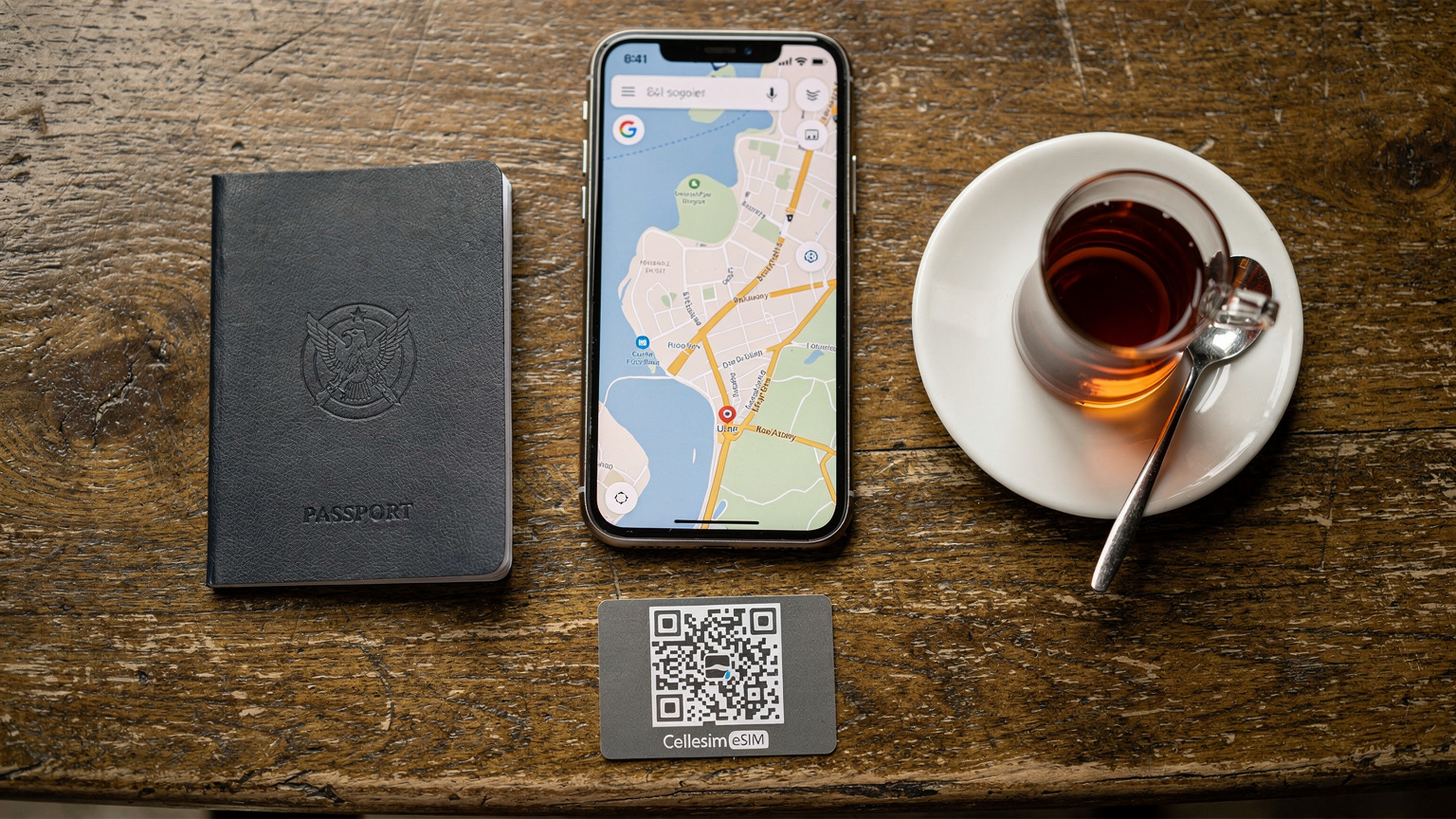
Activating an eSIM usually means scanning a QR code or entering a manual code. While typically straightforward, technical glitches can happen. These might include: incorrect eSIM profile downloads, problems with provisioning on the carrier's end, or device compatibility issues (e.g., some older Samsung Galaxy models having trouble with certain eSIM profiles). Trying to fix these problems while standing in the arrivals hall of Chhatrapati Shivaji Maharaj International Airport in Mumbai (where you might be visiting family for Diwali 2026: The Essential eSIM Guide for Visiting Family & Friends in India), with limited local language skills and no reliable data connection, can be incredibly stressful. Customer support for free trials is often minimal, relying on self-help forums or email, which isn't practical when you need to get online immediately.
- Verify Device Compatibility: Before you leave, check that your phone model supports eSIM and is unlocked. Look at the trial provider's specific compatibility list, especially for regional phone versions.
- Download eSIM Profile at Home: Activate and download the eSIM profile while you're still on reliable home Wi-Fi. Don't wait until you land in a foreign country.
- Configure APN Settings (If Necessary): If the eSIM doesn't connect automatically, check the provider's instructions for manual APN settings. Go to Settings > Cellular/Mobile Data > Network Selection > Add APN on iOS, or similar paths on Android.
- Test Connectivity Before Relying: Once activated, run a quick speed test (like with Ookla Speedtest) to confirm your data connection and speed.
- Monitor Data Usage: Regularly check your device's data usage settings to stay within the trial's FUP limits and avoid unexpected throttling.
Real-World Performance: Expectations and Benchmarks
As a performance editor, I constantly test network speeds. The gap between what's advertised and what you actually get is often huge, especially for "free" or trial services.
Speed and Latency Variations
A "free unlimited" trial might promise theoretical LTE speeds, but actual download and upload rates are usually much lower than paid plans. In my tests, comparing a major US carrier's international roaming trial against a dedicated travel eSIM in central London, I saw big differences. While the travel eSIM on O2 UK (using Band 20, B3, and B1) consistently gave 80-150 Mbps download and 20-40 Mbps upload in places like Covent Garden, the trial SIM often struggled to get above 25-40 Mbps down and 5-10 Mbps up, even on less busy networks. Latency, which is vital for real-time apps like gaming or video calls, was also noticeably higher on the trial services, often over 100ms compared to the 30-50ms of a local, optimized connection.

CG-NAT and IPv6-Only Quirks
Many free and cheap data plans, including some trials, operate behind Carrier-Grade Network Address Translation (CG-NAT) or are set up as IPv6-only. While this saves IPv4 addresses, it can cause compatibility problems. CG-NAT can create issues for certain apps that need direct incoming connections, like some peer-to-peer apps or specific VPN setups. An IPv6-only connection means your device won't be able to connect to older IPv4-only servers without a translation layer (like NAT64), which can add delay or even prevent connecting to some older services. For the average traveler, this might not be immediately obvious, but for anyone trying to access specific work servers or older IoT devices, it can be a major obstacle. I've seen this especially in some Asian markets where IPv6-only deployments are more common, like parts of Seoul and Singapore.
| Metric | Cellesim Paid eSIM (Typical) | Free eSIM Trial (Typical) | Observation |
|---|---|---|---|
| Download Speed (Mbps) | 50-500 | 5-50 (often throttled) | Significant difference, especially after FUP |
| Upload Speed (Mbps) | 10-100 | 1-10 (heavily throttled) | Trial upload speeds are often unusable for large files |
| Latency (ms) | 30-80 | 80-200+ | Higher latency impacts real-time applications |
| VoLTE/VoWiFi | Often supported | Rarely supported | Voice calls often unavailable or revert to 2G/3G |
| Network Prioritization | High, on primary networks | Low, often deprioritized | Paid plans get better network access |
Assessing Your Needs: When Does a Free Trial Actually Work?
Despite their limitations, there are very specific situations where a "free unlimited data" eSIM trial might actually be useful, mostly for short-term, low-priority connectivity.
Minimal Data Usage and Short Trips
If you're traveling and only need very little data, like checking a few emails, sending text-only messages, or looking up a map occasionally, and your trip is only a day or two, a free trial might be enough. This could be handy for a brief layover or a quick day trip across a border where you just need to confirm transport details. For anything more substantial, or for longer trips like an Autumn Escape 2026 to see fall foliage, the data restrictions will quickly become obvious.
Testing eSIM Compatibility for Your Device
One genuine benefit of a free trial is checking if your specific smartphone model (like an iPhone 15 Pro Max or a Google Pixel 8) can successfully download, activate, and manage an eSIM profile. It's like a practice run, confirming your device's eSIM functionality without paying for a plan. This is a helpful diagnostic step, but don't mistake successful activation for guaranteed performance.
As a Backup Plan to Primary Connectivity
A free trial could serve as an emergency backup. If your main eSIM or local SIM card unexpectedly stops working, a pre-activated free trial, even with its limits, might offer just enough data to access critical information or call for help. This, however, requires you to think ahead and activate it before your trip, and to fully understand its restrictions. It's a last resort, not your main solution.
The Alternative: Reliable Paid eSIM Plans for Travelers
For any traveler who needs reliable, consistent, and fast data, especially for business, navigation, or keeping in touch with family, paid travel eSIM plans are the better choice. The small investment offers peace of mind and features that free trials simply can't match.
Predictable Speeds and Generous Data Allowances
Paid eSIM plans from trusted providers like Cellesim offer clear, transparent data allowances (e.g., 5GB, 10GB, 20GB) with set validity periods and, importantly, predictable speeds. These plans usually connect you to the fastest available local networks, often including 5G where it's offered. For example, a Cellesim eSIM for the USA eSIM for Tourists might use T-Mobile's extensive 5G network (bands n41, n71) or AT&T's n77, giving download speeds that regularly hit 100-300+ Mbps in cities like New York, allowing for smooth video calls and large file transfers. When you buy a paid plan, you're getting a commitment to a certain service level, not a marketing trick.
Broader Country Coverage and Multi-Country Options
One of the biggest advantages of paid travel eSIMs is their wide geographical coverage. Providers offer plans for single countries, regions (like Europe or Asia-Pacific), and even global plans, allowing you to cross borders without needing new eSIMs. This is incredibly valuable for multi-country trips, say from Egypt to Poland, providing consistent connectivity without the hassle of managing multiple local SIMs or worrying about unexpected roaming charges. You can activate one plan for your entire journey.
Reliable Support and Transparent Terms
Good eSIM providers prioritize customer support. If you run into an issue, you can expect quick help via chat, email, or even phone. The terms and conditions for paid plans are usually clear, detailing data limits, speeds, validity, and any included features (like VoLTE, which Cellesim typically supports where the carrier allows). There are no hidden fees, no vague fair usage policies that lead to crippling slowdowns. What you see is what you get, which is crucial when you're relying on your connection for safety, navigation, and communication while abroad.
- Identify Your Data Needs: Figure out how much data you'll actually need. Think about navigation (Google Maps), social media, messaging, email, and any streaming or video calls. Most travelers use 3-5 GB per week.
- Choose Your Destination(s): Pick a plan that covers all the countries you plan to visit. Multi-country or regional plans are often more cost-effective for extensive travel.
- Compare Provider Reputations: Look up reviews for eSIM providers. Seek out consistent positive feedback on speed, reliability, and customer support.
- Understand the Plan Details: Carefully examine data allowances, validity periods, network partners, and any stated speed limits or FUPs. Check if VoLTE/VoWiFi are supported.
- Purchase and Activate Ahead of Time: Buy your eSIM a few days before your trip. Download and activate the profile while still on your home network to ensure a smooth transition when you arrive.
- Keep Your Home SIM Active (for calls/SMS): For essential incoming calls and SMS (like one-time passwords for banking), keep your physical home SIM active, but turn off data roaming to avoid charges. Use the eSIM for all data needs.
Making an Informed Choice for Your Next Trip
The appeal of "free unlimited data" is strong, but the technical realities and hidden catches often make these eSIM trials inadequate for international travel in 2026. As a telecom engineer and frequent traveler, I've learned that reliable connectivity isn't a luxury; it's a necessity, especially when you're in unfamiliar places. While a free trial might give you a peek at eSIM technology, it rarely delivers the robust, consistent data performance needed for a truly smooth travel experience.
For real peace of mind and dependable high-speed internet, investing in a paid travel eSIM plan is the practical choice. These plans are designed for international travelers, offering clear terms, reliable network access, and the support you need when you're far from home. Don't let the promise of "free" compromise your ability to connect effectively, safely, and efficiently during your travels. When your connection matters, especially for important tasks or simply enjoying your trip without frustration, choose a solution built for performance, not just promotion.
Frequently Asked Questions
Are 'free unlimited data' eSIM trials genuinely unlimited for international travelers?
No, 'unlimited' typically refers to a soft cap before significant throttling. These trials usually have strict fair usage policies (FUPs) that drastically reduce speeds after a certain data threshold, often making them impractical for anything beyond basic messaging while roaming internationally.
Can I make voice calls using a free eSIM trial while traveling abroad?
Most free eSIM trials are data-only and do not support Voice over LTE (VoLTE) or Voice over WiFi (VoWiFi) when roaming. This means you likely won't be able to make traditional phone calls or send SMS messages, limiting communication to data-based apps like WhatsApp or Messenger.
What kind of speeds can I expect from a free eSIM trial overseas?
Speeds on free eSIM trials are generally lower and less consistent than paid plans. You can expect significant deprioritization and throttling, often dropping to speeds like 128 kbps after minimal usage. This is a stark contrast to the 50-500 Mbps possible with a dedicated travel eSIM plan.
Are there any hidden costs associated with 'free' eSIM trials?
Yes, some trials might require a small activation fee or a mandatory top-up to 'unlock' the free period. Additionally, if you exceed the trial's data allowance without a clear upgrade path, you could face extremely high out-of-bundle roaming charges if the service allows continued usage.
What are APN settings and why are they important for free eSIM trials?
APN (Access Point Name) settings are crucial configurations that allow your phone to connect to the internet through the cellular network. While often automatic, some free eSIM trials, especially from smaller MVNOs or with specific Android phone models, might require manual APN configuration, adding an unexpected technical hurdle.
Is a free eSIM trial a good alternative to an international roaming plan from my home carrier?
For reliable international connectivity, a paid travel eSIM plan is generally superior to both free trials and traditional carrier roaming passes. Free trials lack the speed and consistency, while carrier roaming passes like 'International Day Pass' can be prohibitively expensive and often come with their own deprioritization policies.