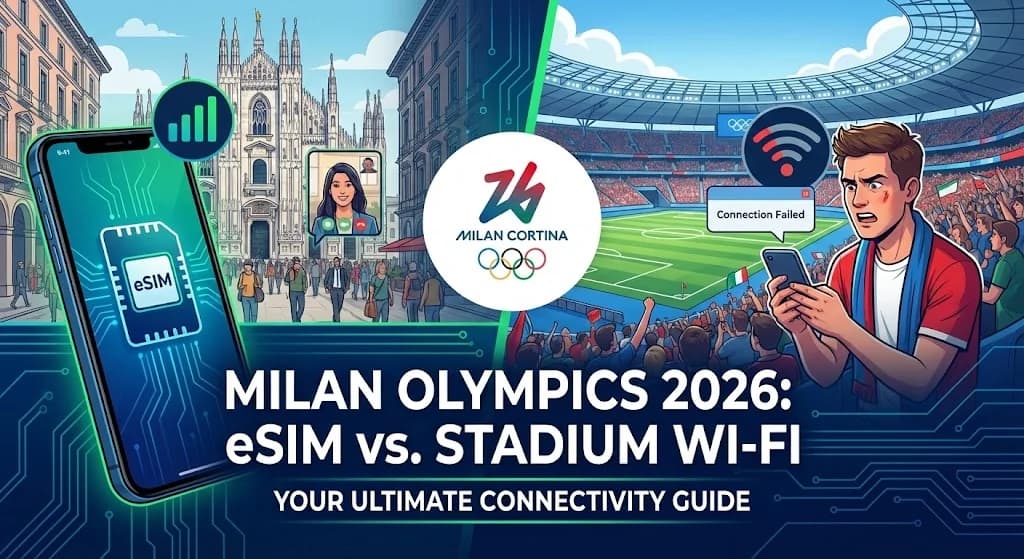
Imagine this: you're in the stands at the Mediolanum Forum, you've just witnessed a breathtaking figure skating final, and you pull out your phone to share the historic moment. But instead of a swift upload, you see the dreaded spinning wheel. This is the reality at most mega-events. The sheer density of people at the Milan-Cortina 2026 Winter Olympics will create enormous strain on local networks. When it comes to the crucial Milan Olympics 2026 eSIM vs Wi-Fi debate, making the right choice beforehand is the difference between a seamless trip and a frustrating one. Having reliable internet isn't a luxury; it's essential for navigating, sharing, and staying safe. A high-quality travel eSIM Italy plan ensures you have a private, high-speed connection from the moment you land, avoiding the pitfalls of overloaded public networks. As you plan your trip for the Milano 2026 Olympics, securing your connectivity should be as high a priority as purchasing your Milan 2026 Olympics tickets.
- The Milan Olympics 2026 Connectivity Challenge
- eSIM vs. Olympic Venue Wi-Fi: A Direct Comparison for Milan 2026
- Maximizing Your Milan Cortina 2026 Experience with an eSIM
- Navigating Public and Stadium Wi-Fi Limitations During the Olympics
- Expected 4G/5G Network Coverage at Milan and Cortina Olympic Sites
- Determining Your Data Needs for the Winter Olympics
- Pre-Travel Setup: Activating Your Cellesim Italy eSIM
- Cost Analysis: Milan 2026 Connectivity Options Compared
- Frequently Asked Questions About Connectivity at the Milan Olympics 2026
Italy eSIM Plans for Milan Cortina 2026
Ensure seamless connectivity at the Winter Olympics. Join 50,000+ happy customers in 200+ countries.
Get Your Italy eSIMThe Milan Olympics 2026 Connectivity Challenge
Attending a global spectacle like the Winter Olympics means joining hundreds of thousands of fellow enthusiasts. While the atmosphere is electric, this concentration of people places immense pressure on digital infrastructure. Major events inherently strain local mobile networks and Wi-Fi systems. Reliable internet access is not merely for leisure; it is essential for checking event schedules, navigating between venues, sharing real-time updates with friends and family, and managing travel logistics such as train tickets. During the Milan-Cortina 2026 Winter Olympics, the connectivity choice you make will significantly impact your overall experience. Opting for a dedicated, high-speed connection solution like an eSIM can transform your trip from potentially frustrating to consistently smooth.
eSIM vs. Olympic Venue Wi-Fi: A Direct Comparison for Milan 2026
For visitors to the Milan Cortina 2026 Winter Olympics seeking an immediate overview of their connectivity options, here is a direct comparison between using an eSIM and relying on stadium or public Wi-Fi networks:
| Feature | Cellesim eSIM | Stadium & Public Wi-Fi |
|---|---|---|
| Speed & Reliability | High, consistent 4G/5G. Less affected by crowds. | Extremely unreliable. Severe congestion during peak times. |
| Security | Very High. Encrypted cellular network. | Very Low. Open, unencrypted, vulnerable to data theft. |
| Coverage | Nationwide. Works in stadiums, on trains, in Cortina. | Limited to specific hotspots (venues, cafes). No coverage in between. |
| Ease of Use | Simple. Scan QR code, activates on arrival. | Frustrating. Requires network search, login portals, timeouts. |
| Cost | Affordable prepaid plans. No roaming charges. | Free, but significant non-monetary costs (time, frustration, security risks). |
Maximizing Your Milan Cortina 2026 Experience with an eSIM
An eSIM represents a significant advancement in mobile connectivity, offering a digital alternative to the traditional physical SIM card. For international travelers, particularly those attending high-profile events like the Winter Olympics, it simplifies the process of staying connected.
What Exactly is an Italy Travel eSIM?
An eSIM (embedded Subscriber Identity Module) is a small, programmable chip built directly into your smartphone, tablet, or smartwatch. When you purchase an eSIM plan, Cellesim sends you a QR code via email. Scanning this code in your phone's settings installs a digital "SIM profile" that allows your device to connect to local partner networks in Italy, such as TIM or Vodafone. This entire setup can be completed from home before your departure. The moment your flight lands at Milan Malpensa (MXP), Linate (LIN), or Verona (VRN), your phone automatically connects to the Italian network, providing instant, high-speed data. This seamless activation is particularly beneficial for travelers using one of the many eSIM compatible devices available today.
The Unbeatable Pros of Using an eSIM for Milan Cortina 2026
- Guaranteed Connectivity at Peak Times: An eSIM leverages the robust local cellular network, providing you with a dedicated connection. While thousands of spectators might struggle to upload photos or check scores on congested Wi-Fi, your eSIM typically offers a clearer path on 4G or 5G. This dedicated bandwidth is crucial for reliably checking Milan 2026 Olympics event schedules, confirming your Olympic tickets, and sharing moments without delay.
- Enhanced Security and Privacy: Public Wi-Fi networks, especially those at large events, are often unencrypted and pose significant security risks, making them vulnerable to data theft and cyber-attacks. An eSIM connection operates over the secure and encrypted cellular network, safeguarding your personal and financial information. This is a critical advantage when accessing banking apps, making online purchases, or managing sensitive data during an international trip.
- Seamless Coverage Across Italy: The Winter Olympics extend beyond Milan, with events also taking place in Cortina d'Ampezzo and other locations. An eSIM provides nationwide coverage, ensuring you remain connected whether you are navigating Milan's extensive metro system to reach the San Siro Stadium, searching for authentic Italian restaurants near the Duomo, or exploring the picturesque Dolomites around Cortina. This comprehensive connectivity supports all your travel and event-related activities.
- Complete Cost Control and Transparency: With a Cellesim eSIM, you purchase a prepaid data package, giving you full transparency and control over your expenses. This eliminates the risk of incurring exorbitant international roaming charges, which can quickly accumulate. You know your costs upfront, allowing you to manage your budget effectively for your Milan Olympics 2026 experience. Our Interactive Setup Guide further simplifies the activation process, providing peace of mind.
Considerations and Limitations for Olympic Visitors
While an eSIM offers many advantages, it is important to be aware of certain considerations. First, your smartphone must be eSIM-compatible. Most devices manufactured since 2018 support eSIM technology. You can quickly verify your device's compatibility on our eSIM checker page. Second, most travel eSIMs provide data-only services. This is generally not an issue for communication, as you can use VoIP apps like WhatsApp, FaceTime, and Skype for calls and messages over your data connection. The initial cost of an eSIM plan is an investment, but it is typically far more economical than daily roaming fees, guaranteeing reliable Olympic Games internet access throughout your stay.
Navigating Public and Stadium Wi-Fi Limitations During the Olympics
During the Milan Olympics 2026, official Olympic venues, airports, hotels, and cafes across Italy will offer Wi-Fi networks. However, the experience of relying solely on these for connectivity during a major international event often falls short of expectations.
What to Expect from Olympic Venue Wi-Fi
Event organizers typically deploy High-Density (HD) Wi-Fi systems, designed to accommodate a large number of users. However, the sheer volume of concurrent connections at a sold-out medal ceremony at the Mediolanum Forum or an intense ice hockey match at PalaItalia Santa Giulia can quickly overwhelm even the most advanced systems. These networks are akin to a multi-lane highway during rush hour; while designed for high traffic, they inevitably suffer from severe congestion. This "bottleneck problem" leads to frustratingly slow speeds, frequent disconnections, and difficulty in performing even basic online tasks. Uploading a video or live-streaming a moment often becomes impossible, undermining the ability to share your Olympic experience in real-time.
The Drawbacks of General Public Wi-Fi in Milan and Cortina
Beyond the venues, public Wi-Fi in cafes, hotels, and public squares presents its own set of challenges.
- Inconsistent Availability: Public Wi-Fi is not universally available. You will find connectivity gaps, particularly when commuting between venues, exploring outside city centers, or venturing into the mountainous regions around Cortina. This forces you to constantly search for hotspots, interrupting your travel flow.
- Security Risks: Open public Wi-Fi networks are notorious for their lack of security. Without encryption, your online activities are vulnerable to eavesdropping by cybercriminals who can easily intercept personal data, passwords, and financial information. This is a significant risk, especially when accessing banking apps or making online purchases.
- Poor Performance: Even when available, public Wi-Fi often offers slower speeds and less reliability than a cellular connection. Shared bandwidth means performance degrades rapidly with increased users, leading to buffering, slow downloads, and general frustration.
Instant
Activation
200+
Countries
50K+
Users
Find Your Italy eSIM Plan
Expected 4G/5G Network Coverage at Milan and Cortina Olympic Sites
Italy boasts a robust mobile network infrastructure, with major carriers like TIM, Vodafone, and WindTre providing extensive 4G LTE coverage across urban and many rural areas. For the Milan Cortina 2026 Winter Olympics, significant investments are being made to bolster network capacity, especially in and around the event venues.
Connectivity in Milan's Olympic Hubs
In Milan, the primary venues such as the Mediolanum Forum (figure skating, short track speed skating), PalaItalia Santa Giulia (ice hockey), and the San Siro Stadium (opening ceremony) are expected to have strong 4G and increasingly prevalent 5G coverage. Major city areas, including popular tourist zones like the Duomo and Navigli district, will offer excellent connectivity. Cellesim partners with leading Italian networks to ensure you get optimal speeds in these high-traffic locations. While capacity will be increased, the sheer volume of users will test these limits. An eSIM ensures you're on the priority network, which can make a noticeable difference during peak event times.
Cortina d'Ampezzo and Mountain Venues
Cortina d'Ampezzo, nestled in the Dolomites, will host alpine skiing, bobsleigh, luge, and skeleton events. The connectivity challenge here is different, combining high altitude with event density. While Italy's mountain regions generally have good 4G coverage, 5G might be more localized. Cellesim's network partners extend their reach to these picturesque but potentially remote areas, offering reliable data for tracking results, sharing scenic photos, and using navigation apps even on the slopes. However, visitors should anticipate that connectivity might be less robust in very remote valleys or tunnels. Checking the specific network coverage maps of local operators (e.g., TIM, Vodafone Italia) can provide granular detail for individual areas in Cortina. OpenSignal reports consistently highlight Italy's strong mobile performance.
Determining Your Data Needs for the Winter Olympics
Estimating your data consumption for a major event like the Olympics is crucial for choosing the right eSIM plan. Over-purchasing data leads to unused credit, while under-purchasing means potential top-ups or slow speeds. Here’s a breakdown of typical data usage during an Olympic trip:
- Light Usage (1-3 GB for 7 days): Ideal for checking event schedules, occasional messaging via WhatsApp, light web browsing, and simple navigation. If you primarily rely on hotel Wi-Fi and only use data on the go, this might suffice.
- Moderate Usage (5-10 GB for 7 days): Suitable for regular use of navigation apps (Google Maps, Citymapper), frequent social media updates with photos, streaming short videos (YouTube, TikTok), and consistent messaging. This is a common choice for active travelers.
- Heavy Usage (15-20+ GB for 7 days): Recommended for those who plan to stream live events on the go, upload high-definition videos, participate in video calls, use mobile hotspots for other devices, or work remotely. This ensures you never have to worry about running out of data.
Consider using Cellesim's Smart Data Calculator to get a more personalized estimate based on your planned activities. During the Olympics, data usage tends to be higher due to the constant desire to share moments, look up results, and navigate new locations.
Pre-Travel Setup: Activating Your Cellesim Italy eSIM
One of the significant advantages of an eSIM for the Milan Olympics 2026 is the ability to set it up before you even leave home. This ensures instant connectivity upon arrival, eliminating airport queues and immediate setup stress. Here’s a brief guide:
- Check Compatibility: Ensure your smartphone is eSIM compatible. Most newer models from Apple, Samsung, Google, and others support eSIM. Use our eSIM Checker.
- Choose Your Plan: Visit the Cellesim Italy eSIM page and select a data plan that aligns with your estimated data needs and trip duration for the Olympics.
- Purchase and Receive QR Code: Complete your purchase. You will receive an email containing a QR code and detailed installation instructions.
- Install eSIM Profile: While still at home (with an internet connection), go to your phone's settings (usually "Cellular" or "Mobile Data"), tap "Add eSIM" or "Add Data Plan," and scan the QR code. Follow the on-screen prompts to label your eSIM (e.g., "Italy eSIM"). Do NOT activate it as your primary line yet if you still need your home SIM.
- Activate Upon Arrival: Once your plane lands in Italy, simply switch your mobile data to your newly installed Cellesim eSIM profile in your phone's settings. Your device will connect to the local Italian network automatically, providing you with instant data. For a more comprehensive walkthrough, refer to our Complete eSIM Setup Guide.
Cost Analysis: Milan 2026 Connectivity Options Compared
Understanding the costs associated with different connectivity options is vital for budgeting your Olympic trip. Here's a comparison to help you make an informed decision:
| Option | Typical Price (15 days) | Setup Effort | Speed & Reliability | Security |
|---|---|---|---|---|
| Cellesim Italy eSIM | From ~$15 (for 10GB) | Instant (pre-travel) | Excellent 4G/5G | High |
| International Roaming | $100 - $300+ | Automatic | Variable, often throttled | High |
| Local Physical SIM | $20 - $40 | Store visit, activation | Excellent 4G/5G | High |
| Stadium & Public Wi-Fi | Free (with hidden costs) | Login portals, inconsistent | Poor, congested | Low |
While public Wi-Fi appears "free," the hidden costs in terms of lost time, frustration, and potential security breaches can far outweigh any monetary savings. Traditional international roaming, offered by your home carrier, is often the most expensive option, leading to "bill shock." Local physical SIM cards require finding a store, presenting ID, and undergoing activation, which can be time-consuming during a busy Olympic schedule, especially if you consider the airport SIM card prices vs. eSIM. An eSIM provides a balance of convenience, security, and affordability for the Milan Olympics 2026.
Frequently Asked Questions About Connectivity at the Milan Olympics 2026
Can I use my existing phone number with an eSIM at the Olympics?
Yes, you can. Your Cellesim eSIM provides data connectivity, allowing your primary SIM (your home number) to remain active for calls and texts. You simply set your Cellesim eSIM as your primary line for mobile data in your phone's settings, ensuring you stay connected without changing your number.
Will my phone work in all Olympic venues with an eSIM?
Cellesim partners with leading local networks in Italy to provide extensive 4G/5G coverage across Milan, Cortina, and other Olympic locations. While network congestion can occur at major events, an eSIM generally offers more reliable connectivity than shared public Wi-Fi due to its dedicated cellular access.
Is an eSIM secure for online banking during the Olympics?
Absolutely. An eSIM operates over the secure and encrypted cellular network, making it a much safer option for sensitive online activities like banking or online purchases compared to public Wi-Fi, which is often unencrypted and vulnerable to security threats.
How much data should I buy for my Olympic trip?
Your data needs depend on your planned usage. For light use (maps, messaging, occasional browsing), 5-10GB for a week might suffice. For heavy use (streaming, video calls, frequent social media), 15-20GB+ is advisable. Our Smart Data Calculator can help you estimate.
What if I need help setting up my Cellesim eSIM for Milan 2026?
Cellesim offers 24/7 customer support via email at [email protected]. You can also refer to our comprehensive eSIM Setup Guide and Interactive Setup Guide on our website for step-by-step instructions.
Can I use my Cellesim eSIM to connect my laptop or other devices?
Yes, most Cellesim eSIM plans support hotspot functionality (tethering), allowing you to share your data connection with other devices like laptops or tablets. This feature is very useful for staying productive or ensuring companions also have internet access during your Olympic visit.
Ready for Seamless Connectivity at Milan Cortina 2026?
Secure your Cellesim eSIM now and focus on the games, not your connection.
Start Your Connected JourneyTrusted by 50,000+ travelers worldwide. 24/7 Support.