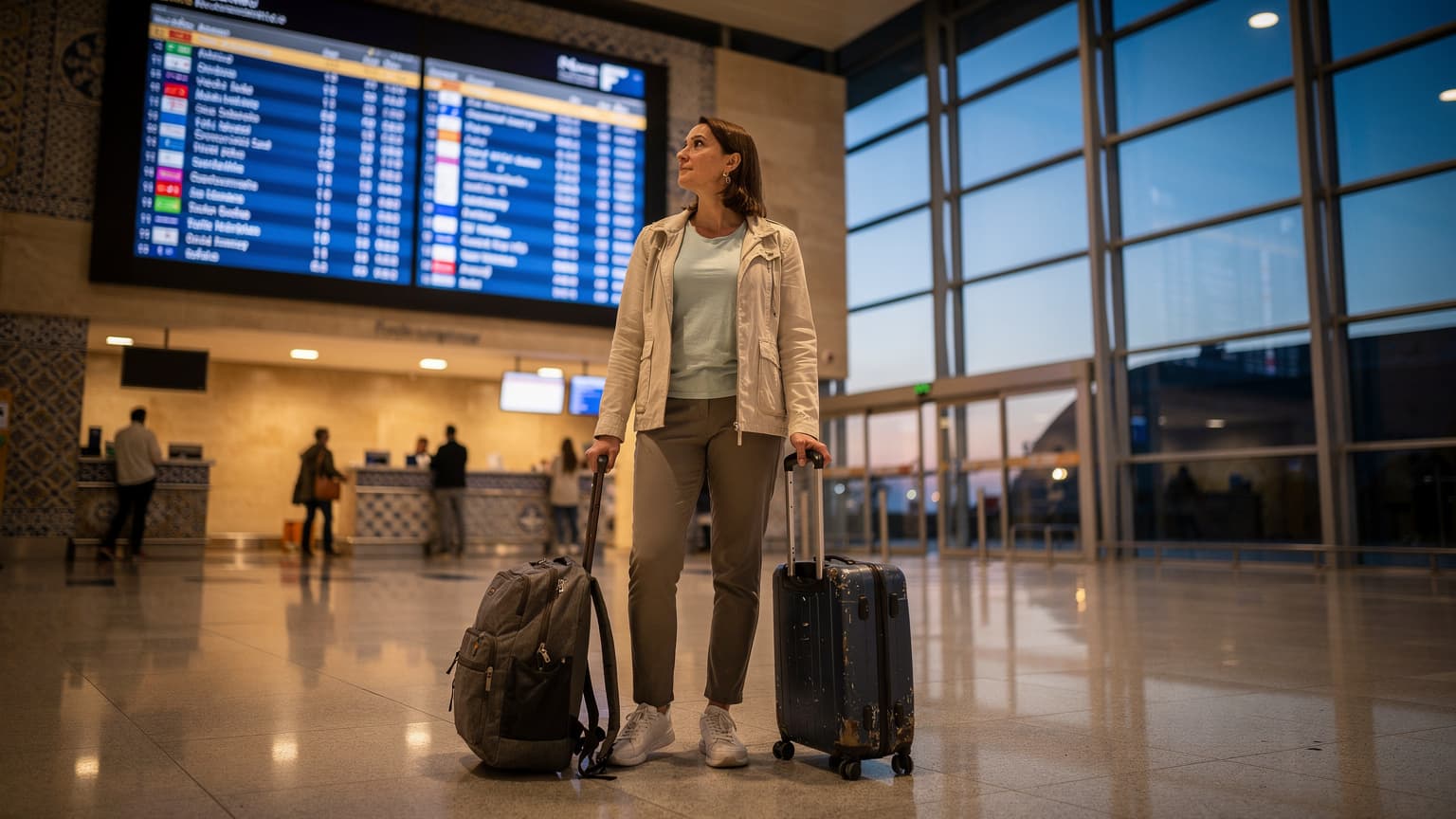
For travelers weighing their options, Cellesim generally offers more transparent pricing, often better per-gigabyte value on larger plans, and a unique free VPN inclusion compared to Nomad eSIM, making it a stronger choice for those prioritizing cost-effectiveness and enhanced security on their international trips.
The eSIM Revolution: My Personal Journey with Travel Data
I remember my first time in Bangkok, back in '08. Landing at Suvarnabhumi Airport (BKK), the first order of business after clearing immigration wasn't a Pad Thai, it was finding a SIM card. A small kiosk in the main arrival hall, a baffling array of Thai script, and a well-meaning but non-English speaking vendor. Two hours and a minor international incident later, I had a working phone. Fast forward to today, and the thought of swapping out a physical SIM card feels as archaic as carrying traveler's checks.
eSIMs, for those who haven't yet jumped on board, have genuinely transformed how we connect abroad. No more fumbling with tiny trays, no more worrying about losing your home SIM in the back of a tuk-tuk in the Phra Khanong district. It's all digital, seamless, and, when done right, a total game-changer. I've been using eSIMs exclusively for years, from navigating the labyrinthine alleys of Bukhara's Old City to keeping up with family during the Summer Games in Paris. It's not just about convenience, it's about being present, knowing you're always just a tap away from a map, a translation, or an emergency call.
Today, we're pitting two prominent players against each other: Nomad eSIM and Cellesim. Both promise easy international data, but as anyone who's ever tried to hail a taxi in Rome's Trastevere knows, promises and reality can be two very different things.
The Good Old Days, and the Pain Points of Physical SIMs
Before eSIMs became mainstream, every trip brought a familiar ritual. Land, find a local telco store, queue, present passport, fill out forms, and then usually, deal with a data plan that was either too small or too expensive. I once spent an entire afternoon in Berlin's Mitte district trying to activate a prepaid SIM from Deutsche Telekom, only to find out it wouldn't work on my specific phone model because of some obscure band incompatibility. That's a day of sightseeing lost, purely to connectivity woes. And don't even get me started on the time I dropped my precious home SIM card down a drain in Osaka, right outside the JR Namba Station. Panic, pure panic. That's a problem eSIMs simply erase from the travel equation.
Why eSIM Matters for the Modern Traveler
Beyond avoiding tiny trays and lost cards, eSIMs offer flexibility. You can buy a plan for a single country, a region, or even global coverage. You can switch plans easily, often topping up or buying a new one right from your phone. This means if you decide last minute to extend your stay in, say, Barcelona's Gràcia neighborhood, or pop over to Andorra for a day trip, you're not scrambling for a new physical SIM. You simply manage your data from an app. This agility is why I recommend eSIMs to everyone, especially to those who, like me, often travel on a whim or extend trips unexpectedly.

Understanding the Landscape: Nomad eSIM at a Glance
Nomad eSIM has been around for a while, carving out a respectable niche in the travel connectivity market. They're known for offering a wide array of plans, often catering to single-country needs, but also with regional options. Their interface is generally straightforward, and they've built a reputation for reliable service in many parts of the world.
Nomad eSIM: Plan Structure and Pricing
Nomad's plans typically come in various data increments, from small 1GB packages for short trips to larger bundles for extended stays. The pricing, from my experience, tends to be competitive, especially for smaller, single-country plans. However, I've noticed that for larger data needs, or multi-country regional plans, the per-gigabyte cost can sometimes creep up. This is particularly true if you're looking for something substantial, like 20GB for a month-long remote work stint. (If you're interested in saving serious money on data, check out how I managed my data costs while working remotely in Bangkok.)
They've got a decent spread, covering most popular destinations. For example, a 5GB plan for France might cost you around $12-15 USD, valid for 30 days. This is pretty standard across the industry, but it's worth digging into the specifics, as prices can fluctuate significantly based on promotions or the specific country's local carrier agreements.
Network Partnerships and Coverage
Nomad partners with various local carriers to provide service. In Europe, this often means tapping into networks like Vodafone, Orange, or Deutsche Telekom. In Asia, it could be AIS in Thailand or SoftBank in Japan. The strength of their coverage, therefore, largely depends on the strength of their partner networks in a given area. Generally, in major cities and tourist areas, you'll find good 4G LTE coverage. However, once you venture into more rural areas, or less developed regions, the experience can vary. For example, I've had perfectly fine service with Nomad in Tokyo's Shibuya crossing, but spotted some dead zones once I got out to the Fuji Five Lakes region.
User Experience with Nomad eSIM
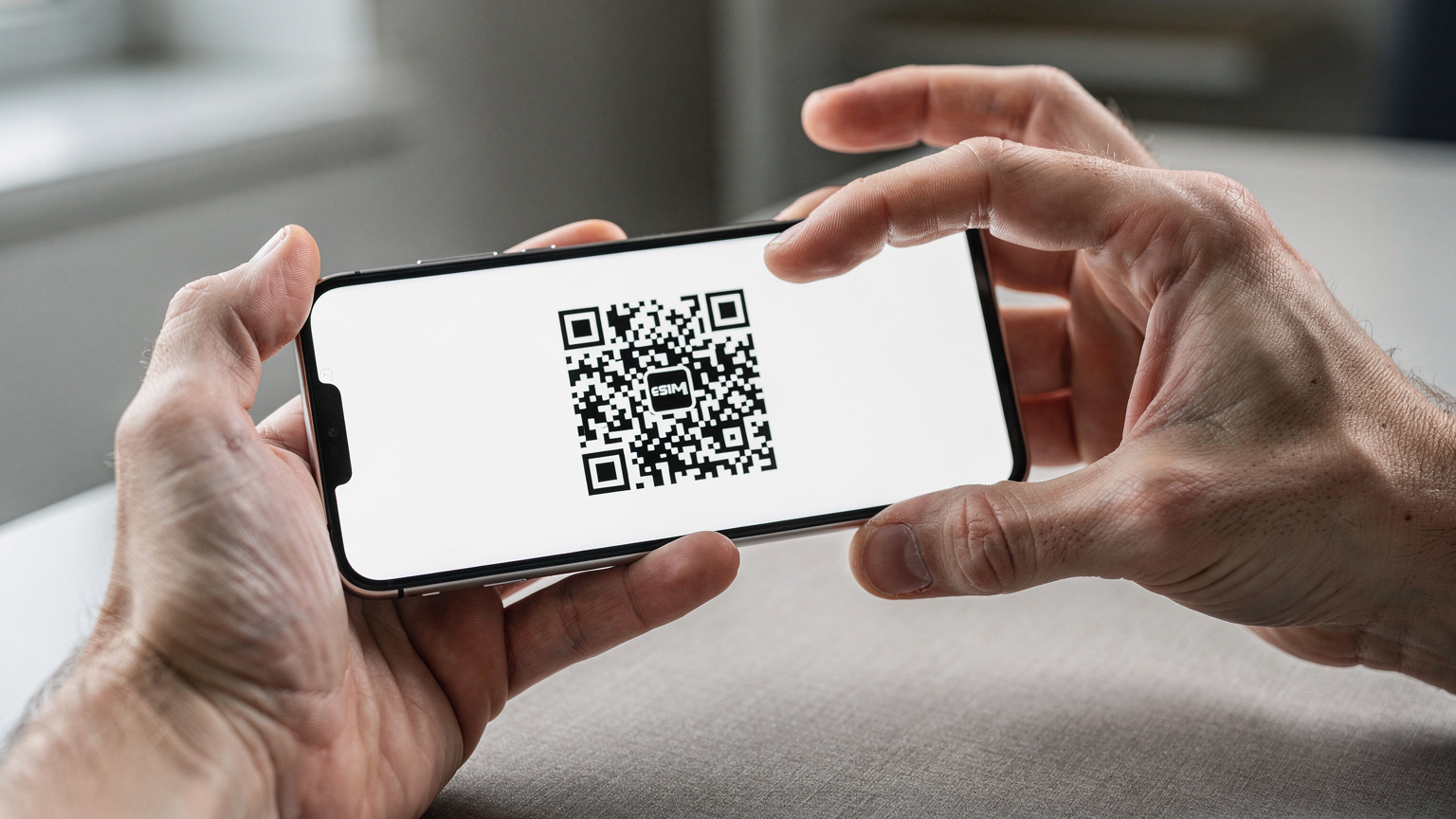
The Nomad app is clean and functional. Buying a plan is usually a few taps, and installation involves scanning a QR code or manual entry. I've found their installation process to be fairly straightforward on both my iPhone and my Samsung Galaxy. One minor quibble I've had in the past is that sometimes the activation can take a few minutes longer than expected, particularly if you're trying to activate right after landing at a busy airport like Heathrow's Terminal 5. Patience is a virtue, but when you're desperate for that taxi app, it feels like an eternity.
Cellesim Unpacked: What Sets Us Apart
Now, let's talk about Cellesim. Our approach has always been about making connectivity not just easy, but truly seamless and value-driven. We've built our service with the seasoned traveler in mind, someone who expects reliability without breaking the bank, and without unnecessary fuss. We also understand that for many, an eSIM is more than just data, it's about security and peace of mind, which is why we’ve incorporated some key differentiating features.
Cellesim Data Plans and Pricing Philosophy
At Cellesim, we focus on providing straightforward, competitive pricing, often with a more attractive per-gigabyte rate, especially on our larger and multi-country plans. We believe in transparency, meaning no hidden fees or surprise charges. For example, a comparable 5GB plan for France might come in slightly cheaper, or offer more data for the same price, depending on current promotions. We also offer more robust regional and global plans that tend to be more cost-effective for longer trips or extensive multi-country itineraries, like a month-long tour of the Middle East.
We also pay close attention to the validity periods, ensuring they align with typical travel durations. A 30-day plan truly means 30 days, not 28. This might seem small, but it's a detail that can make a difference when you're relying on that final bit of data to navigate the Tokyo Metro on a busy Monday morning (the Yamanote Line is no joke during rush hour).
Global Coverage and Network Partnerships
Cellesim prides itself on extensive global coverage, achieved through partnerships with top-tier local network operators. This means we aim for the strongest possible signal and data speeds wherever you go. In Italy, for instance, you'd be connecting through providers like Vodafone IT or TIM, ensuring excellent coverage even in smaller towns outside of Rome's city center, like Orvieto. We prioritize stable 4G LTE and increasingly 5G where available, so you're not left wondering if 256kbps is enough to stream a quick video or make a WhatsApp call.
| Region | Key Cellesim Partners | Typical Coverage (4G LTE) |
|---|---|---|
| Europe | Vodafone, Orange, Deutsche Telekom, O2 | 95-99% in major areas |
| North America | AT&T, T-Mobile, Bell, Rogers | 90-97% in populated areas |
| Asia-Pacific | AIS, SoftBank, Optus, Singtel | 90-98% in major cities/coasts |
| Middle East | Etisalat, STC, Ooredoo | 85-95% in key areas |
The Cellesim User Experience: Simplicity and Speed
Our focus is on making the process as smooth as possible. From selecting your plan to activation, it should feel intuitive. We've honed our app and website to ensure a swift purchase and activation flow. I've personally walked countless travelers through the setup process, and the feedback consistently highlights how quick it is. For an iPhone user, it’s often as simple as scanning a QR code in Settings > Cellular > Add eSIM, then following a couple of prompts. On Android devices, it’s a similar journey through Settings > Network & internet > SIMs > Add eSIM. We aim for activation within a minute or two, because when you've just landed and need to find your AirBnB in Lisbon's Alfama district, every second counts.
Apples to Apples: Data Plan Comparison
Let's get down to the numbers, where the real differences often emerge. While both providers offer various data bundles, it's the nuances in pricing, validity, and plan structure that can swing your decision.
Single-Country Plans: A Focused Look
For a short trip to a single destination, say, a week in Rome, you might compare a 3GB plan from both. Nomad might offer a 3GB plan for 7 days at $8 USD. Cellesim, for the same $8, might offer 5GB for 10 days. These figures are illustrative, of course, but they reflect a general trend I've observed: Cellesim often provides more data or a longer validity period for a similar price point, especially as data volumes increase.
Regional and Global Plans: For the Multi-Stop Adventurer
This is where Cellesim often shines. If you're traversing multiple countries, perhaps an autumn tour through Germany, Austria, and Switzerland (perfect for catching the fall festivals), a regional plan is a must. Nomad offers regional plans, but Cellesim's regional bundles often provide a better per-GB rate. For example, a 20GB Europe plan for 30 days might be $35 USD with Nomad, while Cellesim could offer 25GB for $32 USD with an identical validity. This becomes significant when you're relying on data for navigation, research, and keeping in touch across an entire continent. The savings on a larger plan, especially for backpackers or digital nomads, can add up to a considerable sum over a month.
| Feature | Nomad eSIM | Cellesim |
|---|---|---|
| Typical 5GB Europe Plan (30 days) | $12-15 USD | $10-13 USD (often with more data/validity) |
| Typical 20GB Global Plan (30 days) | $45-55 USD | $40-50 USD (often with higher data allowance) |
| Free VPN Inclusion | No | Yes, bundled with every eSIM |
| Data Rollover | Limited / No | No (industry standard for prepaid) |
| Transparency of Pricing | Good | Excellent, often clearer per-GB cost |
Network Coverage and Reliability: Where Your Data Really Lives
This is arguably the most critical aspect of any eSIM service. A cheap plan is useless if you're stuck with no signal when you're trying to find your way to a specific ramen joint in Tokyo's Shinjuku Gyoen area. Both Nomad and Cellesim leverage local network partners, but the quality and consistency of these partnerships can differ.
How Nomad Handles Network Access
Nomad usually provides access to one or two primary carriers in each country. This is generally sufficient in urban centers. For instance, in London, you'd likely connect to either O2 or Vodafone UK. While this offers broad coverage, there can be slight variations in speed and reliability depending on which specific cell tower your phone latches onto. I've heard anecdotes from fellow travelers about slower speeds during peak hours in popular tourist spots, though this isn't unique to Nomad.
Cellesim's Approach to Robust Connectivity
Cellesim prioritizes robust connectivity by often partnering with multiple leading networks in each destination where available. This allows your device to automatically switch to the strongest available signal, minimizing dead zones and optimizing speeds. For example, if you're traveling through the Italian Dolomites, your Cellesim eSIM might seamlessly switch between TIM and WindTre, ensuring you stay connected even in more remote mountain villages. Our commitment is to ensure you have the best possible connection, whether you're uploading photos from the top of Mount Fuji or simply checking the ATM train schedule in Milan.
The User Experience: From Purchase to Connection
A good eSIM isn't just about data, it's about the entire journey: how easy it is to find a plan, buy it, install it, and get connected. This is where a well-designed app and clear instructions truly make a difference.
Nomad's App and Activation Flow
Nomad's app is generally well-designed, with a clean interface. Browsing plans is intuitive, and the checkout process is standard. Installation typically involves scanning a QR code, which is straightforward for most modern smartphones. My main point of friction, as mentioned, has been occasional delays in the activation process, especially if I'm trying to set it up right after landing and I'm a bit rushed. I once landed in Amsterdam, hoping to call an Uber from Schiphol, and spent a good ten minutes trying to get the eSIM to provision, which felt like an eternity when all I wanted was to get to my hotel in Jordaan.
Cellesim's Streamlined Setup Process
We've invested heavily in optimizing our user experience. From the moment you land on our website or open our app, finding the right plan for your trip to France is quick. Our checkout is designed for minimal clicks, and our activation process is engineered for speed. We provide clear, step-by-step guides for all major devices (iPhone, Samsung, Pixel), which are also easily accessible in our FAQ section. Our goal is to have you connected within minutes, not just seconds, of purchase. We've fine-tuned the backend to ensure immediate provisioning, so you're not left waiting for that 'activating' message to disappear. This means you can buy your eSIM before you even board your flight and activate it the moment you land, without a hiccup. It's the difference between smoothly walking off the plane and into a taxi, or standing by the luggage carousel frantically refreshing your phone.
Installing Your Cellesim eSIM on iPhone (iOS 17+)
- Purchase Your Plan: Select your desired Cellesim plan from our website or app and complete the purchase. You'll receive an email with your QR code and manual installation details.
- Open Settings: On your iPhone, go to Settings.
- Tap Cellular: Select Cellular (or Mobile Data, depending on your region).
- Add eSIM: Tap Add eSIM.
- Scan QR Code: Choose Use QR Code and scan the QR code provided by Cellesim. Alternatively, tap Enter Details Manually and copy/paste the SM-DP+ Address and Activation Code.
- Confirm Activation: Follow the on-screen prompts to label your new eSIM (e.g., 'Travel eSIM') and set it as your preferred line for cellular data when traveling.
Installing Your Cellesim eSIM on Android (Samsung/Pixel)
- Purchase Your Plan: Buy your Cellesim plan and receive your QR code/manual details via email.
- Go to Settings: On your Android device, open Settings.
- Navigate to Network: Tap Network & internet (or Connections on Samsung).
- Add SIM: Select SIMs, then tap Add eSIM or + next to 'Download a SIM'.
- Scan QR Code: Choose Scan QR code and scan the code. If scanning isn't possible, select Enter it manually and input the provided details.
- Activate: Confirm the download and activation of your eSIM. You can then manage its settings, like naming it and setting it for mobile data while abroad.
Customer Support: When Things Go Sideways
No matter how seamless a service is, sometimes things go wrong. A connectivity issue in a remote area, trouble with activation, or a billing query. This is when robust and responsive customer support becomes invaluable. Getting stuck in a new city without data is stressful enough without also wrestling with an unhelpful chatbot or waiting days for an email reply.
Nomad's Support Channels
Nomad offers customer support primarily through email and an in-app chat feature. From what I've gathered and experienced, responses are generally within 24 hours, which is decent for non-urgent issues. However, for immediate problems, like being unable to connect upon arrival, waiting a few hours can feel like an eternity. I once had an issue with a data plan not activating in Ho Chi Minh City, and it took several back-and-forth messages over a day to resolve it, leaving me to rely on spotty hotel Wi-Fi in the Phạm Ngũ Lão area for crucial navigation. It eventually got sorted, but the initial stress could have been avoided.
Cellesim's Responsive Support Commitment
At Cellesim, we understand that connectivity is critical. Our support team is trained to handle queries swiftly and effectively, focusing on quick resolution. We offer multiple channels, including 24/7 live chat support, ensuring you can reach a real person when you need help most. Our goal is to troubleshoot and resolve issues on the spot, so you're not left in the lurch. This proactive approach means less time stressing about your phone and more time enjoying your trip, whether you're bargaining for spices in Istanbul's Grand Bazaar or trying to figure out the best route on the BVG U-Bahn in Berlin.

Value-Added Features: Beyond Just Data
In a competitive market, what truly sets a provider apart can be the extras they offer. It's not just about raw gigabytes anymore, it's about the overall package and the peace of mind it brings.
Nomad's Extra Offerings
Nomad's primary focus is data. While they occasionally run promotions or offer loyalty discounts, they don't typically bundle additional services like VPNs or call minutes into their standard eSIM packages. Their strength lies in providing straightforward data plans, which for many travelers, is precisely what they're looking for, no frills attached.
Cellesim's Unique Free VPN Inclusion
One of Cellesim's standout features, and one I personally value greatly, is the inclusion of a free VPN with every eSIM purchase. This isn't just a nice-to-have, it's a crucial security tool, especially when traveling. Think about it: you're likely connecting to unsecured public Wi-Fi networks in airports, cafes, or hotels. A VPN encrypts your internet traffic, protecting your personal data from potential snooping. Moreover, it can help bypass geo-restrictions, allowing you to access your home country's streaming services or websites that might be blocked abroad. For a traveler concerned with digital security, this is a significant added value that Nomad does not currently offer.
It's also about privacy. When I was in Beijing a few years ago, trying to access my usual news sites, the Great Firewall made it a frustrating experience. A VPN, like the one bundled with Cellesim, makes navigating such digital landscapes much smoother and safer. It's a small detail that makes a big difference in a world where online security is paramount.
My Final Verdict: Which eSIM Provider Deserves Your Next Trip?
Choosing between Nomad eSIM and Cellesim ultimately comes down to your priorities as a traveler. Both are reputable providers offering valid solutions for international data connectivity. However, after years on the road and countless eSIM activations, I find Cellesim offers a more compelling overall package, especially for those who prioritize value, robust connectivity, and added security.
When Nomad eSIM Might Be a Good Fit
- For very short, single-country trips: If you just need a small data bundle for a few days in a popular tourist destination, Nomad can be a convenient option.
- If you prioritize simplicity above all else: Their plans are generally straightforward, and their app is easy to navigate.
- If you're less concerned with per-gigabyte cost: For smaller plans, the price difference might be negligible enough not to matter.
Why Cellesim Often Pulls Ahead
- Better Value on Larger Plans: For longer trips or heavier data users, Cellesim frequently offers more data for your money, or a lower per-gigabyte cost, particularly on regional and global plans.
- Enhanced Network Reliability: Our multi-carrier partnerships in many regions mean your device can automatically switch to the strongest signal, reducing dead spots and ensuring more consistent speeds.
- Free VPN for Security and Access: The bundled VPN is a significant advantage, offering crucial security on public Wi-Fi and allowing access to geo-restricted content. This is a peace-of-mind feature that’s hard to put a price on.
- Faster, More Responsive Support: Our 24/7 live chat and dedicated support team are there to resolve issues quickly, ensuring you spend less time troubleshooting and more time exploring.
- Seamless User Experience: From purchase to activation, Cellesim's process is designed to be quick and intuitive, getting you connected within minutes of landing.
Ultimately, Cellesim is built for the modern traveler who demands reliability, value, and peace of mind. While Nomad provides a decent service, Cellesim’s comprehensive offering, particularly its competitive pricing on larger plans and the invaluable included VPN, makes it a superior choice for ensuring you stay connected, securely and affordably, on your next adventure. Whether you're planning a quiet escape to the Cotswolds or a bustling city break in Singapore's Marina Bay, having reliable data is your lifeline, and Cellesim is engineered to be just that.
Frequently Asked Questions
What is the main difference in pricing between Nomad eSIM and Cellesim?
While both offer competitive pricing, Cellesim often provides better per-gigabyte value, especially on larger data bundles and multi-country regional plans. Nomad's smaller, single-country plans can be competitive, but Cellesim tends to offer more data or longer validity for a similar price point.
Does Cellesim offer a free VPN like some other providers?
Yes, Cellesim stands out by including a free VPN with every eSIM purchase. This enhances your online security on public Wi-Fi and allows you to bypass geo-restrictions, a feature not typically offered by Nomad eSIM.
How does Cellesim's network coverage compare to Nomad eSIM?
Cellesim prioritizes robust connectivity by partnering with multiple top-tier local network operators in many destinations. This allows your device to automatically switch to the strongest available signal, aiming for more consistent coverage and speeds compared to providers that might rely on fewer partner networks.
Is the eSIM activation process complicated for Cellesim?
No, Cellesim has streamlined its activation process to be quick and intuitive. For most modern smartphones, it involves scanning a QR code or entering a few details, typically getting you connected within minutes of purchase, with clear step-by-step guides available for all major devices.
What kind of customer support can I expect from Cellesim versus Nomad eSIM?
Cellesim offers 24/7 live chat support with a focus on swift problem resolution, ensuring you can reach a real person quickly for immediate assistance. Nomad eSIM typically offers email and in-app chat support with response times that can sometimes extend to several hours.
Can I use Cellesim for remote work or longer trips?
Absolutely. Cellesim's larger data bundles and competitive regional/global plans are particularly well-suited for remote workers or travelers on extended trips, providing both value and reliable connectivity for sustained usage across multiple countries.