
Nomad eSIM: The Price of Convenience for Backpackers
Let's be real: Last spring, during my 8-day sprint through the Balkans, I shelled out a whopping €280 on data. That's a huge chunk, especially when I try to stick to a €40/day budget for everything else. Nomad eSIM was part of that spending spree, and it taught me some hard lessons about picking convenience over saving money. Is it really the "best alternative" for digital wanderers in 2026? It really depends on how much cash you've got and how much you hate haggling for a local SIM at a dusty roadside shop.
My Substack readers know I'm a stickler for costs. Every euro matters when you're trying to stretch your travel funds across half a continent. eSIMs generally promise a lot: instant connection, no fumbling with physical SIM cards, and easy top-ups. Nomad is one of the big names often popping up on those "top 5 eSIMs" lists. But for us backpackers and budget digital nomads, the question isn't just "does it work?", it's "does it work without draining my bank account?"
We're talking about real trips here, not corporate expense accounts. The difference between a €5 local SIM and a €25 eSIM for the same data could mean an extra night at a decent hostel or two more meals from a street vendor. This review isn't about luxury travel; it's about making smart choices to make your money last longer on the road.
Initial Impressions and Setup
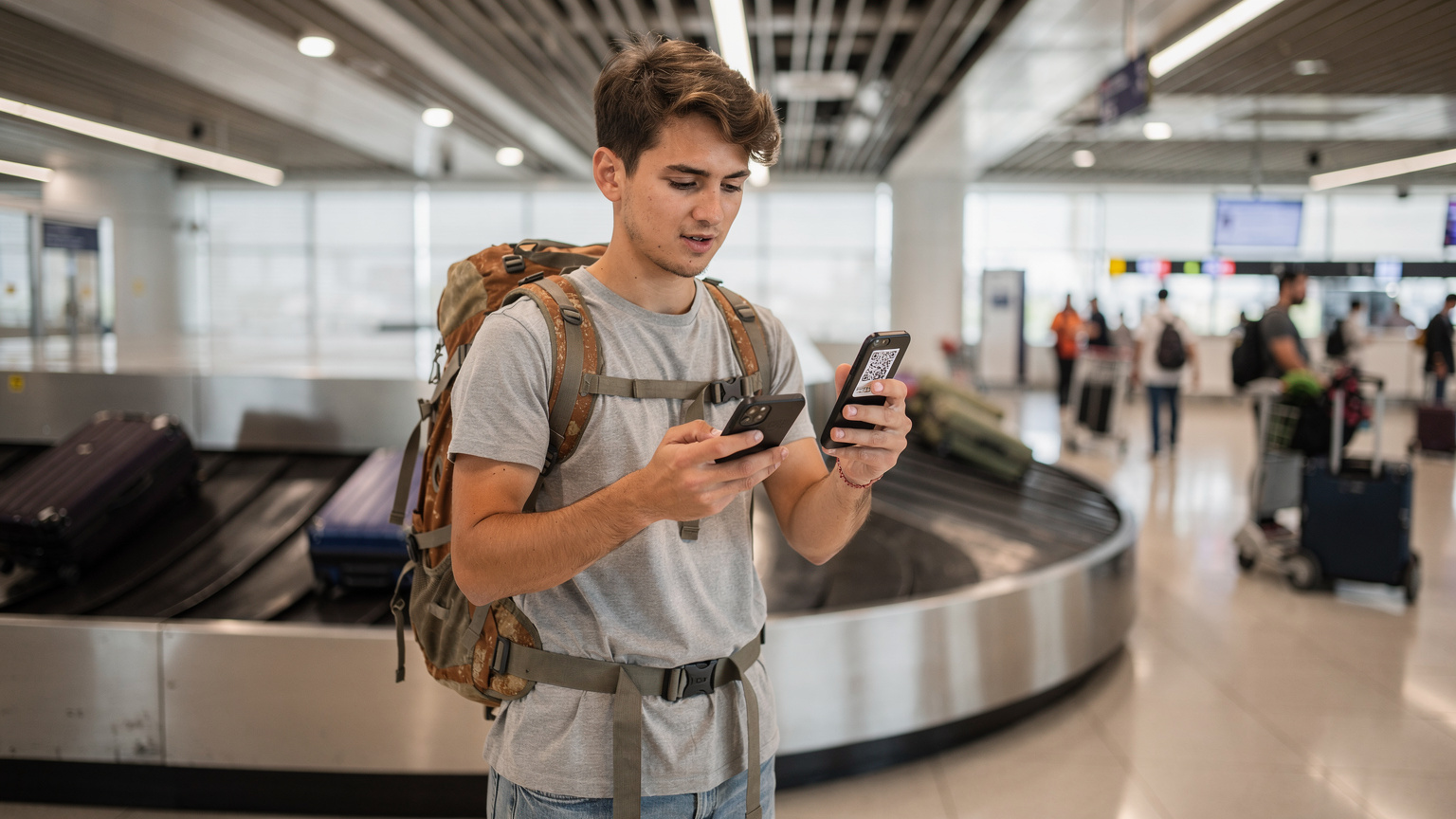
Setting up Nomad eSIM was pretty straightforward, I'll give them that. After you buy a plan, usually through their app, you get a QR code or some details to punch into your phone's settings. For iPhone users, the process is pretty smooth, especially on newer models like the iPhone 15 and up, which are designed more for eSIMs. I used it on my iPhone 14 Pro, which handles several eSIM profiles without a hitch. Activation was quick; I had data within minutes of landing in Tirana, Albania. No hunting for a SIM shop, no language issues, and no handing over my passport for registration. That convenience is definitely appealing, especially after a long flight.
Unpacking Nomad eSIM: Pricing and Plans for 2026
Here's where it gets real, where your euros meet the digital wallet. Nomad eSIM offers different plans: local, regional, and global. For a digital nomad, regional or global plans often seem most appealing because you don't have to buy a new SIM every time you cross a border. But let's take a closer look at the actual price per GB.
| Plan Type | Data (GB) | Validity (Days) | Price (USD) | Price per GB (USD) |
|---|---|---|---|---|
| Local (Thailand) | 5 | 7 | 15.00 | 3.00 |
| Regional (Europe) | 10 | 30 | 35.00 | 3.50 |
| Global (100+ Countries) | 20 | 30 | 70.00 | 3.50 |
| Local (Japan) | 3 | 15 | 12.00 | 4.00 |
These prices are estimates for early 2026 and they do change. What's immediately clear is the price per gigabyte. For comparison, a local physical SIM in Thailand, from AIS or TrueMove H, often gives you 15-20 GB for about 300-400 THB (roughly €8-€10) for 30 days. That's a price per GB of less than €1, sometimes as low as €0.50. The numbers just don't favor Nomad if you're watching every cent.
Hidden Costs and Data Rollover
Nomad's plans generally work on a pay-as-you-go basis, meaning once your data runs out or the plan expires, it's gone. No rollover. This is pretty standard for most eSIMs and physical SIMs, but it's something important to remember. If you buy a 5GB plan for 7 days and only use 3GB, that leftover 2GB vanishes. This is where you need to plan carefully, especially with unpredictable travel schedules.
Another "hidden cost" isn't money, but opportunity. If you're always buying smaller data packs, you're paying more per GB than if you bought a larger one. But then you risk spending too much if your plans change. It's a constant balancing act. Nomad doesn't offer unlimited plans in many regions, which can be a problem for heavy data users who use their phone for tethering or remote work (like video calls).
Coverage and Network Reliability: Where Does Nomad Stand?
Nomad eSIM basically resells data, meaning it partners with local network operators. So, your actual coverage and speed depend entirely on which local carrier they've hooked you up with in a particular country. In big cities, this usually isn't an issue. In Bangkok, my Nomad eSIM on AIS was super fast. But in a small village in Northern Albania, it struggled, often stuck on 3G while a local Vodafone Albania SIM had solid 4G. (Quick note: If you're looking at Vodafone's roaming in 2026, prepare for those high prices.)
Their website proudly states coverage in over 100 countries, which sounds impressive. But "coverage" is a vague term. It doesn't promise 5G speeds everywhere, or even reliable 4G in rural areas. My experience has been that in Western Europe and major Asian travel hubs, Nomad works fine. But if you go off the beaten path, you might find yourself without a signal, desperately trying to find Wi-Fi in a cafe.
Speed Tests and Real-World Performance
I ran some speed tests using Speedtest.net with my Nomad eSIM in different places. In central Rome, connected to what I believe was a TIM network, I consistently got 80-100 Mbps download and 20-30 Mbps upload. Perfectly good for streaming and video calls. However, when I crossed into Montenegro, using a Telenor partner network, speeds dropped to about 20-30 Mbps download. Still usable, but noticeable. It's a bit of a gamble, really, which underlying network you'll get.
For those of us who need stable internet for work, this inconsistency can be annoying. You can't always pick your provider when you buy a regional Nomad pack. This lack of transparency about the actual carrier can be a big disadvantage. You're basically trusting Nomad to choose the best network for you, which isn't always the cheapest or fastest local option.
The Local SIM Card Alternative: Still King for Ultra-Budget?
For travelers who are super budget-conscious, the physical local SIM card is still the best choice in many countries. Yes, it takes a bit more effort: finding a store, showing your passport, sometimes dealing with a language barrier. But the savings can be huge, often 2-5 times cheaper per GB than even the most competitive eSIMs, including Nomad. For instance, in Japan, you can grab a physical SIM from a SoftBank or au store at Narita Airport for about 3,000 JPY (€19) for 10GB over 30 days. Compare that to Nomad's 3GB for 15 days at €12, and it's an obvious choice if you're staying in one place. Or consider Ubigi eSIM Japan vs. Cellesim, where local options often still win on pure price per GB.
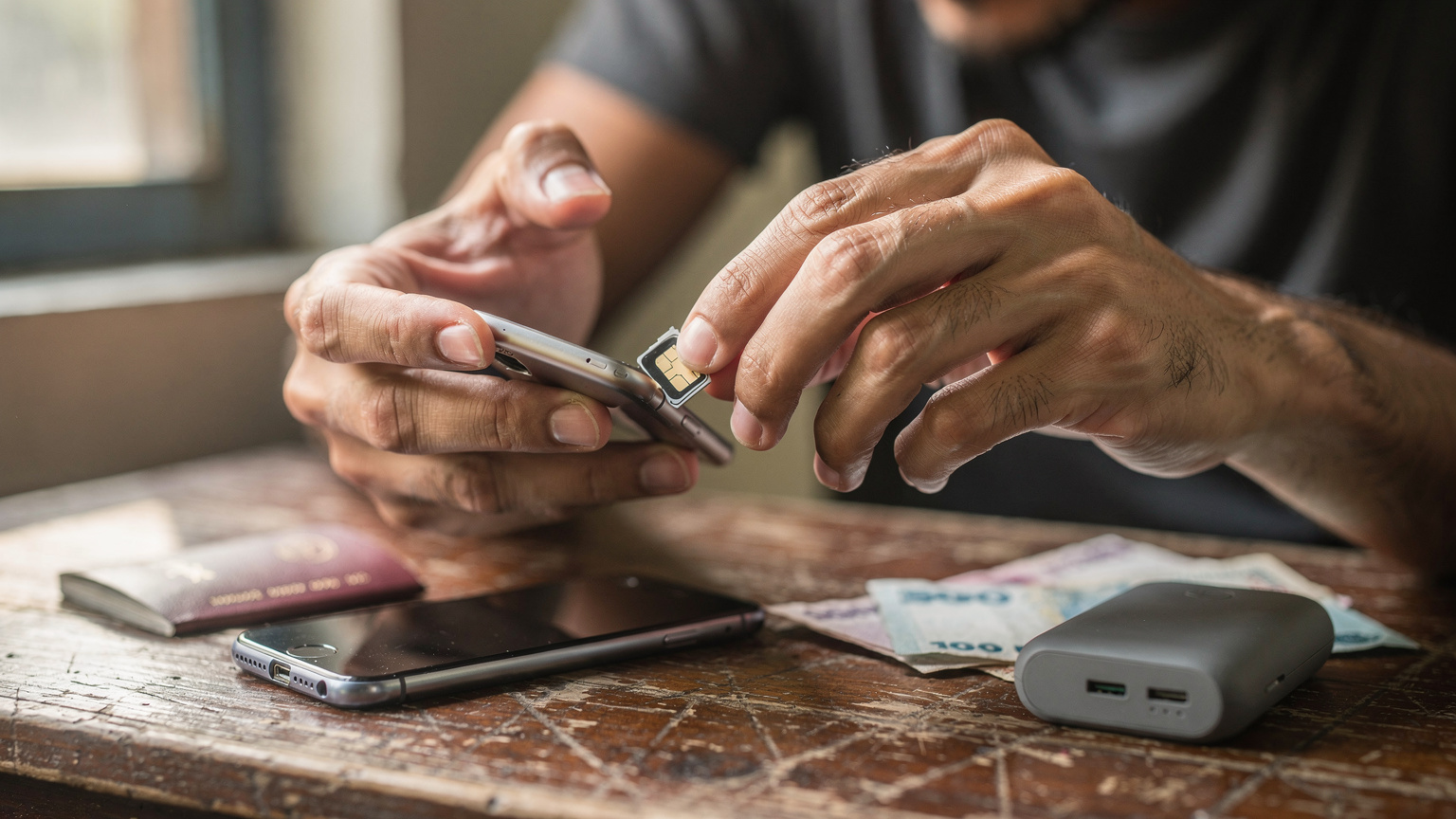
My advice for longer stays (anything over a week in a single country) is almost always to get a local physical SIM. The initial hassle is usually worth the long-term savings. For example, in Vietnam, a Viettel SIM with unlimited data for 30 days costs about 150,000 VND (€6). You simply can't beat that with a global eSIM provider.
Border-Crossing Edge Cases and the Dual SIM Strategy
This is where eSIMs *can* really shine, especially for quick border crossings. Imagine going from Croatia to Bosnia and then to Serbia within a week. Buying three separate physical SIMs would be a nightmare. This is a perfect scenario for a regional eSIM plan. Even here, though, you need to be smart. My strategy often involves keeping my home SIM (with international roaming turned off, obviously) as my main number, and using an eSIM for data. This lets me get important calls or texts to my primary number without racking up huge roaming charges. Activating an eSIM on your iPhone for this dual-SIM setup is quite easy.
For a short hop, like a day trip from Budapest to Bratislava, a regional Nomad eSIM could make sense. But for longer, multi-country journeys, the costs really add up. I prefer Cellesim's regional packs for these situations, as their pricing tends to be more competitive per GB for longer durations, giving a better balance between convenience and cost.
Activation and User Experience: Smooth Sailing or Border Headaches?
Nomad's app is generally well-designed and easy to use. Browsing plans, buying, and installing an eSIM profile is usually a breeze. The process typically goes like this:
- Download the Nomad App: It's on iOS and Android.
- Pick Your Destination and Plan: Choose a country or region, then select a data package based on how much data (GB) and how long it lasts.
- Buy the eSIM: Pay securely right within the app.
- Install the eSIM Profile: This is the key step. You'll usually get an option to install directly (on iOS) or scan a QR code. Make sure you're on Wi-Fi for this.
- Activate the Plan: Once installed, you might need to turn on the eSIM line and select it for mobile data in your phone's settings. Sometimes, it activates automatically when you land in the destination country.
However, I've had a few small issues. Once, in Turkey, after landing at Istanbul Airport, my Nomad eSIM wouldn't connect. A quick troubleshooting session (toggling airplane mode, restarting the phone) eventually fixed it, but it was a minor panic moment, especially when you're tired and just want to order a Bolt. This is where a physical SIM has an edge; you can often see the network name right away.
Customer Support: When Things Go Wrong
I've had to contact Nomad support twice. Both times were through their in-app chat. Response times were okay, within a few hours, but not immediate. The agents were polite but sometimes felt a bit robotic, just following a script. They eventually solved my problems, but it wasn't the kind of quick, on-the-ground support you might get from a local carrier. For a backpacker, especially when you're stranded at a bus station in the middle of nowhere, instant support is crucial. That's a significant pain point. Cellesim, in my experience, has generally offered more proactive and helpful support, especially with tricky network issues.
Border Crossings and Multi-Country Travel: Nomad's Niche?
This is probably where eSIMs like Nomad truly shine. They save you the scramble to find a new physical SIM every time you cross an invisible line on a map. For example, my trip last year from Slovenia through Croatia and into Bosnia and Herzegovina. A regional Europe eSIM from Nomad meant I didn't have to swap cards or register new numbers at each border. This genuinely saves time and reduces stress. Imagine getting off a night bus from Zagreb to Sarajevo at 4 AM; the last thing you want to do is hunt for a SIM shop.

However, the cost still needs to be considered. While convenient, a regional pack is almost always more expensive than buying individual local SIMs in each country. For a month-long trip covering several European countries, a 10GB regional Nomad pack might cost €35-€40. If you were to buy local SIMs, say a 5GB local SIM in Slovenia for €10, another 5GB in Croatia for €12, and 5GB in Bosnia for €8, your total would be around €30 for 15GB. The convenience comes at a higher price, and for a long-term budget traveler, that extra cost really adds up.
The Cost of Flexibility: Is It Worth It?
For a short, multi-country trip, like a week-long whirlwind through the Benelux countries, the flexibility of a regional eSIM from Nomad is probably worth the extra cost. You're not spending enough time in one place to justify the hassle of getting a local SIM. But for a digital nomad spending a month in Portugal, then two weeks in Spain, and another month in Italy, individual local SIMs or a more cost-effective regional eSIM from a provider like Cellesim will likely save you a significant amount of money in the long run. Remember, every euro saved means another espresso, another tram ticket, another night at a budget hostel. You can learn more about eSIM vs. Local SIM for retirees in South America, as the math for budget-conscious travelers is often similar.
How Does Cellesim Stack Up: A Direct Comparison
Having used both Nomad and Cellesim extensively across different continents, I can give you a direct, honest comparison. Both are eSIM providers, but they have different target audiences and pricing strategies.
| Feature | Nomad eSIM | Cellesim |
|---|---|---|
| Primary Focus | Broad global/regional coverage, quick setup | Cost-effectiveness, deeper country-specific options, better long-term value |
| Price per GB (Approx.) | €3-€5 | €1.50-€3.50 |
| Plan Variety | Local, regional, global. Mostly fixed data/duration. | Local, regional, global. More flexible durations, some unlimited options. |
| Coverage Transparency | Less transparent about underlying carriers. | Often specifies underlying carrier, allowing for better network choice. |
| Customer Support | In-app chat, decent response time, sometimes generic. | Responsive chat/email, often more detailed and proactive. |
| Best For | Short, multi-country hops, travelers prioritizing instant convenience over absolute cheapest price. | Budget backpackers, digital nomads, longer stays, those who crunch numbers for best value. |
My biggest issue with Nomad, from a budget standpoint, is the higher price per GB. Cellesim consistently gives you more data for your euro, especially on longer-duration plans. For example, for a month in Japan, I found Cellesim offered 20GB for €30, while Nomad's similar plan was 10GB for €35. That's a big difference for someone who uses, say, 15GB a month (like me, with occasional tethering).
Flexibility and Long-Term Viability
For a digital nomad, long-term viability is crucial. This means not just price, but also how easy it is to top-up, extend plans, and adjust to changing travel plans. Nomad's top-up options are straightforward, but you're usually buying a new fixed-duration plan. Cellesim sometimes offers more precise top-ups or extensions on existing plans, which can be a lifesaver if you decide to stay an extra week in a certain spot. For a long-term traveler, this flexibility can keep you from overspending on a new, bigger plan when you only need a few more days of data.
Ultimately, Cellesim often fits better with the budget backpacker mindset: getting the most value for your money. Their focus on providing competitive eSIMs for Japan, for example, often comes with clearer carrier information and better data bundles.
Data Consumption: Real-World Math for Digital Nomads
How much data do you *actually* need? This is the million-dollar question that decides whether any eSIM or local SIM is "worth it." My average data consumption while traveling is usually around 500MB to 1GB per day. This includes:
- Navigation: Google Maps, Citymapper, often downloading offline maps when possible.
- Communication: WhatsApp, Telegram, occasional video calls to family.
- Social Media: Checking Instagram, Facebook, Substack analytics.
- Email/Light Work: Replying to emails, managing blog posts, reading news.
- Research: Looking up hostels, bus schedules, local attractions, food blogs.
- Entertainment: Occasional Spotify streaming, maybe a YouTube video if I'm desperate and Wi-Fi is bad.
So, for a 30-day trip, I'm looking at anywhere from 15GB to 30GB of data. If I'm tethering my laptop for a few hours a day for work, that number jumps significantly. One hour of video conferencing can easily eat 500MB-1GB. This is why a 5GB plan for 7 days, like some of Nomad's smaller offerings, is simply not enough for most digital nomads unless they are constantly on Wi-Fi.
Optimizing Data Usage: Hacks for the Road
To keep those data costs down, I use a few tricks:
- Download Everything Offline: Maps, music, podcasts, Netflix shows. Do this before you leave your hostel with good Wi-Fi.
- Use Wi-Fi Whenever Possible: Hostels, cafes, libraries, McDonald's. Even if it's slow, it's free.
- Disable Background App Refresh: Go into your phone settings and turn off data usage for apps you don't need constantly updating.
- Low-Quality Streaming: If you absolutely have to stream video, choose the lowest quality setting.
- Monitor Data Usage: Regularly check your phone's data usage stats to see which apps are using the most data.
These tactics can drastically cut your daily data consumption, making smaller eSIM plans more feasible, but they still won't beat the raw price-per-GB of a local SIM in many cases. They will, however, make your chosen eSIM last longer, potentially saving you from expensive top-ups.
Final Verdict: Is Nomad eSIM Right for Your 2026 Travels?
Nomad eSIM is a good option for certain kinds of travelers in 2026. If you're on a short, multi-country trip and you care more about immediate convenience than getting the absolute lowest price, it definitely works. Setup is easy, and you avoid the hassle of getting a local SIM. It's also a good backup to have if you're crossing a particularly tricky border where local SIMs are hard to find right away (think some remote Balkan crossings, or arriving late at night).
However, for the budget backpacker, the long-term digital nomad, or anyone planning an extended stay in a single country, Nomad eSIM's price per gigabyte generally isn't competitive enough. You'll almost always find a better deal with a local physical SIM card (if your phone supports it) or with other eSIM providers like Cellesim, which often offer more data for the same or less money.
My advice? Always do the math. Calculate how much data you think you'll use daily, multiply that by your trip length, and then compare the price per GB across Nomad, Cellesim, and the cheapest local physical SIM option. For me, Nomad often falls into the "convenient but pricey" category, a choice I might make for a short, busy trip, but rarely for my usual slow travel style. Every euro counts, and right now, Nomad often asks for too many of them.
Frequently Asked Questions
Is Nomad eSIM good for digital nomads in 2026?
Nomad eSIM offers convenience for digital nomads, especially for short, multi-country trips, thanks to its easy setup. However, for long-term stays or those on a strict budget, its price per gigabyte is generally higher than local physical SIMs or other eSIM providers like Cellesim, making it less ideal for cost-conscious nomads.
How does Nomad eSIM compare to local SIM cards in terms of cost?
Local physical SIM cards are almost always cheaper per gigabyte than Nomad eSIM, often by a factor of 2-5 times, especially in developing countries or for longer durations. Nomad provides convenience, but local SIMs offer superior value if you're willing to put in the effort to acquire them.
Can I use Nomad eSIM for long trips across multiple countries?
Yes, Nomad eSIM offers regional and global plans suitable for multi-country travel, eliminating the need to swap SIMs at borders. However, these plans come at a premium. For extended multi-country trips, combining local SIMs with a more cost-effective regional eSIM from Cellesim might offer a better balance of convenience and budget.
Does Nomad eSIM offer unlimited data plans?
Nomad eSIM rarely offers truly unlimited data plans. Most of their offerings are fixed data packages (e.g., 5GB, 10GB, 20GB) for a specific duration. This can be a significant drawback for heavy data users, like digital nomads who rely on tethering for work, where data consumption can quickly exceed these limits.
What happens if I run out of data on Nomad eSIM?
If you run out of data on a Nomad eSIM, your connectivity will cease. You will need to purchase a new data package or top-up your existing plan (if available) through the Nomad app to regain internet access. Unused data typically does not roll over to new purchases.
Is Nomad eSIM coverage reliable in rural areas?
Nomad eSIM acts as a reseller, so its coverage and reliability in rural areas depend on the underlying local network operator in that specific country. While generally good in major cities, performance can be inconsistent in remote locations, sometimes defaulting to slower 3G speeds where local SIMs might offer better 4G or 5G access.