Neden eSIM, Okul Tatili Aileler İçin İdeal?
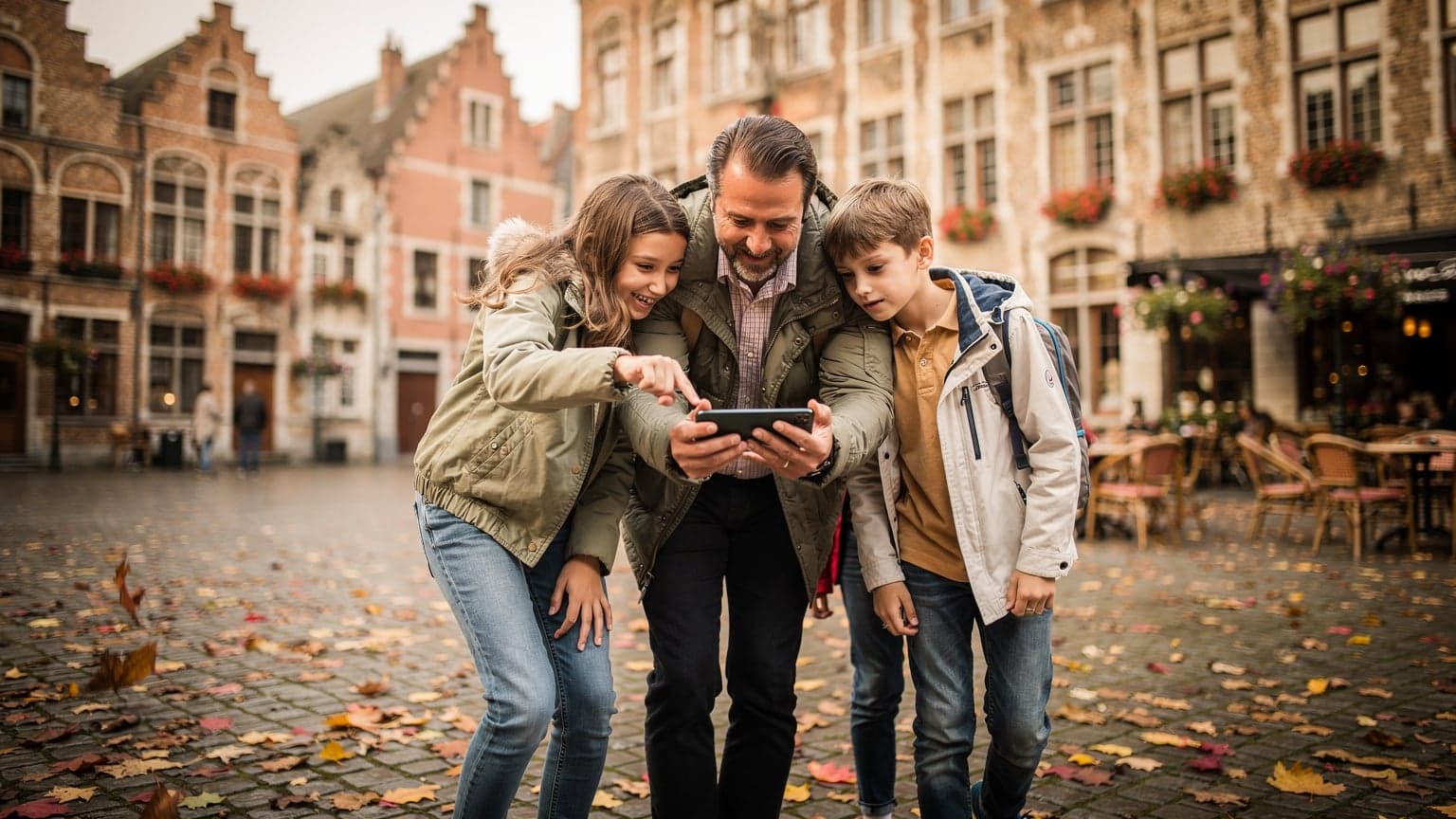
Remember that feeling, standing in line at Rome Fiumicino, jet-lagged kids in tow, trying to explain to a kiosk attendant that you just need 10GB for a week without signing your life away? I do. More than once, usually after an overnight flight into Terminal 3. It's a hassle, particularly when you're trying to keep spirits high for a family holiday. This is precisely where an eSIM becomes not just a convenience, but a genuine lifesaver for school holiday travel in 2026. These shorter, often spontaneous trips, demand immediate connectivity without the usual pre-departure scramble or the post-arrival scavenger hunt for a local SIM card. Imagine landing at Barcelona-El Prat, grabbing a taxi to the Gothic Quarter, and already having data to pull up your Airbnb directions, stream a cartoon for the little ones, or quickly confirm that evening's tapas reservation. That's the eSIM promise, especially for families who value every precious minute of their vacation.
For years, my budget travel advice revolved around local SIMs. I'd tell anyone who'd listen to head straight for a Vodafone or Orange shop on arrival, usually in a city center, because airport kiosks were always a rip-off. I still remember the time I paid an exorbitant €40 for 5GB at an O2 kiosk in Munich's Hauptbahnhof, only to find a better deal down the street at a local shop for €15. The airport ones often close by 9 PM anyway, leaving you stranded if you land late. That kind of frustration is amplified a hundredfold when you're traveling with kids who might be tired, hungry, or just ready to hit the beach in Valencia. An eSIM sidesteps all of it. You buy it online, activate it before you even leave home, or while you're taxiing on the runway. It's a fundamental shift in how we approach international data, moving from reactive to proactive, which is exactly what a family needs for a smooth school holiday escape.
Son Dakika Planlar İçin eSIM Kolaylığı
School holidays, especially those shorter half-term breaks or long weekends, often involve last-minute decisions. A sudden window of opportunity, a flash sale on flights, or just the need for a quick change of scenery. This spontaneity is where an eSIM truly shines. There's no waiting for a physical card to be shipped, no hunting for a local vendor upon arrival, and no fumbling with tiny trays and paperclips at the airport. You can literally be sitting at your kitchen table, planning a trip to the Cotswolds (perhaps to Bibury, if you fancy some quintessential English charm), and have your data sorted for the whole family within minutes. This immediate gratification is invaluable when time is short and the kids' patience is even shorter.
Aile Güvenliği ve Bağlantının Önemi
Beyond convenience, reliable connectivity is a cornerstone of family safety abroad. Whether it's using Google Maps to navigate the labyrinthine streets of Venice's Castello district, checking local transit schedules for the RER A in Paris, or needing to call emergency services, a working phone is non-negotiable. I've had situations where I needed to quickly locate a lost child in a crowded market in Oaxaca, Mexico, and having instant data to message family or pull up a map was critical. With an eSIM, every family member with a compatible device can have their own data plan, or you can tether from one device, ensuring everyone stays connected and reachable. It mitigates those moments of panic, allowing you to focus on enjoying your time together, rather than worrying about getting lost or isolated.
eSIM: Fiziksel SIM Kartlara Karşı Zafer
For over a decade, I’ve been that guy, the one who buys a local SIM card in every country. I've got a collection of defunct plastic squares from dozens of carriers: Mobily from Saudi Arabia, TIM from Brazil, AIS from Thailand. Each one a memory, but also a reminder of the hassle. The language barriers, the passport registrations, the tiny ejector pins I always seem to lose. The rise of eSIM technology has finally offered a genuine alternative that is, quite frankly, superior for most international travelers, especially families on a tight schedule.
The biggest headache with physical SIMs, for me, was always the activation process. In some countries, like Spain, tourist SIMs from Movistar or Vodafone require an ID scan and can take an hour to activate in-store, sometimes longer during peak season (many smaller shops in the Gràcia district of Barcelona close for siesta from 2-5 PM). For a family with restless kids, that's an hour of vacation time you'll never get back. An eSIM, on the other hand, is pre-activated or activates with a simple QR code scan, often taking mere seconds. You can manage multiple eSIM profiles on a single device, switching between them with a few taps, which is incredibly useful if you're hopping between countries like Spain and Portugal during your school holiday. (Need to know more about Movistar eSIM Spain 2026? I've got you covered.)
Çoklu Ülkelerde Sorunsuz Geçiş
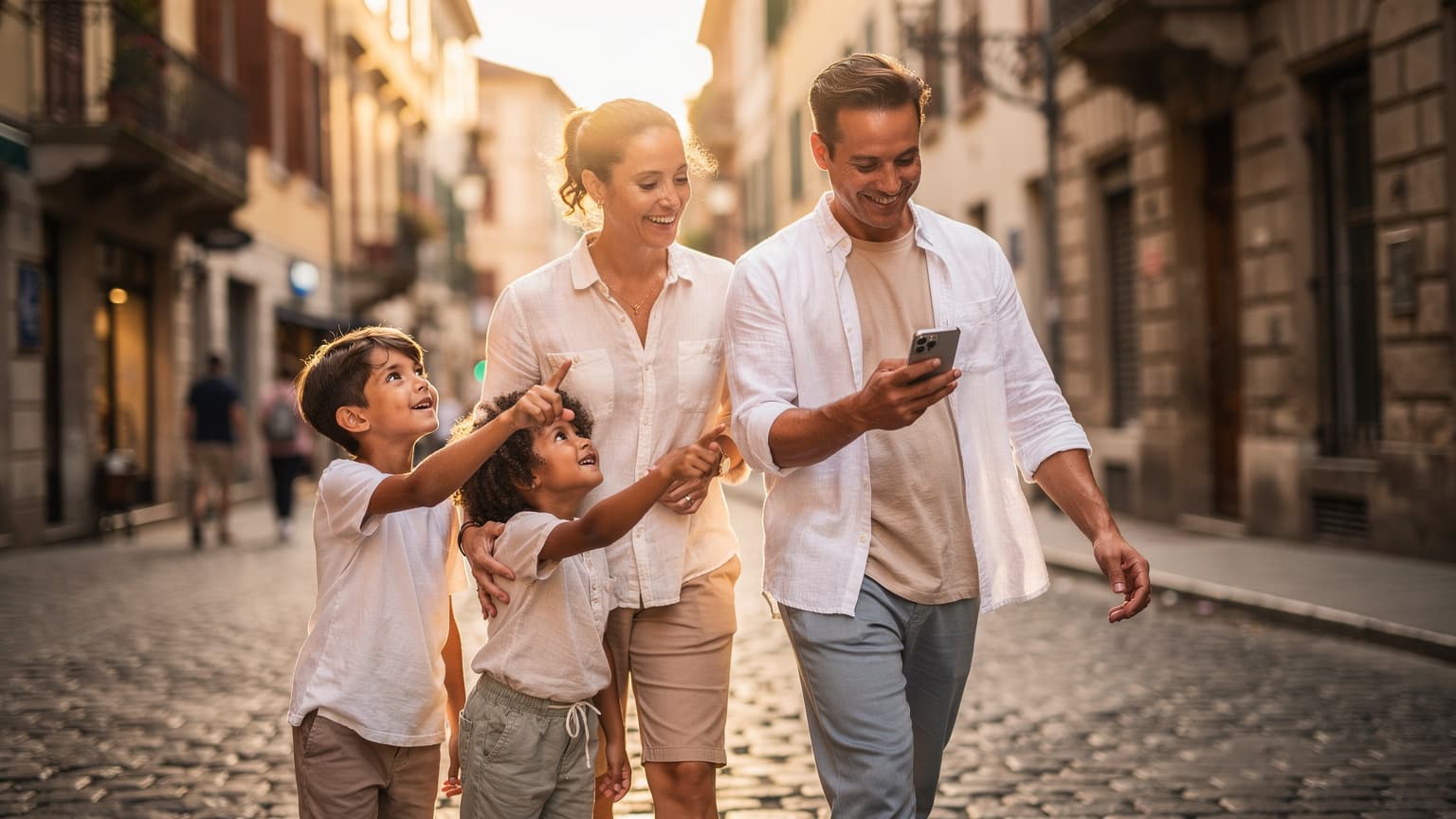
One of the beauties of modern school holiday travel is the ability to visit multiple countries in a short span, especially in Europe. A flight into London Heathrow, a Eurostar ride to Paris, and then perhaps a TGV down to Nice, all within a week. Traditionally, this meant buying a new SIM in each country, or relying on expensive roaming. With a regional or global eSIM plan, your family can seamlessly transition across borders without losing connectivity. Imagine exploring the Louvre in Paris, then hopping on a train to Belgium to taste some chocolate in Brussels' Grand Place, all while your kids are still streaming their favorite shows or using translation apps without a hiccup. This kind of uninterrupted data flow is a game-changer for multi-destination trips, removing a significant layer of logistical stress.
Kayıp ve Hasar Riski Yok
Let's be honest, traveling with kids increases the probability of small mishaps exponentially. Dropped phones, lost wallets, forgotten items in hotel rooms. A physical SIM card is a tiny, fragile piece of plastic. It can be easily misplaced when swapping it out, or damaged if you're not careful. I've personally had a SIM card pop out of my tray and disappear into the abyss of a rental car floor in Sicily, leaving me without data for half a day until I could find a local shop. An eSIM, being embedded directly into your phone's hardware, eliminates this risk entirely. It's digital, secure, and can't be lost or damaged in transit, offering one less thing for parents to worry about.
Aile Seyahatleri: eSIM ile Bütçe Tasarrufu
As the Budget Travel Expert, this is where my ears really perk up. The true cost of international data for families can be astronomical if you're not careful. Relying on your home carrier's roaming plan, like T-Mobile's (while T-Mobile's basic roaming is decent for messaging, the high-speed data buckets can get pricey, and often involve a T-Mobile eSIM QR code activation if you're using a newer device), or AT&T's Passport plans, can easily add hundreds of dollars to your bill. I once racked up a €280 data bill over 8 days with AT&T in Europe, and that was just for myself! Multiply that by a family of four, all trying to use maps, social media, and entertain themselves, and you're looking at a serious dent in your travel budget. (Speaking of, you might want to read my breakdown of AT&T eSIM Abroad: My €280 Data Budget for 8 Days (2026).)
eSIMs, particularly from providers like Cellesim, offer a far more economical solution. They allow you to purchase local or regional data plans at rates significantly lower than traditional roaming. This means more money for gelato in Florence, tickets to the Vienna Prater, or souvenirs from the Grand Bazaar in Istanbul. For budget-conscious families, this isn't just a small saving, it's a fundamental shift that makes international travel more accessible and enjoyable. Plus, with transparent pricing, you know exactly what you're paying for upfront, without any nasty surprises when you get home.
Yerel Tarifelelere Uygun Fiyatlar
The core advantage of an eSIM is its ability to tap into local network rates. When you buy an eSIM for, say, Spain, you're essentially getting access to data at a price point comparable to what a local resident would pay. This completely bypasses the premium that traditional carriers charge for