


T-Mobile eSIM Free Trial: What it Actually is
Let's be clear from the outset: the T-Mobile eSIM free trial you might have heard about is designed for a very specific purpose. It's not a global passport to free data. Instead, it's T-Mobile's way of enticing new customers within the United States. They offer a temporary, no-strings-attached period for potential subscribers to test their network coverage and speeds in their local area, say, if you live in Seattle's Capitol Hill neighborhood or down by the waterfront in Miami. It's a smart move for domestic customer acquisition, allowing folks to see how the magenta network performs on their daily commute, whether that's on the L train in Chicago or the Muni in San Francisco.
This trial usually provides a set amount of data, often around 30GB, for a period like three months. The idea is simple: if you like the service, you're more likely to switch your primary line. If you don't, you simply let the trial expire. It's a test drive, pure and simple, for folks who are considering leaving AT&T or Verizon, not for someone landing at Heathrow and needing directions to their Airbnb in Shoreditch.
The Domestic Focus of T-Mobile's eSIM Trial
The key here is the word 'domestic'. T-Mobile's infrastructure, like any major carrier, is built for its home market. Their free trial is tethered to their US-based network, meaning it operates on their towers and spectrum bands within the continental United States, Hawaii, and Puerto Rico. This isn't a global roaming package or a special international perk.
Think of it this way: when I was working out of a café in Berlin, near the Brandenburg Gate, and trying to get online for a story, my T-Mobile domestic trial eSIM would have been as useful as a chocolate teapot. It just doesn't connect to the local networks, like Deutsche Telekom or Vodafone Deutschland, in the way a dedicated international eSIM would. The trial's purpose is to showcase T-Mobile's US network strength, not its international roaming capabilities, which, even with their 'Magenta MAX' plans, can be quite restrictive for serious data users.
What About T-Mobile's International Roaming Options?
While the free trial doesn't extend abroad, T-Mobile does, of course, offer international roaming. Their 'Simple Global' benefit on many postpaid plans provides free data and texting in over 215 countries and destinations. Sounds great, right?
Well, here's the catch I've hit more times than I care to admit: that 'free' data is usually throttled to 2G speeds. Yes, 2G. In 2026. This means checking a map on Google Maps in a busy place like Tokyo's Shibuya crossing can be agonizingly slow, and trying to upload a photo to Instagram from a cafe in Rome's Trastevere neighborhood? Forget about it. You can upgrade to faster speeds with an International Pass, but those passes start adding up quickly. A 5GB pass for 10 days can run you around $50, and that's just for one country. Suddenly, that 'free' roaming isn't so free, or fast, after all.
Why T-Mobile's Trial Falls Short for International Travel
For anyone planning to step beyond US borders, relying on T-Mobile's free trial for connectivity is a non-starter. It simply wasn't designed for that. And even their standard international roaming, while offering some baseline connectivity, often provides a frustratingly slow experience for anything beyond basic messaging.
My phone, an older iPhone 12, has been my constant companion on countless trips. I've learned the hard way that a slow connection can turn simple tasks into monumental headaches. Trying to order a Bolt taxi in Tallinn, Estonia, while standing in the rain, only to have the app time out because of 2G speeds, is not a memory I cherish. Or, remember that time I needed to pull up my train ticket QR code for the Thalys from Paris Gare du Nord, but the network decided to take a coffee break? These are the moments that make you wish you'd sorted out proper data beforehand.
The Limitations of Carrier-Specific Trials
Major US carriers like T-Mobile, Verizon, and AT&T are primarily focused on maintaining their domestic subscriber base. Their trials, promotions, and even their core services are optimized for the American market. International travel is often an afterthought, a tacked-on extra that comes with significant limitations or additional costs. They aren't in the business of offering free global data because it undercuts their lucrative roaming agreements with foreign carriers.
This is where specialized eSIM providers like Cellesim carve out their niche. We focus exclusively on making international connectivity seamless and affordable. We don't have a domestic network to protect, so our entire business model is built around giving you robust, high-speed data wherever you land.
The Unexpected Headaches of Slow International Data
Slow data isn't just an inconvenience, it's a genuine travel friction point. When you're in a foreign city, say trying to find that tiny tapas bar tucked away in Madrid's La Latina district that everyone raves about, a reliable internet connection is crucial. It's how you navigate, translate, communicate with your travel companions, and access essential information like opening hours (many small businesses in Europe still close for siesta, often from 2:00 PM to 5:00 PM, and you don't want to show up disappointed). For me, it was trying to confirm the 8:00 AM opening time for a specific patisserie in the Marais in Paris, only for my phone to struggle to load the page. Simple tasks become stressful.
Furthermore, many local apps, from ride-sharing like Grab in Southeast Asia to public transit apps like Citymapper in London or the BVG Fahrinfo app in Berlin, rely on a stable, fast connection. You can't hail a taxi from Suvarnabhumi Airport in Bangkok, or check the next U-Bahn arrival at Alexanderplatz, if your data is crawling. These are the moments when a reliable eSIM truly shines.
The True Cost of Roaming with Your Home Carrier
Beyond the free trial's limitations, it's vital to understand the financial implications of using your home carrier's roaming services for international travel. While T-Mobile offers some 'free' data, the moment you need speed, the costs can escalate dramatically. And if you're with a carrier like Verizon or AT&T, the charges can be even higher, often starting at $10-15 per day for an international pass, or exorbitant per-MB rates if you don't opt in.
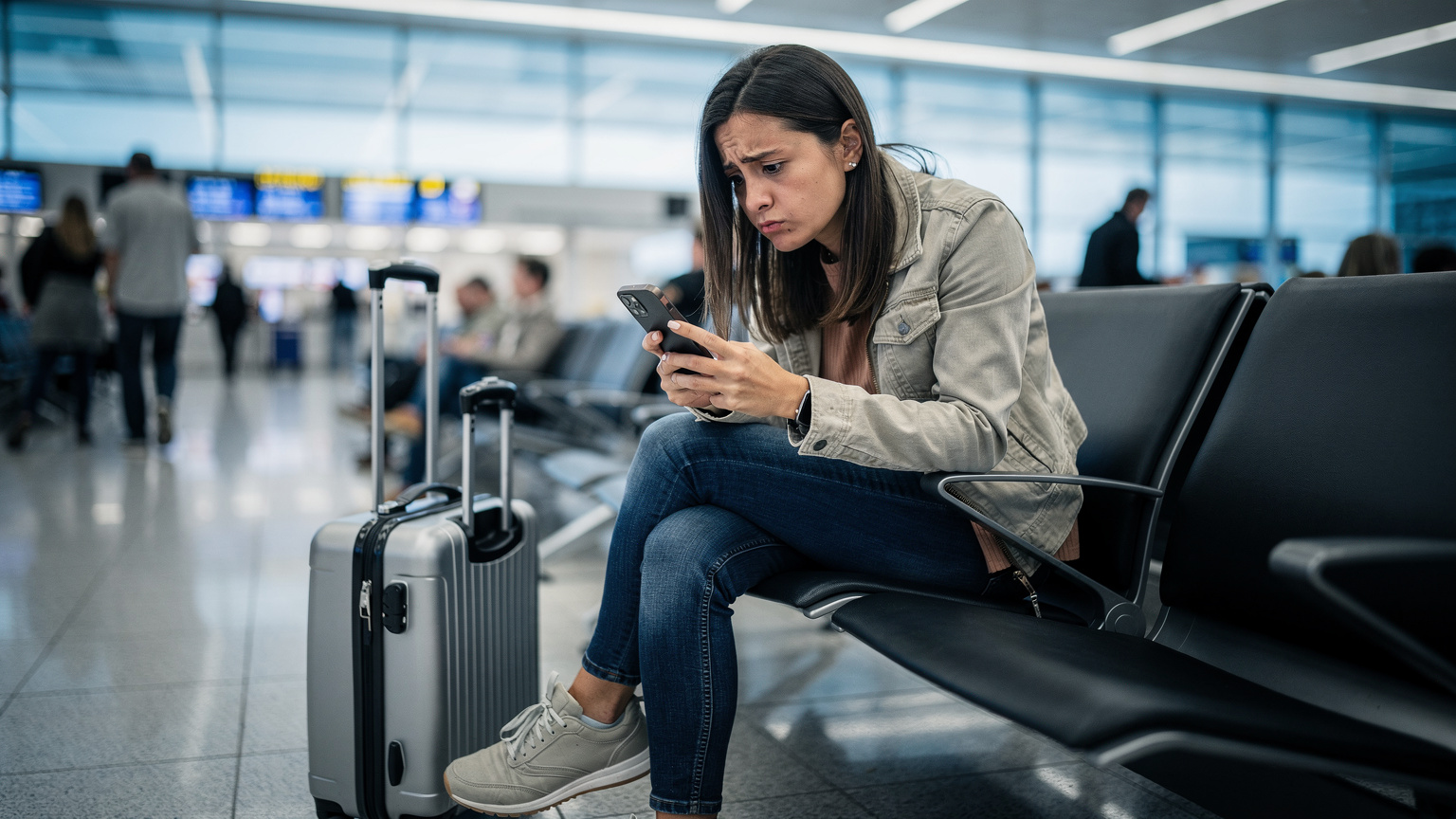
I remember one trip to Japan where I briefly forgot to activate my local eSIM and relied on my US carrier. After just one day of casual browsing and messaging around Tokyo's Shibuya and Shinjuku districts, I received a notification that I'd racked up nearly $70 in roaming fees. That's a significant chunk of change that could have gone towards a delicious bowl of ramen in Golden Gai or a ticket on the Yamanote line. It's a mistake I haven't made since, and it reinforced my commitment to always having a dedicated travel data plan.
Hidden Fees and Unexpected Charges
It's not just the explicit daily or per-GB rates. Many travelers are caught off guard by unexpected charges:
- Overage fees: Go over your allotted data on a roaming pass, and you could be hit with steep penalties.
- Premium rate numbers: Calling a local customer service number that happens to be a premium rate can lead to shocking bills.
- Background data usage: Apps syncing in the background, even when you're not actively using them, can quickly eat through expensive roaming data. (Always check your phone's data usage settings before you fly.)
These hidden costs can turn a carefully budgeted trip into a financial headache. Travel should be about discovery, not deciphering complex international billing statements. This is why a transparent, prepaid eSIM plan is such a relief.
The Value of Predictable, Prepaid Data
With Cellesim, you know exactly what you're paying for upfront. You choose a plan, pay for it, and activate it. There are no hidden fees, no surprise charges, and no fear of returning home to a bill that makes your eyes water. This predictability is a huge advantage, especially for budget-conscious travelers or families trying to manage expenses abroad. For parents traveling with kids, knowing everyone has reliable, prepaid data without unexpected costs can be a game-changer for keeping track of the family, as highlighted in USA Travel with eSIM: The Savvy Parent's 2026 Guide to Family Connectivity.
This certainty allows you to focus on enjoying your trip, whether that's navigating the winding streets of Venice or streaming music as you ride the Scenic Railway through the Blue Mountains outside Sydney, without constantly worrying about your data usage. It's peace of mind in your pocket.
Cellesim's Approach to International Data: No Trial Needed
At Cellesim, our philosophy is simple: provide clear, affordable, and reliable data plans for international travelers. We don't offer a free trial in the same vein as T-Mobile because our product is inherently different. Our eSIMs are designed from the ground up for global connectivity, and our pricing is structured to be transparent and competitive, removing the need for a 'try before you buy' period for our core service. The value is evident from the moment you explore our plans.
Transparent Pricing and Flexible Plans
We offer a wide range of plans, from short-term, small data packages perfect for a quick weekend getaway to larger, longer-term options for extended adventures. Need 3GB for 7 days in France for a quick visit to the Louvre? We have it. Planning a month-long backpacking trip across Southeast Asia and need 20GB? We've got you covered there too. Our plans are typically region-specific (e.g., Europe, Asia, Global) or country-specific, allowing you to tailor your data to exactly where you're going. This means you're not paying for coverage in countries you won't visit.
For instance, if you're heading to Argentina, a Cellesim plan specifically for South America will connect you to local carriers like Claro or Movistar, often at better speeds and prices than your home carrier's roaming. This contrasts sharply with the often limited and expensive roaming options that lead travelers to consider alternatives like those discussed in Vodafone eSIM: The €40/Day Backpacker's Guide to Roaming in 2026.
Instant Activation and Worry-Free Connectivity
One of the biggest advantages of Cellesim eSIMs is the ease of activation. You purchase your plan online, receive a QR code, and activate it on your eSIM-compatible phone (like many modern iPhones, as detailed in iPhone eSIM: Your 2026 Practical Guide to Seamless Global Connectivity). This can often be done before you even leave home, or while you're waiting for your baggage at Incheon International Airport in Seoul. As soon as you land, your phone connects to the local network, and you're online. No more hunting for local SIM card vendors, dealing with language barriers, or registering your passport details at a tiny kiosk in a busy market. It saves time and stress, allowing you to hit the ground running, whether you're navigating the bustling streets of Rome or finding your way around Kyoto's Gion district.
"I've wasted countless hours in airport kiosks and phone stores abroad trying to get connected. With an eSIM, I land, turn on data roaming for the eSIM, and I'm instantly online. It's genuinely changed how I travel. No more fumbling with tiny SIM cards or trying to explain 'data plan' in broken Spanish at a shop in Bogotá."
Comparing T-Mobile vs. Cellesim for Your 2026 Travels
When it comes to international travel data, the choice between sticking with your T-Mobile plan and opting for a dedicated travel eSIM like Cellesim boils down to priorities: convenience versus cost and performance. While T-Mobile offers the convenience of using your existing number, Cellesim offers superior value and speed for data abroad.
| Feature | T-Mobile (with Simple Global) | Cellesim (Travel eSIM) |
|---|---|---|
| Free Trial for Travel | No, domestic only | N/A (prepaid value) |
| Domestic US network testing, limited international roaming | Dedicated international travel data | |
| Typically 2G speeds (throttled), faster with paid pass | High-speed 4G/5G where available | |
| $5-$15/day or $50/10 days for 5GB (approx.) | From $5-$30 for 1GB-10GB over 7-30 days (approx., varies by region) | |
| Free texting, calls $0.25/min (most plans) | Data only (use VoIP apps like WhatsApp/FaceTime) | |
| Limited add-ons | Wide variety of regional, country-specific, and global plans | |
| Automatic roaming, or manual pass purchase | QR code scan, instant digital delivery |
The T-Mobile Advantage and its Limits
If you're a T-Mobile customer, the main advantage of sticking with them for international travel is convenience: you don't need to do anything extra for basic connectivity. Your existing phone number continues to work, and you can receive texts and make calls (albeit often at a per-minute rate). This can be useful for receiving two-factor authentication codes or keeping in touch with home on a minimal basis.
However, that convenience comes at the cost of speed and often, significantly higher data expenses if you need anything beyond very basic usage. Trying to navigate Barcelona's Gothic Quarter with a 2G connection while looking for a specific museum that closes at 6:00 PM (and often earlier on Sundays) can be incredibly frustrating. T-Mobile is great for domestic use, but for serious international data needs, it falls short.
Why Cellesim Wins for the Savvy Traveler
Cellesim offers a compelling alternative because it addresses the core needs of international travelers: reliable, high-speed data at a predictable, affordable price. By using local networks directly, Cellesim eSIMs provide better performance than most roaming options. This means you can confidently use Google Maps to find your way through the labyrinthine streets of Venice, video call family from a cafe in Paris, or upload high-resolution photos of the Roman Colosseum without worrying about slow speeds or exorbitant bills.
It's the difference between merely being 'connected' and being 'truly online' when you're abroad. For many, that distinction is the key to a stress-free and enjoyable trip. For a deeper dive into another popular eSIM provider, check out our Nomad eSIM Review 2026: A Backpacker's Brutally Honest Take.
How to Choose the Right eSIM for Your Trip
Selecting the perfect eSIM isn't a one-size-fits-all decision. It depends on your travel style, destination, and data needs. Just like you wouldn't pack a heavy winter coat for a summer trip to Greece, you shouldn't pick a data plan that's overkill or underpowered for your journey.
Consider Your Destination and Duration
Are you hopping across multiple countries in Europe, or spending two weeks in a single city like Buenos Aires? For a multi-country European tour, a regional Europe eSIM might be your best bet, connecting you across the Schengen Area without needing separate plans for each country. If you're focused on a single nation, a country-specific plan often provides more data for less money, and sometimes even better local network prioritization. Also, think about how long you'll be gone. Most eSIMs offer validity periods ranging from 7 to 30 days, so pick one that comfortably covers your entire trip, plus a buffer.
Assess Your Data Usage Habits
Be honest with yourself: how much data do you actually use? If you're primarily using Wi-Fi at your hotel in Lisbon's Baixa district and just need data for maps and messaging, 1-3GB might be plenty for a week. If you're constantly streaming, video calling, and uploading photos from every picturesque alleyway in Prague's Old Town, you'll want a plan with 10GB or more. My own data usage jumps dramatically when I'm traveling, especially when relying on public transport apps like ATM in Milan or the MTA in New York. A good rule of thumb is to check your average monthly usage on your home carrier's bill and add a little extra for travel-specific activities.
| Usage Type | Estimated Data Usage (per day) | Recommended eSIM Size for 7-Day Trip |
|---|---|---|
| Light (Maps, messaging, email) | 100-300MB | 1-2 GB |
| Moderate (Social media, light browsing, some video) | 300-700MB | 3-5 GB |
| Heavy (Video streaming, frequent calls, large uploads) | 700MB+ | 10 GB+ |
Read Reviews and Check Network Partners
Before committing, always check reviews from other travelers. What's their experience been with coverage and speed in your target destination? Also, look at which local network partners the eSIM provider uses. Cellesim typically partners with major, reliable carriers in each country, ensuring you get strong signal and fast speeds. This detail is often overlooked, but it's crucial for a smooth experience. For example, in Japan, we might partner with SoftBank or NTT Docomo, known for their excellent coverage, even in rural areas outside the main cities. This kind of detail can make or break your ability to stay connected.
Setting Up Your Travel eSIM: A Step-by-Step Guide
One of the beauties of an eSIM is its straightforward setup. No more fiddling with paperclips in dimly lit airplane cabins. Here’s how you generally get connected with Cellesim, whether you’re planning a last-minute Europe trip or a meticulously planned adventure:
Purchasing and Receiving Your eSIM
- Select Your Destination & Plan: Visit the Cellesim website (or app) and choose your desired country or region, then pick a data package that matches your needs (e.g., 5GB for 15 days in Mexico).
- Complete Purchase: Follow the prompts to pay securely. You'll receive a confirmation email almost immediately.
- Receive QR Code: Your confirmation email will contain a QR code or manual installation details. This is your eSIM profile. Don't print it, just keep it accessible on another device or screenshot it.
Activating Your eSIM on Your Phone
The activation process is surprisingly simple, usually taking less than two minutes once you have your QR code ready. Make sure you have a stable Wi-Fi connection for this step, whether that's at home or at your departure airport.
- Access Settings: On an iPhone, go to Settings > Cellular (or Mobile Data) > Add eSIM. On Android, it's usually Settings > Network & Internet > SIMs > Add eSIM.
- Scan QR Code: Choose the option to 'Use QR Code' (or similar wording) and use your phone's camera to scan the QR code provided by Cellesim. If you can't scan, there's usually an option for 'Enter Details Manually'.
- Label Your eSIM: Your phone will prompt you to label your new eSIM (e.g., "Travel Europe," "Mexico Trip"). This is crucial for managing your lines later.
- Set Data Line: Before you land, keep your primary (home) line as your default for cellular data. Once you land, go back to Settings > Cellular > Cellular Data and switch to your new Cellesim eSIM line. Make sure to enable 'Data Roaming' for the eSIM line; this sounds counter-intuitive but it allows the eSIM to connect to the local networks Cellesim partners with. Keep your primary line's data roaming off to avoid charges.
- Enjoy Connectivity: You should now be connected to the local network. If not, a quick restart of your phone often helps, or check the APN settings (though Cellesim usually auto-configures this).
Troubleshooting Common eSIM Issues Abroad
Even with the best preparation, technology can sometimes be finicky. Here are a few common hiccups travelers encounter with eSIMs and how to quickly resolve them:
No Service or No Data After Activation
- Check Data Roaming: This is the most common culprit. Ensure 'Data Roaming' is enabled for your Cellesim eSIM line in your phone settings. It needs to be ON for the eSIM to work internationally.
- Verify APN Settings: Sometimes, the Access Point Name (APN) might not auto-configure. Check your Cellesim activation instructions for the correct APN (e.g., 'internet'). Go to Settings > Cellular > Your eSIM > Cellular Data Network (iPhone) or similar path on Android to manually enter it.
- Restart Your Phone: The age-old tech solution, but it often works wonders. A fresh connection to the network can resolve many issues.
- Manual Network Selection: If all else fails, try manually selecting a network. In your phone's settings, under 'Network Selection,' turn off 'Automatic' and choose one of the listed local carriers.
Slow Speeds or Intermittent Connection
- Check Coverage: Are you in a particularly remote area? Even major carriers have dead zones.
- Network Congestion: In very crowded places, like a major festival in Tokyo or a busy market in Rome, network speeds can temporarily drop due to high usage.
- Data Limit Reached: Have you used up all your data? Check your Cellesim account or app to see your remaining balance. If you're out, it's time to top up or purchase a new plan.
- Physical Obstructions: Being deep inside a concrete building or underground on a metro line (like the Paris Métro) can temporarily degrade signal.
Most issues are minor and quickly resolved. The key is to be proactive and check your settings before panic sets in. A quick glance at the Cellesim FAQ (Cellesim FAQ) often provides immediate answers to specific questions.
My Personal Take on Data Abroad
After years of crisscrossing continents, from the back alleys of Marrakech to the sprawling tech hubs of Shenzhen, I've seen mobile connectivity evolve from expensive roaming SIMs to the seamless world of eSIMs. My early trips were filled with the anxiety of finding local SIM cards, often in places where language barriers turned a simple purchase into a complex charade. I remember spending nearly an hour in a phone shop near Sukhumvit Road in Bangkok, trying to explain I just needed data, not a full post-paid plan, while the vendor kept trying to upsell me to a device I didn't need.
Those days are thankfully behind us. The advent of eSIM technology, and providers like Cellesim who specialize in it, has truly revolutionized how I travel. It’s not just about saving money, though that’s a huge plus. It’s about saving time, reducing stress, and being able to genuinely connect with the places I visit. Being able to instantly look up the train schedule for the JR East line from Narita Airport, or confirming the opening hours (typically 9:00 AM to 5:00 PM, but always worth double-checking for holidays) of a specific temple in Kyoto, without a hitch, means I can spend more time experiencing and less time worrying about my phone.
So, while T-Mobile's eSIM free trial serves a purpose for domestic users, for the international traveler, it's simply not the solution. Invest in a dedicated travel eSIM. You'll thank yourself for the peace of mind, the faster speeds, and the freedom to truly explore without connectivity holding you back. It’s one of the best investments you can make for your 2026 travels, ensuring that your adventures are about discovery, not data frustration.
Frequently Asked Questions
What is the T-Mobile eSIM free trial and who is it for?
The T-Mobile eSIM free trial is a domestic program for US residents to test T-Mobile's network coverage and speeds within the United States. It's designed for potential new customers considering switching carriers and does not provide free international data for travel abroad.
Does T-Mobile's free trial work for international travel?
No, T-Mobile's eSIM free trial does not offer international data for travel. It is strictly for testing their network within the US. For international connectivity, T-Mobile offers 'Simple Global' roaming, which often comes with throttled 2G speeds or requires purchasing expensive International Passes.
How does Cellesim compare to T-Mobile's international roaming?
Cellesim provides dedicated travel eSIMs with high-speed 4G/5G data in various countries and regions at competitive, transparent prices. T-Mobile's 'Simple Global' typically offers free 2G data abroad, with faster speeds requiring costly daily or per-GB passes. Cellesim is generally a more affordable and faster option for data-heavy international use.
Can I keep my T-Mobile number while using a Cellesim eSIM?
Yes, you can absolutely keep your T-Mobile number active. Your Cellesim eSIM will function as a secondary data line. You can continue to receive calls and texts on your T-Mobile number (though calls may be charged at roaming rates), while using the Cellesim eSIM for all your data needs, avoiding high roaming data charges.
Is activating a Cellesim eSIM complicated?
No, activating a Cellesim eSIM is typically very straightforward. After purchase, you receive a QR code, which you scan using your phone's settings (e.g., Settings > Cellular > Add eSIM). The process usually takes less than two minutes, and you can do it before you even depart, ensuring you're connected as soon as you land.
What if my Cellesim eSIM isn't working when I arrive at my destination?
First, ensure 'Data Roaming' is enabled for your Cellesim eSIM line in your phone's settings. A quick phone restart often resolves connectivity issues. You can also check the Access Point Name (APN) settings against Cellesim's instructions or try manually selecting a local network operator in your phone's settings.