T-Mobile eSIM Free Trial: The Fine Print for Travelers
Let's be blunt: a free trial always sounds good, especially when you're staring down the barrel of international roaming charges. The T-Mobile eSIM free trial, often advertised as a 'Test Drive,' gives you 30 days or 30GB of high-speed data, whichever comes first, along with unlimited talk and text on their network. Crucially, this trial is designed for use within the United States. It's meant for prospective T-Mobile customers to check out their network coverage and performance before porting a number or signing up for a full plan. For someone who lives in, say, a sprawling city like Los Angeles and wants to ensure T-Mobile's 5G actually works reliably from their apartment in Koreatown to their co-working space downtown, it's a solid offer. (It's a different story if you're trying to check email from a café in Medellín, though, as we'll get into.)
My experience with these 'free' trials has taught me that the word 'free' often comes with a geographical asterisk, and T-Mobile is no exception. While it's great for folks needing a temporary domestic line, the international traveler looking for seamless connectivity across borders will find it limiting. You're not going to activate this in Lisbon and expect it to cover your trip through Portugal and Spain, despite what some might hope. The trial's purpose is purely domestic network evaluation.
What the Trial Actually Offers
- 30 Days or 30GB Data: You get a generous amount of data and time. For a casual user in the US, 30GB is more than enough for a month.
- Unlimited Talk & Text: Standard domestic calls and SMS are included. Useful for coordinating with friends or local services if you're visiting the US.
- 5G Network Access: If your device is compatible and you're in a 5G-covered area, you'll get T-Mobile's fastest speeds. This is good for checking if their network is genuinely robust in areas you frequent.
- eSIM-Only Activation: No physical SIM card needed. This means you can activate it quickly on your existing eSIM-compatible iPhone or Android device without juggling physical cards.
Eligibility and Device Compatibility
To qualify for the T-Mobile eSIM free trial, you generally need an unlocked, eSIM-compatible smartphone that hasn't been on the T-Mobile network within a specific timeframe (usually 90 days). This is a pretty standard requirement for carrier trials, designed to attract new customers, not just churn existing ones. Most newer iPhones (XS and later) and many Android flagships (Samsung Galaxy S20 series onwards, Google Pixel 3 onwards) will work. If you're unsure, T-Mobile has a compatibility checker on their website. Just remember, this isn't for your laptop's eSIM, which is a different beast entirely, so don't get your hopes up there for eSIM for Laptops & PCs.
Who is This Trial Actually For, and Who Should Skip It?
This trial isn't a one-size-fits-all solution, especially for those of us who live out of a suitcase for months at a time. It's built for a specific kind of user, and understanding that is key to not wasting your time, or worse, getting stuck without data.
Ideal Users for the T-Mobile Trial
The T-Mobile eSIM free trial shines for a very narrow demographic:
- US Residents Considering T-Mobile: If you're currently with AT&T or Verizon and live in the US, this is a no-brainer. You can genuinely test network performance at home, work, and your usual haunts without commitment.
- Short-Term US Visitors Needing a Temporary Local Number: If you're visiting the US for less than a month and need a local number for things like ordering food, getting ride-shares (Uber/Lyft often prefer local numbers for drivers), or making local calls. This is particularly useful if your primary SIM is from a country where international roaming is prohibitively expensive for simple tasks.
- Testing Network Coverage Before Committing to a US Trip: If you’re planning a longer trip to the US later in 2026 and want to scout out T-Mobile’s coverage in specific cities before buying a longer-term plan, this could work. Say, you're eyeing a stint in Austin, Texas, and want to check signal strength in Zilker Park or at the Capital Factory co-working space downtown.
Who Should Definitely Skip the Trial
This is where most Cellesim users, particularly those of us who prioritize global connectivity, fall.
- International Travelers Seeking Global Data: If your trip involves hopping between countries like Mexico, Colombia, or even just crossing the US-Canada border, this trial is useless. It won't provide data outside the US.
- Digital Nomads and Long-Stay Travelers: Absolutely skip it. You need reliable, cost-effective data solutions that span multiple countries and offer flexibility. The T-Mobile trial is a domestic marketing tool, not a travel utility. I've been in Buenos Aires for three months, paying about $400 USD for a lovely one-bedroom in Palermo, and my local Personal SIM has been essential for accessing banking apps and ordering groceries. A US-only trial wouldn't cut it.
- Travelers Needing Consistent Global Connectivity: For those who depend on uninterrupted service for work or family, a trial that expires after 30 days and is geographically locked is a non-starter. You need a dedicated eSIM for Mexico or other destinations.
Activating Your T-Mobile eSIM Trial: A Step-by-Step Guide
Getting the trial up and running is straightforward, assuming you're in the US and have a compatible phone. I once helped a friend set this up when he was visiting me in Miami, staying in Wynwood. He needed a local number for a few weeks to deal with some property management issues he had back in the states, and his primary UK number was racking up charges. It took about 15 minutes, mostly just dealing with T-Mobile's app.
- Download the T-Mobile Network Test Drive App: Search for 'T-Mobile Network Test Drive' in your device's app store (Apple App Store or Google Play Store). This app is the gateway to the trial.
- Check Device Compatibility: Open the app. It will guide you through a quick compatibility check to ensure your phone can handle the eSIM. This usually involves checking your IMEI.
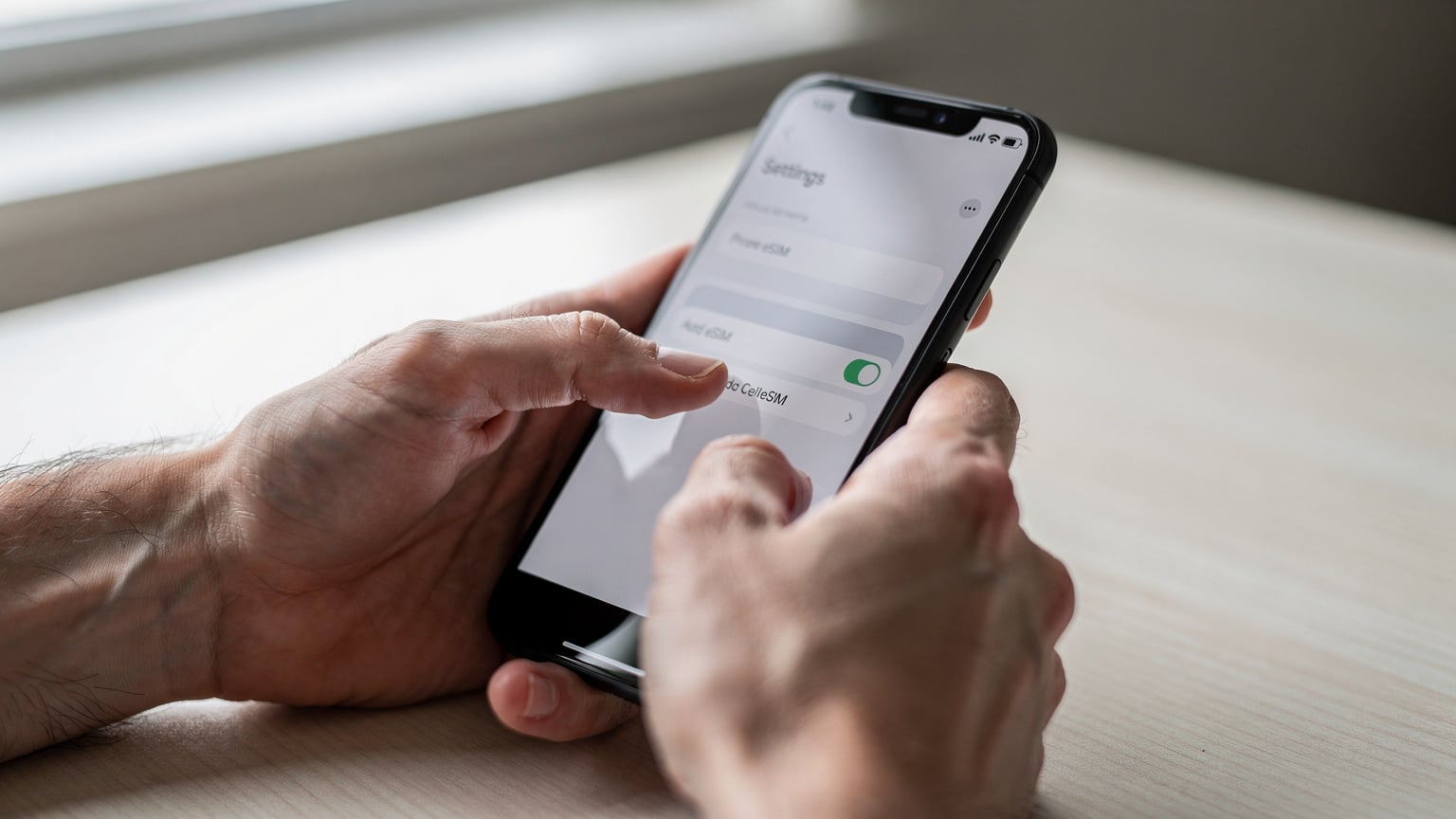
- Follow On-Screen Prompts: The app will walk you through the eSIM profile download and installation. This typically involves allowing the app to add a cellular plan to your device. You might see a popup asking to 'Add Cellular Plan,' which you should confirm.
- Configure Cellular Settings: Once the eSIM is installed, go to your phone's cellular settings. You'll likely see two plans: your primary physical SIM/eSIM and the new T-Mobile trial eSIM. You can label them to keep track. Ensure the T-Mobile eSIM is enabled for data and that you've set it as your default for cellular data if you want to test its performance. Keep your primary line active for calls and texts if you don't want to miss anything.
- Start Your Test Drive: You're all set. The 30-day or 30GB clock starts ticking from activation. Monitor your data usage through the T-Mobile app.
Common Activation Issues and Troubleshooting
Even with simple processes, things can go sideways. I've seen it all, from phones refusing to install an eSIM profile to network registration failures.
- eSIM Profile Download Failure: Sometimes the download gets stuck. Solution: Ensure you have a stable Wi-Fi connection during activation. Restart the app or even your phone and try again.
- Device Incompatibility: The app might say your device isn't compatible even if you think it is. Solution: Double-check your phone's model number against T-Mobile's official list. If it's still an issue, it might be carrier-locked, even if you thought it was unlocked.
- No Service After Activation: You've activated, but there's no signal. Solution: Go into your phone's cellular settings. Make sure the T-Mobile eSIM is turned on. Try manually selecting the T-Mobile network if automatic selection isn't working (Settings > Cellular/Mobile Data > Network Selection). A quick phone restart can often clear up minor network registration glitches.
- Exceeding Previous Trial Usage: If you've used a T-Mobile trial before, you might be ineligible. Solution: This is a hard stop. The trial is usually once per device/IMEI.
The Pitfalls of Using a Domestic Trial Abroad
This should be obvious, but let's be explicit: a US-based trial is a US-based trial. You cannot, and should not, expect it to provide service once you leave US soil. I’ve seen hopeful travelers try this, assuming 'unlimited data' somehow transcends borders. It doesn't. You'll just end up stranded, scrambling for Wi-Fi in an unfamiliar airport, which is a stress nobody needs.
Geographical Limitations and Roaming Charges
The T-Mobile eSIM free trial explicitly states its service is for the T-Mobile network within the United States. Once you cross an international border, your data, talk, and text will cease to function. If, by some remote chance, your phone picks up a partner network, you'd likely be incurring exorbitant roaming charges that aren't covered by the trial. It's not designed for international roaming; it's designed to introduce you to T-Mobile's domestic network. Don't be that person trying to get directions to your Airbnb in Lisbon with a dead SIM.
No International Calls or Texts
Even if you're still in the US, the trial's unlimited talk and text are for domestic numbers only. You won't be able to call or text international numbers, which is a major limitation for global travelers. WhatsApp, thankfully, is your friend here, relying solely on data. But if you need to call a local hotel in Paris or text a tour operator in Rome, this trial won't help you.
The Hassle of Managing Multiple eSIMs for Limited Benefit
While having multiple eSIMs is a core benefit of the technology, dedicating an eSIM slot to a domestic trial that offers zero international utility is inefficient for a true nomad. You only have so many eSIM slots, and you want them reserved for active, useful plans, not expired trials or domestic tests. It’s better to have a robust travel eSIM from Cellesim or another global provider that covers your actual travel route.
Comparing T-Mobile’s Trial with Dedicated Travel eSIMs
This is where the rubber meets the road. For anyone serious about travel, especially long-term or multi-country trips, dedicated travel eSIMs are almost always the superior choice. The T-Mobile trial simply isn't playing in the same league.
| Feature | T-Mobile eSIM Free Trial | Dedicated Travel eSIM (e.g., Cellesim) |
|---|---|---|
| Primary Purpose | US domestic network evaluation | International data connectivity for travelers |
| Geographical Coverage | Strictly USA | Global, multi-country, or regional packages |
| Data Inclusions | 30GB high-speed (then throttled), 30 days | Various packages (1GB to unlimited), validity from 7 to 365 days |
| Talk & Text | Unlimited domestic only | Data only, or options for VoIP/messaging apps |
| Cost | Free | Varies by region/data (e.g., $5-50 USD) |
| Flexibility | One-time use, limited scope | Buy as needed, top-ups, extendable plans |
| Activation Location | Must be in USA | Can activate before travel, anywhere with internet |
Cost vs. Value for Global Travelers
While the T-Mobile trial is 'free,' its value for a global traveler is practically zero beyond a very specific pre-trip assessment of T-Mobile's US network. You might save a few bucks on a coffee in the airport if you use their Wi-Fi to activate it, but that's about it. A dedicated travel eSIM, while costing money, provides actual value by delivering connectivity where you need it, when you need it. For example, a 10GB regional eSIM for Europe for 30 days might run you $25-30, and it covers dozens of countries. That's real value.
Coverage, Reliability, and Support
Dedicated travel eSIM providers like Cellesim partner with multiple local networks in each country, often giving you access to the best available signal. T-Mobile’s trial, of course, is limited to T-Mobile’s network. If you’re in a dead zone, you’re out of luck. Travel eSIMs also typically offer 24/7 customer support via chat or email, which is crucial when you’re halfway across the world and trying to figure out why your data isn't working at 3 AM local time. A domestic trial won't prioritize your international travel woes.
Real-World Scenarios: When to Consider and When to Avoid
Experience has taught me that travel connectivity isn't theoretical; it's about what actually breaks. You're trying to book a Grab in Bangkok, find your hostel in Kyoto, or check your bank balance, and suddenly, no data. It's always a crisis. So, let's look at some practical situations.
Scenario 1: The US Layover and Local App Needs
You're flying from London to Mexico City, with a 12-hour layover in Houston. You want to quickly check emails, message family, and maybe order some food delivery to the airport lounge. You also know that some apps, like certain Brazilian banking apps or India's Aadhaar services, require a local SIM to even register or function properly. But for a quick layover, the T-Mobile trial isn't going to help you, as you won't have time to activate it, and it won't work in Mexico. Instead, a specific eSIM for USA would be better if you truly need US data, but for a layover, usually airport Wi-Fi suffices.
Scenario 2: Extended Stay in the US as a Digital Nomad
Let's say you've landed a three-month gig in NYC, living in a sublet in Bushwick, paying around $1800/month (if you're lucky) and spending your days at 'The Bushwick Generator' co-working space. You need reliable data, a local US number, and potentially hotspot capabilities for your laptop. Here, the T-Mobile trial could be a good *first step* to assess their network. If it performs well, you'd then transition to a full T-Mobile plan. However, you'd need to be mindful of visa limitations, as an extended stay often requires a specific visa category. For instance, if you're on a B1/B2 tourist visa, working remotely, even for a non-US company, can be a grey area, so always check immigration rules before committing to anything long-term.

Scenario 3: Multi-Country Trip Outside the US
You're embarking on a six-week journey through Southeast Asia, hitting Thailand, Vietnam, and Cambodia. This is the exact scenario where the T-Mobile trial is completely irrelevant. You need an eSIM that offers regional coverage or individual country plans. Trying to rely on a US domestic trial here would be a catastrophic mistake, leaving you disconnected and frustrated. This is where providers like Cellesim excel, offering plans that seamlessly transition between countries, so you're not constantly searching for local SIM cards or public Wi-Fi. (Speaking of, I've spent countless hours in the food court at Terminal 21 in Bangkok, relying on its solid, free Wi-Fi, which is a lifesaver when your data plan eventually peters out.)
Alternatives to the T-Mobile Trial for Long-Term Nomads
For me, and for the WhatsApp groups full of nomads I'm in, the priority is always reliable, flexible, and affordable connectivity across borders. The T-Mobile trial simply doesn't fit that bill for global travel.
Dedicated Travel eSIM Providers
These are your bread and butter. Companies like Cellesim specialize in providing data plans for travelers across virtually every country. You can buy regional plans for Europe, Asia, or global plans that cover dozens of countries. The benefits are clear:
- Global Coverage: Purchase plans for specific countries or regions.
- Flexibility: Choose data amounts and validity periods that suit your trip length. Top up easily.
- Cost-Effective: Often significantly cheaper than international roaming from your home carrier.
- Ease of Use: Activate before you even leave home. No need to swap physical SIMs.
Local Prepaid eSIMs in Destination Countries
In many countries, local carriers offer prepaid eSIMs directly. This can be a very cost-effective option, especially for longer stays in a single country. For example, when I was in Poland, I picked up a T-Mobile PL eSIM for a month, which cost me about 30 PLN (around $7.50 USD) for 30GB. The catch is you often need to be in the country to buy and activate it, and sometimes local ID is required (like India's Aadhaar, which is a whole bureaucratic nightmare). But if you're settling into, say, Lisbon for a month, getting a local MEO or Vodafone Portugal eSIM is often the best deal for sustained, heavy usage.
Home Carrier International Roaming Packages (With Caution)
Some home carriers offer international roaming packages. T-Mobile's own 'Magenta MAX' plan, for instance, includes some international data. However, these are often capped at lower speeds (2G in many cases) after a certain limit, or the 'high-speed' allowance is minimal, and the cost can quickly add up. Always read the fine print. I once thought my UK carrier's roaming package would be fine for a week in Egypt, only to find myself throttled to dial-up speeds after 2GB, making basic map navigation a painful ordeal. Not fun when you're trying to find a specific felucca ride on the Nile.
Making an Informed Decision for Your 2026 Travels
When it comes to connectivity, especially for travelers, a little research goes a long way. Don't be swayed by 'free' if it doesn't solve your actual problem. For the T-Mobile eSIM free trial, its utility is highly specific and almost entirely domestic. It's a marketing tool for T-Mobile, not a travel hack for globetrotters.
Assessing Your True Connectivity Needs
Before you even think about an eSIM, ask yourself:
- Where am I going? Single country, region, or global?
- How long will I be there? A weekend, a month, or several months?
- How much data do I realistically need? Light browsing, heavy streaming, or constant video calls?
- Do I need a local number for calls/texts? Or will data-based apps (WhatsApp, Telegram) suffice?
- What's my budget? How much am I willing to spend for peace of mind?
For almost all international travel scenarios, a dedicated travel eSIM solution will offer better value, flexibility, and reliability. They're designed for the complexities of cross-border data, whereas the T-Mobile trial is designed to win US customers.
Considering Long-Term Value Beyond the Free Offer
The free T-Mobile trial lasts 30 days. What happens after that? If you're staying in the US, you'll need to convert to a paid plan. If you're traveling internationally, you'll be back to square one, needing a different solution. Thinking beyond the 'free' aspect and focusing on sustainable, reliable connectivity for your entire trip is crucial. This often means investing in a multi-country eSIM package or researching local options for longer stays. And if you ever need to retrieve the details of your eSIM, here's a handy guide on how to locate your eSIM number.
| Traveler Type | Primary Need | T-Mobile Trial Suitability | Recommended Alternative |
|---|---|---|---|
| US Resident, Switching Carriers | Test T-Mobile network at home/work | Excellent (direct use case) | N/A, this is its purpose |
| Short-Term US Visitor (<1 month) | Temporary US number, local data | Good (if activated immediately upon arrival) | Prepaid T-Mobile/AT&T physical SIM/eSIM |
| US Digital Nomad (Multi-Month Stay) | Consistent US data, hotspot, local number | Limited (initial test only, requires paid plan conversion) | Full T-Mobile/AT&T/Verizon plan, local prepaid eSIM |
| International Traveler (Outside US) | Global data, multi-country coverage | Zero (will not work abroad) | Cellesim or other dedicated travel eSIMs |
| Frequent International Business Traveler | Seamless global connectivity, reliability | Zero (not designed for this) | Cellesim Global Plans, corporate roaming solutions |
The Future of eSIMs and Carrier Offers in 2026
As we move further into 2026, eSIM technology keeps getting better, making it even easier to stay connected globally. More carriers worldwide are supporting eSIMs, and the competition among travel eSIM providers is driving down prices while giving us more data. While T-Mobile's trial is a step towards broader eSIM adoption, it's crucial for travelers to understand its limitations. Don't let the allure of 'free' distract you from what you truly need: consistent, reliable, and geographically appropriate data. For real travel, especially if you're navigating the quirks of Mexico travel safety or exploring new continents, stick to solutions built for the road.
Frequently Asked Questions
Can I use the T-Mobile eSIM free trial for international travel?
No, the T-Mobile eSIM free trial is strictly for use within the United States. It does not offer international roaming or data services outside of the US. Attempting to use it abroad will result in no service.
What devices are compatible with the T-Mobile eSIM free trial?
Most unlocked, eSIM-compatible smartphones are eligible, including newer iPhones (XS and later) and many Android flagship devices from Samsung and Google. The T-Mobile Network Test Drive app will perform a compatibility check for your specific device.
How much data and time do I get with the T-Mobile free trial?
The trial offers 30 days of service or 30GB of high-speed data, whichever comes first. It also includes unlimited talk and text for domestic calls and messages within the US.
Is the T-Mobile free trial truly free, or are there hidden charges?
The trial itself is free, with no activation fees or credit card required. However, if you exceed the 30GB data limit within the 30 days, your data speeds will be significantly throttled. There are no international roaming allowances, so using it abroad would lead to charges if it connected at all.
Can I activate the T-Mobile eSIM trial outside of the US?
No, you must be physically located within the United States to download and activate the T-Mobile eSIM free trial. The app typically uses location services to verify your presence.
What happens after the T-Mobile eSIM trial ends?
Once the 30 days or 30GB of data are used up, the trial service will cease. You will lose connectivity on that eSIM profile. To continue service, you would need to convert to a paid T-Mobile plan, typically by contacting T-Mobile directly.