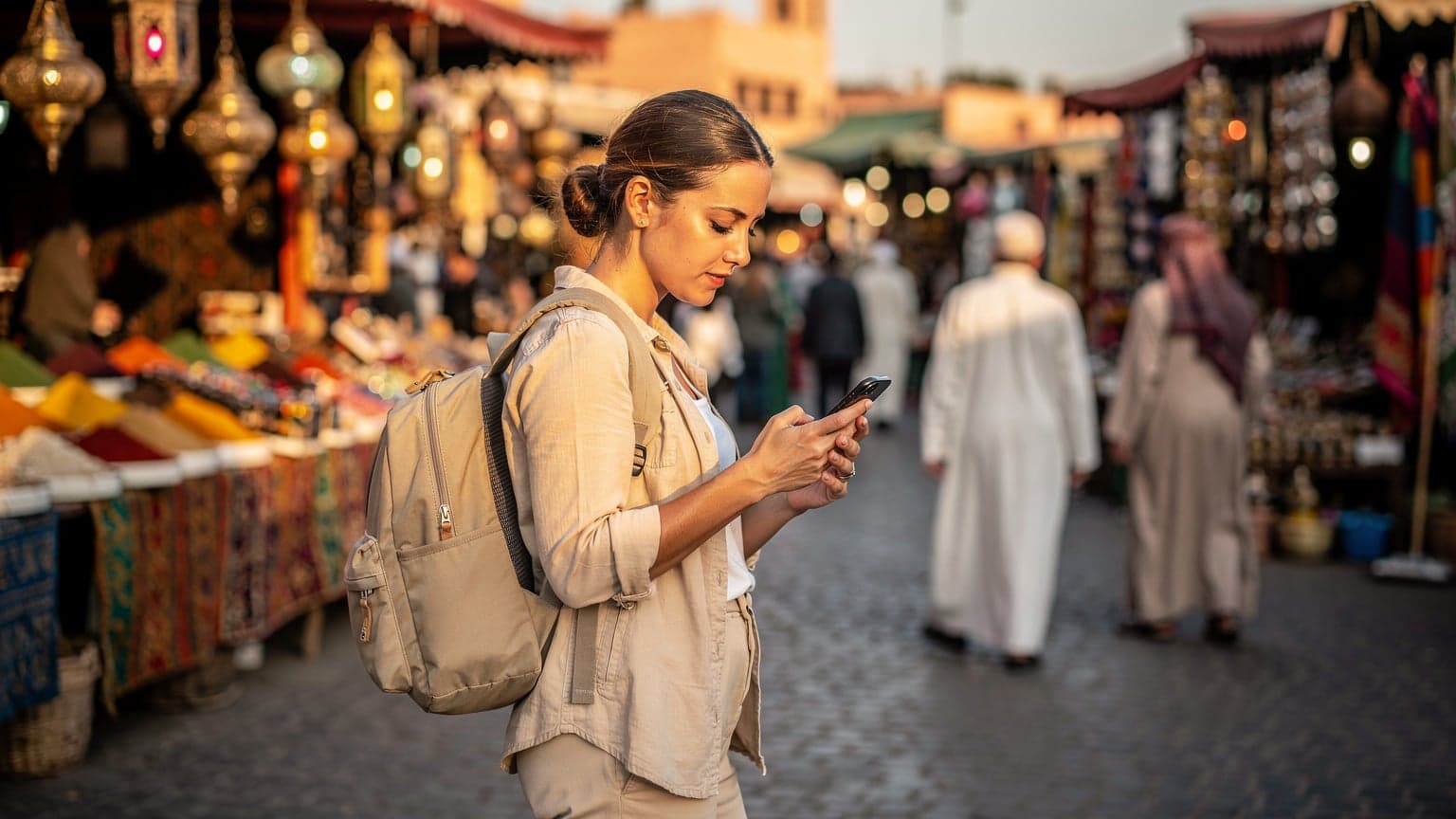
Morocco in 2026 is still that incredible mix of buzzing souks, ancient medinas, and stunning landscapes that keeps travelers coming back. Whether you are wandering Marrakech's busy streets, Fes's historic alleys, or exploring the Sahara Desert and Atlas Mountains, staying connected is key. You will need it for navigation, sharing those epic travel moments, and just staying safe. Those old-school roaming charges can quickly blow up your travel budget, and trying to track down a local SIM card when you land is a total time sink. That is exactly why an eSIM for Morocco is your best friend on this trip. It gives you instant, affordable, and reliable internet access.
- Why an eSIM is Essential for Your 2026 Morocco Adventure
- Morocco's Mobile Network Coverage: What to Expect in 2026
- Cellesim eSIM Plans Tailored for Morocco Travel
- Seamless Activation: Getting Your Cellesim eSIM Ready for Morocco
- Staying Connected in Morocco's Iconic Cities: Fes, Marrakech, & Beyond
- Beyond the Cities: eSIM Connectivity in the Atlas Mountains and Sahara
- eSIM vs. Traditional Options: Roaming and Local SIMs in Morocco 2026
- Maximizing Your Morocco eSIM Experience: Expert Tips for 2026 Travelers
- Choosing Your Perfect Morocco eSIM Plan with Cellesim
- Frequently Asked Questions
Why an eSIM is Essential for Your 2026 Morocco Adventure
For modern travelers in 2026, instant connectivity isn't a luxury, it's a must-have. An eSIM delivers exactly that for your Moroccan trip. Unlike traditional SIM cards, an eSIM is built right into your phone. That means no fiddling with tiny cards or hunting for a local vendor the moment you land. Imagine this: you step off the plane at Casablanca's Mohammed V International Airport, scan a QR code, and boom! You have data. You can call a taxi, check into your riad, or find your way through Marrakech's bustling medina, all without a hitch. This smooth start saves you precious travel time and keeps you from feeling stranded without a connection.
Beyond convenience, an eSIM is a real budget-saver. International roaming with your regular provider can rack up insane costs, often hitting travelers with nasty surprises on their bill. Cellesim offers clear, prepaid eSIM plans for Morocco. You know exactly what you are paying for upfront, with no hidden fees. This financial clarity means you can spend more of your hard-earned money on experiences, like camel treks in the desert or savoring an authentic tagine. To dig deeper into how to dodge those pricey charges, check out our guide on how to avoid roaming charges.
Plus, an eSIM gives you a ton of flexibility. Many newer smartphones let you use two SIMs at once. This means you can keep your home phone number active for calls and texts while using your Cellesim eSIM for all your data needs in Morocco. You stay reachable on your main number for important stuff, but you are not paying international data roaming fees. This mix of ease, affordability, and flexibility makes an eSIM an absolute game-changer for anyone exploring Morocco in 2026, whether it's a quick city break or a long, winding adventure.
Morocco's Mobile Network Coverage: What to Expect in 2026
Morocco has really invested in its telecommunications, so you will find strong mobile coverage in most major cities and, increasingly, in rural spots too. The big players in the mobile network scene are Maroc Telecom, Orange Maroc, and Inwi. All three provide a blend of 4G/LTE and are rolling out 5G, especially in urban areas. In 2026, travelers hitting cities like Casablanca, Rabat, Marrakech, and Fes can count on excellent 4G. You will often see strong 5G signals in downtown areas and popular tourist spots, which means speedy browsing, streaming, and video calls are a go.
Maroc Telecom, being the oldest and largest provider, generally offers the widest reach, especially in more remote parts of the country. Orange Maroc and Inwi are hot on their heels, with great service in cities and surrounding towns. When you grab a Cellesim eSIM for Morocco, you are tapping into one of these top-tier local networks, so you can expect solid connectivity throughout your trip. While 5G is expanding, 4G is still the primary way most of the country gets online, and it is more than fast enough for typical travel uses.
However, it is good to have realistic expectations for really remote spots, like deep in the Sahara Desert or high up in secluded parts of the Atlas Mountains. Popular tourist routes and established desert camps often have satellite internet or even some limited mobile signal, but out in the untouched wilderness, coverage can be spotty or nonexistent. For most popular itineraries, including trips to Chefchaouen, Essaouira, or the Erg Chebbi dunes, Cellesim's network partners will keep you reliably connected, no matter where your Moroccan adventure takes you. Knowing how our network functions can give you more clarity on coverage details.
Stay Connected Across Morocco in 2026
Get instant data for Fes, Marrakech, and beyond with a Cellesim eSIM. Avoid roaming fees and connect seamlessly. Join 50,000+ travelers worldwide.
Buy Morocco eSIM NowCellesim eSIM Plans Tailored for Morocco Travel
Cellesim has a wide variety of eSIM plans specifically designed for travelers exploring Morocco in 2026. No matter if you are taking a quick weekend trip to Fes, spending a week touring historical sites, or embarking on a longer adventure through the desert and along the coast, there is a plan for you. Our plans are built for flexibility, offering different data amounts and lengths of validity, so you only pay for what you actually need.
For example, if you are spending 3-5 days checking out Marrakech's Jemaa el-Fnaa and Bahia Palace, a smaller data package, like 3GB or 5GB good for 7 days, would probably be enough. That gives you plenty of data for getting around, posting social media updates, and essential communication. For those planning a two-week adventure that includes hiking in the Atlas Mountains and a camel trek in the Sahara, a bigger plan, maybe 10GB or 20GB over 15-30 days, would make more sense. These larger plans handle more data for streaming, heavy map use, and sharing high-res photos and videos.
Cellesim's prices are competitive, giving you excellent value and significantly cutting down on what you would pay for traditional international roaming. With plans kicking off at just $5 for basic data, you can easily budget for connectivity without making sacrifices. All plans are prepaid, so there are no surprise bills or hidden fees. You can buy your Morocco eSIM online well before you leave, and your QR code arrives instantly via email. This convenience, paired with reliable network access, makes Cellesim a fantastic choice for staying connected without any fuss in Morocco. If your trip extends beyond Morocco, Cellesim also offers regional plans, like an Africa 29 Countries eSIM, perfect if you are also heading to nearby spots like Tunisia or Egypt.
Seamless Activation: Getting Your Cellesim eSIM Ready for Morocco
Getting your Cellesim eSIM up and running for Morocco is super easy. It is designed to connect you quickly and efficiently, often even before your plane touches down. The whole thing is 100% digital - no physical SIM cards to swap, no trips to local stores. Here is a simple step-by-step guide to activation, so you have data the minute you need it in 2026:
- Buy Your Plan Online: Head to cellesim.com, pick Morocco, and choose the data plan that suits your trip best. You can pay with credit/debit cards, PayPal, Alipay, or other local payment options.
- Get Your eSIM: Just minutes after buying, a QR code and detailed setup instructions will land in your email inbox.
- Install on Your Device:
- For iPhone users: Go to Settings > Cellular > Add eSIM. Tap "Use QR Code" and scan the one from your email.
- For Android users: Go to Settings > Network & Internet > SIMs > Add more. Follow the steps to scan the QR code.
- Activate Your Plan: Follow the on-screen prompts to name your new eSIM (something like "Morocco Travel") and set it as your main line for mobile data. Make sure data roaming is on for your eSIM line, but turned off for your home SIM to avoid any surprise charges. Your plan's validity usually kicks in when it first connects to a supported network in Morocco.
We really recommend installing your eSIM before you travel, ideally when you have a solid Wi-Fi connection. This prevents any connection hiccups when you arrive. If you only have one phone and need to scan the QR code, just print it out or display it on another device. For more detailed instructions, our how to install Cellesim eSIM guide covers both iPhone and Android devices, and our supported devices page will confirm if your phone is compatible.
Staying Connected in Morocco's Iconic Cities: Fes, Marrakech, & Beyond
Morocco's big cities are energetic places where staying connected is not just nice, it is absolutely essential for travelers. You will need it to find your way through confusing medinas, discover those hidden gems, and talk to local guides or services. In 2026, Cellesim's eSIM gives you excellent coverage across Fes, Marrakech, Casablanca, and other urban centers, so you can explore these places without any connectivity worries.
Marrakech: This city is famous for its lively Jemaa el-Fnaa square, complex souks, and stunning palaces like Bahia and El Badi. It is a place made for exploring. With an eSIM, you can count on Google Maps or local navigation apps to guide you through the medina's winding paths, book tours, share live videos of snake charmers and storytellers, and keep in touch with your travel buddies. You will find strong 4G and growing 5G coverage all over the city, from its ancient walls to the modern Gueliz district.
Fes: Home to the world's oldest university and a medina that feels like stepping back in time, Fes absolutely requires reliable data for a real exploration. An eSIM makes sure you can research local tanneries, find traditional restaurants, and use translation apps to chat with artisans. Connectivity is solid inside the Fes el-Bali (the old medina) and in surrounding areas, including the royal palace and the Jewish quarter.
Casablanca: As Morocco's economic hub, Casablanca boasts modern infrastructure with excellent 4G and 5G network reach. An eSIM here is perfect for business travelers or tourists visiting the magnificent Hassan II Mosque, navigating the city's tram system, or coordinating meetings. Similarly, in the capital city of Rabat, known for its historic sites and peaceful vibe, connectivity is smooth, supporting everything from video calls to real-time info on places like the Kasbah of the Udayas.
Even in coastal towns like Essaouira, known for windsurfing and fresh seafood, and the beautiful blue city of Chefchaouen up in the Rif Mountains, Cellesim's partner networks provide reliable coverage. This widespread urban connectivity ensures your phone remains a powerful tool to make your Moroccan trip even better in 2026.
Beyond the Cities: eSIM Connectivity in the Atlas Mountains and Sahara
While Morocco's cities are well-connected, a true Moroccan adventure often takes you into its spectacular natural areas: the Atlas Mountains and the Sahara Desert. Knowing how an eSIM performs in these more remote spots is crucial for planning your 2026 trip.
Atlas Mountains: Hiking through the Atlas Mountains, from the popular Toubkal ascent to scenic valleys like Ourika and Ait Bougmez, offers breathtaking views and unique encounters with Berber communities. In accessible areas and larger villages in the lower and middle Atlas, you will often find decent 4G coverage. Main roads and established tourist trails usually have a signal too. However, as you climb higher or venture into truly remote, less inhabited valleys, mobile signal can become patchy or disappear entirely. This is typical for mountains anywhere in the world. For these kinds of trips, it is smart to download offline maps and let someone know your plans before you lose signal. While a Cellesim eSIM connects you to the strongest local networks available, the natural challenges of mountain terrain will always play a role.
Sahara Desert: A desert trip, especially to the Erg Chebbi or Erg Chigaga dunes, is a highlight for many visitors. In the towns on the edge of the desert, like Merzouga or Zagora, you can expect reliable 4G connectivity. Most established desert camps, particularly those serving tourists, often offer Wi-Fi, sometimes via satellite, and might even have limited mobile signal from local networks. As you head deeper into the dunes on a camel trek or a 4x4 expedition, connectivity will become sparse. During these times, it is a great chance to unplug and soak in the vastness of the desert. Before you leave on a multi-day desert trip, make sure all your important communications are done. You can use our smart data calculator to figure out how much data you might need.
For these off-grid parts of your journey, your eSIM is still vital for getting set up, coordinating with tour operators at the edge of the wilderness, and getting back online quickly once you are in an area with coverage again. It is a practical tool that helps you explore while respecting nature's limits.
eSIM vs. Traditional Options: Roaming and Local SIMs in Morocco 2026
Deciding how to stay connected in Morocco in 2026 means looking at three main choices: international roaming, buying a local physical SIM card, or using an eSIM. Each has its good points and bad points, but for most travelers, eSIMs offer the best mix of convenience, cost, and control.
International Roaming: This is usually the priciest option. While it is handy because your phone works right when you land, the costs can be huge. Many home carriers charge $10-$15 a day for international passes, or even more for pay-as-you-go data. That can easily add up to hundreds of dollars on a multi-day trip. Speeds might also be slowed down, which can ruin your experience. This is especially true for travelers from the UK or USA, who often face high roaming fees. Our article on eSIM vs international roaming breaks down the real cost differences.
Local Physical SIM Card: Buying a local SIM card in Morocco can be cheaper than roaming. Major providers like Maroc Telecom, Orange Maroc, and Inwi sell tourist SIMs at airports or official stores. But this means you have to find a vendor, maybe wait in line, show ID (a passport copy is often needed), and physically swap out your SIM card. This risks losing your home SIM or missing important calls/texts to your main number. For frequent travelers, the hassle of dealing with physical SIMs quickly outweighs any benefits. Compare this to the easy digital setup we talked about in eSIM vs physical SIM.
Cellesim eSIM: An eSIM gives you the best of both worlds. You get local data rates, which are much cheaper than roaming, without the bother of swapping a physical SIM. Setup is instant, digital, and you can even do it before you leave home. You can keep your main SIM active for calls and texts while using the eSIM for data, thanks to your phone's dual SIM capabilities. This method offers flexibility, saves you money, and gives you peace of mind. For a quick look, here is a comparison table:
Maximizing Your Morocco eSIM Experience: Expert Tips for 2026 Travelers
To really get the most out of your Cellesim eSIM during your 2026 trip to Morocco, keep these expert tips in mind for managing your data, tweaking settings, and staying safe online.
- Watch Your Data Usage: Keep an eye on how much data you are using. You can check this through your phone's settings or the Cellesim portal. This helps you avoid running out of data unexpectedly, especially if you are using apps that chew up a lot of data, like video streaming or heavy navigation. If you are traveling for work, make sure you have enough data for stable Zoom calls while you are on the move.
- Use Wi-Fi When You Can: Your eSIM gives you freedom, but if there is free and secure Wi-Fi at your hotel or a trusted cafe, use it. This saves your eSIM data for when you really need it out and about. Just be careful with public Wi-Fi, as it can have security risks. For more on this, check out our guide on public Wi-Fi dangers.
- Take Advantage of Dual SIM: If your phone supports dual SIM (a physical SIM plus an eSIM, or two eSIMs), set your Cellesim eSIM for data and keep your home physical SIM active for calls and texts. Remember to turn off data roaming for your home SIM to avoid accidental charges. Find out more about how to use dual SIM on iPhone.
- Turn on Personal Hotspot: You can share your eSIM data with your travel companions or other devices like laptops and tablets using the personal hotspot feature. This is super handy if you are traveling with a group or need to get some work done remotely. Our guide on eSIM personal hotspot walks you through the setup.
- Download Offline Maps and Content: Before you head into areas where connectivity might be spotty, like the Atlas Mountains or deep Sahara, download maps, travel guides, and entertainment. This reduces how much data you use and makes sure you have access even when you are offline.
- Secure Your Connection: Always use a VPN, especially when you are on public Wi-Fi, to protect your personal information. For countries with internet restrictions, an eSIM paired with a VPN can help you get around censorship, though Morocco generally has open internet.
- Plan for Top-ups: If you start running low on data, Cellesim makes it easy to add more online, so you stay connected throughout your trip.
By following these tips, your Cellesim eSIM will smoothly enhance your Morocco travel experience in 2026, keeping you connected and informed every step of the way.
Choosing Your Perfect Morocco eSIM Plan with Cellesim
Picking the right Cellesim eSIM plan for your 2026 Morocco adventure depends on a few things: how long you are staying, how much data you think you will use, and your budget. Cellesim offers a clear and flexible system to help you make the best choice.
Think About Your Trip Length: For a quick visit, say a 3-5 day exploration of Marrakech, a smaller data package with a shorter validity (like 3GB for 7 days) will probably be enough. If your trip is longer, maybe a 10-14 day tour hitting Fes, Chefchaouen, and a desert excursion, a mid-range plan (like 5-10GB for 15 days) offers a good balance. For longer stays, digital nomads, or those planning extensive travel across the region, larger data plans (like 20GB for 30 days) or even a regional Middle East 11 Countries eSIM or Africa eSIM are available.
Estimate Your Data Needs: Consider your typical daily phone use. Are you mostly using maps, messaging apps, and light social media? Or do you plan to stream videos, make frequent video calls, or even work remotely? Our Smart Data Calculator can help you figure out roughly how much data you will need based on your activities. A good rule of thumb for most travelers is about 1GB per day for moderate use. For digital nomads, Cellesim is a fantastic option, and you can learn more about eSIMs for digital nomads in our dedicated guide.
Budget-Friendly Options: Cellesim is committed to competitive pricing, which means you will save money compared to traditional roaming. Take a look at the Morocco eSIM plans on our website to find the most cost-effective option for your specific needs. With clear, upfront pricing, you can confidently budget your connectivity without worrying about hidden fees. We accept a wide range of payment methods, including credit/debit cards, PayPal, and Alipay, making it easy to purchase from anywhere in the world.
Easy Purchase and Support: Buying a Cellesim eSIM is quick and simple. Just choose your plan, complete the purchase, and get your QR code via email within minutes. Our 24/7 email support at [email protected] is available in 24 languages, ready to help with any questions or issues before or during your trip. This comprehensive support ensures a smooth and stress-free experience, letting you focus on enjoying the wonders of Morocco.
Explore Over 200 Countries with Cellesim eSIM
Never worry about connectivity again. Discover global eSIM plans for your next adventure in 2026.
Explore All eSIM PlansTrusted by 50,000+ satisfied customers worldwide.
Frequently Asked Questions
What is an eSIM and how does it work in Morocco?
An eSIM is like a digital SIM card that is built right into compatible smartphones, tablets, and smartwatches. In Morocco, it lets you connect to local mobile networks (like Orange Maroc or Maroc Telecom) for data without needing a physical SIM card. You just buy an eSIM plan online, get a QR code in your email, and scan it to activate your data. This means instant internet access when you arrive, no need to swap physical SIMs or deal with expensive international roaming.
Which cities in Morocco have the best eSIM coverage?
Morocco's main cities and popular tourist spots have excellent eSIM coverage, mostly 4G/LTE, with 5G expanding in key areas. You can count on strong, reliable connectivity in places like Marrakech, Fes, Casablanca, Rabat, Agadir, Tangier, and Essaouira. Just know that rural areas and remote regions, like parts of the Atlas Mountains or deep in the Sahara Desert, might have spotty or no signal, which is typical for physical SIMs in those kinds of places too.
Can I keep my original phone number with a Cellesim eSIM in Morocco?
Yes, absolutely! One of the biggest perks of using an eSIM for your Morocco trip is that you can keep your original phone number. Most modern smartphones support dual SIM, meaning you can have both your home physical SIM (or another eSIM) and your Cellesim eSIM active at the same time. You can set your Cellesim eSIM to handle all your data, while your home SIM stays active for calls and texts, ensuring you stay connected without those expensive international data roaming charges.
How much data do I need for a trip to Morocco in 2026?
How much data you need really depends on your travel style and how you use your phone. For light use (maps, messaging, occasional social media, email), about 3-5GB for a week-long trip is usually enough. If you plan on streaming videos, making lots of video calls, or working remotely, you should look at plans with 10GB or more. Cellesim offers various data packages for Morocco, so you can pick one that fits your specific needs. Plus, you can easily top up your data if you find yourself running low during your trip.
Is it safe to use an eSIM in Morocco?
Yes, using an eSIM from a trusted provider like Cellesim is very safe. Your personal data is protected, and you are connecting to established local networks. Cellesim's digital activation process is secure, and since there is no physical SIM card to lose or get stolen, it actually adds an extra layer of security compared to traditional SIM cards. On top of that, having reliable internet access can make your trip safer by giving you access to navigation, communication apps, and emergency services.
Can I use my eSIM's personal hotspot feature in Morocco?
Yes, Cellesim eSIMs for Morocco absolutely support the personal hotspot feature. This means you can share your data connection with other devices like laptops, tablets, or even your travel companions' phones. It is incredibly handy for keeping all your devices connected or making sure your group always has internet access, making your Cellesim eSIM a really versatile connectivity solution for your 2026 Moroccan adventure.
See also: eSIM for Tunisia
See also: eSIM for Morocco
See also: eSIM for Marrakech