Updated: 2026-02-16
That familiar bump of wheels on the tarmac signals arrival, bringing a mix of relief and excitement. You switch your phone off airplane mode, eager to connect with family, find your hotel, or book transport. Instead, you see "No Service" or a text warning of exorbitant daily roaming rates. Suddenly, your essential connection transforms into a source of anxiety. This scenario is a common travel dread, marking the entry into the often-costly world of mobile data roaming.
The good news is that avoiding these high roaming charges abroad is entirely possible with a bit of foresight. Before you pack your bags, it is crucial to verify if your phone is eSIM-compatible. This step unlocks the simplest and most economical connectivity options, providing a clear path to bypassing roaming fees from the start.
- The Roaming Shock: High Bills for International Connectivity
- Unpacking the Costs: How Mobile Roaming Fees Accumulate
- Before You Go: Ensuring Your Phone is Ready for Global Connectivity
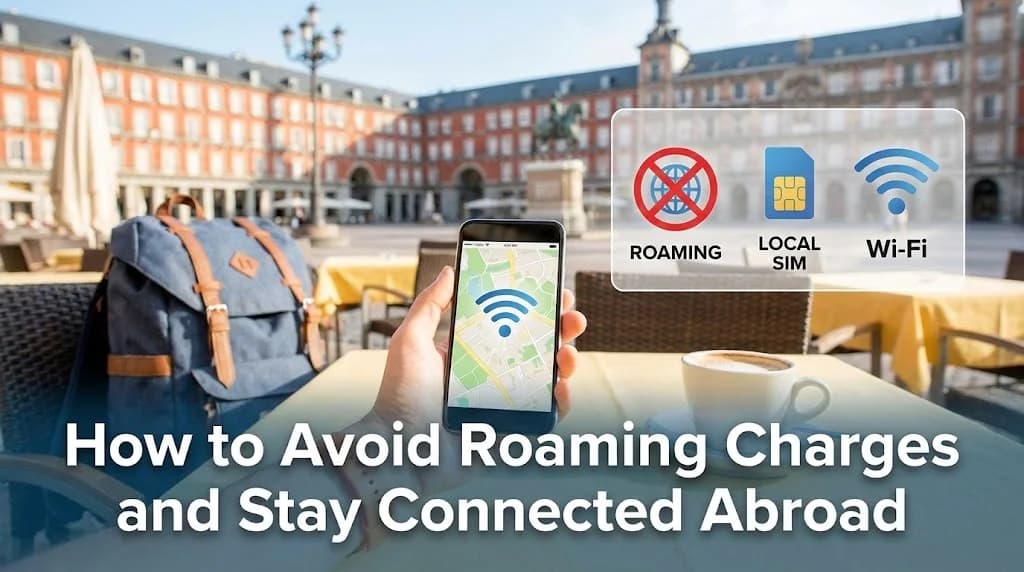
- Your Go-To Solutions: Smart Ways to Stay Connected Without Roaming
- Choosing Your Plan: How Much Data Do You Truly Need Abroad?
- Maximizing Your eSIM: Activation Timing and Smart Usage Tips
- Connectivity Comparison: eSIM, Local SIM, and Carrier Roaming
- Frequently Asked Questions
Europe eSIM Plans from $4.50
Skip the airport SIM queue. Join 50,000+ travelers who connect instantly with Cellesim in 42 European countries.
Get Your Europe eSIMThe Roaming Shock: High Bills for International Connectivity
For many travelers, the moment of landing is quickly followed by the surprise of seeing "No Service" or receiving an alert about expensive roaming charges. This initial disconnection can turn the excitement of a trip into immediate stress. Understanding why this happens is the first step toward effective prevention, ensuring you stay connected without the burden of excessive costs.
International roaming occurs when your phone connects to a foreign network because your home provider has no infrastructure in that country. Your home carrier then pays the local network operator for the service you use, and subsequently charges you, often with a significant markup. This system, while convenient in its automatic nature, is designed primarily for occasional use and can quickly lead to substantial bills for data, calls, and even incoming texts or voicemails.
"The peace of mind that comes with knowing you won't face a shocking phone bill after your trip is invaluable. Planning for connectivity is as important as planning your itinerary."
Unpacking the Costs: How Mobile Roaming Fees Accumulate
The perceived unfairness of skyrocketing phone costs abroad stems from the intricate, and often opaque, agreements between mobile carriers. These agreements are the core reason why international roaming becomes so expensive.
The Costly Handshake Between Carriers
When your phone uses data in another country, your home carrier does not own the local infrastructure. To maintain your connectivity, it must "rent" access from a local network provider. This arrangement acts like a business partnership where the local carrier (e.g., Telecom Italia in Italy, Telefónica in Spain) charges your home carrier (e.g., T-Mobile, O2) a wholesale rate for the data, calls, and texts you consume. Your home carrier then passes this cost to you, but only after applying a substantial markup to cover their operational costs and profit margins. This fundamental mechanism explains the high roaming fees; you are effectively paying for the services and profit of two distinct companies.
Hidden Fees Beyond Just Data Usage
While many travelers focus on mobile data costs abroad, roaming charges can extend beyond internet browsing. Depending on your specific plan, you might incur inflated rates for:
- Making and receiving calls: It is a common misconception that turning off mobile data prevents all charges. Both outgoing and incoming calls can still generate significant fees if your phone settings are not adjusted appropriately.
- Sending and receiving text messages (SMS): Although apps like WhatsApp have largely replaced standard SMS for international communication, traditional text messages can still trigger roaming fees. iPhone users should distinguish between iMessage (which uses data or Wi-Fi) and standard SMS, as the latter can be a source of unexpected charges.
- Checking voicemail: This is a frequent trap. Listening to a voicemail can be billed as an international call. To avoid these specific charges, ensure your phone is in airplane mode or that you have actively disabled your home carrier's international services.
Before You Go: Ensuring Your Phone is Ready for Global Connectivity
To effectively avoid phone charges abroad, every international traveler must complete two essential steps before departure: confirming their phone is unlocked and checking its compatibility with modern solutions like eSIMs.
Is Your Phone Unlocked for International Use?
A "locked" phone is restricted to using SIM cards exclusively from the carrier it was purchased from (e.g., a Vodafone-locked phone can only use Vodafone SIMs). If your device is locked, you will be unable to use a local physical SIM card or, in some cases, even an eSIM from an alternative provider. To determine your phone's unlock status:
- Insert a SIM card from a different carrier. If it functions, your phone is likely unlocked.
- Contact your current carrier directly. They can usually unlock your device, particularly if your contract term is complete.
- Check your phone's settings. For iPhones, navigate to Settings > General > About. Look for a "Carrier Lock" entry. If it says "No SIM restrictions," your phone is unlocked.
Unlocking your phone is a foundational step that grants you the freedom to choose the most cost-effective international data options, whether through an eSIM or a local physical SIM card. This empowerment is key to preventing roaming charges abroad.
eSIM Compatibility: Your Gateway to Modern Travel Connectivity
eSIM technology is revolutionizing travel connectivity, offering unparalleled convenience. However, not all phones support it, though most flagship models released from 2018 onwards are compatible. To check if your device supports eSIM:
- For iPhone users: Most iPhone XS, XS Max, XR, and newer models are eSIM compatible. Go to Settings > General > About. If you see "Add eSIM" or "Digital SIM" under "SIMs" or "Cellular Plan," your phone supports eSIM.
- For Android users: Compatibility varies by manufacturer and model. Consult your phone's documentation or perform an online search for "[your phone model] eSIM compatibility." On many Android devices, you can find relevant options under Settings > Network & internet > Mobile network, looking for "eSIM" or "Add carrier."
Understanding your phone's capabilities before your trip is vital. If your device is not eSIM compatible, you will need to consider other solutions, such as local physical SIM cards or international roaming plans offered by your home carrier. This pre-trip check is a straightforward yet powerful method to avoid unexpected mobile phone charges abroad.
Your Go-To Solutions: Smart Ways to Stay Connected Without Roaming
Navigating international connectivity does not have to result in bill shock. Several excellent options are available, each with its own advantages and considerations. Let's explore them, moving from the most flexible and modern to the more traditional approaches to help you avoid roaming charges.
Option 1: The Modern Traveler's Choice - The Travel eSIM
An eSIM, or embedded SIM, is a digital SIM card built directly into your phone. Instead of needing to swap physical cards, you simply download and activate a data plan for your chosen destination. This method is widely considered the most elegant solution for acquiring affordable international data and specifically for how to avoid roaming charges abroad for users with compatible iPhone and Android devices.
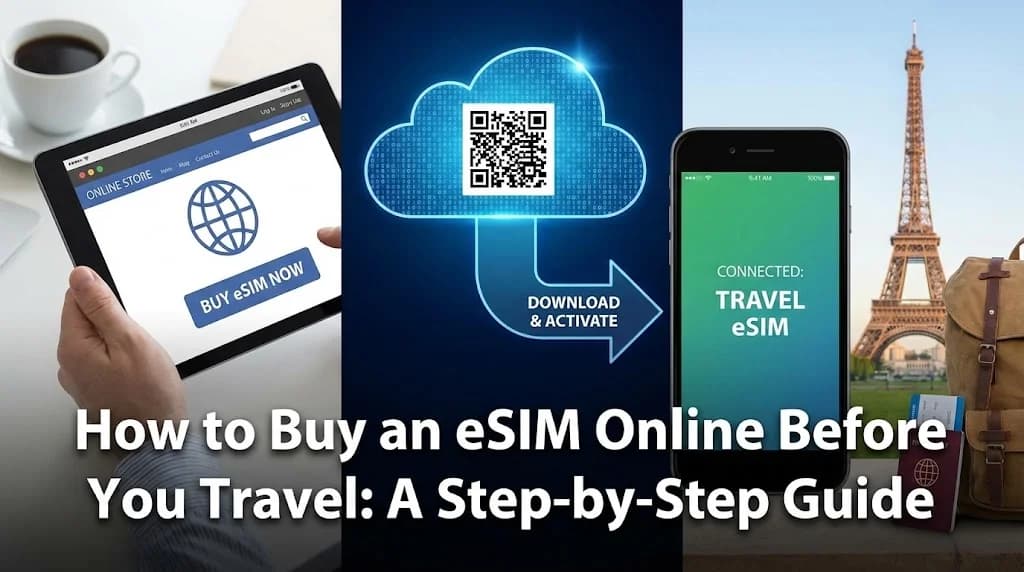
- How it works: Before your trip, you purchase a travel eSIM from a provider like Cellesim. You receive a QR code or manual activation details, which you then use to install and activate your plan. Upon landing, your phone seamlessly connects to a local network, completely bypassing your home carrier's roaming fees. You can explore Cellesim's global eSIM plans, ensuring connectivity in over 200 countries with ease.
- Pros: Instant delivery, no physical card to lose, the ability to keep your home number active for calls/texts, storage of multiple eSIM profiles on a single phone, and it often represents the most cost-effective way to get data overseas. Over 50,000 Cellesim customers attest to its convenience and value. This is an excellent method to prevent unexpected international charges.
- Cons: Requires a newer, eSIM-compatible phone (most flagship models from 2018 onwards).
Option 2: The Established Method - Buying a Local Physical SIM Card
For decades, this has been the preferred approach for experienced travelers. Upon arrival, you locate a kiosk for a local carrier at the airport or a shop within the city and purchase a prepaid physical SIM card for your phone. This remains a reliable strategy to prevent roaming charges abroad, especially for extended stays within a single country.
- How it works: You will need to physically remove your home SIM card and insert the new local one. This provides you with a local phone number and access to local data rates. Carriers such as Orange in France or Vodafone in the UK offer various prepaid options specifically designed for tourists. For more on comparing this option, read our guide on airport SIM cards vs. eSIMs.
- Pros: Can be highly cost-effective for long visits to a single country, often providing generous data allowances at local prices.
- Cons: You will lose access to your regular phone number unless your device supports dual SIM functionality. The process involves finding a store, potentially navigating language barriers, and completing a registration process that sometimes requires your passport. Airport kiosks, while convenient, are frequently more expensive than city center stores, and the entire setup can consume valuable travel time. This method also doesn't effectively avoid roaming charges if you plan to visit multiple countries within a region like Europe, as a new SIM would be needed for each one.
Option 3: The Convenience Play - Your Home Carrier’s International Plan
Most major mobile carriers offer an international data plan or a daily travel pass. These services are designed for convenience, allowing you to use your existing phone number and plan abroad for a fixed daily fee, which can range from $10 to $15 per day. Providers like AT&T and Verizon in the US, or Vodafone and O2 in the UK/EU, all feature their versions of these international roaming plans.
- How it works: You typically opt into these plans through your carrier's app or website before your departure. The daily fee is activated the first time you use data, make a call, or send a text message in a foreign country.
- Pros: Extremely simple to use. You can operate your phone just as you would at home, retaining your familiar phone number.
- Cons: This is generally the most expensive option for extended trips. A two-week vacation could easily add $140 to $210 to your mobile bill. Data speeds may also be throttled after a certain daily allowance, and the list of included countries can sometimes have surprising exclusions. This is usually not the best approach for long-term savings or avoiding excessive costs. Use our roaming savings calculator to see how much you could save with Cellesim.
Choosing Your Plan: How Much Data Do You Truly Need Abroad?
One of the biggest factors in managing costs and avoiding roaming surprises is understanding your data consumption habits. Overbuying data leads to unnecessary expense, while underbuying can leave you without connectivity when you need it most. Consider these typical usage scenarios to help you select an appropriate data plan:
- Light User (1-3 GB per week): You primarily use Wi-Fi, check emails periodically, use maps for navigation, and send messages via WhatsApp or iMessage. Social media browsing is limited.
- Moderate User (5-10 GB per week): You rely on mobile data daily for navigation, frequent social media browsing, streaming some music, occasional video calls, and regular messaging.
- Heavy User (10+ GB per week): You work remotely, stream videos frequently, upload large files, engage in extensive video conferencing, or regularly share your hotspot with others.
Before your trip, try to estimate your daily data usage. Many apps and phone settings track this for you. For instance, an hour of standard-definition video streaming can consume 1-2 GB, while browsing social media for an hour might use 200-500 MB. Navigation and messaging apps typically consume relatively little data.
Maximizing Your eSIM: Activation Timing and Smart Usage Tips
The strategic use of your eSIM can further enhance your travel experience and savings. Knowing when to activate it and implementing smart data habits are key to avoiding roaming charges and staying connected efficiently.
When to Activate Your Travel eSIM for Maximum Benefit
One common question about eSIMs is the optimal activation time. With Cellesim, you can install your eSIM profile anytime before your trip, even weeks in advance. However, the data plan's validity typically begins when it first connects to a network in the destination country. This offers flexibility:
- Before you fly: Install your eSIM profile at home where you have a stable Wi-Fi connection. This avoids any stress or connectivity issues upon arrival. You can follow our interactive setup guide for a smooth installation process.
- Upon arrival: Only activate the data plan itself once you land in your destination. This ensures that your plan's validity period starts precisely when you need it, preventing any wasted days.
Most eSIMs are designed to be activated while abroad. Activating your eSIM too early (e.g., while still at home, if the plan includes your home country) could start the validity period prematurely. Always check the specific terms of your Cellesim plan for precise activation details to ensure optimal usage.
Practical Tips for Smart Data Usage Abroad
- Use Wi-Fi whenever possible: Public Wi-Fi in hotels, cafes, and airports can significantly conserve your data allowance. Exercise caution with sensitive information on unsecured networks.
- Download offline maps: Google Maps and other navigation apps allow you to download maps for offline use, drastically reducing data consumption for directions.
- Disable automatic app updates: Apps can consume significant background data with updates. Turn these off in your phone's settings before you travel.
- Limit background app refresh: Restrict apps from refreshing content when not actively in use. This saves both data and battery life.
- Set data limits: Most smartphones allow you to set a data usage warning or limit, helping you monitor consumption and avoid exceeding your plan.
- Turn off data roaming for your home SIM: If you are using an eSIM for data, ensure your physical SIM's data roaming is disabled to prevent accidental charges. This is a critical step for avoiding hidden roaming fees.
Connectivity Comparison: eSIM, Local SIM, and Carrier Roaming
To make an informed decision about how to best avoid roaming charges, it's helpful to see a direct comparison of the primary options available for international connectivity. This table outlines the key differences in cost, convenience, and features, providing a clear overview.
| Option | Cost (per GB) | Convenience | Setup | Keep Home Number? |
|---|---|---|---|---|
| Cellesim eSIM | Low (from $0.50) | High (instant digital delivery) | Instant, Digital | Yes (dual SIM support) |
| Local Physical SIM | Low-Medium | Medium (in-store purchase) | Physical, In-Store | No (unless dual SIM) |
| Home Carrier Roaming | High (often $10-15/day) | High (automatic) | Automatic | Yes |
As this comparison highlights, Cellesim eSIMs offer a compelling balance of cost-effectiveness and unparalleled convenience, making them the preferred choice for a vast majority of international travelers. With Cellesim, you get reliable high-speed data across 200+ countries, all managed digitally.
For more detailed information on specific country coverage and plans, visit the Cellesim website. You can also explore insights from external resources like the GSMA for a broader understanding of eSIM technology and its global impact on mobile connectivity.
Ready for Seamless Connectivity Abroad?
Join 50,000+ travelers connecting effortlessly in 200+ countries with Cellesim. Get set up in minutes and eliminate roaming worries.
Start Your Connected JourneyTrusted by travelers worldwide. 24/7 Support: [email protected]
Frequently Asked Questions
What are roaming charges and how do they work?
Roaming charges are fees your home mobile network charges you when you use your phone's services (data, calls, texts) outside your home country. Your home carrier partners with local networks abroad and passes on those costs to you, typically with a significant markup.
Is an eSIM really cheaper than traditional roaming?
Yes, in most cases, an eSIM is significantly cheaper than traditional carrier roaming plans. eSIM providers like Cellesim offer local data rates directly, bypassing the high markups of your home carrier. This can result in substantial savings, especially for longer trips.
Can I keep my original phone number with an eSIM?
Absolutely. When you use an eSIM for data, your primary physical SIM remains active for calls and texts, allowing you to keep your existing number. You can often configure your phone to use the eSIM for data and your physical SIM for calls and SMS, or even receive calls and texts on your physical SIM without incurring roaming charges if data roaming is disabled for that line.
How do I know if my phone is eSIM compatible?
Most flagship smartphones released since 2018 (e.g., iPhone XS and newer, many Samsung Galaxy S/Note series, Google Pixel series) support eSIM. You can usually check in your phone's settings under "Cellular" or "Network & Internet" for options like "Add eSIM" or "Digital SIM." You can also use the Cellesim eSIM Checker to verify your device.
When is the best time to activate my Cellesim eSIM?
You can purchase and install your Cellesim eSIM profile before you travel, even at home. The data plan's validity typically starts when it first connects to a network in your destination country, allowing you to activate it precisely when you arrive to maximize its duration.
What happens if I run out of data on my eSIM plan?
If you deplete your data allowance, your internet connection will stop. With Cellesim, you can easily top up your existing eSIM plan with more data directly through the Cellesim app or website, ensuring you remain connected without interruption.