There are moments in travel that redefine your understanding of the wild. Seeing a silverback gorilla lock eyes with you from just a few feet away is one of them. It’s a profound, humbling experience that stays with you forever. Planning a Uganda gorilla trekking 2026 adventure is an investment in one of the planet's most incredible wildlife encounters, particularly in the mystical Bwindi Impenetrable National Park. But while the experience itself is beautifully analog, the journey to get there and stay connected is decidedly digital.
From navigating Entebbe airport to coordinating with your lodge, confirming permit details, and sharing that first incredible photo, reliable connectivity is no longer a luxury, it’s a core part of modern travel. Many travelers focus so much on the gorilla permit that they overlook this crucial detail, leading to unnecessary stress. This guide covers everything you need to know about Bwindi, from permits to packing, with a special focus on staying seamlessly connected. After all, the only thing you should be worrying about is whether your camera battery is charged, not how you'll pay exorbitant fees after seeing the dreaded 'Welcome to Uganda' roaming text from your home carrier; we have all been there and it's not fun to compare the pros and cons of Cellesim vs roaming after the fact.
- Uganda Gorilla Trekking 2026: Why Bwindi is the Premier Choice
- Securing Your Bwindi Gorilla Permit for 2026: A Step-by-Step Guide
- Connectivity Essentials for Your Bwindi Adventure
- Understanding Mobile Network Coverage in Bwindi and Uganda
- Choosing Your Connectivity: Cellesim eSIM vs. Local SIM vs. Roaming
- How Much Data Do You Need for Your Gorilla Trekking Trip?
- Activating Your Uganda eSIM: Best Practices for Bwindi Trekkers
- Beyond Gorillas: Exploring Bwindi's Surrounding Attractions
- Essential Packing and Health Tips for Bwindi Gorilla Trekking 2026
- Frequently Asked Questions
Stay Connected on Your Uganda Adventure
Get instant 4G/5G data in Uganda. Purchase your Cellesim eSIM plan online and activate it in minutes for seamless connectivity.
Get Your Uganda eSIM 🌍Trusted by 50,000+ happy customers in 200+ countries.
Uganda Gorilla Trekking 2026: Why Bwindi is the Premier Choice
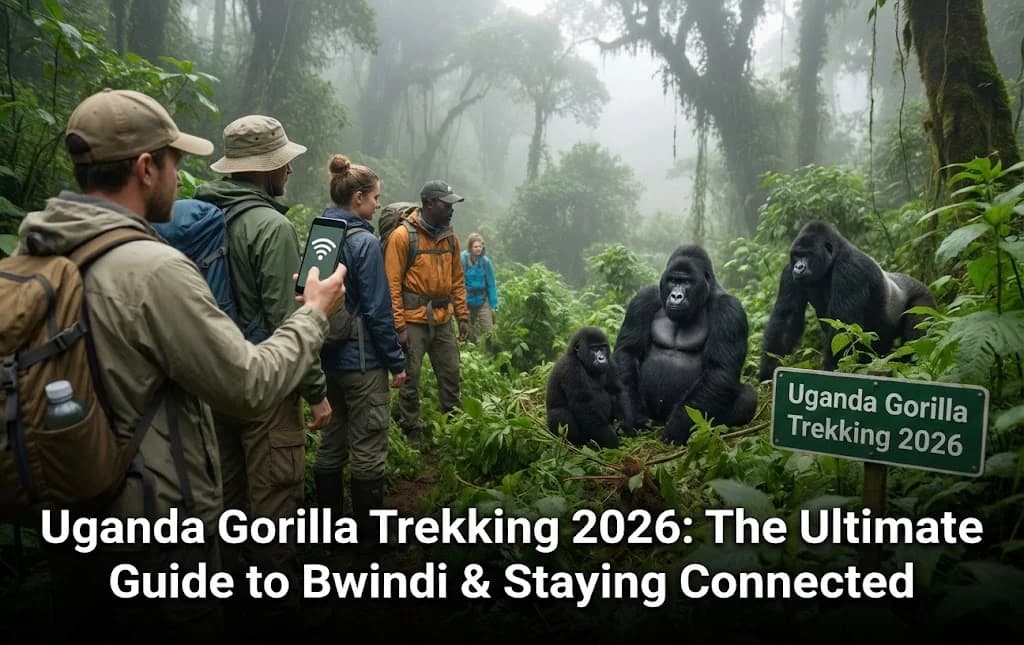
Bwindi Impenetrable National Park, a UNESCO World Heritage site, is home to almost half of the world's remaining mountain gorillas. This ancient rainforest, characterized by its dense vegetation and mist-shrouded hills, offers an unparalleled opportunity to witness these magnificent creatures in their natural habitat. Unlike other gorilla trekking destinations, Bwindi boasts a unique biodiversity, adding another layer of wonder to your journey.
The "Impenetrable" in its name hints at the park's dense jungle, a challenging but rewarding landscape for trekkers. The sheer number of habituated gorilla families, currently over 20, increases your chances of a successful and intimate encounter. Each family is distinct, offering different dynamics and photographic opportunities. Furthermore, Uganda's commitment to conservation ensures that your visit contributes directly to the protection of these critically endangered species and their fragile ecosystem.
"The silence of the Bwindi forest, broken only by the sounds of wildlife, makes that first glimpse of a gorilla truly breathtaking. It's a moment of profound connection with nature."
Securing Your Bwindi Gorilla Permit for 2026: A Step-by-Step Guide
Planning your gorilla trekking adventure involves crucial steps, chief among them securing your permit. For 2026, gorilla permits in Uganda are currently priced at $800 per person. This fee is a significant investment, but it directly supports the conservation efforts and local communities surrounding the park.
-
Book in Advance:
Permits are highly sought after and limited to ensure minimal disturbance to the gorillas. It is highly recommended to book your permit at least 6-12 months in advance, especially if you plan to travel during the peak dry seasons (June to August and December to February). -
Choose Your Sector:
Bwindi is divided into four main sectors: Buhoma, Ruhija, Rushaga, and Nkuringo. Each sector has its own habituated gorilla families and offers slightly different trekking experiences in terms of difficulty and accessibility. Research these to align with your fitness level and preferred travel itinerary. -
Work with a Reputable Tour Operator:
While you can book permits directly through the Uganda Wildlife Authority (UWA), most international travelers opt to use a local tour operator. They can handle permit acquisition, transport, accommodation, and guide services, streamlining the entire process. Ensure your chosen operator is licensed and reputable. -
Consider the Dry Season:
The dry seasons from June to August and December to February offer easier trekking conditions with less mud and dense vegetation. However, trekking is possible year-round, and the wet seasons often present lush landscapes and fewer tourists.
Connectivity Essentials for Your Bwindi Adventure
While the goal of gorilla trekking is to disconnect from the digital world and immerse yourself in nature, having reliable connectivity for crucial tasks is essential. This includes communicating with your tour operator, arranging airport transfers, accessing maps for local navigation, and, of course, sharing those once-in-a-lifetime photos with loved ones. Remote areas like Bwindi present unique challenges for staying online, making pre-trip planning for your mobile data vital.
Unexpected delays, itinerary changes, or simply needing to look up information on the go can be stressful without data. Roaming charges from your home carrier can quickly accumulate, turning a brief check-in into an expensive bill. Local SIM cards can be an option, but often require finding a vendor, registration, and setup upon arrival, precious time you'd rather spend enjoying your trip.
Understanding Mobile Network Coverage in Bwindi and Uganda
Uganda's mobile network infrastructure is developing, with 4G/LTE coverage available in major cities and towns like Kampala and Entebbe. However, as you venture into more remote areas, especially around national parks like Bwindi, coverage can become sporadic or limited to 2G/3G. The primary mobile network operators in Uganda are MTN Uganda, Airtel Uganda, and Uganda Telecom (UTL).
Around the Bwindi Impenetrable National Park, network strength varies significantly by sector and even within a few kilometers. In sectors like Buhoma, which is more developed, you might find decent 3G coverage in and around lodges. However, in more remote areas like Nkuringo or Ruhija, connectivity can be very basic or non-existent, especially deeper inside the forest. Many lodges in these areas offer Wi-Fi, but it can be slow, unreliable, and often comes at an additional cost.
For trekkers, it is important to manage expectations regarding constant high-speed internet. While Cellesim partners with top local providers to offer the best possible coverage, signal strength within the dense forest during the trek itself will be minimal to none. Your eSIM is most effective for reliable data when you are in transit, at your lodge, or in nearby villages.
Choosing Your Connectivity: Cellesim eSIM vs. Local SIM vs. Roaming
When traveling to Uganda, you have several options for staying connected. Understanding the pros and cons of each will help you make an informed decision for your gorilla trekking adventure.
| Option | Price (7-Day Plan Est.) | Speed & Coverage | Setup & Convenience |
|---|---|---|---|
| Cellesim eSIM | From $4.50 (for 1GB) | Optimal 4G/5G (local partner network) | Instant digital activation pre-arrival |
| Local SIM Card | $5-$15 + registration | Good 4G/5G in cities, 3G/2G in rural | Requires purchase, registration (ID needed), and physical swap at airport/store. |
| International Roaming | $10-$20+ per day | Depends on home carrier's partners, often throttled | Automatic, but extremely expensive. |
Cellesim eSIMs offer a balance of convenience and cost-effectiveness. You can purchase and activate your Uganda eSIM before you even depart, ensuring you're connected the moment you land at Entebbe International Airport. This eliminates the need to search for a local SIM vendor, navigate language barriers, or deal with registration paperwork after a long flight. With 200+ countries covered and 50,000+ happy customers, Cellesim provides reliable data through partnerships with Uganda's leading networks.
How Much Data Do You Need for Your Gorilla Trekking Trip?
Estimating data usage for a trip like gorilla trekking requires considering your activities. While you'll spend significant time offline in the forest, you'll need data for crucial communication and sharing outside of the trek. Here's a general guide for a 7-day trip:
- Light User (1-3 GB): Occasional messaging (WhatsApp), checking emails, light social media updates, basic navigation. This is sufficient if your lodge offers reliable Wi-Fi for larger uploads.
- Moderate User (5-10 GB): Regular messaging, social media, moderate browsing, occasional video calls, some photo uploads, streaming music. Good for staying connected daily without excessive usage.
- Heavy User (15+ GB): Frequent video calls, extensive social media, working remotely, streaming high-definition content, large photo/video uploads. Consider this if you rely heavily on your phone for entertainment or work.
For most gorilla trekkers, a 5GB or 10GB plan for 7-10 days should be ample. Remember that you will likely be in remote areas where excessive data usage might not even be possible due to network limitations. Use our Smart Data Calculator to get a more personalized estimate of your data needs.
Explore All Cellesim eSIM Plans
Activating Your Uganda eSIM: Best Practices for Bwindi Trekkers
Using an eSIM for your Uganda trip offers unmatched convenience, but knowing when and how to activate it is key to a smooth experience. Cellesim eSIMs are designed for straightforward installation.
-
Purchase Your eSIM Online:
Visit cellesim.com/en/esim-uganda, select your desired data plan and duration. -
Receive Your QR Code:
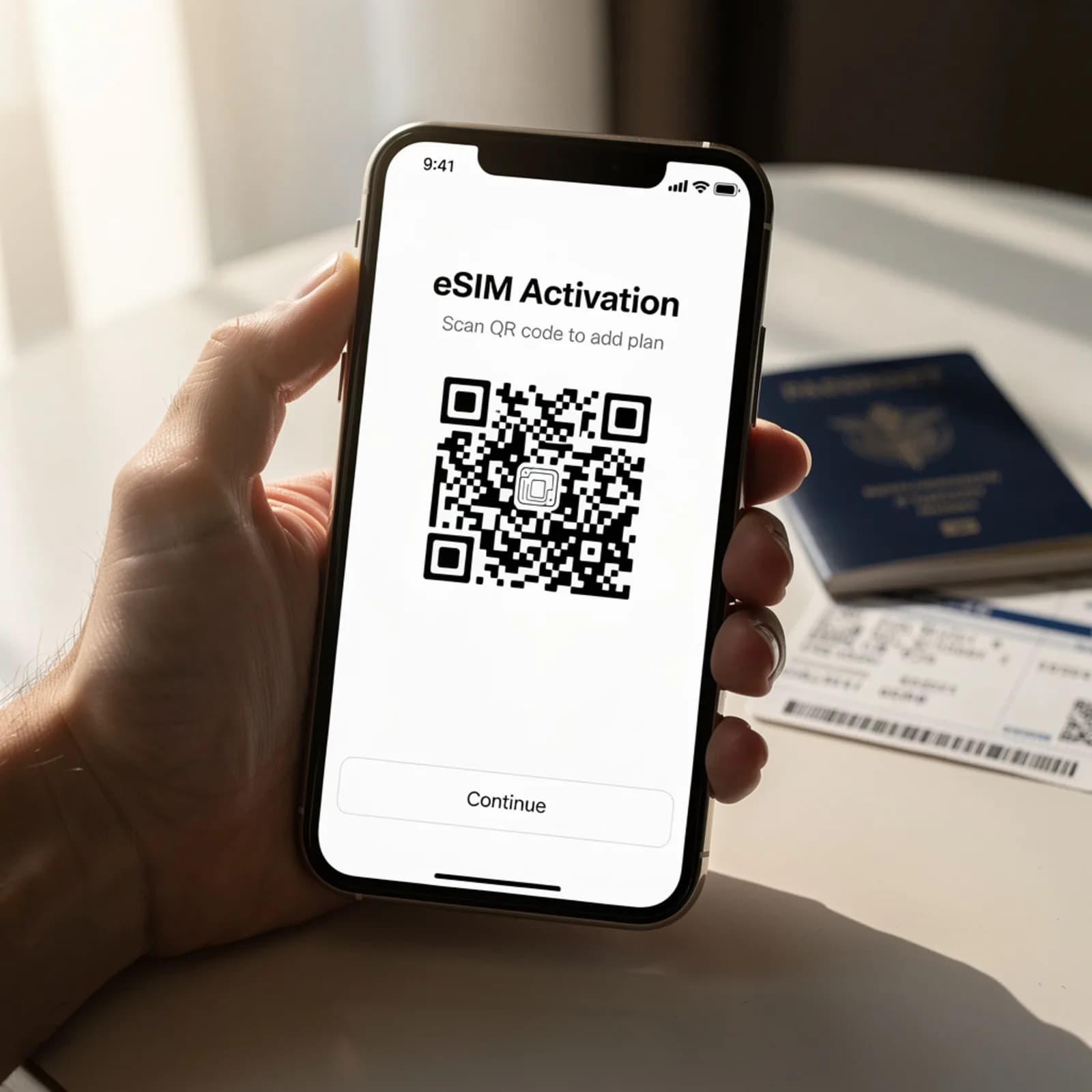
After purchase, you'll receive an email with your eSIM QR code and detailed instructions. -
Install Before You Travel:
We recommend installing your eSIM profile before you even leave home, in an area with a stable Wi-Fi connection. This prepares your phone for immediate connectivity upon arrival. For a detailed guide, refer to our complete eSIM setup guide. -
Activate on Arrival:
Do NOT activate your eSIM until you are ready to use it, preferably as you land in Uganda. This ensures you get the full duration of your plan. In your phone's settings, simply switch to your Cellesim line for mobile data and enable data roaming (don't worry, with an eSIM, this only uses your Cellesim data plan). -
Ensure Device Compatibility:
Before purchasing, verify your device is eSIM compatible. Most newer smartphones (iPhone XS/XR and later, Samsung Galaxy S20 and later, Google Pixel 3 and later) support eSIM technology.
Beyond Gorillas: Exploring Bwindi's Surrounding Attractions
While mountain gorillas are the undeniable highlight, Bwindi offers more to discover. Budget at least an extra day or two to explore the rich cultural and natural tapestry of the area.
-
Batwa Cultural Experience:
Engage with the indigenous Batwa pygmy community, the original inhabitants of the Bwindi forest. This immersive experience offers insights into their traditional lifestyle, hunting techniques, and forest lore, providing a powerful contrast to the gorilla trek. -
Nature Walks and Birding:
Bwindi is a birdwatcher's paradise, boasting over 350 species, including 23 Albertine Rift Endemics. Guided nature walks explore different parts of the park, revealing waterfalls, diverse flora, and other primates like chimpanzees and monkeys. -
Community Visits:
Many lodges offer opportunities to visit local villages, schools, and craft markets. This is a chance to interact with the friendly Ugandan people, learn about their daily lives, and support local economies by purchasing handmade souvenirs. -
Lake Bunyonyi:
A short drive from Bwindi's Ruhija and Nkuringo sectors, Lake Bunyonyi is a serene, deep lake dotted with 29 islands. It's an ideal spot for relaxation, canoeing, swimming (bilharzia-free), and enjoying breathtaking views.
Essential Packing and Health Tips for Bwindi Gorilla Trekking 2026
Preparing adequately for your gorilla trek ensures comfort and safety. The conditions in Bwindi can be unpredictable, with sudden rain showers and dense undergrowth.
-
Appropriate Clothing:
Pack long-sleeved shirts and trousers (preferably waterproof), sturdy hiking boots with good ankle support, thick socks, and gaiters to protect against insects and mud. A rain jacket is crucial. -
Daypack Essentials:
Carry enough water (at least 2-3 liters), high-energy snacks, sunscreen, insect repellent, a wide-brimmed hat, and a camera with extra batteries and memory cards. A dry bag for electronics is highly recommended. For more packing ideas, check out the ultimate carry-on packing list. -
Health Precautions:
Consult your doctor well in advance about necessary vaccinations (e.g., Yellow Fever, Typhoid, Hepatitis A/B) and anti-malarial medication. Carry a basic first-aid kit with pain relievers, blister treatment, and any personal medications. -
Physical Fitness:
Gorilla trekking can be physically demanding, involving hiking through dense jungle, up steep slopes, and across muddy terrain for several hours. Regular exercise, including inclines and long walks, is advisable in the months leading up to your trip. -
Porters:
Consider hiring a local porter at the trekking briefing point. They assist with carrying your bag and offer support on challenging sections of the trail, providing invaluable assistance and directly supporting the local community.
Ready for Your Unforgettable Uganda Adventure?
Secure instant, reliable data for your gorilla trekking trip. Stay connected from the moment you land to sharing your incredible wildlife encounters.
Start Your Connected Journey to UgandaTrusted by travelers worldwide. 24/7 Email Support: [email protected]
Frequently Asked Questions
What is the best time of year for gorilla trekking in Uganda?
The dry seasons, from June to August and December to February, are generally considered the best times for gorilla trekking in Bwindi. The trails are less muddy, and the forest is easier to navigate. However, trekking is possible year-round, and the wet seasons often offer lush scenery and fewer tourists.
How physically demanding is a gorilla trek in Bwindi?
Gorilla trekking can be moderately to very strenuous. Treks can last anywhere from 2 to 8 hours, involving walking through dense forest, climbing steep hills, and navigating slippery terrain. A good level of physical fitness is required. Porters are available to assist with carrying bags and providing support on challenging sections.
Can I use my current phone number with a Cellesim eSIM in Uganda?
Yes, absolutely. One of the main advantages of using a Cellesim eSIM is that your primary physical SIM card remains active. This means you can continue to receive calls and messages on your home number while using the Cellesim eSIM for data. You can easily switch between your lines in your phone settings. Learn more in our guide on keeping your number with a travel eSIM.
Is 5GB of data enough for a 7-day trip to Uganda for gorilla trekking?
For most travelers focusing on gorilla trekking, 5GB of data for a 7-day trip to Uganda is usually sufficient for essential communication, navigation, light browsing, and sharing photos at your lodge or during transit. If you plan extensive social media use, video calls, or working remotely, consider a larger plan. Our smart data calculator can help you estimate your needs.
Are there any age restrictions for gorilla trekking in Uganda?
Yes, the minimum age for gorilla trekking in Uganda is 15 years old. This regulation is in place to ensure the safety of both the trekkers and the gorillas, as the experience can be physically demanding and requires a certain level of maturity to follow instructions in close proximity to wild animals.
What safety precautions are in place during gorilla trekking in Bwindi?
Gorilla trekking is conducted under strict guidelines to ensure safety. You will be accompanied by experienced UWA rangers and guides, often armed for protection against any potential wildlife encounters (though aggression from gorillas is rare). Trekkers receive a briefing beforehand on behavior and safety protocols. Following your guide's instructions is paramount.