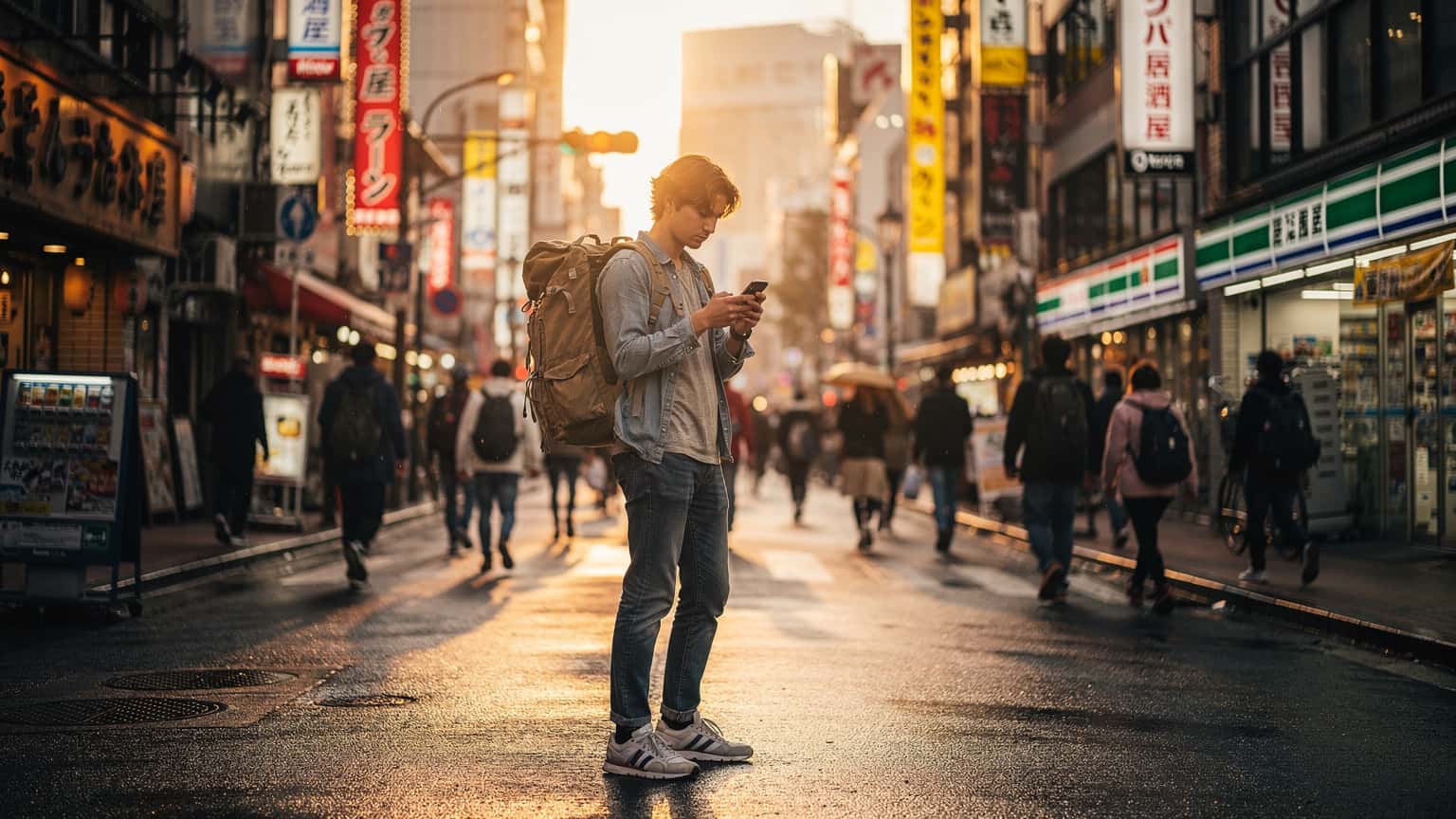
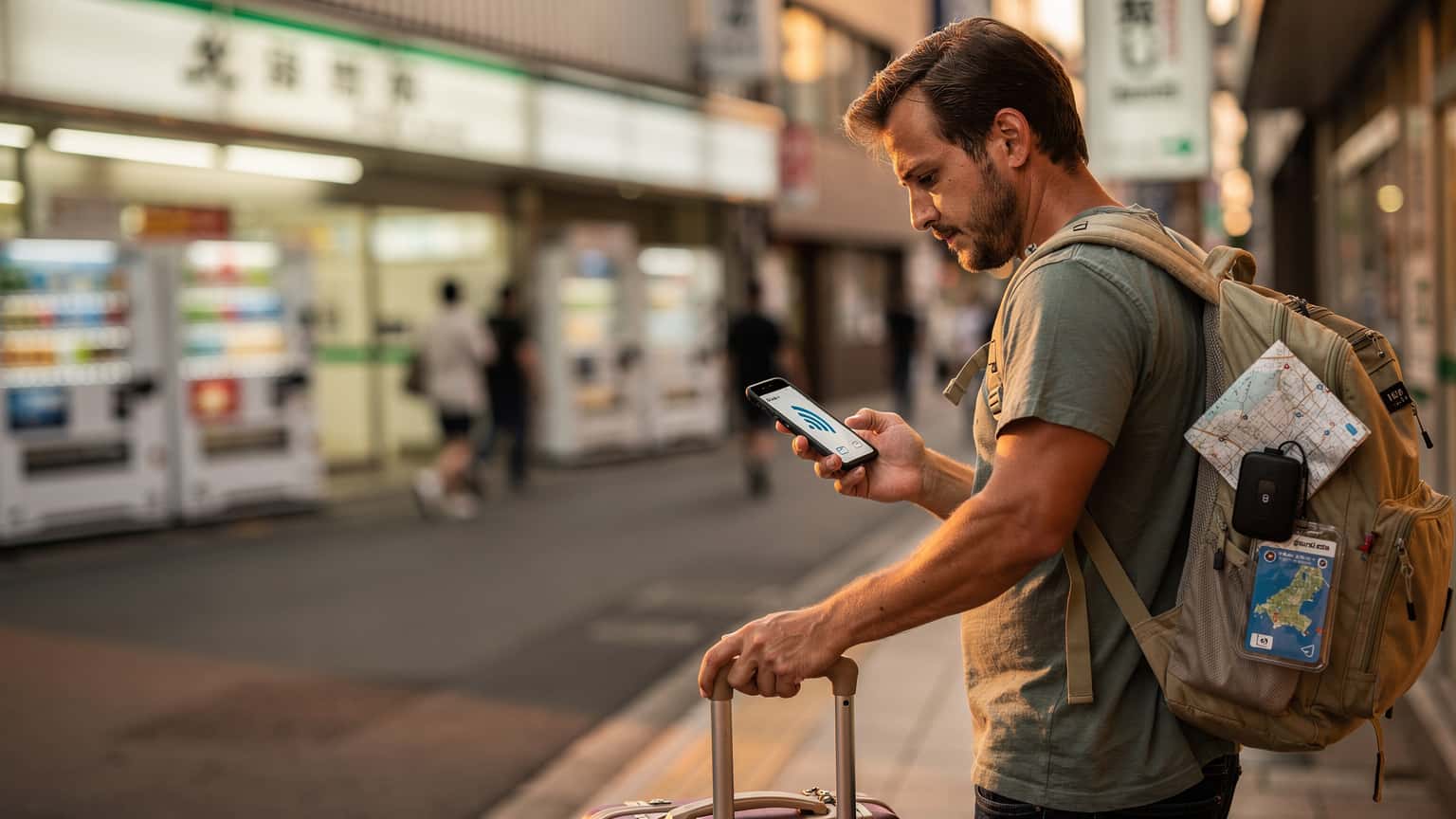
Japan in 2026 continues to be a top destination, captivating travelers with its unique blend of ancient traditions and futuristic innovation. From the bustling neon-lit streets of Tokyo to the serene temples of Kyoto and the tropical shores of Okinawa, staying connected is essential for navigating train systems, translating menus, sharing moments, and keeping in touch with loved ones. While Japan is renowned for its efficiency, relying solely on public Wi-Fi can be a gamble, especially when you need real-time maps or urgent communication. This is where an eSIM for Japan becomes an indispensable travel companion, offering immediate, reliable internet access from the moment your plane touches down.
✅ Last updated: February 2026
Quick Navigation
Japan Overview: Your 2026 Travel Essentials
Connectivity & Network Coverage in Japan in 2026
How to Get Your Cellesim eSIM for Japan
Top Regions & Cities: eSIM Coverage Insights
Airport Arrival: Get Connected Instantly in Japan
Day Trips & Nearby Adventures with eSIM Coverage
Local SIM vs. Roaming vs. Cellesim eSIM for Japan
Budgeting for Connectivity: What Tourists Spend on Data
Practical Japan Travel Tips & Your Connectivity Angle
Related Destinations & Multi-Country eSIM Options
Frequently Asked Questions
Japan Overview: Your 2026 Travel Essentials | Cellesim eSIM
Japan Overview: Your 2026 Travel Essentials
Japan, an archipelago nation in East Asia, offers an unparalleled travel experience in 2026, blending ancient traditions with cutting-edge modernity. Geographically, it spans from the snowy landscapes of Hokkaido in the north to the subtropical islands of Okinawa in the south, presenting diverse climates and cultural experiences. Travelers are drawn to its vibrant cities like Tokyo, with its iconic Shibuya Crossing and neon-lit Shinjuku, and the cultural heartland of Kyoto, home to thousands of temples and traditional geisha districts. Beyond the urban centers, regions like the Japanese Alps offer stunning natural beauty, while coastal areas provide a tranquil escape. Most nationalities enjoy visa-free entry for short tourist stays, typically up to 90 days, making spontaneous trips or longer explorations straightforward. The local currency is the Japanese Yen (JPY), and while major cities are increasingly cashless, cash remains important, especially in smaller towns and traditional establishments. Understanding these basics is crucial for a smooth journey, and having reliable connectivity via an eSIM for Japan ensures you are always prepared.
The best time to visit Japan largely depends on your travel goals. Cherry blossom season (late March to early May) and autumn foliage (October to November) are universally popular, offering breathtaking natural beauty and pleasant weather. However, these peak seasons also mean higher costs and larger crowds. Summer (June to August) is hot and humid, but ideal for festivals and beach trips, especially in Okinawa. Winter (December to February) brings excellent skiing opportunities in Hokkaido and the Japanese Alps. Regardless of the season, reliable internet is paramount for navigation, translation, and booking, making an eSIM a smart choice for every visitor.
Connectivity & Network Coverage in Japan in 2026
Japan boasts one of the most advanced and extensive mobile networks globally, providing excellent connectivity across the country in 2026. The major local carriers are NTT Docomo, au (KDDI), SoftBank, and the newer entrant, Rakuten Mobile. These providers offer widespread 4G LTE coverage, with 5G networks now prevalent in all major cities and rapidly expanding into suburban and even some rural areas. Travelers can expect average speeds ranging from 50 to 150 Mbps, making streaming, video calls, and large file downloads effortless. Even in mountainous regions or on bullet trains (Shinkansen), 4G connectivity is remarkably consistent, ensuring you can navigate, research, and share your experiences almost anywhere.
Crucially, Japan's metropolitan subway systems, including Tokyo's sprawling network, feature full mobile coverage. This means uninterrupted internet access even deep underground, a significant advantage for commuters and tourists alike who rely on navigation apps like Google Maps or HyperDia. For those exploring more remote islands or national parks, while 5G might not reach every corner, 4G LTE is robust. Cellesim leverages these top-tier networks, ensuring that whether you are lost in translation at a rural train station or live-streaming your ascent of Mount Fuji, your connection remains strong. This superior infrastructure makes an eSIM Japan an incredibly reliable choice for any itinerary.
Pro Tip: Before your trip, download offline maps of key areas in Japan, even with excellent eSIM coverage. This provides a valuable backup in rare instances of signal loss or if you're trying to conserve data in remote spots.
How to Get Your Cellesim eSIM for Japan
Acquiring a Cellesim eSIM for Japan is a straightforward process designed for maximum convenience, allowing you to secure your connectivity well before your flight departs in 2026. Forget the hassle of searching for local SIM cards at the airport or dealing with foreign language contracts. Cellesim streamlines your access to Japan's excellent mobile networks. Here is a simple step-by-step guide:
Visit the Cellesim Website: Navigate to cellesim.com/en/esim-japan. You can browse various data plans tailored to different trip durations and data needs. Whether you need a small package for a short city break or a larger one for an extended exploration of Japan, there is an option available.
Select Your Plan: Choose the Japan eSIM plan that best suits your travel style. Consider factors like your expected data usage (maps, social media, video calls) and the length of your stay.
Complete Purchase: Add your selected plan to the cart and proceed to checkout. Cellesim supports various secure payment methods, including credit/debit cards, PayPal, and Alipay, with prices often displayed in your local currency for transparency.
Receive Your eSIM QR Code: Within minutes of your purchase, a unique eSIM QR code and installation instructions will be sent directly to your email address. This instant delivery means no waiting for physical shipments.
Activate Your eSIM: Scan the QR code with your eSIM-compatible smartphone. Most phones allow you to do this via your device's cellular settings. Follow the prompts to add the new cellular plan. Make sure to activate it when you land in Japan, or just before, to avoid starting your plan early. For detailed instructions, refer to our eSIM installation guide.
Enjoy Instant Connectivity: Once activated, your Cellesim eSIM will connect to Japan's local networks, providing you with high-speed internet access across the country. You can keep your primary physical SIM active to receive calls and texts, utilizing the dual SIM functionality of most modern smartphones. This allows for seamless communication without missing important messages from home.
This process makes connecting in Japan simpler and more efficient than ever, ensuring you are prepared for every adventure. Check if your device is eSIM compatible before purchasing.
⚡
Instant
Setup
🌍
200+
Countries
✓
50K+
Users
Top Regions & Cities: eSIM Coverage Insights
Japan's diverse regions offer varied travel experiences, and thankfully, Cellesim eSIMs provide excellent coverage across all of them in 2026, leveraging the robust infrastructure of local carriers like NTT Docomo and SoftBank. Knowing what to expect in key areas helps in planning your connectivity needs.
Tokyo & Kanto Region: As one of the world's largest and most technologically advanced cities, Tokyo boasts comprehensive 5G coverage. Areas like Shinjuku, Shibuya, Akihabara, and Ginza offer blazing fast speeds, perfect for streaming, video calls, and navigating complex metro lines with real-time updates. You will find seamless connectivity even on the Yamanote Line and other major subway routes. The wider Kanto region, including Yokohama and Hakone, also benefits from strong 4G and expanding 5G networks, ensuring your scenic excursions are always connected.
Kyoto & Kansai Region: In the cultural heartland of Japan, including Kyoto, Osaka, and Nara, connectivity is superb. Whether you are exploring the Fushimi Inari Shrine, navigating Dotonbori's vibrant streets in Osaka, or visiting Nara's deer park, you will have reliable 4G and 5G speeds. This is crucial for accessing temple information, translating menus, and sharing your experiences instantly. The network extends well to the bullet train lines connecting these major cities.
Hokkaido & Northern Japan: For winter sports enthusiasts and nature lovers, Hokkaido provides excellent 4G coverage, even in popular ski resorts like Niseko and Furano. Sapporo, the region's capital, has strong 5G. While more remote hiking trails might occasionally drop to 3G or have intermittent service, the overall network quality for travelers is robust.
Okinawa & Southern Islands: The subtropical islands of Okinawa offer beautiful beaches and a unique culture. Major islands like Okinawa Hontō have strong 4G and good 5G coverage in populated areas like Naha. Connectivity generally holds up well even on ferry routes between islands, allowing you to plan your next snorkeling spot or cultural visit. Some smaller, uninhabited islets may naturally have weaker signals, but this is rare for typical tourist routes.
Hiroshima & Chugoku Region: This historical region, including Hiroshima and the iconic Miyajima Island, is well-covered with fast 4G and growing 5G. Reliable internet is invaluable here for visiting peace memorials, accessing ferry schedules to Miyajima, and learning about the area's rich history.
Across Japan, Cellesim ensures you can rely on a consistent, high-speed connection, making it easier to enjoy every facet of your journey.
Airport Arrival: Get Connected Instantly in Japan
Arriving in Japan, whether at Tokyo's Narita (NRT) or Haneda (HND) airports, or Osaka's Kansai International (KIX), marks the beginning of your adventure. The immediate need for internet access is almost universal: checking directions, contacting accommodation, or simply letting family know you have arrived safely. While major Japanese airports offer free Wi-Fi, relying solely on it can be a source of frustration. Airport Wi-Fi can be slow, unreliable, and often requires tedious login procedures. Imagine standing in a crowded arrivals hall, struggling to connect while trying to find your transfer details – not an ideal start to your trip.
This is where a Cellesim eSIM for Japan shines. By purchasing and activating your eSIM before you even board your flight, you can ensure instant connectivity the moment your plane lands and switches off airplane mode. No searching for Wi-Fi hotspots, no queues at SIM card counters, and no worrying about sharing personal data on public networks. Your phone will automatically connect to one of Japan's premier mobile networks, providing you with stable, fast data from the runway to your hotel. This seamless transition is not just a luxury; it is a practical necessity for navigating Japan's efficient but sometimes complex public transport systems, or simply ordering an Uber or taxi if you prefer. This immediate connection also helps you avoid the "airport SIM trap," where local physical SIM cards sold at airport counters often come with a significant markup (typically 3000-5000 JPY for limited data) compared to prepaid eSIM options. For a deeper dive into avoiding these costs, explore our guide on airport SIM card prices vs eSIM.
Day Trips & Nearby Adventures with eSIM Coverage | Cellesim eSIM
Day Trips & Nearby Adventures with eSIM Coverage
Japan is a country begging to be explored beyond its major metropolises, and your Cellesim eSIM ensures you stay connected on every captivating day trip and regional adventure in 2026. Whether you are seeking historical sites, natural beauty, or unique cultural experiences, reliable data is crucial for navigation, checking train schedules, and finding local gems.
Hakone (from Tokyo): A popular escape known for its stunning views of Mount Fuji, hot springs (onsen), and the open-air museum. Your eSIM provides uninterrupted connectivity as you ride the Hakone Tozan Railway, cruise Lake Ashi, and take the Hakone Ropeway. This is essential for checking bus times to the various attractions and locating the best onsen.
Nara (from Kyoto/Osaka): Home to friendly free-roaming deer and magnificent temples like Todai-ji. An eSIM keeps you connected for identifying the best spots to feed the deer, navigating the expansive park, and finding traditional eateries in Nara town.
Miyajima Island (from Hiroshima): Famous for its "floating" torii gate of Itsukushima Shrine. Connectivity is excellent for checking tide times to see the gate at its best, locating specific temples, and ensuring you do not miss your ferry back to the mainland.
Shirakawa-go (from Nagoya/Kanazawa): A UNESCO World Heritage site with traditional gassho-zukuri farmhouses. While more rural, major tourist areas and routes maintain solid 4G coverage, allowing you to use maps and translate local information about these unique dwellings.
For travelers planning a broader Asian adventure, Cellesim also offers flexible multi-country options. If your Japanese journey extends to neighboring countries, consider an eSIM for South Korea to experience Seoul's vibrant culture, or an eSIM for Taiwan to explore Taipei and its natural wonders. Cellesim's Asia 20 Countries eSIM plan is also an excellent choice for seamless regional connectivity, covering not just Japan but 19 other countries as well, making it perfect for backpackers and multi-destination travelers.
Stay Connected Across Japan with Cellesim eSIM
Get instant, high-speed data for your entire trip. Trusted by 50,000+ travelers worldwide.
When planning your connectivity for Japan in 2026, you generally have three main options: purchasing a local physical SIM card, relying on international roaming with your home provider, or opting for a Cellesim eSIM. Each comes with its own set of pros and cons, especially regarding price, convenience, and network access.
International Roaming: The High-Cost Trap
Using your home network's international roaming plan is often the most expensive option. Major carriers like AT&T, T-Mobile, or Verizon (for US travelers) or EE, Three, Vodafone (for UK travelers) typically charge $10-$15 per day for limited data and calls, which can quickly add up to hundreds of dollars for a multi-day trip. While convenient because you do not need to change anything, the exorbitant costs and often throttled speeds (some carriers slow data to 256kbps after a small daily allowance) make it an impractical choice for most. For example, a 7-day trip could easily incur $70-$100 in roaming fees for minimal data usage, leading to the £400 ghost roaming trap if you are not careful.
Local Physical SIM Card: The Airport Hassle
Upon arrival at Narita, Haneda, or Kansai airports, you will find counters selling tourist SIM cards from carriers like NTT Docomo or SoftBank. These typically cost around 3000-5000 JPY (approx. $20-$35 USD) for 5-10GB of data over 7-15 days. While offering good local speeds, this option requires you to queue at the airport, potentially deal with language barriers, and physically swap out your home SIM card, risking loss or damage. If your phone is locked to your home carrier, a local SIM might not even work. Plus, airport prices are often higher than what you might find online or in city centers.
Cellesim eSIM: The Smart 2026 Traveler's Choice
Cellesim eSIMs combine the best of both worlds: the convenience of not swapping physical cards and the affordability of local rates. With Cellesim, you purchase your data plan online before you travel, receive an instant QR code, and activate it upon arrival. This means you are connected immediately without airport queues or carrier lock issues. Cellesim partners with top Japanese networks, providing you with high-speed 4G/5G data coverage similar to local SIMs, but often at a better value and with zero hassle. Plans are flexible, ranging from 1GB for 7 days to larger packages for longer stays. This solution is particularly ideal for travelers who want to keep their primary number active for calls and texts while using the eSIM for data.
Feature
Cellesim eSIM for Japan
Local Physical SIM (Airport)
International Roaming (e.g., US Carrier)
Price for 7 days / 5GB Data (approx.)
From $7-$15 (depending on plan)
3000-5000 JPY (~$20-$35)
$70-$105 ($10-15/day)
Convenience
Instant digital delivery, activate before/upon arrival, no physical swap
Queue at airport, physical swap, potential language barrier
Automatic connection, but high cost
Network Speed & Coverage
High-speed 4G/5G (NTT Docomo, au/KDDI, SoftBank)
High-speed 4G/5G (local carrier)
Often throttled after small daily allowance
Keep Home Number?
Yes (dual SIM functionality)
No (replaces primary SIM)
Yes
Setup Time
Minutes (scan QR code)
15-30 minutes (queue + activation)
Instant (if plan enabled)
Risk of Lost SIM
None
Yes (when swapping)
None
Budgeting for Connectivity: What Tourists Spend on Data
Understanding how much data you genuinely need for your Japan trip in 2026 is key to smart budgeting. Many travelers overestimate their data requirements, leading to overspending, or underestimate, resulting in unexpected top-ups. A typical tourist visiting Japan for 7-10 days might consume anywhere from 5GB to 15GB of data, depending on their usage habits. Here's a breakdown of what different data allowances get you:
1-3 GB: Ideal for light users. This is enough for essential navigation (Google Maps), checking social media occasionally, sending messages on LINE, and looking up quick facts or translations. You will need to rely more on hotel Wi-Fi. Cost with Cellesim: ~$4.50 (1GB/7d) - $10 (3GB/15d).
5-10 GB: The sweet spot for most travelers. This amount allows for daily navigation, regular social media updates, moderate photo uploads, occasional video streaming (e.g., YouTube on a train ride), and a few video calls to family. This provides a good balance of connectivity and value. With 5GB, you can navigate extensively, make a couple of hour-long video calls, and browse social media frequently without constant worry. Cost with Cellesim: ~$7 (5GB/7d) - $15 (10GB/15d).
15-20 GB or more: Perfect for heavy users, digital nomads, or those who plan to use their phone as a personal hotspot. This data allows for extensive video streaming, frequent video calls, large file uploads, and connecting multiple devices. If you are working remotely or watching a lot of Netflix on the go, this is your best bet. Cost with Cellesim: ~$20 (15GB/30d) - $30+ (20GB+/30d).
Consider that 1GB of data can facilitate roughly 10-12 hours of constant Google Maps navigation, 3-4 hours of standard definition video streaming, or thousands of LINE messages and social media scrolls. Cellesim offers competitive plans, often providing more data for less than competitors like Airalo (e.g., 1GB/7d for $4.50) or Holafly (Unlimited/5d for $19, but often throttled after a certain threshold). Ubigi offers 1GB/30d for $5, but Cellesim often has more flexible and cost-effective larger packages. By choosing a Cellesim Japan eSIM, you get transparent pricing and the flexibility to top up if needed via the Cellesim website, ensuring you only pay for what you use.
Key Info: While cash is still prevalent in smaller Japanese shops and restaurants, digital payment methods like PayPay, Suica, and Pasmo IC cards are widely accepted in cities and convenient stores. However, you still need data to manage these apps or check balances, making a reliable eSIM essential.
Practical Japan Travel Tips & Your Connectivity Angle
Japan is a country where preparation pays off, and your Cellesim eSIM plays a central role in making your trip smoother in 2026. Here are some practical tips with a connectivity angle:
Navigation is Key: Japan's public transport, particularly its train and subway networks, is incredibly efficient but can be complex. Google Maps is indispensable for planning routes, checking real-time schedules, and estimating travel times. A reliable data connection means you can use these apps without interruption, making transfers easier and preventing you from getting lost. For detailed train schedules, consider HyperDia or Japan Transit Planner apps, which also benefit from continuous internet.
Communication with LINE: The primary messaging app in Japan is LINE. Many businesses, hotels, and even individuals use it for communication. Having an active data connection ensures you can use LINE to message tour guides, confirm restaurant bookings, or even connect with new friends you meet on your journey. Your eSIM allows you to maintain your primary number for WhatsApp or other apps while using LINE for local interactions.
Language Barriers & Translation: While many Japanese people in tourist areas speak some English, a translation app like Google Translate is invaluable. With your eSIM, you can instantly translate signs, menus, and conversations, greatly enhancing your cultural immersion and independence.
Payment Methods: As mentioned, IC cards like Suica or Pasmo are essential for transport and widely accepted at convenience stores and vending machines. Many modern smartphones allow you to add a digital Suica/Pasmo card, which requires an internet connection for initial setup and sometimes for checking balances. Your Cellesim eSIM ensures these digital conveniences are always at your fingertips.
Stay Safe: Japan is incredibly safe, but knowing local emergency numbers is wise. Dial 110 for police and 119 for fire or ambulance. In an emergency, a working phone with data is critical to communicate your location. Having a reliable connection also helps you look up safe travel advisories from local authorities if unexpected events occur.
Tipping Culture: Tipping is generally not expected or even customary in Japan; in some cases, it might even be considered rude. Your eSIM helps you quickly look up local etiquette to avoid cultural missteps.
Power Plugs: Japan uses Type A and B power plugs, the same as in North America. The voltage is 100V. Ensure you have the correct adapters for your devices to keep them charged and your eSIM active.
By leveraging your Cellesim eSIM, you unlock a seamless and stress-free travel experience, allowing you to fully immerse yourself in the wonders of Japan.
Related Destinations & Multi-Country eSIM Options | Cellesim eSIM
Related Destinations & Multi-Country eSIM Options
Japan often serves as a gateway to exploring the broader East Asian region, or it can be a part of a larger multi-country itinerary. Cellesim understands that modern travelers frequently combine destinations, and our eSIM offerings extend far beyond a single country, providing seamless connectivity across continents in 2026. If your adventure plans include more than just Japan, consider these options:
South Korea: Just a short flight away, South Korea offers a vibrant blend of K-pop culture, ancient palaces, and futuristic cities like Seoul. Travelers often combine Japan with South Korea for an immersive East Asian experience. Cellesim offers dedicated eSIM plans for South Korea, ensuring you stay connected from Gangnam to Busan.
Taiwan: Known for its stunning natural landscapes, bustling night markets, and rich history, Taiwan is another excellent extension to a Japan trip. Explore Taipei's vibrant food scene or hike through Taroko Gorge. Secure your data with a Cellesim eSIM for Taiwan.
China: For the more adventurous, extending your trip to mainland China offers a drastically different cultural experience. Be aware that internet censorship is prevalent, but Cellesim's eSIMs can help you bypass these restrictions. Check out our eSIM for China plans.
For those embarking on an extensive journey across the continent, Cellesim's regional eSIMs are an unparalleled solution. Our Asia 20 Countries eSIM covers Japan along with 19 other nations, including popular destinations like Thailand, Vietnam, and Malaysia. This eliminates the need to purchase separate SIMs for each country, providing consistent data and simplifying your connectivity management. Whether you're island hopping in Southeast Asia or exploring diverse East Asian capitals, a regional eSIM plan from Cellesim ensures you remain seamlessly connected throughout your entire multi-country adventure. You can even explore global options with our Global eSIM Plan 127 Countries for truly worldwide coverage.
Explore the World with Cellesim eSIM
Get instant connectivity in 200+ countries with high-speed data plans.
For Japan in 2026, Cellesim eSIMs are among the best choices due to their competitive pricing, reliable high-speed data on top local networks (NTT Docomo, au/KDDI, SoftBank), and instant digital delivery. Cellesim offers flexible plans ranging from 1GB to 20GB+, catering to various travel durations and data needs, ensuring you stay connected without hassle.
Is it worth getting an eSIM in Japan in 2026?
Absolutely, getting an eSIM for Japan in 2026 is highly recommended. It offers instant connectivity upon arrival, avoids expensive international roaming charges, and bypasses the inconvenience of buying a physical SIM card at the airport. An eSIM allows you to keep your home number active for calls/texts while using high-speed data, which is crucial for navigation, translation, and communication via apps like LINE.
Is eSIM available in Japan in 2026?
Yes, eSIM technology is widely available and supported in Japan in 2026. All major local carriers, including NTT Docomo, au/KDDI, and SoftBank, support eSIMs, and the country boasts extensive 4G and 5G network coverage. Cellesim leverages these robust networks to provide seamless service to travelers.
How much is an eSIM for 2 weeks in Japan in 2026?
The cost of an eSIM for 2 weeks in Japan in 2026 varies depending on the data package you choose. For a typical traveler needing 5GB-10GB of data over 14 days, Cellesim offers plans ranging from approximately $10 to $20 USD. Light users might find smaller, more affordable plans, while heavy users or those needing personal hotspot functionality can opt for larger data packages.
Can I get unlimited data with a Japan eSIM in 2026?
Some eSIM providers, like Holafly, advertise "unlimited" data for Japan. However, it is crucial to read the fine print. Often, these plans come with a Fair Usage Policy (FUP), meaning speeds can be significantly throttled after a certain amount of high-speed data (e.g., 20GB-30GB) is consumed within a specific period. Cellesim focuses on providing transparent, high-speed fixed-data plans that offer reliable performance without unexpected throttling.
How do Cellesim eSIMs compare to Airalo or Ubigi for Japan in 2026?
Cellesim offers competitive pricing and excellent network quality for Japan in 2026. While Airalo and Ubigi also provide eSIMs, Cellesim often delivers better value in terms of data allowance for the price, alongside leveraging Japan's premier networks for consistent high speeds. For instance, a 1GB/7d plan from Airalo costs around $4.50, and Ubigi offers 1GB/30d for $5, but Cellesim plans often offer more flexible tiers and greater overall value for larger data needs, backed by 24/7 support in 24 languages.
Senior eSIM Analyst & Travel Tech Specialist - Cellesim Global
Oleg Maskhov is a Senior Tech Writer and Connectivity Analyst at Cellesim. With a background in telecommunications engineering and over a decade of experience as a digital nomad, Oleg specializes in testing mobile network performance and eSIM r...
Discover the best eSIM for your Bahamas trip in 2026. Stay connected with reliable data, avoid roaming fees, and enjoy seamless travel. Get your Celle...
Discover the best eSIM for Italy travel in 2026. Stay connected in Rome, Florence & Venice with Cellesim's affordable, high-speed plans. Buy your Ital...
We use cookies to keep Cellesim reliable and secure, improve user experience, provide social media features, and analyze how our website is used. Learn more.
Guest Checkout
--•-
-
Enter your details to continue with guest checkout. No account needed!