Updated: 2026-02-16
You've just touched down at Mexico City's Benito Juárez International Airport (MEX). That buzzing feeling of being in a new place is exciting, but then reality hits: you need to find your Airbnb in Condesa, tell your host you're here, and call an Uber before the swarm of taxi drivers descends. The problem? Your phone screen stubbornly says 'No Service.' Every traveler knows this moment, that sudden connectivity panic. For digital nomads in Mexico, this isn't just a minor inconvenience; it's a critical decision. Your work, your ability to navigate, and even your social life hinge on having a reliable connection.
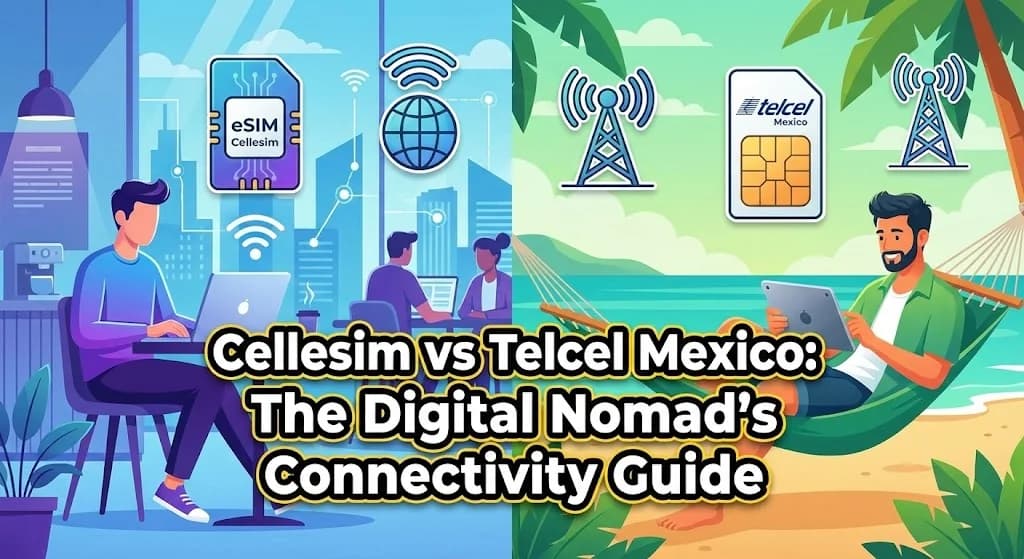
So, what's the smartest move here? Do you go with the modern ease of an eSIM or stick to the old-school local SIM card? This guide will dive deep into the Cellesim vs Telcel Mexico debate for digital nomads. We'll give you real, on-the-ground advice, covering everything from the moment you land to your daily work routine. Our goal is to help you pick the right connection for your Mexican adventure as a remote worker. With convenient Mexico eSIM plans from Cellesim, you can be online literally seconds after your plane lands, making your arrival in Mexico City, or any other lively Mexican spot, completely smooth.
- Navigating Digital Nomad Connectivity in Mexico
- At a Glance: Cellesim eSIM vs. Telcel SIM for Nomads
- Option 1: The Cellesim eSIM Experience for the Modern Remote Worker
- Option 2: Going Local with a Telcel SIM Card for Extended Stays
- Telcel's Network and Plans: What Digital Nomads Need to Know
- Data Needs & Connectivity Demands for Remote Work in Mexico
- Activation and Setup: A Crucial Difference for Digital Nomads
- Cost, Value, and Hidden Fees: A Nomad's Budget Perspective
- Maximizing Your Connectivity: Pro Tips for Digital Nomads in Mexico
- Making Your Choice: Cellesim or Telcel for Your Mexico Journey
- Frequently Asked Questions
Mexico eSIM Plans from $4.50
Stay connected from the moment you land. Join 50,000+ travelers who connect instantly with Cellesim in over 200 countries.
Get Your Mexico eSIMNavigating Digital Nomad Connectivity in Mexico: Your Essential Guide
Mexico has really become a hotspot for digital nomads. It's got amazing culture, diverse landscapes, and a pretty affordable cost of living. Whether you're in the busy streets of Mexico City, relaxing on Oaxaca's quiet beaches, or working from a co-working space in Puerto Vallarta, staying connected is non-negotiable. You need it for work, and you need it to truly enjoy the local scene. Picking the right mobile plan, especially between a Cellesim eSIM and a local Telcel SIM, can seriously impact how productive you are and how much you enjoy your trip. This comparison focuses on what matters most to remote workers who absolutely rely on a stable, strong internet connection.
At a Glance: Cellesim eSIM vs. Telcel SIM Showdown for Nomads
Sometimes, you just need the quick facts, especially when you're a busy digital nomad on the go. Here’s a fast look at how Cellesim eSIMs and Telcel SIMs stack up for a typical remote worker or tourist exploring Mexico.
| Feature | Cellesim eSIM | Telcel Local SIM |
|---|---|---|
| Activation | Instant (scan QR code before you fly) | In-person purchase at OXXO, Telcel store, or airport kiosk |
| Convenience for Nomads | Extremely high; online in minutes, ideal for remote work setup immediately upon arrival. | Low; requires finding a store, potential queues, language barrier, delaying connectivity. |
| Upfront Cost | Transparent, paid online in your currency, no hidden fees. | Low for the SIM card (~$150 MXN), but requires separate data package purchase and potential admin fees. |
| Data Plans | Clear, fixed data packages (e.g., 10GB for 30 days), perfect for predictable remote work usage. | Complex 'Amigo Sin Límite' plans with confusing terms, often throttled social media. |
| Top-Ups | Easy online process, vital for uninterrupted digital nomad work. | Requires visiting a store or using a Mexican credit card online, inconvenient for nomads. |
| Coverage | Excellent; uses top-tier local networks like Telcel & AT&T, ensuring broad connectivity. | Excellent; Telcel has the most extensive network in Mexico, a strong point for coverage. |
| Local Number | No (data-only), but VoIP apps suffice for most digital nomad needs. | Yes, useful for local contacts or services if absolutely required. |
| Best For | Digital nomads, short-term tourists, anyone valuing convenience, flexibility, and immediate connectivity for remote work. | Long-term residents (6+ months), those specifically needing a local number for formal banking or extensive local calls. |
Option 1: The Cellesim eSIM Experience for the Modern Remote Worker
An eSIM, short for embedded SIM, is a digital SIM card. It lets you activate a cellular plan without having to deal with a physical nano-SIM. For travelers, especially digital nomads, this is a total game-changer. You buy a plan online, get a QR code, and you're good to go before you even start packing your suitcase. It’s a modern, super easy way to handle your travel connectivity, perfect for staying productive and keeping in touch with clients and colleagues.
How It Works: Instant Digital Delivery
Cellesim makes the whole process incredibly simple, which is exactly why it's such a great eSIM for digital nomads in Mexico. You just pick your Mexico data package online, buy it, and almost immediately you get a QR code in your email. Then, you go into your phone's settings, scan that code, and boom - your new cellular plan is added. The best part is you can do all of this from your couch at home or a coffee shop. The plan won't actually start until it connects to a network once you're in Mexico. So, when you land at Benito Juárez International Airport in Mexico City, you just turn off airplane mode, switch your cellular data to the Cellesim line, and you're instantly online. No more hunting for Wi-Fi, no frantic search for a SIM card seller, and no language barriers to deal with. Before you commit, it's always smart to check if your phone is eSIM compatible, though most newer models are. Cellesim offers plans for over 200 countries and has served over 50,000 happy customers worldwide, proving its reliability for international travelers and remote workers.
Pros of Using a Cellesim eSIM in Mexico for Digital Nomads
- Unbeatable Convenience: This is the biggest perk for a digital nomad. Landing with your internet already set up takes away so much travel stress. You can book a ride, check your hotel details, and let your family know you landed safely, all while you're still on the tarmac. For remote work, this means you can jump straight into emails and essential communications without any delays.
- Complete Transparency: You'll know exactly what you're paying for and how much data you're getting. There are no hidden fees, confusing promo periods, or tricky terms about "unlimited" social media that actually have a sneaky data cap. This clarity is a lifesaver for budgeting as a digital nomad.
- Keep Your Home Number: Since an eSIM is digital, your phone's physical SIM slot stays empty. This means you can keep your regular number active to get calls or important verification texts (like from your bank) while using the Cellesim eSIM for all your data needs. This dual SIM feature is something many digital nomads really appreciate.
- Safety and Security: You won't have to hand over your passport or personal info in a foreign store. The whole transaction is done securely online. Plus, you won't risk losing your tiny home SIM card while trying to swap it out, which is a common worry when traveling. Cellesim makes secure online transactions and customer privacy a priority.
Cons and Considerations for Digital Nomads
- Data-Only Plans: Most eSIMs, including Cellesim's, are just for data. You won't get a local Mexican phone number for traditional calls or texts. But for a digital nomad working remotely, this is rarely an issue. Apps like WhatsApp, Telegram, Google Meet, and FaceTime Audio handle almost all communication needs, often more efficiently and affordably over data.
- Device Compatibility: While most high-end phones from the last few years support eSIMs, older or cheaper models might not. It's crucial to check this before you buy to make sure your device can handle this modern connectivity solution. Always look at the list of supported devices.
Option 2: Going Local with a Telcel SIM Card for Extended Stays
Telcel is Mexico's biggest mobile carrier, and you'll see its blue and white logo everywhere. If you go the local SIM route, you'll buy a physical SIM card and a prepaid data package, called 'Paquetes Amigo Sin Límite,' after you arrive. This option might appeal to people who want to really integrate locally or have very specific phone usage habits, but it does come with its own set of challenges for remote workers in Mexico.
The Process: Getting a Telcel SIM Card in Mexico
This is where things can get a bit tricky for a digital nomad who needs to be online right away. Your first job is to find a place that sells Telcel SIM cards. You might spot a kiosk at big airports like Cancun (CUN) or even Mexico City's Benito Juárez International Airport (MEX), but prices there can be higher and choices limited compared to official stores. More often, you'll need to go to a Telcel store or a convenience store like OXXO. This usually means waiting in line, possibly dealing with a language barrier, and needing to show ID like your passport. This whole process can easily eat up an hour or more of your valuable travel time, delaying your ability to connect with your remote work team or figure out your new surroundings.
Pros of Using a Telcel SIM in Mexico for Nomads
- Local Mexican Number: The main advantage here is getting a local Mexican phone number. This can be handy if you need to set up local bank accounts, make reservations, or deal with local services that insist on a Mexican number. For short-term digital nomads, though, this usually isn't a must-have, as VoIP apps cover most communication needs.
- Direct Carrier Support: When you buy directly from Telcel, you get access to their customer support in Mexico. This can be helpful if you run into complicated network problems that need direct help from the local provider.
- Potentially Lower Long-Term Cost (for voice/SMS): If your main need is a lot of local calls and texts, Telcel's prepaid plans often bundle these in, which could be cheaper than using data-only VoIP calls for a very long stay. But for remote work that uses a lot of data, the savings might not be that big.
Cons and Considerations for Digital Nomads
- Time-Consuming Activation: This is the biggest downside for a digital nomad. You lose precious time upon arrival trying to find a store, buying the SIM, and getting the plan activated. This delay can really mess with your immediate productivity or urgent communications.
- Complex Data Plans: Telcel's 'Amigo Sin Límite' plans can be quite confusing. While they often advertise "unlimited" social media, these usually come with fair-use policies and slower speeds after you hit a certain limit. The actual main data allowance might be less than you expect, or speeds for non-social media apps could be inconsistent.
- Physical SIM Card: You have to swap out your home SIM, which means you risk losing it and also lose access to your home number for important verification texts. For many digital nomads, juggling two physical SIM cards is just a pain.
- Recharge Inconvenience: To top up your data or credit, you typically have to go to an OXXO, a Telcel store, or use a Mexican credit card online. This can be a real hassle compared to the easy online top-ups offered by eSIM providers.
Telcel's Network and Plans: What Digital Nomads Need to Know
Telcel proudly offers the most extensive and robust network coverage across Mexico, which is a huge deal for any digital nomad. This wide reach means you're more likely to have a signal even in remote areas or smaller towns where other carriers might struggle. However, their prepaid plans have some details that remote workers should definitely understand.
Coverage and Speed for Remote Work
Telcel's 4G LTE network is widely available in major cities, popular tourist spots, and along main highways. In these areas, you can generally expect good speeds that are fast enough for video calls, uploading large files, and streaming. That said, like any network, performance can change depending on how many people are using it, your specific location inside a building, and the device you have. While Telcel usually provides great speeds, keep in mind that their "unlimited social media" deals often come with speed limits for those specific apps. This could affect you if your work heavily relies on social platforms.
Understanding 'Amigo Sin Límite' Plans
Telcel's prepaid plans are known as 'Amigo Sin Límite'. These packages combine data, calls, and SMS. The "Sin Límite" (unlimited) part usually means unlimited national calls and texts, and often social media apps like WhatsApp, Facebook, Twitter, and Instagram. However, there's typically a specific data allowance for these apps before speeds are reduced. The actual "open internet" data is usually a set amount, often ranging from 1.5 GB to 10 GB for 30 days, depending on the price. Digital nomads really need to look closely at these plans to understand how much data they truly get for general internet use, rather than being swayed by "unlimited" claims tied to specific apps. Many plans don't explicitly include tethering (hotspot), which is crucial for many remote workers. Always confirm hotspot allowance when buying a local SIM plan.
"For a digital nomad, knowing your actual data allowance for Zoom calls and uploading files is far more important than 'unlimited' Facebook. eSIMs provide that clarity upfront."
Data Needs & Connectivity Demands for Remote Work in Mexico
Figuring out how much data you actually use is key to picking the right plan, especially for digital nomads. Your work often involves video calls, accessing cloud storage, emails, and potentially lots of browsing or moving large files. This section will help you estimate your needs and see how Cellesim and Telcel can meet them.
Estimating Your Daily Data Usage
Remote work can burn through a lot of data. Here’s a general idea:
- Emails & Messaging (Slack, WhatsApp): Low, roughly 50-100 MB per day.
- Browsing & Research: Moderate, 200-500 MB per hour.
- Video Conferencing (Zoom, Google Meet): High, 800 MB - 2 GB per hour (depending on quality).
- File Uploads/Downloads: Highly variable, can use gigabytes quickly.
- Streaming (Music/Video for breaks): High, 100 MB - 3 GB per hour.
A typical digital nomad might need anywhere from 5GB to 20GB of data for a week of active work and play. Over a month, that could easily jump to 30GB or more, especially if you use your phone as a hotspot for your laptop. Cellesim offers various Mexico eSIM plans with different data amounts and validity periods, so you can pick one that fits your estimated usage. You can also use our Smart Data Calculator to get a more precise estimate of your data usage.
Reliability for Critical Tasks
When you're working remotely, staying connected isn't just about fun; it's about hitting deadlines and joining client calls. Both Cellesim (by using top local networks) and Telcel offer good network coverage. However, how predictable your data plan is makes a huge difference. With Cellesim, you buy a clear data allowance, which means consistent speeds until you use it up or renew. Telcel's "unlimited" features, which often have hidden conditions, can create uncertainty, potentially hurting important work if speeds suddenly slow down.
Explore eSIMs for Business Travelers
Activation and Setup: A Crucial Difference for Digital Nomads
The moment you land in a new country, time is money and convenience is everything for a digital nomad. How you activate your internet connection can really set the tone for your whole trip. This section breaks down the very different setup experiences you'll have with Cellesim and Telcel.
Cellesim: Pre-Travel Preparation for Seamless Arrival
With Cellesim, your internet can be all set up before you even get on your flight. The process is super simple:
- Purchase: Pick a Mexico eSIM plan online.
- Receive QR Code: An email with your eSIM QR code arrives instantly.
- Install eSIM: Scan the QR code using your phone's settings (usually under 'Cellular' or 'Mobile Data'). Give it a clear name, like "Cellesim Mexico." You can do this anywhere you have an internet connection.
- Activate on Arrival: Once you land in Mexico, turn off airplane mode, switch your cellular data to your Cellesim line, and make sure data roaming is turned on for that line (it uses local networks, so you won't get traditional roaming fees). Your connection will start automatically.
This pre-emptive setup means you can immediately use important apps for navigation (Google Maps), communication (WhatsApp), and transport (Uber/DiDi) without having to rely on dodgy airport Wi-Fi or delaying your departure from the airport. For a visual, step-by-step guide, you can check out the Cellesim Complete eSIM Setup Guide.
Telcel: Post-Arrival Logistics and Potential Delays
Activating a Telcel SIM involves several steps that you have to do after you arrive:
- Locate a Store: You need to find an official Telcel store or an OXXO convenience store that sells SIM cards. This could be at the airport (often more expensive) or in the city.
- Purchase SIM: Buy a physical SIM card. You'll probably need your passport to register it.
- Choose and Activate Plan: Pick a 'Paquete Amigo Sin Límite' and have it activated. This often requires help from a store employee, who might not speak English.
- Wait for Activation: Sometimes, it can take a few minutes or even longer for the SIM to become active.
This whole process can be a real pain and eat up a lot of time. Imagine landing in a new airport, possibly with all your luggage, trying to find a store, and then dealing with language barriers, all before you can even tell your Airbnb host you've arrived. For a digital nomad who needs to check emails or respond to clients immediately, this delay is a major problem.
Cost, Value, and Hidden Fees: A Nomad's Budget Perspective
For digital nomads, keeping track of finances is essential. Connectivity costs can really add up, so it's super important to understand the true value and any potential hidden fees for each option. Let's compare the money side of Cellesim eSIMs versus Telcel local SIM cards.
Transparent Pricing with Cellesim eSIMs
Cellesim offers pricing that's straightforward and clear. When you buy an eSIM plan for Mexico, the price you see is exactly what you pay. There are no sneaky activation fees, unexpected taxes, or confusing top-up processes that might cost you extra. You pick a data package (like 5GB, 10GB, 20GB) for a set time (like 7, 15, or 30 days), and that's exactly what you get. This predictability is incredibly helpful for budgeting as a digital nomad, letting you plan your connectivity expenses without any surprises. You can easily check roaming savings with eSIM compared to traditional options.
Telcel: Initial Savings vs. Long-Term Value and Hidden Costs
A Telcel SIM card might look cheaper at first, with the SIM itself costing around 150 MXN (about $8-10 USD). But that's just for the card; you still need to buy a data package. While some bundles can seem appealing, especially with "unlimited social media," you need to carefully evaluate the actual value for general internet use (which is crucial for remote work). Things that can add to the real cost include:
- Throttled Speeds: If speeds slow down after you hit a certain limit for "unlimited" services, you might find yourself needing to buy more data or just putting up with slower service, which hurts your productivity.
- Inconvenient Top-Ups: Having to physically go to a store or use a Mexican payment method to top up adds opportunity cost (your time) and can be a hassle.
- Currency Exchange and Fees: Paying in Mexican Pesos might mean foreign transaction fees from your bank if you use an international card, or unfavorable exchange rates.
- Tourist Pricing: Sometimes, airport kiosks or certain vendors might charge tourists slightly higher prices or offer less favorable bundles.
While a local SIM can be cheaper for very long stays (several months or more) if you really maximize local calls/SMS, for most digital nomads staying under 3-4 months, the convenience, transparency, and instant connection of an eSIM usually offer better overall value.
Maximizing Your Connectivity: Pro Tips for Digital Nomads in Mexico
Beyond simply choosing between Cellesim and Telcel, there are a few smart moves digital nomads can make to get the best possible internet experience in Mexico.
Utilize Wi-Fi When Available
Even with an eSIM, it’s a good idea to take advantage of free Wi-Fi at cafes, co-working spaces, and where you're staying. This helps you save your cellular data for when you really need it, like when you're traveling, exploring, or making important work calls where public Wi-Fi might not be reliable. But always use a VPN when on public Wi-Fi for security, especially if you're handling sensitive work information.
Monitor Your Data Usage
Keep a close eye on how much data you're using. Most smartphones have built-in data trackers. Cellesim also gives you tools to check your remaining data balance. Checking regularly means you won't suddenly run out of data in the middle of an important task. Plan for potential top-ups if you're using more than you expected. For more details on this, you can read our guide on how to check eSIM data usage and top up.
Consider a Backup Solution
For crucial work that absolutely cannot have any downtime, think about having a backup plan. This could be a small Cellesim eSIM plan running alongside a bigger Telcel plan, or vice-versa. Some digital nomads even carry a portable Wi-Fi hotspot for an extra layer of security, though that does mean another device to manage. Having a backup is key to keeping your remote work going without interruptions.
Explore Co-Working Spaces
Mexico's popular digital nomad spots like Mexico City, Oaxaca, and Puerto Vallarta have tons of co-working spaces with fast, dependable internet. These places not only offer great connectivity but also create a community where you can meet other remote workers. Websites like Nomad List or Coworker.com can help you find good options. For general travel advice, the official Visit Mexico tourism site is a helpful resource.
Making Your Choice: Cellesim or Telcel for Your Mexico Journey
The best internet choice for your digital nomad trip in Mexico really comes down to what you prioritize, how long you're staying, and your specific work needs.
Choose Cellesim if:
- You value immediate connectivity upon arrival: This is crucial for settling in quickly and for urgent work communications.
- You prefer clear, predictable data plans: No hidden fees or confusing "unlimited" claims.
- Your stay is short to medium-term (up to a few months): Cellesim's flexibility is perfect.
- You need to keep your home number active: The dual SIM feature is a huge benefit.
- You want a hassle-free, fully digital experience: No trips to physical stores or language barriers to deal with.
Choose Telcel if:
- You plan an extended stay (6+ months): Here, the long-term cost savings and local number benefits might slightly outweigh the initial inconvenience.
- You absolutely need a local Mexican phone number for official reasons: Like opening a local bank account or for specific government services.
- You are comfortable navigating local stores and potential language barriers: And you have plenty of time upon arrival to get everything set up.
For most digital nomads, who prioritize convenience, instant access, and easy data management, a Cellesim eSIM for Mexico is clearly the better option. It fits perfectly with the adaptable, independent lifestyle of remote work and international travel.
Ready for Seamless Connectivity in Mexico?
Join 50,000+ digital nomads and travelers connecting effortlessly worldwide. Activate your Cellesim eSIM in minutes.
Start Your Connected JourneyTrusted by travelers in 200+ countries. 24/7 Support.
Frequently Asked Questions
Is Telcel really the best network in Mexico for digital nomads?
Telcel generally has the widest coverage across Mexico, especially in more rural areas, making it a strong choice for reliability. However, eSIMs like Cellesim use these same top-tier local networks, often including Telcel and AT&T, giving you comparable coverage without the hassle of a physical SIM. For digital nomads, the convenience of instant activation with an eSIM often makes it a better choice than any small difference in direct carrier performance.
Can I use my Cellesim eSIM as a hotspot for my laptop in Mexico?
Yes, Cellesim eSIMs absolutely support personal hotspot functionality. This means you can share your data connection with other devices like your laptop or tablet. This is a crucial feature for digital nomads who need to use their phone's internet for working on their computers. Just make sure your device and plan settings allow for tethering, and you can easily create a mobile Wi-Fi hotspot.
Do Cellesim eSIMs for Mexico come with a local phone number?
Cellesim eSIMs for Mexico are usually data-only plans, so they don't include a local Mexican phone number. However, for most communication needs a digital nomad has, VoIP (Voice over Internet Protocol) apps like WhatsApp, Telegram, Google Meet, or FaceTime Audio work perfectly over your data connection. This lets you make calls and send messages internationally without needing a local number.
What if my phone isn't eSIM compatible?
If your phone is an older model or simply doesn't support eSIMs, then a physical SIM card from a local carrier like Telcel would be your main option. Before you travel, it's really important to check if your device is compatible. If your phone does support eSIM, it opens up a world of convenience for international travel and remote work.
How do I top up my Cellesim eSIM data plan if I run out in Mexico?
Topping up your Cellesim eSIM data plan is a simple online process. You can log into your Cellesim account on the website, pick your active plan, and then choose to buy an extra data package or extend your current plan. The top-up is applied digitally and instantly, ensuring you stay connected without needing to go to a physical store. This is ideal for a busy digital nomad.
Is it safe to rely solely on an eSIM for remote work in Mexico?
Yes, it's generally very safe and effective to rely on an eSIM for remote work in Mexico. Cellesim partners with dependable local networks, giving you stable connectivity that's similar to a local SIM. For critical tasks, having a backup (like a small secondary data package or always looking for Wi-Fi) can add an extra layer of security. The digital nature of eSIMs also makes them more secure by reducing the risk of losing or having a physical SIM card stolen.
See also: Mexico City eSIM