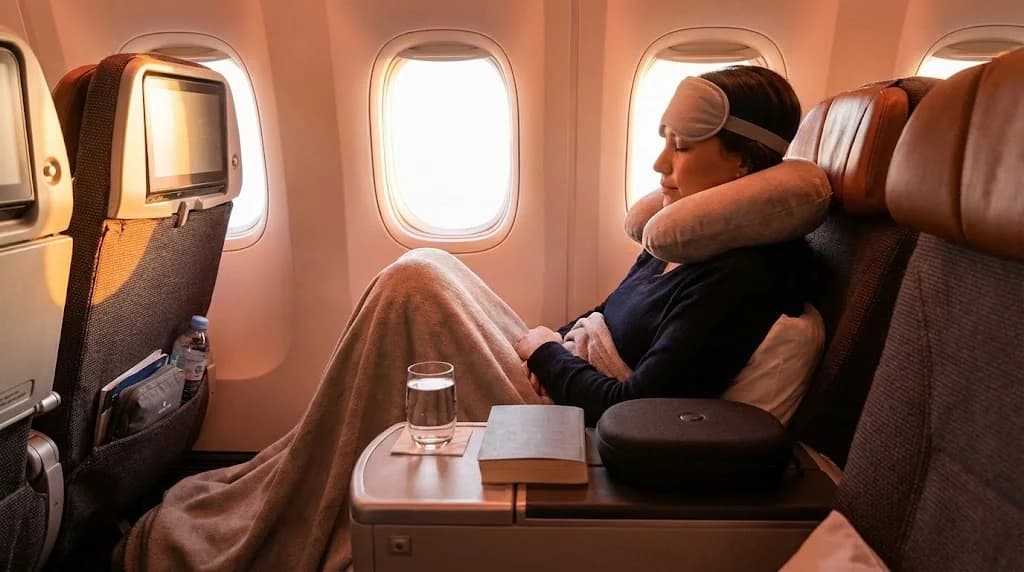
There is a unique mix of excitement and dread that comes with a long-haul flight. On one hand, an adventure awaits. On the other, 14 hours in a pressurised tube. The difference between arriving refreshed and feeling like a crumpled piece of paper often comes down to preparation and strategy. This guide offers comprehensive advice for not only enduring but thriving during lengthy journeys, ensuring you land ready to embrace your destination and swiftly overcome jet lag.
- The Art of Pre-Flight Preparation: Setting the Stage for Comfort
- Crafting Your Comfort Zone: Essential In-Flight Strategies
- Fueling Your Journey: Nutrition and Hydration Strategies
- Conquering Jet Lag: Resetting Your Internal Clock
- Seamless Connectivity Upon Arrival: The eSIM Advantage
- Optimising Your Device for Travel: Before Take-Off
- Maximising Sleep During and After Your Flight
- Frequently Asked Questions
Connect Instantly Upon Landing with Cellesim
Eliminate airport SIM queues and roaming charges. Join 50,000+ happy customers in 200+ countries with Cellesim.
Shop All eSIM PlansThe Art of Pre-Flight Preparation: Setting the Stage for Comfort
The success of your long-haul flight often hinges on decisions made before you even leave home. Strategic pre-flight planning minimises stress and enhances your ability to manage the journey itself.
Choosing Your Seat Wisely
When booking, consider your priorities. An aisle seat offers freedom to stretch and access the lavatory without disturbing others, which is invaluable on long flights. A window seat provides a wall to lean against for sleep and an uninterrupted view, but sacrifices easy movement. Exit row seats or bulkhead seats offer extra legroom, though they may come with restrictions on carry-on storage during take-off and landing.
Adjusting Your Schedule in Advance
To mitigate jet lag, begin adjusting your sleep schedule a few days before departure. If travelling east, try going to bed and waking up earlier. If travelling west, shift your schedule later. Even small adjustments of 30-60 minutes per day can make a difference in how quickly your body adapts to the new time zone.
Packing Smart for Your Carry-On
Your carry-on is your survival kit. Prioritise comfort, entertainment, and essential toiletries. This includes items like a neck pillow, eye mask, earplugs or noise-canceling headphones, and layers of clothing. Ensure all liquids comply with airline security regulations, and consider packing an empty reusable water bottle to fill after security.
"Preparation is not just about packing bags, it's about mentally preparing your body and mind for the transition across time zones."
Crafting Your Comfort Zone: Essential In-Flight Strategies
Once onboard, your mission is to create a personal sanctuary that shields you from the less glamorous aspects of air travel. This involves a combination of smart attire, comfort accessories, and mindful movement.
Dressing for Success: Layers and Loose Clothing
Airplane cabins are notorious for fluctuating temperatures. Dress in loose, comfortable layers that can be easily added or removed. Natural, breathable fabrics like cotton or linen are ideal. Compression socks are also highly recommended to promote circulation and prevent swelling, particularly on flights exceeding six hours.
Your Personal Comfort Kit
- Neck Pillow: A good quality neck pillow provides crucial support, preventing neck strain and improving sleep quality.
- Eye Mask & Earplugs/Headphones: Essential for blocking out light and noise, allowing you to rest in a busy cabin environment. Noise-canceling headphones are particularly effective for creating a quiet space.
- Travel Blanket or Large Scarf: Cabins can get chilly. A lightweight blanket or large scarf offers extra warmth and can double as a pillow or back support.
- Moisturiser & Lip Balm: The dry cabin air can dehydrate skin and lips. Keep travel-sized versions handy for regular application.
Movement and Stretching
Sitting for extended periods can lead to stiffness and even increase the risk of deep vein thrombosis (DVT). Aim to get up and walk around the cabin every 2-3 hours. When seated, perform simple stretches: ankle rotations, knee lifts, and neck rolls. Many airlines provide in-flight exercise guides in their entertainment systems.
Fueling Your Journey: Nutrition and Hydration Strategies
What you consume before and during your flight significantly impacts your energy levels, mood, and ability to combat jet lag. Hydration is paramount.
The Importance of Water
The low humidity in an airplane cabin accelerates dehydration. Drink plenty of water before, during, and after your flight. Aim for at least 1 litre every four hours. Avoid excessive caffeine and alcohol, as both are diuretics and contribute to dehydration. Consider carrying an empty reusable water bottle to fill up once you are past airport security.
Smart Food Choices
Before your flight, opt for light, nutrient-rich meals. Avoid heavy, greasy, or gas-producing foods. During the flight, choose lighter airline meal options when available. If you have dietary restrictions, pre-order special meals well in advance. Bringing your own healthy snacks like nuts, fruit, or energy bars can prevent reliance on less healthy airline offerings and keep your energy stable. Try to align your meal times with your destination's schedule to begin adapting to the new time zone.
For further reading on maintaining well-being during travel, consult resources from organisations like the World Health Organization for general travel health advice.
Conquering Jet Lag: Resetting Your Internal Clock
Jet lag is a physiological condition resulting from alterations to the body's circadian rhythm. Minimising its impact requires a multi-pronged approach, both in the air and upon arrival.
Adjusting to Destination Time Immediately
As soon as you board the plane, set your watch to your destination's local time. Begin to operate on that schedule for eating and sleeping. If it is daytime at your destination, try to stay awake. If it is night, attempt to sleep.
Strategic Light Exposure
Light is the most powerful cue for regulating your circadian rhythm. Upon arrival, expose yourself to natural daylight if it is daytime at your destination, especially in the morning. This signals to your body that it is time to be awake. Conversely, avoid bright light in the evening if you need to sleep earlier. Wearing sunglasses can help manage light exposure when necessary.
Napping and Sleep Cycles
Resist the urge to take long naps during the day after arrival, even if you are exhausted. Short power naps (20-30 minutes) can be helpful, but extended naps can reinforce the old time zone. Prioritise sleeping through the night according to local time. Melatonin supplements can be considered, but it is advisable to consult a doctor before use.
Seamless Connectivity Upon Arrival: The eSIM Advantage
While an eSIM does not provide in-flight connectivity, it plays a critical role in your post-flight survival, ensuring you are connected the moment your plane touches down. This immediate access to data is vital for navigating your new surroundings and communicating.
Eliminating Post-Landing Hassle
One of the biggest post-flight headaches is securing local mobile connectivity. With an eSIM, this stress is eliminated. You can purchase and install your plan before you even depart, or while still in the air (if Wi-Fi is available). The moment your plane lands, your phone can connect to a local network, avoiding expensive roaming fees and the search for a local SIM card vendor at the airport.
Instant Access to Essentials
Imagine landing after a long journey and immediately being able to:
- Access maps for directions to your accommodation.
- Order a ride-sharing service.
- Contact family or friends to let them know you have arrived safely.
- Check local transport schedules or hotel booking details.
This instant connectivity provides significant peace of mind and reduces the cognitive load after a tiring flight. Cellesim offers eSIM plans for Italy and over 200 other countries, ensuring you can find a suitable option for your destination.
| Connectivity Option | Setup Difficulty (Upon Arrival) | Cost (Estimated per GB) | Network Speed |
|---|---|---|---|
| Cellesim eSIM | Instant activation (pre-installed) | From $4.50/GB (varies) | Full 4G/5G Local |
| International Roaming | Automatic (pre-set) | $10-15/MB (very high) | Throttled, Home Carrier Dependent |
| Local Physical SIM | High (find store, paperwork) | $2-8/GB (varies) | Full 4G/5G Local |
Optimising Your Device for Travel: Before Take-Off
Beyond physical comfort, ensuring your electronic devices are prepped for a long journey and seamless transition is key to stress-free travel. This includes managing entertainment and understanding your connectivity options.
Pre-Download Entertainment and Information
Relying on in-flight Wi-Fi for entertainment or critical information is a gamble. Its speed is often inconsistent, and costs can be prohibitive. Before your flight, download movies, TV shows, podcasts, audiobooks, and music directly to your devices. Also, download offline maps of your destination, travel documents, and any essential apps that work without an internet connection. This ensures you have uninterrupted access regardless of Wi-Fi availability.
Checking eSIM Compatibility and Data Needs
Ensure your device is eSIM compatible before you travel. You can use our eSIM checker tool to verify this quickly. Understanding how much data you will need is also crucial. Consider activities like navigation, social media, messaging, and occasional browsing. Our Smart Data Calculator can help estimate your data usage for your trip, allowing you to choose the perfect Cellesim plan.
"A fully charged device with pre-downloaded content is a traveler's best friend on a long-haul flight."
Maximising Sleep During and After Your Flight
Quality sleep is perhaps the most challenging aspect of long-haul travel, yet it is fundamental to arriving refreshed and combating jet lag effectively. Strategic approaches can improve your chances of resting.
Creating a Sleep-Conducive Environment Onboard
Even in a cramped economy seat, you can optimise your sleep environment. Recline your seat slightly if permitted, use your neck pillow and eye mask, and put on noise-canceling headphones. Avoid screens for at least an hour before you plan to sleep, as blue light can disrupt melatonin production. If you struggle to sleep, try relaxation techniques or meditation apps downloaded in advance.
Maintaining a quiet, dark, and cool environment is ideal. Many travellers find success by establishing a pre-sleep routine similar to what they would follow at home, even if abbreviated. This signals to your body that it is time to wind down.
Prioritising Rest Upon Arrival
Once you land, resist the temptation to push through extreme fatigue. If it is nighttime at your destination, aim for a full night's sleep in a dark, quiet room. If it is daytime, try to stay active and expose yourself to natural light, but do not hesitate to take a short power nap if absolutely necessary. Consistency in your new sleep schedule is the most effective long-term strategy for adjusting to the new time zone.
Ready for Seamless Connectivity and Stress-Free Travel?
Choose Cellesim for instant data upon landing, effortless setup, and global coverage.
Start Your Connected JourneyTrusted by 50,000+ travelers worldwide. 24/7 Support.
Frequently Asked Questions
How does an eSIM help me on a long-haul flight?
While an eSIM does not provide in-flight connectivity, it ensures seamless data access the moment your plane lands. This eliminates the need to buy a local SIM card at the airport, saving you time and stress, allowing you to instantly use maps, ride-sharing apps, and contact loved ones. You can often purchase and install your Cellesim eSIM before you even take off.
What are the most effective strategies to combat jet lag?
Key strategies include gradually adjusting your sleep schedule a few days before departure, setting your watch to the destination time onboard, prioritising hydration, controlling light exposure upon arrival (seeking sun if it is daytime, avoiding it if nighttime), and resisting long naps during the day to align with local sleep patterns.
What essential items should I pack in my carry-on for comfort?
Your carry-on survival kit should include noise-canceling headphones, a quality eye mask, a supportive neck pillow, compression socks, a comfortable travel blanket or large scarf, an empty reusable water bottle, and healthy snacks. These items create a personal comfort zone in the cabin.
Is airplane Wi-Fi reliable enough for work or streaming?
In-flight Wi-Fi is generally not reliable enough for demanding tasks like video calls, heavy streaming, or critical work. It can be slow, expensive, and intermittent. It is always recommended to pre-download all your entertainment, documents, and offline maps to your devices before your flight.
When is the best time to activate my Cellesim eSIM?
The best time to activate your Cellesim eSIM is usually just before you depart or during a layover, once you have purchased your plan. This ensures that your data is ready to connect the second your plane touches down in your destination, providing immediate peace of mind and connectivity. Our Interactive Setup Guide provides step-by-step instructions.
How can I stay hydrated and manage my diet effectively during a long flight?
To stay hydrated, drink plenty of water (aim for at least 1 litre every 4 hours), limit alcohol and caffeine, and carry an empty water bottle for refills. For diet, pack healthy snacks, choose lighter airline meal options if available, and try to time your meals to align with your destination's schedule to assist with jet lag adjustment.