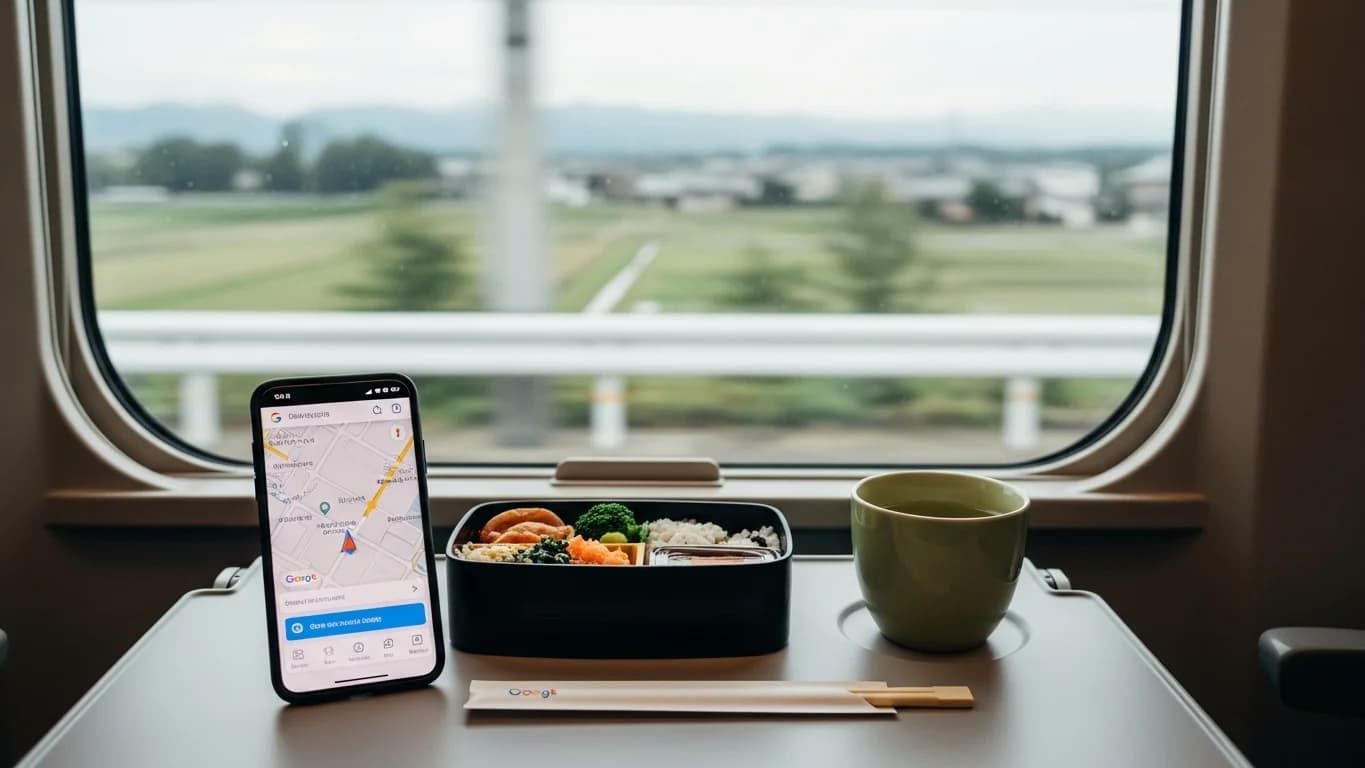
You have just landed at Narita (NRT) or Haneda (HND). The organised chaos is exhilarating, and your first mission is to navigate the sprawling train system to your hotel in Shinjuku. You pull out your phone to check Google Maps, assuming you can hop on free airport WiFi, but you are met with a frustratingly slow connection and a complicated sign-up portal. This is the first moment many travellers realise that relying on public WiFi in Japan is not the seamless experience they imagined.
- The Public WiFi Challenge in Japan
- Comparing Connectivity Options for Japan
- The Indispensable Role of Mobile Data in Japan
- Cost and Convenience: eSIM vs. Alternatives in Japan
- Navigating Japan's Advanced 4G/5G Network
- Determining Your Data Needs for a Japan Trip
- Getting Started: Activating Your Cellesim Japan eSIM
- Making the Smart Choice for Your Japan Adventure
- Frequently Asked Questions
Connect Instantly in Japan with Cellesim eSIM
Experience fast, reliable data across Japan without hidden roaming fees. Join 50,000+ happy customers in 200+ countries.
Get Your Japan eSIMThe Public WiFi Challenge in Japan
Japan is renowned for its technological prowess, yet consistent, free public WiFi remains surprisingly elusive for travellers. While you will find hotspots in major train stations, convenience stores, and some cafes, their reliability, speed, and security are often suboptimal. Many require registration through complex Japanese-only portals, have strict time limits, or are simply not robust enough for demanding tasks like video calls or large downloads.
For daily navigation, translating menus, coordinating with travel companions, or simply sharing your experiences, relying solely on public WiFi presents significant hurdles. Imagine needing to find the next Shinkansen platform or a specific restaurant address in a bustling area, only to be left without a connection. This is where a dedicated mobile data solution becomes not just a convenience, but a necessity.
In cities like Tokyo and Kyoto, public WiFi can be found, but it often comes with connectivity caveats. A seamless journey requires more than sporadic access.
Comparing Connectivity Options for Japan
When planning your trip to Japan, several options exist for staying connected. Understanding the pros and cons of each is crucial for making an informed decision that suits your travel style and budget.
Relying on Public WiFi
- Pros: Potentially free (if available).
- Cons: Inconsistent availability, often slow, requires complex registration, limited security, not ideal for navigation or urgent communication outside designated hotspots.
International Roaming
- Pros: Uses your existing phone number, automatic connection.
- Cons: Extremely expensive, often comes with hidden fees or throttling after a small data allowance. Bill shock is a common experience.
Local Physical SIM Card
- Pros: Generally good local rates, reliable connection.
- Cons: Requires purchasing upon arrival (airport queues), involves physical SIM swap (risk of losing your home SIM), activation can be complicated for foreigners, your home number may become inactive.
Pocket WiFi Rental
- Pros: Provides a portable hotspot for multiple devices, typically good speeds.
- Cons: Another device to carry, charge, and return. Can be expensive for solo travellers, security concerns if rented from unknown providers, may have daily data caps. Compare with eSIM: Cellesim vs. Pocket WiFi Korea.
eSIM (Embedded SIM)
- Pros: Instant digital delivery, no physical SIM swap, keep your home number active, flexible plans, competitive pricing, often access to local high-speed networks.
- Cons: Requires an eSIM-compatible device.
The Indispensable Role of Mobile Data in Japan
Mobile data in Japan is more than just a convenience; it is an essential tool for navigating this unique country. From intricate train schedules to understanding cultural nuances, real-time connectivity enhances every aspect of your journey.
- Navigation: Google Maps is indispensable for public transport (train lines, exits), walking directions, and finding local attractions. Reliable data ensures you never miss a connection or get lost in a new city.
- Translation: Language barriers can be significant. Real-time translation apps allow you to communicate with locals, read menus, and understand signs instantly.
- Communication: Stay in touch with family and friends via messaging apps like WhatsApp or Line (popular in Japan). Data-based calls are far cheaper than international roaming. Keep your number active.
- Information & Bookings: Check opening hours, book restaurant reservations, buy tickets for attractions, or look up emergency information on the go.
- Emergencies: In unexpected situations, immediate access to information and communication tools can be vital for your safety and well-being.
For a deeper dive into planning a connected Japan trip, consider resources like the Japan National Tourism Organization (JNTO) website for official travel advice.
Cost and Convenience: eSIM vs. Alternatives in Japan
When evaluating connectivity options for Japan, cost and convenience are key factors. Let's compare the typical expenditure and ease of use for a standard 7-day trip, assuming moderate data usage (around 10-15 GB).
| Option | Estimated Cost (7 Days) | Setup Difficulty | Network Speed | Key Benefit |
|---|---|---|---|---|
| Cellesim eSIM | From $4.50 - $15 | Easy & Instant | Full 4G/5G | Seamless Connectivity |
| International Roaming | $70 - $150+ | Automatic | Throttled/Limited | Uses Home Number |
| Local Physical SIM | $15 - $30 | Moderate (In-store) | Full 4G/5G | Local Rates |
| Pocket WiFi Rental | $40 - $60 | Moderate (Pickup/Return) | Good 4G/5G | Shareable |
The table clearly illustrates why an eSIM often represents the best balance of cost-effectiveness and user experience for most travellers to Japan. You avoid the high costs of roaming and the logistical hassle of physical SIM cards or extra devices.
Navigating Japan's Advanced 4G/5G Network
Japan boasts one of the most advanced mobile network infrastructures globally. Major carriers like NTT Docomo, KDDI (au), and SoftBank provide extensive 4G LTE coverage across the archipelago, including remote areas. 5G networks are rapidly expanding, especially in metropolitan areas like Tokyo, Osaka, and Nagoya, offering blistering speeds for data-intensive activities.
Cellesim partners with leading local networks in Japan to ensure you receive optimal speeds and coverage. This means that with a Cellesim Japan eSIM, your experience will be comparable to that of a local user, with reliable connectivity whether you are exploring bustling city streets, riding the Shinkansen, or visiting serene temples.
Before traveling, it is always a good practice to check the coverage maps of major local carriers to understand the expected network performance in specific regions you plan to visit. Generally, you can expect strong signal strength and fast data speeds in most populated areas.
Determining Your Data Needs for a Japan Trip
The amount of data you need for your Japan trip largely depends on your usage habits. Here's a general guide:
- Light User (1-3 GB/week): Primarily uses maps, messaging, and occasional browsing. Suitable for short trips or those who often rely on hotel WiFi.
- Moderate User (5-10 GB/week): Regular navigation, social media, messaging, light streaming, and occasional video calls. This is typically sufficient for most travellers on a 1-2 week trip.
- Heavy User (15-20+ GB/week): Frequent video calls, extensive streaming, online gaming, or tethering other devices. Consider larger plans or unlimited data options if available.
For a personalised estimate, consider using the Cellesim Smart Data Calculator. It helps you understand your consumption based on typical travel activities.
Getting Started: Activating Your Cellesim Japan eSIM
Activating your Cellesim Japan eSIM is a straightforward process designed for simplicity, allowing you to get connected quickly upon arrival.
- Purchase Your Plan: Visit cellesim.com/en/esim-japan and choose a data plan that matches your travel duration and data needs.
- Receive QR Code: After purchase, you will receive an email with a QR code and manual installation details.
- Install eSIM: On your eSIM-compatible smartphone, go to Settings > Mobile Data > Add Data Plan. Scan the QR code or enter the details manually.
- Activate Plan: Follow the on-screen prompts to name your eSIM (e.g., "Japan Travel") and set it as your primary data line. Ensure Data Roaming is ON for the eSIM (this does not incur roaming charges with Cellesim as it connects to local networks).
- Connect: Once you land in Japan, your phone will automatically connect to the local network, providing instant access to mobile data.
For a detailed visual guide, refer to our complete eSIM setup guide or the interactive setup guide.
Making the Smart Choice for Your Japan Adventure
While the allure of free WiFi can be tempting, the reality of connectivity in Japan often falls short of traveller expectations. For a truly stress-free and connected journey, relying on a robust mobile data solution like an eSIM is the most practical and efficient choice. It liberates you from the hunt for hotspots, ensures your safety with constant communication, and empowers you to make the most of every moment in this captivating country.
From navigating the vibrant streets of Tokyo to exploring the serene landscapes of Hokkaido, an eSIM provides the reliable connectivity you need. Say goodbye to roaming worries and hello to seamless exploration.
Ready for Seamless Connectivity in Japan?
Choose Cellesim for instant data, competitive rates, and reliable coverage. Your adventure awaits.
Start Your Connected JourneyTrusted by 50,000+ travellers worldwide. 24/7 Support.
The WiFi Myth: Navigating Japan’s Connectivity Landscape
The core question is, do you really need a dedicated connection for Japan? The short answer is a resounding yes. While Japan is a technological wonderland, consistent, reliable mobile data is not a luxury; it is an essential tool for navigating the country with confidence. To make the smartest choice, understanding the options beyond just hunting for hotspots is crucial, which is why having a plan for the best eSIM for international travel before you even leave home can transform your trip from stressful to smooth.
Japan has a reputation for being hyper-modern, leading many to believe free, high-speed WiFi is available on every corner. While you can find it in places like major train stations (JR East/West WiFi), convenience stores (7-Eleven, FamilyMart), and some cafes, the reality on the ground is quite different. Here is what you will actually encounter:
- Registration Hurdles: Almost every "free" network requires a multi-step registration process, often asking for an email address you have to verify. This is a catch-22 when you need data to access your email in the first place.
- Inconsistent Coverage: Step outside the main tourist bubbles of Tokyo, Kyoto, or Osaka, and public WiFi becomes scarce. In smaller towns, temples, nature reserves, or even on certain train lines (including some sections of the Shinkansen), you will find yourself completely offline.
- Session Timeouts: Many public networks have strict time limits, logging you out after 30 or 60 minutes. This is incredibly disruptive when you are in the middle of navigating or trying to book a last-minute ticket.
- Security Risks: Public WiFi networks are notoriously insecure. Using them for anything sensitive, like checking your bank account or booking a hotel with a credit card, exposes your personal data to potential hackers on the same network.
Relying on this patchwork of hotspots means your trip is dictated by where you can find a signal, not by your sense of adventure. It is the difference between confidently exploring a hidden alleyway in Gion or being tethered to a Starbucks, hoping the connection holds.
Seamless Connectivity for Your Japan Trip
Stay connected from the moment you land. Get a Cellesim eSIM for Japan with instant activation and reliable 4G/5G speeds across the country.
Explore Japan eSIM Plans 🇯🇵Join 50,000+ happy customers relying on Cellesim in 200+ countries.
The Main Contenders: A Traveller's Breakdown of Japan Connectivity
Once you accept that you need your own source of mobile data in Japan, you are faced with a few key options. Each has its own set of trade-offs, and what works for a solo backpacker might not be ideal for a family on a two-week holiday. Let us break down the most common choices for Japan connectivity for travellers.
Physical Tourist SIM Cards
This is the traditional option. You can buy a physical Japan travel SIM at airport kiosks (like those from Mobal or Sakura Mobile) or electronics stores like Bic Camera or Yodobashi Camera.
Pros:
- Potentially Cheaper for Long Stays: For trips over a month, some long-term plans can be cost-effective.
- Widely Available: You can find them easily in major cities and airports.
Cons:
- Airport Queues & Hassle: After a long flight, the last thing you want is to wait in a long line, deal with paperwork, and have a stranger handle your phone.
- Passport Registration: Japanese law often requires you to register your passport to get a SIM card with a voice number. While data-only SIMs sometimes bypass this, it is often a required step.
- Risk of Losing Your Home SIM: You have to physically swap out your tiny home SIM card, creating a risk of losing it while abroad.
- Device Lock Issues: If your phone is locked to your home carrier, a Japanese SIM simply will not work.
Pocket WiFi Rentals
These portable hotspots have been popular for years. You rent a small device that provides a WiFi signal for your phone, tablet, and laptop.
Pros:
- Connect Multiple Devices: A single pocket WiFi can provide data for an entire family or group of friends.
- Simple to Use: Once it is on, you just connect to it like any other WiFi network.
Cons:
- Another Device to Carry & Charge: It is one more thing to remember, one more battery to keep charged, and one more item to fit in your pocket or bag. If it dies, everyone loses their connection.
- Clunky Pickup and Return Process: You have to arrange to pick it up at the airport or your hotel and then remember to mail it back in a specific envelope before you leave, an easy task to forget on your last day.
- Risk of Loss/Damage Fees: If you lose or break the device, you will be hit with a hefty replacement fee, sometimes over $200.
International Roaming from Your Home Carrier
This is the easiest option in theory; you just use your phone as you normally would. However, that convenience comes at a staggering price.
Pros:
- Utmost Convenience: No setup required. It just works when you land.
Cons:
- Extremely Expensive: Most US, UK, and European carriers charge daily fees ($10-$15 per day) or per-MB rates that can lead to a bill of hundreds of dollars. It is easy to see why so many travellers want to avoid these steep international roaming fees.
- Throttled Speeds: Carriers often cap your high-speed data allowance while roaming, slowing you down to unusable speeds after you hit a certain limit.
The Modern Solution: An eSIM for Japan
An eSIM (embedded SIM) is a digital SIM card that is built into your phone. You can download a data plan directly to your device without needing a physical card.
Pros:
- Instant Delivery & Activation: You can buy and install it from home before you even pack your bags. You are connected the second you touch down in Japan.
- Keep Your Home Number: Your physical SIM stays in your phone, so you can still receive calls and texts on your regular number if you need to. Learn more about how to keep your number with an eSIM.
- No Queues, No Paperwork: The entire process is 100% digital. No waiting in line, no passport scans.
- Secure and Private: You get your own private, secure data connection, unlike public WiFi.
- Flexible Plans: Choose the exact amount of data you need for the length of your trip, from a few days to a few weeks.
Cons:
- Device Compatibility: Your phone needs to support eSIM technology. Most smartphones made since 2019 do, but it is always wise to check the list of eSIM-compatible devices before purchasing. You can also use our eSIM checker.
Why Independent Mobile Data is Non-Negotiable in Japan
Beyond the simple convenience, having your own reliable mobile data in Japan empowers you to experience the country on a deeper level. Think about these real-world scenarios that become effortless with an eSIM, but a nightmare without one:
- Mastering the Transit System: Japan's train and subway networks are masterpieces of efficiency, but they can be incredibly intimidating. With data, apps like Google Maps, Japan Transit Planner, or Jorudan give you real-time platform numbers, train times, and tell you exactly which car to board for the easiest transfer. This is crucial when trying to catch the correct Shinkansen.
- Translating the World Around You: Cannot read a menu at a local ramen shop? Do not know what a sign says at a temple? With Google Translate's camera feature, you can get an instant translation. This opens up a world of authentic local experiences you might otherwise miss. You can also use it to communicate with hotel staff or shopkeepers.
- Spontaneity and Discovery: Found a cool-looking side street? Heard about a festival happening across town? With data, you can instantly look up reviews, check opening hours, and navigate to new places on a whim. You are free to be spontaneous without the fear of getting lost. Before you go, you can even use a tool to estimate how much mobile data you will need for these activities.
- Booking and Reservations: Many popular restaurants, museums (like the Ghibli Museum), and experiences require advance online booking. Having data lets you secure your spot on the go, rather than having to find WiFi and hope tickets are still available.
- Emergency Access: Whether it is contacting your hotel because you are running late, finding the nearest pharmacy, or letting family back home know you are safe after a long day, a reliable connection provides invaluable peace of mind.
Cost Comparison: eSIM vs. Other Options for Japan
Understanding the actual costs involved is essential for any savvy traveller. While upfront prices might look appealing for some options, hidden fees, low data caps, or daily charges can quickly inflate your travel budget. Let us compare the typical costs for a two-week trip to Japan.
| Option | Typical Cost (14 days) | Key Benefits | Drawbacks |
|---|---|---|---|
| Cellesim eSIM | From $15 - $35 | Instant activation, flexible plans, keep home SIM, secure, 4G/5G speeds. | Requires eSIM-compatible device. |
| International Roaming | $140 - $210+ ($10-15/day) | Utmost convenience. | Extremely expensive, throttled speeds, bill shock risk. |
| Physical Tourist SIM | $25 - $50 | Can be cheaper for longer stays. | Airport queues, passport registration, risk of losing home SIM, device lock issues. |
| Pocket WiFi Rental | $70 - $100 ($5-7/day + deposit) | Connect multiple devices, simple to use. | Another device to carry/charge, clunky pickup/return, loss/damage fees. |
As this comparison illustrates, Cellesim eSIMs generally offer the most cost-effective solution for short to medium-term trips, providing premium connectivity without the hidden expenses or logistical headaches. Moreover, you can purchase an eSIM before you leave, avoiding the potentially higher prices at places like Suvarnabhumi Airport or other international airports.
Network Coverage and 5G Speeds in Japan
Japan boasts one of the most advanced telecommunications infrastructures globally, primarily supported by three major carriers: NTT Docomo, KDDI au, and SoftBank. These networks offer extensive 4G LTE coverage across the archipelago, from bustling city centres to remote rural areas and even on many high-speed Shinkansen routes.
- NTT Docomo: Renowned for its comprehensive coverage, particularly in less populated regions. Docomo also leads in 5G expansion, offering impressive speeds in major cities.
- KDDI au: Provides strong urban and suburban coverage with a focus on high-speed data. Its 5G network is rapidly expanding, especially in metropolitan areas.
- SoftBank: Known for its robust network in cities and tourist hotspots, offering reliable performance. SoftBank is also investing heavily in its 5G infrastructure.
Cellesim partners with leading local networks in Japan to ensure you receive the best possible signal quality and data speeds, whether you are streaming content, navigating Tokyo's intricate subway system, or video calling family back home. Most Cellesim Japan eSIMs operate on 4G LTE, with 5G access available in supported areas and on compatible devices, ensuring a consistently fast and stable connection throughout your travels. For specific coverage details, you can refer to the official coverage maps of these Japanese carriers.
Find Your Perfect eSIM Plan
How Much Data Do You Really Need for a Trip to Japan?
Estimating your data needs for a trip to Japan can prevent overspending or running out of data mid-trip. Your usage will vary based on your activities, but here are some common estimates for daily consumption:
- Light User (500 MB - 1 GB/day): Ideal if you primarily use data for navigation (Google Maps), checking emails, occasional social media, and messaging. This is typically sufficient for most casual tourists.
- Moderate User (1 GB - 2 GB/day): Suitable if you frequently browse the web, upload photos to social media, stream music, and make occasional video calls. Many travellers fall into this category.
- Heavy User (2 GB - 5+ GB/day): If you plan to stream high-definition videos, engage in extensive video conferencing, heavily use social media with video uploads, or tether other devices, you will need a larger data package.
For a typical 7 to 14-day trip, a plan offering 10 GB to 20 GB often provides a comfortable buffer for moderate users. Consider using our Smart Data Calculator to get a more personalised estimate based on your specific travel habits. Remember, you can always top up your Cellesim plan if you find yourself needing more data.
Step-by-Step Guide: Activating Your Cellesim Japan eSIM
Activating a Cellesim eSIM for your Japan trip is a straightforward process, designed to get you connected quickly and effortlessly. Here is a simplified guide:
- Purchase Your eSIM: Visit Cellesim.com and choose a Japan eSIM plan that fits your data needs and trip duration.
- Receive Your QR Code: After purchase, you will receive an email containing a QR code and manual installation details.
- Install the eSIM:
- For iPhone: Go to Settings > Cellular/Mobile Data > Add eSIM. Scan the QR code or enter details manually.
- For Android: Go to Settings > Network & Internet > SIMs (or Mobile Network) > Add eSIM (or Download a SIM). Scan the QR code or enter details manually.
- Label Your eSIM: Name your new eSIM plan "Japan Travel" or similar to easily distinguish it from your primary SIM.
- Activate Data Roaming: Once you arrive in Japan, ensure that the data roaming for your Cellesim eSIM is turned ON and that your Cellesim eSIM is selected for cellular data. Your primary SIM can remain active for calls/texts.
For a more detailed walkthrough, including device-specific instructions and troubleshooting tips, refer to Cellesim's Complete eSIM Setup Guide. You can activate your eSIM shortly before you travel, or even after you land, but it is often most convenient to do it while you have a stable Wi-Fi connection at home.
Frequently Asked Questions
Is WiFi freely available everywhere in Japan?
While Japan is technologically advanced, free public WiFi is not universally available or consistently reliable. You will find it in major transport hubs, convenience stores, and some cafes, but often with registration hurdles, session limits, and potential security risks. For consistent connectivity, a dedicated mobile data solution like an eSIM is recommended.
Do I need a SIM card for Japan if my phone supports eSIM?
If your phone supports eSIM, a digital eSIM plan is generally a superior alternative to a physical SIM card. It offers instant activation, allows you to keep your home number active, and avoids the hassle of physical swaps, queues, and passport registration often associated with local SIM cards.
Can I use my Cellesim eSIM for calls and texts in Japan?
Cellesim eSIM plans primarily provide data services. While you can use data-based communication apps like WhatsApp, FaceTime, or Skype for calls and messages, traditional SMS and voice calls to local Japanese numbers are typically not included. Your home SIM remains active for receiving calls and texts on your usual number.
How much data should I buy for a two-week trip to Japan?
For a two-week trip, a moderate user might need between 10 GB and 20 GB of data. This allows for daily navigation, social media, messaging, and occasional streaming. Heavy users might opt for larger plans. You can use a Smart Data Calculator to estimate your specific needs, and Cellesim offers easy top-ups if you run low.
Is 5G available with Cellesim eSIMs in Japan?
Yes, Cellesim partners with leading local networks in Japan, which offer extensive 4G LTE coverage and expanding 5G networks. If your device is 5G-compatible and you are in a 5G-covered area, you will be able to access 5G speeds with your Cellesim Japan eSIM plan.
What should I do if my phone is not eSIM-compatible?
If your device is not eSIM-compatible, you would need to consider alternative connectivity options like renting a pocket WiFi device or purchasing a physical local SIM card upon arrival. Always check your device's compatibility on our eSIM Compatible Devices list before your trip.