Updated: 2026-02-16
Picture this: you have just landed at Rome’s Fiumicino Airport (FCO), bleary-eyed from the flight but buzzing with excitement for your Italian adventure in 2026. You pull out your phone to call your hotel or book a ride-share, only to see those two dreaded words: “No Service.” The airport Wi-Fi is slow and requires a clunky sign-up. Suddenly, the simple task of getting to your accommodation feels like a monumental challenge. This is the moment the question of getting a SIM card for Italy as a tourist becomes urgent and real.
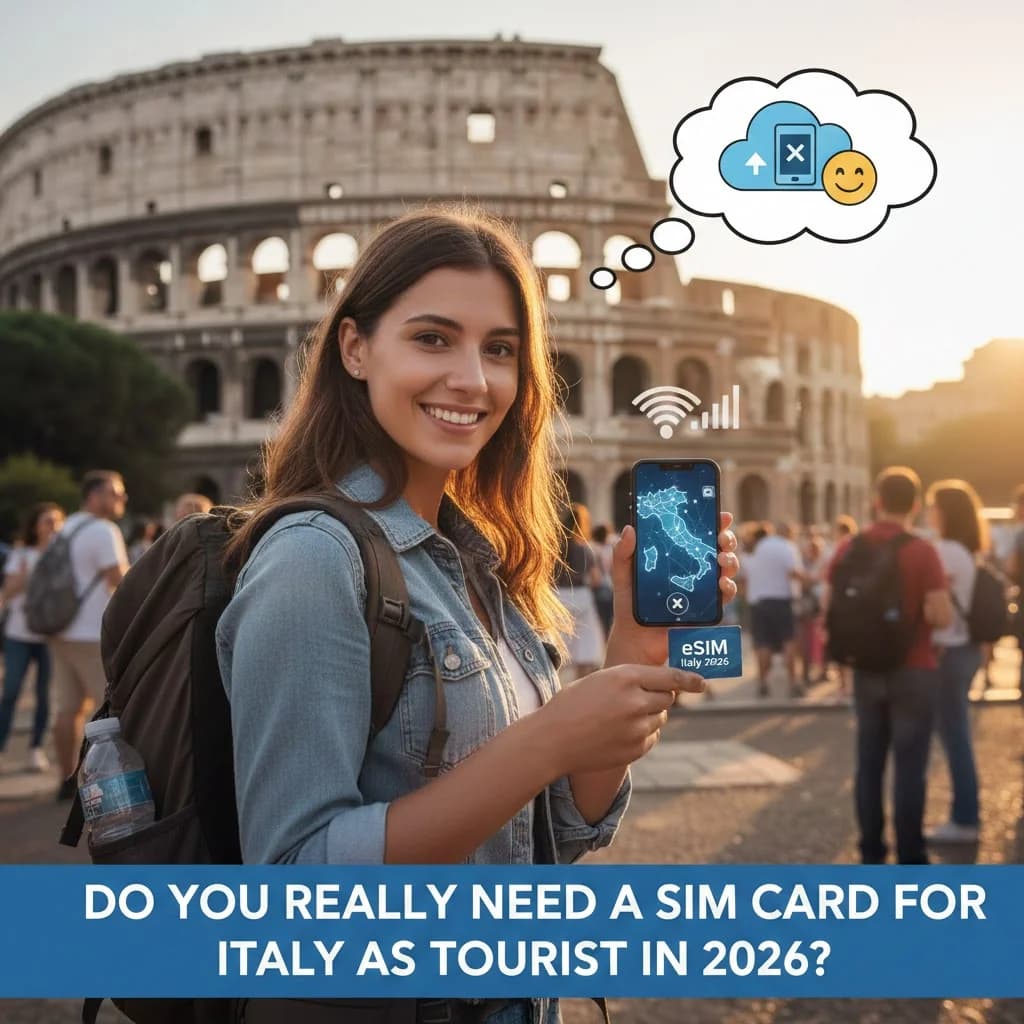
For years, the answer was to hunt down a local SIM vendor. But in 2026, with the rapid advancement of digital connectivity, is that still the best move? The short answer is predominantly no. This guide explores why, breaking down your options from costly international roaming to the modern, hassle-free solution of getting an eSIM for Italy before you even pack your bags, ensuring seamless connectivity right from your arrival. Let's compare the choices for Italy tourists in 2026.
- The 2026 Reality of International Roaming: Expensive and Limited
- Physical SIM Cards in Italy by 2026: A Fading Necessity
- Embracing eSIMs: The Smart Connectivity Solution for Italy Tourists in 2026
- Cellesim eSIM for Italy: Seamless Setup and Superior Coverage
- Choosing Your Ideal Cellesim eSIM Plan for Italy
- Cost Comparison: eSIM vs. Traditional SIM for Your 2026 Italy Trip
- Pro Tips for Maximizing Your eSIM Experience in Italy
- Frequently Asked Questions
Italy eSIM Plans from Cellesim
Connect instantly in Italy without searching for a local SIM. Join 50,000+ travelers who trust Cellesim for seamless connectivity across 200+ countries.
Get Your Italy eSIMThe 2026 Reality of International Roaming: Expensive and Limited
The first instinct for many travelers in 2026 is still to simply use their phone as they do at home. Your home carrier likely offers an international day pass, promising seamless connectivity abroad. It sounds convenient, but the reality for an Italy tourist in 2026 is often a painful bill waiting for you upon your return.
Most major carriers in the US, UK, and elsewhere continue to charge a flat daily fee, typically £10 to £15 per day, for international access. For a two-week trip to Italy, that is an extra £140 to £210 on your phone bill, just for one person. For a family enjoying their Italy travel in 2026, the cost can easily spiral into the hundreds, making it an unsustainable option for most. Use our roaming savings calculator to see how much you could save.
These international roaming plans are a masterclass in hidden costs and limitations, especially when considering data usage in 2026. Beyond the sticker shock of Italy roaming charges, you will often encounter “fair use” policies that carriers do not advertise prominently. After using a small amount of high-speed data (sometimes as little as 500MB per day), your connection can be throttled to painfully slow 2G or 3G speeds. This renders apps like Google Maps, video calls, or even loading high-resolution photos nearly impossible , precisely when you need them most while navigating Rome or sharing photos of Florence. You are paying a premium price for a subpar experience, completely unsuited for the demands of modern travel.
"I learned my lesson about roaming the hard way. A weekend trip to Milan cost me more in phone bills than my actual flight. Never again without an eSIM."
Physical SIM Cards in Italy by 2026: A Fading Necessity
For decades, the go-to solution for savvy travelers was to buy a local prepaid SIM card upon arrival. It is certainly a better option than roaming, but in 2026, it comes with its own set of frustrations and time-consuming hurdles that can eat into your precious vacation time in Italy, making the question "do I need a SIM card for Italy in 2026" increasingly answered with a 'no' by experienced tourists.
Where to Buy a Physical SIM Card in 2026: Airports vs. City Stores
Your first opportunity to get a physical SIM is usually at the airport. You will still find kiosks for major Italian carriers like TIM, Vodafone, and WindTre at airports in Rome (FCO), Milan (MXP), and other major cities in 2026. While seemingly convenient, these airport locations often have a few major drawbacks that make them less ideal for tourists seeking efficient connectivity in Italy in 2026:
- Higher Prices: They frequently offer special “tourist plans” that are notably more expensive and often provide less data than what is available in city centre stores.
- Long Queues: After a long international flight, the last thing you want is to wait in a 45-minute line behind dozens of other travelers.
- Limited Choice: Airport kiosks might only carry a few specific plans, limiting your options for data and validity periods.
Heading into a city center store might offer better prices and more plan choices, but this introduces other complexities:
- Language Barriers: While many Italians speak English, particularly in tourist areas, navigating technical terms or specific plan details can be challenging.
- Documentation: Italian law often requires a valid ID (like your passport) and, in some cases, even a Codice Fiscale (Italian tax code) to activate a SIM card. While tourists usually get around this, it can lead to delays or complications.
- Time Consuming: Finding a store, waiting, choosing a plan, providing documentation, and activation can easily consume an hour or more of your valuable travel time. This is time you could spend exploring a Roman piazza or enjoying an authentic Italian espresso.
Embracing eSIMs: The Smart Connectivity Solution for Italy Tourists in 2026
The landscape of mobile connectivity has evolved significantly, and 2026 marks a pivotal year where eSIM technology has become the preferred option for international travelers. An eSIM (embedded SIM) is a digital SIM card that allows you to activate a cellular plan from a carrier without needing a physical SIM card. For tourists visiting Italy, this technology eliminates many of the frustrations associated with traditional SIM cards and expensive roaming.
The primary advantage of an eSIM is convenience. You can purchase and activate an eSIM plan for Italy from Cellesim before you even leave home. This means you land in Italy with immediate access to data, allowing you to use navigation apps, contact your accommodation, or share your arrival with loved ones without any delay or airport hassle. No searching for kiosks, no long queues, and no language barriers.
eSIMs are particularly well-suited for the modern traveler who values efficiency and seamless integration. Most newer smartphones, including models from Apple, Samsung, Google, and Huawei, are eSIM compatible. This widespread adoption has made eSIMs a mainstream solution, providing robust connectivity for your entire Italian journey.
Cellesim eSIM for Italy: Seamless Setup and Superior Coverage
Cellesim offers a straightforward and reliable solution for your connectivity needs in Italy. Our eSIM plans are designed specifically for tourists, providing high-speed data without the complexities of traditional SIM cards or the exorbitant costs of roaming.
Activating Your Cellesim eSIM for Italy
The activation process for a Cellesim eSIM is simple and can be completed in minutes:
- Purchase Your Plan: Visit cellesim.com/en/esim-italy and select the data package that best suits your trip duration and usage habits.
- Receive QR Code: After purchase, you will receive an email with a QR code and detailed instructions.
- Install eSIM: Scan the QR code with your eSIM-compatible smartphone. This will guide you through adding the eSIM profile to your device. Make sure you are connected to Wi-Fi during installation. You can also refer to our complete eSIM setup guide for detailed steps.
- Activate on Arrival: Once you land in Italy, simply enable your Cellesim eSIM line in your phone settings, and you will connect to the local network.
With Cellesim, you retain your original phone number for calls and texts (on your primary physical SIM, if applicable) while using the eSIM for data. This dual-SIM functionality is invaluable for staying connected with friends and family without interruption. For more details, explore our guide on keeping your WhatsApp number while using a travel eSIM.
Choosing Your Ideal Cellesim eSIM Plan for Italy
Selecting the right data plan is crucial for a stress-free trip. Cellesim offers various plans to cater to different travel styles and data needs. When considering how much data you will need for your Italian vacation, think about your typical usage:
- Light User (2-5 GB): Ideal for checking emails, occasional social media, messaging, and light navigation. Suitable for short trips (3-7 days) or those relying heavily on hotel Wi-Fi.
- Moderate User (5-15 GB): Perfect for regular social media updates, streaming music, daily navigation, occasional video calls, and sharing photos. Good for week-long to two-week trips.
- Heavy User (15+ GB): For those who work remotely, stream videos frequently, upload large files, or use their phone as a hotspot. Essential for longer trips or if you cannot compromise on connectivity.
You can always monitor your data usage through your phone's settings and top up your Cellesim eSIM plan if you find yourself running low. Consider using our Smart Data Calculator to estimate your exact data requirements.
Cost Comparison: eSIM vs. Traditional SIM for Your 2026 Italy Trip
To truly understand why you might not need a physical SIM card for Italy in 2026, let's look at a comparative cost and convenience breakdown for a typical 10-day trip.
| Option | Estimated Cost (10 days) | Setup Difficulty | Data Speed & Limits |
|---|---|---|---|
| Cellesim eSIM | From $10-$30 (e.g., 5GB-10GB) | Instant (pre-arrival) | Full 4G/5G, no throttling |
| International Roaming | $100-$150+ | Automatic (high cost) | Often throttled after low usage |
| Local Physical SIM | $20-$40 (plus travel time) | Moderate (store visit, ID, language) | Full 4G/5G (potential activation issues) |
As evident from the comparison, Cellesim eSIM offers a compelling balance of affordability, convenience, and performance, making it the superior choice for most tourists in Italy in 2026. The upfront cost is predictable, and you avoid the hidden fees and logistical hurdles associated with other options.
Pro Tips for Maximizing Your eSIM Experience in Italy
While an eSIM simplifies connectivity, a few additional tips can enhance your experience in Italy:
- Download Offline Maps: Before your trip, download offline maps of major Italian cities like Rome, Florence, and Venice using Google Maps or similar apps. This ensures you can navigate even if you temporarily lose signal or want to save data.
- Use Wi-Fi When Available: Public Wi-Fi is common in hotels, cafes, and some city centers. Connect to these networks to conserve your eSIM data for when you truly need it on the go.
- Monitor Data Usage: Regularly check your data usage in your phone settings to avoid unexpected depletion. Cellesim also provides easy options to top up your plan if needed.
- Stay Charged: Data usage, especially with navigation and photo uploads, can drain your phone battery faster. Carry a portable power bank to keep your device charged throughout your sightseeing adventures.
- Enable Dual SIM Settings: If you are using a dual-SIM phone, ensure your primary SIM is set for calls/SMS and your Cellesim eSIM is set for mobile data. This prevents accidental roaming charges on your home number. You can find detailed instructions in our interactive setup guide.
Ready for Seamless Connectivity in Italy?
Say goodbye to SIM card hassles and expensive roaming. Get your Cellesim eSIM for Italy today and arrive connected.
Start Your Connected JourneyTrusted by 50,000+ travelers worldwide. 24/7 Support: [email protected]
Frequently Asked Questions
Do I really need a SIM card for Italy as a tourist in 2026?
In 2026, a physical SIM card is generally no longer a necessity for tourists in Italy. eSIMs like those offered by Cellesim provide a more convenient, cost-effective, and flexible alternative, allowing you to connect instantly upon arrival without the need to find a local vendor or deal with paperwork.
What is an eSIM and how does it work for Italy travel?
An eSIM is a digital SIM embedded in your phone, eliminating the need for a physical card. For Italy travel, you purchase an eSIM plan online from providers like Cellesim, receive a QR code, and scan it to install the plan. Your phone connects to local networks in Italy for data services without swapping any cards.
Can I use my current phone number with an Italy eSIM?
Yes, one of the major benefits of using an eSIM for data in Italy is that you can keep your original physical SIM active for calls and texts on your primary number. This "dual SIM" functionality ensures you stay connected with your contacts while enjoying affordable data.
Is an eSIM cheaper than international roaming for Italy?
Absolutely. International roaming from your home carrier can cost £10-£15 per day, quickly adding up to hundreds for a typical trip. Cellesim eSIM plans for Italy offer predictable, significantly lower costs for high-speed data, making them a much more economical choice.
What if my phone isn't eSIM compatible?
Most modern smartphones released in the last few years are eSIM compatible. You can easily check if your device supports eSIM by visiting our eSIM checker on the Cellesim website. If your phone is not compatible, a physical local SIM would still be your best alternative to roaming.
Where can I get a Cellesim eSIM for my trip to Italy?
You can purchase a Cellesim eSIM plan directly from our website at cellesim.com/en/esim-italy. Select your desired data package and validity period, and you will receive instant activation instructions via email.